
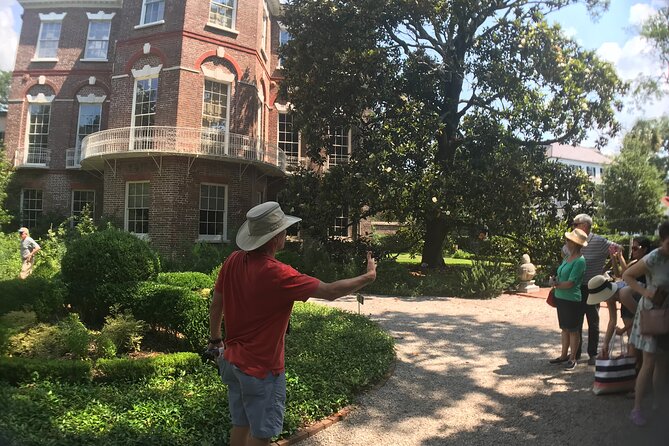
Review · HISTORICAL TOURS
Historic Charleston: The Battery, Rainbow Row, St. Michael Church
Charleston’s past comes at you in layers on this compact walk: grand churches, pastel houses, harbor views, and reminders of slavery all sit within a small section of the old city. The Battery and Rainbow Row supply the postcard moments, while the churches and Old Slave Mart area give the walk its weight.
I like the way the tour joins architecture with people and politics, especially at the Four Corners of Law, where city, state, federal, and church authority meet. I also like the small-group limit of 20, which gives guides such as Eric room to answer questions and adjust the conversation to your interests.
The main caution is that church interiors are not guaranteed. St. Michael’s and St. Philip’s are active places of worship, and access depends on what is happening that day. Bring good walking shoes, since even a relaxed two-hour pace includes several historic blocks and outdoor stops.
Key points to know before you walk
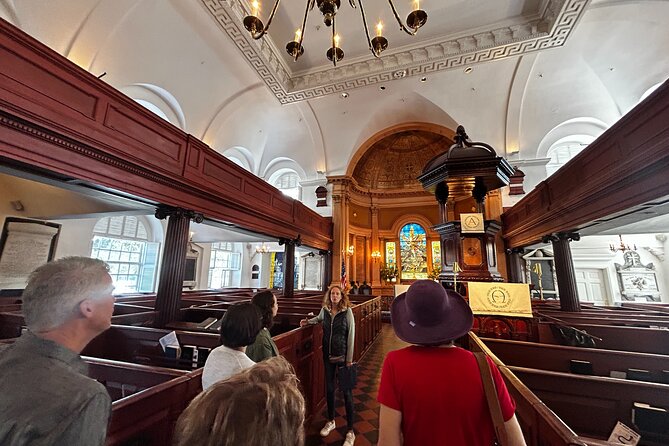
- St. Michael’s Church dates to 1752: Its spire, Tiffany stained-glass windows, organ, and links to George Washington and Robert E. Lee make it one of the tour’s major stops.
- Church entry can change: You may enter one to three historic sites, but working congregations control access.
- The route covers Charleston’s essential landmarks: You’ll see Rainbow Row, Washington Square, the Battery, Dock Street Theater, and the Old Slave Mart area.
- The Battery brings the best open views: Historic artillery, harbor scenery, and grand homes create the walk’s strongest photo stop.
- The guide is central to the experience: Eric and Erik are praised for clear storytelling, patience, local knowledge, and tailoring the tour to group interests.
- The group can include up to 20 people: That is small enough for questions, though not the same as a private tour.
Charleston’s old city in a two-hour walk
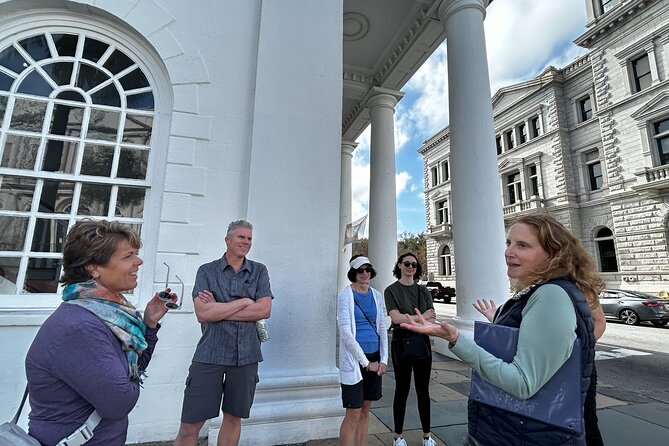
This is a good introduction to Charleston because it does not limit itself to pretty buildings. You move from churches and civic institutions to colorful houses, a theater, a public square, the harbor, and a site tied to the city’s role in the domestic slave trade.
The route begins at Washington Square at 10:00 a.m. and returns there after about two hours. Since the meeting point is near public transportation, it is practical for fitting into a morning in central Charleston. You do not need to arrange transfers between stops, and the walking route keeps the city’s historic core connected.
I would treat the timing as an overview rather than a full study of each site. Five minutes at a church or civic landmark gives you a useful introduction, but not a long interior visit. The value comes from the guide connecting the stops, not from spending half an hour inside each one.
More History Walks in the USA:
- Chicago in a Day: Food, History & Architecture Walking Tour
★ 5.0 · 1,153 reviews - Charleston’s Best Highlights: History, Culture & Architecture
★ 5.0 · 422 reviews - Palm Springs Modernism Architecture & History Bike Tour
★ 5.0 · 359 reviews
St. Philip’s Church and St. Michael’s Church
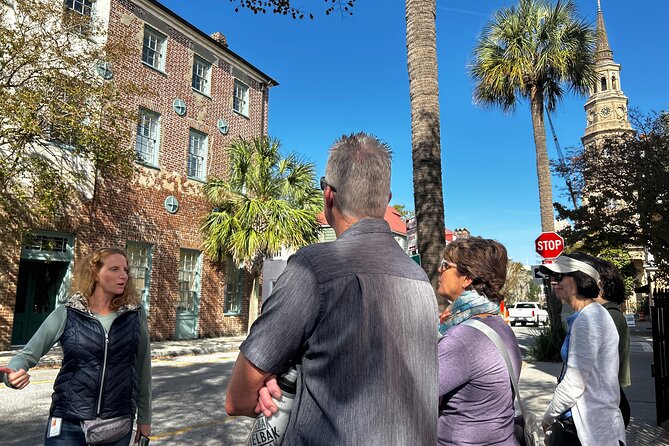
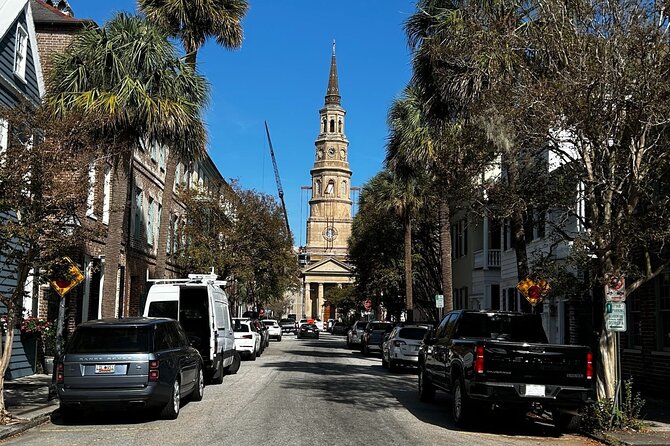
The first church stop is St. Philip’s Church on Church Street. Completed in 1836, it is known for its tall steeple, which can be seen from far across the city. The tour allows a short look at the building, its grand interior, its organ, and the notable figures buried in the churchyard when access is available.
That combination is useful because Charleston’s churchyards are not just decorative spaces. They help you see how religion, public life, and prominent families shaped the old city. The stop is brief, so listen closely when your guide explains what you are looking at.
St. Michael’s Church is older, dating to 1752, and is identified as the oldest surviving religious structure in Charleston. Its spire is one of the city’s familiar markers, while the Tiffany stained-glass windows and interior give you more to study than the exterior alone.
The church also carries strong political associations. George Washington and Robert E. Lee are among the historical figures connected with the building. You do not need a long lecture to understand why St. Michael’s matters: it links Charleston’s religious life with the people who shaped American public life.
Here is the practical point: entrance is subject to availability. These are working churches, not museum rooms kept open all day for tour groups. The experience includes entry into one to three historic sites when possible, but you should book this walk for the guide and the outside architecture first. An interior visit is a welcome extra, not something to count on.
Four Corners of Law and Charleston’s civic design
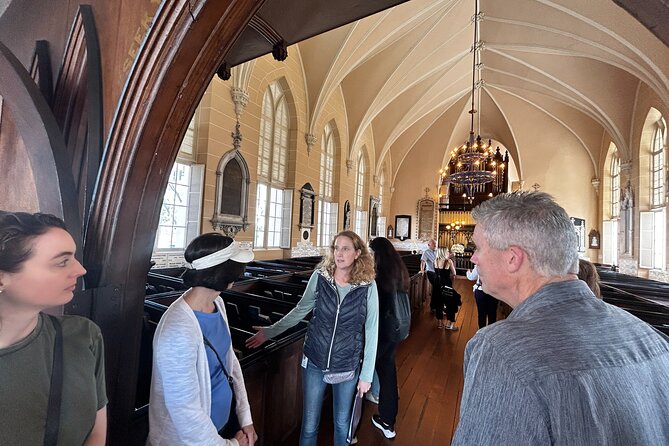
At the Four Corners of Law, the guide explains an unusual concentration of authority. Local, state, federal, and church laws meet at this intersection, giving you a quick way to understand how Charleston’s civic center was arranged.
This stop is short, but it is the kind of detail that makes a walking tour useful. You are not simply passing one attractive building after another. You are learning why the city placed its institutions where it did and how different layers of government and religion shared the same small area.
I especially like this kind of stop for first-time visitors. A map can show you streets, but it does not explain the meaning of an intersection. A good guide turns an ordinary crossing into a lesson in how the city works.
Rainbow Row, where color takes over the street
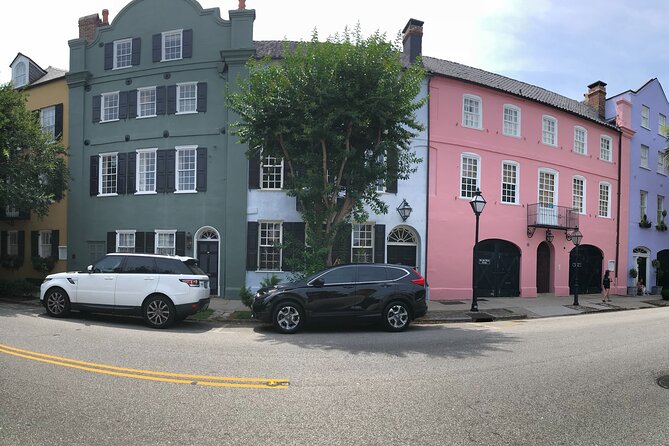
Rainbow Row is the tour’s easiest visual win. The pastel-colored historic houses create one of Charleston’s most recognizable views, and the compact row gives you a clear photo opportunity without requiring a long detour.
Your guide can add context that a quick photograph cannot. Look at the repeated facades, the colors, and the way the houses form a unified stretch of old Charleston. The stop lasts about five minutes, so you will have time to take pictures but not to linger for a detailed architectural study.
This is also a place where expectations matter. Rainbow Row is a public street, not a house museum. You are seeing the exterior character of the buildings, and the tour gives you the background to appreciate it. If colorful architecture is your main reason for visiting Charleston, you may want extra time here after the tour ends.
Same city, a different facade:
- Chicago Architecture River Cruise
★ 5.0 · 15,756 reviews - Chicago River 90-Minute Architecture Tour
★ 4.5 · 9,629 reviews - Chicago River: 1.5-Hour Guided Architecture Cruise
★ 4.8 · 8,046 reviews - Chicago Architecture Center River Cruise aboard First Lady
★ 5.0 · 5,536 reviews
Dock Street Theater and the value of a possible interior
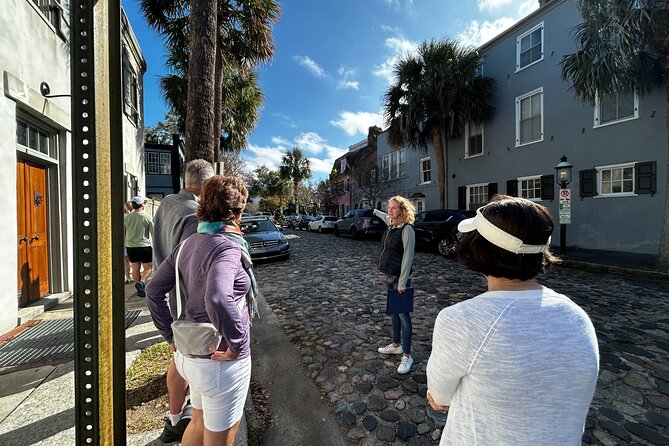
Dock Street Theater receives about ten minutes, making it one of the longer stops. It is recognized as America’s first building designed specifically for theatrical performances, so it adds a different note to a route otherwise focused on churches, government, homes, and the waterfront.
Entrance is included when available. As with the churches, access can depend on the building’s schedule. That means you may get an interior look, or you may hear the story from outside. The tour description also notes another historic building stop without identifying it separately, so the exact flow can shift slightly on the day.
For you, the important distinction is between admission and guaranteed access. The price includes entry into the listed historic sites when conditions permit, but a working church or theater may not be open at the precise time of the walk. I would see this flexibility as sensible rather than a flaw, provided you know about it before booking.
Washington Square gives the route a pause
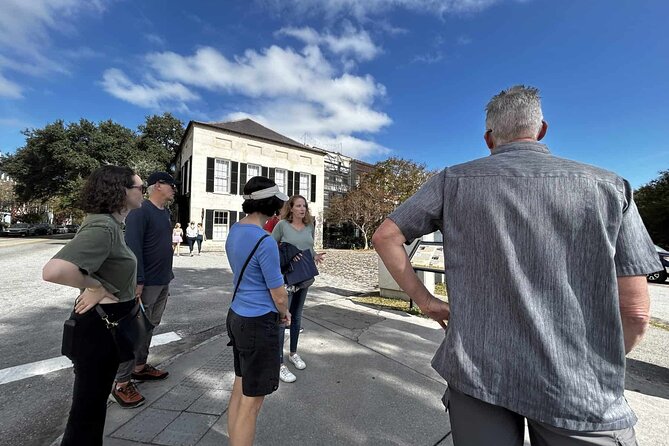
Washington Square is both the starting and ending point, and it also serves as a ten-minute stop during the walk. Its live oaks, statues, plaques, and quiet paths make it a pleasant contrast to the more formal buildings and busy streets nearby.
The square is useful as a storytelling space. Statues and plaques provide small pieces of Charleston’s past, while the trees and open setting give you a breather midway through the route. Since the tour returns here, you can use the location as a reference point for continuing your own sightseeing afterward.
A return to the starting point also keeps the logistics easy. You are not left at a distant end point trying to find your way back to public transportation or your hotel. For a short morning tour, that matters.
The Battery, harbor views, and old defenses
The Battery is the scenic high point of the route. This waterfront promenade offers views across Charleston Harbor, with historic artillery and stately homes lining the walk. You get open space, water, old defenses, and architecture in one place.
It is an excellent outdoor stop for photographs, but the views are only part of its value. The artillery helps you picture the Battery as a defensive edge of the city, while the mansions show how wealth and power appeared along the waterfront. Your guide can connect those visual clues to Charleston’s larger story.
The stop lasts about ten minutes, which is enough for a guided overview and several photographs. If the Battery is your top priority, I would return on your own later for more time. The guided visit gives you orientation and context, while a second visit lets you slow down.
Weather matters here. The walk is outdoors, and one review specifically notes that the experience remained worthwhile in the rain, while also offering the practical advice to wear good walking shoes. I would add an umbrella or rain jacket on wet days, though the tour data does not promise any weather adjustment.
The Old Slave Mart area and the harder part of Charleston
The route also brings you to the Old Slave Mart Museum area, described as a reminder of Charleston’s troubled past. This part of the walk is essential because the city’s elegant streets and grand homes cannot be understood without facing the lives of enslaved people and the system that shaped Charleston and the wider United States.
The stop is meant to help you consider the experiences and resilience of enslaved people. It gives the tour a needed balance. You are not being shown only steeples, pastel houses, and harbor views. You are also being asked to understand the human cost behind the city’s growth.
The provided schedule does not give a separate time or admission arrangement for this stop, so you should think of it as part of the guided route rather than a guaranteed museum visit. If you want a longer examination of the subject, allow time for further independent study. Within this two-hour walk, the guide provides an important introduction.
What the guide adds to the buildings
The guide is the main reason to choose this experience instead of walking the same streets with a map. Eric is praised for tying historical events together, answering questions, and shaping the discussion around the group’s interests. Another account identifies Erik as patient, friendly, and comfortable with a leisurely pace.
That matters in Charleston, where a short block can contain several centuries of stories. A guide who simply recites dates would make the walk feel flat. The strongest feedback points instead to storytelling, local history, architecture, and a personal approach.
The group limit is 20 people. That is not private, but it is manageable. You should have a reasonable chance to hear the guide and ask questions, especially compared with a large coach group. If you want a one-to-one experience, this is not that, but the size supports the relaxed tone described by the tour.
The walk is offered in English and includes live commentary from a professional licensed guide. That is useful for visitors who want immediate explanations rather than reading plaques later. It also means the quality of your morning depends partly on the guide assigned that day, although the available guide feedback is notably strong.
Pace, access, and practical value
The tour lasts about two hours and follows a leisurely pace. That makes it a good choice for a first morning in Charleston, for people who want orientation without committing to a full-day program, and for anyone who prefers a guided introduction before exploring alone.
You will be on foot for the entire experience. Comfortable shoes are more important than stylish ones, particularly if rain makes the streets slick. Most people can participate, service animals are allowed, and the route is near public transportation.
The price is not provided here, so I cannot judge it against a specific dollar amount. I can judge what you receive: a licensed guide, live commentary, a two-hour route through major landmarks, and admission into one to three historic sites when available. That is solid value if you would otherwise pay for separate admissions or spend time piecing together the city’s story yourself.
The value is less clear if you want long interior visits. Several stops last only five minutes, and church access is not guaranteed. You are paying for a guided overview, not a museum-heavy tour.
Booking flexibility is helpful. You can cancel for a full refund up to 24 hours before the local start time. Cancellations or changes inside that window are not refunded or accepted, so keep the cutoff in mind when your plans are uncertain.
Who should book this Charleston walk?
I would choose this tour if you are visiting Charleston for the first time and want the major sights arranged into a clear story. It also suits you if architecture, religious buildings, local government, waterfront views, and difficult history all belong in the same morning.
It works well for couples, families, and small groups who want questions answered along the way. The calm pace and group limit make it more personal than a large sightseeing operation, while the two-hour length leaves most of the day free.
You may want something else if your main goal is extended museum time, a private guide, or a tour focused on one subject such as military history or slavery. You should also avoid relying on guaranteed church interiors. The buildings remain in use, and access can change.
Should you book it?
Book this Charleston walking tour if you want a well-paced first look at the historic center, especially with a guide who can connect the Four Corners of Law, the churches, Rainbow Row, the Battery, and the Old Slave Mart area into one story. The high praise for Eric and Erik points to strong guiding, clear explanations, patience, and personal attention.
Go in with realistic expectations: the route is short, some stops are brief, and interior entry depends on availability. With good shoes and a willingness to spend time outdoors, this is a useful and thoughtful way to get your bearings before exploring Charleston on your own.
FAQ
How long does the Charleston walking tour last?
The tour lasts approximately two hours.
Where does the tour begin?
It begins at Washington Square, 80 Broad Street, Charleston, South Carolina 29401.
Where does the tour end?
The tour ends back at the meeting point at Washington Square.
What time does the tour start?
The listed start time is 10:00 a.m.
Is the tour offered in English?
Yes. The tour is offered in English and includes live commentary.
Are church interiors guaranteed?
No. St. Philip’s Church and St. Michael’s Church are working churches, so entrance depends on availability and congregation schedules.
How many historic sites can admission include?
Admission includes entry into one to three historic sites, subject to availability.
What is the maximum group size?
The tour accepts a maximum of 20 travelers.
Can I cancel for a full refund?
Yes. You can cancel at least 24 hours before the local start time for a full refund. Cancellations or changes made less than 24 hours before the start time are not accepted, and the amount paid is not refunded.
Newly added in the USA
- Art Deco Tour of South Beach in French★ 4.5 · 8 reviews
- Award-winning Art Deco & Neon Lights Walking Tour★ 5.0 · 5 reviews
- Miami Beach Art Deco Segway Tour★ 4.5 · 17 reviews
- Boston: Freedom Trail History and Architecture Walking Tour★ 4.8 · 18 reviews
- Boston: Harbor and Charles River Architecture Boat Tour★ 4.6 · 9 reviews
- Iconic Capitol Hill Architectural Walking Tour★ 5.0 · 21 reviews
- Chicago: Guided Tour with Architecture River Cruise★ 4.5 · 20 reviews
- South Beach Food Tour- Culinary & Art Deco & History★ 5.0 · 22 reviews
Historical Tours, compared.
Chicago in a Day: Food, History & Architecture Walking Tour
Read our review →
Charleston’s Best Highlights: History, Culture & Architecture
Read our review →
Palm Springs Modernism Architecture & History Bike Tour
Read our review →
Historic Georgetown: History, Gossip, & Architecture Walking Tour
Read our review →
Charleston History, Homes, and Architecture Guided Walking Tour
Read our review →

Historical and Architectural Chicago Fireboat River & Lake Cruise
Read our review →Browse the lists this tour appears in