
Review · SEGWAY AND BIKE ARCHITECTURE TOURS
Sopot Private City Walking or Bike Tour with a local architect
Sopot’s best stories are often found away from the pier. This private tour with architect Agnieszka Lasota leads you through old villas, spa buildings, quiet gardens, and streets once nicknamed Poland’s Montmartre. Along the way, historical photographs show how this seaside resort changed from a fishing village into the Riviera of the North.
I like the focus on architecture with human stories, not just grand landmarks. I also like the private format for up to nine people, since Agnieszka can adjust the pace, explain details clearly, and possibly arrange a meeting with artist Per Oscar Gustav Dahlberg.
The main thing to consider is the length. At 90 minutes to two hours, the route covers a lot, and the optional lighthouse climb may leave little time for lingering. If you want to enter museums or spend time on the pier, plan those separately.
Key points about the Sopot tour
- A local architect leads the route: Agnieszka Lasota explains Sopot through buildings, planning, design, and personal stories.
- Historical photos make the past visible: You compare today’s streets with older views of Sopot as a fishing village and European resort.
- The route reaches beyond Monte Cassino Street: Expect quiet villas, a former manor guest house, spa architecture, the beach, and fishermen’s cottages.
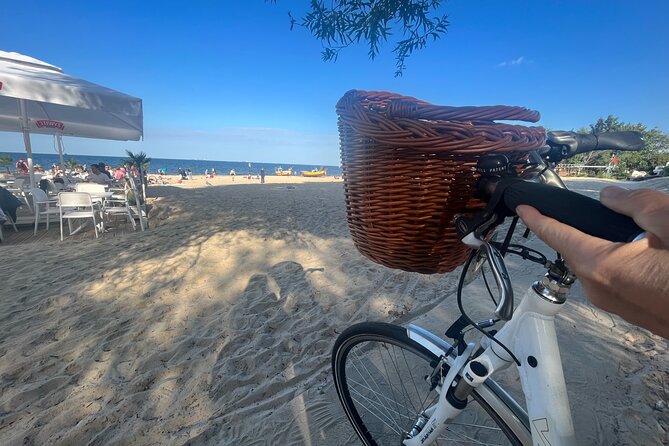
- You can walk or ride a bike: The tour lasts about 90 minutes to two hours, with pickup offered.
- The private format adds flexibility: Your group alone takes part, with room to pause for coffee, photos, or extra questions.
- The lighthouse visit is optional: Climb for a view, or skip the steps and keep the route easier.
Why an architect is the right guide for Sopot
Sopot can look simple at first glance. There is the famous pier, a long beach, the busy Monte Cassino pedestrian street, and a good supply of cafés. But the town’s real character sits in the details: roof shapes, timber work, villa gardens, old resort buildings, and the way the town was planned around leisure and health.
Agnieszka Lasota brings an architect’s eye without turning the walk into a technical lecture. The information provided about her tours points to a guide who can explain design in plain language and connect buildings to the people who used them. That matters in Sopot, where a house may reveal a merchant’s ambitions, a doctor’s plans, or the changing tastes of European holidaymakers.
She also appears to read the group well. The tour can include a pause for coffee or refreshment when needed, and the route can be adjusted to suit your interests. That is useful in cooler or windy weather, especially if you want time for photographs.
The private setup is a real advantage here. The price is $204.04 for up to nine people, not per person. For one or two people, that is a significant cost. For a family or small group, the price becomes more reasonable because you are paying for a dedicated guide rather than several separate tickets. The strongest value comes if you care about architecture, local history, or a flexible conversation rather than simply checking off sights.
More Architecture Tours by Bike and Segway in the world:
- Palm Springs Modernism Architecture & History Bike Tour
★ 5.0 · 359 reviews - Historical and Modernist Bike Tour Barcelona
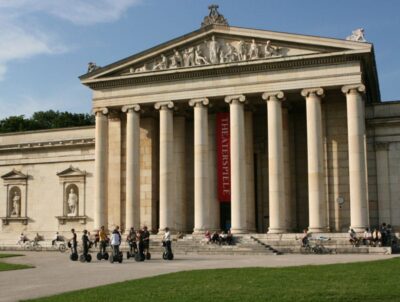
★ 5.0 · 262 reviews - Munich 3-Hour Segway Tour: Nazi Munich & Royal Architecture
★ 4.9 · 194 reviews
Monte Cassino Street and Sopot’s village beginnings
The tour starts at McDonald’s on Bohaterów Monte Cassino 21. That may not sound like a grand meeting point, but it is easy to find and puts you directly beside Sopot’s main pedestrian route.
Bohaterów Monte Cassino is famous across Poland. The street began as the road leading from the small settlement toward the sea. Local fishermen used it to reach the shore, long before Sopot became a major spa and holiday town.
This is where the historical photographs become especially useful. Instead of asking you to picture an older Sopot from a string of dates, Agnieszka can show how the center changed over the centuries. You see the present-day street, then compare it with earlier views of a much smaller place.
The stop lasts about 14 minutes, so expect a brisk introduction rather than a full historical lecture. The street can also be busy, and the modern restaurant and shopping scene may compete with the old stories. Keep your eyes up. The point is not only the pavement beneath you, but the buildings and route around it.
Dworek Sierakowskich and the quiet side of town
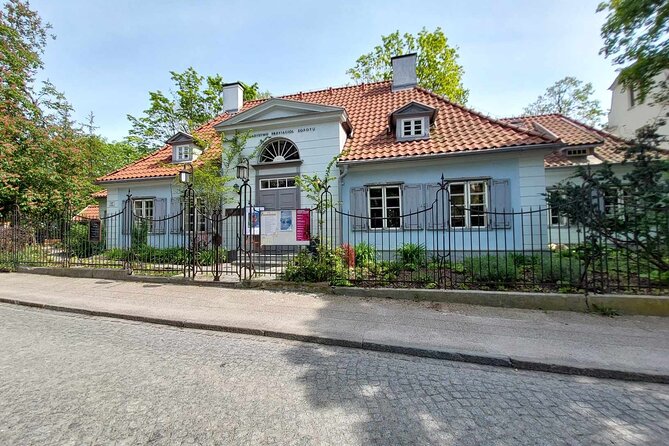
A short stop at Dworek Sierakowskich changes the mood. This 18th-century building once served as a guest house for a large manor. Today, its garden and authentic interiors offer a calmer setting away from the main pedestrian flow.
The house is linked with Fryderyk Chopin. A bust commemorates the composer, who very probably stayed here while on holiday and played the piano. The wording matters: this is presented as a strong local tradition, not an invitation to treat every detail as proven fact.
I like this part of the route because it gives you a pause from the obvious Sopot sights. The visit lasts about six minutes, but the garden and the building help explain how visitors once experienced the town. Sopot was not only about the beach. It also offered manor houses, elegant stays, music, and quiet leisure.
Villas Street and the architecture of Poland’s Montmartre
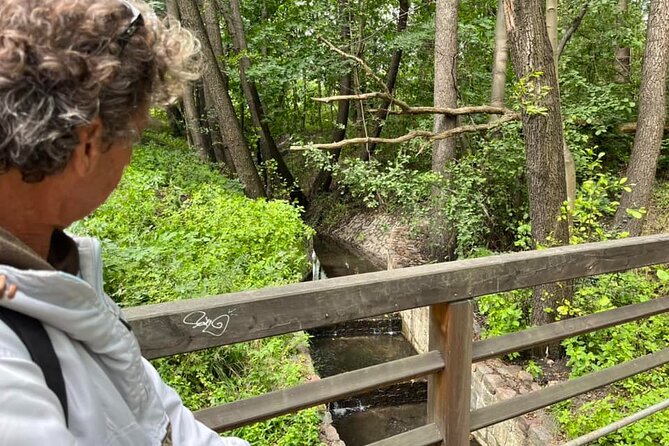
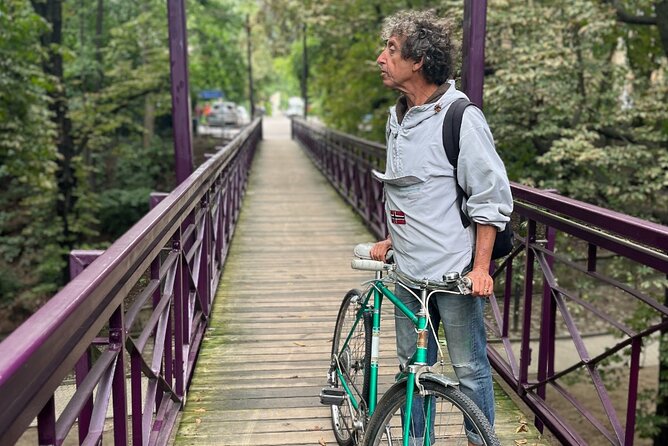
The route then crosses a picturesque bridge over a deep ravine and reaches a street first known as Villas Street. The oldest house here dates from 1881, and the classical architecture is part of what makes this neighborhood worth a slower look.
The nickname Poland’s Montmartre points to the artistic reputation the street developed in the second half of the 20th century. You will hear stories linked to the houses and the people who lived behind their walls. This is the sort of stop that rewards a guide who knows the area personally, because the buildings do not explain themselves.
There is no admission charge, and the value comes from interpretation. Without context, you might simply see attractive old homes. With Agnieszka’s explanations, you can look for the relationship between the houses, the gardens, the street, and Sopot’s changing role as a resort.
If you have mobility concerns, ask about the bridge and ravine section before booking. The tour is described as suitable for most people, but the route is not presented as a fully step-free experience.
More Walking Tours in the world:
- Lecce: Baroque Architecture and Underground Walking Tour
★ 4.6 · 1,248 reviews - Chicago in a Day: Food, History & Architecture Walking Tour
★ 5.0 · 1,153 reviews - Ramblas, Old Town, Gothic and Gaudi Architecture Walking Tour
★ 5.0 · 723 reviews - Chicago’s Secret Interiors Architectural Walking Tour
★ 5.0 · 635 reviews
Goyki 3 and the Tower Villa’s Alpine style
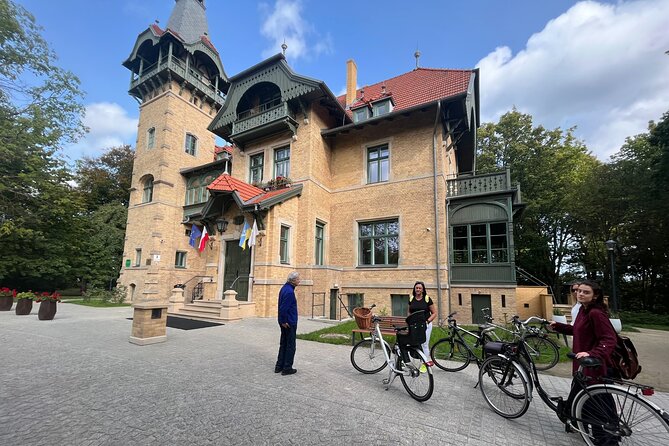
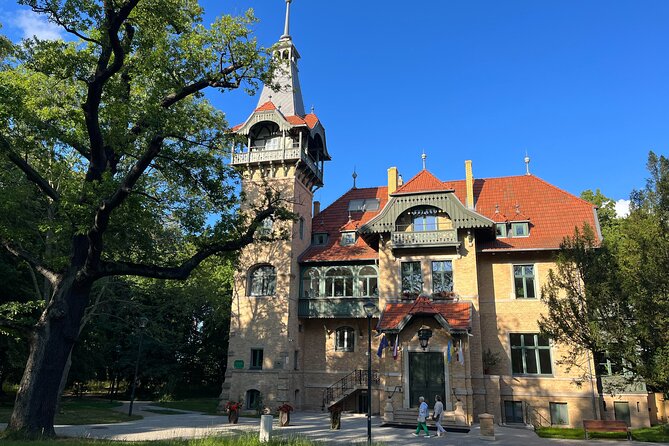
Goyki 3 Art Inkubator occupies one of Sopot’s more striking late-19th-century villas. The building is known as the Tower Villa and has a long, sad story tied to music. It was built by a merchant for his family, and its design draws on the Alpine Resort style.
That style raises a good question: why would a seaside town use a look associated with mountain resorts? Sopot was part of a wider European spa culture that grew from the 18th century onward. Resort towns borrowed ideas from one another, and architecture helped signal health, leisure, refinement, and escape from ordinary life.
This is one of the tour’s strongest architectural lessons. You are not simply told that a villa is old. You learn why it looks the way it does and how its design fits into a larger European fashion.
The stop takes about 13 minutes. You will not get a full museum visit, and museums are best handled separately. The tour does enter a few buildings for free, but the focus remains on seeing and understanding the town rather than spending long periods indoors.
Spa architecture and a possible artist connection
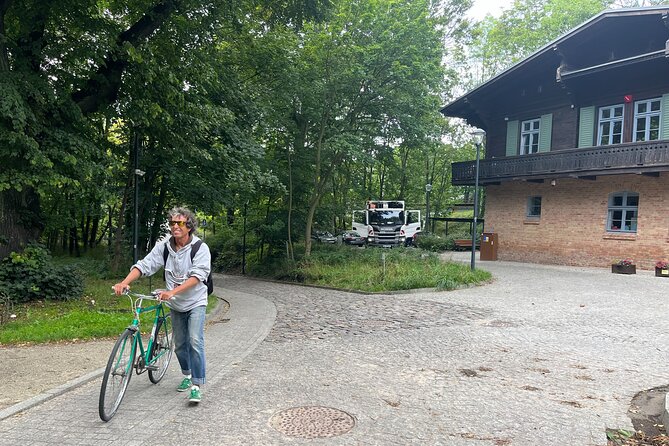
Sopot is described as having one of Europe’s largest collections of spa architecture. The tour uses the neighborhood around Goyki 3 to explain what that means in practice.
Look for buildings shaped by the needs of a resort town: grand villas, guest houses, gardens, decorative details, and public facilities made for visitors seeking rest and treatment. The architecture reflects a period when a seaside stay could be sold as both pleasure and health.
This is also the area associated with Swedish artist Per Oscar Gustav Dahlberg. He moved to Sopot in 1996 after falling in love with the town and lives and works there. His drawings inspired the design of Sopot’s famous Crooked House.
Agnieszka may be able to arrange a meeting at Dahlberg’s house and studio if you are interested. That is not a guaranteed part of the standard route, so you should raise the subject before the tour. You might also be able to buy his graphics or an album about Sopot and Gdańsk architecture.
For art lovers, this could add a personal connection to the town. For other visitors, the exterior stories and architecture may be enough.
Haffner, the town’s founder figure, and the resort idea
The Jan Jerzy Haffner Monument is a quick stop, lasting about three minutes. Haffner was a surgeon in Napoleon’s army who chose Sopot as a place to live before the town became widely known.
The surrounding area helps place his story in context. Sopot has tennis courts, broad parks with mature trees, and sandy beaches. Those features are not random extras. They are part of the resort identity that developed around health, outdoor activity, and leisure.
This is a short stop, but it connects the town’s physical setting with the people who shaped its future. You learn why one person’s decision to settle here mattered to Sopot’s growth.
The Grand Hotel and the beach as a civic project
The Sofitel Grand Sopot, historically known as the Grand Hotel, sits directly beside the beach. Its position is impressive, but the more interesting point is who made the investment.
In the 1920s, the city of Sopot itself decided to build such a grand hotel. That choice says a great deal about the town’s ambitions. Sopot was not content to serve only local bathers or passing holidaymakers. It wanted to compete as a major European resort.
The stop lasts about 15 minutes. Expect stories about the hotel’s splendor and its place in the town, along with a chance to understand how the beach, hotel, and public spaces work together.
The tour does not promise an extended hotel interior visit. You should think of this as an architectural and historical look from the outside, not a hotel tour.
Skwer Kuracyjny and the Riviera of the North
Skwer Kuracyjny was created in 1925 and forms one of Sopot’s key public spaces. Here, the tour returns to older photographs showing the resort in its heyday.
Sopot was once promoted throughout Europe as the Riviera of the North. The name sounds grand, but the old pictures help explain it. The plaza offered access to attractions and social life, with the beach and pier nearby.
This stop lasts around 12 minutes. It is a good place to connect the separate themes of the tour: spa culture, public planning, resort entertainment, and the town’s desire to attract visitors from far beyond the Polish coast.
The setting can be busy, particularly around the pier and beachfront. That is part of the appeal, but it may make conversation less quiet than in the villa districts.
The pier, changing rooms, and fishermen’s cottages
At some point, the route passes Sopot’s famous pier. The tour does not treat the pier as the whole story. Instead, Agnieszka explains its background so you can return and explore it on your own afterward.
The tour ends near the former changing rooms built in 1905, or at a plaza surrounded by small fishermen’s houses. The houses were gently moved from their original location in the same year. That detail gives you another look at how Sopot balanced its older village identity with its new resort ambitions.
The changing rooms come with amusing stories, while the fishermen’s cottages offer a more modest view of the town. Together, they keep the tour from becoming a parade of grand villas and hotels. Sopot’s character grew from both worlds: working fishermen and wealthy holidaymakers.
The lighthouse climb and what you will see
The final stop is Sopot Lighthouse. Climbing the steps is optional, which is helpful after a full route through the town.
The climb may feel tiring, but the view is the payoff. The experience allows you to decide at the time, so you do not have to commit if you are short on energy or prefer to stay at ground level.
Because the lighthouse visit takes about 14 minutes, it works as a compact finish rather than a long attraction visit. If you want to spend more time at the lighthouse or pier, plan to do so after the guided portion ends.
Timing, transport, and the private price
The tour lasts approximately 90 minutes to two hours. The variation likely reflects the walking or bike choice, questions, pauses, and the optional lighthouse climb. You should allow extra time if you want to stop for refreshments or arrange the possible artist meeting.
Pickup is offered, and the starting point is near public transportation. The end point is different from the start, so this is useful to remember when planning your next stop. You will not finish where you began.
The tour is offered in English. Service animals are allowed, and most people can participate. A mobile ticket keeps the arrangement simple, while confirmation is provided at booking.
At $204.04 per group of up to nine, the cost is easiest to justify for a family, group of friends, or architecture-minded party. For a solo visitor, it is expensive. The private format does give you the guide’s full attention, and the experience combines several neighborhoods that would be easy to pass through without understanding.
Free cancellation is available up to 24 hours before the start time. Changes or cancellations inside that period are not accepted for a refund.
Who will get the most from this experience
I would choose this tour if you want Sopot to feel like a real town rather than a beach stop between Gdańsk attractions. It suits you especially well if you enjoy:
- Historic houses and resort architecture
- Local stories tied to buildings and residents
- Old photographs that show change over time
- A private guide who can adjust the pace
- A short introduction before exploring the pier and museums alone
- Returning to Sopot after a previous visit and wanting a fresh route
It may be less suitable if you want a long museum visit, a slow café crawl, or a full-day excursion. The route covers many subjects quickly. You may leave with several places you want to revisit, which is a strength, but you will need to plan separate time for deeper exploration.
The tour has earned a perfect 5 rating from 19 evaluations, with all recommending it. The most consistent praise centers on Agnieszka’s local knowledge, clear explanations, architectural route, humor, and ability to show lesser-known corners of Sopot. One useful practical detail is that she has also guided people in Polish, with translation support used when needed, but this particular experience is offered in English.
Should you book the Sopot architect tour?
Book it if you want to understand why Sopot looks the way it does. The combination of Monte Cassino Street, villas, spa buildings, the Grand Hotel, fishermen’s cottages, beach spaces, and the lighthouse gives you a strong overview in a compact period.
The best reason to book is Agnieszka Lasota’s architectural approach. She connects design with people, money, music, health, and the changing fortunes of a seaside town. The best reason to hesitate is the price for a very small group and the limited time at each stop.
For a group of several people, I consider it a solid way to get your bearings. For one or two people, book only if the subject matters to you. If you do, ask in advance about the bike option, the possible artist meeting, and how much time you can devote to the lighthouse and pier.
FAQ
Where does the Sopot tour start?
It starts at Restauracja McDonald’s, Bohaterów Monte Cassino 21, 81-706 Sopot, Poland.
Where does the tour end?
The tour ends at a different location from the starting point. The route finishes near the 1905 changing rooms or at a plaza near the relocated fishermen’s cottages.
How long does the experience last?
The tour lasts approximately 1 hour 30 minutes to 2 hours.
Is this a walking tour or a bike tour?
You can take the experience as a private city walking or bike tour.
Is the lighthouse climb required?
No. The lighthouse climb is optional, and you can decide whether to do it.
Is the tour conducted in English?
Yes. The experience is offered in English.
How many people can join the private tour?
The price covers one private group of up to nine people.
What is included in the price?
A licensed guide and historical pictures showing how central Sopot changed over the centuries are included. Museum admission is not included, and museums are best visited separately.
More Bike Tours in the world
- Electric Bike Art and Architecture Guided Tour in Jacksonville
★ 5.0 · 155 reviews - Bike Tour in Barcelona: History, Architecture and Culture
★ 3.5 · 29 reviews - Barcelona e-Bike Tour: Gaudí & Old Town Small Group
★ 5.0 · 769 reviews - Miami: 2-Hour Art Deco Bike Tour
★ 4.6 · 155 reviews
Newly added in the world
- Venice Art and Architecture Private Walking Tour★ 4.5 · 11 reviews
- Basilica San Marco and the Pala d’Oro with Architect Guide★ 4.5 · 19 reviews
- Walking tour in Venice with an architect★ 5.0 · 16 reviews
- Paris: Discover the hidden architecture gems of Le Marais★ 3.8 · 4 reviews
- Porto Tour: Street Art & Architecture Experience 3h★ 5.0 · 4 reviews
- Faro Private Walking Tour: Uncovering its Architectural Legacy★ 5.0 · 8 reviews
- Private Walking Tour of Old Gdańsk with an architect-guide★ 5.0 · 7 reviews
- Lesser Poland Wooden Architecture Trail UNESCO Private Tour from Krakow★ 5.0 · 15 reviews
Segway and Bike Architecture Tours, compared.

Barcelona e-Bike Tour: Gaudí & Old Town Small Group
Read our review →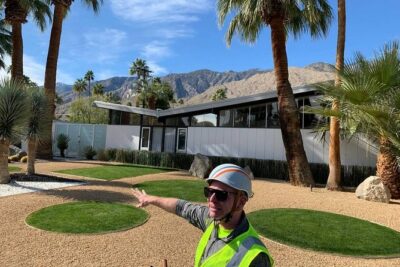
Palm Springs Modernism Architecture & History Bike Tour
Read our review →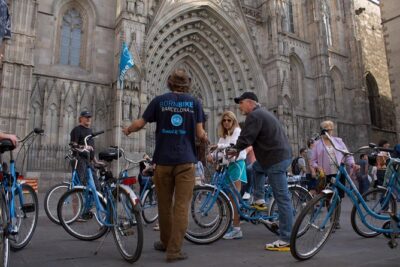
Munich 3-Hour Segway Tour: Nazi Munich & Royal Architecture
Read our review →
Barcelona Bike tour, Gaudí houses or beach bike or eBike tour
Read our review →
Miami Beach Art Deco & History Bike Tour with Design Enthusiast
Read our review →
Browse the lists this tour appears in