
Review · SPAIN ARCHITECTURE TOURS
Architecture tour Gran Vía from its best rooftops 20thC
Madrid’s grandest street looks different from above. This private tour uses two rooftops and a walk down Gran Vía to explain how Madrid grew from a medieval city into a modern capital. Architect and Madrid native Emilio leads the experience with plans, old photographs, and plenty of historical context.
I like the opening view from the Círculo de Bellas Artes, and I like the way the tour connects buildings to the people, politics, and urban changes behind them. You also enter Telefónica, Madrid’s first skyscraper, instead of simply photographing it from the pavement.
The main drawback is the price: $216.62 per person is a serious outlay for a tour lasting about three hours and 35 minutes to four hours. The opening explanation can also feel long, especially in cold or rainy weather, and the rooftop portions are exposed.
Key points to know before booking
- Begin above Madrid at the Círculo de Bellas Artes: The first rooftop gives you a clear view of the city before the walking tour begins.
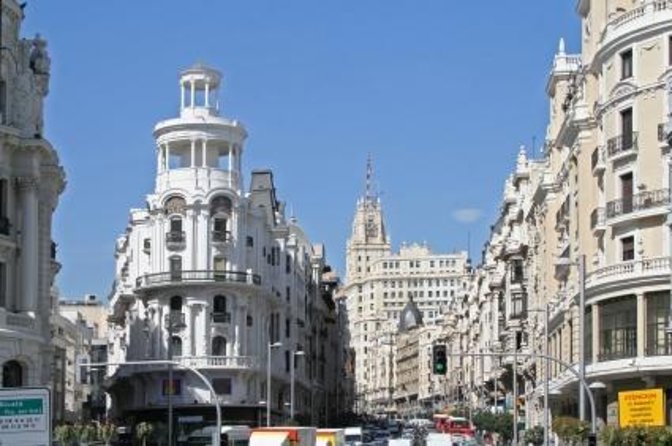
- Follow Gran Vía through 20th-century Madrid: Emilio explains the street’s buildings through architecture, politics, culture, and urban growth.
- Enter Telefónica: You visit the interior of Madrid’s first skyscraper and learn how it changed from its 1929 opening to its 2012 renovation.
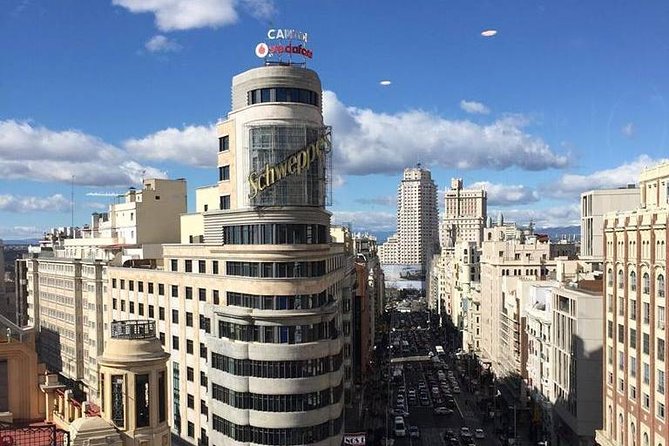
- See famous façades up close: The route includes Museo Chicote, the Carrion Building, Plaza del Callao, and the Schweppes neon sign.
- Finish near Plaza de España: The final rooftop looks toward the Royal Palace, Cathedral, Royal Theatre, and Casa de Campo forest.
- Best for architecture-minded adults: The pace and detail suit people who enjoy specific architectural discussion more than a quick sightseeing loop.
Why the rooftops change your view of Gran Vía
Gran Vía is easy to treat as a shopping street lined with grand façades. From street level, you see signs, traffic, crowds, and the lower floors of the buildings. From a rooftop, you can understand the street as part of a larger plan.
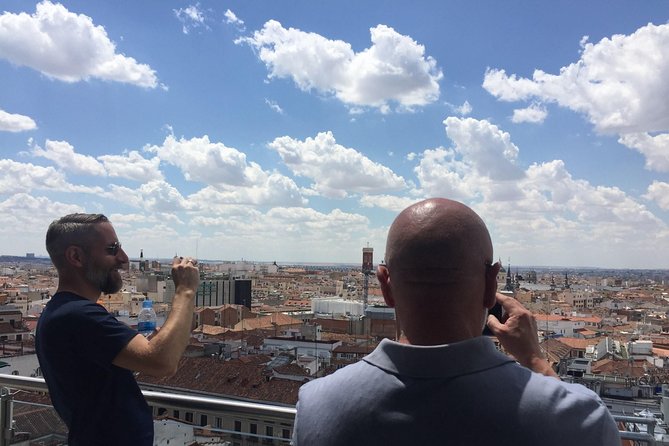
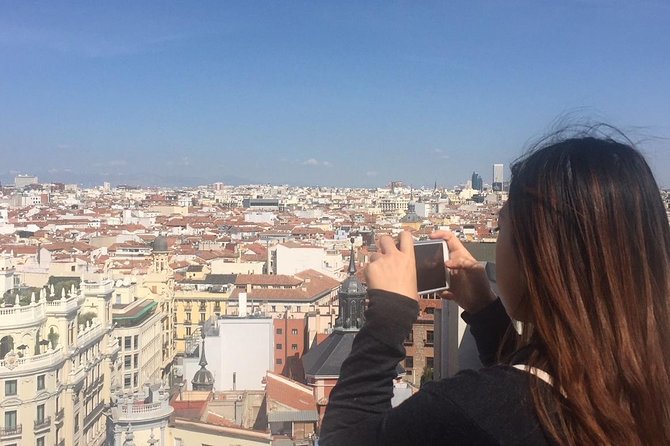
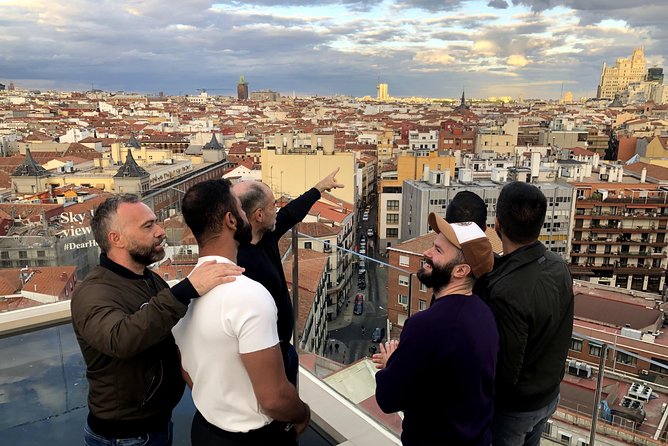
The Círculo de Bellas Artes is a strong place to begin. Its rooftop gives you a broad view across central Madrid, and Emilio uses that view to explain the city’s urban development. You are not just learning names and dates. You are looking at the shape of Madrid and then relating that shape to the buildings you will soon pass on foot.
This opening lasts about 1 hour and 15 minutes, including the rooftop and the building interior. That is a substantial start, so you should arrive ready to listen rather than expect a quick photo stop.
You will also walk down the building’s impressive staircase and see the interior designed by architect Antonio Palacios. The staircase adds a useful sense of scale. It helps you appreciate the building as a complete work, not just as a platform for city views.
The €6 entrance fee to the Círculo de Bellas Artes is not included. That extra cost is small compared with the tour price, but it is worth knowing before you arrive.
A few more architecture walks in Spain worth a look
- Barcelona: Sant Pau Recinte Modernista Entry Ticket
★ 4.6 · 2,567 reviews - Barcelona: Sagrada Familia, Modernism, and Old Town Tour
★ 4.7 · 1,621 reviews - Ramblas, Old Town, Gothic and Gaudi Architecture Walking Tour
★ 5.0 · 723 reviews
Círculo de Bellas Artes and Antonio Palacios
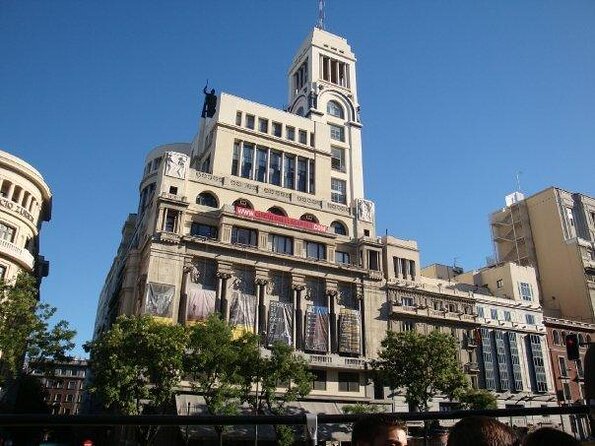
The Círculo de Bellas Artes is more than a convenient viewpoint. It gives the tour a visual starting point, and the building itself becomes the first architectural lesson.
Emilio uses historical plans and photographs to show how Madrid changed through different periods. This is one of the strongest parts of the experience for anyone who wants more than a list of famous buildings. You get a sense of how streets, buildings, and city life developed together.
The rooftop is also a practical place to get your bearings. Before you walk along Gran Vía, you can look across central Madrid and understand where the Royal Palace, Cathedral, Royal Theatre, and other major landmarks sit in relation to the city center.
The trade-off is weather. A cold, windy, or rainy day can make a long outdoor explanation uncomfortable. If the forecast looks poor, bring a warm layer and rain protection, and understand that the tour depends on suitable weather. The operator offers another date or a full refund if bad weather forces cancellation, but there is no promise that every outdoor talk will move indoors.
Walking Gran Vía through its 20th-century buildings
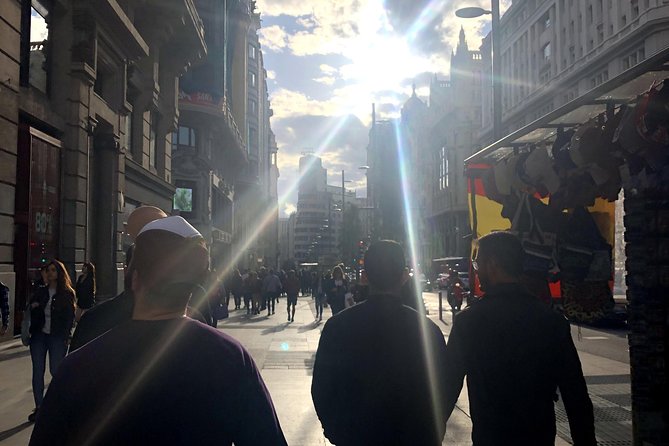
After the first rooftop and interior visit, the route moves along Gran Vía. The walking section is where the tour’s theme comes together. Emilio explains the buildings as part of Madrid’s 20th-century growth, rather than presenting them as isolated façades.
The route is especially useful if you have already walked Gran Vía and noticed its mix of styles without knowing what you were seeing. Plans and old photographs help you compare past and present. You may begin to notice how entrances, towers, decorative details, signs, and upper stories contribute to each building’s character.
This is not a light overview. The material is specific, and Emilio’s enthusiasm can lead to long answers when the group asks questions. That can be a pleasure if you like architecture and history. If you prefer a brisk route with short explanations, the pace may feel slow.
The tour is private, so only your group takes part. That gives you more room to ask questions and discuss what you are seeing. It also means the final length can vary. A large group with many questions may take longer than the usual three hours and 35 minutes to four hours.
Museo Chicote and the art-deco side of Madrid
The stop at Museo Chicote is brief, about five minutes, but the setting adds cultural context to Gran Vía. The cocktail bar dates from 1931 and reflects the art-deco atmosphere designed by Luis Gutiérrez Soto.
Emilio connects the venue with Madrid’s film culture, including visits by Hollywood stars such as Ava Gardner and film premieres associated with Pedro Almodóvar. You will not spend a long time inside, so think of this as a quick architectural and cultural pause rather than a full bar visit.
That short stop works well within the walking route. It shows how Gran Vía has served as a place for nightlife, cinema, celebrity, and public life, not just commerce and offices.
Same city, a different facade:
- Barcelona: Park Güell and Gaudí House Museum Entry Ticket
★ 4.5 · 6,326 reviews - Barcelona: Gaudi’s Casa Vicens Skip-the-Line Entrance Ticket
★ 4.7 · 4,541 reviews - Barcelona: Gaudí’s Park Güell Tour with Fast-Track Ticket
★ 4.8 · 4,512 reviews - Sagrada Familia & Gaudi Tour Private or Small Group with Tickets
★ 4.5 · 1,188 reviews
Telefónica, Madrid’s first skyscraper
The Telefónica building is one of the tour’s most useful stops because you go inside. The building opened in 1929 and is described as Madrid’s first skyscraper, giving you a chance to see how the city presented modern communications and new construction at the time.
The interior visit lasts about 20 minutes. Emilio explains what the building was like when it was built and how it changed during its 2012 renovation. That comparison gives the building a life beyond its original date. You see how older structures can be adapted while keeping their role in the city.
The Fundación Telefónica entrance is included in the tour price. This is an important value point because it adds an indoor visit to a route that otherwise depends heavily on rooftops and street views.
If you are hoping to enter many of Gran Vía’s most famous buildings, adjust your expectations. Telefónica is the clear interior visit listed for the route, while several other stops are viewed from the outside or treated as brief pauses.
Carrion Building and Plaza del Callao
The Carrion Building is another short stop, lasting about five minutes. Its most famous feature is the Schweppes neon sign, one of the visual markers of Plaza del Callao.
A quick explanation here helps you read the surrounding square. The point is not to spend a long time inside the building. It is to understand how advertising, cinema, commerce, and architecture work together in one of Madrid’s best-known public spaces.
This is also where the tour can appeal to people who enjoy details that are easy to miss. After Emilio points out the building’s history from 1933 and explains its place in the square, the sign and façade may look less like background scenery and more like part of Madrid’s story.
The final rooftop near Plaza de España
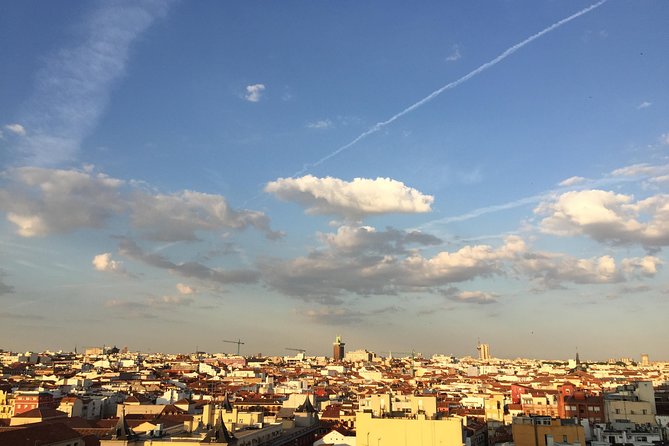
The experience ends near Plaza de España, on a hotel terrace described as a less-public rooftop option. From here, you can look toward the Royal Palace, Almudena Cathedral, the Royal Theatre, and the Casa de Campo forest.
The final stop lasts about 15 minutes, though you may stay for a drink after the formal tour ends. Drinks are not included, and the rooftop finish is optional. An alternative finish at the RIU Hotel may involve an extra fee depending on the day and time:
- €5 Monday through Friday from 5 p.m. to 11 p.m.
- €10 on Saturdays, Sundays, and bank holidays
- €10 Monday through Friday during the stated daytime option
Confirm the exact rooftop arrangement when booking, since the description gives several possible charges and conditions. The final view is a pleasant way to end the route, but you should not treat a drink or extended rooftop visit as part of the base price.
What the $216.62 price buys you
At $216.62 per person, this is not a budget walking tour. The price makes the most sense if you are sharing the private experience with a group, want an architect as your guide, and value a tailored conversation over a standard city introduction.
You are paying for Emilio’s architectural training, the private format, the use of plans and historical photographs, the Círculo de Bellas Artes visit, and the included Fundación Telefónica entrance. You are also paying for a carefully linked story about Madrid rather than a collection of unrelated sightseeing stops.
The value drops if you mainly want rooftop photographs. There are only two principal rooftop settings, and much of the experience consists of explanations while walking between buildings. You may also find the cost hard to justify if your interest in architecture is casual.
Group discounts are available, which may improve the price for a larger party. The tour is offered in English, and confirmation normally arrives at booking unless you reserve within 20 hours of the start time. It is near public transportation, with the meeting point at the Círculo de Bellas Artes on Calle del Marqués de Casa Riera.
Who will enjoy this tour most
I would choose this tour for an adult or older teenager who wants to understand Madrid through buildings. It suits you if you enjoy architectural styles, city planning, historical photographs, and the stories behind famous streets.
The tour is also a good fit for anyone who has already seen the basic sights and wants a more focused way to read central Madrid. The itinerary brings together rooftop views, Gran Vía façades, art deco, Telefónica, cinema culture, and the city’s changing skyline.
It is less suitable for a young child who needs constant movement or for anyone looking for a short, easy introduction. There are stairs, and the detailed format is probably not a good choice for strollers or children under about 15. You should also be comfortable standing outdoors and walking through central Madrid for several hours.
Because this is a private activity, you can ask Emilio to explain a point in more detail or clarify something that catches your eye. That personal exchange is one of the experience’s best features.
Practical tips for a better experience
Wear comfortable shoes. The route combines rooftops, stairs, and a walking tour along Gran Vía, so this is not a sit-down sightseeing activity.
Check the forecast before you go. The tour requires good weather, and the rooftops can feel cold or windy even when the city streets seem manageable. A light rain layer is sensible.
Arrive at the Círculo de Bellas Artes meeting point with time to spare. The tour starts on the rooftop, and you will need to account for the €6 entrance fee, which is not included.
Keep some flexibility in your schedule. The planned duration is about three hours and 35 minutes to four hours, but a group that asks many questions may run longer. That extra time can be valuable, but it may affect a tightly planned afternoon.
Bring your phone or camera, but do not let photography take over. The tour’s real benefit is learning how to read the city. Once Emilio points out the connections between buildings, you will likely see even familiar places differently.
Should you book the Gran Vía rooftop architecture tour?
Book it if you want a focused, detailed look at Madrid’s architecture and prefer a private guide who can explain the city through plans, photographs, and personal insight. Emilio’s background as an architect and Madrid native is central to the experience, and the route gives you both strong city views and a useful interior visit at Telefónica.
Skip it if you want a cheap overview, many building interiors, or a quick rooftop crawl. The price is high, the opening talk may feel long, and bad weather can make the outdoor portions less comfortable.
For the right audience, this is a thoughtful way to understand Gran Vía. You leave with more than photographs from two rooftops. You gain a framework for looking at Madrid’s façades, streets, signs, and skyline with sharper eyes.
FAQ
How long does the tour last?
The experience lasts approximately three hours and 35 minutes to four hours. It can take longer if your private group asks many questions.
Where does the tour begin?
It begins at the rooftop of the Círculo de Bellas Artes de Madrid, at C. del Marqués de Casa Riera, 2, in central Madrid.
Where does the tour end?
The listed end point is Plaza de España. The group finishes at a hotel terrace with views toward the Royal Palace, Cathedral, Royal Theatre, and Casa de Campo forest.
Is the tour offered in English?
Yes. The tour is offered in English.
Is the Círculo de Bellas Artes entrance included?
No. The entrance fee is €6 per booking and is not included in the tour price.
Is the Telefónica entrance included?
Yes. The Fundación Telefónica entrance is included.
Are drinks included at the rooftops?
No. Alcoholic beverages and other rooftop drinks are not included.
Does the tour require good weather?
Yes. The experience requires good weather. If poor weather causes cancellation, you will be offered another date or a full refund.
Can I cancel for a full refund?
Yes, if you cancel at least 24 hours before the experience start time. Cancellations or changes made less than 24 hours before the start are not refundable.
Newly added in Spain
- Santander: The Caprice of Gaudí, Santillana and Redwood Forest★ 4.0 · 11 reviews
- Madrid: Gran Vía Rooftops and Architecture Tour★ 5.0 · 4 reviews
- Architour through Lavapiés and Rastro with an architect★ 5.0 · 10 reviews
- Bilbao: Historical and Architectural Walking Tour★ 3.6 · 17 reviews
- Private Montserrat, Gaudi and Modernism Day Trip from Barcelona★ 4.5 · 20 reviews
- Barcelona: The Genuis of Gaudi & Modernist Architects Tour★ 5.0 · 20 reviews
- Barcelona Private Walking Tour through the City of Gaudi★ 4.5 · 20 reviews
- Offer: Be Gaudí mosaic class Barcelona for families (max 4 pax)★ 5.0 · 20 reviews
Spain Architecture Tours, compared.
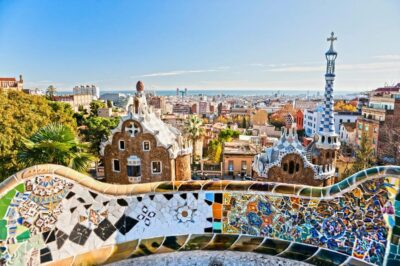
Park Güell and Gaudí House Museum Entry Ticket
Read our review →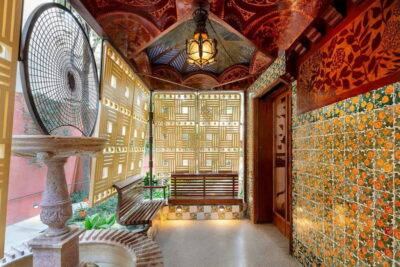
Gaudi’s Casa Vicens Skip-the-Line Entrance Ticket
Read our review →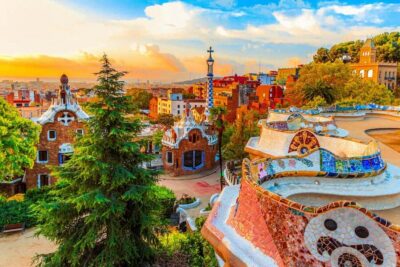
Gaudí’s Park Güell Tour with Fast-Track Ticket
Read our review →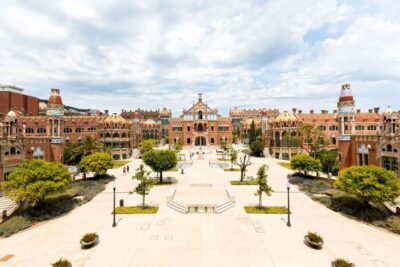
Sagrada Familia, Modernism, and Old Town Tour
Read our review →
Sagrada Familia & Gaudi Tour Private or Small Group with Tickets
Read our review →
Complete Gaudi Tour: Casa Batllo, Park Guell & Sagrada Familia
Read our review →
Park Güell: Guided Tour with Optional Gaudí Experience Entry
Read our review →Browse the lists this tour appears in