
Review · GAUDí TOURS
Barcelona: Art Nouveau & Gaudí Tour
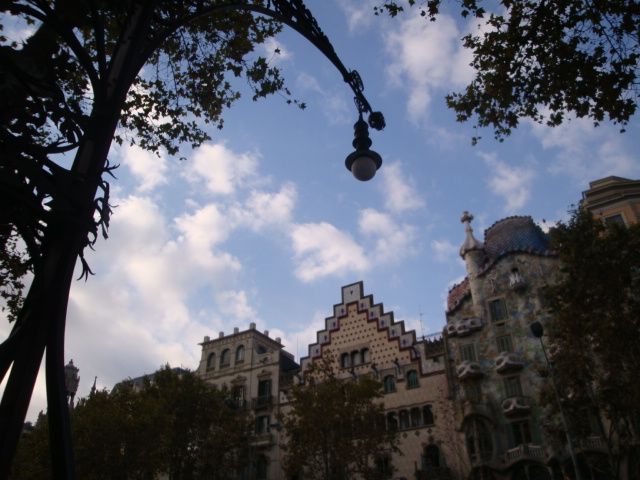
Barcelona’s most revealing architecture is often found above street level, around corners, and in the details of ordinary-looking apartment blocks. This private walk through Eixample and the Golden Square connects Gaudí’s playful forms with the politics, money, and social change that shaped the district.
I like the way the tour ties architecture to Barcelona’s past, from the 1714 war and the old city walls to Ildefons Cerdà’s planned expansion. I also like the relaxed pace, the included subway ticket, and the chance to study façades by Gaudí, Domènech i Montaner, and Puig i Cadafalch without being hurried.
The main consideration is that this is chiefly an exterior architecture walk. Entry fees are not included, and most interiors are not visited, so choose this tour for context and close-up street views rather than a museum-style tour.
Key points at a glance
- Private format for up to four people: The $212 group price works out to $53 per person for four, making the value much better for a small family or group than for a solo visitor.
- A story that begins in 1714: You learn why Barcelona’s old walls mattered, why the city felt confined, and what changed when the walls came down.
- Gaudí is part of a bigger movement: The tour places him alongside Domènech i Montaner and Puig i Cadafalch within Catalan Modernism.
- Passeig de Gracia is treated as an open-air gallery: Look for trencadís tilework, the Block of Discord, Casa Milà, and the architectural one-upmanship of wealthy families.
- A relaxed 3.5-hour walk: There is time for photographs and bathroom breaks, with no need to race from one stop to the next.
- English and German guiding: The guide is identified as Johannes, also referred to as Hannes in the tour material, and the activity is available in both languages.
Why Eixample tells Barcelona’s bigger story
Start at Plaza de Urquinaona, in front of Theater Borrás. From here, the tour moves into Eixample, whose name simply means expansion. That plain translation hides a dramatic change in the city.
For around two centuries, Barcelona’s residents lived within crowded medieval walls. The old city held wealthy families, workers, and the poorest residents close together, while the central government in Madrid limited local control. Once the walls were torn down in 1854, the open land between the old city and the small town of Gracia offered a chance to build something new.
I find this background essential. Without it, Eixample can look like a pleasant grid of wide streets and handsome apartment buildings. With it, the district becomes a statement about freedom, order, wealth, and civic ambition.
The tour also introduces Ildefons Cerdà’s vision of the ideal city. His plan used a regular grid, broad streets, and distinctive chamfered corners. Those leveled corners are the unusual building edges you may already have noticed while walking around Barcelona.
The plan was meant to improve movement, air, and daily life. In practice, wealthy industrialists and returning Catalans who had made fortunes in South America used the new district to build grand urban homes. You see the tension between public planning and private display in almost every block.
More Gaudi Tours in Barcelona:
- Barcelona: Park Güell and Gaudí House Museum Entry Ticket
★ 4.5 · 6,326 reviews - Barcelona: Gaudí’s Park Güell Tour with Fast-Track Ticket
★ 4.8 · 4,512 reviews - Sagrada Familia & Gaudi Tour Private or Small Group with Tickets
★ 4.5 · 1,188 reviews
Catalan Modernism beyond Gaudí
The word Art Nouveau is useful, but it can also narrow your view. Catalan Modernism was not only a decorative building style. It was a cultural movement that reached into literature, visual art, music, and ideas about Catalan identity.
The tour places this movement beside German Art Nouveau, the Viennese Secession, and the English Modern Style. That comparison helps you recognize the shared interest in natural shapes, new materials, craftsmanship, and modern life, while still seeing what made Barcelona’s version distinct.
Gaudí receives plenty of attention, as you would expect, but he is not treated as an isolated genius. Domènech i Montaner and Puig i Cadafalch are important parts of the story. Their buildings show how Modernist architects competed, borrowed, and pushed decoration in different directions.
Domènech i Montaner’s Palau de la Música Catalana is a useful example of the movement’s cultural reach. Its design pays homage to Catalan folk songs, not only through musical purpose but through stone, sculpture, color, and allegory. You should not expect a full interior visit here, but the building helps explain why Modernism was about more than pretty façades.
That wider view is one of the tour’s strongest features. If you know only Gaudí’s name, you leave with a better sense of the people and ideas around him.
Passeig de Gracia and the Golden Square
The walk continues through the part of Eixample often called the Golden Square. This was the favored address of industrialists, aristocrats, and newly wealthy families. Their houses were personal calling cards, and architects were asked to make them memorable.
Passeig de Gracia is the clearest place to see this competition. The street brings together ornate balconies, carved stone, ceramic decoration, stained glass, and unusual rooflines. You are not simply ticking off famous buildings. You are looking at how one rich family tried to outdo the next.
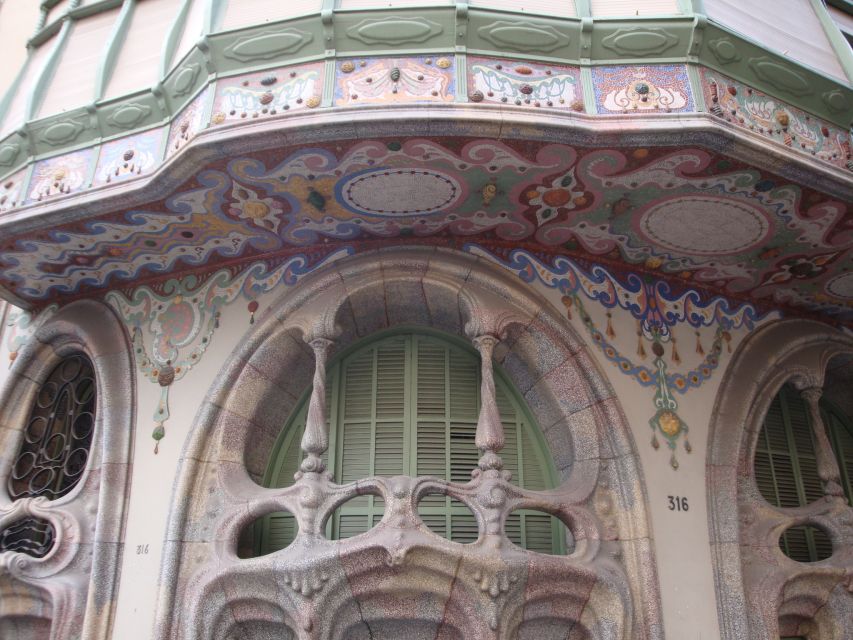
One detail to watch for is trencadís, the broken-tile mosaic technique associated with Modernist decoration. Shards of ceramic create irregular surfaces that catch sunlight and give walls, benches, and architectural details a handmade quality. The tour’s reference to shards bringing luck captures the playful side of the movement.
The Block of Discord, or Illa de la Discòrdia, is a particularly good lesson in architectural rivalry. Several notable buildings sit close together, each with its own personality. The effect is less a neat architectural ensemble than a friendly argument in stone, ceramic, and glass.
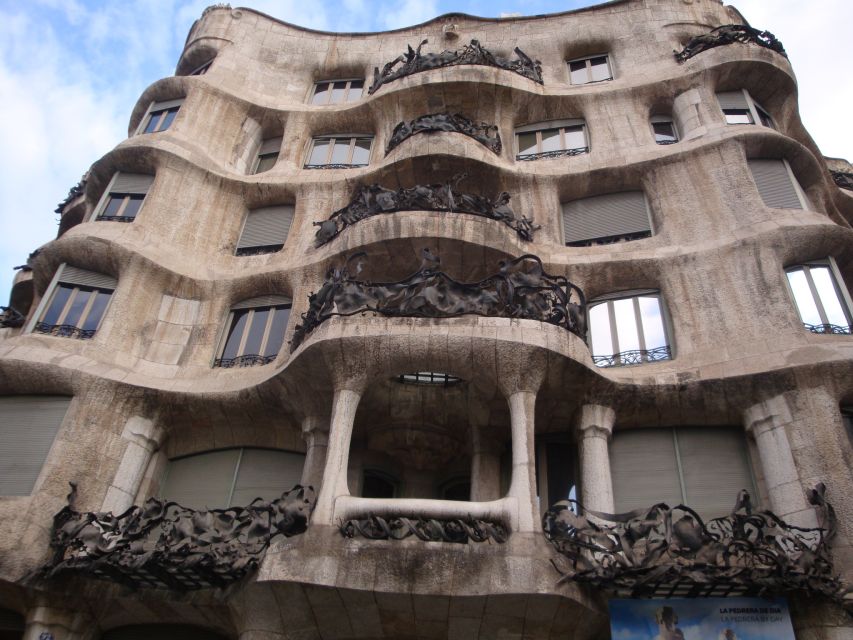
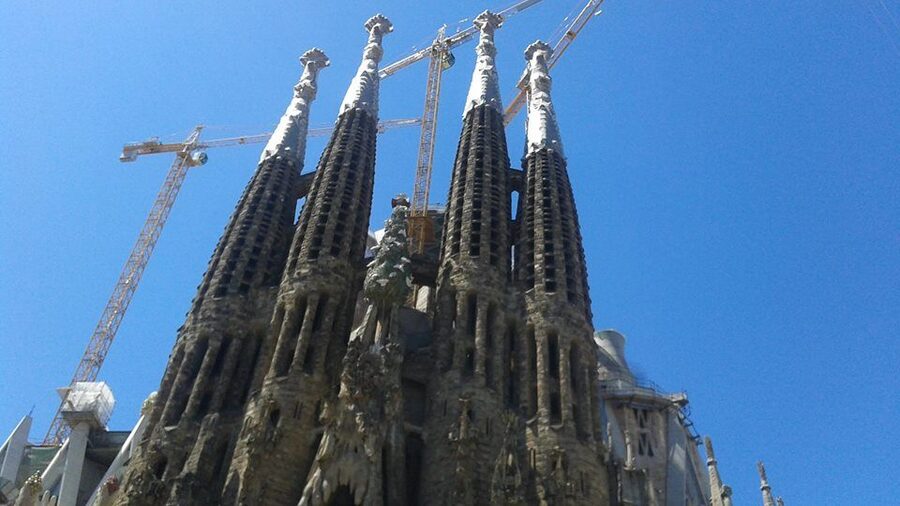
The route also points to Casa Milà, often called La Pedrera, the famous stone quarry. Its rippling façade rejects the straight lines of ordinary apartment construction. Even from outside, you can see why it became one of Barcelona’s defining Modernist works.
You should keep your eyes moving upward. The best details may be around windows, balconies, entranceways, roof edges, and courtyards glimpsed from the street. A guide adds value here because it is easy to walk past a small sculpted face or symbolic shape without understanding why it matters.
Gaudí’s stranger, more playful side
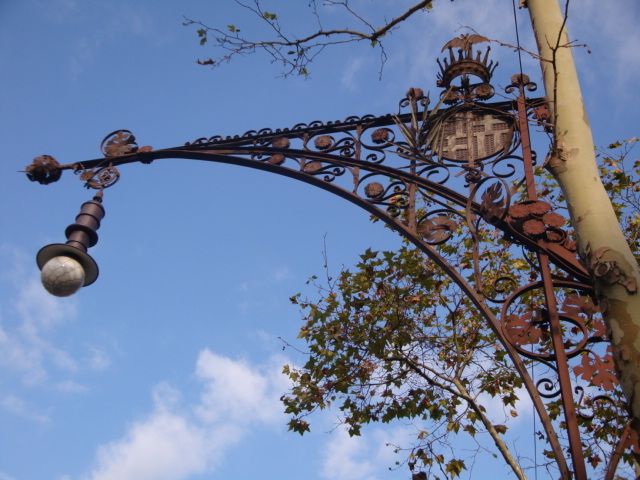
Gaudí’s work can seem familiar from postcards, yet the street-level details reward slow looking. The tour explores his changing ideas through references to dragons, carnival-like decoration, stars on ceilings, and his famous string model.
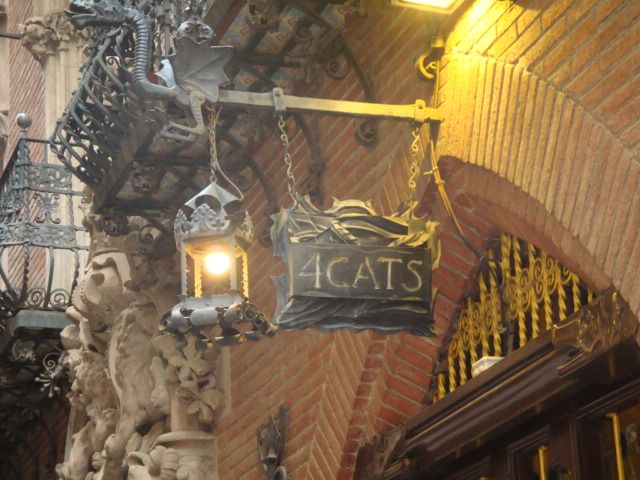
The dragon image matters because it links architecture to Catalan legend and symbolism. Gaudí often made buildings feel alive, as if roofs, chimneys, balconies, and walls were shifting forms rather than fixed parts of a structure.
The string model is another memorable subject. Gaudí used gravity and hanging strings to study forms for buildings, turning a simple physical experiment into a way of thinking about arches and structure. This is the kind of explanation that can make a complicated building easier to read from the pavement.
You also hear about Gaudí’s relationship to New York, the lost plans for Sagrada Familia, and the question of how much of a completed building reflects the architect’s original intention. These subjects add some mystery, but the practical point is clear: Sagrada Familia is not just a finished monument attributed to one man. It is also a long, changing project shaped by missing plans, later builders, and evolving interpretation.
The route includes Sagrada Familia in its wider story, but do not book this walk expecting a basilica admission. Interior visits and entry fees are not part of the standard program. If you want to go inside, arrange a separate ticket and allow extra time.
More Art Nouveau Tours in Barcelona:
- Walking Tour of Riga’s Beautiful Art Nouveau Architecture
★ 4.8 · 20 reviews - Private Art Nouveau and Art Deco tour near Opera
★ 5.0 · 15 reviews - Riga’s Architecture: A self-guided audio tour of the city’s art nouveau history
★ 5.0 · 3 reviews - Mexico City origins and architecture: Art Nouveau, Deco,Eclectic
★ 3.0 · 2 reviews
The social story behind the grand façades
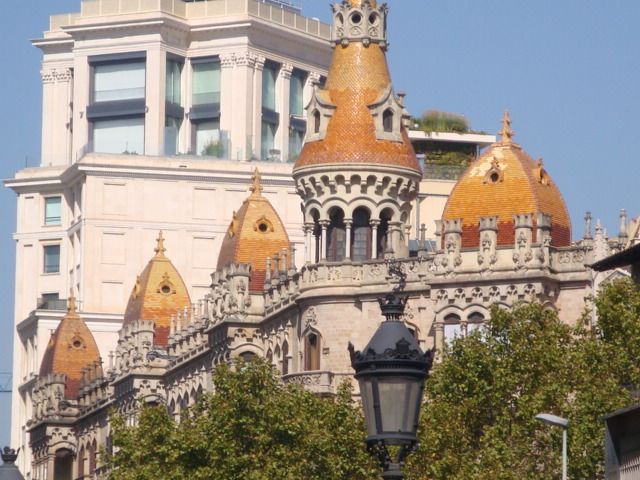
The wealthy homes of Eixample were built during a period of sharp social contrast. Industrial fortunes funded extraordinary architecture, while much of Barcelona still faced poor working and living conditions.
The tour brings in the industrial barons, the bourgeoisie, the Raval, and the city’s festival culture. This keeps the architecture from becoming a parade of wealthy houses without consequences. Grand façades were beautiful, but they also displayed who had money and who did not.
The history reaches back to the War of the Spanish Succession and the repercussions of 1714. The tour frames Barcelona’s later cultural revival as a response to political pressure and lost autonomy. The Catalan Renaissance, often called the Renaixença, helped revive interest in Catalan language, culture, and identity.
Barcelona’s major public events also enter the story, including the city’s efforts to clean itself up and present a modern face during the Barcelona World’s Fair. These episodes show a city repeatedly using architecture and public space to announce what it wanted to become.
The result is a better way to read the city. You are not only asking whether a building is attractive. You are asking who paid for it, what identity it expressed, and what sort of Barcelona its creators imagined.
A guide who makes connections matter
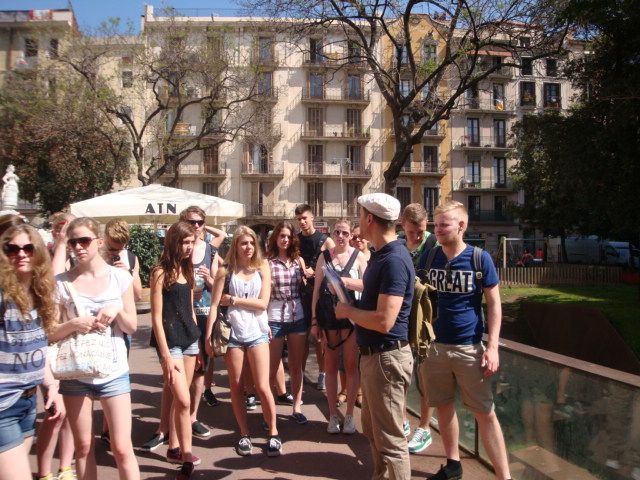
A walking tour rises or falls with its guide. Here, the guide is presented as Johannes, with one reference also using Hannes. He is described as linking local events, political changes, people, and building styles without relying on notes.
That matters during a subject this broad. The tour covers 1714, the city walls, Cerdà, Catalan Modernism, Gaudí, Sagrada Familia, Dali, Chupa-Chups, the Block of Discord, and the Week of Tragedy. Without a clear storyteller, that list could feel scattered.
The strongest praise centers on Johannes’s storytelling, historical command, and ability to explain architecture as part of a larger chain of events. The comments also point to a friendly, unpretentious manner. You can expect a guide who aims to keep the walk moving through stories rather than a dry lecture.
The activity is offered in English or German. If you want the German version, confirm the language and guide details when booking, particularly because the name appears in both Johannes and Hannes forms.
What the 3.5-hour pace feels like
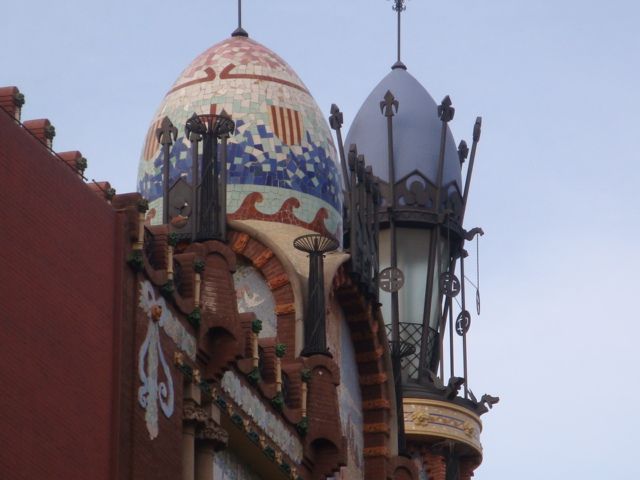
Three and a half hours is long enough to build a proper story but short enough to fit into a busy Barcelona visit. This is described as a relaxed walk, not a race between landmarks. You have time for photographs, and a bathroom stop is acceptable.
That slower pace suits Eixample. The district rewards looking up, comparing façades, and noticing small design choices. A rushed route would turn it into a checklist.
The walk runs in sun, rain, wind, and strong showers. In summer, bring a hat, sunglasses, sunscreen, and water. In winter, a jacket or light coat should be enough according to the practical guidance provided.
The tour is wheelchair accessible, though the activity remains a walking route through streets and squares. The included subway ticket helps with movement during the city tour, but the main experience is on foot.
Is $212 good value for your group?
The price is $212 per private group of up to four people. For four, that comes to $53 each. For two, it is $106 each, and for one person the full group rate is a much heavier expense.
This is why group size matters. A family or small party that wants a private English or German guide gets a better deal than a solo visitor. You are paying for a private format, a dedicated guide, a three-and-a-half-hour route, and the subway ticket, not for admission to major monuments.
I consider the price reasonable for four people who care about architecture and want a guide to connect the pieces. It is less attractive if you mainly want to enter Gaudí buildings, since admission costs are separate and interiors are generally outside the program.
The tour can also save you planning time. Eixample is easy to walk through but harder to interpret well on your own. A good explanation of the Golden Square, Cerdà’s plan, and the political setting gives the buildings more meaning than a list of names from a guidebook.
Who should book this Barcelona walk?
I would choose this tour if you enjoy architecture, city planning, political history, or stories about how wealthy families shaped urban space. It also suits first-time visitors who want a strong introduction to Eixample before returning to selected buildings on their own.
It works well for a small family or group that prefers a private pace. The guide can pause for pictures, and the route does not demand a forced march.
You may want something else if your main goal is interior access. This tour is not a substitute for visiting Sagrada Familia, Casa Batlló, La Pedrera, or Palau de la Música Catalana inside. It gives you context and exterior views, then leaves you to arrange admissions separately.
I would also think twice if you dislike long historical explanations. The route covers political conflict, cultural revival, social inequality, and architectural technique. That is its strength, but it may feel like too much background if you only want quick photo stops.
Should you book the Art Nouveau and Gaudí Tour?
Book it if you want Barcelona’s Modernist buildings explained as part of the city’s political and social story. The private format is especially appealing for up to four people, and the guide’s reported strength is the ability to connect architecture with people, events, and local identity.
Skip it if you need a ticketed interior tour or want a shorter landmark crawl. For everyone else, this is a thoughtful way to read Eixample: start with the demolished walls, follow the money and the movement, then watch Gaudí and his peers turn a new district into one of Europe’s most memorable city quarters.
FAQ
How long does the Barcelona Art Nouveau and Gaudí Tour last?
The tour lasts 3.5 hours.
Where does the tour meet?
The meeting point is Plaza de Urquinaona, in front of Theater Borrás.
Is the tour available in English?
Yes. The tour is offered in English and German.
Is this a private tour?
Yes. It is a private group activity for up to four people.
Are entry fees included?
No. Entry fees are not included. The tour mainly views monuments from the outside, with museum visits and interior exploration generally excluded.
What happens if it rains?
The tour operates in sun, rain, wind, and strong showers. In summer, bring sun protection and water. In winter, a jacket or thin coat should be sufficient.
Newly added in Barcelona
- Barcelona Private Walking Tour through the City of Gaudi★ 4.5 · 20 reviews
- Offer: Be Gaudí mosaic class Barcelona for families (max 4 pax)★ 5.0 · 20 reviews
- Private Montserrat, Gaudi and Modernism Day Trip from Barcelona★ 4.5 · 20 reviews
- Barcelona: The Genuis of Gaudi & Modernist Architects Tour★ 5.0 · 20 reviews
- Barcelona: Wonders of Gaudi Bike Tour★ 5.0 · 22 reviews
- Barcelona: Gaudí Segway Tour★ 4.6 · 21 reviews
- Gaudi Guided Tour: Casa Batllo, La Pedrera & Casa Vicens★ 3.5 · 24 reviews
- Gaudi and La Sagrada Familia Exterior Self-Guided Audio Tour★ 3.5 · 25 reviews
Gaudí Tours, compared.
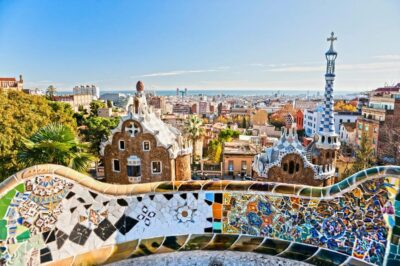
Park Güell and Gaudí House Museum Entry Ticket
Read our review →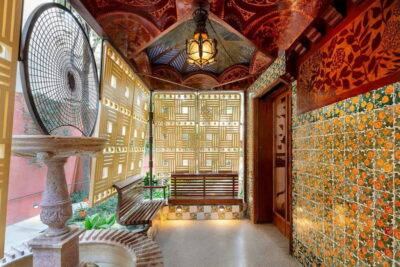
Gaudi’s Casa Vicens Skip-the-Line Entrance Ticket
Read our review →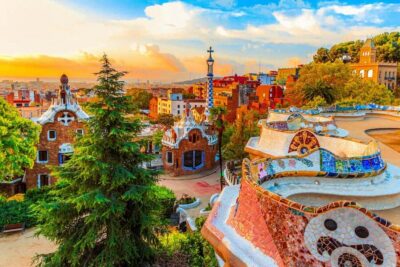
Gaudí’s Park Güell Tour with Fast-Track Ticket
Read our review →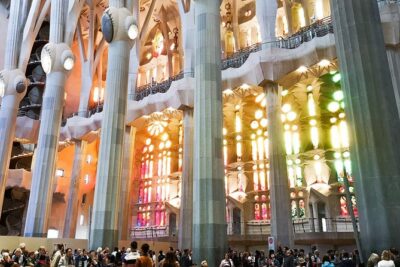
Sagrada Familia & Gaudi Tour Private or Small Group with Tickets
Read our review →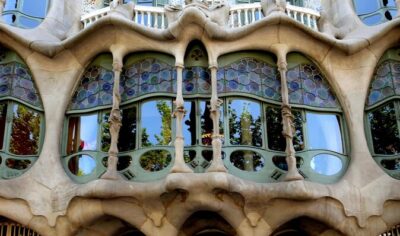
Complete Gaudi Tour: Casa Batllo, Park Guell & Sagrada Familia
Read our review →
Park Güell: Guided Tour with Optional Gaudí Experience Entry
Read our review →
Barcelona e-Bike Tour: Gaudí & Old Town Small Group
Read our review →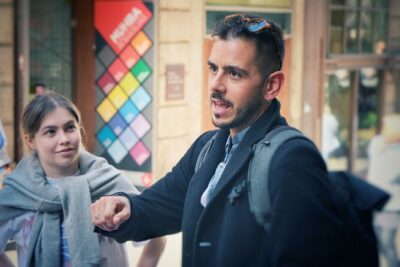
Ramblas, Old Town, Gothic and Gaudi Architecture Walking Tour
Read our review →Browse the lists this tour appears in