
Review · ART DECO TOURS
Mexico City origins and architecture: Art Nouveau, Deco,Eclectic
Mexico City’s story comes in layers here: an Aztec capital beneath the modern center, Diego Rivera murals inside a government palace, monumental avenues, and Roma’s early 20th-century houses. The most unusual part is the three-hour Roma walk, where Art Nouveau, Art Deco, Eclectic, modern, and Neo-Romanesque designs are compared side by side.
I like the efficient mix of major sights and local architecture, especially the link between history and design. I also like that the tour is private for your group, with transport included and pickup available from Mexico City International Airport.
The main caution is time. Six to eight hours is a long outing, and the museums charge separate admission. Communication also deserves care: one earlier booking was canceled after a missed WhatsApp reply, so confirm the meeting time and messaging arrangements clearly before the day of the tour.
Key points to know before booking
- Aztec Mexico and modern Mexico meet: Templo Mayor and the Anthropology Museum give you two different views of the city’s Indigenous past.
- Rivera murals are a major highlight: Palacio Nacional offers about 45 minutes with Diego Rivera’s large historical paintings.
- Roma gets the most detailed treatment: The walk covers Romita, several plazas, Sagrada Familia, and examples of three architectural styles.
- You pay per group, not per person: The $98.33 rate covers up to 10 people, making the value strongest for a full small group.
- Museum tickets are extra: Admission to Templo Mayor, Palacio Nacional, and the Anthropology Museum is not included.
- Plan for a full day: The listed visits total roughly seven hours before traffic, lunch, and ticket lines are added.
A city tour built around contrasts
This experience works because it does not treat Mexico City as one single story. You move from the remains of Mexico Tenochtitlan to colonial government halls, then to national museums, a grand boulevard, and the residential streets of Roma.
That range gives you useful context. The first stops explain where the city began and how its symbols developed. The final walk shows how Mexico City tried to present itself as a modern capital through grand houses, public squares, churches, decoration, and imported architectural ideas.
You travel by private transportation between the principal stops, then spend three hours on foot in Roma. The arrangement is practical for a private group of up to 10, though you should expect a full schedule. The total time is advertised as six to eight hours, and the planned stops alone add up to about seven hours.
The guide is identified as Daniel Mendívil Olvera. The experience is offered in English, and the available feedback suggests that a friendly, question-friendly guiding style is one of its strengths. That matters here because the architecture walk depends on explanation, not just pointing at façades.
More Art Deco Tours in the world:
- Art Deco and Architecture Midtown Landmarks Tour
★ 5.0 · 142 reviews - Chicago Architecture Walking Tour: Incredible Art Deco Interiors
★ 5.0 · 85 reviews - Tulsa Art Deco and Architecture with Expert Guide Walking Tour
★ 5.0 · 77 reviews
Templo Mayor: Mexico City before the Spanish conquest
Your first stop is Museo del Templo Mayor, built around the ruins of the main Aztec city, Mexico Tenochtitlan. This is an important opening because Mexico City’s present-day center sits over the earlier capital.
You can expect about one hour at the site. The visit is not simply a look at old stone walls. It gives you a physical sense of how the Aztec city occupied this part of the basin before Spanish construction changed the center forever.
The museum admission is not included, so allow for that extra cost. The one-hour visit is also fairly short for a major archaeological site. If you enjoy ancient history, you may want to ask Daniel how much of the visit will be spent outdoors among the ruins and how much inside the museum, since the supplied details do not specify that balance.
As a first stop, though, it gives the rest of the day a strong foundation. The later government buildings and museums make more sense after you have seen the remains of the city beneath modern Mexico City.
Palacio Nacional and Diego Rivera’s walls
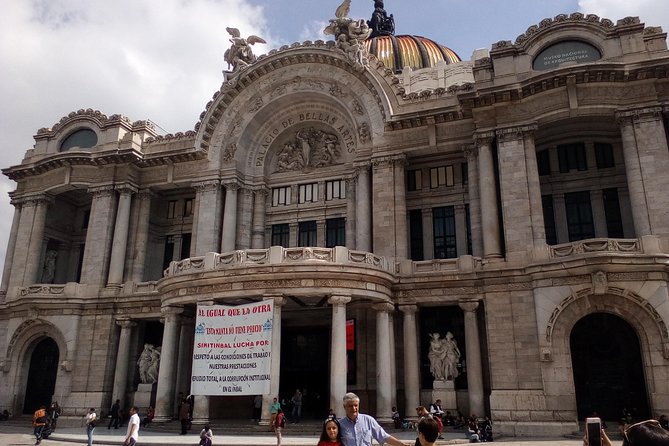
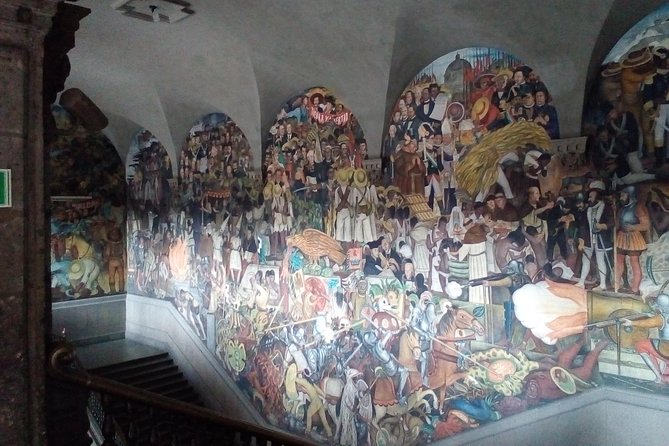
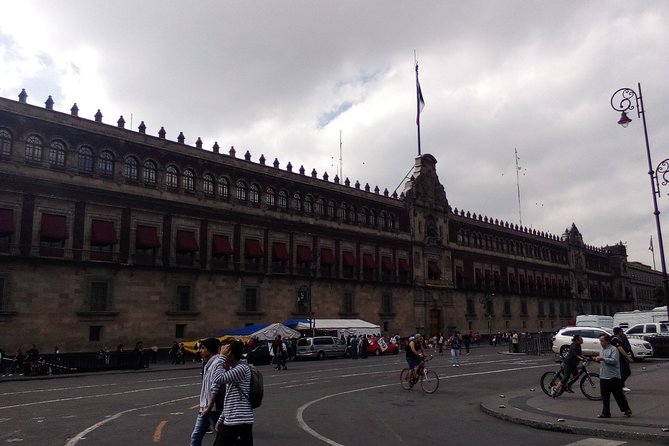
The tour continues to Palacio Nacional, where Diego Rivera’s mural paintings cover practically all the walls of the building’s second story. You have about 45 minutes here.
That is enough time to focus on Rivera’s mural program, but it is not a leisurely visit to every part of the palace. The point is the painting itself and the way Rivera uses a government building to present Mexican history through large public images.
This stop adds a different kind of evidence to the tour. Templo Mayor gives you archaeological remains. Palacio Nacional gives you a 20th-century artistic interpretation of national identity. Together, they show how Mexico City presents its past through both excavation and public art.
Admission is extra. I would confirm the day’s access arrangements before setting out, since a palace visit can depend on opening conditions, security, or visitor flow. The tour description promises the mural area, not unlimited time throughout the building.
Two hours at the National Museum of Anthropology
The Museo Nacional de Antropología receives the longest museum visit, at two hours. Archaeological pieces found during years of excavation in Mexico City’s center are among the subjects connected to this stop.
Two hours gives you room to make a focused visit rather than rushing through every gallery. You will likely get the most from it if you treat the stop as a continuation of Templo Mayor. The ruins show the city in place; the museum places objects and archaeological findings into a wider cultural setting.
The museum is large, and two hours will not cover everything in detail. That is not a flaw in the tour so much as a scheduling reality. If you want a museum day, this experience is too broad. If you want a well-chosen introduction to Mexico City’s archaeology before moving on to architecture, the timing is more useful.
Admission is not included. Ask Daniel which sections receive priority, especially if your group has a particular interest in Mexico City excavations rather than the museum’s full national collection.
More Art Nouveau Tours in the world:
- Walking Tour of Riga’s Beautiful Art Nouveau Architecture
★ 4.8 · 20 reviews - Riga’s Architecture: A self-guided audio tour of the city’s art nouveau history
★ 5.0 · 3 reviews - Barcelona: Art Nouveau & Gaudí Tour
★ 5.0 · 39 reviews - Private Art Nouveau and Art Deco tour near Opera
★ 5.0 · 15 reviews
Paseo de la Reforma in half an hour
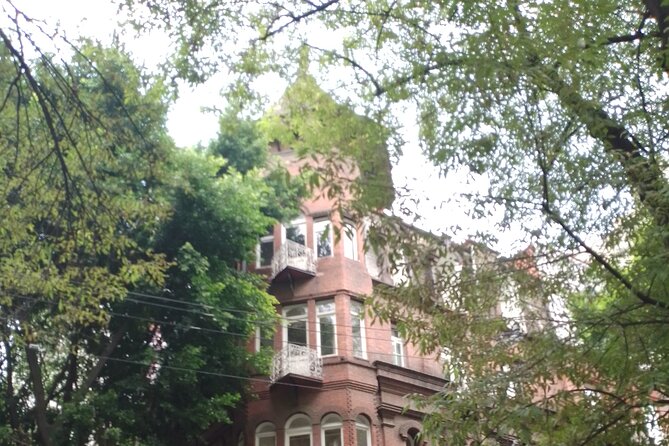
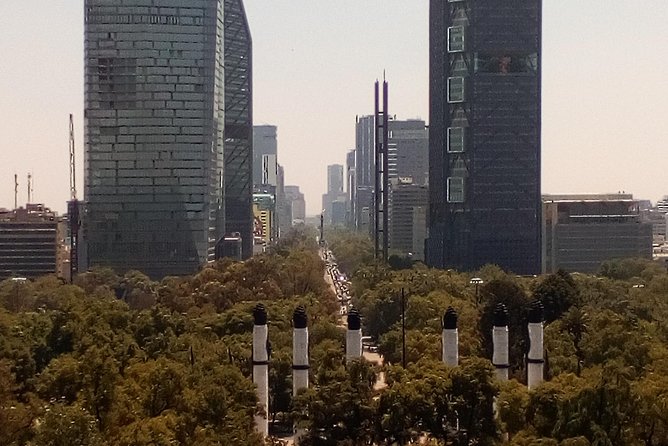
Paseo de la Reforma is a short 30-minute stop, with no admission charge. The route includes the Independence Column, government buildings, Chapultepec Park, and other monuments.
This is a city-viewing pause rather than a long museum visit. You will see the broad civic scale of Mexico City, where monuments and government architecture create a formal public corridor.
The short timing means you should not expect a detailed walk of every monument. It is best understood as a chance to orient yourself to the city’s grand avenue and connect the museum portion of the day with the Roma neighborhood that follows.
Because the tour uses private transportation, this stop also breaks up the indoor visits. Traffic can affect any Mexico City schedule, so the half-hour should be treated as an approximate window rather than a guarantee of extensive sightseeing.
Roma’s architecture: the heart of the experience
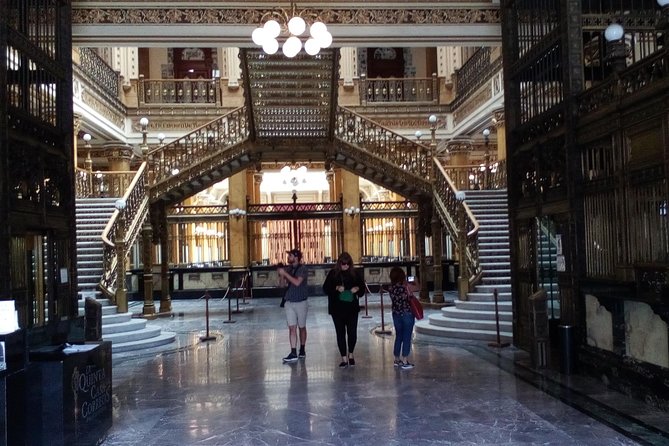
The three-hour Roma walk is the most distinctive part of the day. It begins at Romita Town church, then circles through the neighborhood, comparing original buildings with newer designs.
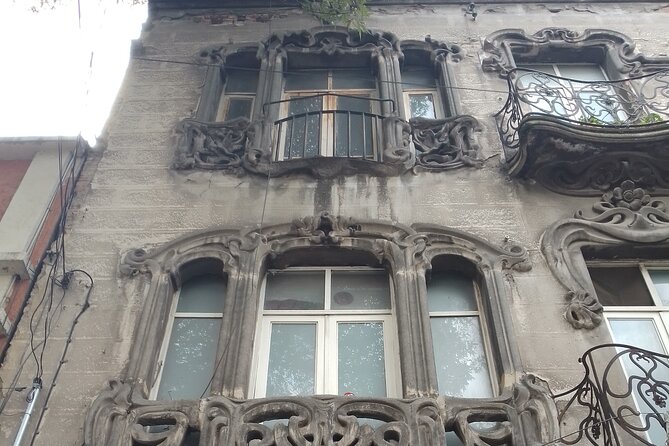
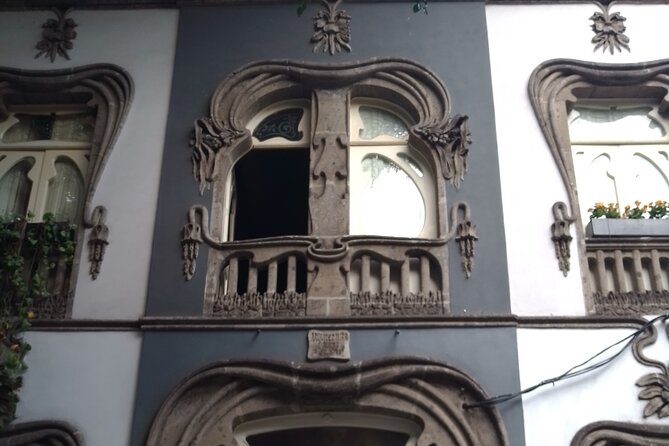
The focus is on Art Nouveau, Art Deco, and Eclectic architecture. You are not just being shown attractive streets. The guide is expected to explain the features that separate these styles, along with their ornamental details and the way the neighborhood changed over time.
That makes this walk a good choice if you like buildings, city planning, decorative work, or the social stories attached to urban districts. The route includes Ajusco, Roma, and Cibeles squares, giving the walk several public spaces rather than one straight stretch of façades.
The experience also brings in people connected with Roma, including Clement Jacques, Aldon Conti, Antonio Caso, high-ranking politicians, and artists such as Leonora Carrington and Alfaro Siqueiros. These names are part of the neighborhood’s cultural and political story, though the supplied details do not say how much time is devoted to each person.
You also visit Sagrada Familia, a Neo-Romanesque cathedral. The discussion includes the religious and political conflict between the state and the church. That gives the architecture a social setting. A church façade is not only a style exercise here; it also points to a period when religious authority and the government were in conflict.
The walk is described as a short trip through a city that hoped to make its dream of progress real. That idea helps connect the styles. Art Nouveau, Eclectic, and Art Deco are not presented as isolated labels. They reflect changing ambitions, tastes, and ideas about what a modern Mexico City should look like.
Because this section lasts three hours, wear comfortable shoes and keep some energy for walking. No admission fee is listed for the Roma portion, but the experience still requires stamina. You should also be ready for a neighborhood walk rather than a sequence of formal indoor attractions.
What the private format adds
This is a private activity, and only your group participates. That changes the feel of a tour in practical ways. You can ask questions without waiting for a large group to catch up, and the guide can focus on your interests within the time available.
The English-language format is useful for visitors who want architectural terms and historical connections explained as they go. One positive account of the experience describes the guide as friendly and willing to help with questions. That matches the needs of this route, especially in Roma, where the value rests on interpretation.
Private transportation is included, and pickup from Mexico City International Airport is available. Airport pickup can be useful if you have a long layover or want to begin sightseeing right after arriving. Still, confirm the exact pickup time and location in advance. A previous communication problem involved a change to an earlier start and a missed WhatsApp response, followed by a cancellation the night before.
That does not make the tour unusable, but it is a clear reason to keep messages simple and reply promptly. Ask for the final meeting details in writing, particularly if you are arranging airport pickup or changing the start time.
Is $98.33 good value for your group?
The price is $98.33 per group of up to 10 people. For one person, that is not a low-cost museum day once admissions, lunch, and parking are added. For a full group, however, the per-person cost becomes much more attractive.
The price includes private transportation, but not museum or site admission. Lunch is also separate, as is parking. Since three principal stops require paid admission, budget beyond the headline price.
The value comes from the range of the day. You are not paying for one entrance ticket and a short explanation. You are arranging transport, an English-language guide, archaeology, murals, monuments, and a substantial neighborhood walk in one private outing.
The tradeoff is depth. You will see several important places, but you will not have unlimited time at any one of them. The Anthropology Museum gets two hours, Templo Mayor one hour, and Palacio Nacional 45 minutes. That suits you if you want a broad first look at Mexico City. It suits you less if you prefer to spend a whole morning at one museum.
Who should book this experience?
I would recommend it to a small group that wants a first-day orientation with more substance than a basic city drive. Families, friends, and airport stopover visitors may appreciate the private vehicle and the wide mix of sights.
It is also a strong match for anyone who cares about architecture. The Roma walk gives the day a point of view that many standard city tours lack. Instead of treating Roma as a place for a quick coffee stop, it gives the neighborhood three full hours and links its buildings to politics, religion, artists, and urban ambition.
You may want another plan if your main goal is slow museum study. The schedule is packed, admissions are extra, and traffic can reduce the time available at stops. You should also be comfortable with a long day that ends with an extended walk.
The guide’s role matters more here than it would on a simple transfer. Daniel Mendívil Olvera is the named provider, and the strongest available indication about the guiding style is friendly, helpful explanation and attention to questions. Ask specific questions during booking about the walking pace, museum priorities, and the exact balance between the archaeological stops and Roma.
Should you book it?
Book this tour if you want one private day that connects Mexico City’s Aztec foundations, Rivera’s public art, national museums, civic monuments, and Roma’s architectural styles. The Roma section is the deciding factor. If Art Nouveau, Art Deco, Eclectic façades, churches, plazas, and neighborhood stories appeal to you, the long walk gives the experience its character.
Skip it if you want a relaxed museum visit, a low final cost, or a short outing. The price is most convincing for a group sharing the $98.33 rate, and you must add admissions, lunch, and possibly parking.
Before paying, confirm the start time, airport pickup details, WhatsApp contact, and which museum sections will receive attention. With those points settled, this is a thoughtful way to see how Mexico City’s past and modern ambitions occupy the same streets.
FAQ
How long does the tour last?
The experience lasts approximately six to eight hours. The listed visits add up to about seven hours before allowing for traffic, lunch, and admission arrangements.
What language is the tour offered in?
The tour is offered in English.
Is the tour private?
Yes. Only your group participates in the activity.
How many people can join for the listed price?
The price of $98.33 covers one group of up to 10 people.
Is transportation included?
Private transportation is included.
Is pickup available from Mexico City International Airport?
Yes. Pickup from Mexico City International Airport is available.
Are museum admission tickets included?
No. Admission to the museums and sites is not included.
Is lunch included?
No. Lunch is not included.
Which museums are visited?
The tour visits Museo del Templo Mayor, Palacio Nacional de Mexico, and Museo Nacional de Antropología.
What is covered during the Roma neighborhood walk?
The three-hour walk covers Art Nouveau, Art Deco, and Eclectic architecture, along with Romita Town church, Ajusco, Roma and Cibeles squares, Sagrada Familia, and stories connected with people associated with the neighborhood.
Who provides the experience?
The experience provider is Daniel Mendívil Olvera.
Newly added in the world
- Venice Art and Architecture Private Walking Tour★ 4.5 · 11 reviews
- Basilica San Marco and the Pala d’Oro with Architect Guide★ 4.5 · 19 reviews
- Walking tour in Venice with an architect★ 5.0 · 16 reviews
- Private Walking Tour of Old Gdańsk with an architect-guide★ 5.0 · 7 reviews
- Sopot Private City Walking or Bike Tour with a local architect★ 5.0 · 19 reviews
- Lesser Poland Wooden Architecture Trail UNESCO Private Tour from Krakow★ 5.0 · 15 reviews
- Lisbon Contemporary Architecture★ 5.0 · 3 reviews
- Private Munich Tour for History Buffs with Architectural Gems and WWII sites★ 5.0 · 3 reviews
Art Deco Tours, compared.
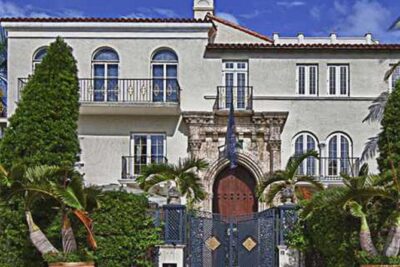
The Official Art Deco Walking Tour by The Miami Design Preservation League
Read our review →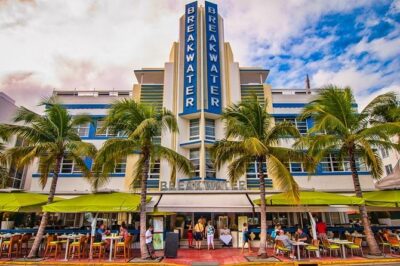

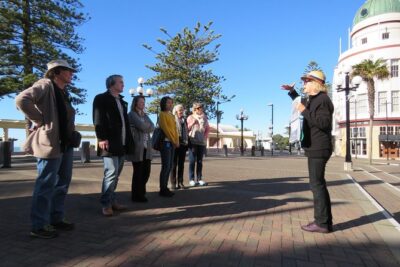
Guided 10am Morning Art Deco Walk From Napier Art Deco Trust
Read our review →
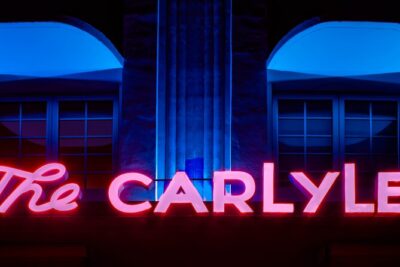
Award-winning Art Deco & Neon Lights Walking Tour in Miami Beach
Read our review →
Art Deco and Architecture Midtown Landmarks Tour
Read our review →Browse the lists this tour appears in