
Review · WALKING TOURS
Barcelona Walking Tour: Modernisme & Iconic Architecture
Barcelona’s Modernisme is best understood on foot, one ornate doorway and twisting balcony at a time. This two-hour walk through Eixample links Gaudí’s famous façades with the work of his less famous rivals, giving you a clearer picture of the movement that reshaped the city.
I like the low price, just $17, and the fact that the tour still runs with one participant. I also like the route through the Quadrat d’Or, where Casa Batlló and La Pedrera share the stage with buildings many visitors walk past without noticing.
The main limitation is simple: this is an exterior architecture tour. Entrance tickets to Casa Batlló and Casa Milà are not included, so you will need a separate visit if you want to see their interiors.
Key points to know before you book
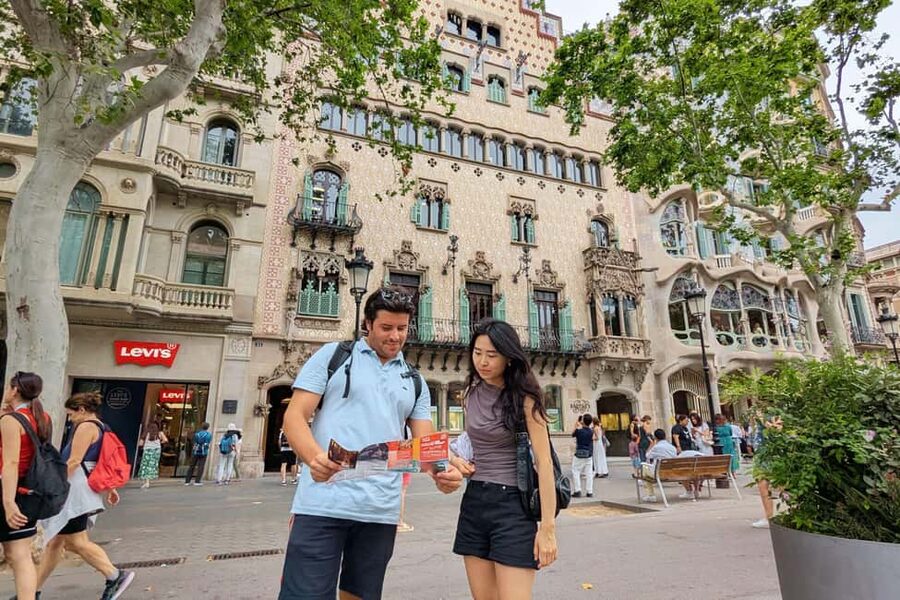
- Casa Batlló and La Pedrera are viewed from outside, with no admission included.
- The route begins underground at Plaça de Catalunya 17, inside the Turisme de Barcelona office.
- The Quadrat d’Or packs many Modernisme façades into a walkable area along and near Passeig de Gràcia.
- Boris and Pierre are named guides associated with the experience, with English, Spanish, and Catalan offered.
- The tour runs even with a single participant, useful for solo visitors and cautious planners.
- Comfortable shoes matter, since the experience lasts two hours and moves between several buildings.
Why Barcelona’s Modernisme makes a good walking tour
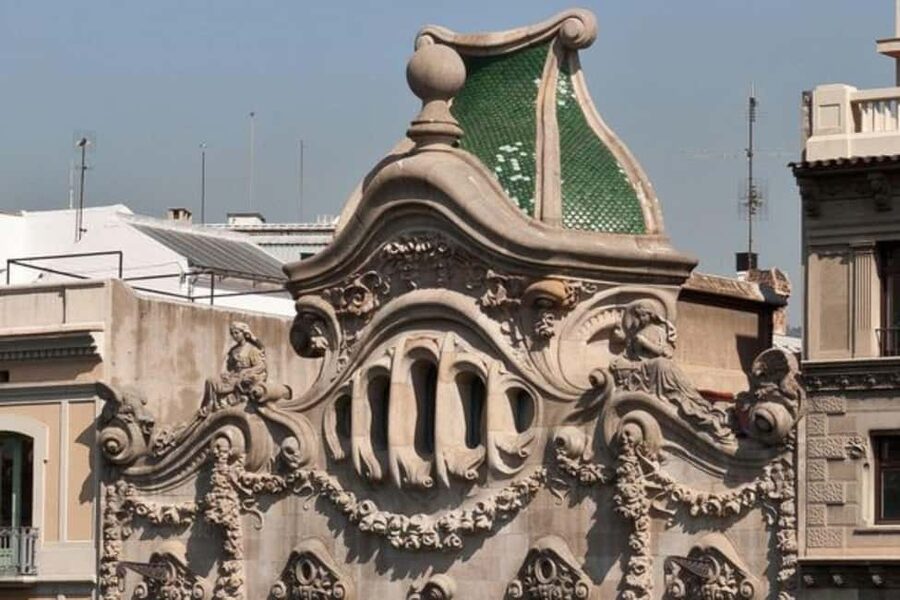
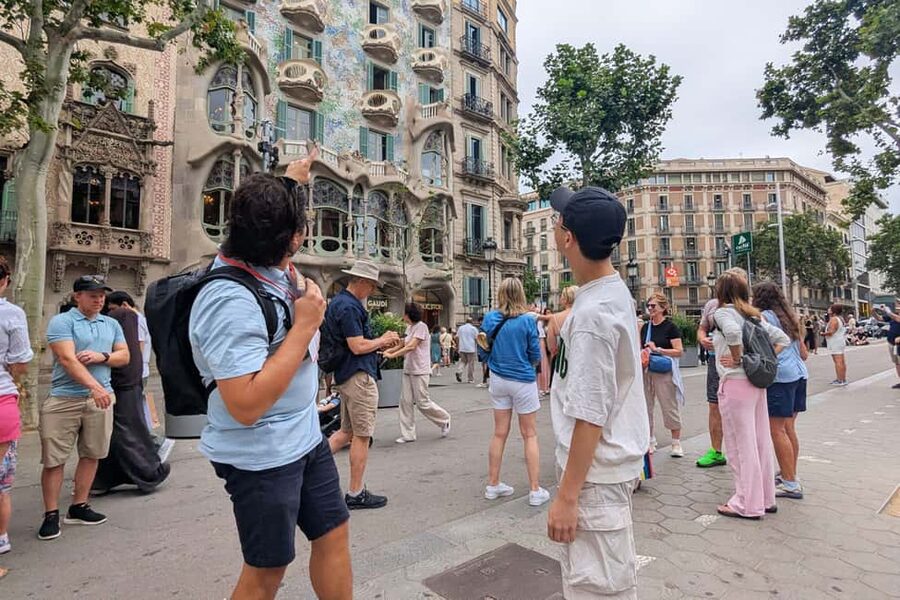
At first glance, Barcelona’s Modernisme can look like a parade of fanciful façades. You see broken-up tiles, stonework that seems to ripple, balconies shaped like masks or bones, and windows that refuse to line up in a tidy row.
A guide helps you connect those details to the people and ideas behind them. This was not just Antoni Gaudí showing off. Architects across Barcelona were experimenting with new forms, local craft traditions, bold decoration, and modern construction at the same time.
That wider view is one of the best reasons to book this walk. You will see Gaudí, but you will also hear about the architects and wealthy families who helped turn the Eixample into a display of status and imagination.
The tour also places Modernisme in its political and economic setting. A guide such as Boris may explain how the city’s growth, industrial wealth, and changing political climate shaped its architecture. That context helps you see these buildings as products of a particular Barcelona, not just unusual photo backgrounds.
More Walking Tours in Barcelona
- Ramblas, Old Town, Gothic and Gaudi Architecture Walking Tour
★ 5.0 · 723 reviews - Barcelona 1.5h Private Old Town, Gothic & Ramblas Walking Tour
★ 5.0 · 318 reviews - Barcelona: Ramblas, Old Town & Gaudí Houses Walking Tour
★ 4.9 · 239 reviews
Starting beneath Plaça de Catalunya
Your meeting point is the Turisme de Barcelona Tourist Information Office at Plaça de Catalunya 17. The office is on the underground level, inside the basement.
Look for the large red Tourist Information totem in the square. The escalators beside it lead down to the office, where the guide waits. Arrive 15 minutes early. Plaça de Catalunya is a major city-center meeting place, and finding the correct entrance is easier before the group is ready to leave.
The start is practical rather than scenic. The real architecture begins once you move toward the Eixample, but Plaça de Catalunya gives you a clear central reference point and a convenient place to begin a day of sightseeing.
The guide may lead the tour in English, Spanish, or Catalan. Boris and Pierre are among the guides connected with this experience. The supplied guide feedback points to Boris’s ability to explain the political and economic forces behind the buildings, while Pierre is associated with energetic explanations and useful suggestions for the rest of a Barcelona visit.
Casa Comalat and the first lesson in detail
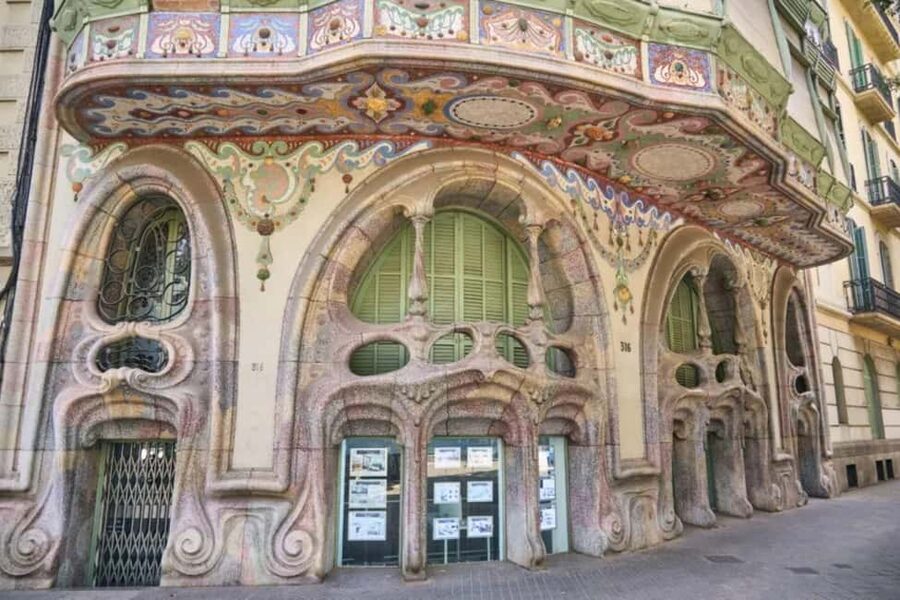
Casa Comalat is one of the early stops, reached after about a 15-minute walk. It is a useful choice because it shifts your attention away from the two most famous Gaudí buildings.
The point here is not simply to photograph another decorated façade. You begin to notice how Modernisme uses balconies, windows, sculpture, color, and irregular shapes to make an entire building feel alive. Casa Comalat gives the guide a chance to explain the movement’s variety rather than presenting every building as a variation on Gaudí.
You should expect exterior viewing from the street. This is an urban walk, not a series of interior visits, so listen closely for the details the guide points out. Some features are easy to miss when you are looking at the whole façade at once.
The 15-minute walking intervals also shape the pace. You are not standing in one place for the full two hours. Instead, the route mixes short walks with stops for explanation, which makes the experience manageable for most people who can comfortably walk through central Barcelona.
Casa Lleó Morera and the rivalry of the Quadrat d’Or
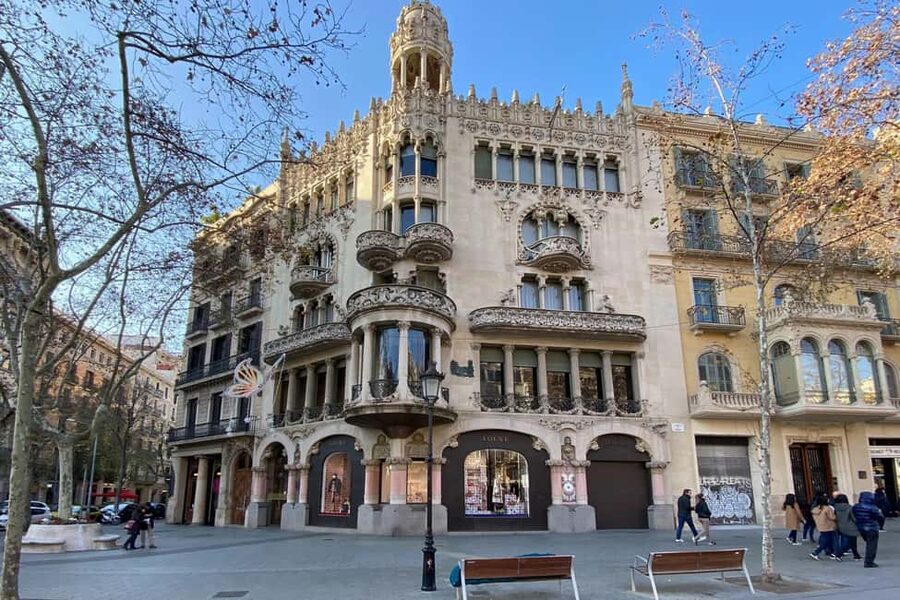
Casa Lleó Morera brings you into one of the most important concentrations of Modernisme in the city. Along this part of the Eixample, grand homes were designed to announce taste, money, and social position.
This is also where the famous Block of Discord becomes important. Casa Batlló, Casa Lleó Morera, and other striking buildings sit close together, each offering a different answer to the same architectural challenge. Their façades do not form a single style. They compete.
That comparison is more useful than seeing Casa Batlló alone. You can look from one building to the next and compare balconies, windows, stonework, and surface decoration. The buildings become part of a conversation between architects.
The name Quadrat d’Or, or Golden Square, refers to this especially concentrated section of the Eixample. You do not need a technical background to enjoy it. A good guide will show you where to look, then explain why the details matter.
The route information includes Casa Lleó Morera twice, once as an early stop and again later in the sequence. In practical terms, treat this as part of the same Modernisme cluster rather than expecting two separate tours of the building.
More Walking Tours in Spain
- Barcelona Architecture Walking Tour With Casa Batlló Upgrade
★ 5.0 · 137 reviews - Treasures of Barcelona: Private Gaudi Walking Tour
★ 5.0 · 128 reviews - Night Tapas Walking Tour in Barcelona Modernist Area with Small Group and Dinner
★ 4.5 · 56 reviews - Private Barcelona Modernism and Gaudí Walking Tour
★ 4.7 · 54 reviews
The Antoni Tàpies Foundation and Montaner i Simon
The former Editorial Montaner i Simon building is now home to the Antoni Tàpies Foundation. Its inclusion widens the story beyond residential buildings.
Modernisme affected commercial and institutional architecture as well as private homes. A publishing house needed an impressive public face, and its design shows how architectural ambition could be applied to a working business.
The present-day connection with the Antoni Tàpies Foundation adds another layer. You are seeing a building linked to Barcelona’s artistic life across more than one period, though the walking tour focuses on its Modernisme character and exterior.
This is a good point to remember that Barcelona’s architecture is not arranged in a museum. These buildings are part of the active city. Shops, offices, cultural spaces, and homes continue behind many of the façades. The experience gives you a street-level reading of the city rather than a carefully controlled gallery visit.
Passeig de Gràcia, Barcelona’s grand architectural stage
Passeig de Gràcia is the main avenue of the walk and one of the most memorable streets in central Barcelona. Its width, elegant layout, and concentration of decorated buildings make it an ideal setting for Modernisme.
I like this part of the route because it gives you a sense of scale. The architecture is not limited to one remarkable house. Several important façades appear within a relatively short walk, and the avenue lets you compare them without needing public transport.
Your guide will explain the stories behind the façades and the people who commissioned them. That human angle matters. These were not anonymous public monuments. They were homes and commercial buildings shaped by ambition, wealth, artistic taste, and competition.
Passeig de Gràcia is also an active city street, not a quiet historical zone. You may need to pay attention while walking and crossing. Keep your camera ready, but do not let photography make you miss the guide’s explanations or the smaller details above eye level.
Casa Batlló and the Block of Discord
Casa Batlló is the tour’s most obvious crowd-pleaser. Gaudí’s façade uses curved forms, unusual windows, colorful surface treatment, and a roofline that gives the building a storybook quality without making it feel like a simple fantasy set.
From the street, you can study the exterior and hear how its design fits Gaudí’s approach. The guide can also place it beside Casa Lleó Morera and the other buildings in the Block of Discord, where the differences between architects become especially clear.
The drawback is that you will not go inside on this tour. Casa Batlló’s interior is a separate paid experience, and the walking tour price does not cover it. If you already plan to buy an admission ticket, this walk can help you decide what details to look for when you return.
If you only have time for photographs, the exterior stop still earns its place. If you want rooms, stairways, the roof, and a fuller sense of Gaudí’s design, plan that visit separately and budget for another ticket.
Casa Milà and the value of seeing more than Gaudí
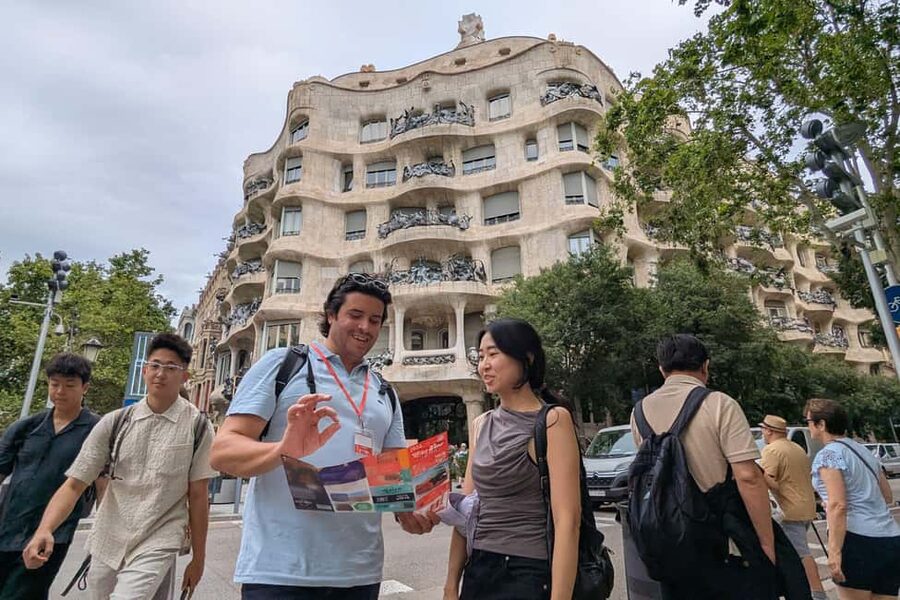
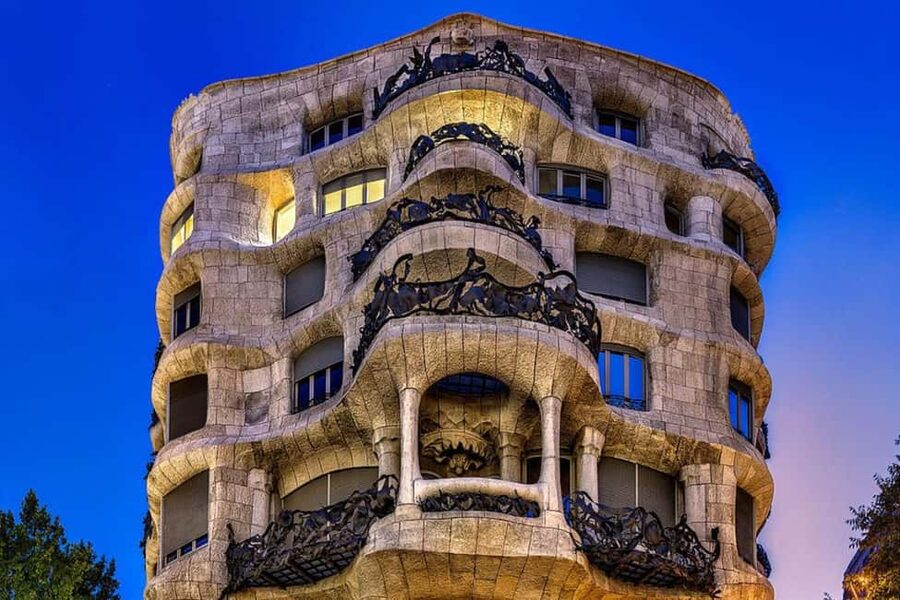
Casa Milà, usually called La Pedrera, is another major Gaudí landmark connected with the route. Its heavy stone façade and undulating form look very different from Casa Batlló, even though both buildings are associated with the same architect and avenue.
The tour highlights La Pedrera as part of the Modernisme story, but admission is not included. You should therefore think of this experience as an introduction and orientation, not a replacement for visiting the building.
That distinction affects the $17 price. For the cost of a casual meal or a modest museum ticket, you get two hours of guided explanation and a route through one of Barcelona’s most concentrated architectural areas. You do not get entry to the famous interiors.
For many people, that is good value. You can use the walk to decide which buildings deserve a separate visit. You also avoid spending your entire sightseeing day inside one attraction before understanding how it fits into the surrounding city.
The quieter façades along the route
The route includes many names that are easy to miss when you walk alone: Casa Comalat, Palau de Quadras, the Pons and Pascual Houses, the Antoni Rocamora Houses, Pia Batlló House, Heribert Pons House, Jaume Moysi House, Sebastià Pratsjusà House, Climent Arola House, Garriga Nogués House, and Casa Ramon Casas.
You will not get the same level of fame from every stop. That is part of the appeal. The guide can direct your attention to doorways, sculptural details, rooflines, and decorative work that do not appear in every Barcelona guidebook.
Palau de Quadras and Casa Ramon Casas help round out the route, showing that the district’s architectural interest is not limited to the Block of Discord. The final stop at Casa Ramon Casas gives the walk a clear endpoint after the sequence of façades and short transfers.
Because the tour covers many buildings in two hours, the experience favors breadth over long, detailed study of each property. If you want a slow architectural sketching session or a full lecture on one architect, this may feel brisk. If you want a strong first look at the district, the pace makes sense.
What the $17 price really buys you
At $17 per person, this is an inexpensive guided introduction to central Barcelona. The value comes from the guide’s interpretation, not from admission to a monument.
You are paying for a professional English-speaking guide, a planned route, and explanations that help you distinguish one Modernisme building from another. The walk also saves you the work of finding the less familiar addresses on your own.
The experience includes a certified guide accredited by Turisme de Barcelona. That does not guarantee a particular style or personality, but it gives you a guide with a formal connection to the city’s tourism system.
The two available verified ratings are both five out of five. One particularly useful point is the emphasis on more than Gaudí. Pierre is associated with helping participants notice the wider range of Barcelona architecture and offering ideas for the rest of a trip. Boris is associated with connecting architecture to political and economic forces.
You should still keep expectations sensible. This is not a private architectural consultation, and there is no included entry to Casa Batlló or La Pedrera. The price is strongest for someone who wants orientation, explanation, and a compact route.
Who should book this Barcelona walk?
I would choose this tour early in a Barcelona visit if you care about architecture but do not yet know which buildings deserve your time. The route gives you a useful map of Passeig de Gràcia and the Eixample, and the guide’s suggestions may help you plan later visits.
It suits solo travelers especially well because the tour runs even with one participant. That guarantee removes the worry that a small booking will cause the experience to be canceled.
It also works for couples, friends, and families who prefer a focused walk to a long museum visit. You need comfortable shoes, a camera, and the ability to walk through the city for two hours.
I would choose something else if you want to enter several buildings during the same activity. The tour remains outdoors and does not include admission tickets. I would also avoid booking it at the end of an exhausting walking day if your feet are already sore.
The route is wheelchair accessible, which makes it a practical option for many visitors. Still, central Barcelona streets can be active, so arrive early and confirm the meeting point inside the tourist office.
Should you book it?
Book this walk if you want to understand why Barcelona is much more than Gaudí. For $17, you get a compact tour of the Quadrat d’Or, a look at Casa Batlló and La Pedrera from the street, and a guide who can connect architecture with the city’s social and economic story.
Do not book it expecting interior access. Instead, use the tour as a well-priced first look, then choose which buildings merit separate admission. It is particularly useful at the start of your stay, when the route can help you get your bearings and plan the rest of your time.
FAQ
Where does the Barcelona Modernisme walking tour meet?
The meeting point is the Turisme de Barcelona Tourist Information Office at Plaça de Catalunya 17, on the underground level. Look for the large red Tourist Information totem and the escalators beside it.
How long does the tour last?
The walking tour lasts two hours.
Which languages are available?
The live guide can conduct the tour in English, Spanish, or Catalan.
Are Casa Batlló and Casa Milà admission tickets included?
No. Entrance to Casa Batlló and Casa Milà, also called La Pedrera, is not included.
Does the tour run if only one person books?
Yes. The tour is scheduled to run even with a single participant.
Is the tour wheelchair accessible?
Yes, the activity is described as wheelchair accessible. Comfortable shoes are recommended, and you should bring a camera.
Newly added in Barcelona
- Roman & Gotic & Gaudi in Barcelona: private walking tour★ 4.5 · 2 reviews
- Barcelona Gaudi Tour: Sagrada Familia, Casa Batllo & Casa Mila★ 5.0 · 4 reviews
- Visit to the Modernist houses of the Americans★ 5.0 · 2 reviews
- Self-Guided Audio Tour-The Surrealist Barcelona of Dalí and Gaudí★ 3.5 · 8 reviews
- Barcelona Street Escape: Gaudi and the Hidden Treasure★ 5.0 · 17 reviews
- Gaudí & Catalan Modernism Private Walking Tour★ 5.0 · 11 reviews
- Gaudí and Barcelona Legends – Private Tour★ 5.0 · 4 reviews
- Sagrada Familia Private Tour – Unlock the mysteries of Gaudi★ 5.0 · 10 reviews
Walking Tours, compared.
The Official Art Deco Walking Tour by The Miami Design Preservation League
Read our review →
Baroque Architecture and Underground Walking Tour
Read our review →
Chicago in a Day: Food, History & Architecture Walking Tour
Read our review →

Ramblas, Old Town, Gothic and Gaudi Architecture Walking Tour
Read our review →
Chicago’s Secret Interiors Architectural Walking Tour
Read our review →
Browse the lists this tour appears in