
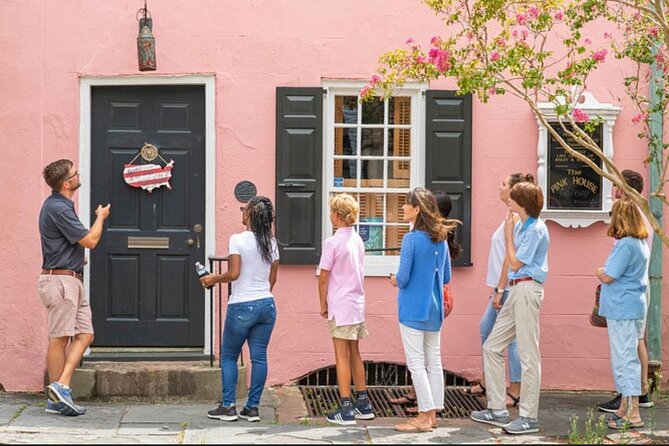
Review · WALKING TOURS
Charleston History and Architecture Walking Tour
Charleston’s old center makes the most sense on foot, and this tour links several of its best-known sights with the stories between them. I like the way it pairs architectural details with human stories, so you are not simply photographing pastel houses. I also like its efficient route, which helps first-time visitors get their bearings quickly.
The $27 price is fair for a two-hour introduction, especially with a strong guide such as Paige or Emerson. The main drawback is the walking itself: Charleston’s cobblestones, sun, and changeable weather can make the route less comfortable than the photos suggest.
Key points to know before you book
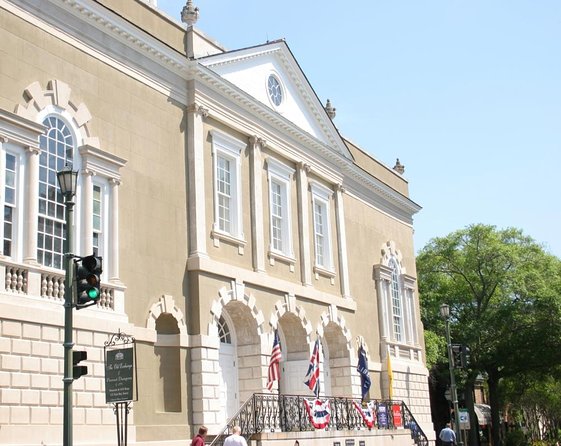
- Rainbow Row is only one part of the route: You also visit the Unitarian Church, Philadelphia Alley, the Old Exchange, and Twenty-one Magazine.
- The guide makes the difference: Paige and Emerson receive especially warm praise for lively storytelling and clear explanations.
- It is built for first-time visitors: The route covers major sights without asking you to plan the sequence yourself.
- The tour lasts about two hours: That is enough time for a useful overview, but not enough for lengthy interior visits at every stop.
- The group can reach 20 people: Large enough for shared energy, but still small enough to remain manageable on city streets.
- Weather matters: The activity requires good weather, and you can receive a full refund if the operator cancels for that reason.
Why this walking route works so well in Charleston
The best feature here is the combination of scale and subject. Charleston’s historic center rewards slow looking, but it can be hard to know where to go first. This route gives you a clear path through some of the city’s most photographed corners while explaining why they look the way they do.
I like that the tour is led by an architectural historian guide rather than treating buildings as background scenery. You hear about design, city development, culture, colonial life, and the people connected to the buildings. That gives the walk more purpose than a simple photo stop.
The route also suits a short visit. If you have only a day or two in Charleston, two hours can help you learn the shape of the old center before exploring on your own. You will finish at Waterfront Park, a useful location for continuing your sightseeing.
The tour has a published rating of 5 out of 5 from 63 reviews, with 98 percent recommending it. Paige and Emerson receive particularly strong praise for being entertaining, personable, and clear. One account also describes a rainy-day tour that still worked well because Emerson kept the history and architecture engaging.
More Walking Tours in the USA
- The Official Art Deco Walking Tour by The Miami Design Preservation League
★ 5.0 · 1,580 reviews - Chicago in a Day: Food, History & Architecture Walking Tour
★ 5.0 · 1,153 reviews - Miami South Beach Art Deco Walking Tour
★ 5.0 · 1,039 reviews
Pineapple Fountain: a quick start by the water
The meeting point is at 195 East Bay Street, and the first stop is the Pineapple Fountain. You have about 10 minutes here, which is enough for photographs and a brief introduction.
The pineapple is a familiar Charleston symbol, so this opening stop gives you an immediate sense of place. It is also an easy landmark for orienting yourself near the waterfront. I would not expect a long lecture here. The value is in beginning with a recognizable image and then moving into the city streets.
The short stop matters because the tour has a lot to cover. You get a photo opportunity without using too much of the two-hour schedule. If you arrive early, this is also a good point to settle in, check your mobile ticket, and prepare for the walk.
Rainbow Row and the stories behind the pastel homes
Rainbow Row receives about 20 minutes, making it one of the more substantial stops. The famous stretch contains 13 privately owned Antebellum homes, each painted in a different pastel shade.
You will have time to look at the full row, take photographs, and listen to the guide explain its place in Charleston’s architectural story. I like having a guide here because the houses can otherwise become a quick backdrop for pictures. The colors catch your eye first, but the buildings also open a discussion about preservation, private ownership, and the way Charleston presents its past.
Do not expect to tour the homes. They are privately owned, and the appeal is the street view, the facades, and the history explained from outside. That is worth knowing before you book, since visitors seeking extended interior access will find this tour more introductory than exhaustive.
Rainbow Row is also a good example of the tour’s general approach. You see a well-known landmark, then connect it to the wider story of the city instead of treating it as an isolated attraction.
The Unitarian Church and a chance for closer architectural study
The Unitarian Church receives another 20-minute stop. Here the focus shifts from a colorful residential row to religious architecture and the building’s history.
This is one of the points where the guide’s background matters most. Church architecture rewards details that are easy to miss from the street, and the tour is designed to help you notice those details. The church also provides strong photo opportunities.
Some tour accounts describe the chance to enter the church, including a memorable look at Tiffany windows. The supplied schedule does not promise a guaranteed interior visit, so I would treat entry as possible rather than assured. That distinction is important if seeing the inside is your main reason for booking.
Even without an interior visit, 20 minutes gives you time to understand why the building matters. If you enjoy architecture more than quick sightseeing, this may be one of the most rewarding stops on the route.
Same city, a different facade:
- Chicago Architecture River Cruise
★ 5.0 · 15,756 reviews - Chicago River 90-Minute Architecture Tour
★ 4.5 · 9,629 reviews - Chicago River: 1.5-Hour Guided Architecture Cruise
★ 4.8 · 8,046 reviews - Chicago Architecture Center River Cruise aboard First Lady
★ 5.0 · 5,536 reviews
Twenty-one Magazine: stories with a darker edge
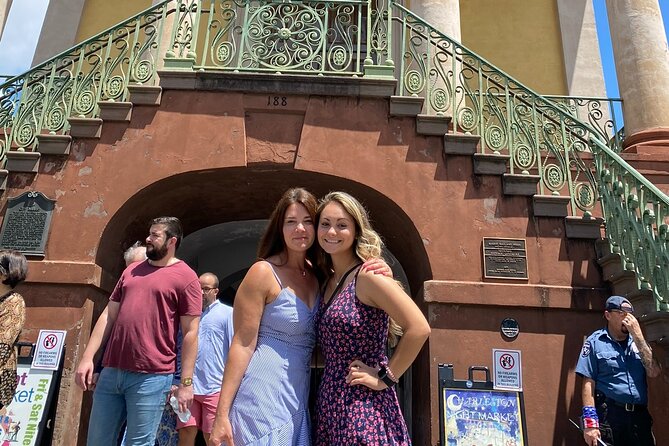
The stop at Twenty-one Magazine lasts about 20 minutes and mixes history, architecture, and scary stories. This adds a different mood to the tour.
I like the change of pace. Charleston’s past is not only grand houses and attractive streets. Stories with a darker edge can show how people once understood particular places and how local memory develops around old buildings and narrow lanes.
The schedule gives the guide enough time to tell more than a passing anecdote, though the exact stories will depend on the person leading your group. Paige is praised for offering detailed facts in an entertaining way, while Emerson is praised for bringing people and places to life. Those comments suggest that the quality of this stop depends heavily on presentation.
If you prefer architecture without ghostly or unsettling material, this is worth keeping in mind. The stop includes history and building details, but the scary stories are part of its appeal.
The Old Exchange and Provost Dungeon

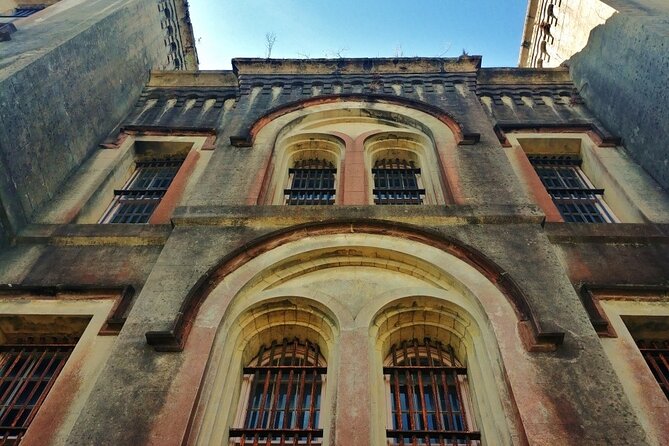
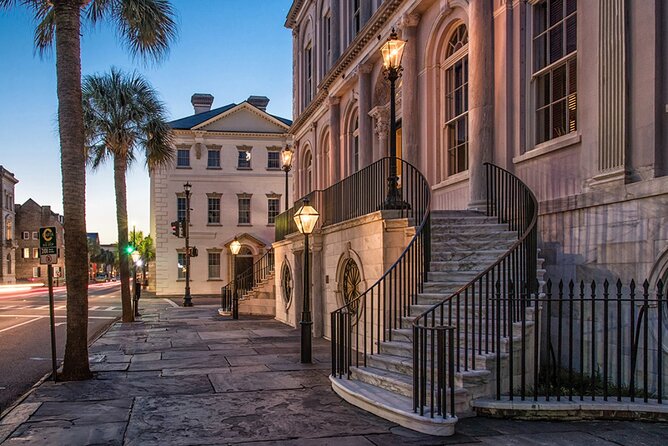
At the Old Exchange and Provost Dungeon, you spend about 20 minutes learning about Charleston’s colonial period and architecture. This is an important stop because it connects the city’s built environment to its early civic and political life.
The name also signals that this is more than a grand facade. The Provost Dungeon brings a darker, more confined side of colonial Charleston into the story. The tour gives you context for the building rather than leaving you to guess what happened there.
The schedule lists this as a sightseeing stop, not a separate extended attraction visit. I would expect the guide to explain the site from the route and allow time for viewing and photographs, rather than a lengthy, independently paced tour inside. If you want a full visit to the Old Exchange, you may need to return later.
That is a common tradeoff on a route like this. You see several important locations in two hours, but each one receives a focused introduction rather than a complete museum visit.
Philadelphia Alley, also called Duelers Alley
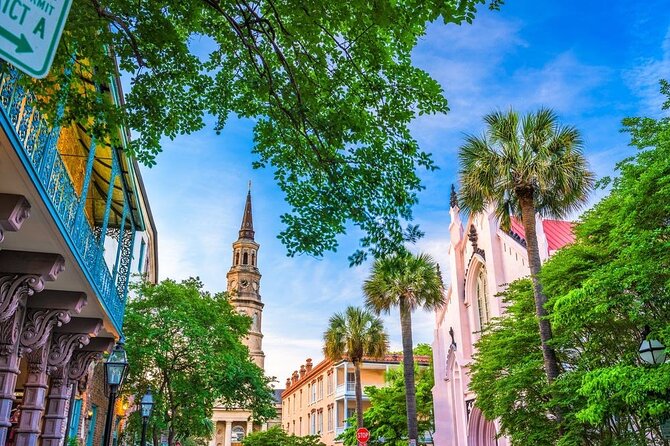
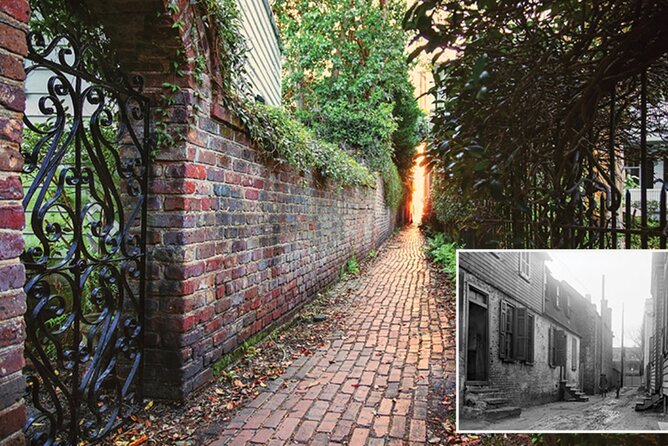
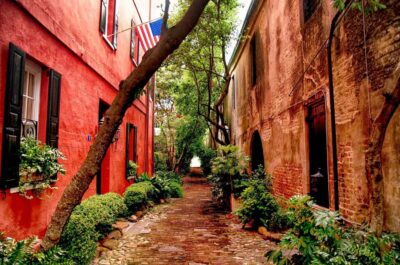
The final listed stop is Philadelphia Alley, also known as Duelers Alley. You have about 20 minutes here, which makes sense because the narrow passage is small but full of atmosphere.
This is the kind of place that can be easy to miss if you are wandering without a plan. The alley offers a sharp contrast to the wider streets and formal buildings. Its architecture, confined scale, and nickname create an opening for stories about Charleston’s past.
I especially like this stop for people who want photographs that feel less obvious than Rainbow Row. The alley gives you texture and a sense of the old street plan without requiring a long visit. The guide can also explain how such a small passage fits into the city’s social and architectural story.
The tour ends near Waterfront Park at Vendue Range and Concord Street. That makes the route feel logical: you begin near the waterfront, move through the historic center, and finish close to another useful sightseeing area.
What the guides add to the experience
The strongest praise centers on the guides, especially Emerson and Paige. Emerson is described as entertaining, personable, and deeply informed about Charleston’s past and buildings. Paige is praised for enthusiasm, detailed facts, and an easy way of explaining the type of land on which Charleston sits.
That last point is useful. Architecture does not exist apart from geography, city planning, and local conditions. A guide who explains those links can help you understand why Charleston developed in a particular way instead of presenting a list of dates and names.
I also like that the guides appear to use stories rather than only formal explanations. That can make a short walking tour easier to remember. You may recall the person connected to a building or the odd story about an alley long after you forget a year.
The group limit is 20 people. That is not a private tour, but it is a reasonable size for a city walk. You should still expect occasional pauses for the full group to gather, especially near popular photo stops.
Price, pace, and practical comfort
At $27, this is good value if you want a guided introduction rather than a self-guided walk. You are paying for route planning, interpretation, and the chance to connect six distinct places in roughly two hours.
The price is less compelling if you already know Charleston well or want long visits inside individual buildings. This is a broad overview. It gives you a framework for later exploring, not a full treatment of every site.
The tour uses a mobile ticket, and confirmation arrives at booking. Most people can participate, service animals are allowed, and the route is near public transportation. Those points make it relatively easy to add to a Charleston day without arranging complicated transport.
Comfort deserves attention. You will be outside for about two hours, and the experience requires good weather. A previous tour still went ahead pleasantly in rain, but the policy allows cancellation for poor weather with either a different date or a full refund.
Wear shoes suited to city walking. The tour information specifically points to cobblestones and sun as possible annoyances, and one three-star account found the guide too apologetic about those conditions. I see that as a small presentation issue, but it also confirms that the physical setting is part of the experience.
The cancellation terms are simple but strict: cancel at least 24 hours before the start time for a full refund. Cancellations or changes inside 24 hours are not refunded or accepted. The cut-off follows local Charleston time.
Who should book this Charleston tour
I would choose this tour for a first visit, a short stay, or the first morning of a longer trip. It gives you a useful mental map and points out places you might otherwise walk past.
It also suits people who like buildings but do not want a dry lecture. The combination of Rainbow Row, the church, the Old Exchange, and Philadelphia Alley gives you several kinds of architecture in one route. The stories about culture, colonial life, and the people behind the city keep the walk from becoming a facade-counting exercise.
Families and mixed-age groups may appreciate the variety. The Pineapple Fountain and pastel homes offer easy photo stops, while Twenty-one Magazine and Philadelphia Alley add more unusual stories. Most people can participate, though anyone uncomfortable with uneven walking surfaces should think carefully about the route.
I would be more cautious if you need a fully accessible, indoor experience or want guaranteed entry to every building. The tour is outdoors, weather-dependent, and focused on seeing several sites from the city streets.
Should you book it?
Yes, if you want an affordable and efficient first look at Charleston’s historic center. I especially like it for the way the guide links famous sights with smaller places such as Philadelphia Alley, and for the strong track record of guides such as Emerson and Paige.
Book it with the right expectations. You are getting a lively two-hour orientation, not a full museum tour or a private architectural consultation. Bring comfortable shoes, prepare for sun or rain, and treat the possible church interior visit as a bonus rather than a guarantee. For $27, it is a sensible way to get your bearings and decide which buildings deserve a closer look later.
FAQ
How long does the Charleston History and Architecture Walking Tour last?
The tour lasts approximately two hours.
How much does the tour cost?
The listed price is $27.
Where does the tour begin?
The meeting point is 195 East Bay Street, Charleston, South Carolina 29401.
Where does the tour end?
The tour ends at Waterfront Park near Vendue Range and Concord Street.
Which sights are included?
The route includes the Pineapple Fountain, Rainbow Row, the Unitarian Church, Twenty-one Magazine, the Old Exchange and Provost Dungeon, and Philadelphia Alley.
How many people can join the tour?
The maximum group size is 20 travelers.
Can I cancel for a full refund?
Yes. You must cancel at least 24 hours before the experience start time for a full refund. Cancellations or changes made less than 24 hours before the start time are not refunded or accepted. If poor weather causes the operator to cancel, you can receive a different date or a full refund.
More History Walks in the USA
- Charleston’s Best Highlights: History, Culture & Architecture
★ 5.0 · 422 reviews - Palm Springs Modernism Architecture & History Bike Tour
★ 5.0 · 359 reviews - Charleston: History and Architecture Guided Walking Tour
★ 4.8 · 349 reviews - Historic Georgetown: History, Gossip, & Architecture Walking Tour
★ 5.0 · 321 reviews
Newly added in the USA
- Miami Beach Art Deco Segway Tour★ 4.5 · 17 reviews
- Boston: Freedom Trail History and Architecture Walking Tour★ 4.8 · 18 reviews
- Boston: Harbor and Charles River Architecture Boat Tour★ 4.6 · 9 reviews
- Chicago: Guided Tour with Architecture River Cruise★ 4.5 · 20 reviews
- Iconic Capitol Hill Architectural Walking Tour★ 5.0 · 21 reviews
- South Beach Food Tour- Culinary & Art Deco & History★ 5.0 · 22 reviews
- Manhattan Architecture Photography Tour★ 5.0 · 24 reviews
- Chicago: Architecture Center Exhibit Admission★ 4.3 · 22 reviews
Walking Tours, compared.
The Official Art Deco Walking Tour by The Miami Design Preservation League
Read our review →
Baroque Architecture and Underground Walking Tour
Read our review →
Chicago in a Day: Food, History & Architecture Walking Tour
Read our review →

Ramblas, Old Town, Gothic and Gaudi Architecture Walking Tour
Read our review →
Chicago’s Secret Interiors Architectural Walking Tour
Read our review →
Browse the lists this tour appears in