
Review · FRANCE ARCHITECTURE TOURS
Contemporary Architecture in Bordeaux city center!
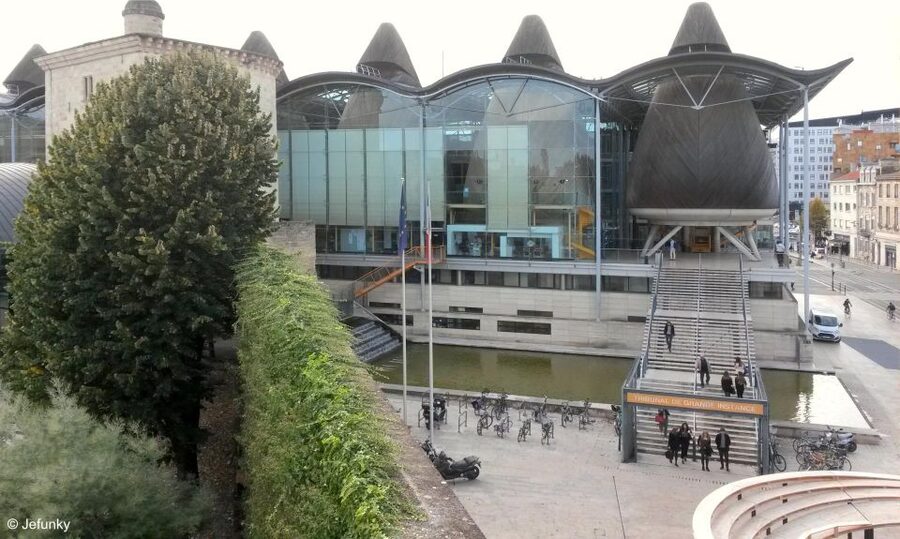
Bordeaux’s best modern building is also your meeting point: Richard Rogers’ all-glass Law Courts. Inside, the courtroom pods look a little like giant wooden eggs, a bold answer to the formal stone buildings nearby. This tour uses that building, the Water Mirror, Square Vinet, Mama Shelter, and historic central Bordeaux to explain how a once-neglected city rebuilt its public face.
I like the mix of architecture and urban history, rather than a walk that simply points at photogenic buildings. I also like the small scale of places such as Square Vinet, where a tiny public space and vertical garden say as much about modern city planning as a grand civic project. The main consideration is the pace: two hours can introduce Bordeaux’s major ideas, but it cannot examine every building in detail.
- Richard Rogers’ Law Courts: Enter one of Bordeaux’s most striking modern buildings and see how glass, steel, and curved courtroom forms work together.
- Water Mirror: Use Bordeaux’s famous reflecting pool as a starting point for understanding the city’s redevelopment since 1995.
- Square Vinet: Find a small central playground framed by vertical green walls from Patrick Blanc.
- Historic and modern Bordeaux: Compare the Rohan Palace, Grand Théâtre, and 18th-century riverfront with newer projects.
- Possible Euratlantique extension: Depending on the route, discuss newer development and possibly see MECA by BIG.
- Architect-led explanation: Tours are offered in English or French, with architect-guides such as David bringing a calm, clear approach.
Why Bordeaux’s Modern Side Deserves Two Hours
Bordeaux is often introduced through its 18th-century stone facades, broad quays, and grand squares. Those sights deserve their fame, but they tell only half the story. In recent decades, Bordeaux has worked hard to repair its center, improve its riverfront, attract new residents, and connect old districts with new public spaces.
That change is the central subject here. You are not simply walking from one attractive building to another. You are looking at the decisions behind the city’s renewal: where people gather, how old buildings receive new uses, how modern structures fit beside protected monuments, and how large development projects may shape Bordeaux’s future.
The tour lasts about two hours, which is long enough to create a useful framework without turning into a full architecture course. I would treat it as an introduction for curious visitors, architecture students, design-minded travelers, and anyone who wants to see why Bordeaux feels different from the city described by its old nickname, Sleeping Beauty.
Starting at Richard Rogers’ Bordeaux Law Courts
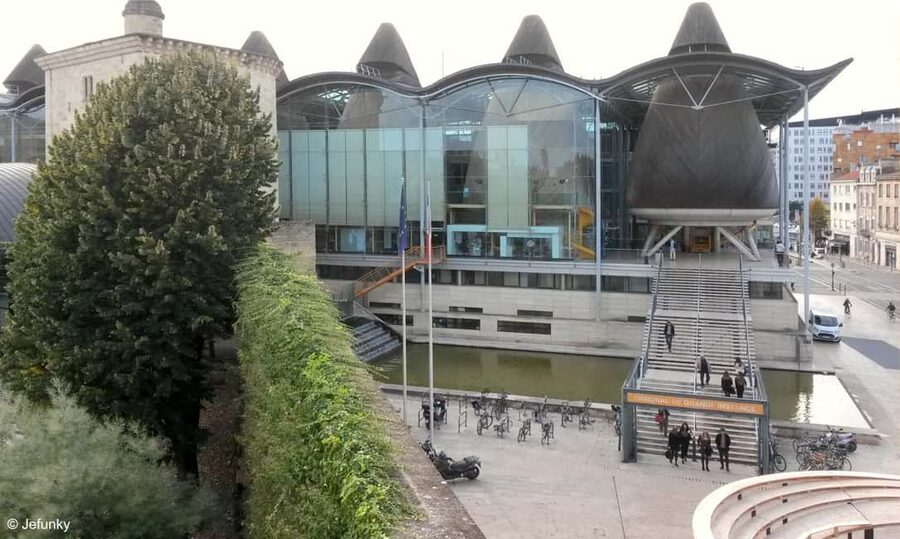
Meet at the foot of the entrance stairs to the Law Courts building. This is a practical starting point because the building immediately makes the tour’s subject clear. Richard Rogers designed a courthouse that does not hide behind a traditional ceremonial facade. Instead, glass, steel, and large rounded forms create an open, unusual public building.
The most memorable feature is the courtroom arrangement. The courtrooms are enclosed in curved wooden shells, often compared to large eggs or vessels, within the taller glass structure. That contrast gives the building a clear internal logic: public circulation and daylight around the outside, more private legal spaces gathered inside.
Your guide can help you read the building as more than a striking photograph. A courthouse has serious practical demands, including security, public access, circulation, and separation between different users. The design turns those requirements into visible architecture.
This is also where the tour’s balance becomes clear. The Law Courts are not an old monument with a tidy story. They are a modern building that asks you to decide how much openness and experimentation belongs in a civic institution. You may admire the design, dislike parts of it, or do both at once. That is more useful than being told that every unusual building is automatically successful.
The meeting point is easy to identify, but remember that the entrance stairs matter. The activity is not suitable for people with mobility impairments, and the tour is not designed for children under 10.
A few more architecture walks in the world worth a look
- Chicago Architecture River Cruise
★ 5.0 · 15,756 reviews - Chicago River 90-Minute Architecture Tour
★ 4.5 · 9,629 reviews - Chicago River: 1.5-Hour Guided Architecture Cruise
★ 4.8 · 8,046 reviews
From the Garonne to the Water Mirror
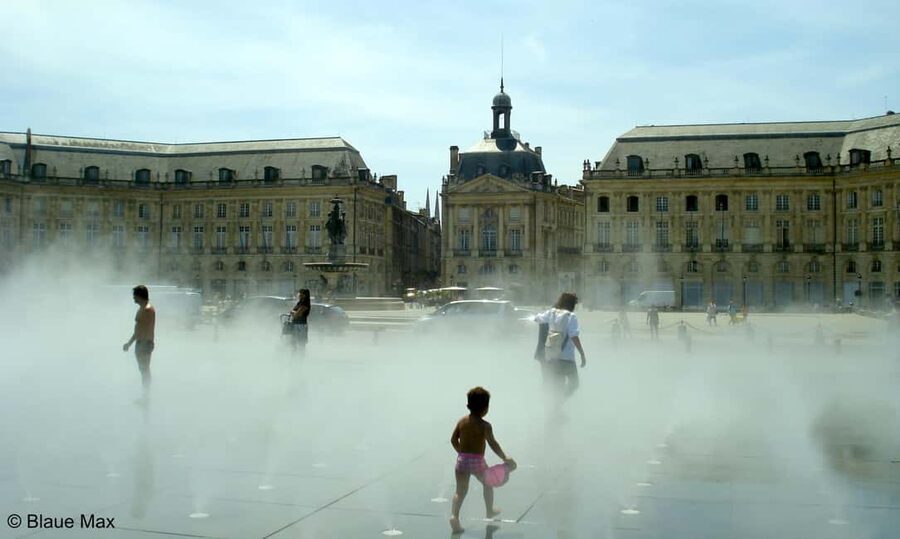
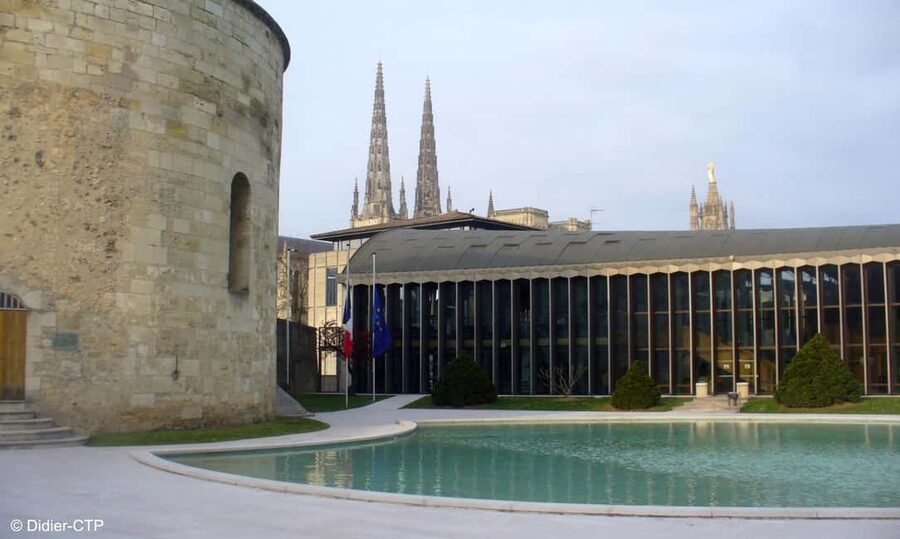
The Garonne River quays and the Water Mirror form the clearest starting point for Bordeaux’s modern public life. Michel Corajoud’s Water Mirror is a shallow reflecting pool that alternates between a smooth sheet of water and a low veil of mist. It sits opposite the Place de la Bourse, where 18th-century stone architecture supplies a formal backdrop.
The important point is not only the pool’s appearance. It changed how people use this part of the riverfront. Instead of treating the quays as a traffic corridor or a grand architectural frame viewed from a distance, the redevelopment made them a place to pause, gather, stroll, and look across the river.
This is a good place to stop and ask questions. Your guide uses the Water Mirror to explain the larger plans put in place since 1995, including the effort to make the riverfront a backbone for Bordeaux’s renewal. You can discuss how a public project affects movement, tourism, local life, and the way a city presents itself.
The Water Mirror is also a useful lesson in restraint. It is a simple idea, but its position does much of the work. The reflection links the water, the square, and the classical facades in one view. At the same time, it can be crowded and visually busy, especially when many people are taking photographs. The tour gives the place a second layer, helping you notice the planning choices instead of treating it as a photo stop alone.
Square Vinet and the Value of Small Places
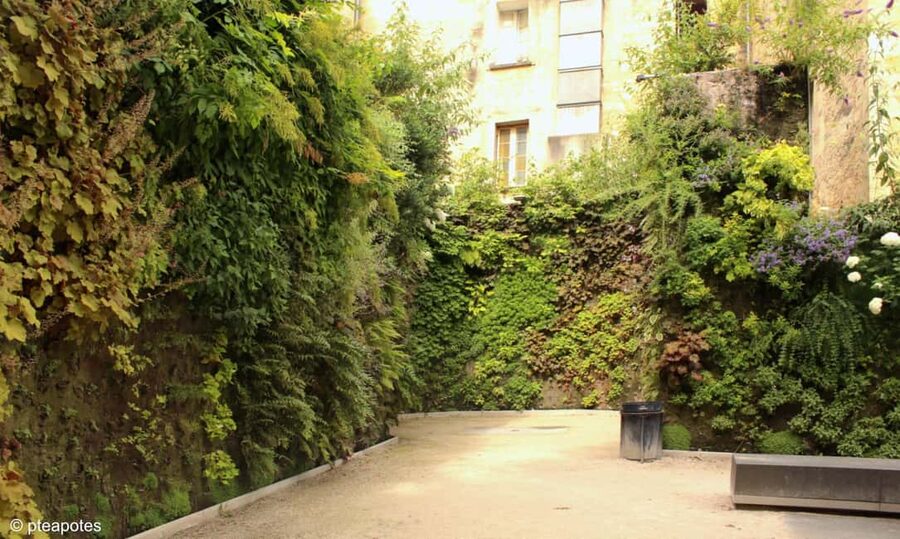
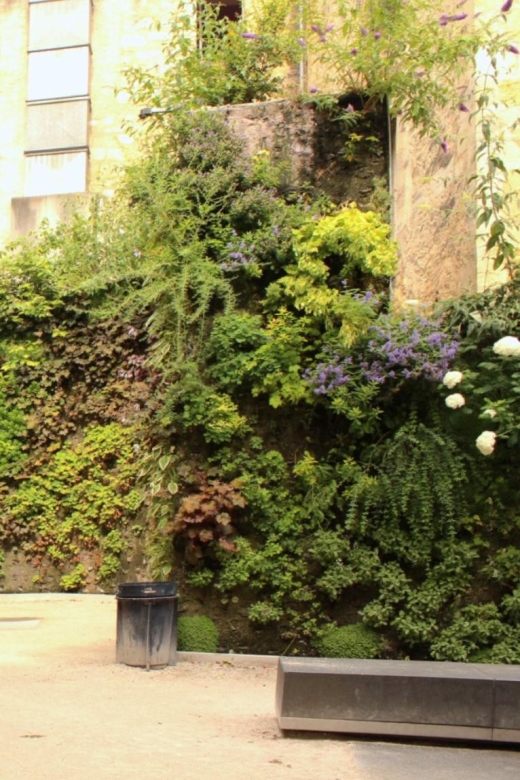
Square Vinet is one of the tour’s more modest stops, and that is precisely why it matters. It is a tiny public space in the city center, fitted with a playground and tall green walls. Michel Desvigne worked on the square, while Patrick Blanc is associated with its vertical planting.
Do not expect a grand park. The appeal is compact and urban. A narrow or overlooked site has been given a clear public purpose, with plants rising vertically where a large lawn would be impossible. It is a useful example of how city design can work at a very small scale.
I like this stop because it keeps the tour from becoming a parade of famous architects. A city is not improved only by spectacular civic buildings. Small squares, play areas, planting, shade, and places to sit affect daily life just as strongly, even if they rarely appear in guidebook photographs.
The square also raises a fair question: can a designed green wall replace the feeling of a larger natural space? The answer depends on what you need. For a short break in a dense center, it offers relief. For a serious garden visit, it is too small. Your guide can place it in that proper scale rather than overselling it.
Mama Shelter, Rohan Palace, and the Grand Théâtre
The walk connects contemporary projects with older landmarks, including the Rohan Palace and the Grand Théâtre. That pairing helps you see Bordeaux as a city of layers rather than a place divided into old and new districts.
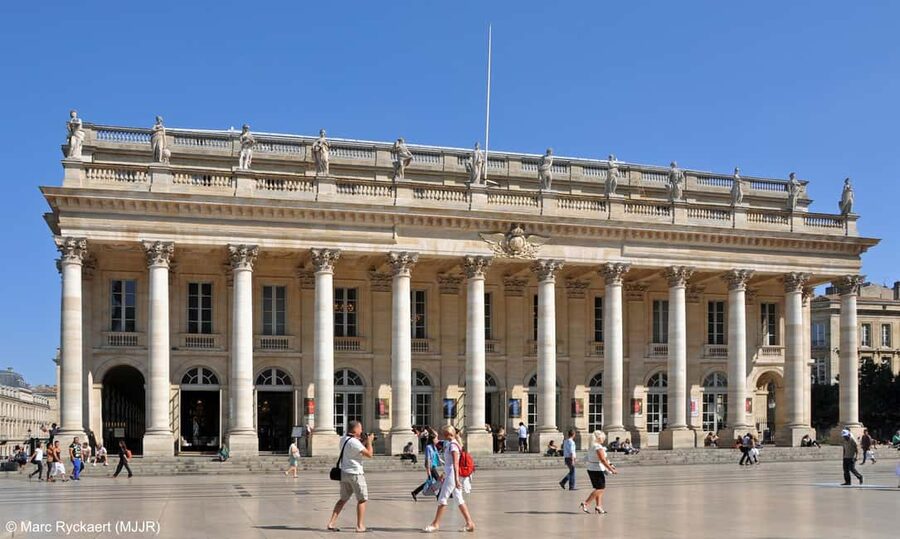
The Grand Théâtre represents the formal public architecture that shaped Bordeaux’s reputation. Its scale, symmetry, and ceremonial presence reflect the confidence of the 18th century. The Rohan Palace adds another point of reference, showing the political and civic weight of the historic center.
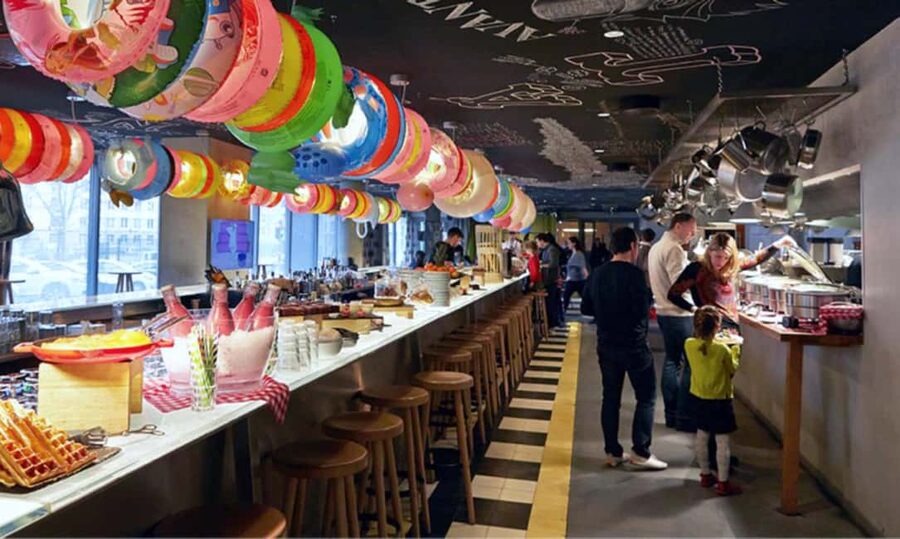
Then comes Mama Shelter, a 1934 office building converted into a hotel. Philippe Starck’s interior and public spaces give the building a more playful second life. From the outside or through a brief look, you get a clear example of adaptive reuse: a structure made for one purpose is adjusted for another, rather than simply demolished.
That change is worth discussing because conversions are rarely perfect. A hotel must work for guests, staff, dining, and commercial use, while still retaining something of its original structure. The result can feel lively and inventive, but also more stylized than timeless. The tour gives you a chance to compare this approach with Bordeaux’s older buildings and with the more direct architectural statement of the Law Courts.
The stop is especially useful if you are interested in how historic cities remain active. Preserving every old building exactly as it was can leave a center frozen. Replacing everything with new construction can erase its character. A converted office building sits somewhere between those two choices.
Same city, a different facade:
- Chicago Architecture Center River Cruise aboard First Lady
★ 5.0 · 5,536 reviews - Chicago: Architecture River Cruise Skip-the-Ticket Line
★ 4.8 · 4,325 reviews - Chicago River 45-Minute Architecture Tour from Magnificent Mile
★ 4.5 · 2,924 reviews - Barcelona: Sant Pau Recinte Modernista Entry Ticket
★ 4.6 · 2,567 reviews
From the Historic Core to Euratlantique
The final part of the experience may turn toward larger current development operations, especially Euratlantique. This project reflects Bordeaux’s wider growth and its expected population of one million inhabitants by 2030. That figure helps explain why the city is not only polishing its historic center. It is also planning for housing, jobs, transport, offices, and new public institutions.
Depending on the route and timing, you may see or discuss some of the area’s notable buildings, including MECA. The building was designed by the Danish firm BIG and houses the regional creative economy, with spaces connected to culture and design.
Euratlantique is a different sort of subject from Square Vinet. Here, the questions become larger: How much new construction can Bordeaux absorb? How should modern districts connect with the old center? Who benefits from regeneration, and how can a growing city avoid losing its identity?
Do not book this walk expecting a full tour of every Euratlantique building. The supplied description presents the area as a possible focus and mentions the possibility of seeing emblematic projects such as MECA. The exact route may depend on the guide, access, and the day’s plan. If this district is your main interest, ask when booking whether the contemporary development portion will be emphasized.
The Guide’s Role Makes the Difference
Architecture tours can fail when they become a stream of dates and names. The strength of this experience is the guide’s role as an architect, with the calm, friendly approach associated with David, one of the named guides connected with the activity.
A good guide should help you notice how a building works, not just who designed it. You might discuss structure, materials, public access, old and new uses, or the effect of a project on its surrounding streets. The supplied description also allows for several possible drink stops, which can give the walk a relaxed rhythm and create time for questions.
The tour is offered in English and French. That matters in Bordeaux, where architectural terms and planning debates can become hard to follow if the explanation moves too quickly. If you are booking in English, confirm that your selected departure is led in English.
One particularly useful quality is the mixture of building types. You see a courthouse, a hotel conversion, a planted square, a major riverfront project, historic civic monuments, and possibly a new cultural building. That variety prevents the tour from becoming a narrow lesson in one architectural style.
Is $40 a Fair Price?
At $40 per person, this is not the cheapest way to spend two hours in Bordeaux. You can see the Water Mirror, walk past the Grand Théâtre, and admire much of the historic center without paying an entry fee.
The value comes from access and interpretation. You enter the Law Courts rather than viewing the building only from outside, and you get a connected explanation of projects that are otherwise easy to treat as isolated curiosities. For someone who already knows Bordeaux well, the price may feel less compelling. For a first visit, it can provide a strong map of the city’s recent changes.
The architect-guide element also matters. You are paying for judgment and context, not transport or a long list of included attractions. There is no promise of a museum ticket, meal, or extended interior access at every stop. Think of it as a focused walking seminar with buildings around you.
The small number of published ratings gives only limited evidence about consistency, but the available feedback gives useful detail about the tone. One visitor described David as relaxed, kind, and friendly, and praised the balance between detail and unusual places. That is exactly the balance I would want here: enough technical information to sharpen your eye, without turning the walk into a lecture.
Who Should Book This Architecture Walk?
I would recommend it most strongly to you if you enjoy cities as working places, not only as collections of monuments. It suits visitors curious about public design, reuse, urban planning, and the tension between a protected historic center and a growing modern city.
It is also a good choice if you have already seen the Place de la Bourse and the main central sights, but want to understand what happened after the classic postcard views. The route adds purpose to familiar locations and introduces smaller sites such as Square Vinet.
You may want to skip it if you need a gentle, fully accessible walk, are traveling with children under 10, or want only medieval and 18th-century history. The subject is contemporary Bordeaux, and the tour asks you to think about current development as much as the past.
Wear comfortable shoes and leave room for conversation. The experience is only two hours, but the best moments may come when you stop to ask why one project works better than another.
Should You Book It?
Book this tour if you want to understand how Bordeaux moved from a dark, neglected city toward a renewed regional capital. The strongest reasons are the entrance to Richard Rogers’ Law Courts, the Water Mirror’s role in riverfront planning, and the mix of major projects with small urban interventions.
I would be cautious only if you expect a fixed route focused entirely on Euratlantique or guaranteed access to every building named. That portion may vary. For most architecture-minded visitors, though, the $40 price is fair because the guide connects Bordeaux’s grand historic identity with the city it is still becoming.
FAQ
Where does the tour meet?
The meeting point is at the foot of the entrance stairs of the Bordeaux Law Courts building.
How long does the tour last?
The tour lasts two hours.
What languages are available?
The live tour guide can lead the experience in English or French.
Is the Law Courts building included?
The experience includes entry into Richard Rogers’ Bordeaux Law Courts, an all-glass contemporary building.
Is the tour suitable for children?
The activity is not suitable for children under 10.
Can I cancel the booking?
You can cancel up to 24 hours in advance for a full refund. You can also reserve now and pay later.
Newly added in the world
- Washington, DC: Georgetown Architecture Walking Tour★ 5.0 · 8 reviews
- Washington DC: Dupont Circle & Embassy Row Architecture Tour★ 5.0 · 6 reviews
- New Orleans : Garden District Architecture Walking tour★ 4.8 · 5 reviews
- Wilmington History and Architecture Tour★ 4.8 · 18 reviews
- Unveiling Brno: History, Culture & Architectural Delights★ 5.0 · 2 reviews
- Vicenza: Palladian Architecture Private Walking Tour★ 3.3 · 3 reviews
- Walk & Discover KL’s Architectural and Heritage Gems★ 5.0 · 7 reviews
- Private Colonial Williamsburg Architectural Tour★ 5.0 · 5 reviews
France Architecture Tours, compared.
Bastille’s Architecture & Artisans Self-Guided Walking Tour
Read our review →
Private Art Nouveau and Art Deco tour near Opera
Read our review →

Neoclassical Paris Architecture 2-Hour Private Walking Tour
Read our review →
Discover the hidden architecture gems of Le Marais
Read our review →
Marseille Belvedere: The city through architecture
Read our review →Browse the lists this tour appears in