
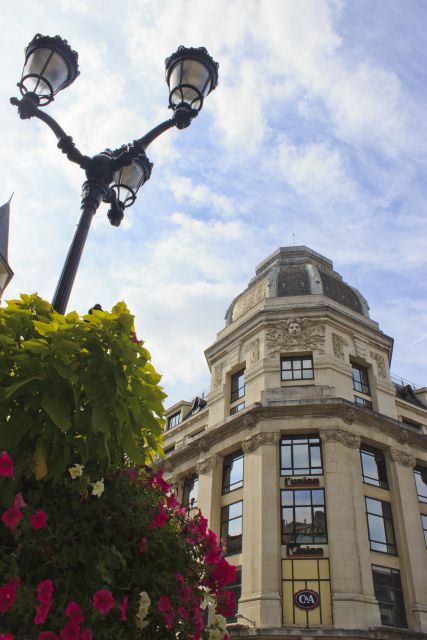
Review · ART DECO TOURS
Reims Art Deco guided tour
Reims wears its history on its walls. This one-hour walk shows you the city center through the Art Deco and 1920s architecture that appeared after the First World War, when German bombing destroyed much of the city. Look up, and ordinary streets become a lesson in stucco, mosaics, ironwork, and sculpture.
I like the tour’s clear focus and modest price. You get a licensed guide, a city-center route, and a useful explanation of why Reims looks the way it does today. The main drawback is language: the tour is conducted in French, and a group of about 25 people may make the guide hard to hear.
Key points to know
- Postwar Art Deco: See how Reims rebuilt after severe First World War destruction.
- Look above street level: The best details are on facades, including mosaics, stucco, ironwork, and sculpture.
- French-language guiding: The guide speaks French, so basic comprehension will help.
- Central meeting point: Begin at the Office de Tourisme du Grand Reims.
- Short and affordable: The listed duration is one hour and the price is $12 per person.
- Potential timing issue: One participant reported that the walk lasted closer to 90 minutes, so avoid booking it immediately before another appointment.
Reims rebuilt in an Art Deco style
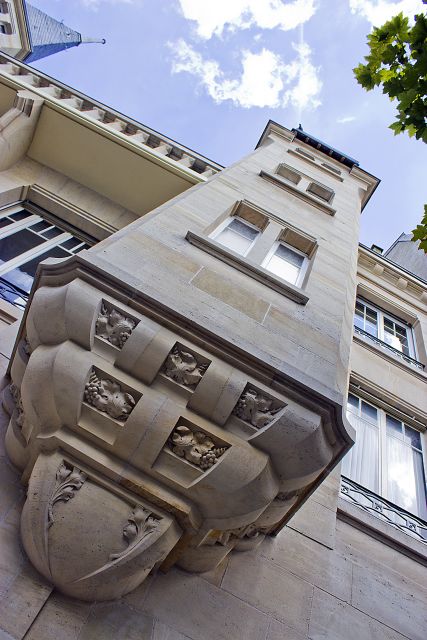
Reims is often linked with champagne, grand religious architecture, and wartime memory. This walk shifts your attention to a different part of the city: the street-level and upper-level facades created during its rebuilding in the 1920s and 1930s.
The tour explains the origins of Art Deco and connects the style to Reims’ place in the First World War. German bombing left the city badly damaged, so rebuilding was not simply a matter of repairing old walls. Architects and builders had to create a new urban face, and the result included the geometric decoration, modern materials, and careful craftsmanship associated with the period.
That background gives the buildings more meaning. Without it, you may see a handsome facade and keep walking. With it, you can understand why so many buildings from this era appear together and why their decoration carries a sense of confidence after destruction.
The walk is not mainly about entering monuments. It concentrates on the exteriors of buildings, especially private residences, so you need to enjoy architecture from the pavement. If you prefer interiors, paintings, or a long visit inside a major landmark, this is not that kind of tour.
More Art Deco Tours in the world:
- Art Deco and Architecture Midtown Landmarks Tour
★ 5.0 · 142 reviews - Chicago Architecture Walking Tour: Incredible Art Deco Interiors
★ 5.0 · 85 reviews - Tulsa Art Deco and Architecture with Expert Guide Walking Tour
★ 5.0 · 77 reviews
Looking up at stucco, mosaics, and ironwork
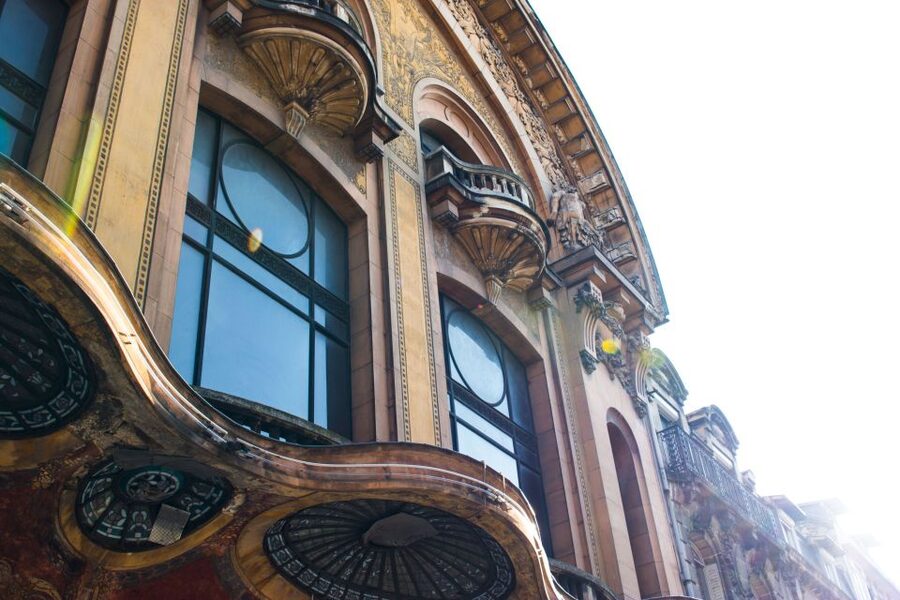
The guide’s central lesson is simple: do not keep your eyes at shop-window height. Reims’ Art Deco details often sit above the level you would notice on an ordinary stroll.
You can expect to examine several types of exterior decoration:
- Stucco, used to shape and frame parts of a facade
- Mosaics, which add color and pattern
- Ironwork, including practical features with decorative design
- Sculptural details, which give buildings a more personal character
The value of a guided walk is that these features can be easy to miss when you are alone. A guide can point out the detail, explain its place in the style, and help you compare one building with the next. The facades become less like background scenery and more like pages in a visual record of the period.
The route appears to focus on the city center rather than a single famous building. That makes it useful for getting your bearings. You are not just visiting one landmark, you are learning how to recognize a style across several streets.
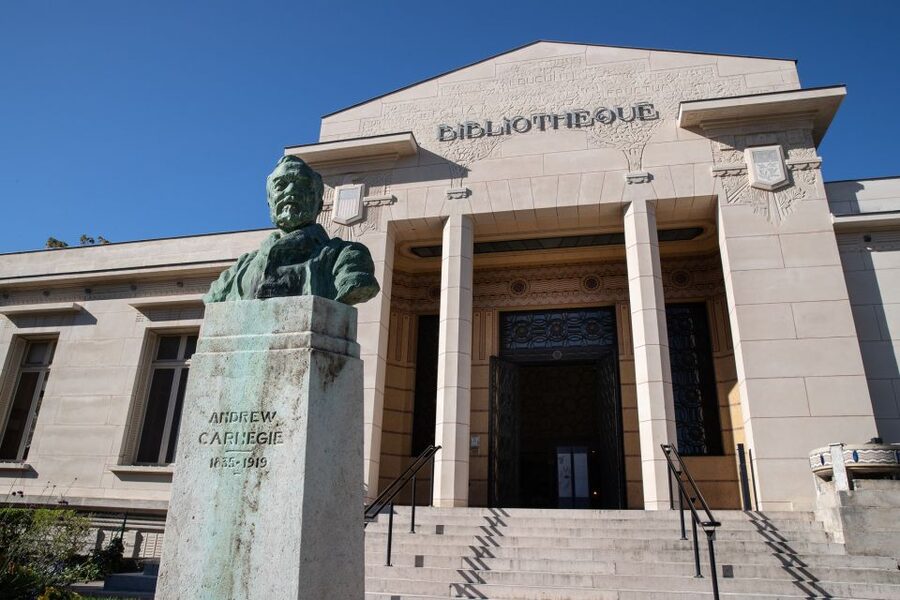
A library is also associated with the experience in the feedback, though the exact part it plays in the route is not specified. Treat that as a possible point of interest rather than a guaranteed interior visit. The published details describe a walking tour of exterior architecture.
Why the First World War matters here
The war context is not a decorative extra. It explains why Reims has so much early 20th-century architecture and why Art Deco is an important part of the city’s identity.
The city was bombed and destroyed by the German army during the First World War. Rebuilding brought a practical question: what should a damaged city look like after the conflict? The answer in Reims included new construction shaped by the design ideas of the 1920s and 1930s.
You will hear about the origins of Art Deco and see how that style took form on local buildings. The point is not only to identify a pattern or ornament. It is to connect design with a particular moment of recovery and change.
That connection makes the tour worthwhile even if you are not an architecture specialist. You do not need to know the difference between every decorative movement before you arrive. The guide’s job is to give you enough context to notice what would otherwise pass unseen.
Still, this is a compact introduction rather than a full course in Reims’ wartime past. The walk refers to the First World War as part of the architectural story, but the available information does not indicate that it visits battle sites, memorials, or museums connected to the conflict.
What the one-hour route feels like

The meeting point is the Office de Tourisme du Grand Reims. From there, your guide leads a walking route through the city center and draws attention to the most notable Art Deco facades along the way.
The route’s rhythm is likely to be stop, look up, listen, and move on. At each building, you can expect the guide to identify elements such as mosaics, ironwork, stucco, or sculpture, then place them within the wider story of reconstruction.
Because the walk is listed as one hour, it fits neatly into a day of sightseeing. You could use it early in your visit to learn what to look for during later walks, or place it between larger attractions. The short length also makes the tour accessible to people who want a focused introduction rather than a long architecture lecture.
There is one practical wrinkle. One participant reported that the tour lasted at least 90 minutes instead of the stated hour. That may have been a particular departure or a longer-than-usual presentation, but you should allow extra time if your schedule is tight. I would not book it immediately before a train, restaurant reservation, or timed entry.
The tour is wheelchair accessible, which is useful for anyone who needs a route suitable for a mobility aid. The experience remains a walking tour, so you should still consider your own comfort with standing and moving through city streets for the full duration.
More Guided Tours in the world:
- Chicago River: 1.5-Hour Guided Architecture Cruise
★ 4.8 · 8,046 reviews - Charleston: History and Architecture Guided Walking Tour
★ 4.8 · 349 reviews - Vienna: Spanish Riding School Guided Architectural Tour
★ 4.8 · 333 reviews - Charleston History, Homes, and Architecture Guided Walking Tour
★ 5.0 · 267 reviews
The French-language guide makes a difference
The live guide speaks French, and the tour is not advertised with English interpretation. That is the single biggest booking consideration for international visitors.
If you understand French, the format should give you more than a self-guided walk. You can hear the explanation behind the style, follow the link between war damage and rebuilding, and ask questions when the group format allows it.
If you understand only a little French, you can still appreciate the visual side of the walk. The facades, colors, shapes, and metalwork are easy to see. But you may miss the finer points about Art Deco and Reims’ wartime history, which are a major part of the tour’s purpose.
The quality of the guiding appears to depend partly on the individual guide and the size of the group. Some departures have been praised for a charming, well-presented guide and for strong cultural knowledge. One especially positive assessment described the guide as highly cultivated, courteous, and very well informed.
Another French-language departure used questions to help the group apply what it had just learned. That is a good sign for anyone who likes an active tour rather than a speech delivered from start to finish. At the same time, one participant found the presentation too rehearsed and felt the guide did not make enough eye contact or respond fully to questions.
This is worth keeping in mind. A guided walk can be excellent when the guide reads the group and pauses for discussion. It can feel flatter when the material is recited without much interaction. The available feedback points to both possibilities.
Group size and hearing the guide
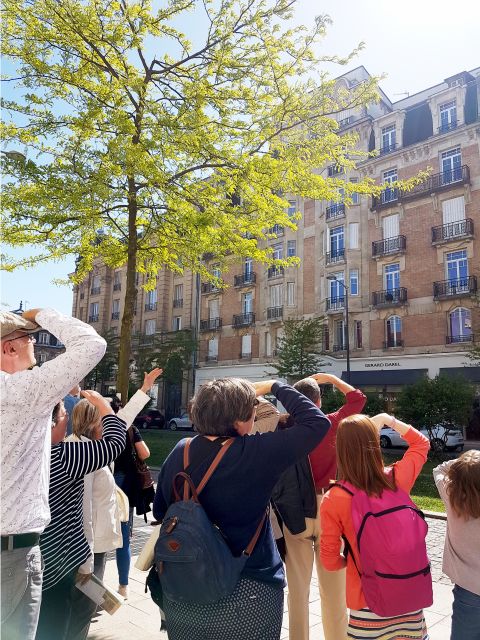
A group of 25 people was reported on one departure, and the guide was sometimes difficult to hear. That matters more on an architecture tour than you might expect. You are often standing beside a street, looking upward, while traffic and city noise compete with the explanation.
If you have hearing difficulty, position yourself close to the guide at the start. The available information does not say that an audio amplification device is supplied, so do not assume one will be available.
A smaller group would make it easier to see details, ask questions, and stay connected to the guide. It would also help with the visual side of the tour, since you may need to move a little to see a facade clearly.
The group size may vary by date. Still, I would treat the possibility of a fairly full departure as part of the experience, especially during popular periods. Arrive at the Office de Tourisme du Grand Reims with enough time to find the meeting point and get near the guide.
Is $12 a fair price?
At $12 per person, this is an inexpensive way to add structure to a walk through central Reims. You are paying for a professional guide and a focused explanation, not for admission to a museum or access to private interiors.
The value is strongest if you would otherwise pass the Art Deco buildings without noticing them. A self-guided walk costs less, of course, but it requires you to research the style, locate the relevant facades, and understand how the First World War shaped the rebuilding. Here, those pieces are brought together in a single hour.
The value is less clear if you already know Reims’ 1920s architecture well or if you want a broad city tour covering champagne, the cathedral, and major historical sites. This experience has a narrow subject, and that is both its strength and its limit.
The price also makes it a low-risk choice for a short stay. You can learn a new side of Reims without giving up half a day or spending the cost of a major attraction. The flexible booking terms add practical value: you can reserve now and pay later, and cancellation is allowed up to 24 hours in advance for a full refund.
Who will enjoy this walk most
I would choose this tour for several kinds of visitors:
- Architecture fans who enjoy comparing facades and spotting small decorative details
- First-time visitors who want a better sense of central Reims before exploring alone
- History-minded visitors interested in how war changed a city’s appearance
- French speakers who want a guided explanation rather than a printed route
- Short-stay visitors looking for a compact activity at a reasonable price
- Curious walkers who like finding beauty in ordinary residential streets
You may want to skip it if you need an English-language tour, prefer indoor attractions, or have a tightly timed schedule. You should also think twice if you are looking for a tour centered on the cathedral, champagne houses, or the full story of Reims. Those subjects are outside the stated focus here.
Small details that make the walk rewarding
The best habit to bring is a willingness to look up. Art Deco decoration is often placed where people do not naturally focus, especially above doors and windows or along upper sections of facades.
You should also pay attention to repetition. One building may show a single attractive detail, while several buildings together reveal the style more clearly. The guide’s comparisons can help you notice how materials and decoration are used across the city center.
Try not to judge the tour only by the number of famous sights. Its purpose is closer to an architectural reading lesson. You are learning how to see a city that was rebuilt, and that skill can continue to help you after the tour ends.
Because the experience is short, it works well as a companion to independent exploring. Afterward, you can walk back through the same streets and test yourself. Can you spot the mosaic? Did you notice the ironwork before the guide pointed it out? That kind of follow-up is where a one-hour tour can earn its keep.
Should you book the Reims Art Deco tour?
Book it if you want a focused look at Reims’ 1920s and 1930s facades, understand French, and enjoy learning how architecture reflects wartime destruction and rebuilding. At $12, it offers a sensible introduction to a part of the city that many visitors overlook.
Go in with realistic expectations. The tour concentrates mainly on exterior buildings, particularly residences, and the route may run longer than the advertised hour. A larger group can also make hearing difficult, and the guide’s style may be more formal than conversational.
For a French-speaking visitor with an interest in design, this is an easy recommendation. For an English-only visitor, book only if you are comfortable gaining most of the value from the visual details rather than the spoken explanation.
FAQ
Where does the Reims Art Deco tour meet?
The meeting point is the Office de Tourisme du Grand Reims.
How long does the tour last?
The listed duration is one hour. One participant reported that a departure lasted closer to 90 minutes, so allow extra time if your schedule is tight.
What language is the tour conducted in?
The live guide speaks French. No other tour language is specified.
What does the tour include?
The activity includes a walking tour in Reims city center and a professional tour guide.
Is the tour wheelchair accessible?
Yes, the activity is listed as wheelchair accessible.
Can I cancel or pay later?
You can cancel up to 24 hours in advance for a full refund. You can also reserve your place and pay later, with no payment required at the time of booking.
Newly added in the world
- Venice Art and Architecture Private Walking Tour★ 4.5 · 11 reviews
- Basilica San Marco and the Pala d’Oro with Architect Guide★ 4.5 · 19 reviews
- Walking tour in Venice with an architect★ 5.0 · 16 reviews
- Lesser Poland Wooden Architecture Trail UNESCO Private Tour from Krakow★ 5.0 · 15 reviews
- Lisbon Contemporary Architecture★ 5.0 · 3 reviews
- Private Munich Tour for History Buffs with Architectural Gems and WWII sites★ 5.0 · 3 reviews
- Neoclassical Paris Architecture 2-Hour Private Walking Tour★ 5.0 · 7 reviews
- Street Art and Architecture:Porto Speaks Through Its Streets★ 3.0 · 2 reviews
Art Deco Tours, compared.

The Official Art Deco Walking Tour by The Miami Design Preservation League
Read our review →

Guided 10am Morning Art Deco Walk From Napier Art Deco Trust
Read our review →

Award-winning Art Deco & Neon Lights Walking Tour in Miami Beach
Read our review →
Art Deco and Architecture Midtown Landmarks Tour
Read our review →Browse the lists this tour appears in