

Review · WALKING TOURS
Copenhagen: Danish Design and Architecture Walking Tour
Copenhagen’s design story is easiest to grasp on foot, where a modern opera house, old harbor buildings, a royal castle, and everyday objects all share the same practical outlook. This tour connects those dots instead of treating architecture as a string of photo stops. I especially like the Opera House visit, where light and space become part of the lesson, and the chance to handle three Danish design objects, which gives the ideas a hands-on edge.
The route also shows how Copenhagen fits new uses into old buildings along the harborfront. The main drawback is pace: you cover several sights in a short time, and the advertised duration appears as both two hours and about two and a half hours, so allow extra time. The meeting point is on Holmen, and the accessibility notes conflict, so check before booking if you have mobility needs.
Key points
- Start at the Royal Danish Academy on Holmen: Begin where architecture, design, and conservation are taught together.
- See Copenhagen through design principles: Your guide links function, beauty, light, space, and innovation.
- Cover seven distinct stops: The route includes the Opera House, Inderhavnsbroen, Nyhavn, Rosenborg Castle, King’s Garden, and Design Museum Denmark.
- Handle three iconic Danish objects: This is more active than a standard sightseeing walk.
- Hear the story in English: The guide explains how old buildings and modern uses work side by side.
- Plan for a brisk city walk: Comfortable shoes and weather-ready clothing matter more than dressy clothes.
A design tour that connects buildings to daily life

Many architecture walks stay fixed on façades. This one takes a wider view. You look at buildings, bridges, harbor spaces, gardens, and objects, then consider the same design ideas in ordinary life. The focus is not only on what looks good, but on how a place works.
That makes the tour useful for you even if you do not know much about architecture. Your guide introduces the principles of Danish design in plain terms, then points to examples along the route. Expect discussion of functionality, aesthetics, innovation, light, and space, rather than a long list of dates and architects.
The walk begins at the Royal Danish Academy, Architecture, Design and Conservation, on Holmen. That is a fitting starting point because the academy brings together the very subjects the tour explores. You meet outside the main sightseeing core, then walk toward the harbor and central Copenhagen.
The experience is led in English. One verified booking specifically names Linnea as the guide and praises the mix of Danish architectural history, art, and design across several centuries. Linnea may not be the guide on every departure, but the comment gives you a useful picture of the approach: detailed without being limited to one period.
More Walking Tours in the world:
- Lecce: Baroque Architecture and Underground Walking Tour
★ 4.6 · 1,248 reviews - Chicago in a Day: Food, History & Architecture Walking Tour
★ 5.0 · 1,153 reviews - Ramblas, Old Town, Gothic and Gaudi Architecture Walking Tour
★ 5.0 · 723 reviews
The Opera House makes light part of the lesson
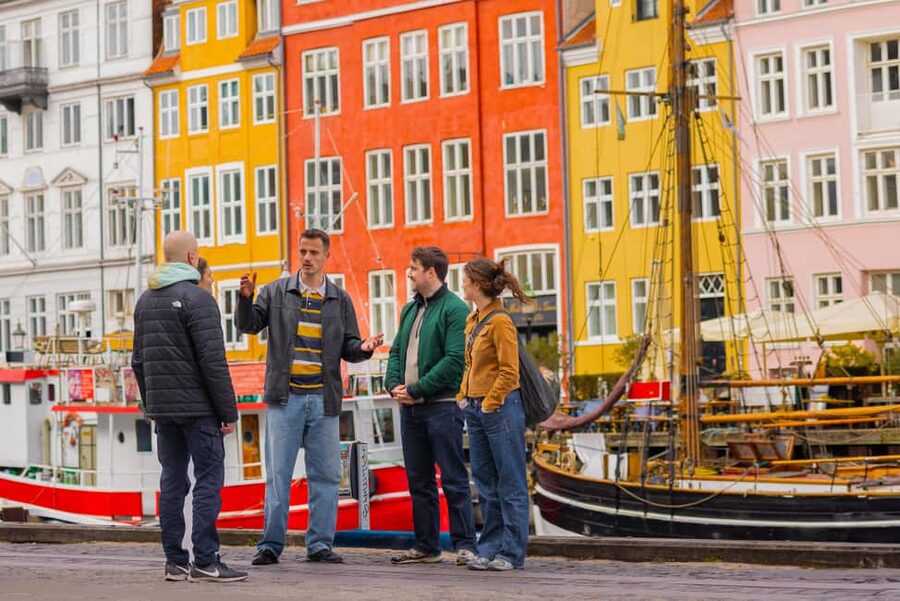
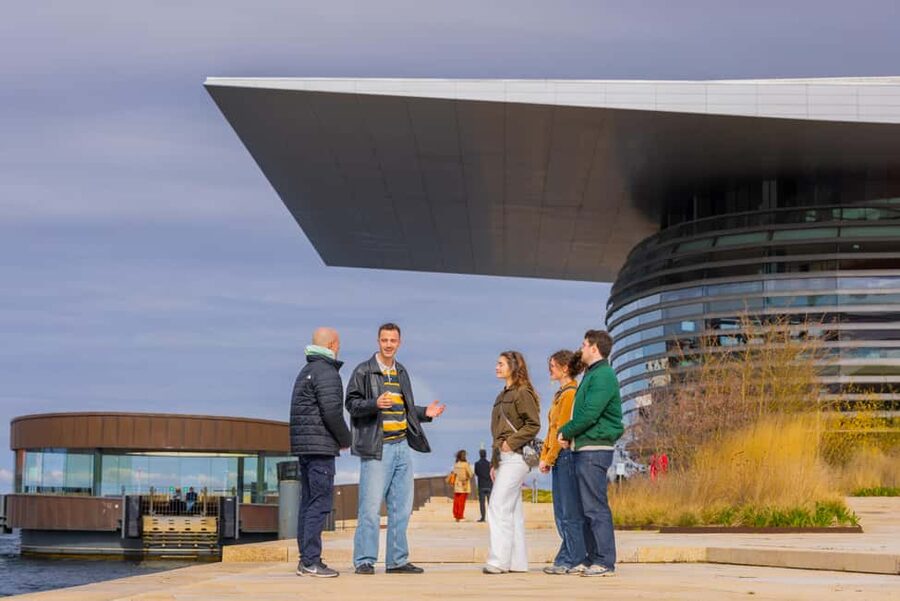
The Copenhagen Opera House is the first major stop, with about 20 minutes set aside for a visit. The point here is not simply to photograph a famous building. Your guide uses the Opera House to explain the relationship between light and space, two ideas that can sound abstract until you are standing inside or beside a large public structure.
A short stop means you should expect an introduction rather than a full architectural study. You will have time to take in the building and hear why its design matters, but not time for every detail. If the Opera House is a personal priority, consider returning on your own after the tour.
This is also where the tour’s design-first approach becomes clear. Instead of asking only when a building was built, you are encouraged to think about how people move through it, how light shapes the experience, and how a grand cultural venue can still feel usable.
Crossing Inderhavnsbroen on foot
From the Opera House, the group walks for roughly 15 minutes to Inderhavnsbroen. A bridge can seem like a simple link between points, but on this route it becomes part of the subject. You experience how infrastructure joins neighborhoods and changes the way people move through the city.
The bridge crossing also breaks up the stops inside buildings or historic areas. You get an open-air stretch and a chance to see Copenhagen from a different angle before reaching Nyhavn. Keep your camera ready, but listen as you walk. The bridge is not only a transfer between attractions; it helps show how design affects everyday movement.
This portion may feel less structured than the formal visits. That is normal. The tour is built around the city itself, so some of the learning happens while walking from one example to another.
Nyhavn shows old buildings with a modern role

Nyhavn receives about 20 minutes. Its colorful waterfront buildings are familiar Copenhagen scenery, but the design discussion gives the stop more purpose than a quick photo opportunity. Here, you consider how historic buildings along the harborfront can be adapted for present-day use.
That theme matters because Copenhagen’s architecture is not presented as a contest between old and new. The tour looks at how traditional forms and historic structures can remain part of a modern city. You may find this one of the most useful ideas on the walk because it applies to urban planning far beyond Denmark.
Twenty minutes is enough to understand the setting and hear the main points. It is not enough for a leisurely harbor visit, a meal, or an extended photo session. If you want time to explore Nyhavn at length, plan a separate visit.
A few more architecture walks in the world worth a look
- Chicago Architecture River Cruise
★ 5.0 · 15,756 reviews - Chicago River 90-Minute Architecture Tour
★ 4.5 · 9,629 reviews - Chicago River: 1.5-Hour Guided Architecture Cruise
★ 4.8 · 8,046 reviews - Chicago Architecture Center River Cruise aboard First Lady
★ 5.0 · 5,536 reviews
Rosenborg Castle adds a royal contrast
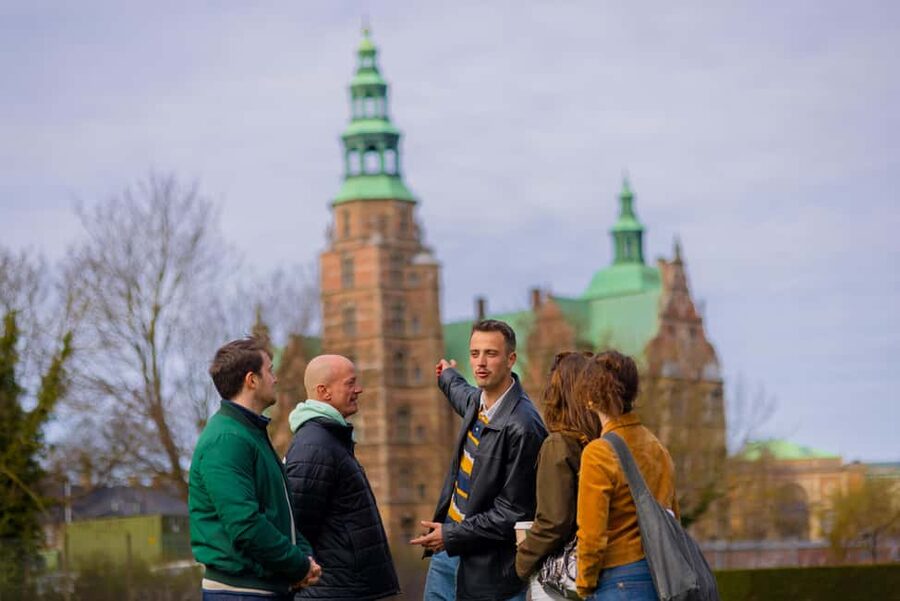
The next stop is Rosenborg Castle, with about 15 minutes listed for a visit and break time. The castle brings a different scale and mood to the route. After contemporary architecture, a pedestrian bridge, and adapted waterfront buildings, you encounter a historic royal setting.
The stop is brief, so think of it as context rather than a complete castle tour. You will not have time to explore every room or collection during this walking experience, and entrance fees are not included. The value here lies in seeing how older architecture fits into the broader story of Copenhagen’s design traditions.
The break is helpful. A walking tour with several stops can feel rushed if there is no pause, and this point gives you a moment to reset. Bring water or a small snack if needed, since food and drinks are not included.
King’s Garden gives the route breathing room

The King’s Garden follows with about 25 minutes, the longest scheduled visit on the itinerary. This is a sensible place for a longer pause. The garden gives you space to absorb the contrast between architecture and open ground, while Rosenborg Castle supplies the historic backdrop.
The stop also reminds you that design is not limited to buildings. How a garden is arranged, how people pass through it, and how it relates to a major landmark are all part of the experience of a city. Your guide can connect those choices to the larger ideas discussed throughout the walk.
Because the tour takes place outdoors, the weather matters. Wear layers and bring clothing suited to the forecast. Copenhagen’s conditions can change, and an outdoor stop is much more pleasant when you are prepared.
Design Museum Denmark finishes with objects you can handle

The walk ends at Design Museum Denmark, where you receive about 15 minutes of free time. The museum is a natural finish because the tour moves from large public buildings to the objects people use every day.
A particularly good feature is the hands-on experience with three iconic Danish design objects. Handling an object can make design principles easier to understand than simply viewing a chair, tool, or household item behind glass. You can think about how the object feels, how it functions, and why its form may be considered successful.
The supplied details do not promise a full museum admission or a guided museum tour. Entrance fees are not included, and the scheduled free time is short. Treat the museum as the endpoint and a useful introduction, then return later if you want a longer visit.
Finishing here also gives you a practical advantage. You end near a major design institution rather than returning to Holmen, so you can continue exploring central Copenhagen from there. The tour does not include transportation back to the starting point.
What the walking pace feels like

The listed stops create a route with several transitions. You walk from Holmen to the Opera House, cross Inderhavnsbroen, continue to Nyhavn, then reach Rosenborg Castle, King’s Garden, and Design Museum Denmark.
The activity is described as lasting two hours in one section and approximately two and a half hours in another. The individual stop and walking times also suggest that your full outing may run longer than a strict two-hour appointment. I would reserve at least two and a half hours, with a little flexibility afterward.
You should be comfortable walking outdoors for the full route. Wear proper walking shoes, bring a camera if you like taking architectural photos, and dress for the weather. Smoking is not allowed during the experience.
The format suits you best if you prefer a guided overview before exploring on your own. It is less suitable if you want a slow photography walk, a long museum visit, or extended time at each landmark.
What the $63 price really buys

At $63 per person, this is not the cheapest way to see Copenhagen’s central sights. You can view many of the exterior landmarks independently for little or no cost. The price makes more sense if you want a guide to explain the links between them and give you a design framework for the rest of your visit.
You are paying for a guided walking route, English-language interpretation, and a hands-on session with three Danish design objects. You are not paying for transportation, food, drinks, or attraction entrance fees. That distinction matters. If you expect a ticketed castle or museum tour to be included, the price may feel less attractive.
I see the best value for people who enjoy ideas as much as pictures. The tour helps you notice why a space works, how old and new uses can coexist, and how design reaches into daily objects. It is less valuable for someone who only wants a quick list of famous sights.
The two available ratings are both five out of five. One detailed comment praises the guide, Linnea, and the way the walk combines Danish architectural history with art and design across several centuries. Another describes the guides as friendly and well informed about the area, with the afternoon feeling pleasant. Those points match the tour’s strongest promise: good guidance and a clear connection between places.
Still, two ratings are too small a sample to settle every question. I would judge the tour mainly by its format, route, and price rather than treating the perfect score as a guarantee.
Who should book this Copenhagen walk?
I would recommend it to first-time Copenhagen visitors who want a smart introduction to the city’s built environment. It also suits design students, architecture fans, museum-minded visitors, and anyone curious about why Danish objects often favor simple, useful forms.
You will get the most from it if you:
- Enjoy walking between major sights
- Want context rather than isolated photo stops
- Like hearing how cities reuse historic buildings
- Appreciate both architecture and everyday objects
- Have time to explore Design Museum Denmark more fully later
I would hesitate if you have very limited time and only want the Opera House or Nyhavn. A dedicated visit may give you longer at those places. I would also think twice if you dislike outdoor walking or need a fully step-free route.
The accessibility information needs special attention. One section says the activity is wheelchair accessible, while another says it is not suitable for people with mobility impairments or wheelchair users. Since the route crosses a bridge and moves through several outdoor and historic areas, contact the provider before booking and ask for the current conditions. Do not rely on the general accessibility label alone.
Booking advice for a smoother afternoon
Arrive at the Royal Danish Academy meeting point 10 minutes early. The starting location is on Holmen, so check your route to the academy before the day begins and leave enough time to find the exact meeting point.
Book comfortable shoes rather than stylish but stiff ones. You will spend the experience moving between stops, and the quality of your afternoon depends as much on your feet as on the guide’s commentary.
The booking terms are flexible: you can cancel up to 24 hours before the start for a full refund, and you can reserve now and pay later. Those options help if your Copenhagen schedule is still shifting.
FAQ
Where does the Danish Design and Architecture Walking Tour start?
The tour starts at Det Kongelige Akademi, Architecture, Design, Conservation, on Holmen in Copenhagen.
Where does the tour finish?
It finishes at Designmuseum Danmark, also known as Design Museum Denmark.
How long does the walking tour last?
The activity information gives a duration of two hours in one place and approximately two and a half hours elsewhere. Allow at least two and a half hours so you are not rushed.
What language is the tour offered in?
The live guided tour is offered in English.
Is transportation included?
No. Transportation to and from the meeting point is not included.
Are attraction entrance fees included?
No. Entrance fees to attractions are not included in the price.
What should I bring?
Bring comfortable walking shoes, a camera if desired, and clothing suitable for the weather.
Can I cancel for a full refund?
Yes. You can cancel up to 24 hours in advance for a full refund.
Is the tour suitable for wheelchair users?
The information is inconsistent. One section describes the activity as wheelchair accessible, while another says it is not suitable for wheelchair users or people with mobility impairments. Contact the provider before booking to confirm the current route and access conditions.
Should you book it?
Book this tour if you want Copenhagen explained through design choices, not just famous views. The Opera House, Nyhavn, Rosenborg Castle, King’s Garden, and Design Museum Denmark make a varied route, while the three hands-on objects keep the subject connected to daily life.
At $63, the tour is worth it for thoughtful guidance and a well-linked route, but not if you expect meals, transport, or museum admissions. Allow extra time beyond the two-hour label, arrive early at Holmen, and settle the accessibility question in advance. For a curious visitor who likes architecture, objects, and the way old buildings serve new needs, this is a focused and useful introduction to Copenhagen.
Newly added in the world
- Washington, DC: Georgetown Architecture Walking Tour★ 5.0 · 8 reviews
- Washington DC: Dupont Circle & Embassy Row Architecture Tour★ 5.0 · 6 reviews
- New Orleans : Garden District Architecture Walking tour★ 4.8 · 5 reviews
- Wilmington History and Architecture Tour★ 4.8 · 18 reviews
- Unveiling Brno: History, Culture & Architectural Delights★ 5.0 · 2 reviews
- Vicenza: Palladian Architecture Private Walking Tour★ 3.3 · 3 reviews
- Walk & Discover KL’s Architectural and Heritage Gems★ 5.0 · 7 reviews
- Private Colonial Williamsburg Architectural Tour★ 5.0 · 5 reviews
Walking Tours, compared.

The Official Art Deco Walking Tour by The Miami Design Preservation League
Read our review →
Baroque Architecture and Underground Walking Tour
Read our review →
Chicago in a Day: Food, History & Architecture Walking Tour
Read our review →

Ramblas, Old Town, Gothic and Gaudi Architecture Walking Tour
Read our review →
Chicago’s Secret Interiors Architectural Walking Tour
Read our review →

Browse the lists this tour appears in