
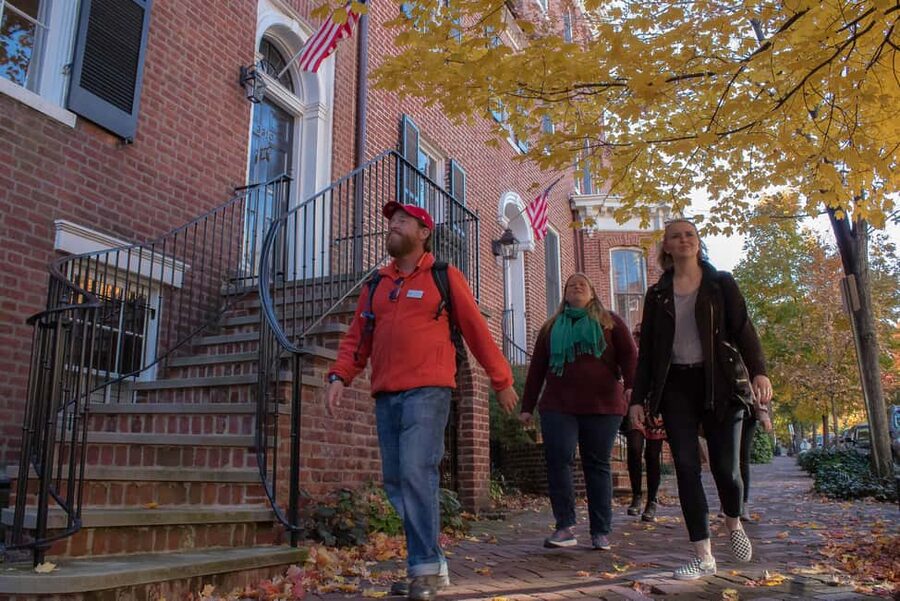
Review · HISTORICAL TOURS
DC: Georgetown History & Architecture Tour with Local Guide
Georgetown feels like Washington’s older, more personal face. Before the capital was planned, this port town already had merchants, churches, taverns, and brick houses. I like that this tour begins beside the C&O Canal, then threads through quiet lanes where small details, such as firemarks, coal chutes, ironwork, and gas lanterns, tell more than a grand monument ever could.
I also like the human scale. You hear about the Kennedys, Black Georgetown families, immigrants, women who pushed against old rules, and the politicians who lived here before reaching the White House. The small-group feel and relaxed pace have earned repeated praise, though anyone expecting a formal architectural lecture may find the tour leans as much toward stories and local gossip as building design.
Key points at a glance
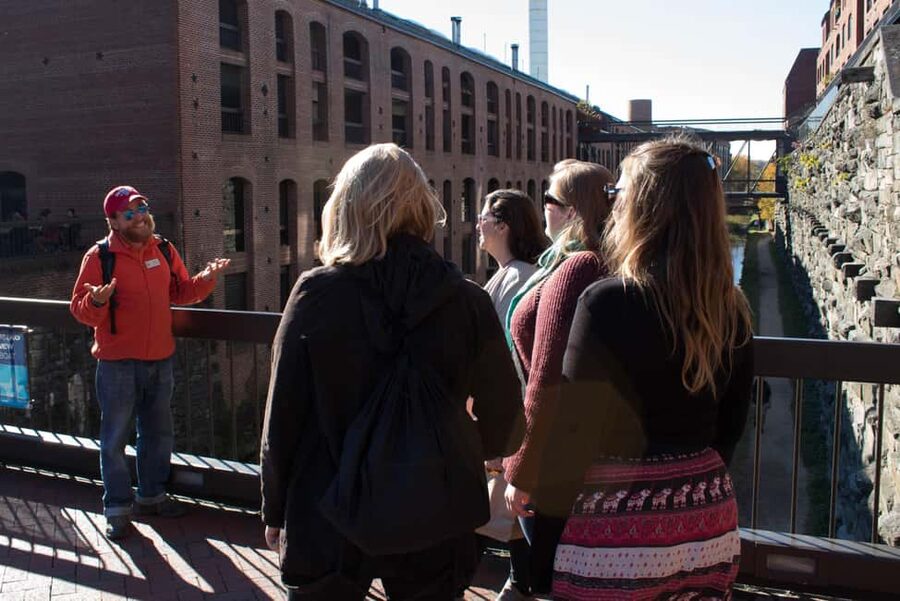
- Begin at C&O Canal Lock 3: See how Georgetown’s industrial past grew around a working waterway.
- Enter the Old Stone House yard: Visit the oldest residential building in Washington, DC.
- Read the streets like a history book: Look for original firemarks, coal chutes, ironwork, and old gas lanterns.
- Follow the Kennedy connection: Hear about John and Jackie Kennedy’s Georgetown years before and after the assassination.
- Finish at Georgetown University: Connect the neighborhood to the famous campus and its long local influence.
- Expect a personable guide: Vicky, Wesley, Becca, Ingeborg, Georgia, Catherine, Wayne, and others have led this walk with humor, clear storytelling, and useful restaurant tips.
Why Georgetown deserves a walking tour
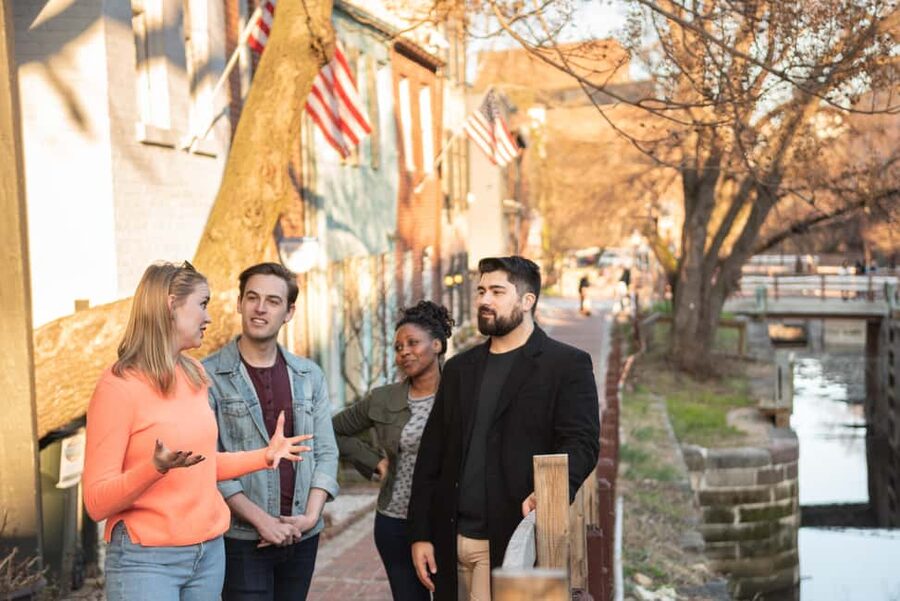
Washington is often presented through monuments, government buildings, and broad ceremonial avenues. Georgetown gives you something different: narrow streets, old homes, shaded sidewalks, and the sense of a town that existed before the capital was drawn on a map.
That age matters. Georgetown was founded in the 18th century, while Washington, DC, came later as the new national capital. The neighborhood kept its own identity, and the tour helps you see that independence in the buildings and street plan.
I find walking especially useful here because the best details are easy to miss from a car or sightseeing bus. A row of handsome homes may look uniform at first. Then your guide points out a coal chute, a small fire insurance mark, unusual ironwork, or a surviving gas lantern. Suddenly, the street becomes a record of how people heated their homes, protected their property, and moved through daily life.
The two-hour length is well judged. You have enough time to get beyond the shopping streets, but not so much that the walk becomes tiring for most people. Several participants have described the pace as neither too fast nor too slow, and one guide took particular care with older walkers who needed more time.
More History Walks in the USA:
- Chicago in a Day: Food, History & Architecture Walking Tour
★ 5.0 · 1,153 reviews - Charleston’s Best Highlights: History, Culture & Architecture
★ 5.0 · 422 reviews - Palm Springs Modernism Architecture & History Bike Tour
★ 5.0 · 359 reviews
Starting beside C&O Canal Lock 3
The meeting point is at C&O Canal Lock 3, between Thomas Jefferson Street and 30th Street NW. Look for the large park on the north side of the canal. Google Maps lists the location simply as C&O Canal Lock 3, with no conventional street address.
This is a sensible starting point because it introduces Georgetown through work rather than wealth. The canal carried goods through the industrial side of the neighborhood, linking Georgetown to a wider transportation network. Your guide spends about 15 minutes here, using the lock and canal as a way to explain how the area made money and why its waterfront mattered.
The location can be slightly awkward if you are relying on a taxi or rideshare. The practical landmark supplied for drivers is Baked & Wired at 1052 Thomas Jefferson Street NW. From there, the canal meeting point is about a two-minute walk, and you can see the starting area from the bridge in front of the bakery.
Arrive with a little time to spare if you want to get oriented. Baked & Wired is also a useful place to pick up a pastry before the walk, though food is not included in the tour.
Old Stone House and Georgetown’s earliest homes
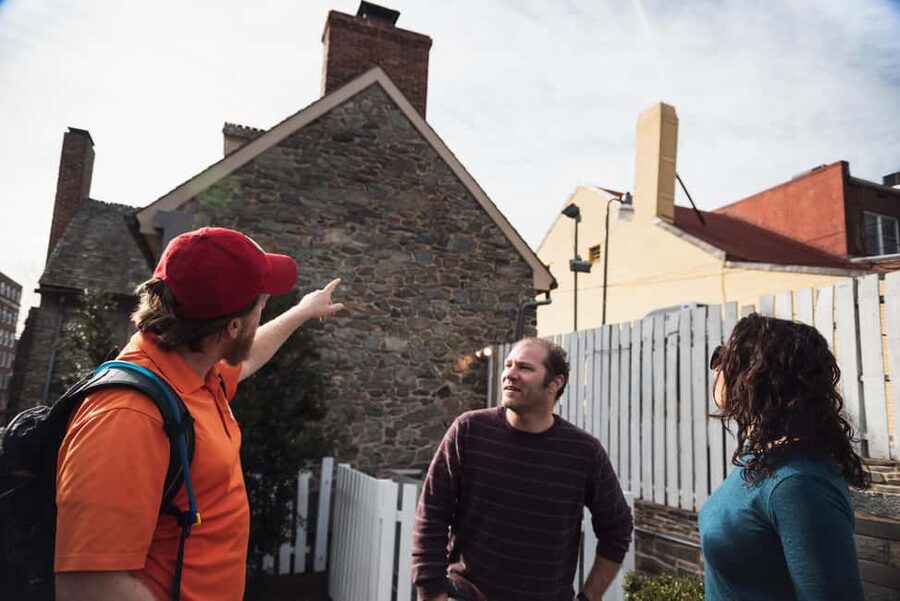
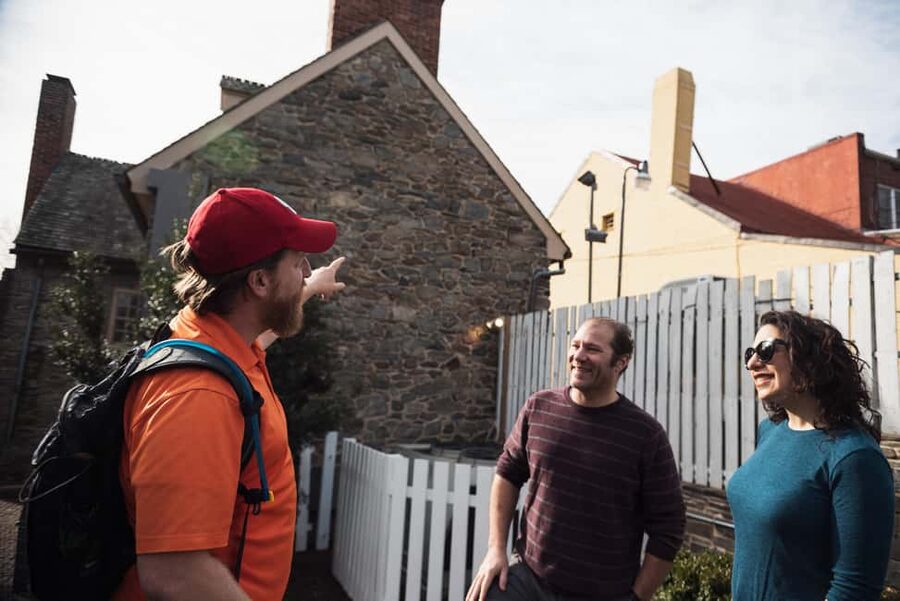
The next stop is the Old Stone House, one of the clearest links to Georgetown’s early residential past. It is described as the oldest residential building in the District and is now a National Park site.
You get a short visit and photo stop, including access to the yard. That access is a small but worthwhile detail. The house is not simply something you pause beside on a busy street. You have a little space to see it as a home and to think about how different Georgetown looked when the neighborhood was still a separate town.
From there, the walk moves toward M Street and the surrounding residential blocks. M Street is the livelier commercial spine, but the tour uses it as a bridge between public Georgetown and the quieter streets behind it. You will have time for photographs and a guided explanation of how the neighborhood changed over the centuries.
This is also where the tour’s balance becomes clear. You are not spending two hours examining architectural plans or discussing every decorative feature in academic detail. Instead, the guide connects houses to people and events. For many visitors, that makes the information easier to remember. If your main goal is a specialist study of Federal, Georgian, or Victorian design, you may want to add a more architecture-focused visit elsewhere.
Historic houses and the details most people miss
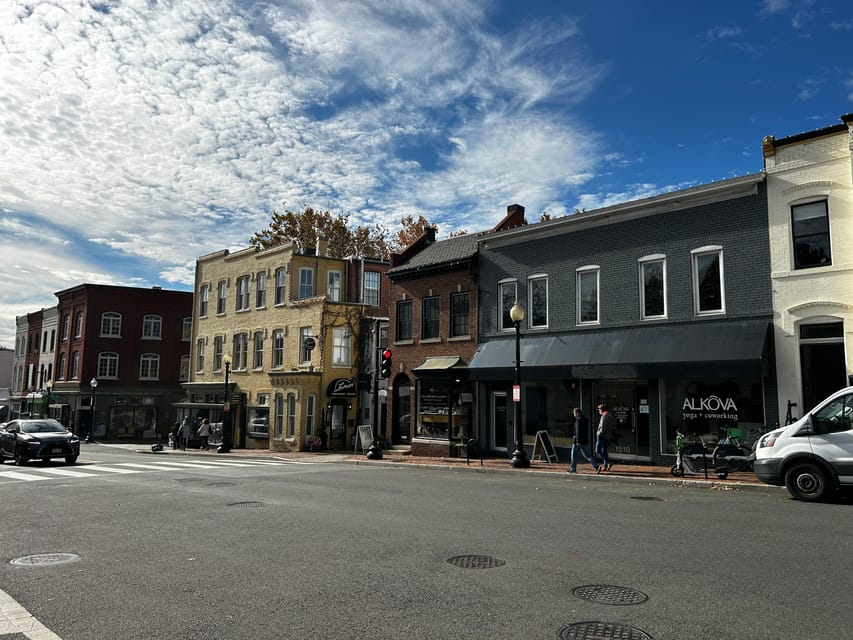
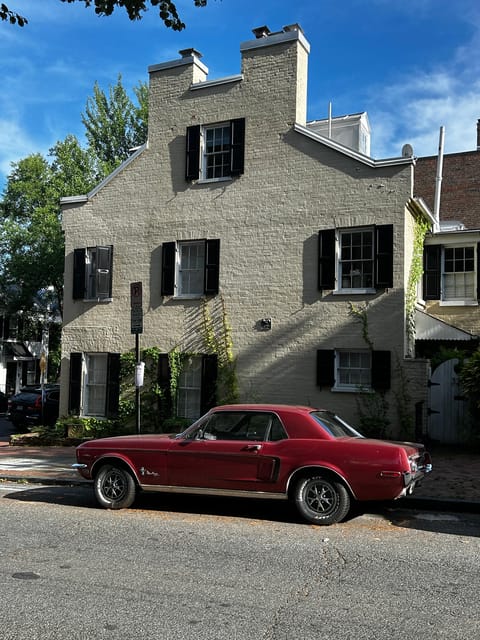
A major part of the walk takes place in Georgetown itself, with about 45 minutes devoted to streets, homes, and local stories. This is the section where comfortable shoes matter most. You are walking over cobblestones and along historic streets, with stops for explanation and photographs.
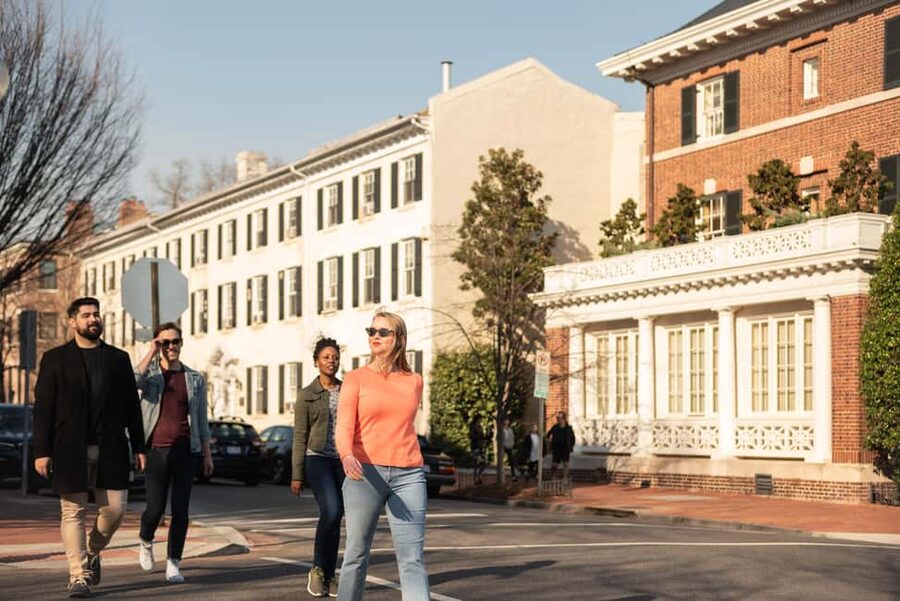
The houses cover the 18th and 19th centuries, and the guide draws attention to features that reveal their original use. Look for:
- Firemarks showing historic insurance protection
- Coal chutes that once fed household heating systems
- Decorative and practical ironwork
- Surviving gas lanterns
- Victorian homes beside older brick buildings
- Historic churches and streets shaped before modern traffic
These details give you a more useful way to look at Georgetown after the tour ends. Instead of seeing a pretty row of façades, you start asking who lived there, how the home functioned, and what changed over time.
The stories also reach beyond the famous names. You hear about Black Georgetown families, immigrant communities, and women who challenged the social expectations of their time. That wider view keeps the neighborhood from becoming only a parade of presidents and celebrities.
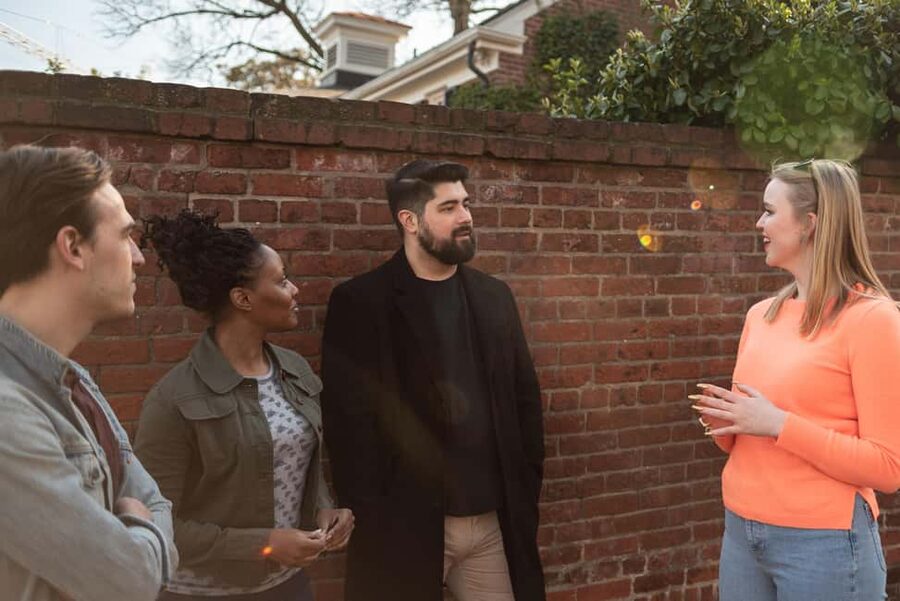
The guide’s delivery matters here. Vicky is repeatedly praised for combining facts with warmth and for answering questions. Wesley is described as informative, entertaining, and helpful with dining suggestions. Ingeborg has a lively style, while Wayne adds jokes without losing the historical thread. Other guides named by participants include Becca, Georgia, Catherine, and Katherine.
Because different guides lead the walk, the exact rhythm will vary. That is worth knowing before booking. The core route and subject matter remain the same, but one guide may emphasize architecture, another local personalities, and another the political stories.
More Guided Tours in the USA:
- Chicago River: 1.5-Hour Guided Architecture Cruise
★ 4.8 · 8,046 reviews - Charleston: History and Architecture Guided Walking Tour
★ 4.8 · 349 reviews - Charleston History, Homes, and Architecture Guided Walking Tour
★ 5.0 · 267 reviews - Chicago River: Guided Sunset Cocktail & Architecture Tour
★ 4.6 · 203 reviews
Kennedy homes and the neighborhood’s famous residents
Georgetown’s connection with John and Jackie Kennedy is one of the tour’s strongest hooks. You hear about their homes and their time in the neighborhood before and after John Kennedy’s assassination.
The value here is not just spotting a celebrity address. Georgetown helps place the Kennedys in a real neighborhood, surrounded by churches, restaurants, university life, and old houses rather than only the polished image associated with the White House years.
You also hear stories about politicians and other notable residents. The guide may connect Georgetown to the period when future presidents were still members of Congress, living ordinary urban lives before national fame changed their routines.
Taylor Swift is part of the tour’s modern connection to Georgetown as well. That reference gives the walk a current touch, but the older stories remain the main attraction. The mix can be useful for families or groups with different interests: one person may come for architecture, another for presidential history, and another for contemporary celebrity connections.
Martin’s Tavern appears as a short photo stop. The stop is brief, about five minutes, so treat it as a visual and historical marker rather than a meal break. Dining recommendations can come from the guide, and several people valued those practical suggestions, but food and drinks are not included.
The Wave Wall and the neighborhood’s changing identity
The Wave Wall is another short stop, with time to visit, take photos, and hear an explanation. The tour does not linger here, which helps keep the overall walk moving.
This part of the route is useful because Georgetown is not frozen in the past. The neighborhood combines old buildings with modern public art, shops, restaurants, university life, and changing cultural references. The tour presents that mixture without abandoning the older story.
Still, the short stop means you should not expect a major standalone attraction at every point. Some locations function mainly as prompts for the guide’s storytelling. The experience depends on listening closely, not simply collecting famous sights.
Georgetown University and the final ten minutes
The walk finishes at Georgetown University, with a visit, photo opportunity, and about ten minutes of free time. The campus gives the tour a strong ending because it links the neighborhood’s history to an institution that remains central to its identity.
You learn how Georgetown influenced the university and how the surrounding community and campus developed alongside one another. Even people who already attended the university can pick up new information about the rest of the neighborhood and the school’s place within it.
The university is also a practical finish. Once the tour ends, you are in a part of Georgetown with plenty of options for continuing your afternoon. You can explore more streets, stop for food, shop along M Street, or use the guide’s suggestions to plan the next part of your visit.
The supplied description also mentions President Lincoln and his grand memorial. That subject appears as part of the wider Washington context, but the listed walking route does not go to the Lincoln Memorial. Do not book this tour expecting a memorial visit. Its focus is Georgetown, with Lincoln used as part of the city’s broader historical story.
Pace, group size, and guide style

This is a walking tour, not a hop-on, hop-off experience. You should be ready to spend two hours outside and to walk across historic surfaces. The route includes photo stops and pauses, so it is not presented as a hard march.
Group size can vary. One person reported a group of eight, which is a comfortable size for hearing the guide and asking questions. Another booking became a private tour, while several others described small groups. You should not assume every departure will be private, but the format appears capable of feeling personal when numbers are low.
The guides are licensed professionals and local writers on Georgetown history. The strongest praise centers on their delivery: clear explanations, humor, attention to questions, and an ability to keep the walk moving. Vicky is especially often singled out for her warmth and depth of information, while Becca, Ingeborg, Georgia, Catherine, Katherine, Wesley, and Wayne also receive strong marks for making the history lively.
The one consistent caution is emphasis. One person wanted less gossip and more architectural analysis. That is fair. This tour is best understood as a local history walk with architecture woven through it, not as a technical building survey.
Is $39 a fair price?
At $39 per person, the tour offers good value if you want a guided introduction to Georgetown rather than a list of addresses to photograph. You get two hours with a licensed local guide, access to the Old Stone House yard, a look at the canal, historic homes, Martin’s Tavern, the Wave Wall, and Georgetown University.
The real value lies in interpretation. You can walk these streets for free, but you may not notice the firemarks, coal chutes, or social stories without help. A guide also saves you from piecing together Georgetown’s colonial, industrial, political, and university connections on your own.
The price is less compelling if you only want to wander independently or if you are mainly interested in detailed architectural classification. In that case, use the route as a starting point and spend extra time exploring the streets afterward.
Gratuity is not included. You can cancel up to 24 hours before the tour for a full refund, and the reserve now, pay later option gives you some flexibility while planning a Washington visit.
Who should book this Georgetown walk?
I would recommend it to first-time visitors who want to understand why Georgetown feels different from the rest of Washington. It also suits people who enjoy old homes, political stories, neighborhood history, and short walks with regular pauses.
Families and mixed-interest groups should do well because the subjects range from canals and architecture to the Kennedys, Taylor Swift, universities, immigrants, and local personalities. The humor used by several guides can make the material easier for children and teenagers to follow, though the tour is still built around listening.
It is also a good choice for anyone who wants practical advice after the history talk. Guides have offered restaurant, shopping, and neighborhood tips, giving you an easy way to continue exploring once the formal walk ends.
You may want something else if you dislike cobblestones, need a fully seated activity, or want a strict architecture seminar. The tour includes historic design, but its strongest feature is storytelling about people and place.
Should you book it?
Book this tour if you want Georgetown to feel like a lived-in town rather than a collection of attractive houses. The C&O Canal, Old Stone House, Kennedy connections, Black Georgetown stories, university history, and small architectural clues form a useful two-hour introduction.
I especially like it for a first afternoon in Georgetown. You get your bearings, learn which streets deserve a second look, and leave with restaurant and shopping ideas. Choose it for a friendly local history walk, not for a technical architecture course or a Lincoln Memorial visit.
FAQ
Where does the Georgetown tour begin?
It begins at C&O Canal Lock 3, between Thomas Jefferson Street and 30th Street NW. The meeting area is in the large park on the north side of the canal.
What address should I use for a taxi or rideshare?
Use Baked & Wired at 1052 Thomas Jefferson Street NW, Washington, DC 20007. The tour meeting point is about a two-minute walk away, and the start can be seen from the bridge in front of the bakery.
How long is the walking tour?
The tour lasts two hours.
What language is the tour conducted in?
The live tour is conducted in English.
How much does the tour cost?
The listed price is $39 per person.
Does the tour visit the Old Stone House?
Yes. The route includes a visit and photo stop at the Old Stone House, along with access to the yard of one of Georgetown’s oldest homes.
Does the tour visit Georgetown University?
Yes. The tour ends at Georgetown University and includes a campus visit, photo time, and free time.
Is the Lincoln Memorial part of the walking route?
No. The route ends at Georgetown University. Lincoln and his memorial may be discussed as part of the wider Washington story, but the listed route does not visit the memorial.
Is gratuity included?
No. Gratuity is not included in the tour price.
Can I cancel the booking?
Yes. You can cancel up to 24 hours in advance for a full refund. You can also reserve now and pay later, according to the booking terms.
Newly added in the USA
- Miami Beach Art Deco Segway Tour★ 4.5 · 17 reviews
- Boston: Freedom Trail History and Architecture Walking Tour★ 4.8 · 18 reviews
- Boston: Harbor and Charles River Architecture Boat Tour★ 4.6 · 9 reviews
- Chicago: Guided Tour with Architecture River Cruise★ 4.5 · 20 reviews
- Iconic Capitol Hill Architectural Walking Tour★ 5.0 · 21 reviews
- South Beach Food Tour- Culinary & Art Deco & History★ 5.0 · 22 reviews
- Chicago: Architecture Center Exhibit Admission★ 4.3 · 22 reviews
- Chicago: First Lady River Cruise & Architecture Center Combo★ 4.7 · 24 reviews
Historical Tours, compared.
Chicago in a Day: Food, History & Architecture Walking Tour
Read our review →
Charleston’s Best Highlights: History, Culture & Architecture
Read our review →
Palm Springs Modernism Architecture & History Bike Tour
Read our review →
Historic Georgetown: History, Gossip, & Architecture Walking Tour
Read our review →
Charleston History, Homes, and Architecture Guided Walking Tour
Read our review →

Historical and Architectural Chicago Fireboat River & Lake Cruise
Read our review →Browse the lists this tour appears in