
Review · WALKING TOURS
Downtown Los Angeles History and Architecture Walking Tour
Downtown Los Angeles is at its most interesting when you look up, step inside, and ask what used to be there. This small-group walking tour connects movie palaces, old banks, food halls, Art Deco towers, and repurposed buildings into one long story about how LA grew and changed.
I like two things right away. First, the guide uses old photos and maps to show how today’s streets once looked. Second, the tour does not treat architecture as a list of dates and building names. It links design to film, immigration, commerce, public space, and city planning. The one caution is simple: 2.5 hours means a lot of walking, and there may be few chances to sit, rest, use a bathroom, or take photos at an easy pace.
Key points to know before booking
- Movie palaces are a major theme: See the Historic Theater District, Million Dollar Theater, Los Angeles Theatre, Arcade Building, and Apple’s Tower Theatre.
- The route reveals old and new LA together: Former banks, hotels, and theaters now house lofts, shops, restaurants, and a major Apple store.
- The guide brings a global view: Eloi Mark is Belgian, lived in China for a decade, and has made DTLA his home for four years.
- Expect discussion, not a lecture: Questions and local perspectives are welcome, with attention to urban design and public space.
- The tour is capped at 15 people: That makes conversation easier than on a large bus tour.
- The price is $35: A fair deal if you value context and access to interiors, though less compelling if you want a purely technical architecture lesson.
Why this walk makes Downtown LA easier to read
Many visitors see Downtown Los Angeles as a collection of separate pockets: a food hall here, a theater there, a few tall buildings, and then a modern hotel. This tour gives those places a common thread.
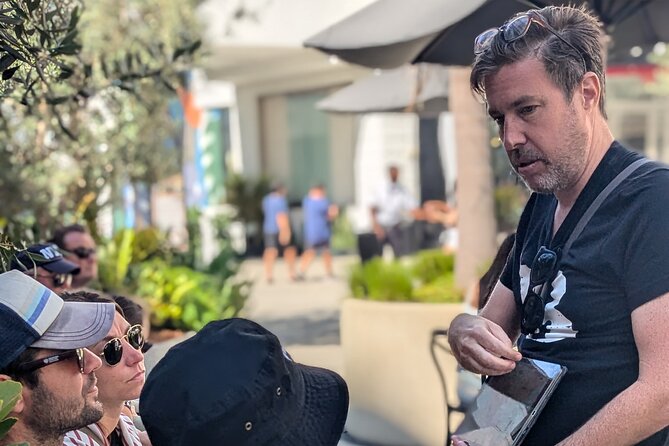
Your guide, identified in the tour material as Eloi and also referred to as Marc or Mark in some feedback, approaches DTLA from the outside and inside. He is Belgian, spent ten years in China, lives in Downtown LA, and hosts a podcast about the area. That background matters because the commentary is not only about local dates and famous names. You get comparisons with Lisbon, Hong Kong, Antwerp, Paris, Madrid, Beijing, and London.
I find that useful in Los Angeles, a city that can feel hard to read on foot. The tour explains why a small funicular matters, why a movie palace is also an urban planning story, and how old financial buildings now serve very different purposes.
The format is informal and discussion-friendly. The group maximum is 15, so you can ask questions without trying to catch a guide’s voice across a crowd. That said, downtown traffic and street noise can make hearing difficult at times. One person specifically found the guide hard to understand, while another noted that there was not much architectural detail. If you want a technical lecture on structure, materials, or preservation law, this may not be your ideal tour.
More Walking Tours in the USA
- The Official Art Deco Walking Tour by The Miami Design Preservation League
★ 5.0 · 1,580 reviews - Chicago in a Day: Food, History & Architecture Walking Tour
★ 5.0 · 1,153 reviews - Miami South Beach Art Deco Walking Tour
★ 5.0 · 1,039 reviews
Starting at Grand Central Market and Angels Flight
The walk begins at the Grand Central Market parking garage, near Grand Central Market itself. The Metro stop at 7th Street and Metro Center is one block from the end point at Hotel Per La, but you should plan your arrival carefully because the listed meeting point is at the garage on South Hill Street.
Grand Central Market is a smart place to begin. Open since 1917, it brings together Mexican tacos, Japanese ramen, Salvadoran pupusas, Jewish pastrami, and other food traditions under one roof. You get a quick lesson in the city’s immigrant and entrepreneurial character before the architectural tour really gets moving.
The market stop is listed at about 10 minutes. That is enough to get the idea and perhaps note a place to return for food, but it is not a meal break. Do not arrive expecting a long tasting session or time to browse every counter.
Next comes Angels Flight, the compact railway built in 1901. It once helped people reach the Bunker Hill neighborhood and now works as a small but memorable reminder of a different city. The comparison with Lisbon’s funiculars and Hong Kong’s Peak Tram helps explain why this tiny railway matters beyond its novelty.
The tour also passes Pershing Square, a place where the guide considers the role of public space in a modern city. The discussion includes the tension between open civic areas and privatized urban life. That is one of the tour’s stronger features because it moves you beyond pretty facades and into questions about who a city is designed for.
Bunker Hill, Broadway, and the movie palaces
Bunker Hill’s steps tell a story of sharp change. The area was once a wealthy residential district, then became part of the cultural and financial core of Downtown LA. The steps become a useful image for the city’s upward ambitions, but the larger point is how quickly neighborhoods can change function and social character.
The Historic Theater District on Broadway receives about 20 minutes. This is one of the most worthwhile sections for film fans. The area contains one of the largest concentrations of movie palaces anywhere, and the guide explains how these grand theaters turned moviegoing into a public spectacle.
You will see the Million Dollar Theater, the first movie palace associated with Sid Grauman. Its lavish design reflects the period when cinema was still proving that it could compete with opera, theater, and other established forms of entertainment. The building is important not only for its decoration, but also for the way it helped shape the business and social ritual of going to the movies.
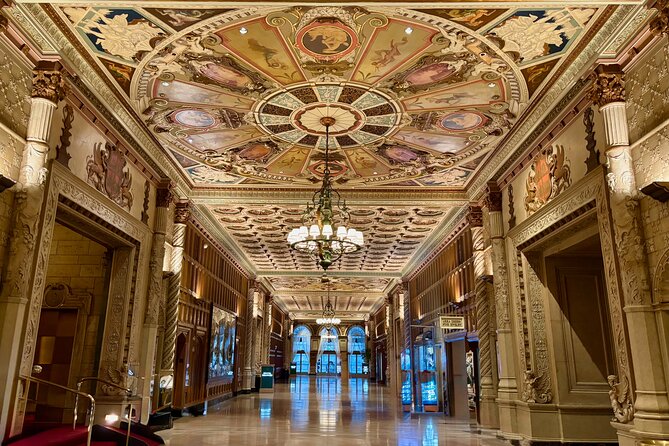
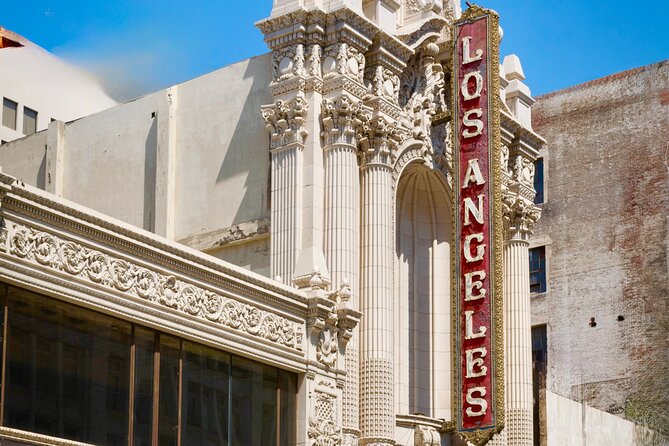
The Los Angeles Theatre, built in 1931 for the premiere of Charlie Chaplin’s City Lights, receives another 10-minute stop. Its crystal chandeliers, gold details, marble staircases, and formal interior are meant to impress. The comparison with Paris’s Palais Garnier is not hard to understand. Here, a film was not simply something projected on a screen. The building itself was part of the event.
One practical point: the itinerary describes these locations and interiors, but it does not promise a full theater performance or extended interior access at every stop. You should think of the walk as an architectural and historical overview, not a theater tour with long visits inside each venue.
Bradbury Building and the old financial district
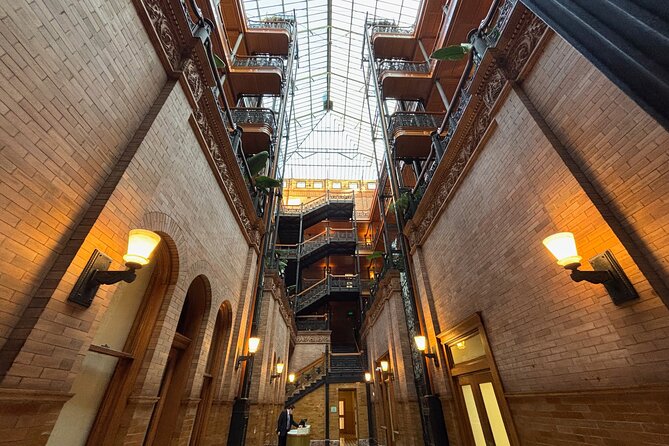
The Bradbury Building is likely to be one of the most memorable stops. Its open atrium, iron staircases, and filtered light give it a very different mood from the formal movie palaces. The building’s connection to Blade Runner adds a film layer, but the space is worth seeing even if you have not watched the movie.
The guide uses the Bradbury to discuss the line between real architecture and imagined worlds. That suits the building, which feels both practical and theatrical. You can expect about 10 minutes here, enough to study the staircases and hear why the building has remained so useful to filmmakers.
The Old Bank District follows on Spring Street. Once known as the Wall Street of the West, it was the financial center of the Pacific Coast. The Beaux-Arts facades communicate money, confidence, and civic ambition. Today, the area’s changing uses make it a clear example of how buildings can outlast the purposes for which they were built.
The Continental Building, completed in 1904, adds an early skyscraper to the route. Its Beaux-Arts design is a reminder that Los Angeles was experimenting with vertical growth well before its modern towers filled the skyline.
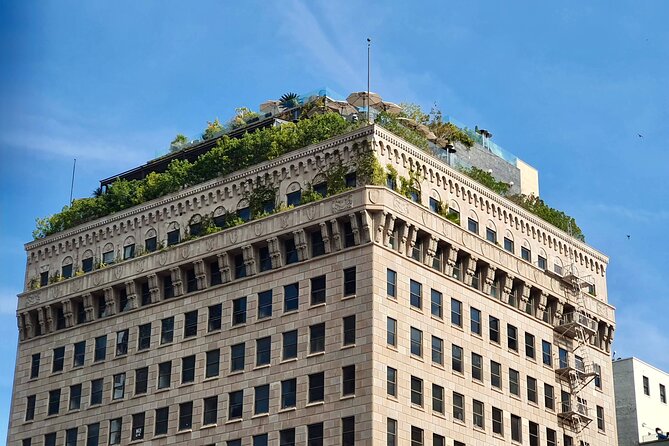
The El Dorado Lofts adds another layer. Built as a luxury hotel in 1913, it has an ornate terra cotta exterior with floral and geometric decoration. The building later became residential lofts, showing how a structure can move from hotel to housing without losing its visual identity.
These stops are where the tour’s architectural focus works best. You are not simply told that a building is old. You are shown how its style, use, and place in the city changed over time.
Same city, a different facade:
- Chicago Architecture River Cruise
★ 5.0 · 15,756 reviews - Chicago River 90-Minute Architecture Tour
★ 4.5 · 9,629 reviews - Chicago River: 1.5-Hour Guided Architecture Cruise
★ 4.8 · 8,046 reviews - Chicago Architecture Center River Cruise aboard First Lady
★ 5.0 · 5,536 reviews
The Last Bookstore, Los Angeles Theatre, and old entertainment spaces
The Last Bookstore is a short stop with a very different feel. Its book tunnel, high shelves, rare books, vinyl records, and local art make it part shop and part visual attraction. Ten minutes is enough to see why the place is popular, but you may want to return later if you enjoy browsing.
This stop also shows how DTLA’s older commercial buildings now support creative businesses. The tour does not frame the area as frozen in the past. Instead, it looks at how new uses give old spaces a second life.
The Arcade Building, completed in 1924, once held studios and offices tied to Los Angeles radio. Today it contains eateries and boutiques. That shift from early broadcasting to modern retail captures the city’s habit of changing industries while keeping its old shells.
Clifton’s brings yet another kind of story. Founded in 1931 as a cafeteria, it became known for offering free meals to people in need during the Great Depression. Its later design includes a large tree, forest-like decorations, and hidden tiki bars. The point is not only that the restaurant is unusual. It also shows how hospitality, fantasy, and social service can coexist in one building.
These interiors are a good reason to choose a walking tour over a bus loop. From a vehicle, you can spot the facades. On foot, you can enter selected buildings, look at details, and understand how the spaces feel.
Tower Theatre and adaptive reuse on Broadway
The Apple Tower Theatre is one of the clearest examples of old and new meeting in Downtown LA. Built in 1927, it was the first Los Angeles theater designed for films with synchronized sound. Its opening with The Jazz Singer marked a major shift in cinema.
The Spanish Renaissance Revival design includes carved details, stained glass, and vaulted ceilings. The theater also appeared in the Silencio scene from David Lynch’s Mulholland Drive, which suits its dreamlike interior.
Today, Apple uses the building as a flagship store. That gives you a practical example of adaptive reuse: the theater’s historic shell and visual character remain part of the experience, while the building serves a completely different commercial purpose.
This is one of the tour’s strongest ideas. Preservation does not always mean keeping a building exactly as it was. Sometimes it means finding a new use that keeps the structure active. You may not agree with every modern conversion, but you will understand why these choices matter.
Jewelry District, Fashion District, and the city’s working side
The Jewelry District covers 12 blocks and is described as the largest jewelry district in the United States. Its roots reach back to the 1920s. The comparison with Antwerp is especially fitting given the guide’s Belgian background.
This section gives the walk an economic and human angle. The district is not only about shop windows and glitter. It reflects craft, trade, family businesses, and the movement of goods through a global economy.
The Fashion District makes a similar point. It is less polished than the grand shopping streets of Paris, but it is closely tied to textiles, streetwear, design, and small business. This is where the tour moves away from the postcard version of Los Angeles and shows how the city’s creative industries actually function.
You should expect these stops to be more about context than formal monuments. If you care only about grand facades, this portion may feel less exciting. If you want to understand how DTLA works as a place of business and production, it adds useful balance.
Art Deco, Bank of Italy, and the finish at Hotel Per La
The Eastern Columbia Lofts is one of the route’s most recognizable buildings. Its turquoise terra cotta tiles and clock tower make it an Art Deco favorite. Built in 1930, it expresses the confidence and style of the period.
The building is also linked with celebrity residents, including Johnny Depp. That detail adds a touch of Hollywood interest, though the building’s design is the real reason to pay attention.
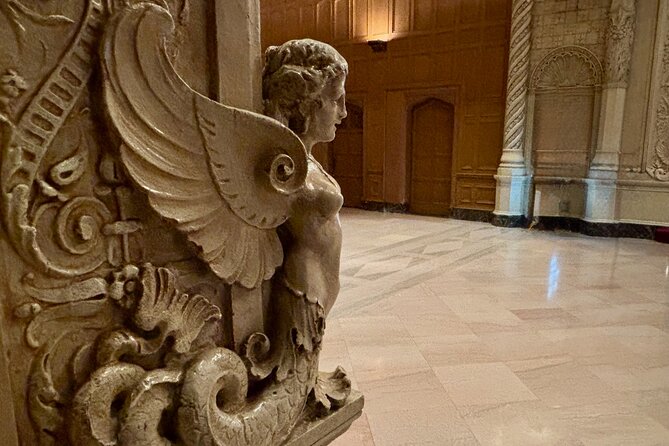
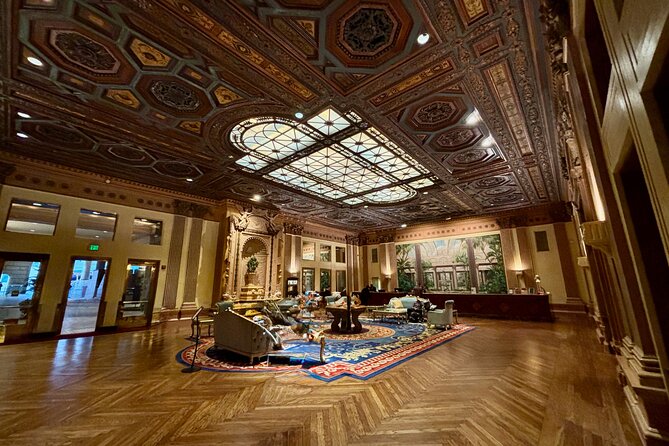
The final major stop is Hotel Per La, formerly the Bank of Italy building. The 1920s structure was tied to the aspirations of Italian immigrants and later became part of the institution that evolved into Bank of America. Its gold ceiling, tall marble columns, rooftop pool, and art-filled interiors now serve a boutique hotel.
This ending works because it brings several themes together: immigration, banking, design, status, and reuse. You finish with a building that has changed function but still carries its earlier identity.
The end point is convenient for public transportation, one block from 7th Street and Metro Center, where Metro lines A, B, D, and E serve the area. Parking is not included, so public transport is worth considering.
What the $35 price buys you
At $35 per person, this is priced below many large-city specialty walks. The value depends on what you want from the afternoon.
You are paying for a local guide, a small group capped at 15, and a route that covers a wide range of sites. The strongest value comes from the connections between places: movie history beside urban planning, old banks beside lofts, and grand theaters beside modern retail.
The price is less convincing if you expect paid admissions, food, a sit-down break, or extended access to every building. Admission to the listed stops is free, but parking is not included. The tour also does not promise a technical study of architectural construction.
I would book it for the ideas and access to places you might otherwise pass without understanding. I would skip it if you want a relaxed stroll with little commentary or if long walks are difficult.
Who should book this Downtown LA walk?
This tour suits:
- Film fans interested in movie palaces and locations
- Architecture fans who enjoy styles, interiors, and reuse
- Urban planning students and professionals
- Longtime Angelenos who want a fresh look at familiar streets
- First-time visitors who want more than Hollywood and beaches
- Curious families with older children and teenagers
The content is aimed more at adults, but the guide can include younger participants. A family with children aged 9 and 14 found that the children were included, though the subject matter leaned adult.
Bring comfortable shoes, water, and patience for street noise. The tour requires moderate physical fitness, and the walk may feel long because there are few planned rest stops. Service animals are allowed, and the experience is offered in English.
The tour requires good weather and a minimum number of participants. You can cancel for a full refund up to 24 hours before the start time. Cancellations or changes inside that window are not refunded, while a weather or minimum-participant cancellation offers another date or a full refund.
Should you book it?
Book this tour if you want to understand how Downtown Los Angeles became a place of movie palaces, financial ambition, immigrant enterprise, creative work, and constant reuse. The guide’s strongest qualities are his preparation, humor, visual aids, and willingness to follow good questions.
Go in expecting a story-led city walk, not a strict architecture seminar. The route is long, some commentary can be hard to hear beside traffic, and you will not spend a long time inside every building. But at $35, the combination of history, film, interiors, and urban discussion is a solid value for curious visitors and locals.
FAQ
How long is the Downtown Los Angeles History and Architecture Walking Tour?
The tour lasts approximately 2 hours and 30 minutes.
How much does the tour cost?
The price is $35 per person. Group discounts are available.
Where does the tour begin?
The meeting point is Grand Central Market Parking Garage, 308 S Hill St, Los Angeles, California 90013.
Where does the tour end?
The tour ends at Hotel Per La, Autograph Collection, 649 S Olive St, Los Angeles, California 90014.
Is the tour close to public transportation?
Yes. The end point is one block from the 7th Street and Metro Center station, served by Metro lines A, B, D, and E.
How large is the group?
The maximum group size is 15 people.
Is parking included?
No. Parking fees are not included in the tour price.
What happens if I need to cancel?
You can receive a full refund if you cancel at least 24 hours before the start time. Cancellations or changes made less than 24 hours before the start are not refunded.
More History Walks in the USA
- Charleston’s Best Highlights: History, Culture & Architecture
★ 5.0 · 422 reviews - Palm Springs Modernism Architecture & History Bike Tour
★ 5.0 · 359 reviews - Charleston: History and Architecture Guided Walking Tour
★ 4.8 · 349 reviews - Historic Georgetown: History, Gossip, & Architecture Walking Tour
★ 5.0 · 321 reviews
Newly added in the USA
- Miami Beach Art Deco Segway Tour★ 4.5 · 17 reviews
- Boston: Freedom Trail History and Architecture Walking Tour★ 4.8 · 18 reviews
- Boston: Harbor and Charles River Architecture Boat Tour★ 4.6 · 9 reviews
- Chicago: Guided Tour with Architecture River Cruise★ 4.5 · 20 reviews
- Iconic Capitol Hill Architectural Walking Tour★ 5.0 · 21 reviews
- South Beach Food Tour- Culinary & Art Deco & History★ 5.0 · 22 reviews
- Chicago: First Lady River Cruise & Architecture Center Combo★ 4.7 · 24 reviews
- Chicago River 90-Min Architecture Boat Tour★ 4.5 · 24 reviews
Walking Tours, compared.
The Official Art Deco Walking Tour by The Miami Design Preservation League
Read our review →
Baroque Architecture and Underground Walking Tour
Read our review →
Chicago in a Day: Food, History & Architecture Walking Tour
Read our review →

Ramblas, Old Town, Gothic and Gaudi Architecture Walking Tour
Read our review →
Chicago’s Secret Interiors Architectural Walking Tour
Read our review →
Browse the lists this tour appears in