
Review · WASHINGTON DC ARCHITECTURE TOURS
Embassy Row: Architecture, Mansions & International Intrigue
Washington’s Embassy Row is more than a line of official buildings. It is a parade of grand homes built by wealthy Americans, then handed over to foreign governments as diplomatic offices. I like that this tour connects Gilded Age mansions with modern diplomacy, and I like the small-group limit of 15, which makes it easier to ask questions and hear your guide.
The two-hour walk also reaches quieter corners that many first-time visitors skip, including the Saraswati statue, Sheridan Circle, Woodrow Wilson House, and the Spanish Steps. The main consideration is route clarity: the published details say the tour ends back at the meeting point, while additional guidance describes the finish as near the starting area and a Metro station. Ask your guide where you will finish that day.
Key points to know before you book
- Former mansions now serving as embassies: See how Washington’s Gilded Age homes became diplomatic offices.
- Small groups of up to 15: This keeps the walk personal and helps with questions.
- Strong storytelling: Guides including Becca, Mark, Tyler, Dan, John, and Eli have been praised for clear explanations and lively stories.
- Several overlooked stops: The Saraswati statue, Spanish Steps, Sheridan Circle, and Woodrow Wilson House add variety beyond embassy facades.
- Easy two-hour walking route: The walk is described as long but manageable, with some shade along the way.
- Useful neighborhood advice: Your guide can point you toward places to eat, shop, use public transportation, and continue exploring.
Why Embassy Row is worth your morning
If you only glance at the embassies from a car window, you miss the best part. The buildings tell two stories at once. First comes Washington’s Gilded Age, when millionaires built oversized homes along Massachusetts Avenue. Then comes the diplomatic chapter, when foreign governments acquired those properties for embassies, ambassadorial residences, and cultural offices.
That change gives the walk its appeal. You are not simply looking at pretty stonework. You are learning why this part of Washington attracted the wealthy, how grand private houses became international workplaces, and how architecture can reflect a country’s public image.
I especially like the mix of architecture and human stories. The tour is not limited to dates and building names. The program promises stories about millionaires, inherited homes, political figures, scandals, and the diplomatic role of the buildings. The exact stories will depend on your guide, but past guides such as Becca, Mark, Tyler, and Dan have been singled out for strong storytelling and clear answers.
The setting also makes this a pleasant break from Washington’s major memorials. Dupont Circle and Embassy Row have a more residential feel than the National Mall. You get sidewalks, historic homes, embassies, statues, and leafy streets instead of long formal avenues and large crowds.
A few more architecture walks in the USA worth a look
- Chicago Architecture River Cruise
★ 5.0 · 15,756 reviews - Chicago River 90-Minute Architecture Tour
★ 4.5 · 9,629 reviews - Chicago River: 1.5-Hour Guided Architecture Cruise
★ 4.8 · 8,046 reviews
Starting at Dupont Circle
The tour begins at the Dupont Circle fountain at 10:00 in the morning. Your guide uses the first 10 minutes to explain the neighborhood and offer suggestions for eating or shopping afterward.
That opening matters because Dupont Circle is not just a convenient meeting point. It gives you the local setting for the walk. You begin with a sense of the neighborhood before moving toward the diplomatic buildings along Massachusetts Avenue.
This is also a smart time to ask practical questions. If you need help finding a Metro connection later, want to know where to eat, or plan to continue exploring on foot, ask early. One guide was praised for helping with transportation directions, and the tour provider specifically notes that the finish is close to a Metro station.
Arrive ready to walk. The route is described as easy but fairly long, and the group may pause often for explanations. Wear comfortable shoes and bring water, especially in warm weather. Since the tour is outdoors and the buildings are generally viewed from the street, weather will affect your comfort more than admission lines or indoor crowding.
Walking through Embassy Row’s former mansions
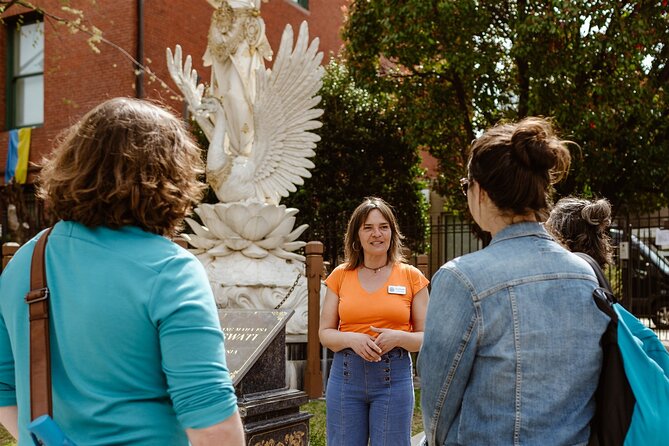
The main Embassy Row portion lasts about 30 minutes, though the full route continues through several nearby sights. Here, your guide explains how wealthy Washington residents built large homes and how those properties later became embassies.
This is where the tour earns its price. You could walk Massachusetts Avenue alone and enjoy the facades, but you would have little context for why a particular home matters. With a guide, the architecture becomes a record of ambition, money, social status, and diplomacy.
The stories may also be more colorful than a standard government-building tour. The experience includes tales of scandal, which adds a human edge to the mansions. That tone should suit you if you like history with personalities and complications, not just polished dates.
Still, keep your expectations realistic. This is a street-level walking tour. You will not be touring the interiors of the embassies, and diplomatic properties are working offices with security concerns. The appeal comes from exterior architecture, history, and explanation.
The group size helps here. With a maximum of 15 people, you are less likely to lose the guide in a noisy street or feel like one person in a large crowd. Several guides have been praised for keeping a comfortable pace and answering questions without making the walk feel rushed.
The Saraswati statue and cultural connections
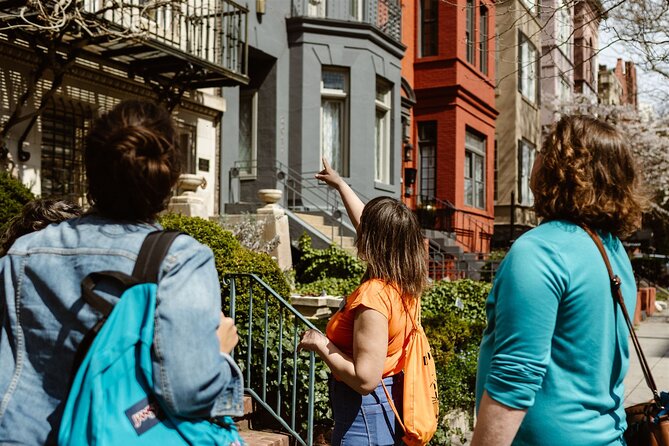
The statue of Goddess Dewi Saraswati is one of the route’s more unusual stops. Located near the Indian Embassy, it honors the Hindu goddess associated with knowledge, music, and the arts. Flowers surround the statue, giving the stop a different mood from the formal mansions and embassy walls.
I like this pause because it broadens the tour. Embassy Row can easily become a parade of European-style homes and official plaques. The Saraswati statue brings Indian culture, religion, learning, and artistic life into the route.
Your guide also explains the statue as a symbol of cultural exchange. That idea fits the larger theme of Embassy Row: countries communicate through more than formal meetings. Buildings, memorials, art, and public symbols also tell a diplomatic story.
The stop lasts only about five minutes, so do not expect a long lecture. It works best as a focused introduction to the statue and its setting before the walk continues.
Same city, a different facade:
- Chicago Architecture Center River Cruise aboard First Lady
★ 5.0 · 5,536 reviews - Chicago: Architecture River Cruise Skip-the-Ticket Line
★ 4.8 · 4,325 reviews - Chicago River 45-Minute Architecture Tour from Magnificent Mile
★ 4.5 · 2,924 reviews - Chicago Lake and River Architecture Tour
★ 4.5 · 2,308 reviews
The Society of the Cincinnati and Washington’s old elite
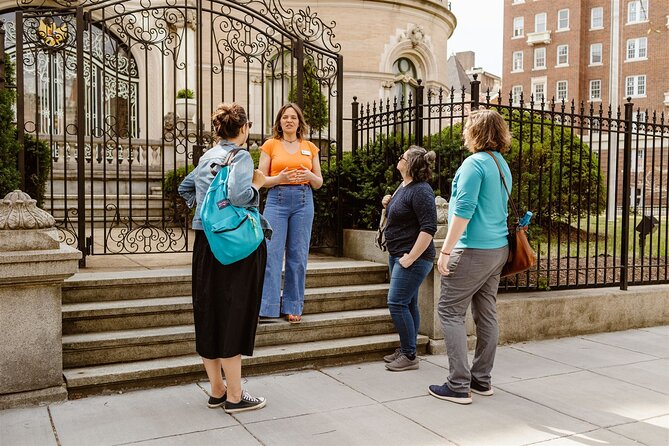
The Society of the Cincinnati is another short stop, with about 10 minutes devoted to the home and the people connected to it. The tour explains the millionaires who built the house and the society that inherited it.
This is a useful counterpoint to the embassies. Instead of looking only at foreign governments, you get a glimpse of the American elite who shaped the neighborhood before many properties changed hands.
The stop also helps you understand that these buildings were not originally designed as embassies. They were private homes, built for families and social circles with enormous resources. Their later diplomatic use is part of a longer story about how Washington’s most prestigious residential districts changed over time.
If you enjoy architecture, pay attention to how the guide links the house’s appearance with its original owners. The value is not just in seeing a handsome building. It is in understanding why someone built such a home and how its purpose changed.
The Indian Embassy and Gandhi statue

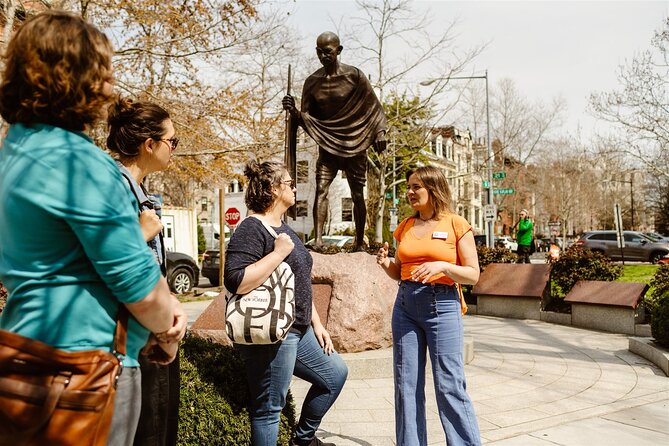
The Indian Embassy is presented as a historic building tied to Indian heritage and cultural diplomacy. Nearby, the Gandhi statue on Massachusetts Avenue honors Mahatma Gandhi’s ideas of peace and nonviolence.
This section gives the walk a clear international focus. You are seeing a working embassy, then a public monument connected to India’s political and moral legacy. The two stops together show how diplomacy can be represented through both official architecture and a familiar public figure.
The Gandhi statue is also a good reminder that Embassy Row is not only about private mansions. It is a place where countries present parts of their identity to the American public. India’s presence here includes government work, cultural representation, and a tribute to Gandhi.
Again, the stop is brief, around five minutes. That is enough for orientation and photographs, but not a full study of Indian diplomatic history. If this subject matters greatly to you, treat the tour as a starting point for further exploration rather than the final word.
Ireland’s embassy and the international side of Massachusetts Avenue
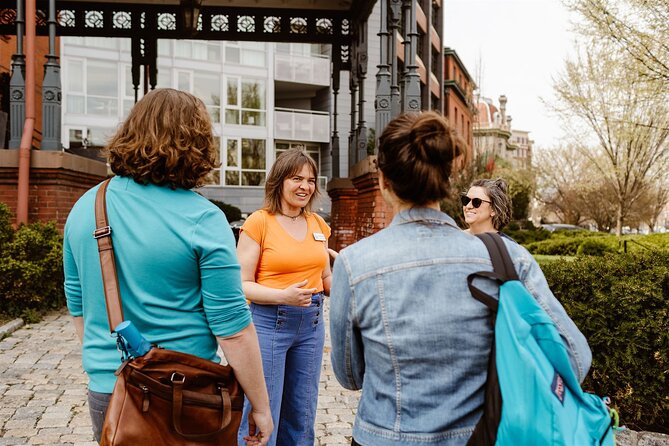
The Irish Embassy provides another example of how a country uses a prominent Washington address to maintain diplomatic ties with the United States. Your guide discusses the building’s connection to Irish history and culture and its role in international engagement.
By this point, the walk’s pattern becomes clear. You see a building, learn about its earlier private life or architectural setting, then consider its current diplomatic purpose. That repeated comparison is what makes the route more interesting than a simple neighborhood stroll.
The Irish Embassy also adds variety to the national stories. India and Ireland bring different cultural traditions and political histories into the same Washington corridor. You are moving through one neighborhood, but the subject keeps changing.
Because the stop lasts about five minutes, listen for the details that interest you and ask follow-up questions if the group has time. The guides are expected to cover a lot in two hours, so not every building can receive equal attention.
Sheridan Circle and the Mount Rushmore connection
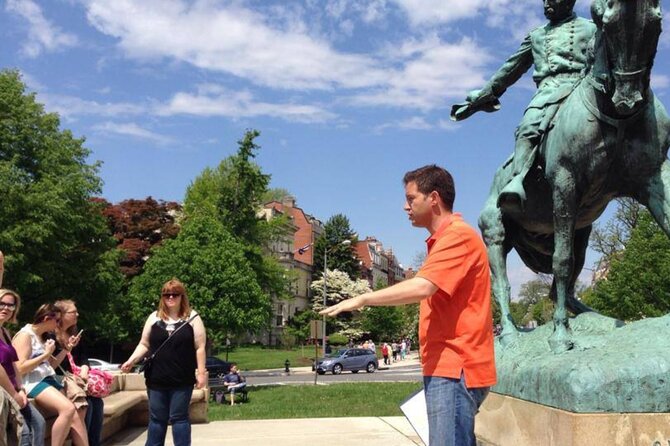
Sheridan Circle brings the tour to an open, recognizable landmark. The focus is the equestrian statue of Philip Sheridan and its connection to Mount Rushmore.
That question gives the guide a chance to connect local Washington sculpture with a much more famous American monument. It is the kind of small link that can make a walking tour memorable, especially when you would not think to ask about it on your own.
The stop lasts only about five minutes, but it breaks up the building-by-building rhythm. You get a statue, a circle, and a story about American public art rather than another embassy facade.
Woodrow Wilson House from the sidewalk
At the President Woodrow Wilson House, the guide discusses the property from outside. The house is tied to Wilson’s life after the presidency, and the tour highlights the fact that he was the only former president to live in Washington after leaving office, apart from Barack Obama in the modern period.
This stop works best for people interested in presidential history and Washington’s role as a permanent political home. It also shows how Embassy Row and nearby streets served not only diplomats and millionaires, but national political figures.
Do not expect an interior visit as part of this experience. The information provided describes an exterior discussion, so the value comes from the story and the setting rather than museum access.
The Spanish Steps and the end of the route
The Spanish Steps are a small urban landmark near Dupont Circle, inspired by the famous staircase in Rome. The steps offer a quieter final stop, surrounded by greenery and historic buildings.
I like ending with this kind of place. After the formal embassies, statues, and presidential house, the steps give you a calm neighborhood setting where you can pause and take in the area at a slower pace.
The published tour details say the activity ends back at the meeting point. However, the practical description also explains that the route may finish within sight of the start and a Metro station rather than at the exact fountain. Since one participant found the ending unclear, ask your guide early in the walk where the group will finish that day.
That detail matters if you have a timed museum entry, lunch reservation, or another tour immediately afterward. The route is in a useful part of Washington, but you should allow a little breathing room rather than planning a tight connection.
Price, group size, and what you receive
The tour costs $49 per person for about two hours. That is not the cheapest way to walk Embassy Row, since the streets and exterior buildings are free to see. The question is whether the explanations and route design are worth paying for.
For me, the answer depends on your interest. If you already know Washington architecture well and enjoy researching as you walk, you can cover some of the same ground with a map and your phone. One critical assessment made exactly that point, arguing that the route was not unique and that some facts were presented inaccurately.
The larger body of feedback is more favorable, especially about the guides’ storytelling, clear explanations, friendly manner, and ability to answer questions. Names repeatedly associated with strong tours include Becca, Mark, Tyler, Dan, John, and Eli. Since guide quality can shape a walking tour, the small group and licensed guide are meaningful parts of the price.
You also get a focused route rather than spending time deciding which street to take next. In two hours, the tour links Dupont Circle, Embassy Row, the Saraswati statue, the Society of the Cincinnati, the Indian and Irish embassies, Sheridan Circle, Woodrow Wilson House, and the Spanish Steps.
The tour is offered in English and uses a mobile ticket. Service animals are allowed, public transportation is nearby, and most people can participate. You can cancel up to 24 hours before the experience for a full refund.
Who will enjoy this walk most
I would choose this tour if you like architecture, Washington politics, diplomatic history, or stories about powerful people and their homes. It also suits you if you have already seen the major memorials and want a neighborhood walk with a different subject.
The route should work well for couples, solo visitors, and families with older children who can manage two hours on foot. The group size makes it easier to hear, and the pace has been described as easy even though the walk is fairly long.
You may want to skip it if you dislike outdoor tours, need indoor access, or want to enter embassy buildings. You should also consider another plan if you prefer highly specialized architectural detail or a full-day exploration. Two hours gives you a useful overview, not every fact about every house on Massachusetts Avenue.
If hearing your guide clearly is important, stay close to the guide and mention it at the start. One guide was praised for speaking clearly enough for a hard-of-hearing participant, but street noise and group position can still affect the experience.
Should you book Embassy Row: Architecture, Mansions & International Intrigue?
Book it if you want a well-paced introduction to Dupont Circle and Embassy Row with stories you would probably miss on your own. The strongest reasons are the small group, the mix of grand homes and working embassies, and the guides’ record of making history lively and approachable.
At $49, I see the tour as a reasonable buy for a first visit or for anyone who prefers explanation over self-guided phone research. Just keep the limits in mind: the route is outdoors, the embassy visits are exterior views, and the ending location may need clarification.
For the best experience, arrive ready for a long but manageable walk, ask questions, and leave time afterward for food, shopping, nearby museums, or a Metro connection. If Washington’s homes could tell stories, this route gives them a useful microphone.
FAQ
Where does the tour begin?
The tour begins at the Dupont Circle fountain in Washington, DC. The start time is 10:00 am.
How long does the Embassy Row tour last?
The guided walk lasts approximately two hours.
How large is the group?
The tour has a maximum of 15 participants.
Is the tour conducted in English?
Yes. The experience is offered in English.
What sights are included?
The route includes Dupont Circle, Embassy Row, the Goddess Dewi Saraswati statue, the Society of the Cincinnati, the Indian Embassy, the Irish Embassy, Sheridan Circle, the Woodrow Wilson House, and the Spanish Steps.
Can I cancel for a refund?
Yes. You can cancel up to 24 hours before the experience for a full refund.
Newly added in the USA
- Miami Beach Art Deco Segway Tour★ 4.5 · 17 reviews
- Boston: Freedom Trail History and Architecture Walking Tour★ 4.8 · 18 reviews
- Boston: Harbor and Charles River Architecture Boat Tour★ 4.6 · 9 reviews
- Iconic Capitol Hill Architectural Walking Tour★ 5.0 · 21 reviews
- Chicago: Guided Tour with Architecture River Cruise★ 4.5 · 20 reviews
- South Beach Food Tour- Culinary & Art Deco & History★ 5.0 · 22 reviews
- Chicago River 90-Min Architecture Boat Tour★ 4.5 · 24 reviews
- Manhattan Architecture Photography Tour★ 5.0 · 24 reviews
Washington DC Architecture Tours, compared.

Historic Georgetown: History, Gossip, & Architecture Walking Tour
Read our review →
Dupont Circle and Embassy Row Architectural Walking Tour
Read our review →

DC: Georgetown History & Architecture Tour with Local Guide
Read our review →
Browse the lists this tour appears in