
Review · WALKING TOURS
Historic Georgetown Architectural Walking Tour
Georgetown’s story unfolds best on foot, and this tour links its most interesting pieces: the C&O Canal, elegant homes, old schools, Georgetown University, and the Potomac waterfront. You get more than a row of pretty facades. The guide explains how trade, politics, education, and famous residents shaped the neighborhood.
I like the small-group format, capped at 20 people, and the steady two-hour pace. I also like the mix of headline sights and odd local details, from the Yellow Tavern to Alexander Graham Bell’s Volta Laboratory and the Exorcist Steps. The main consideration is that this is more a history walk with architectural detail than a specialist architecture tour, and the two miles include cobblestones, hills, and stairs.
Key points at a glance
- Start with coffee culture: Meet outside Baked & Wired, a popular Georgetown coffee and dessert stop, at 10am.
- See old Georgetown in layers: The route connects the C&O Canal, Old Stone House, historic homes, churches, schools, and university buildings.
- Expect stories, not just photo stops: Guides such as Brian, Kim, Christine, Sam, Caroline, and Ellery have been praised for friendly, clear, engaging narration.
- Walk beyond the main shopping streets: The tour reaches Pomander Walk, Cady’s Alley, Georgetown University, and quieter residential blocks.
- Finish by the Potomac: The route ends at Georgetown Waterfront Park, a useful spot for continuing your day.
- Plan for moderate walking: You will cover about 2 miles in roughly two hours, with cobblestones, slopes, and the Exorcist Steps.
Why Georgetown makes a good walking tour
Georgetown can feel simple at first glance. You see brick sidewalks, old row houses, smart shops, and busy streets. But the neighborhood has several identities layered on top of one another. It was tied to the Potomac River trade network, it developed before the city of Washington took shape, and it later became linked with politics, education, fashionable society, and popular culture.
This tour helps you connect those pieces. Instead of stopping at one grand house and moving on, you follow a route that shows how the canal, streets, homes, schools, university, and river fit together.
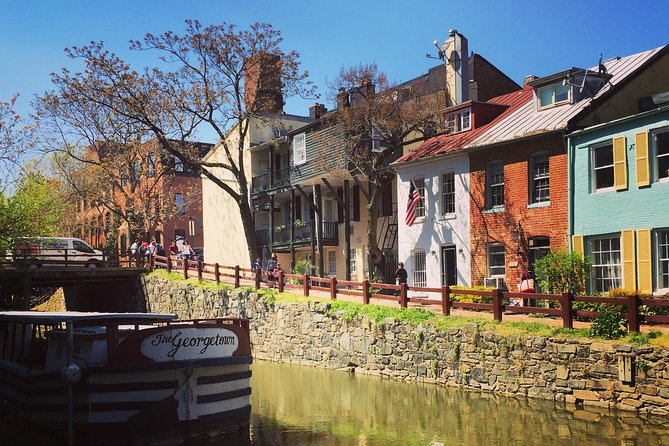
I especially like that the walk begins at the C&O Canal. That gives you a useful frame for the rest of the morning. The canal was built to connect Potomac River communities with markets and goods. Its presence explains why Georgetown mattered before it became known for restaurants, shopping, and presidential connections.
The pace is leisurely, but this is still a walking tour. Two miles over two hours is manageable for most people with moderate fitness, yet you should wear shoes that handle uneven pavement. Georgetown’s historic streets are part of the charm, but they are not always smooth or flat.
More Walking Tours in the USA
- The Official Art Deco Walking Tour by The Miami Design Preservation League
★ 5.0 · 1,580 reviews - Chicago in a Day: Food, History & Architecture Walking Tour
★ 5.0 · 1,153 reviews - Miami South Beach Art Deco Walking Tour
★ 5.0 · 1,039 reviews
Meeting at Baked & Wired and finding your bearings
The meeting point is outside Baked & Wired at 1052 Thomas Jefferson Street NW. The start time is 10am, which works well for a first activity of the day. You can arrive with coffee or a pastry in mind, though the tour itself includes only the guide.
Starting at a local favorite rather than a large monument gives the experience a neighborhood feel right away. From there, the group moves toward the C&O Canal for an opening look at Georgetown’s past.
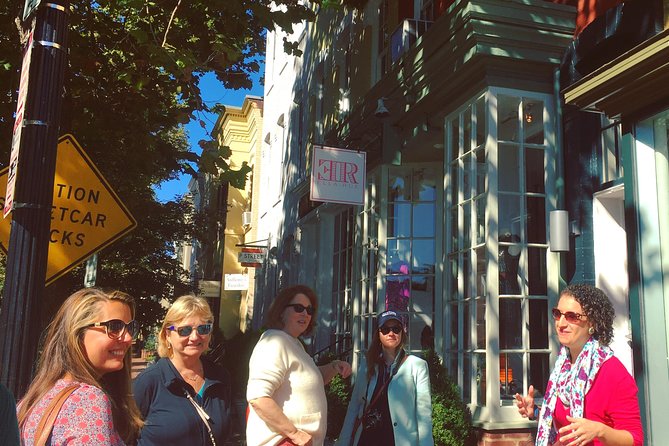
The guide sets the tone during this first section. The tour is fully narrated, so you are not left to guess why a particular building matters. Guides named in past tour experiences include Brian, Kim, Christine, Sam, Caroline, and Ellery. The strongest pattern is a presentation style that is friendly, clear, and easy to follow, with room for questions and local recommendations.
That personal contact matters in Georgetown. A guide can point out details that blend into the streetscape, then explain the people or events connected to them. You are not simply being led from one pin on a map to another.
C&O Canal and Old Stone House
The C&O Canal is the natural opening chapter. Its towpath and waterway point to Georgetown’s commercial past, when river transport helped move goods through the region. This gives context to the older buildings you see later.
The next stop is the Old Stone House, described as the oldest building in Washington, DC. You get a brief look inside before leaving the main commercial street and moving into the neighborhood.
That change of setting is one of the tour’s strengths. Georgetown’s main streets can be crowded and polished, but the side streets reveal a quieter residential character. The route shifts from public storefronts to houses, schools, churches, and small lanes.
The Old Stone House also helps you see why preservation matters here. It is not just an attractive old structure. It offers a physical link to an earlier Georgetown, before the neighborhood became part of the modern capital’s tourist circuit.
Historic homes, churches, and Georgetown’s social history
As you walk the cobblestone streets, the guide discusses homes connected with prominent Washington figures, including Jackie Kennedy and Ben Bradlee. The point is not simply to collect famous names. These stories show how Georgetown became associated with political families, journalism, wealth, and public life.
The Laird-Dunlop House and Newton D. Baker House add more examples of Georgetown’s domestic architecture. You will see how the neighborhood’s houses vary in scale and style, from grander residences to more compact urban homes.
The Lydia English Seminary School for Girls offers a different angle. This boarding school served upper-class students, reminding you that Georgetown was also a place of education and social ambition. The Hyde-Addison School continues that thread, showing how learning institutions became part of the neighborhood’s daily life.
The Grafton Tyler Double House is another useful stop because it shifts attention from one grand residence to a paired structure. Details like this make the tour feel more observant. You begin to notice how buildings were designed for different owners, families, or uses rather than seeing every facade as part of one uniform historic district.
Christ Episcopal Church adds a religious and civic presence. Along with the houses and schools, it helps explain how a settled neighborhood worked. The guide gives the buildings human context, which is why this tour suits people who prefer stories about residents and institutions rather than architecture terms alone.
Same city, a different facade:
- Chicago Architecture River Cruise
★ 5.0 · 15,756 reviews - Chicago River 90-Minute Architecture Tour
★ 4.5 · 9,629 reviews - Chicago River: 1.5-Hour Guided Architecture Cruise
★ 4.8 · 8,046 reviews - Chicago Architecture Center River Cruise aboard First Lady
★ 5.0 · 5,536 reviews
Yellow Tavern and the less-polished side of the neighborhood
The Yellow Tavern, also called the White Horse Tavern, brings a little local scandal into the walk. It was a formerly salacious establishment, so this stop breaks up the formal procession of mansions, churches, and schools.
That is a welcome touch. Georgetown’s past was not made only by respectable families and grand institutions. Taverns, trade, arguments, nightlife, and rumors also shaped the area. The tour’s occasional humorous or surprising story helps keep the historical material moving.
You may also hear about a feud between two tobacco merchants. It is exactly the kind of small dispute that can make an old neighborhood feel inhabited rather than frozen in time. The guide’s storytelling style matters here. Sam, Christine, and Ellery have each been singled out for engaging delivery, and these colorful episodes give a good guide room to make the past memorable.
Pomander Walk and the west side of Georgetown
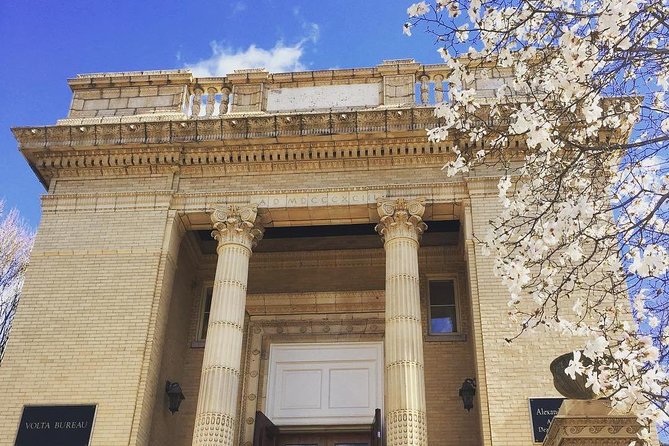
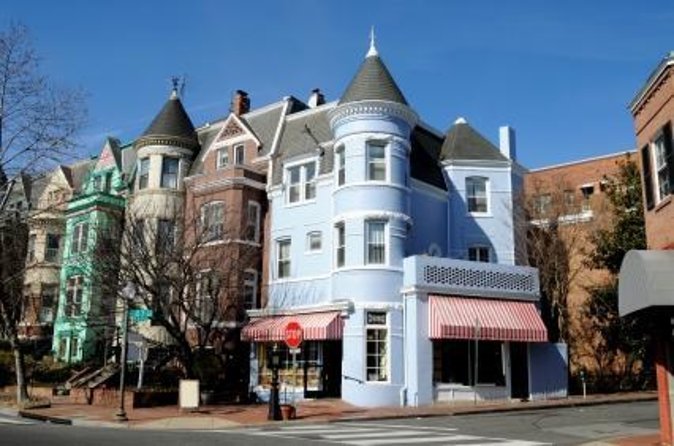
Pomander Walk is one of the route’s most distinctive visual stops. The path passes tiny, pastel-colored row houses that feel different from Georgetown’s larger brick residences.
This is where the walk becomes especially useful for first-time visitors. You move beyond the obvious attractions and see a smaller residential corner that you might miss on a shopping trip. The pastel houses create a pleasant contrast with the more formal buildings seen earlier.
The route crosses Wisconsin Avenue toward the west side of Georgetown. That crossing marks a shift in mood. You leave some of the busier central streets and continue through areas tied to education, technology, and the university.
Do not expect a long pause at every address. The listed stop times are brief, and many buildings are discussed from the street. That keeps the tour moving, but it also means the experience is best for someone who enjoys seeing many places while listening to a guide rather than entering each one.
Alexander Graham Bell and Georgetown’s academic side
The Volta Laboratory is one of the tour’s most interesting surprises. Alexander Graham Bell founded it here, adding a scientific and inventive chapter to Georgetown’s better-known political and social history.
This stop broadens the story. The neighborhood was not only a place for old families, churches, and schools. It also had a connection to experimentation and new technology. For anyone who enjoys the less obvious corners of Washington history, this is a worthwhile detail.
The route then turns toward academic landmarks, including Georgetown Preparatory School, Georgetown University’s Healy Hall, and the University Library. These buildings give the walk a grander scale. Their institutional role helps you understand why Georgetown has such a strong student presence alongside its residential streets.
Healy Hall is especially useful as a visual anchor. The university buildings contrast with the smaller row houses and older commercial structures seen earlier. The guide explains the campus within the larger neighborhood rather than treating it as a separate attraction.
You also get a glimpse of student life at The Tombs, a Georgetown nightlife spot. This keeps the university section from becoming only an architecture lesson. It connects the formal campus to the social life that still shapes Georgetown after classes end.
The Car Barn, Exorcist Steps, and the river finish
The Georgetown Car Barn is a renovated streetcar depot and another example of adaptive reuse. Its presence shows how older transportation buildings can take on a new role while remaining part of the neighborhood’s identity.
From there, the route includes the Francis Scott Key Memorial and Cady’s Alley before reaching the waterfront. The memorial links the neighborhood to a major American songwriter, while Cady’s Alley offers another change from the grand houses and university buildings.
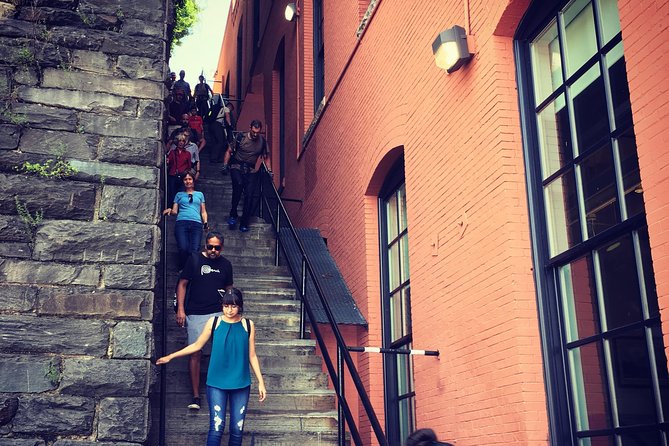
The Exorcist Steps are among the most recognizable and playful parts of the route. They add a film connection to the tour and create a physical challenge near the end. You should be ready for stairs, especially if the group uses them as part of the descent toward the waterfront.
The final stop is Georgetown Waterfront Park at 3303 Water Street NW. This is a satisfying place to end because the river gives you a broad view after two hours of close-up streets and buildings. The conclusion also leaves you well placed for the rest of your day in Georgetown.
You can continue exploring on your own, find lunch, browse shops, or simply sit by the water. The tour does not return you to Baked & Wired, so keep the ending location in mind when planning your morning.
What $48 gets you
The price is $48 per person. That is not the cheapest way to walk around Georgetown, since the streets and many exterior sights are free. The value comes from the guide’s interpretation and the route’s structure.
You could pass the Old Stone House, Pomander Walk, Healy Hall, and the Car Barn on your own. What you would miss is the thread connecting them. The tour explains why the canal mattered, how notable residents fit into Georgetown life, and why a school, tavern, laboratory, or streetcar depot belongs in the same story.
A two-hour private guide would cost far more, while a large bus tour would give you less time on foot and less contact with the neighborhood. With a maximum group size of 20, this sits between a private walk and a mass-market outing.
I would consider the price fair if you are new to Georgetown, enjoy local history, or want an efficient orientation before exploring independently. If you already know the neighborhood well and prefer reading plaques at your own pace, the cost may feel less worthwhile.
The tour is also a good value for families with older children and teenagers. One past family experience especially appreciated the combination of Georgetown’s formation, the canal, university life, Alexander Graham Bell, the Exorcist connection, and the Kennedy stories. The mix gives younger participants several ways into the subject.
Who will enjoy this walk most
I would choose this tour for a first visit to Georgetown, especially if you want more than shopping and restaurant suggestions. It suits history fans, architecture lovers who also enjoy social stories, couples, solo visitors, and families with school-age children who can manage a two-hour walk.
It is also useful after a busy stretch of sightseeing around the National Mall. Georgetown feels different from the monumental core of Washington. The tour lets you slow down and see a neighborhood at street level.
You should think twice if you want a highly technical architecture lesson, extensive interior access, or a short route with no hills or stairs. Most buildings are viewed from outside, and the itinerary covers a lot of ground. The tour’s strength is its range, not long visits inside each site.
The English-only format is straightforward. A mobile ticket is provided, and service animals are allowed. The meeting point is near public transportation, but the supplied details do not specify a particular Metro exit or bus route, so check your map before setting out.
The tour requires a minimum number of participants. If that minimum is not reached, you are offered another date or experience, or a full refund. You can cancel free of charge up to 24 hours before the start time. Changes or cancellations inside that window are not refunded.
Should you book the Historic Georgetown Architectural Walking Tour?
Book it if you want a friendly, story-led introduction to Georgetown that covers the canal, old homes, university buildings, local oddities, and the waterfront in one morning. The strongest guides combine facts with humor, and the route gives you a practical sense of how the neighborhood fits together.
I would be especially comfortable booking it for a first-time visitor, a family with teenagers, or anyone who has walked Georgetown before but never understood its past. Go with supportive shoes, allow for stairs and uneven streets, and expect more history than formal architectural analysis. At $48, the tour earns its price through context, pacing, and the chance to notice the details you might otherwise walk past.
FAQ
How long is the Historic Georgetown Architectural Walking Tour?
The tour lasts approximately two hours.
How much walking is involved?
You will walk about 2 miles, or 3.2 kilometers, at a leisurely pace.
Where does the tour begin?
The meeting point is outside Baked & Wired at 1052 Thomas Jefferson Street NW, Washington, DC 20007.
What time does the tour start?
The tour begins at 10am.
Where does the tour end?
The route ends at Georgetown Waterfront Park at 3303 Water Street NW.
Is the tour offered in English?
Yes. The tour is offered in English.
How large is the group?
The group can include a maximum of 20 people.
Can I cancel for a full refund?
Yes. You can cancel at least 24 hours before the start time for a full refund. Cancellations made less than 24 hours before the start time are not refunded.
More History Walks in the USA
- Charleston’s Best Highlights: History, Culture & Architecture
★ 5.0 · 422 reviews - Palm Springs Modernism Architecture & History Bike Tour
★ 5.0 · 359 reviews - Charleston: History and Architecture Guided Walking Tour
★ 4.8 · 349 reviews - Historic Georgetown: History, Gossip, & Architecture Walking Tour
★ 5.0 · 321 reviews
Newly added in the USA
- Miami Beach Art Deco Segway Tour★ 4.5 · 17 reviews
- Boston: Freedom Trail History and Architecture Walking Tour★ 4.8 · 18 reviews
- Boston: Harbor and Charles River Architecture Boat Tour★ 4.6 · 9 reviews
- Iconic Capitol Hill Architectural Walking Tour★ 5.0 · 21 reviews
- Chicago: Guided Tour with Architecture River Cruise★ 4.5 · 20 reviews
- South Beach Food Tour- Culinary & Art Deco & History★ 5.0 · 22 reviews
- Manhattan Architecture Photography Tour★ 5.0 · 24 reviews
- Chicago: Architecture Center Exhibit Admission★ 4.3 · 22 reviews
Walking Tours, compared.
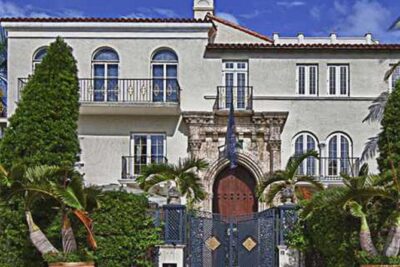
The Official Art Deco Walking Tour by The Miami Design Preservation League
Read our review →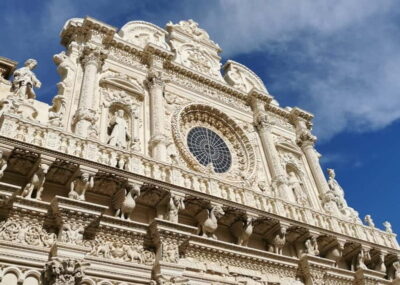
Baroque Architecture and Underground Walking Tour
Read our review →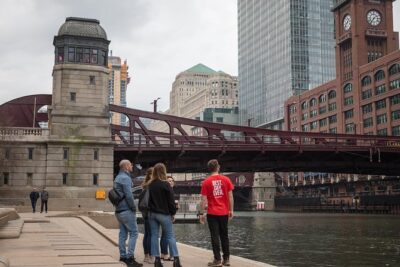
Chicago in a Day: Food, History & Architecture Walking Tour
Read our review →

Ramblas, Old Town, Gothic and Gaudi Architecture Walking Tour
Read our review →
Chicago’s Secret Interiors Architectural Walking Tour
Read our review →
Browse the lists this tour appears in