
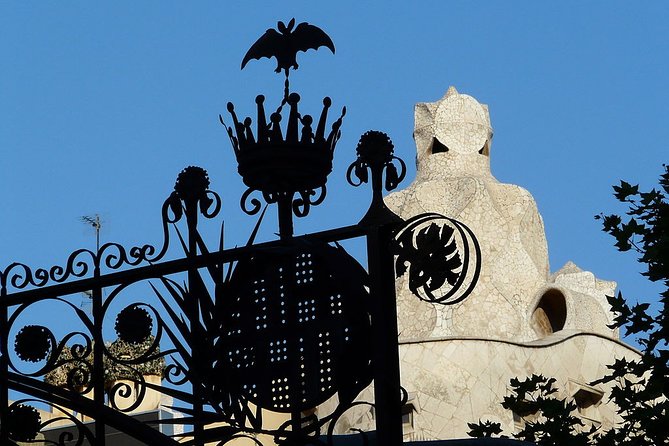
Review · GAUDí TOURS
Gaudí and Modernism – Private Walking Tour
Barcelona’s Modernisme is easiest to understand when you stop treating its buildings as pretty facades and start reading them as social documents. This private walking tour connects Plaça de Catalunya, Passeig de Gràcia, the Manzana de la Discordia, and Sagrada Família while explaining how the city changed from medieval Barcelona to the grand Eixample.
I like the relaxed pace and the chance to ask questions without sharing the guide with a large group. I also like the unusual details: Civil War marks, symbolic lampposts, chocolate money, tobacco wealth, and the personal stories tucked into the facades. The main drawback is that the tour lasts about two and a half hours and finishes at Sagrada Família, but it does not include entry to the interiors.
Key points
- Private attention with Patrick: The guide adapts the pace and explanation to your group, including older walkers who may need a gentler rhythm.
- A clear city story: You begin at Plaça de Catalunya and follow Barcelona’s growth into the Eixample.
- Facade reading, not just sightseeing: Casa Amatller and Casa Lleó i Morera reveal symbols, family stories, and architectural rivalry.
- Gaudí in context: The tour connects Gaudí’s work to other Modernisme architects, rather than treating him as an isolated genius.
- Sagrada Família finish: You spend about 30 minutes examining its exterior facades and construction story.
- Good value for small groups: At $66.08 per person, the price makes more sense when shared by a private party that wants conversation and flexibility.
Starting at Plaça de Catalunya, where two Barcelonas meet
The tour begins outside the Apple store at Passeig de Gràcia, 1, beside Plaça de Catalunya. This is a useful starting point because the square marks a change in Barcelona’s character.
On one side is the older city, with its tight medieval streets and layered past. On the other is the Eixample, the broad 19th-century district planned with a grid of streets and chamfered corners. Your guide uses this first stop to explain how Barcelona expanded and why the new district became the setting for grand Modernisme houses.
You also hear about the marks left by the Spanish Civil War. That gives the opening talk more weight than a standard architectural introduction. Barcelona’s buildings are not only decoration. They carry traces of political conflict, commercial ambition, family pride, and changing ideas about city life.
The stop is brief, about 10 minutes, but it gives you a framework for everything that follows. I find this especially useful if you are new to Barcelona. Without that framework, Passeig de Gràcia can seem like one long parade of ornate buildings. With it, you can see the street as a record of the city’s growth.
More Walking Tours in Barcelona
- Ramblas, Old Town, Gothic and Gaudi Architecture Walking Tour
★ 5.0 · 723 reviews - Barcelona 1.5h Private Old Town, Gothic & Ramblas Walking Tour
★ 5.0 · 318 reviews - Barcelona: Ramblas, Old Town & Gaudí Houses Walking Tour
★ 4.9 · 239 reviews
Walking Passeig de Gràcia through bourgeois Barcelona
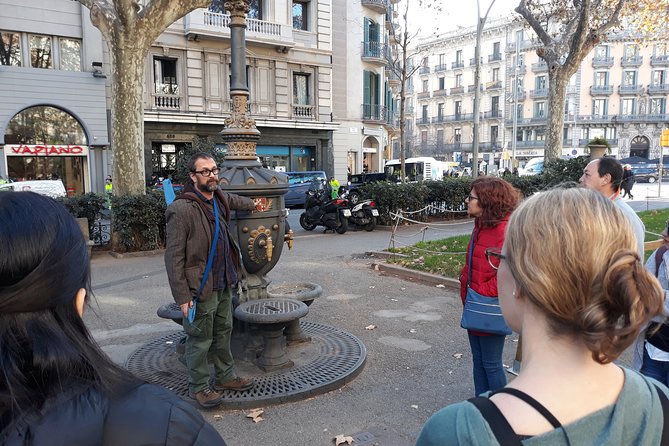
From Plaça de Catalunya, you move along Passeig de Gràcia, the grand avenue of the Eixample. In the late 19th and early 20th centuries, this was the address for Barcelona’s wealthy Catalan families.
The avenue still feels more formal and spacious than the old city. Its role in the tour is not simply to show you expensive shops and grand facades. It helps explain the social world that paid for Modernisme. Industrial fortunes created a new wealthy class, and those families wanted homes that announced their success, taste, and local identity.
Your guide spends about 15 minutes here, pointing out how the street became a showcase for architects. You begin to see why Barcelona’s architecture is so competitive. Families commissioned striking homes, and architects answered with unusual stonework, sculpture, colored tiles, ironwork, and shapes drawn from nature.
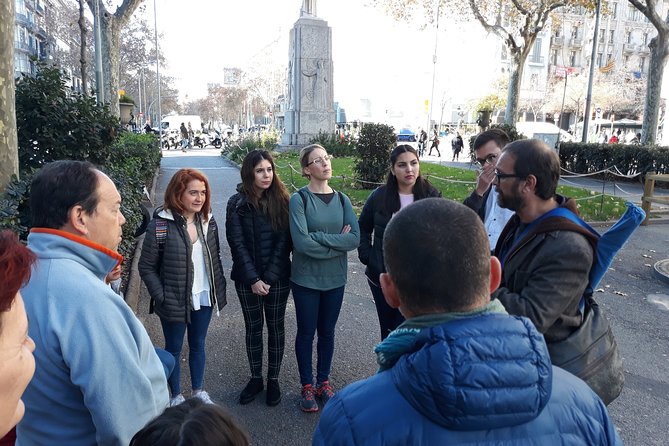
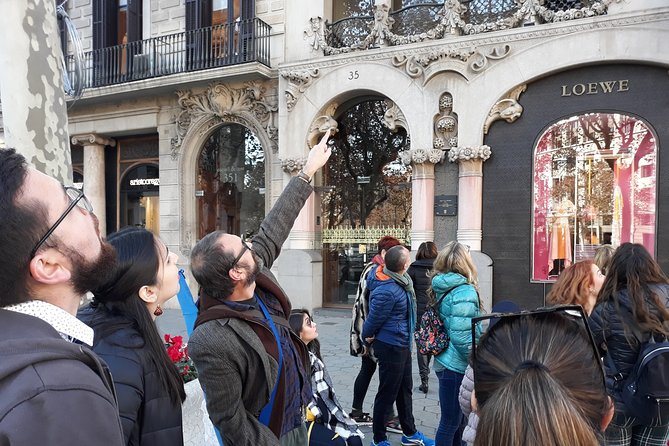
This is also where you should pay attention to the pace. The walk is designed as a conversation, not a race between photo stops. Several people who have taken the tour specifically valued the chance to stop, look closely, and ask questions. That makes it a good choice if you prefer understanding a few buildings rather than collecting a long list of names.
The Bancs Fanals and the details above eye level
The Bancs Fanals are the ornate benches and lampposts that decorate Passeig de Gràcia. The tour gives them about 10 minutes, which may sound minor, but this is one of the more pleasant details on the route.
Barcelona’s Modernisme is often presented through famous houses, yet the street furniture shows how the style reached into everyday public space. These lamps and benches are made to be noticed. Their forms, decorations, and symbols reward a slower look.
I would not plan a whole visit around them, but I appreciate their place in this walk. They remind you that Modernisme was not limited to private mansions. It shaped the public face of the avenue too.
This is a good moment to look up and around rather than straight ahead. A private guide can point out details you might otherwise miss while you are focused on traffic, shops, or taking pictures.
Casa Lleó i Morera and the Manzana de la Discordia
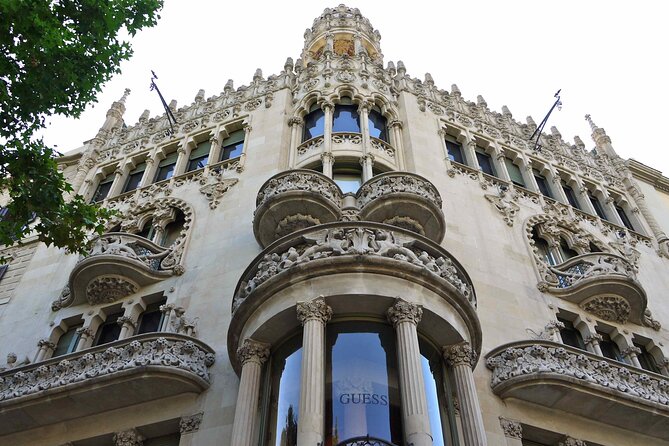
Casa Lleó i Morera is part of the famous Manzana de la Discordia, or Block of Discord, a cluster of Modernisme houses with very different personalities. The building was designed by Domènech i Montaner at the start of the 20th century.
The name of the block reflects the architectural competition packed into one stretch of Passeig de Gràcia. Casa Lleó i Morera is not simply a backdrop for a photograph. Its facade contains details tied to the life and ideas of its architect and owner.
This is where the private format earns its keep. You can ask why a particular decorative element matters, how the building fits into the block, or what the owner wanted the house to communicate. A large group would make those questions harder to handle.
The tour focuses on the exterior, so you should set your expectations correctly. You are studying the facade and hearing its story, not taking a full interior tour. For many people, that is enough, especially if they want an architectural overview before deciding which interiors deserve separate admission.
More Walking Tours in Spain
- Barcelona Architecture Walking Tour With Casa Batlló Upgrade
★ 5.0 · 137 reviews - Treasures of Barcelona: Private Gaudi Walking Tour
★ 5.0 · 128 reviews - Night Tapas Walking Tour in Barcelona Modernist Area with Small Group and Dinner
★ 4.5 · 56 reviews - Private Barcelona Modernism and Gaudí Walking Tour
★ 4.7 · 54 reviews
Casa Amatller, chocolate money, and symbols in stone
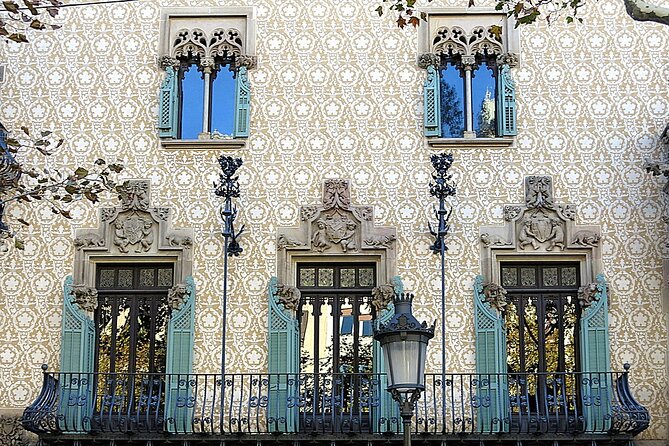
Casa Amatller is another key stop on the block. Designed by Puig i Cadafalch, it belonged to a family of chocolate producers. That connection gives the building a particularly useful human angle.
Your guide explains the history of chocolate at the time and the Amatller family’s place in Barcelona’s commercial world. The house becomes easier to read once you know that it was a real family home tied to a successful business, not an abstract exercise in decoration.
The facade is full of symbols. You will look for clues hidden in the design and consider how the architecture reflected the family’s identity. This is one of the strongest parts of the walk for anyone who likes buildings with a story behind them.
It is also possible to enter the inner courtyard free of charge, where you can see the staircase, the old elevator, and refined sculptures. The information provided does not promise a full interior visit, so treat this as a possible short addition rather than a major indoor tour. Still, the courtyard can give you a better sense of how the building worked beyond its street-facing facade.
Casa Amatller also helps put Gaudí in perspective. Barcelona’s Modernisme was a wider movement, and Puig i Cadafalch and Domènech i Montaner were major figures in their own right. That balance is important. You leave with a broader view of the period instead of assuming every ornate building is by Gaudí.
Casa Malagrida and the story behind a bourgeois facade
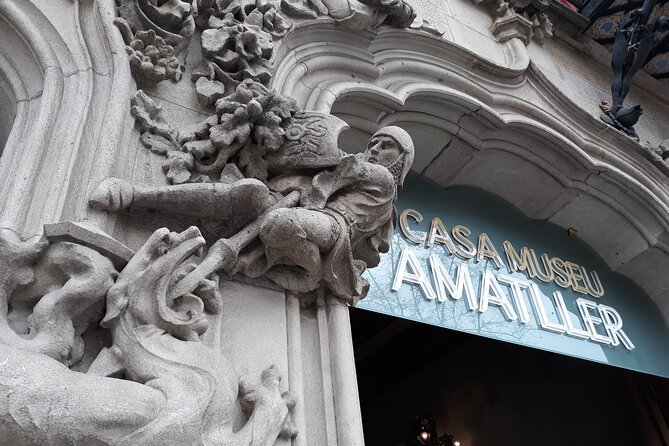
Casa Malagrida is presented as the first example of a Modernisme bourgeois house on the route. It was owned by Señor Malagrida, a wealthy tobacco industrialist whose life linked Argentina and Spain.
The building gives you another way to read Barcelona’s prosperity. Tobacco, chocolate, and other industries helped create the money behind the Eixample’s impressive homes. The facade becomes a visual account of business, migration, and social ambition.
The supplied route details place Casa Malagrida among the stops, though they do not specify a separate visit length. The exact order may depend on how the guide organizes the walk on the day. What matters is the contrast it provides with the better-known Gaudí buildings. You see how Modernisme reached beyond the most famous names and into the homes of successful business owners.
This stop should appeal to you if you like architecture tied to biography. The building is not presented as a detached object. Its decoration is used to discuss Malagrida’s life between Argentina and Spain.
Reaching Sagrada Família and reading Gaudí from outside
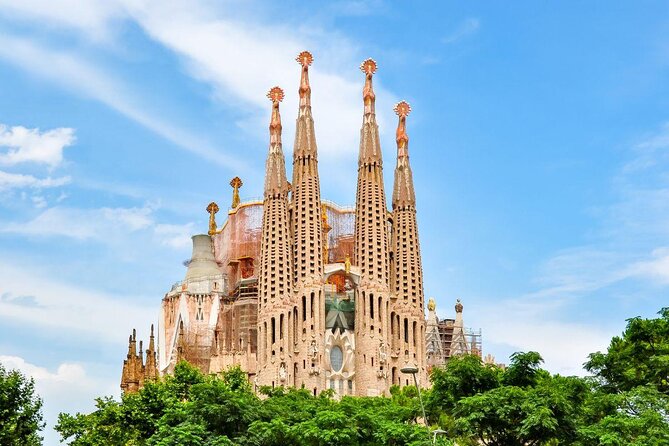
The tour ends in front of Sagrada Família, where the guide spends about 30 minutes examining the exterior. This is the grand finale, and the extra time matters because the basilica can overwhelm you at first glance.
You look at its different facades, hear the long and surprising story of its construction, and examine details linked to Gaudí’s ideas. The guide also discusses why the building remains incomplete and draws attention to features you might not notice on your own.
This is an exterior visit. Admission to Sagrada Família is not included, and the tour does not take you inside. If you want to see the interior, you will need to arrange that separately. Still, ending here works well because the earlier stops have prepared you to compare Gaudí with other Modernisme architects.
I especially like the sequence from Casa Lleó i Morera and Casa Amatller to Sagrada Família. You can see that Gaudí was part of a larger architectural age, yet his approach was unmistakably his own. The tour gives you language for discussing shape, symbolism, construction, and the changing role of architecture in Barcelona.
The route ends at Sagrada Família in the Eixample. That makes the tour useful as a starting point for your next activity, although you should allow time for the walk and any plans you make afterward.
Why the private format matters for this route
This is a private tour, so only your group participates. That changes the feel of the experience more than the word private sometimes suggests.
You can ask Patrick to spend more time on a building that catches your eye, or move at a slower pace if needed. One especially useful detail from the feedback is that he adapted the walk for two seniors. That suggests the format can work well for mixed-age groups, provided everyone is comfortable with a two-and-a-half-hour city walk.
The guide’s strengths are described in specific terms: Patrick connects political, social, and architectural history, explains how the buildings relate to Barcelona’s development, and adapts his presentation to the group. He also gives enough context that the buildings make more sense later as you explore the rest of the city.
The private setup also reduces the risk of a generic script. You can ask about Gaudí’s symbols, the Civil War marks, the Manzana de la Discordia, or the families behind the buildings. That kind of back-and-forth is difficult in a large group.
Is $66.08 per person a fair price?
At $66.08 per person, the value depends heavily on the size of your party. For one or two people, it is a premium price for a 2.5-hour exterior walk. For a private group, the price becomes easier to justify because you are paying for dedicated attention rather than a seat in a large group.
You are not paying for admission to Sagrada Família or the Modernisme houses. The value lies in interpretation, route planning, and the ability to ask questions. If you would happily walk Passeig de Gràcia on your own and read about each building afterward, this may feel expensive.
If you want a clear introduction to Barcelona’s architecture at the beginning of your stay, the price makes more sense. Several people specifically found it useful before visiting Gaudí’s houses, since the tour gave them a better grasp of his life, style, and place in the city.
I would book it early if you want a particular date. It is usually booked about 14 days ahead, which is a useful planning clue even though availability can change.
Practical details before you book
The tour is offered in English and includes a mobile ticket. Pickup is offered, but the listed starting point is the Apple store at Passeig de Gràcia, 1, beside Plaça de Catalunya. Confirm the exact pickup arrangement when you book.
The activity is near public transportation, and most people can participate. You should still expect a city walk lasting around two and a half hours, with several stops where you stand and look up at facades.
The stated operating period runs from July 27, 2020, through December 7, 2026, with hours listed from 8:00 a.m. to 5:00 p.m., Monday through Sunday. The experience requires good weather. If poor weather causes cancellation, you are offered another date or a full refund.
Free cancellation is available up to 24 hours before the start time. Changes or cancellations made less than 24 hours before the start are not accepted for a refund.
Who should book this Modernisme walk?
I would choose this tour for a first visit to Barcelona, especially if you want to understand the city before visiting its famous interiors. It suits couples, families, and small groups who enjoy asking questions and setting their own pace.
It is also a good match for architecture fans who want more than a list of Gaudí buildings. Casa Amatller, Casa Lleó i Morera, Casa Malagrida, and the Bancs Fanals give the walk useful range.
You may want something else if your main goal is entering Sagrada Família or touring several interiors. This experience is primarily an outdoor architectural and historical walk, with the major emphasis on facades and explanation.
Should you book it?
Book this tour if you want Barcelona’s Modernisme explained as part of the city’s social and political story. Patrick’s approach connects the buildings to the families, businesses, and events behind them, and the private format gives you room to ask questions.
Skip it if you prefer independent sightseeing or need a tour with interior admission included. For everyone else, it is a strong early-trip choice: start at Plaça de Catalunya, learn how to read the Eixample, and finish at Sagrada Família with a sharper eye for what you are seeing.
FAQ
How long does the Gaudí and Modernism private walking tour last?
The tour lasts approximately 2 hours and 30 minutes.
Where does the tour start?
The listed starting point is the Apple store at Passeig de Gràcia, 1, in the Eixample beside Plaça de Catalunya.
Where does the tour end?
The tour ends in front of Sagrada Família in Barcelona’s Eixample district.
Is entry to Sagrada Família included?
No. The tour examines Sagrada Família from the outside, and admission to the interior is not included in the provided details.
Is this a private tour?
Yes. Only your group participates in the activity.
What language is the tour offered in?
The tour is offered in English.
Can I cancel for a full refund?
Yes. You can cancel at least 24 hours before the experience start time for a full refund. Cancellations made less than 24 hours before the start are not refunded.
More Gaudi Tours in Barcelona
- Barcelona: Park Güell and Gaudí House Museum Entry Ticket
★ 4.5 · 6,326 reviews - Barcelona: Gaudí’s Park Güell Tour with Fast-Track Ticket
★ 4.8 · 4,512 reviews - Sagrada Familia & Gaudi Tour Private or Small Group with Tickets
★ 4.5 · 1,188 reviews - Complete Gaudi Tour: Casa Batllo, Park Guell & Sagrada Familia
★ 5.0 · 1,152 reviews
Newly added in Barcelona
- Private Montserrat, Gaudi and Modernism Day Trip from Barcelona★ 4.5 · 20 reviews
- Barcelona: The Genuis of Gaudi & Modernist Architects Tour★ 5.0 · 20 reviews
- Barcelona Private Walking Tour through the City of Gaudi★ 4.5 · 20 reviews
- Offer: Be Gaudí mosaic class Barcelona for families (max 4 pax)★ 5.0 · 20 reviews
- Barcelona: Gaudí Segway Tour★ 4.6 · 21 reviews
- Barcelona: Wonders of Gaudi Bike Tour★ 5.0 · 22 reviews
- Barcelona 3-hour Bike or E-Bike Tour: Gaudí By Bike★ 5.0 · 24 reviews
- Gaudi Guided Tour: Casa Batllo, La Pedrera & Casa Vicens★ 3.5 · 24 reviews
Gaudí Tours, compared.
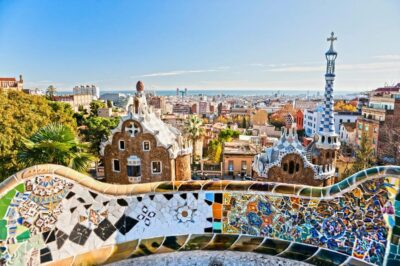
Park Güell and Gaudí House Museum Entry Ticket
Read our review →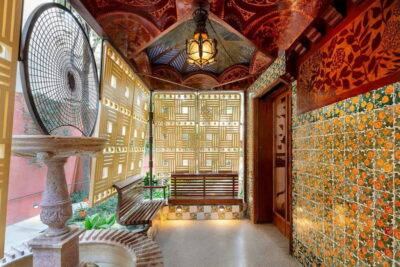
Gaudi’s Casa Vicens Skip-the-Line Entrance Ticket
Read our review →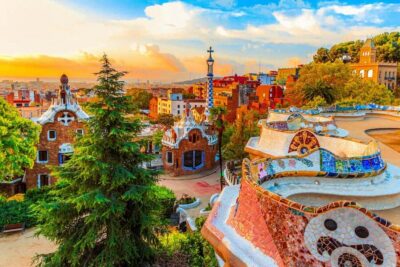
Gaudí’s Park Güell Tour with Fast-Track Ticket
Read our review →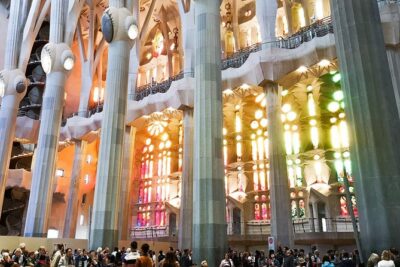
Sagrada Familia & Gaudi Tour Private or Small Group with Tickets
Read our review →
Complete Gaudi Tour: Casa Batllo, Park Guell & Sagrada Familia
Read our review →
Park Güell: Guided Tour with Optional Gaudí Experience Entry
Read our review →
Barcelona e-Bike Tour: Gaudí & Old Town Small Group
Read our review →
Ramblas, Old Town, Gothic and Gaudi Architecture Walking Tour
Read our review →Browse the lists this tour appears in