
Review · WALKING TOURS
Oklahoma City History and Architecture Walk Downtown
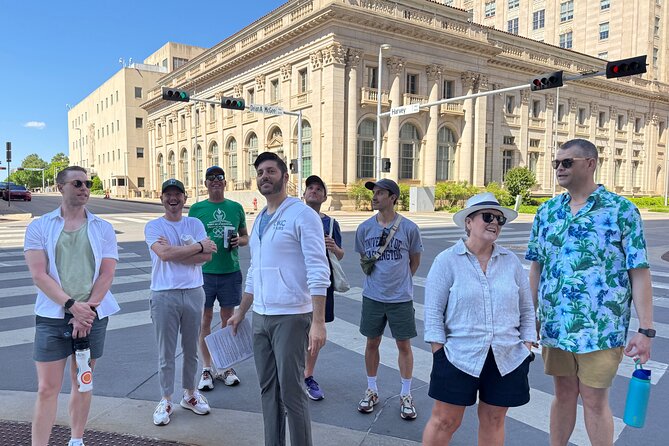
Oklahoma City’s story is written in its downtown buildings. This two-hour walk links a pioneer skyscraper, a storied hotel, an old auto district, the Oklahoma City National Memorial, and one of the state’s finest Art Deco interiors. It is a quick way to see how a frontier town grew into a modern city, then faced one of its darkest days.
I like the manageable route and the mix of architecture with human stories. The Skirvin brings old hotel gossip and ghost tales, while the Memorial gives the walk a serious emotional center. I also like that guides such as Jeffrey and Ryan leave room for questions instead of racing from stop to stop.
The main drawback is the Oklahoma weather. This is an outdoor walking tour, and hot sun can make even an easy route tiring. The group may use hotel interiors and shade when possible, but you should still plan for the conditions. The Memorial Museum is not included, so seeing it requires extra time and a separate admission.
Five things to know before you go
- Six downtown stops in two hours: The route covers major buildings and public spaces without turning into an all-day march.
- The Skirvin adds colorful local stories: You hear about Mr. Skirvin, his socialite daughter, the hotel’s expansion, and its famous haunting tales.
- The National Memorial changes the tone: The manicured grounds explain the 1995 bombing through design, place, and community response.
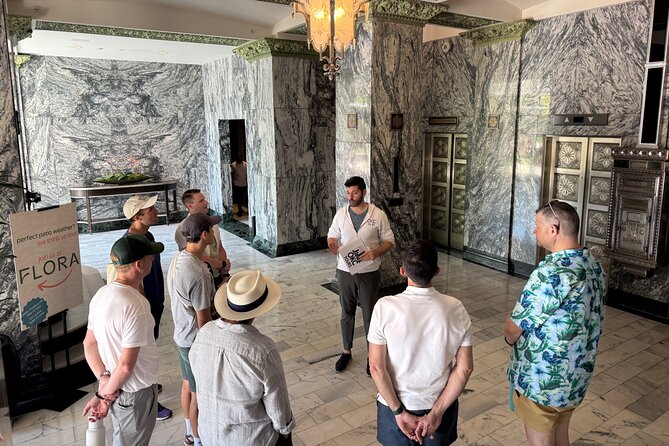
- Art Deco gets real attention: The First National Center is not just a quick exterior photo stop. You enter to see its decorated interior.
- Small groups help with questions: The maximum group size is 20, and guides including Jeffrey and Ryan have been praised for making history easy to follow.
- The $35 price covers a guided introduction: It does not include admission to the National Memorial Museum or a tip for the guide.
Why this walk is a smart first look at Oklahoma City
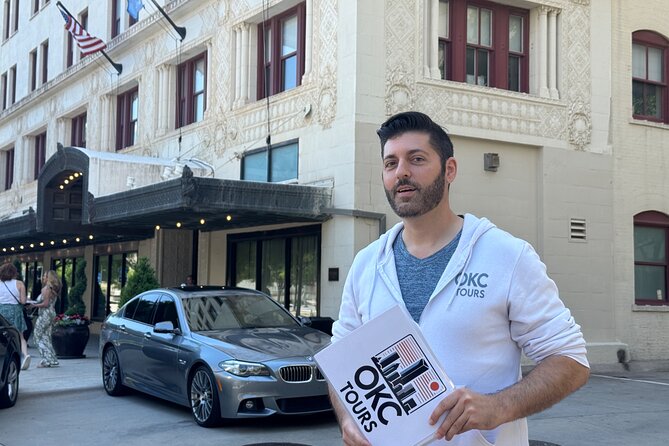
At $35 per person, this tour works best as a first introduction rather than a complete study of Oklahoma City. You get a local guide, a planned route, and access to historic interiors that can be easy to miss when exploring on your own.
The value comes from the connections. A hotel is not just a hotel here. The route shows how banking, oil, cars, rail-era growth, entertainment, and civic memory shaped downtown. You can look at a handsome façade by yourself, but a guide can explain who paid for it, what came before it, and why it mattered.
The tour starts at 10:00 a.m. at 120 N Robinson Avenue and returns to the same meeting point. That makes it easy to fit into a morning before lunch or another downtown activity. You receive a mobile ticket, and confirmation arrives when you book.
The walking time is about two hours. The route is described as an easy walk by people who took it, though the activity information asks for a moderate level of physical fitness. Expect time on city sidewalks and outdoors, with some indoor stops. Wear comfortable shoes and bring water, especially during warm weather.
More Walking Tours in the USA
- The Official Art Deco Walking Tour by The Miami Design Preservation League
★ 5.0 · 1,580 reviews - Chicago in a Day: Food, History & Architecture Walking Tour
★ 5.0 · 1,153 reviews - Miami South Beach Art Deco Walking Tour
★ 5.0 · 1,039 reviews
The Colcord Hotel, where Oklahoma City reached upward
The first stop is the Colcord Hotel, a useful place to begin because it introduces the city’s early ambition. You learn how Oklahoma City’s pioneer skyscraper was built and who was behind it.
The stop lasts about 15 minutes and does not require an admission ticket. The focus is on the building’s origin, construction, and place in the city’s early growth. That gives you a frame for the rest of the walk: downtown was not simply filled with old buildings by accident. These structures reflect money, competition, and a young city trying to look established.
I like starting here because it puts the architecture in context before the tour turns to legends and tragedy. You are not just collecting façades. You are learning to read them as evidence of changing priorities in Oklahoma City.
The Skirvin Hotel, with social history and ghost stories
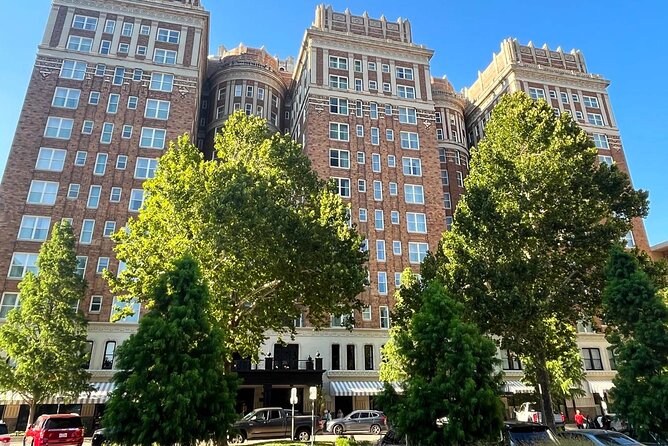
The Skirvin Oklahoma City, a Hilton Hotel, is the most theatrical stop. The guide explains how the hotel grew in size and reputation, then adds stories about Mr. Skirvin and his socialite daughter.
You also hear about the hotel’s reported hauntings, which have become part of its public identity. The ghost stories add fun, but the better part of the stop is the mix of business, family, status, and hotel life. A grand hotel tells you who wanted to be seen in the city and how downtown served as a social center.
The group explores the renovated lobby and points out original details more than 100 years old. That indoor time matters on a hot day. Several people have appreciated guides who tried to keep the group in shade or inside historic hotels when the weather turned harsh.
Allow about 20 minutes here. It is enough to take in the lobby and hear the main stories, but not enough for a slow architectural study. If old hotels interest you, pay close attention to the original details and ask questions. Guides such as Jeffrey and Ryan have been praised for making room for them.
Kerr-McGee Park and the land beneath downtown
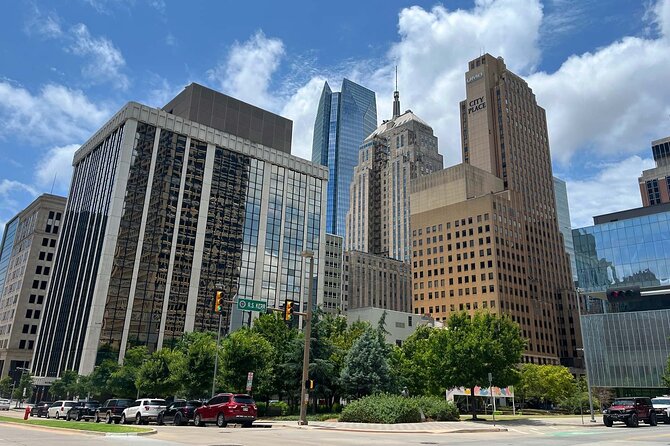
Kerr-McGee Park is a short stop, about five minutes, but it adds a useful layer to the city’s story. The guide explains Robert S. Kerr’s influence and contributions, along with what occupied this land before it became a park.
That last point matters. Public spaces often look permanent, yet downtown land changes purpose as cities grow. Here, the stop gives you a brief look at Oklahoma’s political and business development without slowing the route.
Do not expect a long park visit. This is a compact explanation between larger stops. Its value is in the connection to the people and uses that shaped downtown, not in the park itself as a destination.
Same city, a different facade:
- Chicago Architecture River Cruise
★ 5.0 · 15,756 reviews - Chicago River 90-Minute Architecture Tour
★ 4.5 · 9,629 reviews - Chicago River: 1.5-Hour Guided Architecture Cruise
★ 4.8 · 8,046 reviews - Chicago Architecture Center River Cruise aboard First Lady
★ 5.0 · 5,536 reviews
Automobile Alley, from car showrooms to modern city life
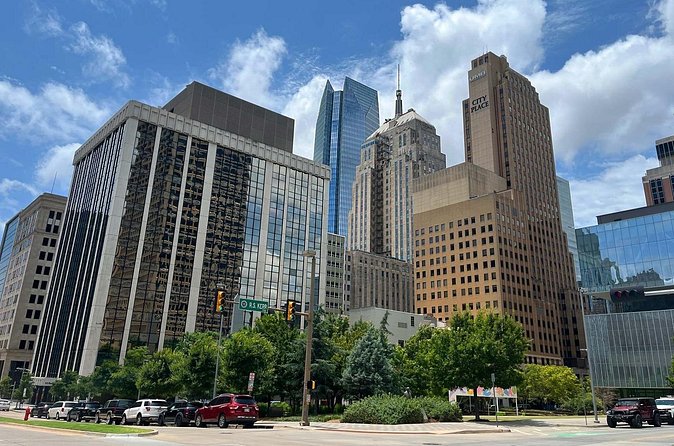
The tour passes the entrance to Automobile Alley and explains why this district became the center of Oklahoma City’s auto industry about a century ago. You also hear about the entertainment found there today.
This is one of the clearest examples of downtown change. The district’s name preserves its original purpose, while its present-day use reflects a newer phase of city life. The guide helps you see the district as more than a collection of renovated buildings.
The stop lasts around 10 minutes. Since the route only passes the entrance, do not plan on a full neighborhood tour during this experience. Still, the brief explanation helps you return later with a better sense of what you are looking at.
For a first visit, that is often enough. You learn why the district has its name, then decide if you want to spend extra time there after the walk.
The National Memorial, where the walk turns solemn
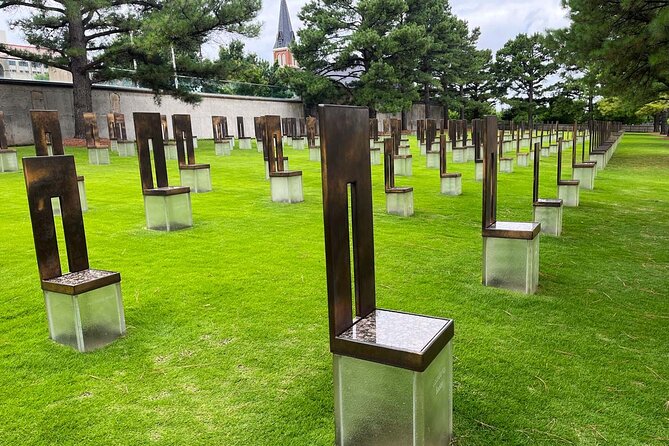
The Oklahoma City National Memorial and Museum is the emotional center of the tour. You enter the manicured memorial grounds and learn what happened on Oklahoma’s darkest day, along with the meaning behind the memorial’s design.
The guide also explains how the community responded to the crisis. That community response is important because the memorial is not only a marker of loss. It also records the way Oklahoma City faced grief, remembrance, and recovery.
The tour allows about 20 minutes at the memorial grounds. That gives you time to understand the layout and symbolism, but it is not enough for a full museum visit. Museum admission is not included, so plan a separate visit if you want the exhibits and more detailed interpretation.
The change in mood can be striking. The early part of the walk is filled with hotels, architecture, business stories, and a few ghost tales. At the Memorial, the pace becomes quieter and more reflective. A good guide handles that shift with care, and the strongest part of this stop is the chance to understand the place before you explore it on your own.
If the bombing memorial is a main reason for visiting Oklahoma City, treat this tour as an introduction, not a substitute for the museum. If you have limited time, the guided explanation still gives the grounds more meaning than a quick independent walk-by.
The First National Center and Oklahoma’s Art Deco showpiece
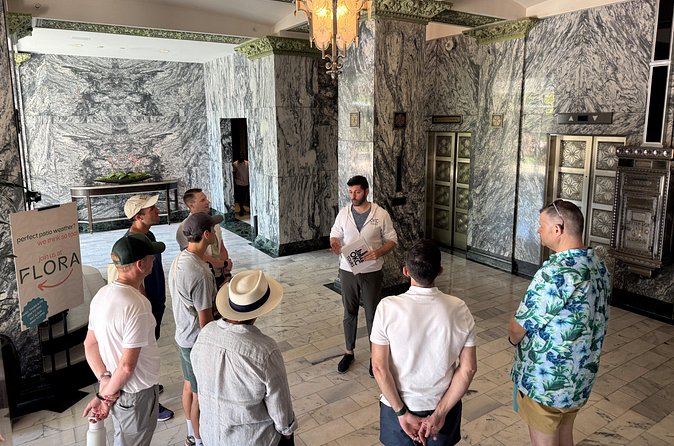
The final stop is the First National Center, described as one of the most impressive buildings in the state. The tour takes you inside the former bank to see Art Deco details inside and out.
This is a strong finish because the building brings together the themes introduced earlier: financial power, civic pride, design, and downtown change. The property now includes a hotel, apartments, shops, and restaurants, so you see how an old bank building has found new uses.
Allow about 15 minutes. The focus is on the dazzling Art Deco elements and the building’s former role as a bank. The interior access makes this more than an exterior architecture walk. You get a chance to look upward, notice decorative details, and understand how design once helped a financial institution project confidence.
I would save a few questions for this stop. If you like historic interiors, this may be the architectural highlight of the morning. The route includes several fine buildings, but the First National Center offers the clearest look at the city’s Art Deco character.
Guides, group size, and the feel of the walk
The experience is limited to a maximum of 20 people. That is large enough to create a social group, but small enough for a guide to answer questions without shouting across a crowd.
Guides named in feedback include Jeffrey and Ryan. Their strengths are clear: local stories, architecture, humor, and the ability to explain history in plain terms. Ryan was also praised for leading a first OKC tour with confidence, which suggests that the tour’s quality depends on preparation and storytelling rather than a single script alone.
You should expect a conversational walk, not a lecture. Questions are welcome, and the route is not rushed. That is useful in a city where several of the best details are easy to miss from the sidewalk.
The tour has also included a coupon for ice cream, though that should be treated as a possible extra rather than a guaranteed part of the package. The listed inclusion is the guide. Gratuity is optional and not included.
Weather, comfort, and practical planning
This activity requires good weather and may be canceled if conditions are poor. In that case, you are offered another date or a full refund. The tour also requires a minimum number of people, so a cancellation is possible if that minimum is not reached.
Oklahoma heat deserves respect. The route includes outdoor walking, and one person specifically appreciated the effort to find shade or indoor space on a very hot day. Still, you should prepare as if much of the morning will be outside.
Wear shoes suited to city sidewalks. Bring water, use sun protection, and consider a light layer if you expect strong air conditioning indoors. Since the tour begins at 10:00 a.m., it avoids the very earliest morning heat but may reach warmer conditions as the day goes on.
Service animals are allowed. The activity asks for moderate physical fitness, so it is not best suited to anyone who struggles with a two-hour urban walk.
Free cancellation is available up to 24 hours before the start time for a full refund. Changes or cancellations made less than 24 hours ahead are not accepted for a refund, and the cut-off follows local time.
Who will get the most from this $35 tour
I would choose this walk for a first visit to Oklahoma City, especially if you want the city explained rather than simply photographed. It suits people who enjoy old hotels, Art Deco, civic history, and stories about the people behind public buildings.
It also works well for a short weekend. The route gives you a useful orientation in two hours, then leaves the rest of the day open for the National Memorial Museum, Automobile Alley, or another downtown stop.
History-minded families may enjoy the variety, though the Memorial section may require a thoughtful conversation with younger children. Architecture fans will appreciate the Colcord, Skirvin, and First National Center, while anyone interested in Oklahoma’s civic story will gain more from the Kerr-McGee and Memorial stops.
You may want to skip it if you dislike guided walks, already know downtown Oklahoma City well, or want a long visit inside the Memorial Museum. The tour gives you a strong overview, but each stop is brief by design.
Should you book the Oklahoma City history walk?
Book it if you want a compact, fairly priced introduction to downtown, with a guide who can connect architecture, local characters, business, tragedy, and renewal. The best parts are the Skirvin’s old stories, the National Memorial’s careful explanation, and the First National Center’s Art Deco interior.
At $35, the tour offers solid value because it combines six stops and a local guide in about two hours. Just remember that museum admission is extra, the walk is weather dependent, and Oklahoma’s heat can affect your comfort.
For the best experience, schedule it near the start of your Oklahoma City stay. You will gain useful context before exploring on your own, and you can return to the places that catch your interest.
FAQ
How long is the Oklahoma City History and Architecture Walk?
The walk lasts approximately two hours.
Where does the tour begin?
It begins at 120 N Robinson Avenue, Oklahoma City, Oklahoma 73102.
What time does the tour start?
The scheduled start time is 10:00 a.m.
Where does the tour end?
The activity ends back at the meeting point.
How much does the tour cost?
The listed price is $35 per person.
Is admission to the Oklahoma City National Memorial Museum included?
No. The tour visits the National Memorial grounds, but museum admission is not included.
What is included in the tour?
A guide is included. Optional gratuity for the guide is not included.
Can I cancel for a full refund?
Yes. You can cancel at least 24 hours before the start time for a full refund. The tour may also offer another date or a full refund if poor weather or an insufficient minimum number of participants causes cancellation.
More History Walks in the USA
- Charleston’s Best Highlights: History, Culture & Architecture
★ 5.0 · 422 reviews - Palm Springs Modernism Architecture & History Bike Tour
★ 5.0 · 359 reviews - Charleston: History and Architecture Guided Walking Tour
★ 4.8 · 349 reviews - Historic Georgetown: History, Gossip, & Architecture Walking Tour
★ 5.0 · 321 reviews
Newly added in the USA
- Washington, DC: Georgetown Architecture Walking Tour★ 5.0 · 8 reviews
- Washington DC: Dupont Circle & Embassy Row Architecture Tour★ 5.0 · 6 reviews
- New Orleans : Garden District Architecture Walking tour★ 4.8 · 5 reviews
- Wilmington History and Architecture Tour★ 4.8 · 18 reviews
- Private Colonial Williamsburg Architectural Tour★ 5.0 · 5 reviews
- Castle to Capitol: Museums of the National Mall Architecture Tour★ 4.5 · 9 reviews
- Tulsa: Art Deco Walking Tour of Tulsa★ 5.0 · 8 reviews
- Monuments and Memorials Architectural Walking Tour★ 5.0 · 17 reviews
Walking Tours, compared.
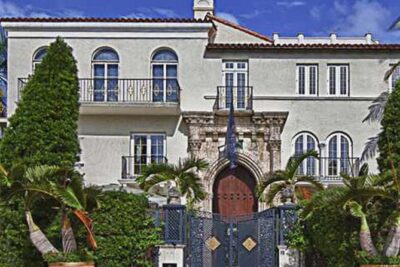
The Official Art Deco Walking Tour by The Miami Design Preservation League
Read our review →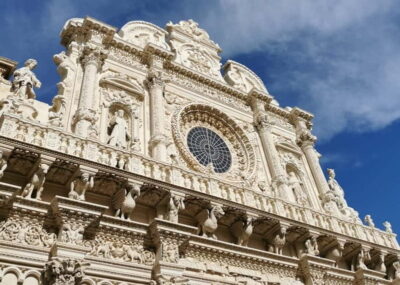
Baroque Architecture and Underground Walking Tour
Read our review →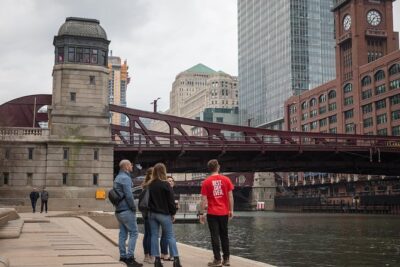
Chicago in a Day: Food, History & Architecture Walking Tour
Read our review →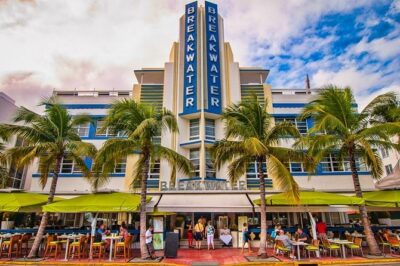

Ramblas, Old Town, Gothic and Gaudi Architecture Walking Tour
Read our review →
Chicago’s Secret Interiors Architectural Walking Tour
Read our review →
Browse the lists this tour appears in