
Review · TOKYO ARCHITECTURE TOURS
Private Ginza Architecture Tour
Ginza’s best architecture is not confined to grand department stores. This private walk begins at the surprising Tsukiji Hongwan-ji temple, moves through traditional theater and bold modern design, then finishes beneath the famous Wako clock tower. Along the way, you’ll see how Tokyo can place Indian-inspired temple details, European church elements, luxury façades, and 1960s urban ideas within a few city blocks.
I like the balance here. First, you get famous buildings you may already have saved in your Tokyo plans. Second, the walk includes a quiet backstreet detour, giving you a look at Ginza beyond its polished main avenues. The main consideration is the price: at $129 per person, this makes the most sense if you care about architecture and want a private English-language guide rather than a general Ginza stroll.
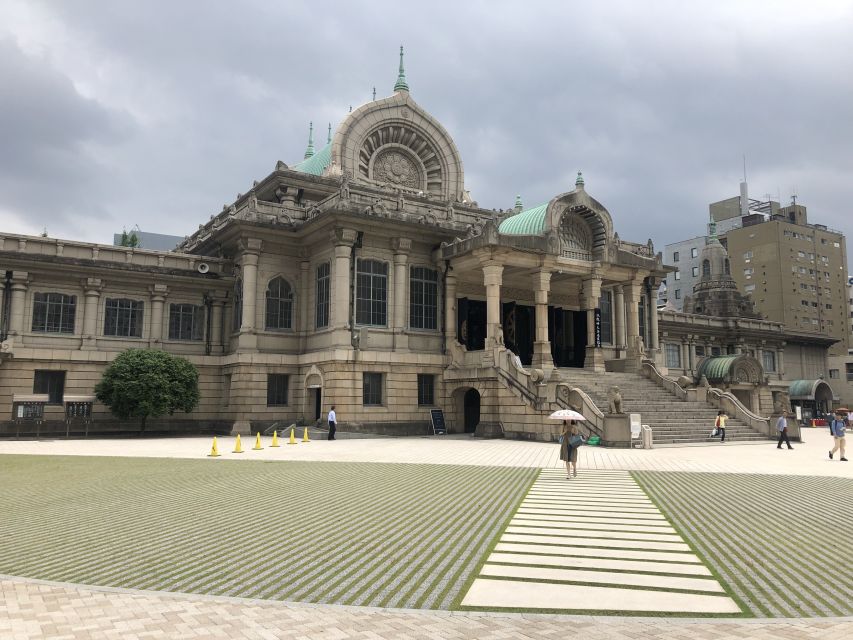
- Tsukiji Hongwan-ji begins the tour with an unusual blend of Indian exterior details and a European church-like interior.
- Kabuki-za connects modern construction with traditional Japanese theater design.
- The route includes works linked to the Japanese Metabolism movement of the 1960s and 1970s.
- Maison Hermès, Tokyu Plaza Ginza, and Mikimoto Ginza 2 show how retail buildings can become architectural statements.
- The Okuno Building offers an older contrast to Ginza’s newer luxury façades.
- A private format lets the guide keep the focus on your interests, with a drinks break included.
Why this Ginza walk is different
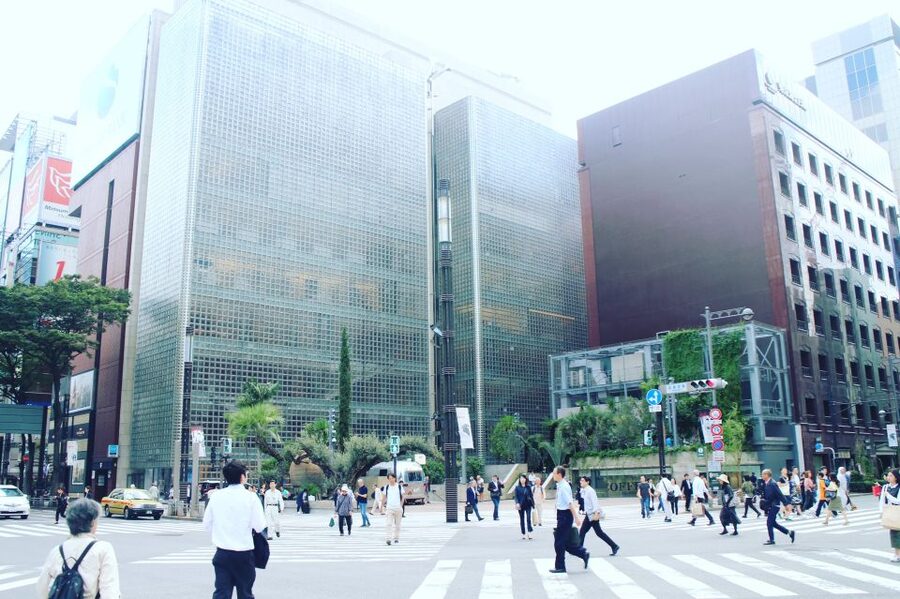
Many Ginza walks focus on shopping, department stores, food, or the famous intersection at Ginza 4-chome. This one uses buildings as the main subject. That changes the pace. Instead of simply moving from one attraction to another, you’ll look up, compare materials, notice silhouettes, and consider how each structure fits into a very dense part of Tokyo.
The route also has a useful time span. You begin with a temple, pass through a theater that carries older traditions into a new building, then move toward modern commercial architecture and earlier apartment-style design. The result is not just a parade of expensive storefronts. It is a compact lesson in how Tokyo has handled tradition, reconstruction, business, and limited urban space.
The private format matters. You are not walking with a large mixed group that may care more about shopping or street photos than buildings. You can ask why a façade looks the way it does, how an architect used a narrow site, or what separates a famous work from an ordinary commercial building. The guide speaks English, and the tour lasts 210 minutes, long enough for a proper architectural route without turning into a full-day commitment.
Starting beneath the unusual Tsukiji Hongwan-ji temple
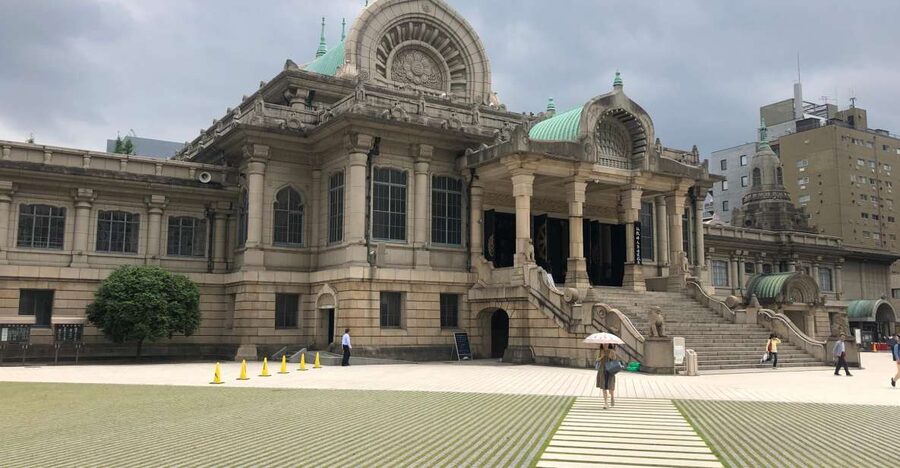
The meeting point is directly in front of the main gate of Tsukiji Hongwan-ji temple. From Exit 1 of Tsukiji Station on the Tokyo Metro Hibiya Line, turn left and walk straight for less than a minute. That is a useful start because you do not need to cross Ginza first or search for a small café entrance.
The temple gives the tour an immediate surprise. Its exterior uses an Indian style, while the interior has the feel of a European church. This is not the standard image many visitors carry of a Buddhist temple, and that is precisely why it works as the opening stop.
Take time here to compare the building’s outside and inside rather than treating it as a quick photo stop. The contrast introduces one of the tour’s main ideas: Japanese architecture can absorb outside influences without giving up its own identity. You are also reminded that the Tsukiji area is more than its former fish market reputation.
Because the tour starts at the temple gate, you should arrive ready to begin on foot. Transportation to and from the Ginza area is not included, so factor in your own subway fare and the time needed to reach the meeting point.
More Private Tours in the world:
- Best of Chicago: Architecture & Highlights City Private Tour
★ 5.0 · 94 reviews - Private Harajuku Omotesando Architecture Walking Tour
★ 5.0 · 67 reviews - Private Santa Barbara History and Architecture Walking Tour
★ 5.0 · 56 reviews
Kabuki-za and the problem of building new traditions
Next comes the Kabuki theater, newly built in 2013. Its importance lies in the way it carries forward a traditional style while using a modern building. You do not need to know kabuki to appreciate the architectural question here: how do you create a new theater that still feels connected to earlier generations?
This is a particularly useful stop for anyone interested in the difference between copying an old building and continuing its visual language. The theater does not simply belong to the past. It shows how a cultural institution can keep familiar forms in public view while occupying a contemporary urban site.
The stop also helps set up the later buildings. At Kabuki-za, tradition is visible and deliberate. As you continue through Ginza, the architecture becomes more experimental, more commercial, or more openly modern. That change gives the walk a clear rhythm instead of presenting unrelated buildings one after another.
Nicolas G. Hayek Center and the architecture of retail
The Nicolas G. Hayek Center brings the focus to commercial design. In Ginza, retail buildings compete for attention on valuable streets, so the building itself becomes part of the brand. You will look at it not only as a shop but as a piece of urban design.
This is where a guide can add real value. On your own, you may notice an unusual exterior and take a photograph. With an architecture-focused explanation, you can consider how a luxury business uses a building to express precision, exclusivity, or modernity. The tour’s stated focus is on both established architectural names and newer work, so this stop helps connect commerce with design.
Do not expect an interior tour of every building. The experience is a walking tour, and the information provided does not promise entry into all the sites. The pleasure comes from seeing the structures in their streetscape and comparing one façade with the next.
Maison Hermès and the polished Ginza façade
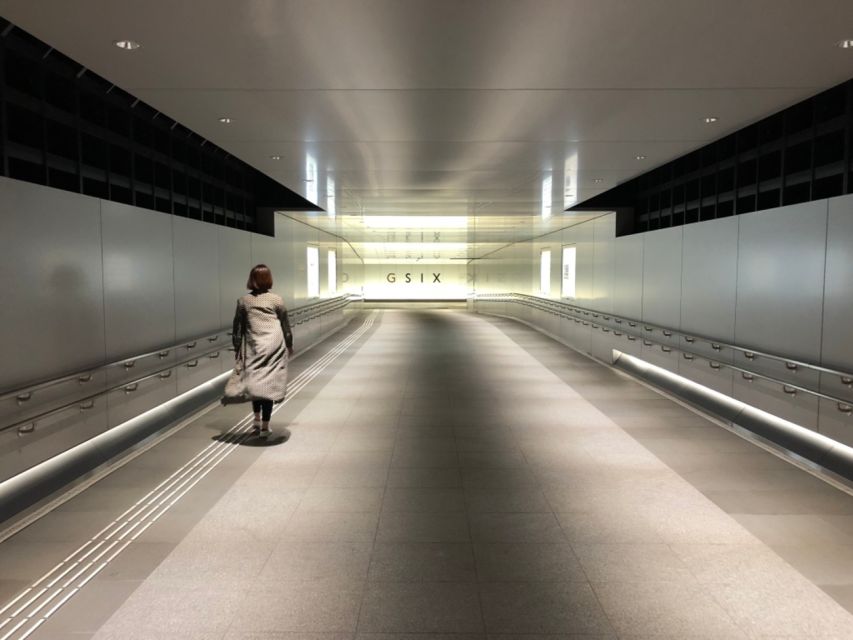
Maison Hermès is another strong example of Ginza’s retail architecture. Its presence fits the district’s luxury image, but the tour asks you to pay attention to the building as a designed object rather than as a shopping stop.
This is a good place to think about surface and restraint. Ginza architecture often has to communicate quality from the street, where pedestrians see only a façade and an entrance. The guide can help you notice how a building creates a sense of identity without relying on a huge sign or a conventional department-store shape.
For you, the practical benefit is simple: you can see a major Ginza landmark without giving up time for shopping. If you do want to enter stores along the route, remember that the tour has a fixed schedule and several planned stops. Treat the walk as an architecture experience first.
A few more architecture walks in the world worth a look
- Chicago Architecture River Cruise
★ 5.0 · 15,756 reviews - Chicago River 90-Minute Architecture Tour
★ 4.5 · 9,629 reviews - Chicago River: 1.5-Hour Guided Architecture Cruise
★ 4.8 · 8,046 reviews - Chicago Architecture Center River Cruise aboard First Lady
★ 5.0 · 5,536 reviews
Tokyu Plaza Ginza and modern forms at street level
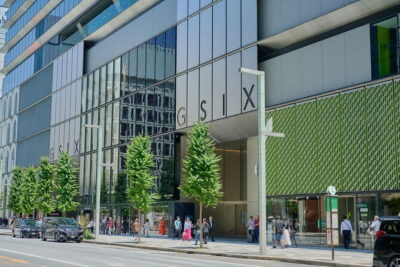
Tokyu Plaza Ginza shifts the mood again. Its design belongs to contemporary Ginza, where a commercial building needs to feel new while fitting into one of Tokyo’s best-known shopping districts.
This stop is useful because modern architecture can be difficult to read at first glance. You may see angles, glass, metal, or repeated patterns, but the guide can point out how the building presents itself to the street and how it differs from older neighbors. That comparison is one of the strongest reasons to choose this tour over a simple list of Ginza landmarks.
The route’s balance between famous buildings and emerging architectural work is also important here. You are not limited to one historic style. You get a view of Ginza as an active architectural district, where new ideas keep appearing beside established commercial addresses.
Mikimoto Ginza 2 and the value of a close comparison
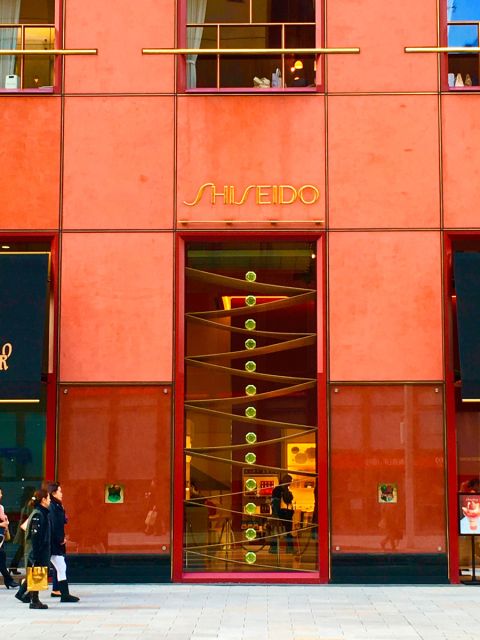
Mikimoto Ginza 2 continues the tour’s look at brand architecture. Like the other retail buildings, it shows how a narrow urban site can become a highly recognizable identity for a company.
The most useful way to experience this stop is comparatively. Instead of asking if you like the building, ask how it differs from Maison Hermès, the Nicolas G. Hayek Center, or Tokyu Plaza Ginza. Does it feel quieter or more decorative? Does it draw attention through structure, color, materials, or its relationship to the street?
The supplied details do not specify the exact amount of time spent at each building, so the pace may vary according to your guide and your questions. That flexibility is an advantage of a private group, but it also means you should tell the guide early if one building matters especially to you.
The Okuno Building and Ginza’s older face
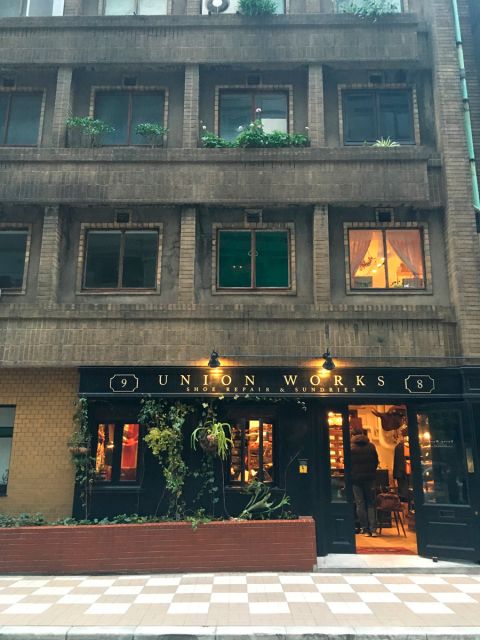
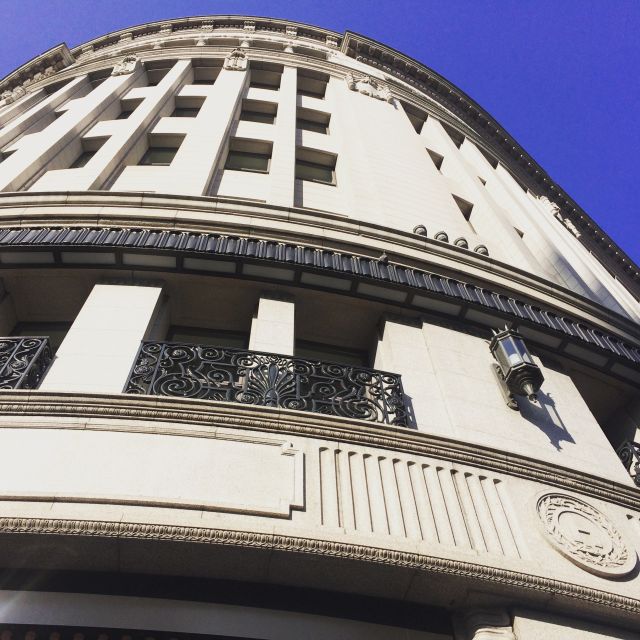
The Okuno Building provides an important change from the newer retail works. After several polished contemporary façades, an older building helps you see that Ginza is not a blank slate rebuilt in one period.
This is the sort of stop that can be missed if you only follow the main shopping route. It gives you a different scale and mood, and it helps explain why an architecture walk should include more than the newest or most expensive buildings. The Okuno Building lets you compare age, proportion, and atmosphere with the commercial structures that came before it on the route.
I especially like its place in the sequence. The tour does not leave older architecture behind after Tsukiji Hongwan-ji and Kabuki-za. It returns to it later, after showing you modern retail design. That back-and-forth makes the changes easier to see.
The Japanese Metabolism movement in Ginza
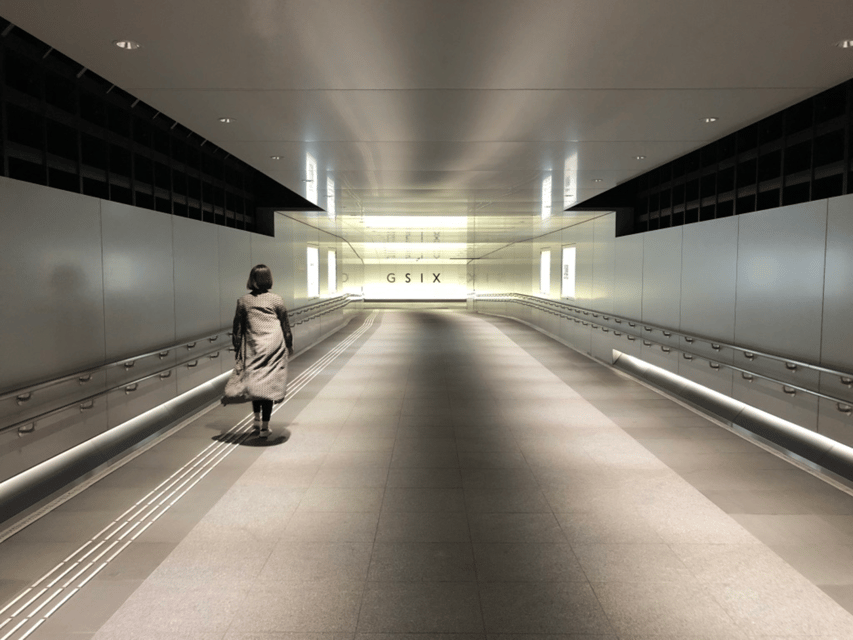
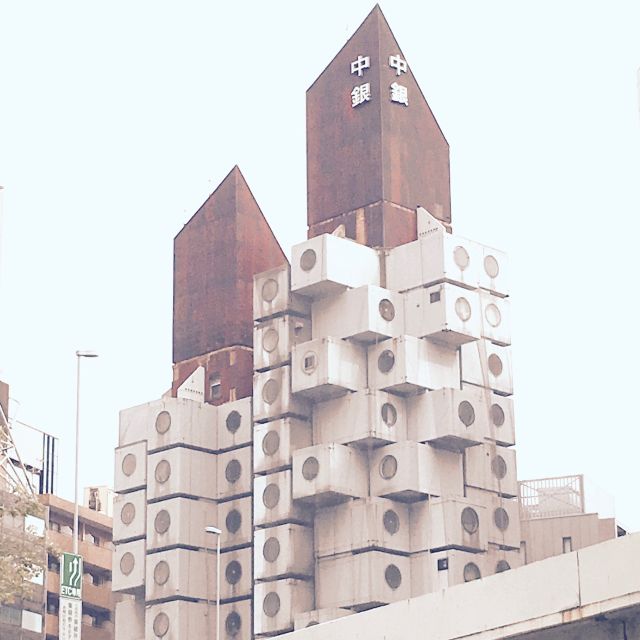
One of the tour’s most distinctive themes is the Japanese Metabolism movement. In the 1960s and 1970s, architects associated with this movement proposed new forms of urbanism and imagined cities that could change, grow, and adapt.
You will see a masterpiece connected with that movement during the route. The provided information does not name the exact building, so I would ask your guide to identify it clearly and explain what makes it a Metabolist work. That question can turn a visually striking stop into a much more useful lesson.
The movement matters because Tokyo was not simply copying Western modernism. Japanese architects were responding to rapid urban growth, limited space, technology, and the need to imagine a city for the future. Even if you are new to architecture, this context gives you a way to understand why some Ginza buildings feel more like urban machines or modular systems than traditional structures.
A short backstreet detour
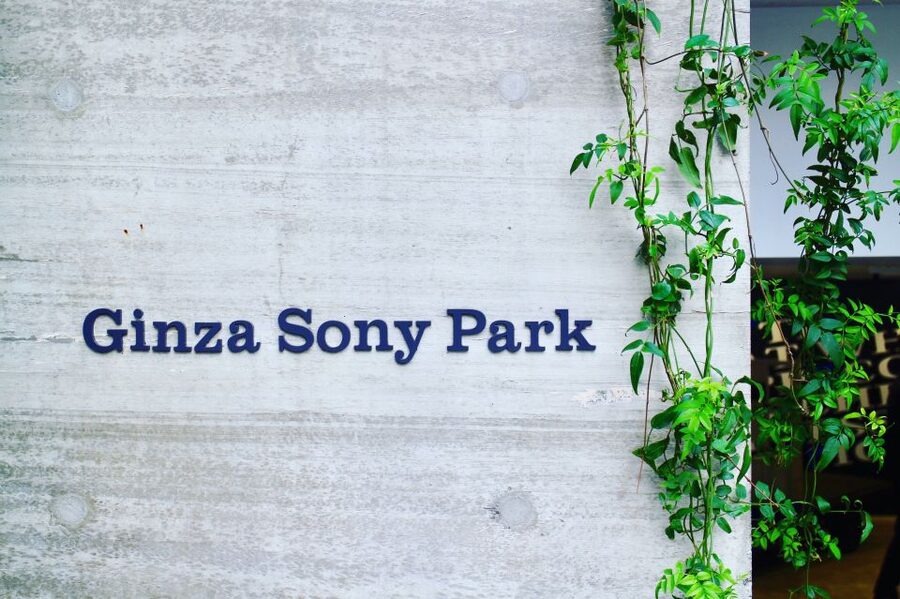
The secret side trip into a backstreet neighborhood is a welcome change of scale. Ginza’s main streets can feel formal and carefully presented. A smaller neighborhood shows another side of the same district, with less emphasis on brand image and more on everyday urban texture.
The information provided does not specify the exact lane or neighborhood, so do not expect a named hidden attraction. The value is in the contrast. You will have just looked at major buildings designed for international brands and public attention. Then you turn into a quieter area and see how the district works away from its grand avenues.
This detour also keeps the tour from becoming too predictable. Architecture is not only about isolated masterpieces. It is about the spaces between them, the streets people use, and the way different building types sit side by side.
The Ginza 4-chome finish at Wako
The tour finishes at the intersection of Ginza 4-chome, where the Wako building and its SEIKO watch face provide one of Tokyo’s most recognizable city views. It is a fitting ending because the building is both an architectural landmark and a symbol of Ginza’s commercial identity.
After the temple, theater, modern retail buildings, Metabolism-era work, and backstreet detour, Wako brings the route back to a famous public image. You can use the final stop to review the contrasts you have seen: religious and commercial architecture, inherited forms and experimental ideas, polished avenues and quieter side streets.
The finishing location is also practical. You end at a major intersection rather than returning to the starting point. The tour information does not state the exact onward transport options, so plan your next move before setting out if you have a dinner reservation or another timed activity.
Is $129 per person good value?
At $129 per person, this is not a budget walking tour. The price covers a private guide, a 210-minute walking route, and a break with drinks. Meals and transportation to and from the Ginza area are not included.
The value depends on how much you want from the experience. For a casual visitor who only wants to see Ginza’s best-known streets, the cost may be hard to justify. You can walk through the district on your own and photograph several of these buildings from outside.
For someone with a real interest in architecture, the calculation is different. You are paying for selection, context, and a private conversation across three and a half hours. The route includes places that are easy to pass without understanding, especially the Metabolism-related work and the relationship between older and newer buildings.
The drinks break is a small but useful touch. Three and a half hours on foot is long enough to need a pause, and the break gives you time to ask questions without trying to walk and talk at the same time.
Who should book this private architecture tour?
I would choose this tour if you enjoy cities through buildings rather than only through museums and food. It is also a good fit if you have already seen the standard Ginza sights and want a more focused reason to return.
The private format suits couples, families, friends, or solo visitors who want to set the conversation around their own interests. An architecture student, designer, photographer, or simply a curious first-time visitor could all get something useful from the route.
You should think twice if you dislike walking tours, want extensive interior access, or prefer an activity with meals included. The experience is built around exterior architecture and street-level observation. It also requires you to pay for your own transportation to and from the area.
Book this tour if you want Ginza explained through its buildings, from Tsukiji Hongwan-ji’s unusual design to the Wako clock at Ginza 4-chome. The strongest reason to go is the range: traditional forms, modern retail architecture, Metabolism-era thinking, and a backstreet contrast all fit into one private walk. At $129, it is a specialist experience, but for the right visitor, that focus is the point.
FAQ
Where does the Private Ginza Architecture Tour start?
It starts in front of the main gate of Tsukiji Hongwan-ji temple.
How do I reach the meeting point?
Use Exit 1 of Tsukiji Station on the Tokyo Metro Hibiya Line, turn left, and walk straight for less than a minute.
How long does the tour last?
The tour lasts 210 minutes.
Is the tour private?
Yes. It is offered as a private group experience.
What language is the tour conducted in?
The live guide conducts the tour in English.
Are meals included?
No. Meals are not included, but a break with drinks is included.
Can I cancel for a full refund?
Yes. You can cancel up to 24 hours in advance for a full refund.
Newly added in the world
- Washington, DC: Georgetown Architecture Walking Tour★ 5.0 · 8 reviews
- Washington DC: Dupont Circle & Embassy Row Architecture Tour★ 5.0 · 6 reviews
- New Orleans : Garden District Architecture Walking tour★ 4.8 · 5 reviews
- Wilmington History and Architecture Tour★ 4.8 · 18 reviews
- Unveiling Brno: History, Culture & Architectural Delights★ 5.0 · 2 reviews
- Vicenza: Palladian Architecture Private Walking Tour★ 3.3 · 3 reviews
- Walk & Discover KL’s Architectural and Heritage Gems★ 5.0 · 7 reviews
- Private Colonial Williamsburg Architectural Tour★ 5.0 · 5 reviews
Tokyo Architecture Tours, compared.
Private Harajuku Omotesando Architecture Walking Tour
Read our review →
Private Edo-Tokyo Open Air Architectural Museum Tour
Read our review →
Tokyo Architecture and Contemporary Art Walking Tour with a local guide
Read our review →
Japanese Garden & Western Architecture: Akasaka exploration tour
Read our review →
Browse the lists this tour appears in