
Review · PRIVATE
Private Harajuku Omotesando Architecture Tour
Harajuku and Omotesando are much more than youth fashion and luxury shopping. This private walk explains why world-famous architects and designer brands chose this particular stretch of Tokyo, then takes you into back streets where ordinary Japanese life sits beside bold modern buildings. The architecture is the main event, but the change from polished Omotesando to smaller neighborhood lanes gives the tour its real character.
I like the way the route brings together major works by Japanese and international architects, including Prada, Dior, Louis Vuitton, The Iceberg, and SunnyHills. I also like the private format: guides such as Taka, a retired urban planner educated at MIT, and Fuki, who is deeply interested in architecture, can adjust the walk to your questions and priorities.
The main drawback is simple: three and a half hours can feel short here. You cover a lot of ground, and the route involves walking on city streets, so comfortable shoes matter. If your main interest is shopping rather than design, some stops may feel more like a visual lesson than a shopping trip.
Key points at a glance
- Start beside Meiji Shrine: Meet at Café Mori no Terrace near the large wooden entrance gate, not at the cafe inside the shrine.
- See landmark buildings in one walk: The route includes Yoyogi Gymnasium, The Iceberg, Dior, Louis Vuitton, SunnyHills, and Prada.
- Get more than a facade tour: Your guide explains why architects and luxury brands are drawn to Omotesando.
- Step into local streets: A side trip through Harajuku’s back streets and Cat Street shows a quieter side of the district.
- Ask for an architecture-focused walk: The private format allows the guide to respond to your interests, from famous architects to less obvious buildings.
- Try the evening option: Night light gives several of the buildings a different look, though starting times depend on availability.
Why Omotesando is worth seeing on foot
Omotesando is often compared with Ginza or Rodeo Drive, but the comparison only goes so far. Ginza is known for grand department stores, broad avenues, and a formal luxury-shopping feel. Omotesando has that polish, yet its buildings are more experimental and tightly woven into the street.
The avenue was planned as an approach to Meiji Shrine, and its broad tree-lined setting gives the district a calmer rhythm than many central Tokyo shopping streets. Along the route, brand stores are not simply boxes with logos attached. Their buildings are part of the attraction, designed to catch the eye from the pavement and fit the brand’s identity.
That is why a guide adds real value here. You can look at a striking facade on your own, but you may not understand why the building has that shape, how it relates to the brand inside, or how it fits into Tokyo’s modern architecture. The guide turns a pleasant walk into a way of reading the city.
I especially like that the tour does not treat Omotesando as a collection of famous storefronts. It also asks you to notice the spaces between them. Once you leave the main avenue, you see a different pace of life, with smaller streets and a more residential feel.
More Private Tours in the world:
- Best of Chicago: Architecture & Highlights City Private Tour
★ 5.0 · 94 reviews - Private Harajuku Omotesando Architecture Walking Tour
★ 5.0 · 67 reviews - Private Santa Barbara History and Architecture Walking Tour
★ 5.0 · 56 reviews
Meeting at Meiji Shrine’s wooden gate
The tour begins near Jingubashi, beside the large wooden entrance gate to Meiji Shrine. The exact meeting place is in front of Café Mori no Terrace at 1 Yoyogikamizonocho, Shibuya City.
This detail matters because there is another cafe with a similar name inside Meiji Shrine. From JR Harajuku Station, leave through the Omotesando exit and walk toward the forest. You do not need to pass through a Shinto gate to reach the meeting point.
The location gives the walk a strong beginning. You start with the shrine forest and its traditional setting, then move toward the sleek commercial architecture of Omotesando. That change helps explain the district better than beginning in the middle of the shopping avenue.
Give yourself enough time to find the cafe without rushing. A private guide can usually begin the walk smoothly once everyone has arrived, but you do not want to spend the first minutes checking maps and station exits.
Yoyogi Gymnasium and Tokyo’s modern design story
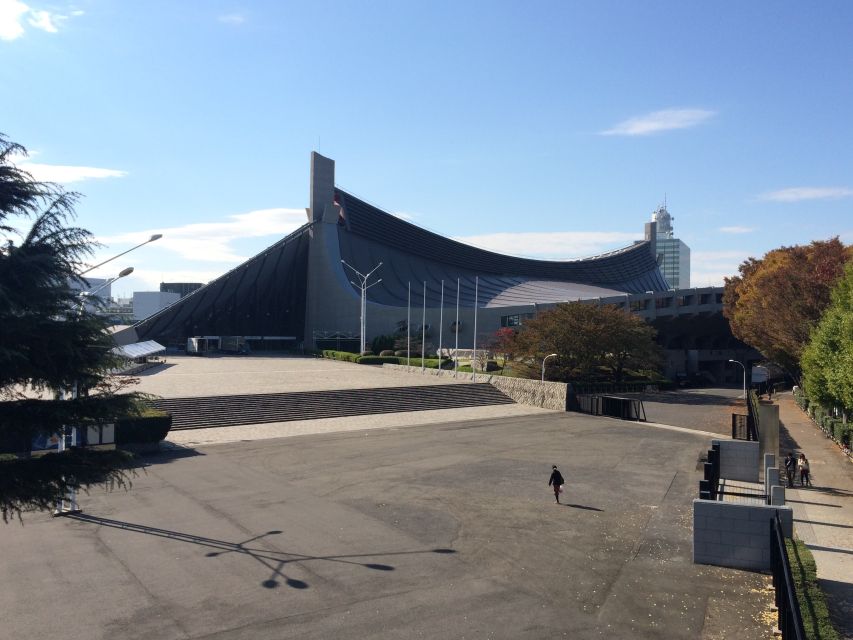
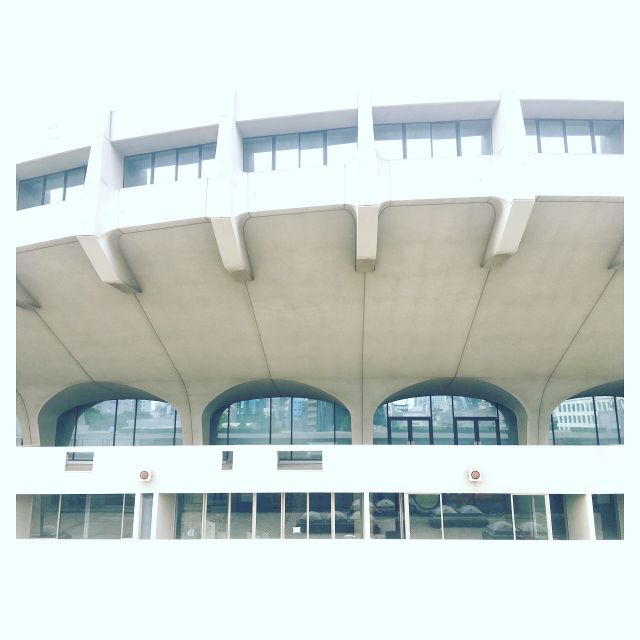
Early in the walk, you see Yoyogi Gymnasium from a distance. The tour does not present it as a shopping stop. Instead, it provides an important piece of Tokyo’s architectural story before you reach the brand buildings.
Yoyogi Gymnasium is associated with the bold modern design created for the 1964 Tokyo Olympics. Even from outside, its unusual form helps you see that Tokyo has long used architecture to express ambition, movement, and new technology.
The distant view is also a practical reminder of how the tour works. This is a walking study of the area, not a sequence of interior visits. You should expect to examine buildings from public streets and hear the ideas behind them rather than enter every store or landmark.
That approach suits people who enjoy design, photography, and city planning. It may be less satisfying if you expect museum-style access or long indoor visits. The reward comes from seeing how several important buildings relate to one another within a small part of Tokyo.
The Iceberg, Dior, and Louis Vuitton
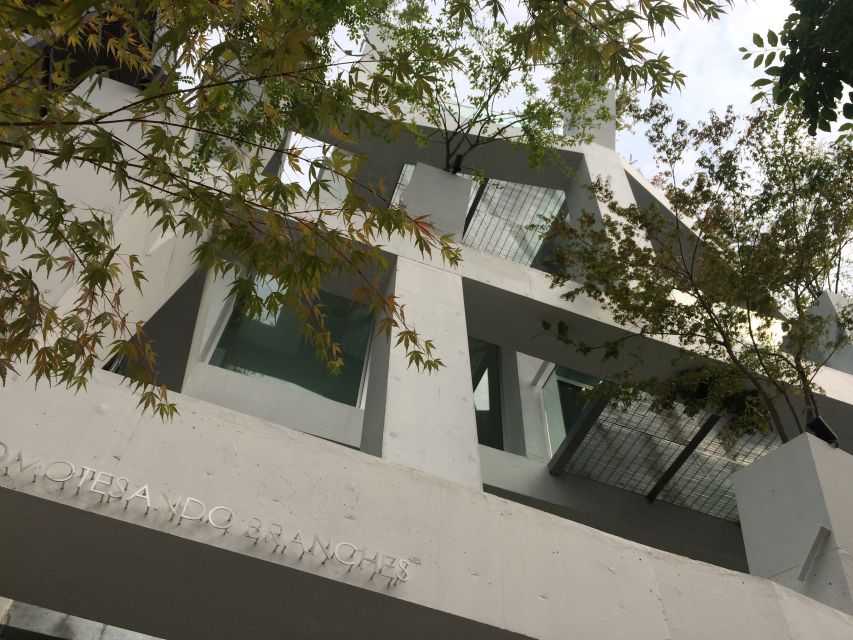
As you continue toward Omotesando, the route reaches some of the district’s best-known contemporary buildings. The Iceberg, Dior, and Louis Vuitton each offer a different architectural statement, even though they occupy the same general shopping area.
The Iceberg is hard to miss because of its angular glass form. It shows how a commercial building can act almost like a sculpture, using geometry and reflections to change as you move past it. This is a good place to keep your camera ready, since the building looks different from various points along the pavement.
Dior presents a more delicate and layered appearance. Its facade has a light, patterned quality that contrasts with the sharper lines found elsewhere on the avenue. A guide can help you compare the materials and visual effects instead of treating every luxury store as another photo stop.
Louis Vuitton adds another recognizable architectural voice to the route. The building helps explain why major brands want more than a standard retail unit in Omotesando. The store itself becomes part of the brand’s public image, and the street becomes an outdoor gallery of commercial design.
The route moves at walking pace, so you can pause for photos and questions. Still, you should not expect unlimited time at every building. There are many stops packed into 210 minutes, and the balance between explanation and forward movement is part of the experience.
A few more architecture walks in the world worth a look
- Chicago Architecture River Cruise
★ 5.0 · 15,756 reviews - Chicago River 90-Minute Architecture Tour
★ 4.5 · 9,629 reviews - Chicago River: 1.5-Hour Guided Architecture Cruise
★ 4.8 · 8,046 reviews - Chicago Architecture Center River Cruise aboard First Lady
★ 5.0 · 5,536 reviews
Prada and SunnyHills: buildings that sell an idea
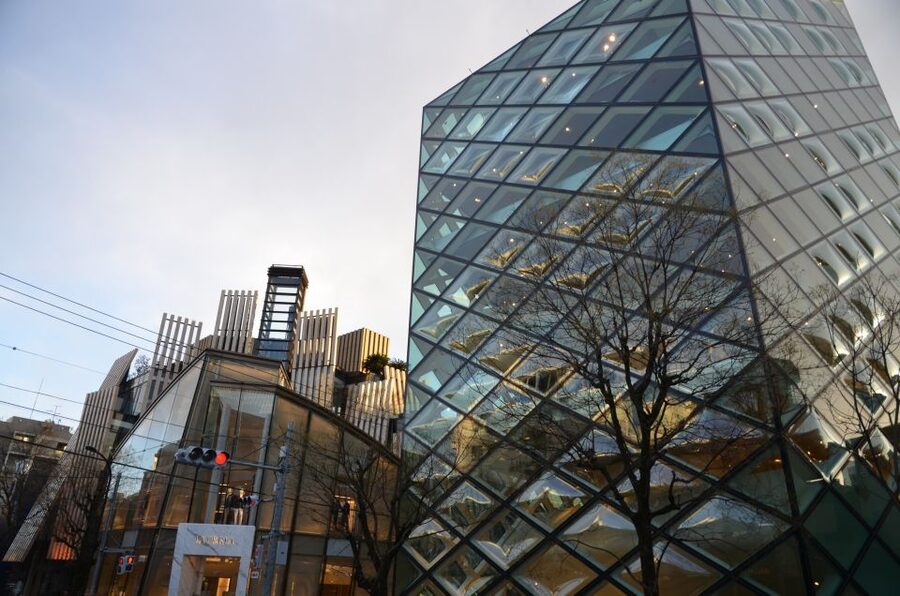
Prada is one of the strongest examples of architecture shaping a brand experience. Its faceted glass exterior creates a changing pattern of planes, reflections, and shadows. From the street, you can appreciate the design even if you have no interest in buying anything inside.
SunnyHills offers a different mood. The building’s unusual wooden lattice gives it a warm, crafted presence and makes it feel distinct from the polished glass and stone around it. It is a useful comparison because it shows that high-profile architecture in Omotesando is not limited to shiny international fashion houses.
These stops also help answer one of the tour’s central questions: why are designers and architects drawn to this neighborhood? Omotesando offers heavy foot traffic, strong visual identity, and a street setting where architecture can be seen by large numbers of people. It also allows brands to make the building itself part of the message.
I would pay close attention to the contrasts here. Prada feels precise and abstract. SunnyHills feels tactile and connected to Japanese craft. Seeing both in the same walk makes the district more interesting than a simple list of famous store names.
Back streets, Cat Street, and everyday Harajuku
The side trip into the back streets is one of the most useful parts of the route. On the main avenue, it is easy to think of Omotesando as a polished shopping corridor. A few turns away, the mood changes.
The neighborhood lanes show a wider range of Japanese life. You may see smaller businesses, local homes, and streets that feel less formal than the avenue. The point is not to find one single attraction. It is to understand how luxury retail, youth culture, ordinary homes, and creative businesses occupy the same part of Tokyo.
Cat Street adds another layer. It is lively and popular, but it has a more relaxed scale than Omotesando’s broad avenue. One guide, Fuki, has included Cat Street for people interested in the area’s local character, and it is easy to see why the route can leave you wanting to return on your own.
This is also where the private format matters most. You can ask to spend more time on urban design, small streets, fashion culture, or photography. A fixed group tour usually has to keep everyone on one schedule. Here, your interests can shape the conversation.
A cafe break and the value of a private guide
A short cafe break with drinks is included. Meals are not included, so think of this as a pause rather than a lunch stop. It gives you time to rest your feet, ask follow-up questions, and watch people move along the Omotesando streets.
The guides bring different strengths. Taka is a retired urban planner who graduated from MIT and has a strong background for explaining city design and Japanese architects. Fuki is described as passionate about architecture and flexible with personal interests. Other guides named by past participants include Yoshi, Hal, and Mari Sakai.
You cannot choose a particular guide from the information provided, so I would not book on the assumption that one specific person will lead your walk. But the range of guide backgrounds suggests that the experience is built around conversation, not a memorized speech.
That is important for architecture tours. You may want to know about Pritzker Prize-winning Japanese architects, the reason for a building’s materials, or how a store fits the street. A good guide can follow those threads. The private group setup gives you room to ask questions without worrying about holding up a large crowd.
Photography, timing, and the evening option
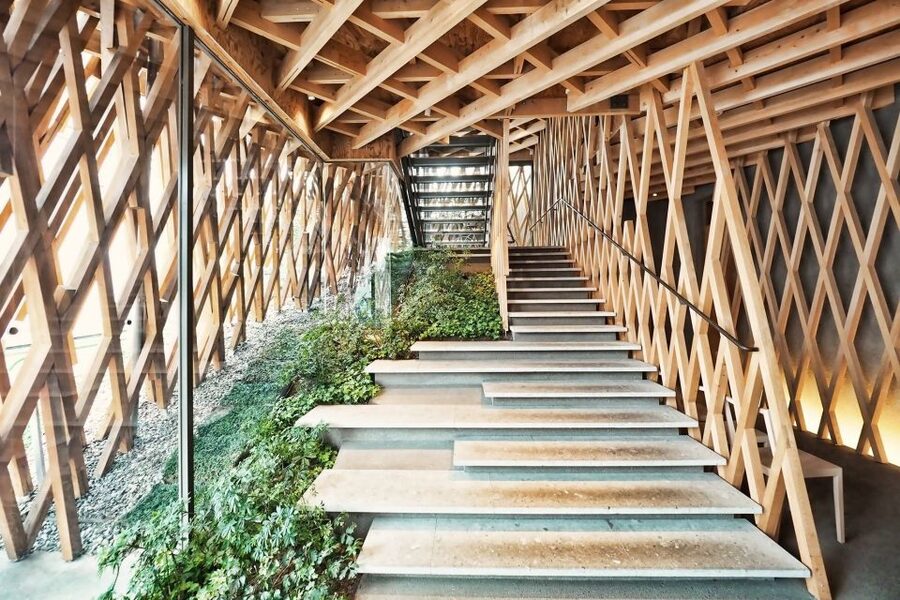
This is a strong tour for photography, but it is not a dedicated photo workshop. You get many opportunities to frame unusual facades, reflections, street scenes, and contrasts between large commercial buildings and smaller lanes.
Bring comfortable shoes. The route lasts 210 minutes, and even a city walk with frequent stops can tire you. You will want to look upward, cross streets, pause for explanations, and keep moving through the district.
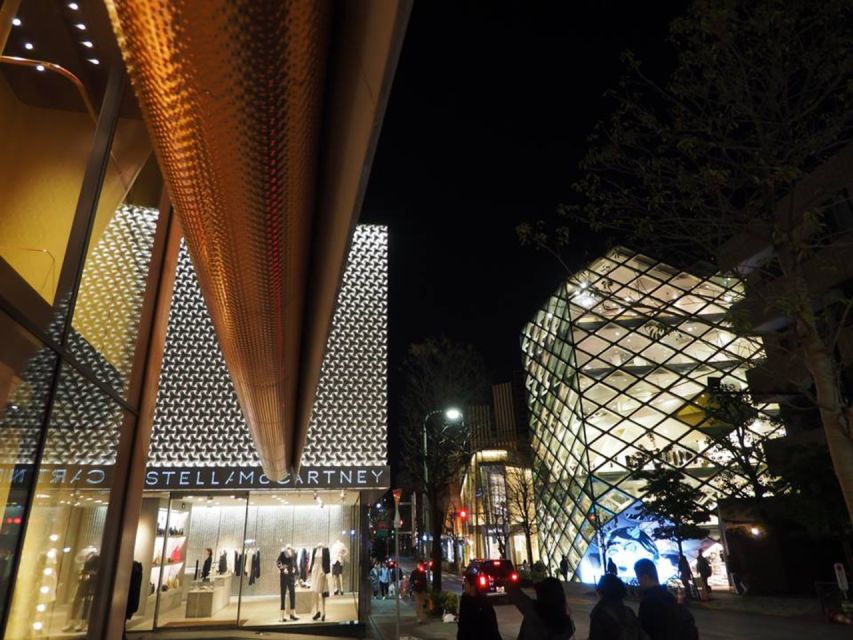
An evening start can change the experience. Store lighting, reflections, and darker streets give the buildings a different look, especially the glass and geometric facades. Night photography can also make the commercial architecture feel more theatrical.
The tradeoff is that details may be harder to see after dark. If your priority is reading materials, patterns, and construction details, daytime may suit you better. If you care more about atmosphere and illuminated buildings, check for an evening starting time when you book.
Is $129 per person a fair price?
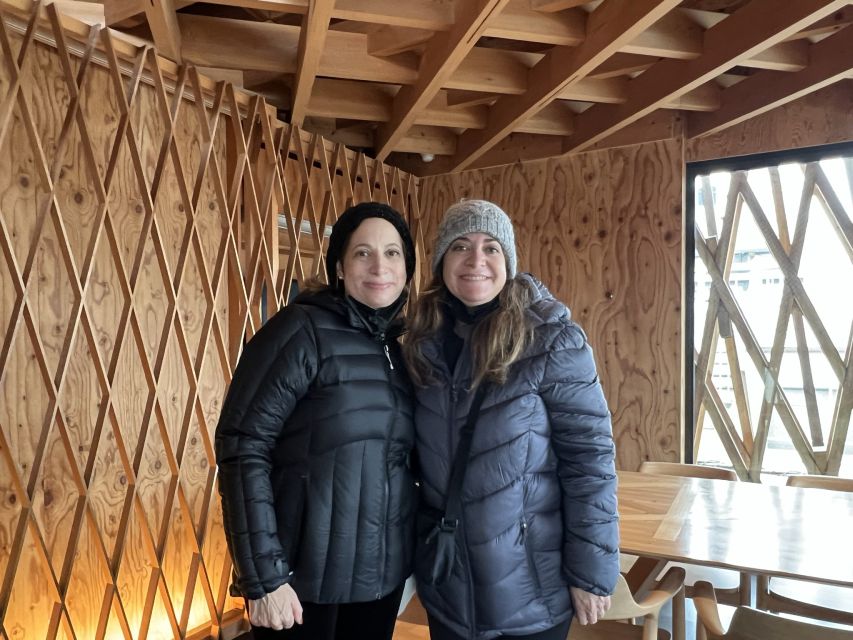
At $129 per person, this is not a cheap orientation walk. The value depends on how much you want from the architecture side of Harajuku and Omotesando.
For a private group, the price includes a licensed English-speaking guide, a 210-minute walk, and drinks during the break. You are paying for interpretation and flexibility, not admission tickets or transportation. Meals are extra, and you must arrange your own way to and from the area.
I think the price makes the most sense for two types of visitors. First, architecture students, designers, photographers, and urban-planning fans can get a focused look at buildings they may otherwise pass without understanding. Second, a small private group can split the cost and make use of the guide’s ability to adapt the route.
It is harder to justify if you simply want to browse shops or take a quick stroll down Takeshita Street. You can see the main avenue without a guide. The fee earns its keep when you want context, comparisons, and a chance to ask detailed questions.
The very high 4.9 rating from 18 reviews fits the tour’s strongest qualities: clear English, enthusiasm, strong architecture knowledge, and personal attention. Several participants specifically valued the guides’ ability to answer questions and adjust the walk to their interests.
Who should book this walk?
I would recommend it to anyone who wants to understand Tokyo through its buildings rather than only through its famous sights. It is particularly good for adults and older children who can manage a long walking tour and enjoy stopping to discuss design.
It also suits solo visitors. One person can ask plenty of questions and shape the route around a specific interest. Couples and small groups may appreciate the relaxed private setting, especially if one person wants architecture and another wants Harajuku’s streets and shopping atmosphere.
The tour is wheelchair accessible, which is useful, though the provided information does not explain the exact street conditions or route adaptations. If access needs are important for your group, confirm the details before booking.
I would skip it if you want a food tour, a shopping guide, or a visit inside every building. This is an outdoor architecture and neighborhood walk, with a short cafe break and no meal included.
Should you book the Private Harajuku Omotesando Architecture Tour?
Book it if names such as Prada, Yoyogi Gymnasium, and SunnyHills mean more to you than photo backdrops. The route gives you a clear look at how architecture, retail, shrine grounds, youth culture, and ordinary neighborhoods meet in one compact part of Tokyo.
The best reason to choose this tour is the private guide. You can ask why Omotesando feels different from Ginza, discuss Japanese architects, spend more time on photography, or follow the route into Cat Street and the back lanes.
Keep your expectations realistic. You will walk for three and a half hours, mostly see buildings from outside, pay separately for meals and local transport, and cover a lot of material in one session. For architecture-minded visitors, that packed schedule is a strength. For casual shoppers, it may feel like more explanation than you need.
FAQ
Where does the tour meet?
It meets in front of Café Mori no Terrace in the large open space by the wooden entrance gate to Meiji Shrine. The address is 1 Yoyogikamizonocho, Shibuya City, Tokyo 151-0052.
How do I reach the meeting point from Harajuku Station?
Leave JR Harajuku Station through the Omotesando exit and walk toward the forest. You do not go through a Shinto gate to reach the cafe.
Is the cafe inside Meiji Shrine the meeting point?
No. The meeting point is Café Mori no Terrace in the open space outside the shrine entrance. It is different from the cafe inside Meiji Shrine.
How long does the tour last?
The walk lasts 210 minutes, or three and a half hours.
What language is the tour conducted in?
The tour is conducted in English by a live English-speaking guide.
Is this a private tour?
Yes. It is offered for a private group.
What buildings are included?
The route includes a distant view of Yoyogi Gymnasium and contemporary works such as The Iceberg, Dior, Louis Vuitton, SunnyHills, and Prada. It also includes Harajuku and Omotesando back streets.
Is a cafe break included?
Yes. Break time with drinks is included. Meals are not included.
Is the tour wheelchair accessible?
Yes, the activity is listed as wheelchair accessible.
What should I bring?
Bring comfortable shoes. You will be walking through Harajuku and Omotesando for 210 minutes.
Can I take the tour at night?
An evening option may be available, depending on the starting times offered when you check availability. Night visits let you see the buildings under different lighting.
Newly added in the world
- Venice Art and Architecture Private Walking Tour★ 4.5 · 11 reviews
- Basilica San Marco and the Pala d’Oro with Architect Guide★ 4.5 · 19 reviews
- Walking tour in Venice with an architect★ 5.0 · 16 reviews
- Sopot Private City Walking or Bike Tour with a local architect★ 5.0 · 19 reviews
- Lesser Poland Wooden Architecture Trail UNESCO Private Tour from Krakow★ 5.0 · 15 reviews
- Lisbon Contemporary Architecture★ 5.0 · 3 reviews
- Private Munich Tour for History Buffs with Architectural Gems and WWII sites★ 5.0 · 3 reviews
- Neoclassical Paris Architecture 2-Hour Private Walking Tour★ 5.0 · 7 reviews
Private, compared.
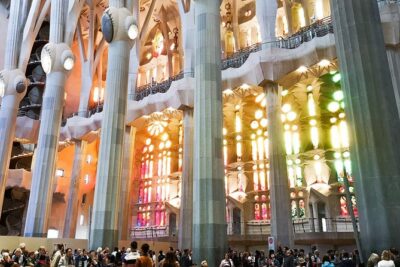
Sagrada Familia & Gaudi Tour Private or Small Group with Tickets
Read our review →
Barcelona 1.5h Private Old Town, Gothic & Ramblas Walking Tour
Read our review →
Treasures of Barcelona: Private Gaudi Walking Tour
Read our review →
Sagrada Familia & Gaudi Guided Tour Private or Small Groups
Read our review →
Best of Chicago: Architecture & Highlights City Private Tour
Read our review →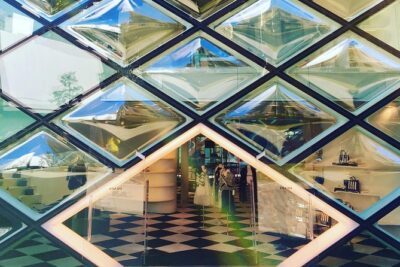
Private Harajuku Omotesando Architecture Walking Tour
Read our review →
Private Santa Barbara History and Architecture Walking Tour
Read our review →
Private Barcelona Modernism and Gaudí Walking Tour
Read our review →Browse the lists this tour appears in