
Review · HISTORICAL TOURS
The History and Architecture of Downtown Los Angeles
Downtown Los Angeles reveals itself in layers: Victorian homes lost to redevelopment, movie palaces on Broadway, Japanese American businesses in Little Tokyo, and bold modern buildings by Frank Gehry and the architects behind MOCA and The Broad. This three-hour small-group walk gives you a useful way to read those layers instead of simply ticking off famous buildings.
I like the included ride on Angels Flight Railway, and I like the stop at Fugetsu-Do for traditional mochi, a small food break with more than a century of family history behind it. The main consideration is pace: you cover a lot of downtown in three hours, with most stops viewed from outside and only brief time at several buildings.
Why this downtown LA tour is worth your time
- Angels Flight is included, giving you a quick ride on the historic funicular at the start.
- Chris leads the tour, bringing strong knowledge of Los Angeles architecture, civic history, food, and local businesses.
- Little Tokyo gets real attention, including legacy businesses, historic markers, restaurants, and a mochi sample.
- The route links several eras, from the 1893 Bradbury Building and old bank district to The Broad and Walt Disney Concert Hall.
- The group is capped at 15 people, which makes questions and conversation easier than on a large coach tour.
- The loop begins and ends at 341 S Hill Street, a helpful setup if you are parking downtown or using public transportation.
A smart way to read Downtown Los Angeles
This is not a Hollywood celebrity tour. Its subject is the city beneath the usual Los Angeles image: civic buildings, old theaters, immigrant communities, financial ambition, public art, and the constant push to rebuild downtown.
Chris has led downtown tours for about a decade and brings an unusual mix of architectural detail and local connection. You can expect stories about how buildings were designed, but also explanations of the people, businesses, and political choices that shaped the streets. The tour also uses pictures and other visual material at times, which helps when an important building has changed or a lost neighborhood is being discussed.
The route is especially useful for first-time visitors who want an overview of central Los Angeles. It also works for locals. Several people who had lived in the area for decades found that the tour revealed buildings and stories they had never noticed.
At $39.20 per person, the price is reasonable for a three-hour guided walk with a small group, the Angels Flight fare, and a mochi sample included. You are paying less for entry tickets than for interpretation. That matters here, since many of the best sights are public exteriors where the right explanation makes the visit worthwhile.
More History Walks in the USA:
- Chicago in a Day: Food, History & Architecture Walking Tour
★ 5.0 · 1,153 reviews - Charleston’s Best Highlights: History, Culture & Architecture
★ 5.0 · 422 reviews - Palm Springs Modernism Architecture & History Bike Tour
★ 5.0 · 359 reviews
Angels Flight and the vanished Bunker Hill
The tour begins at 341 S Hill Street and starts with a ride on Angels Flight, often described as the shortest train ride in the world. The fare is included, so you do not need to sort that out separately.
The ride itself takes only a moment, but the story around it is the real point. Angels Flight once connected downtown with the Victorian homes of Bunker Hill. Chris explains what happened to that residential district and how the modern financial center took shape in its place.
This opening gives you a useful theme for the whole walk: Los Angeles is a city that repeatedly removes, replaces, preserves, and reinterprets its past. You will also see major downtown skyscrapers associated with films, including buildings recognizable from Independence Day.
Do not expect a long ride or a museum visit here. Angels Flight is a short introduction, not a full attraction on its own. Its value comes from connecting the railway to the people and neighborhood that once surrounded it.
MOCA, The Broad, and two different ideas of art
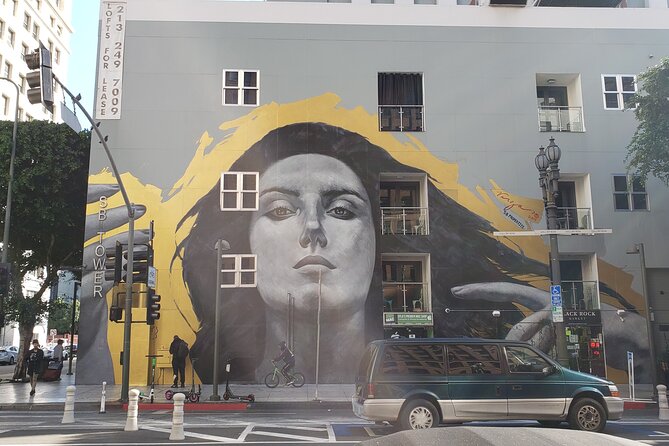
Bunker Hill brings together two major free art museums, the Museum of Contemporary Art and The Broad. The tour does not spend a long time inside either one. Instead, you get a focused look at their architecture, cultural role, and place in downtown’s renewal.
At MOCA, the discussion includes the architect behind the building and the early struggles of a designer who later won the Pritzker Prize. That context helps you see the museum as more than a box for displaying art.
The Broad offers a different lesson. Its pale, honeycomb-like exterior is instantly recognizable, and Chris explains how to pronounce the name correctly. You will hear about the museum’s Pop Art collection and plans for future additions.
Five minutes at each museum is not enough for an art visit. If you want to see the collections, return later and allow separate time. On this walk, the benefit is comparison: two free museums, two architectural statements, and two examples of how art helped reshape Bunker Hill.
Walt Disney Concert Hall and the making of a modern icon
The Walt Disney Concert Hall receives more time, about 15 minutes, and it deserves it. Frank Gehry’s sweeping metal forms make the building one of the easiest downtown landmarks to recognize, but the story behind its creation adds another layer.
Chris explains Gehry’s place among major contemporary architects and the long process behind the concert hall. You learn why the building matters as architecture, not simply as a popular photo stop.
This is one of the strongest parts of the route for anyone interested in design. You can study the curves, angles, and reflective surfaces while hearing about the planning and ambition that produced them. The stop stays outside, so music lovers should not expect a performance or interior tour.
Bring a hat if the day is sunny. The route includes open civic spaces, and previous tour experiences suggest that shade breaks are part of the guide’s practical approach. Still, Los Angeles weather can be warm, and a little sun protection makes the walk more comfortable.
A few more architecture walks in the USA worth a look
- Chicago Architecture River Cruise
★ 5.0 · 15,756 reviews - Chicago River 90-Minute Architecture Tour
★ 4.5 · 9,629 reviews - Chicago River: 1.5-Hour Guided Architecture Cruise
★ 4.8 · 8,046 reviews - Chicago Architecture Center River Cruise aboard First Lady
★ 5.0 · 5,536 reviews
Grand Park and the political center of Los Angeles
From the concert hall, the walk moves toward City Hall through Grand Park. This section shifts from private design and cultural institutions to government and civic life.
You will hear how Los Angeles grew from a settlement of only 44 people into a city of millions. That number gives the city’s scale a clear starting point. City Hall then becomes more than a familiar tower. It marks the political heart of the city and the growth of its public institutions.
The tour’s route gives you a sense of how close downtown’s major districts are to one another. In a single morning or afternoon, you move from art and music to government, then on to Japanese American history and the old commercial core.
The Civic Center stop is brief, around ten minutes. Think of it as a guided orientation rather than an in-depth civic history lesson. If political history is your main interest, you may want to ask Chris questions while you are there.
Little Tokyo and the meaning of a legacy business
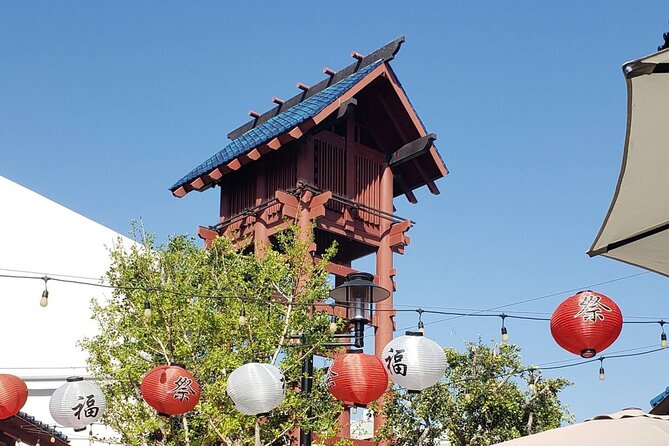
Little Tokyo is one of the most important stops because it shifts the focus from buildings to community. The tour spends about 30 minutes here, pointing out historic markers, restaurants, long-running businesses, and the continuing influence of Japanese communities in California.
That time is well used. Little Tokyo can look compact on a map, but its story includes immigration, family businesses, cultural continuity, and the pressures faced by an urban neighborhood. Chris’s local connections also add practical value. You can ask for food suggestions and get a better sense of which places deserve a return visit.
The stop at Fugetsu-Do gives the history a taste. The Kito family opened this small business in 1903 and kept it going through two world wars, the Great Depression, and more than 120 years of change. You sample mochi, a traditional Japanese confection, at the shop.
This is a modest snack, not a full meal. That distinction matters because the tour includes Grand Central Market later, and you may want to save your appetite. Still, Fugetsu-Do is exactly the sort of stop that improves a city walk: a family business, a local tradition, and a chance to connect history with food.
Vibiana, Broadway, and downtown’s older showmanship
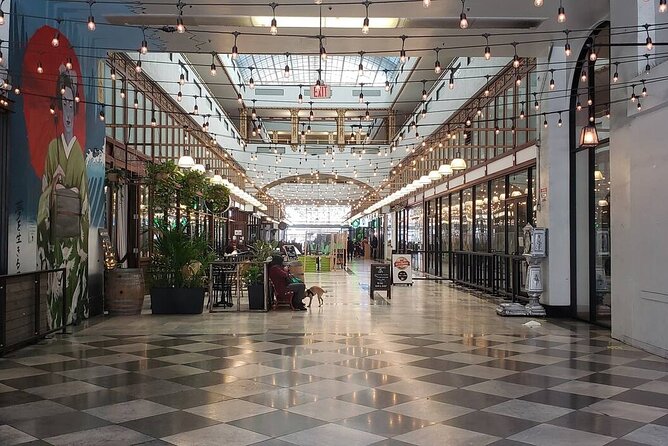
St. Vibiana’s Cathedral, now known as Vibiana, dates from 1876 and is the oldest building on the route. Chris explains that it was built when nearly one-fifth of Los Angeles’s entire population could fit inside.
That detail makes the city’s growth easier to picture. A building that once served a small town now sits inside one of the country’s largest metropolitan areas. The stop is short, but it gives you a clear example of how old downtown structures survive inside a much larger city.
The Million Dollar Theatre carries you into another period. Broadway contains one of the largest collections of historic movie palaces still found in the United States. These grand theaters hosted Hollywood premieres, including events connected with stars such as Charlie Chaplin.
The Million Dollar Theatre is among the most elaborate surviving examples. You should not expect a full theater tour or a film screening, but the exterior and the story explain why Broadway mattered so much to early Los Angeles entertainment.
The Bradbury Building and the old bank district
The Bradbury Building is one of the route’s essential stops. Completed in 1893, it is famous for its interior architecture and unusual atmosphere. Chris shares the story behind its creation and explains why this building remains so important.
The route then follows Spring Street through the old bank district. Here, the architecture becomes a timeline. Iron gives way to steel, Beaux Arts design leads toward Art Deco, and the buildings reflect the money and ambition of early twentieth-century Los Angeles.
This section rewards anyone who likes to look up. The details are not always at eye level, and the shift in materials and styles is easier to understand when someone points it out. You see why Spring Street was once called the Wall Street of the West.
The Bradbury stop is listed at about ten minutes, and much of the tour is similarly concise. That is useful if you want a broad introduction, but it can feel quick if you prefer long periods inside historic buildings. Ask questions as you go, since the small group makes that practical.
The Last Bookstore and Grand Central Market
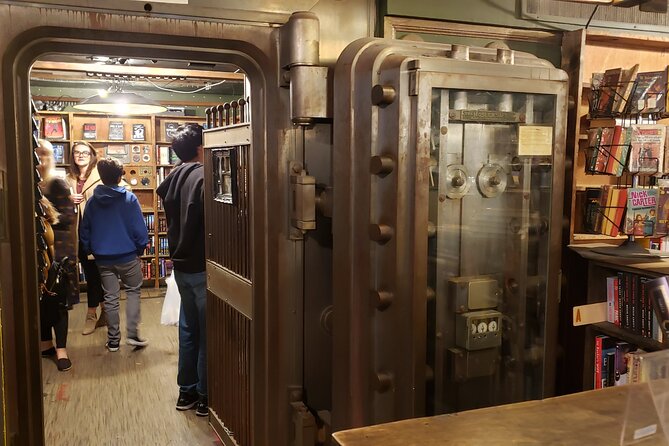
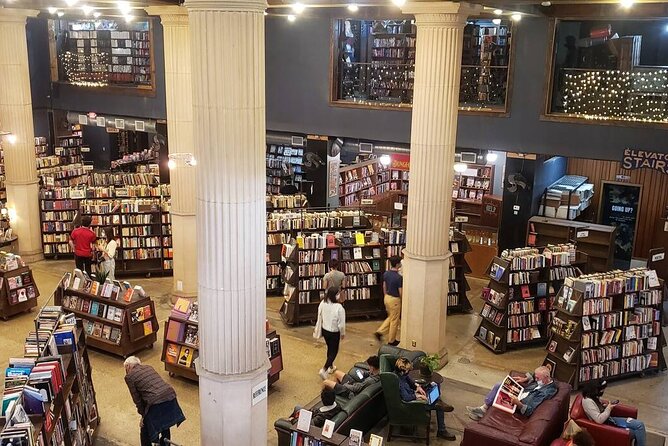
The Last Bookstore provides a lighter stop near the end. You go inside a former bank building, learn about its original use, and see the old vault. The store is also a popular place for photographs, with unusual corners and displays that make it more than a standard bookshop.
You get about ten minutes here. That is enough to look around and understand the building’s past, but readers who want to browse seriously will want to return after the tour.
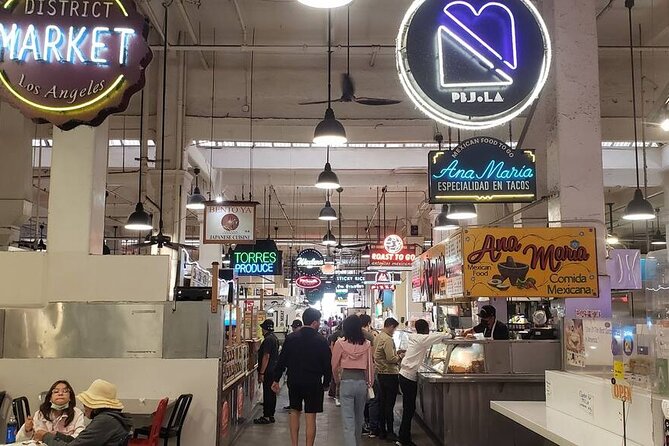
Grand Central Market is the final stop, and the activity ends back at the original meeting point. The market has operated for more than 100 years and remains one of downtown’s best places to find food under one roof.
The tour gives you an introduction, not a full food crawl. Use Chris’s recommendations to choose where to eat later, or stay after the walk if your schedule allows. Ending at the market is practical because you can continue exploring, grab a meal, or return to the starting point without arranging another pickup.
Pace, group size, and practical details
The tour lasts about three hours and is limited to 15 people. That is a good middle ground: large enough to keep the tour running, but small enough for direct conversation and questions.
The walking pace has been described as comfortable, with the guide taking care to include everyone and pause in shade when possible. Even so, this is a city walking tour, not a seated sightseeing trip. Wear comfortable shoes and bring a hat, especially since one January tour was hot enough for that advice.
The activity is offered in English and uses a mobile ticket. It begins and ends at 341 S Hill Street, near public transportation. Service animals are allowed, and most people can participate.
The tour requires good weather and a minimum number of bookings. If poor weather or low enrollment cancels it, you are offered another date, another experience, or a full refund. For your own plans, the standard cancellation rule is simple: cancel at least 24 hours before the start time for a full refund. Changes or cancellations within 24 hours are not refunded.
One historical gap is worth knowing before you book. The route does not go to Olvera Street or focus heavily on the Spanish and Mexican founding story of Los Angeles. That is a meaningful omission for anyone seeking a complete account of the city’s early development. The tour instead gives extra time to Little Tokyo and follows a closed loop that ends where it began.
Who should book this tour
I would choose this walk if you want to understand why downtown Los Angeles looks the way it does. It suits first-time visitors who want a strong orientation, locals who have never studied central LA closely, and anyone drawn to architecture, public history, food, or old businesses.
It is also a good match for people who prefer a guide with personality. Chris is described as friendly, funny, patient, and energetic, with a habit of answering questions rather than rushing through a script. That personal approach is one of the tour’s main strengths.
I would choose something else if your priority is a long museum visit, extensive interior access, or a tour centered on Spanish and Mexican Los Angeles. You will see many buildings, but several stops last only five or ten minutes.
Should you book it?
Book it if you want a compact, thoughtful introduction to Downtown LA that goes beyond Hollywood. The combination of Angels Flight, Gehry’s concert hall, Little Tokyo, Fugetsu-Do, Broadway, the Bradbury Building, and Grand Central Market gives you a broad look at the city’s past and present.
At $39.20, the small group, included railway ride, mochi sample, and three hours of guided context make the price fair. Bring comfortable shoes, a hat, and questions for Chris. If you can accept the quick stops and the lack of Olvera Street, this is a strong way to get your bearings and leave with a better sense of what downtown can be.
FAQ
How long does the Downtown Los Angeles tour last?
The tour lasts approximately three hours.
Where does the tour begin and end?
It begins at 341 S Hill St, Los Angeles, California 90013, and ends back at the same meeting point.
How many people can join the tour?
The tour has a maximum group size of 15 people.
Is the Angels Flight ride included?
Yes. The tour includes admission for the ride on Angels Flight Railway.
Is food included?
A traditional mochi sample at Fugetsu-Do is included. The tour also visits Grand Central Market, but it does not state that a full meal is included there.
What happens if the tour is canceled because of weather?
If poor weather causes cancellation, you are offered a different date or a full refund.
Newly added in the USA
- Miami Beach Art Deco Segway Tour★ 4.5 · 17 reviews
- Boston: Harbor and Charles River Architecture Boat Tour★ 4.6 · 9 reviews
- Boston: Freedom Trail History and Architecture Walking Tour★ 4.8 · 18 reviews
- Iconic Capitol Hill Architectural Walking Tour★ 5.0 · 21 reviews
- Chicago: Guided Tour with Architecture River Cruise★ 4.5 · 20 reviews
- South Beach Food Tour- Culinary & Art Deco & History★ 5.0 · 22 reviews
- Chicago River 90-Min Architecture Boat Tour★ 4.5 · 24 reviews
- Manhattan Architecture Photography Tour★ 5.0 · 24 reviews
Historical Tours, compared.
Chicago in a Day: Food, History & Architecture Walking Tour
Read our review →
Charleston’s Best Highlights: History, Culture & Architecture
Read our review →
Palm Springs Modernism Architecture & History Bike Tour
Read our review →
Historic Georgetown: History, Gossip, & Architecture Walking Tour
Read our review →
Charleston History, Homes, and Architecture Guided Walking Tour
Read our review →
Historical and Architectural Chicago Fireboat River & Lake Cruise
Read our review →Browse the lists this tour appears in