
Review · WALKING TOURS
Tirana: Street Art & Modern Architecture Walking Tour
Tirana’s walls tell a story that official monuments often miss. On this two-hour walk, you’ll see murals, graffiti, new buildings, and narrow central streets while your guide explains how Albania’s past and present appear in public art. The most useful part is learning to look again at places you may otherwise pass without a thought.
I like the mix of street art and modern architecture, since neither subject gets treated as a side note. I also like the chance to ask questions as you go, especially with a guide such as K, whose clear English and interest in Tirana’s development make the route feel more like a conversation than a lecture. The main consideration is that this is a compact tour, so the pace and route leave limited time for long stops at individual works.
Key points to know before you book
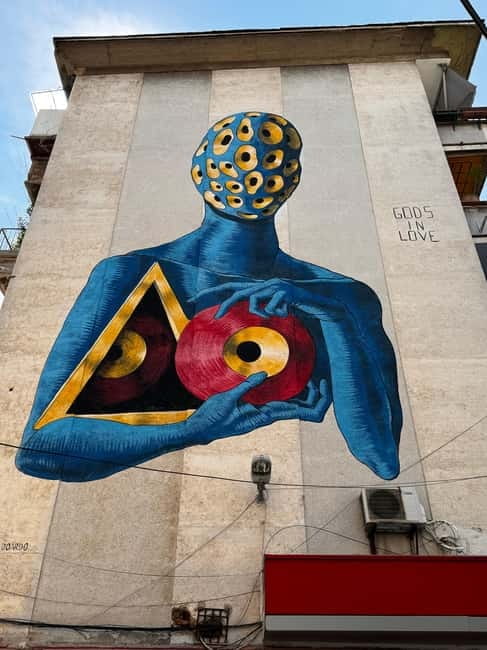
- Street art with a political edge: Murals and graffiti reflect Albania’s difficult past, current social concerns, and changing identity.
- Architecture is part of the story: You look at Tirana’s newest buildings alongside the art on its older streets.
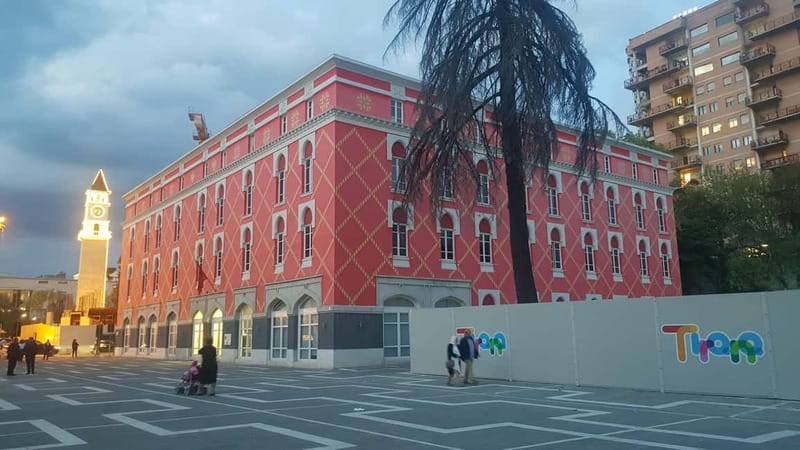
- A central starting point: Meet at the steps of the Opera House in Skanderbeg Square, in the city center.
- Two hours on foot: The tour makes a good introduction early in your stay, or a useful second look after you have explored Tirana alone.
- English-speaking local guide: The walk is guided in English, and questions are welcome throughout the route.
- Good value at $14: Your payment reserves a place and covers the guide’s work, while donation-based participants may also join.
Why Tirana is best understood from its walls
Tirana can change character from one block to the next. A broad central square gives way to a side street, a polished new building, or a wall covered in color and sharp political symbols. This tour connects those pieces instead of treating street art as decoration.
The art reflects several layers of the city. Some pieces refer to Albania’s turbulent political past. Others use humor, local symbols, or bright illustrations to celebrate culture. Still others raise questions about present-day life. Your guide helps you read those signals, which is useful because a mural’s meaning is not always clear from a quick photograph.
I especially like this approach for a first visit. You are not simply collecting attractive pictures. You are learning why certain walls matter and how public art can shape a neighborhood’s sense of place. After the walk, you may find yourself studying street signs, facades, and painted corners that you would have ignored before.
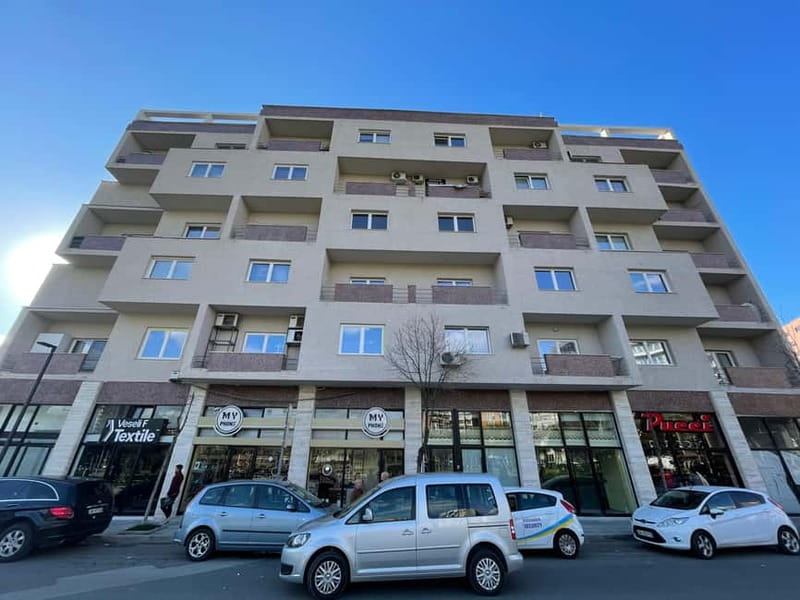
The architecture gives the tour a second layer. Tirana’s newer buildings show a city working out how it wants to look and function today. Placing them beside street art makes the discussion broader: one part of the city is planned and built by developers or architects, while another part speaks through images, slogans, and independent expression.
More Walking Tours in the world:
- Lecce: Baroque Architecture and Underground Walking Tour
★ 4.6 · 1,248 reviews - Chicago in a Day: Food, History & Architecture Walking Tour
★ 5.0 · 1,153 reviews - Ramblas, Old Town, Gothic and Gaudi Architecture Walking Tour
★ 5.0 · 723 reviews
Meeting at the Opera House in Skanderbeg Square
The meeting point is at the steps of the Opera House, in the center of Tirana. This is a practical place to begin because it puts you near one of the city’s main public spaces and makes the location easy to identify.
Skanderbeg Square receives a short guided visit of about 10 minutes and serves as the tour’s main named stop. Expect a photo opportunity and a brief orientation before the walk moves into the surrounding streets. The square gives you a useful visual starting point: it is a formal civic space, while the smaller streets nearby offer a more informal setting for murals and graffiti.
Do not expect the square stop to fill the whole two hours. It is one part of a moving walking route, not a full historical tour of the square. If you want extensive background on every building around it, you may need a separate city-history walk.
The route returns to the Tirana Free Walking Tour meeting point. That makes the experience easy to fit around lunch, museum visits, or an afternoon of independent exploring. Since the walk begins and ends in the city center, you do not need to arrange transport between the start and finish.
Reading Tirana’s murals and graffiti
The strongest part of the experience is the way the guide explains what the art is saying. You may see large murals, smaller pieces tucked into side streets, and graffiti that only makes sense when placed in its political or cultural setting.
The tour presents street art as a form of public discussion. Images can refer to Albania’s past, question social conditions, or express pride in local culture. A guide can point out symbols and connections that are easy to miss when you are walking alone. That context is worth paying for, particularly if your main interest is not just the photograph but the reason the work is there.
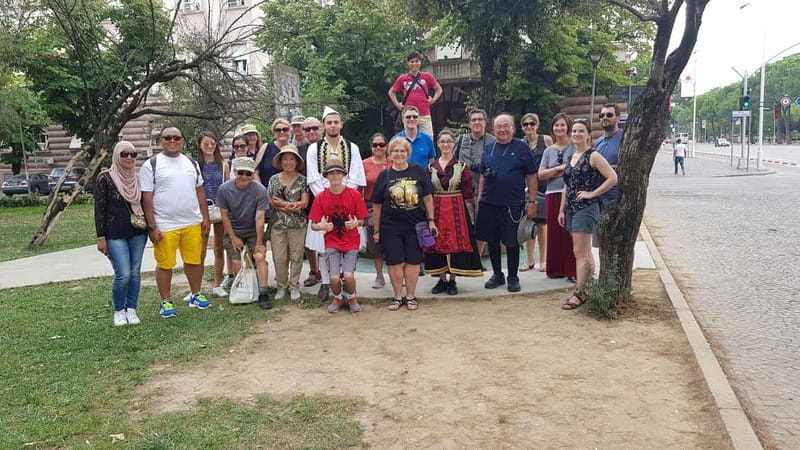
You will also have room to form your own view. The purpose is not to tell you that every piece has one correct meaning. Instead, the guide gives you useful background and helps you notice messages, moods, and visual choices. If you enjoy asking questions, this is a good setting for it. K, one of the guides associated with the route, is described as welcoming questions and able to explain Tirana’s development in clear English.
The art may not all appeal to you. Street art is uneven by nature, and a short route cannot guarantee that every piece will match your taste. That is part of the honest appeal. You are seeing a living form of expression, not entering a gallery where every work has been selected for polish.
Modern architecture and a city still changing
Many city walks treat new buildings as background. This one gives them proper attention. You will look at Tirana’s newest architecture and consider what it says about the city’s direction.
That matters because new construction is not just a visual topic. It reflects investment, changing needs, and the way a capital city presents itself. When your guide places contemporary buildings next to older streets and independent art, you get a clearer sense of the contrasts shaping central Tirana.
The architecture portion also gives balance to the street art. If the walk focused only on murals, you might leave with a narrow view of the city as a colorful art project. If it focused only on buildings, you could miss the informal voices on the walls. The combination shows both the official and unofficial sides of urban change.
The tour does not promise entry into buildings or a technical architecture lecture. Its value is in seeing the exteriors in context. You can ask about the choices, influences, and development that have shaped modern Tirana, then continue looking at buildings on your own after the walk.
More Street Art Walks in the world:
- Walking Tour of Houston: History, Architecture, Street Art
★ 5.0 · 59 reviews - Tirana: Street Art & Modern Architecture Tour
★ 5.0 · 18 reviews - Porto Tour: Street Art & Architecture Experience 3h
★ 5.0 · 4 reviews - Street Art and Architecture:Porto Speaks Through Its Streets
★ 3.0 · 2 reviews
How the two-hour route works
The exact sequence beyond Skanderbeg Square is not laid out in a long list of fixed stops, which suggests that the guide leads you through central streets and alleys where art and architecture can be seen along the way. This format has a clear advantage: the focus stays on what is actually around you rather than on a rigid checklist.
You should expect a steady walking experience with time to stop for explanations and photographs. The route includes hidden or less obvious streets, so keep your attention up and to the sides. Art may appear on a wall, around a corner, or along a building you might otherwise treat as ordinary.
The short duration is another advantage. Two hours is enough to give Tirana’s visual character some meaning without taking over your day. I would choose this tour early in a stay if you want a better frame for later sightseeing. I would also choose it after a few days in town if you want to revisit familiar streets with a sharper eye.
There is a small trade-off. Because the tour covers both architecture and street art, it cannot give every subject a long, specialist treatment. You get breadth and connection rather than a detailed study of one mural or building. That balance works well for most visitors, but serious architecture fans or street-art specialists may want more time afterward to explore alone.
What the guide adds
The guide is the key to the experience. Without explanation, you might see a painted wall and take a photograph. With the right guide, you begin to understand how the image relates to Albania’s past, cultural life, and present-day questions.
The tour is offered in English. The guide information emphasizes local leadership, which is important here because the subject is tied closely to the city’s identity. A local guide can explain not only what a work depicts but also why its subject matters in Tirana.
K is specifically associated with strong explanations of the city’s modern architecture and street art. The guide’s clear English is useful if you want to ask about details rather than simply follow along. You should feel free to bring questions about a mural, a building, or the link between the two.
The tone appears suited to curious people rather than to visitors who want a silent photo walk. You will get more from it if you pause, listen, and ask when something catches your eye.
Is $14 a fair price?
At $14 per person, this is an inexpensive way to add local context to a visit to Tirana. The price is low enough to work as a first-day orientation, yet the subject is specific enough to offer more than a standard walk through the center.
The value comes from interpretation. You can walk through Tirana for free, but you may not understand the political references in the art or notice how new architecture changes the feel of the city. A guide turns those observations into a connected story.
There is also a practical payment detail. Your booking secures your place and pays for the guide’s expertise and platform fees. Other people may join on a donation basis, with their usual contribution reportedly similar to the $14 cost. That means the paid booking is mainly useful for reserving your spot and arranging the experience in advance.
For the price, I would not expect a private tour or a long stop at every artwork. You are paying for a two-hour guided introduction, not an all-day art course. Within that limit, the cost is sensible, especially for visitors who want to understand Tirana rather than only pass through it.
Who will get the most from this walk?
This tour suits you if you like cities that reveal themselves through ordinary streets. It is a good match for photographers, architecture fans, students of modern European history, and anyone who enjoys asking why a place looks the way it does.
It also works well for a return visit to Tirana. You may already have walked through the center and seen the main sights. This route gives those streets a new purpose by pointing out art and buildings you may have missed.
I would recommend it to solo visitors and couples who want a social but focused activity. Families with older children may also find the murals easier to engage with than a long museum visit, though the supplied information does not specify an age range.
The experience is listed as wheelchair accessible. If accessibility is essential for you, confirm the route details and current conditions when booking, since street surfaces and access can vary even when a tour is marked accessible.
Useful timing and booking advice
The tour lasts two hours, and starting times depend on availability. I would book it near the beginning of your visit if you want to use the guide’s suggestions during the rest of your stay. You can also take it later, as one visitor who had already spent three days in Tirana found it helped reveal details that had previously gone unnoticed.
Wear comfortable shoes for city walking and leave room on your phone for photographs. The tour is built around visual details, so a camera is useful, but do not spend the whole walk looking through a screen. The guide’s explanation is what makes the images more memorable.
You can cancel up to 24 hours before the activity for a full refund, and the reserve-now, pay-later option keeps your plans flexible. Those policies are helpful if your Tirana schedule is still shifting.
Should you book the Tirana street art tour?
Book it if you want a short, affordable way to understand Tirana’s murals, political references, and modern buildings. The best reason to go is the connection between the art on the walls and the city being built around it.
Skip it if you want a long architectural study, a private route, or a tour devoted only to famous landmarks. This is a moving introduction with a balanced focus on street art and new architecture.
For most visitors, I would book it early in a Tirana stay. At $14, two hours, and a central start and finish, it asks little of your schedule while giving you a better way to see the city afterward.
FAQ
Where does the tour meet?
The guide waits at the steps of the Opera House in Skanderbeg Square, in Tirana city center.
How long does the tour last?
The walking tour lasts two hours.
What language is the tour offered in?
The live tour guide speaks English.
Does the tour include Skanderbeg Square?
Yes. The itinerary includes a guided visit and photo stop at Skanderbeg Square lasting about 10 minutes.
Where does the tour finish?
The walk returns to the Tirana Free Walking Tour starting point.
Can I cancel for a refund?
Yes. You can cancel up to 24 hours in advance for a full refund. You can also reserve now and pay later.
Newly added in the world
- Venice Art and Architecture Private Walking Tour★ 4.5 · 11 reviews
- Basilica San Marco and the Pala d’Oro with Architect Guide★ 4.5 · 19 reviews
- Walking tour in Venice with an architect★ 5.0 · 16 reviews
- Private Walking Tour of Old Gdańsk with an architect-guide★ 5.0 · 7 reviews
- Sopot Private City Walking or Bike Tour with a local architect★ 5.0 · 19 reviews
- Lesser Poland Wooden Architecture Trail UNESCO Private Tour from Krakow★ 5.0 · 15 reviews
- Lisbon Contemporary Architecture★ 5.0 · 3 reviews
- Private Munich Tour for History Buffs with Architectural Gems and WWII sites★ 5.0 · 3 reviews
Walking Tours, compared.

The Official Art Deco Walking Tour by The Miami Design Preservation League
Read our review →
Baroque Architecture and Underground Walking Tour
Read our review →
Chicago in a Day: Food, History & Architecture Walking Tour
Read our review →

Ramblas, Old Town, Gothic and Gaudi Architecture Walking Tour
Read our review →
Chicago’s Secret Interiors Architectural Walking Tour
Read our review →
Browse the lists this tour appears in