
Review · GERMANY ARCHITECTURE TOURS
500 Years of Munich Architecture (Max. 16 Guests)
Munich’s buildings tell a lively story of power, faith, war, taste, and social change. On this 150-minute architecture tour, Philipp, an architect and official Munich guide, links famous churches with lesser-known buildings, then carries the story toward the Isar and modern Munich.
I like the small maximum of 16 people, which gives you a fair chance to ask questions. I also like the unusual route: you do not stop with the old town, but continue to Art Nouveau, street art, a modern museum, and the Gasteig rooftop terrace. The main caution is practical: this is not a good choice for wheelchair users or people with mobility impairments, and the final rooftop view depends on weather.
Key points to know before you book
- Architecture across centuries: Move from Romanesque and Gothic churches to Baroque, Rococo, Neoclassical, Historicist, Art Nouveau, and modern design.
- Philipp leads the tour: You are guided by an architect and certified official city guide who speaks English, German, and Spanish.
- A broader Munich route: The walk includes major central sights, the Isar River, Müllersche Volksbad, street art, and the Sudetendeutsches Museum.
- Small-group setting: The group is limited to 16 people, with private tours available.
- A strong final stop: The tour finishes at the Gasteig rooftop terrace, with views across Munich when the weather cooperates.
- Bring sensible shoes: You will be on your feet for two and a half hours, and food, drinks, and transport are not included.
Why Munich architecture makes a good walking tour
Munich is easy to read as a history book if you know where to look. A church facade can show the power of the Wittelsbach court. A broad avenue can reveal political ambition. A public bathhouse can say more about changing city life than another grand palace.
That is the strength of this experience. Philipp does not simply point at a building and name its style. The tour connects architecture with the social and political conditions that shaped it. You see how Munich changed, then notice how each period left its mark on the next.
The title promises 500 years, but the route reaches across a wider range of styles, from Romanesque elements through Gothic, Baroque, Rococo, Neoclassical, Historicist, Art Nouveau, street art, and modern architecture. You will not receive a full academic survey of every building in Munich. Instead, you get a brisk, selective route with enough variety to sharpen your eye.
That approach suits you if you like context but do not want to spend two hours inside one monument. It also works well early in a Munich visit, since you will pass several central landmarks and gain a better sense of how the city fits together.
A few more architecture walks in the world worth a look
- Chicago Architecture River Cruise
★ 5.0 · 15,756 reviews - Chicago River 90-Minute Architecture Tour
★ 4.5 · 9,629 reviews - Chicago River: 1.5-Hour Guided Architecture Cruise
★ 4.8 · 8,046 reviews
Starting at Frauenplatz and the Frauenkirche
Meet Philipp outside the entrance to the Frauenkirche at Frauenplatz 1. The meeting point is central and simple to reach. From Marienplatz station, the walk takes about 10 minutes, with S-Bahn and U3 or U6 subway service providing the easiest access.
The Frauenkirche is the right place to begin. Its twin towers and distinctive red-brick body are among Munich’s clearest visual symbols, but the building is more than a postcard backdrop. Here, Philipp can set up the Gothic chapter of the tour and explain how religious buildings shaped the city center.
The visit is a useful reminder that architecture is not just decoration. Scale, height, light, and material all served a purpose. You will look at the church with more attention than you might on a quick sightseeing stop.
Comfortable shoes matter from the beginning. The experience lasts 150 minutes, and the route continues well beyond the old town.
From St. Michael’s to the Trinity Church
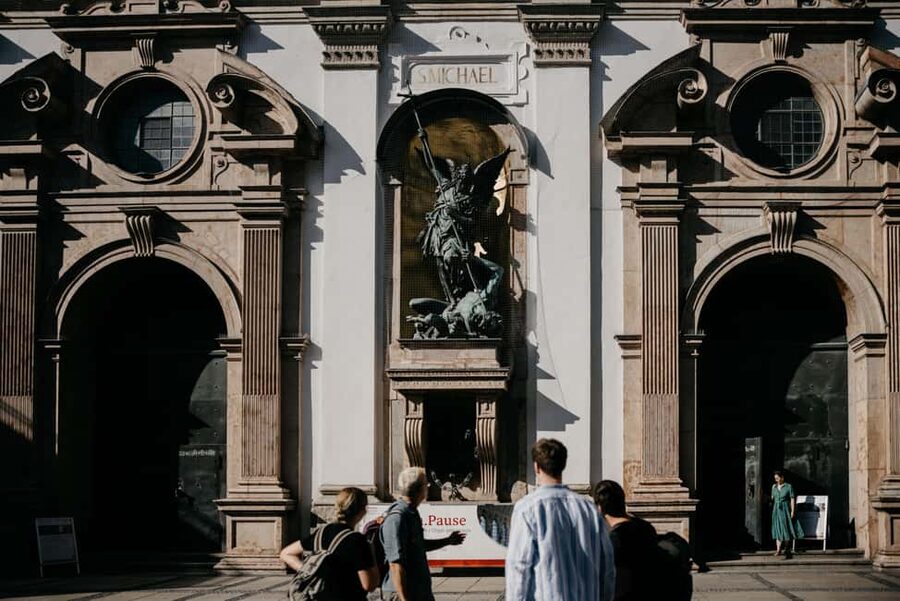
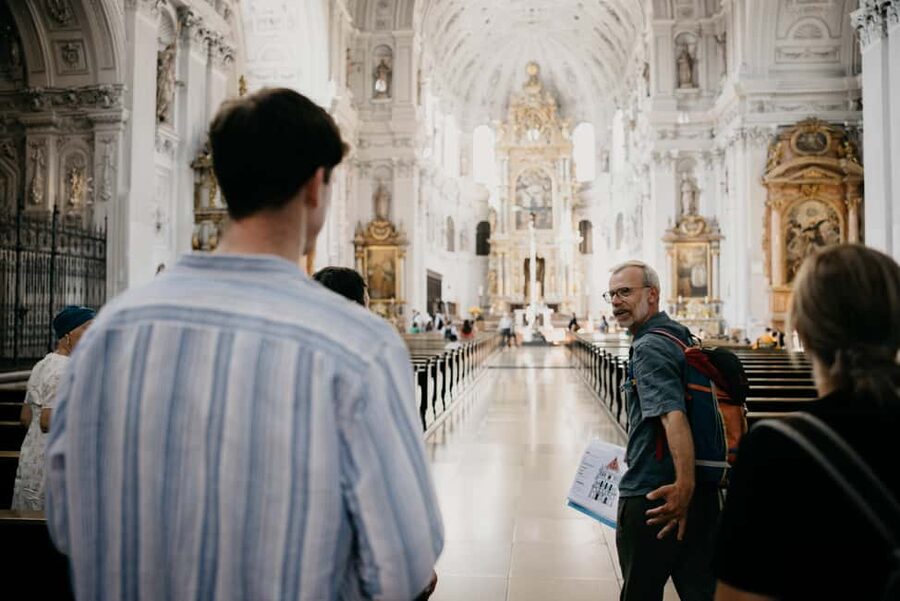
The next stops bring different layers of church architecture into a fairly compact part of Munich. St. Michael’s Church is one of the city’s major landmarks, while the Trinity Church offers a quieter and more intimate experience.
The contrast between the two is part of the value. Rather than seeing church after church as a blur of stone and decoration, you can compare their scale, design choices, and place in the city. Philipp’s background in architecture should help you notice details that are easy to miss when walking alone.
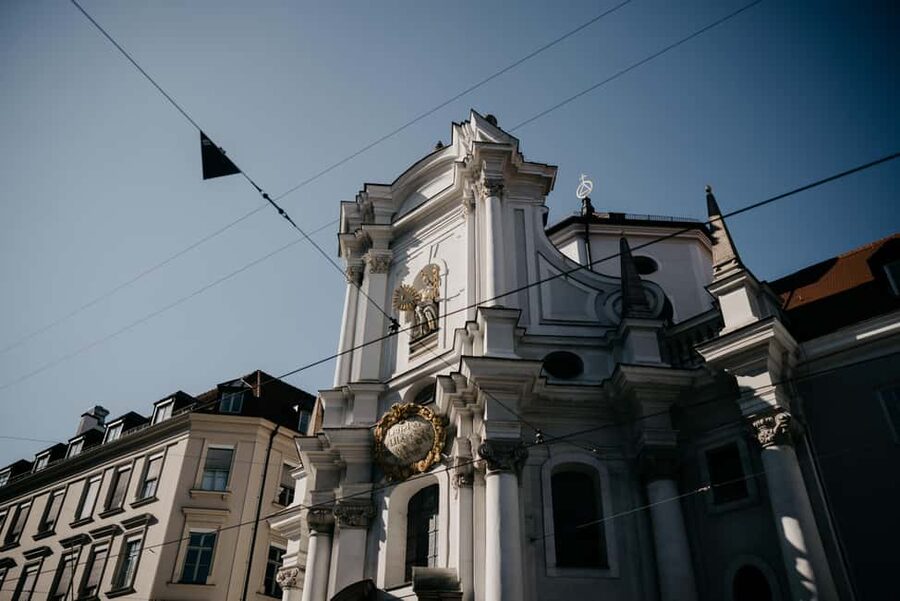
Trinity Church is especially appealing for people who enjoy finding less obvious stops. It is a Baroque building, and the tour presents it as one of Munich’s important but easily missed architectural points. This is the sort of stop that can change your independent sightseeing later. You begin to look beyond the most famous facade.
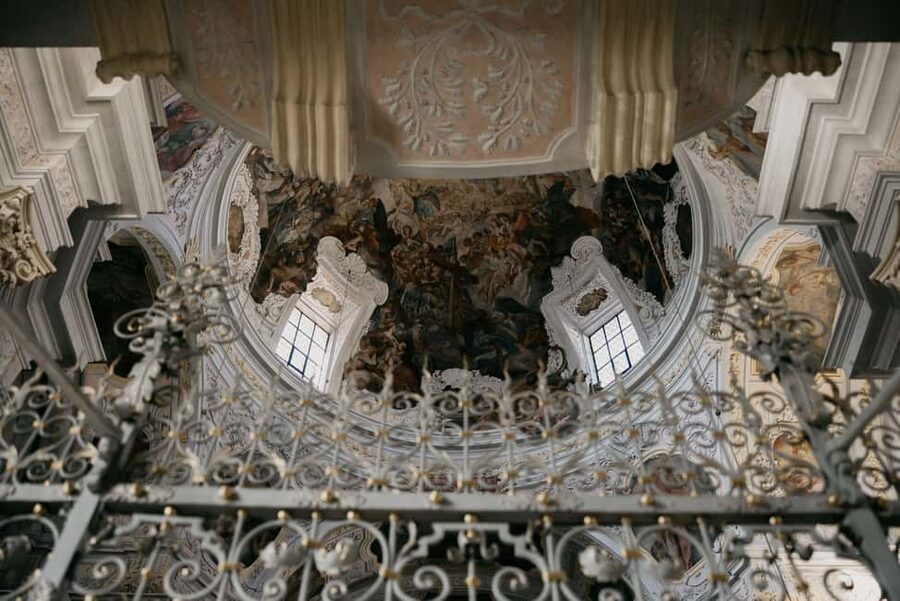
The tour also includes the Theatine Church, another major central building. Its presence broadens the discussion of courtly architecture and changing taste. You should expect an explanation of how style relates to the people and institutions that paid for these buildings, not just a list of dates and labels.
Courtly Munich at the Bavarian State Opera
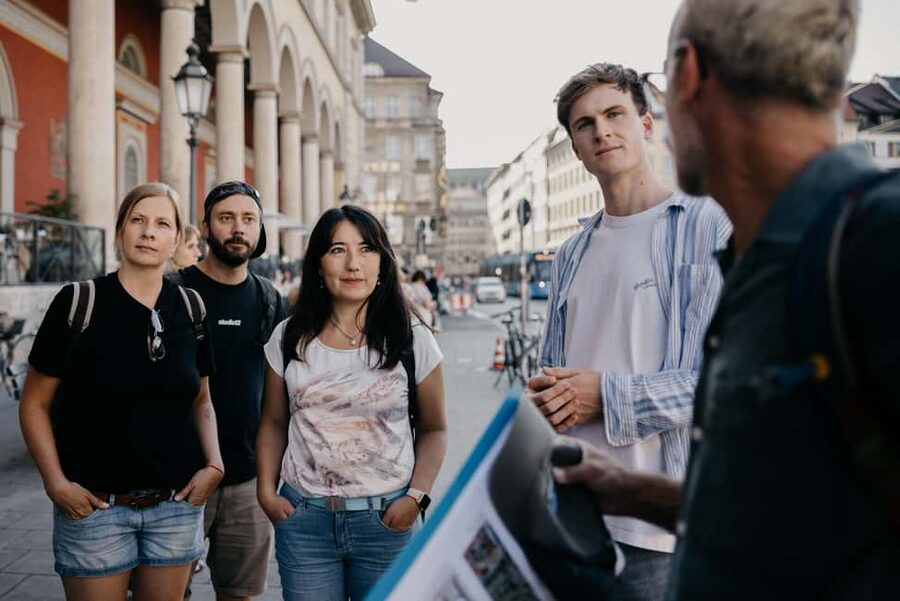
The Bavarian State Opera shifts the focus from religious architecture to public and court culture. Its location and design help explain how Munich presented itself as a capital of ceremony, music, and authority.
This is where the tour’s social angle becomes especially useful. Buildings connected with performance and government often communicate power through scale and placement. You will see how an architectural style can serve a public image.
The stop is part of a central-city sequence, so the walking feels efficient rather than scattered. You can cover several major landmarks without spending the entire time crossing long distances between them.
Same city, a different facade:
- Chicago Architecture Center River Cruise aboard First Lady
★ 5.0 · 5,536 reviews - Chicago: Architecture River Cruise Skip-the-Ticket Line
★ 4.8 · 4,325 reviews - Chicago River 45-Minute Architecture Tour from Magnificent Mile
★ 4.5 · 2,924 reviews - Barcelona: Sant Pau Recinte Modernista Entry Ticket
★ 4.6 · 2,567 reviews
Maximilianstraße and the look of power
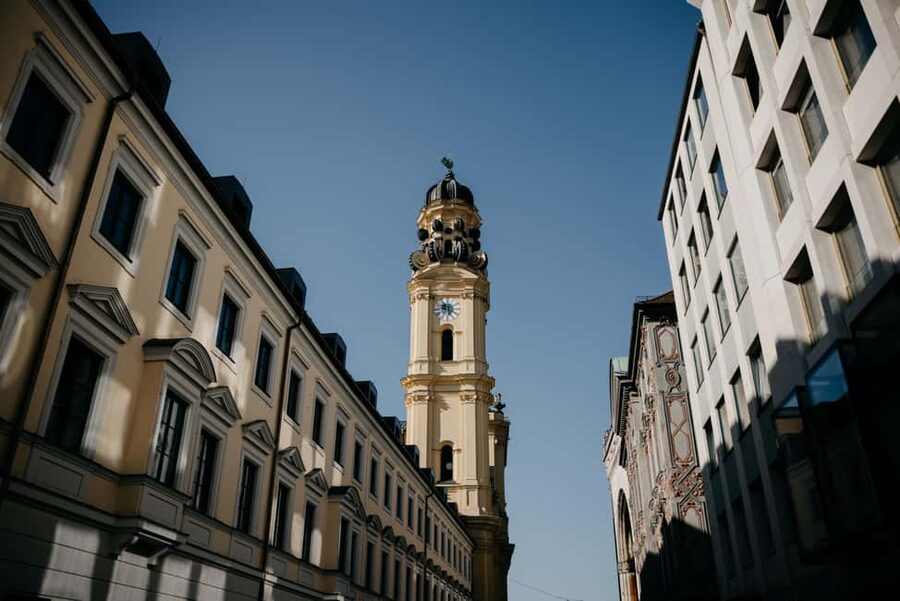
Maximilianstraße gives you a different kind of architectural lesson. The avenue is associated with grand urban planning and Munich’s nineteenth-century ambitions. It is not simply a place to admire expensive shops. It is also a statement about how a city wants to be seen.
Philipp’s approach is useful here because the street makes more sense when you connect its buildings with politics, wealth, and changing ideas of a modern capital. The facades belong to a broader period of Historicism, when architects often drew from earlier styles and adapted them for new civic purposes.
I would pay close attention to the street as a whole, not only to individual buildings. The width, sequence, and relationship between architecture and movement are part of the story.
Along the Isar to St. Lukas and Müllersche Volksbad
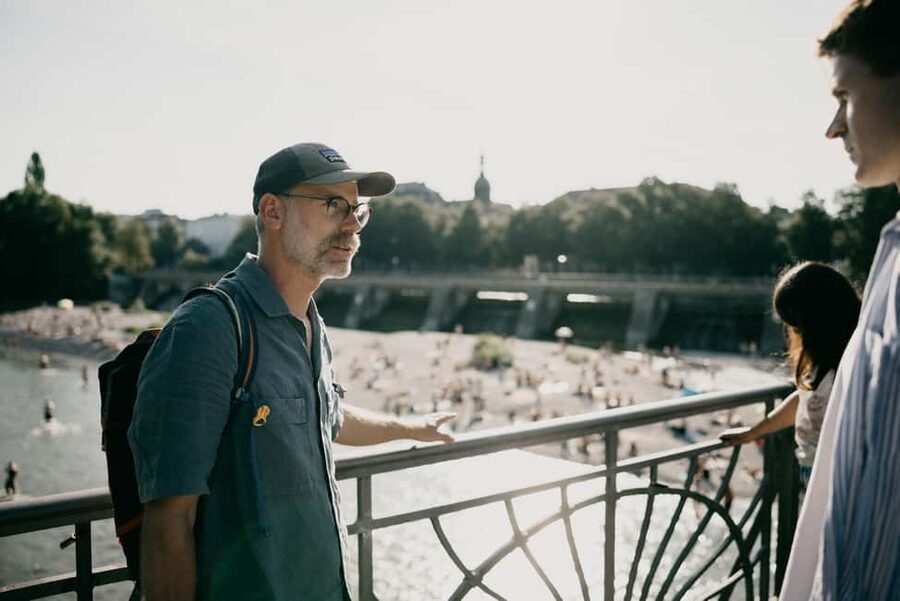
The route then moves toward the Isar River, giving the tour a welcome change of pace. Munich’s center can feel formal and monumental. By the river, architecture meets public space, recreation, nature, and contemporary city life.
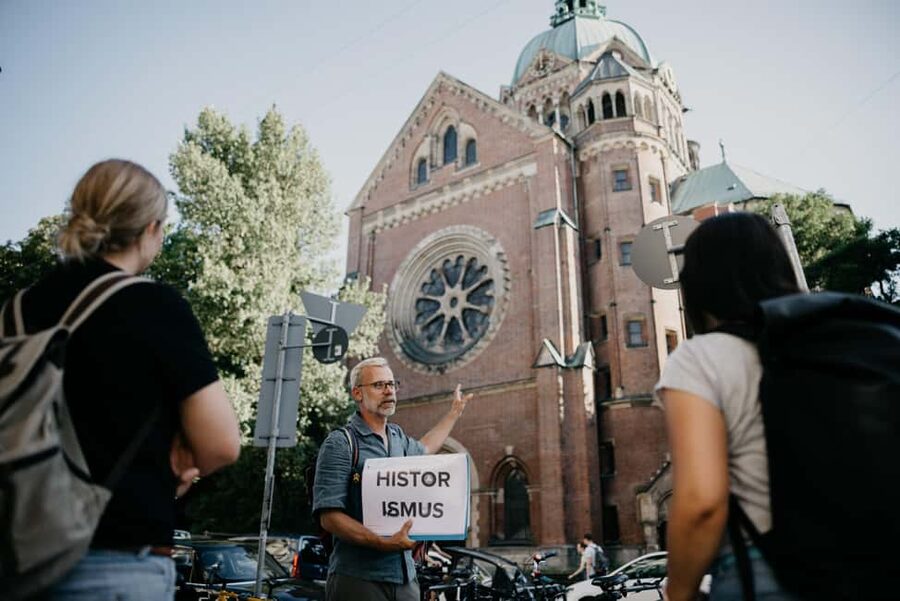
St. Lukas is an important stop in this part of the route. The church provides another point of comparison with the earlier religious buildings, while its setting helps show how Munich expanded beyond its historic core.
Müllersche Volksbad adds a particularly interesting public-building chapter. A historic public bath tells you about everyday city life, public health, leisure, and civic responsibility. It is a more social form of architecture than a palace or cathedral, and it helps keep the tour from becoming a parade of grand facades.
The Isar section is also one reason to bring good shoes and allow the full 150 minutes. The tour is not only a central old-town circuit. You are covering a wider area and moving through different types of urban space.
Transportation deserves a little thought. Getting to the meeting point is your responsibility, and transport costs are not included. Because the route reaches the Isar area, check the day’s arrangements with the provider if you have time limits or need to know whether public transport will be used during the outing.
Modern Munich at the Sudetendeutsches Museum
The Sudetendeutsches Museum brings the route into more recent architectural territory. This stop helps show that Munich’s story did not end with nineteenth-century boulevards and historic churches.
A museum building can be read in several ways: through its structure, its materials, its public purpose, and its relationship to the surrounding city. Here, the tour connects modern design with memory and identity, adding a serious layer to the architectural discussion.
The experience also includes street art and a modern building later in the route. That mixture is welcome. It prevents the tour from suggesting that architecture only matters when it is old, ornate, or connected with famous institutions.
The itinerary includes an additional visit between the Sudetendeutsches Museum and the finish, though the exact stop is not specified. If you need a tightly timed schedule, ask Philipp for the precise route on the day you book.
The Gasteig rooftop finish
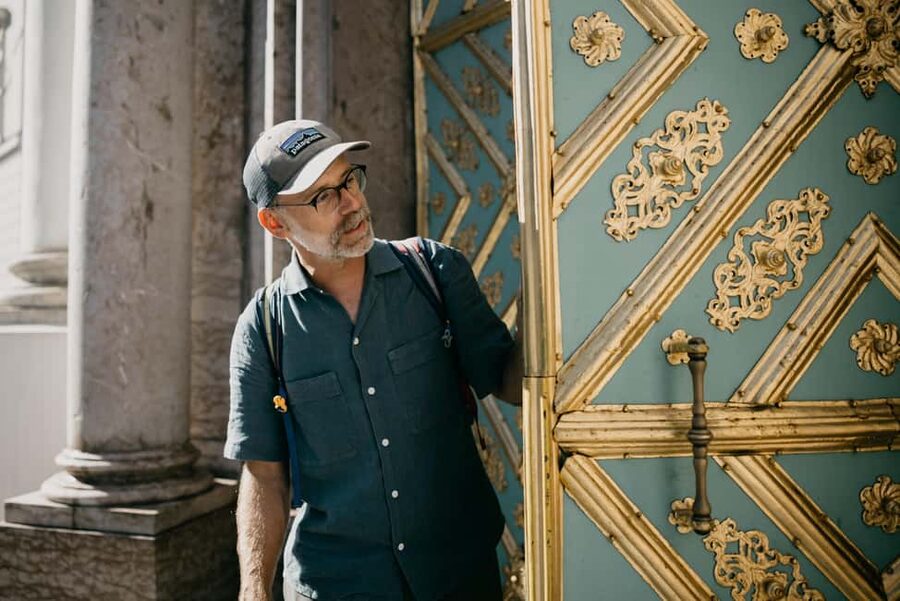
The final stop is the Dachgarten rooftop terrace at Gasteig. This is a smart way to finish an architecture tour. After looking closely at facades, streets, churches, and public buildings, you get a chance to see Munich from above.
The rooftop view is weather dependent, so do not treat it as guaranteed in poor conditions. Still, the ending gives the tour a clear payoff. You can connect the separate parts of the route and see how Munich’s historic center, newer districts, and green river corridor relate to one another.
The view also gives you a practical sightseeing tool. After the tour, you will have a better sense of where the Isar lies, how the major central landmarks connect, and which parts of the city you may want to explore on your own.
Philipp’s guiding style
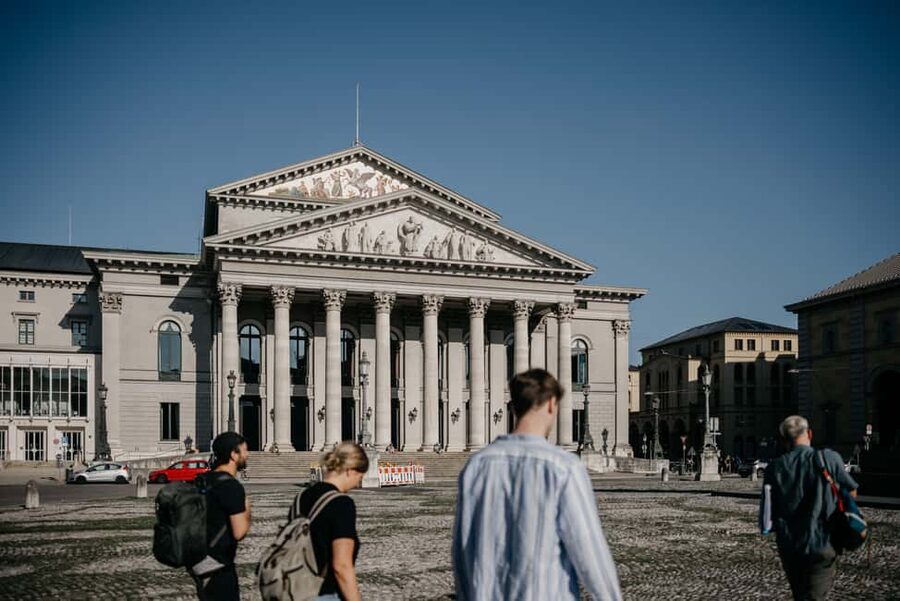
Philipp is both an architect and a certified official Munich guide, and that combination shapes the experience. You get professional city guiding with a specialist’s eye for form, materials, planning, and style.
The strongest feature is the personal exchange. Philipp is described as patient with questions and comfortable responding beyond the narrow limits of architecture. That matters because a good city tour should not feel like a lecture. You can ask about a building, a period, or a detail that catches your eye and receive an answer tied to the wider city.
The tour is available in English, German, and Spanish. The small group limit of 16 should make it easier to hear and participate than on a large coach-style outing. Private groups are also available, which may suit families, study groups, or visitors with a particular architectural interest.
The experience is family-friendly, but remember that it is a walking tour with a substantial route. Children who enjoy buildings, stories, and city exploration may like it. Very young children who need frequent breaks may find the pace less suitable.
Is $30 a fair price?
At $30 per person, this is a reasonable price for a 150-minute specialist-led city tour. You are paying for Philipp’s time, architectural training, official guiding credentials, a small group, and a route that covers more than the standard old-town highlights.
The value is strongest if you would otherwise walk past Munich’s buildings without understanding their connections. A self-guided stroll can show you the Frauenkirche, State Opera, and Maximilianstraße, but it is less likely to explain how political power, social change, religion, and public life shaped them.
The price does not include food, drinks, or transportation. That is not unusual, but it matters because the route reaches the Isar and may involve more than a simple walk from Marienplatz. You also receive a postcard featuring a tour highlight and a digital map with Philipp’s favorite Munich spots, useful extras for planning the rest of your stay.
Free cancellation is available up to 24 hours before the tour, and you can reserve now and pay later. Those policies make the booking less risky if your Munich schedule is still changing.
Who should book this experience?
I would choose this tour if you enjoy architecture but want it explained in plain language. It is also a good fit if you have already seen Munich’s famous central sights and want a route that adds the Isar, Art Nouveau, street art, a public bath, and modern design.
It suits first-time visitors who want historical orientation, as well as Munich residents who want to see familiar buildings differently. The repeated praise for Philipp’s friendly, entertaining way of answering questions is important: this is not presented as a dry technical tour.
You should think twice if you want a slow indoor tour with long visits at each building. The route is broad, the timing is fixed, and the group will keep moving. People with mobility impairments or wheelchair users should not book this experience, since it is specifically listed as unsuitable.
Should you book the 500 Years of Munich Architecture tour?
Book it if you want a broad architectural story rather than a checklist of landmarks. Philipp’s mix of professional training and official guiding gives the tour a clear point of view, while the small group and question-friendly format keep it personal.
The best reasons to go are the variety of the route and the move beyond central Munich. You get Gothic churches, Baroque and Rococo details, courtly avenues, a historic public bath, the Isar, modern architecture, street art, and a rooftop finish for $30.
Skip it if you need step-free access, dislike walking for two and a half hours, or require a guaranteed rooftop view. For everyone else, this is a thoughtful way to see Munich as a changing city, not just a collection of handsome old buildings.
FAQ
How long does the architecture tour last?
The tour lasts 150 minutes, or two and a half hours.
What is the maximum group size?
The small group is limited to 16 participants. A private group option is also available.
Where does the tour begin?
It begins outside the entrance to the Frauenkirche at Frauenplatz 1 in Munich.
How do I reach the meeting point?
The easiest route is by S-Bahn or U3 or U6 subway to Marienplatz station, followed by a walk of about 10 minutes.
Where does the tour finish?
The tour finishes at the Dachgarten rooftop terrace at Gasteig.
Is the rooftop view guaranteed?
No. The view from the Gasteig rooftop terrace depends on the weather.
Which languages are available?
The live tour is offered in English, German, and Spanish.
Is transportation included?
Transportation to and from the meeting point is not included. Food and drinks are also not included.
What should I bring?
Bring comfortable shoes. You should expect to be on your feet for the full 150-minute experience.
Is the tour suitable for wheelchair users?
No. The activity is listed as unsuitable for wheelchair users and people with mobility impairments. Participation is at your own risk.
Newly added in the world
- Venice Art and Architecture Private Walking Tour★ 4.5 · 11 reviews
- Basilica San Marco and the Pala d’Oro with Architect Guide★ 4.5 · 19 reviews
- Walking tour in Venice with an architect★ 5.0 · 16 reviews
- Sopot Private City Walking or Bike Tour with a local architect★ 5.0 · 19 reviews
- Lesser Poland Wooden Architecture Trail UNESCO Private Tour from Krakow★ 5.0 · 15 reviews
- Lisbon Contemporary Architecture★ 5.0 · 3 reviews
- Private Munich Tour for History Buffs with Architectural Gems and WWII sites★ 5.0 · 3 reviews
- Neoclassical Paris Architecture 2-Hour Private Walking Tour★ 5.0 · 7 reviews
Germany Architecture Tours, compared.
Munich 3-Hour Segway Tour: Nazi Munich & Royal Architecture
Read our review →
Düsseldorf: Guided City Architecture Walking Tour
Read our review →
Hidden Architectural Gems of Munich (Max. 16 guests)
Read our review →
Guided Walking Tour of UNESCO Site and Architecture
Read our review →
Private Taxi Tour City East & West History and Architecture 3-4h
Read our review →
Karl-Marx-Allee Tour: Life and Architecture in East Berlin
Read our review →
Browse the lists this tour appears in