
Review · GERMANY ARCHITECTURE TOURS
Hidden Architectural Gems of Munich (Max. 16 guests)
Munich’s creative side is far from the postcard center. This walk leads you through street art, converted spaces, river neighborhoods, and unusual beer gardens, ending at Gans Woanders. The route feels less like a standard city tour and more like a guided look at how Munich’s southern districts keep changing.
I like two things right away: Philipp is both an official Munich guide and an architect, and the route links several places you would probably miss on your own. I also like the small maximum of 16 people, which should make it easier to ask about buildings, art, and local life as you go.
The main consideration is mobility. This is a 150-minute walking tour, and the experience is not suitable for wheelchair users. Food and drinks are not included, so plan to buy your own refreshments at one of the stops or after the tour.
Key points at a glance
- A different Munich: Leave the usual old-town sights behind and explore the city’s southern districts.
- An architect as your guide: Philipp explains buildings, public spaces, art, and urban change from a professional point of view.
- Creative stops: See the Beginner’s Wall, Bahnwärter Thiel, and the artistic setting of Gans Woanders.
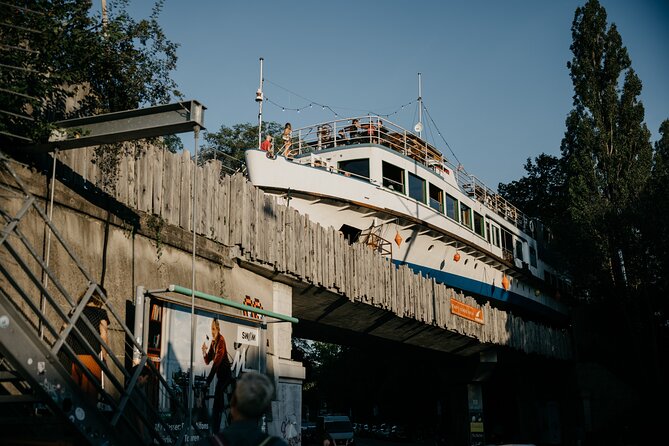
- A beer garden on a boat: Alte Utting, also called MS Utting, is one of the route’s most unusual stops.
- A 150-minute walk: Wear comfortable shoes and bring warm clothing, since much of the experience takes place outdoors.
- Useful local follow-up: You receive a digital map with Philipp’s favorite places to visit in Munich.
Why this tour shows you a less familiar Munich
Many first visits to Munich center on Marienplatz, the Frauenkirche, palace rooms, and the large museums. Those sights matter, but they do not explain the whole city. Munich also has former industrial areas, public art, informal cultural venues, and neighborhoods along the Isar where local life feels more relaxed.
This tour focuses on that side of town. You move through places where old structures have been reused, where art appears on walls, and where restaurants and beer gardens take unusual forms. The route is especially useful if you have already seen the central sights or simply prefer cities as they are lived in now.
Philipp’s background adds real value here. An official city guide can provide the local context, while an architect can point out details that a general sightseeing guide might pass over. The strongest part of the experience is likely to be the way he connects design with daily life, rather than treating each stop as an isolated photo opportunity.
The rating is 4.9 from 52 ratings, and the praise focuses on Philipp’s explanations, his speaking style, and the unusual route. The feedback also includes people who had lived in Munich for many years and still learned new things, which says something about the tour’s local focus.
A few more architecture walks in the world worth a look
- Chicago Architecture River Cruise
★ 5.0 · 15,756 reviews - Chicago River 90-Minute Architecture Tour
★ 4.5 · 9,629 reviews - Chicago River: 1.5-Hour Guided Architecture Cruise
★ 4.8 · 8,046 reviews
Starting at Piazza Zenetti
The meeting point is Piazza Zenetti Square, identified by its grey and turquoise street furniture. Philipp says to look for him with a tablet slung over his shoulder, so finding the guide should be straightforward once you reach the square.
The easiest public transport route is the U3 or U6 subway line to Poccistrasse station, followed by a walk of about 10 minutes. Allow enough time for that walk. Arriving early is especially useful on a walking tour, since you do not want to begin by rushing through an unfamiliar neighborhood.
Piazza Zenetti is a practical starting place because the route quickly moves away from the standard visitor circuit. You begin with a central urban setting, then gradually shift toward creative spaces and neighborhoods south of the center.
Munich Volkstheater: architecture before street art
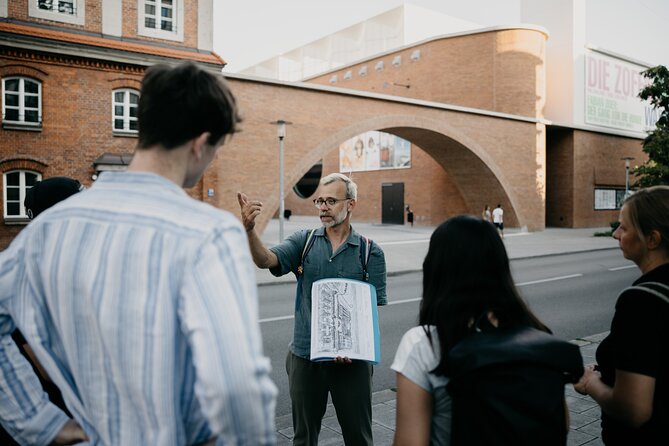
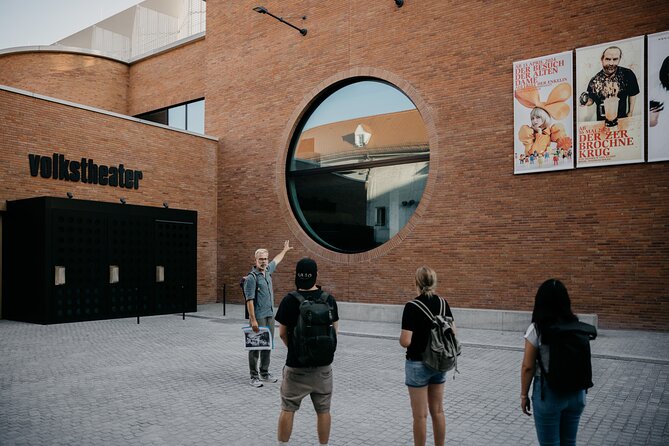
The first guided stop is Münchner Volkstheater. The theater gives Philipp a natural place to discuss architecture and the role of cultural buildings in the city.
This is not presented as a theater performance or an interior visit. Think of it as an architectural and cultural introduction to the walk. Philipp can help you notice how a public building fits into its surroundings and how a theater functions as part of city life, not just as a box for performances.
For architecture fans, this opening sets the tone. You are not simply collecting famous facades. You are learning to look at buildings, streets, and public spaces as connected parts of Munich.
Beginner’s Wall and the city’s street art
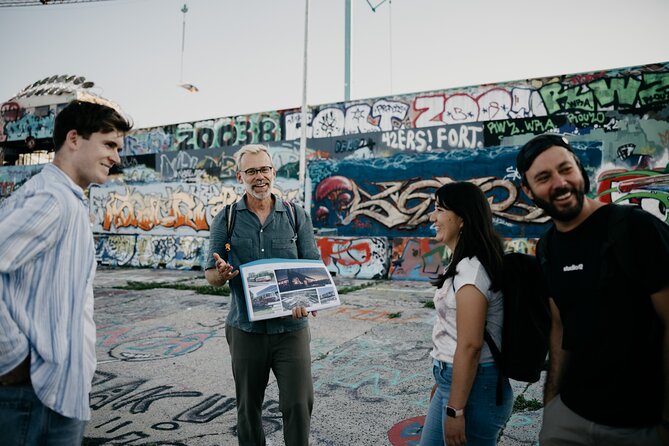
The route then moves toward the street art scene around the Beginner’s Wall. This is one of the clearest changes of mood on the walk. Instead of polished monuments, you see creative work in a more informal setting.
Street art can be hard to understand without context. It changes over time, may be temporary, and often reflects the neighborhood around it. With Philipp, you have someone who can explain the visual details and place them within Munich’s broader creative culture.
This stop will suit you if you like cities that show their personality on walls and in reused spaces. It may be less appealing if your idea of architecture is limited to grand historic buildings, but that is also the point. The tour asks you to widen your view of what deserves attention.
Same city, a different facade:
- Chicago Architecture Center River Cruise aboard First Lady
★ 5.0 · 5,536 reviews - Chicago: Architecture River Cruise Skip-the-Ticket Line
★ 4.8 · 4,325 reviews - Chicago River 45-Minute Architecture Tour from Magnificent Mile
★ 4.5 · 2,924 reviews - Barcelona: Sant Pau Recinte Modernista Entry Ticket
★ 4.6 · 2,567 reviews
Bahnwärter Thiel, a former railway setting turned cultural hub
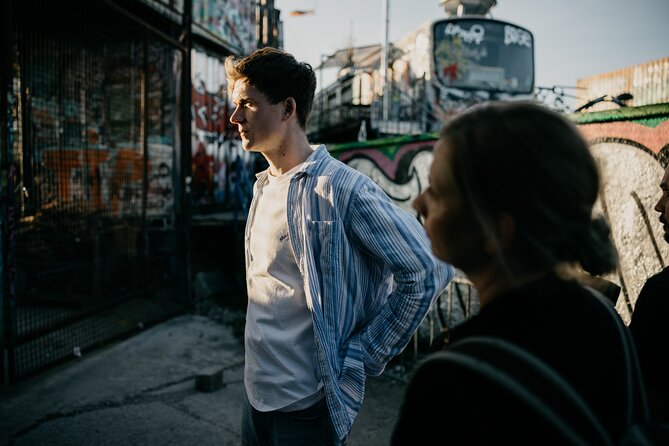
Bahnwärter Thiel is one of the route’s strongest stops. It is an eclectic cultural space centered on creativity, art, and events. Its railway character gives it a rougher feel than the tidy streets of central Munich.
Philipp’s architectural training should be especially useful here. Places such as Bahnwärter Thiel are best understood through their setting: old or industrial elements are given new life, and the result becomes a meeting place for art and community.
You should expect time for a guided look rather than a full event program. The tour information does not promise admission to a performance or special activity, so do not book it expecting an evening show. Instead, treat the visit as an introduction to one of Munich’s most distinctive cultural spaces.
Alte Utting and Munich’s water story
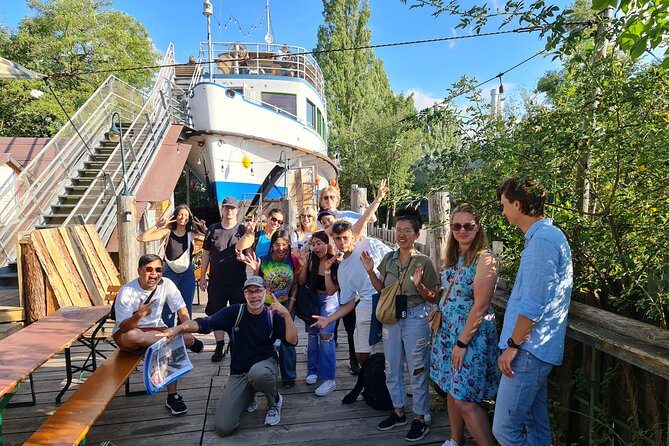
Next comes MS Utting on the bridge at Lagerhausstrasse. The boat is home to Alte Utting, an unusual beer garden that gives the tour one of its best visual surprises.
A beer garden on a steamboat is memorable on its own, but Philipp also uses the stop to discuss Munich’s water history. That adds depth to what could otherwise be a quick photo stop. You get a sense of how the city relates to water, bridges, transport, and public gathering places.
Food and drinks are not included in the tour price. The description identifies Alte Utting as a beer garden, but it does not promise a scheduled break or included purchase. Ask Philipp how much time is available if you want to buy something, and bring a card or cash according to your own preference.
This stop is a good example of the tour’s value. You are not only seeing an unusual venue. You are also learning why the setting matters, which makes the place easier to remember after the walk ends.
From Dreimühlenstraße to the Isar
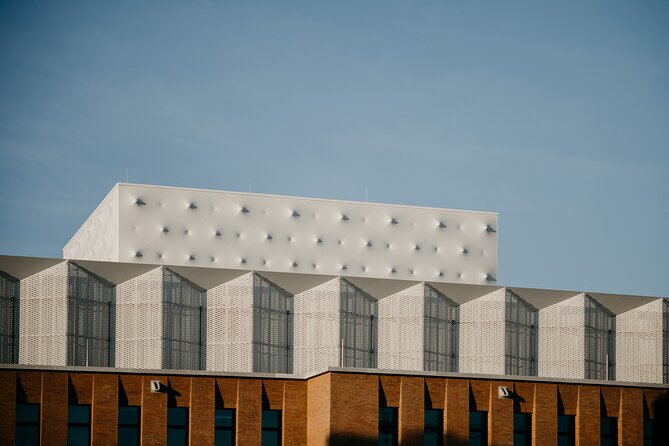
The route continues through Dreimühlenstraße and toward the Isar. The pace shifts here from art spaces and repurposed structures to the character of a river neighborhood.
The Isar is part of Munich’s daily identity, and seeing it within a walking route gives you a useful break from buildings and walls. You can expect the guide to connect the river with the city’s water story and with the neighborhoods around it.
This portion also shows why comfortable shoes matter. The tour lasts 150 minutes, and the route includes several districts and outdoor stops. You should be ready for steady walking rather than a short series of transfers between attractions.
Wittelsbacherbrücke and the river views
Wittelsbacherbrücke gives the tour another strong connection to the Isar. Bridges are practical structures, but they also provide a clear way to understand how a city crosses and uses its river.
The stop is likely to appeal to photographers and architecture fans, though the supplied information does not promise a particular viewpoint or photo opportunity. Go with the expectation of a guided look at the bridge, the river, and the surrounding urban space.
Warm clothing matters here, especially outside the warmer months. The activity notes specifically recommend bringing warm clothes. Since the tour is outdoors and includes the river, weather can affect your comfort even if the walking pace remains manageable.
Claude-Lorrain-Straße and the Scherbenviertel

From the bridge, the route reaches Claude-Lorrain-Straße and the Scherbenviertel. This is where the walk becomes most neighborhood-focused.
The Scherbenviertel is presented as a charming area, and Philipp’s job is to help you see more than attractive streets. The value lies in understanding how a district feels, how its buildings relate to one another, and how local culture appears in ordinary places.
This is also the sort of stop that rewards attention. You might notice small architectural details, street patterns, or creative touches that are easy to pass without a guide. One of the strongest themes in the feedback is that Philipp helps people appreciate small details and see Munich from another angle.
Little Venice, a playful name with local character
The walk then reaches Little Venice. The name suggests a place shaped by water and small-scale urban character, but the available information does not give a detailed description of its exact features. That makes Philipp’s commentary particularly important.
Rather than expecting a replica of Venice, come for the local setting and the way it fits into the Isar-side neighborhoods. This is another point where the tour differs from a checklist of famous attractions. You are looking at a place that gains much of its interest from context.
The route’s sequence works well here. After architecture, street art, a cultural hub, and the boat beer garden, Little Venice gives you another way to think about Munich’s relationship with water and neighborhood identity.
Ending at Gans Woanders
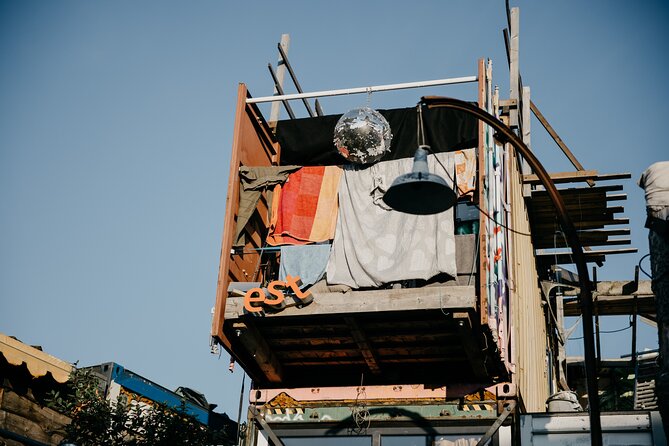
The final stop is Gans Woanders, a whimsical beer garden filled with artistic flair. It provides a fitting finish because it brings together several themes from the walk: informal culture, creative design, food and drink, and the reuse of space for social life.
The tour ends here, but your time at the venue is not described as an included meal or organized dining session. You can decide if you want to stay for food or drinks after the guided portion. That flexibility is useful, especially if you want to discuss the route with your group or continue exploring nearby.
Gans Woanders also makes a practical endpoint. Instead of finishing at a standard monument and sending you back toward the center, the tour leaves you in a place with its own atmosphere. Philipp’s digital map can help you plan what to see next.
What the $30 price gets you
At $30 per person, the tour is priced fairly for a 150-minute small-group walk led by a guide who is both an official Munich guide and an architect. You are paying for interpretation, route planning, and access to a part of the city that is not obvious from a standard map.
The value is strongest if you enjoy architecture, street art, urban culture, and local neighborhoods. If you only want major landmarks or a broad introduction to Munich’s famous history, another city tour may give you more familiar sights for the same amount of time.
The digital map adds practical value. You can use it after the walk to find Philipp’s favorite places in Munich, which turns the tour into more than a one-time outing. The small group size, limited to 16 people, is another advantage over large coach-style sightseeing.
Private groups are available, and tours can be conducted in English, German, or Spanish. That makes the experience flexible for families, friends, or groups with a shared interest in design and local culture.
Who should book this walk
I would choose this tour if you have already covered Munich’s old-town essentials or if you prefer contemporary culture to a standard monument tour. It is also a good match for architecture students, design fans, photographers, and anyone who wants to understand how a city uses old structures in new ways.
Families can join, and the format is family-friendly. Still, the 150-minute duration means younger children need to be comfortable walking and listening for a sustained period.
I would not choose it if you need step-free access, since the activity is not suitable for wheelchair users. I would also reconsider it if poor weather would spoil your day, as the route is outdoors and warm clothing is specifically recommended.
Free cancellation is available up to 24 hours before the start, and you can reserve now and pay later. Those terms help if your Munich schedule is still moving around.
Should you book Hidden Architectural Gems of Munich?
Book it if you want Munich beyond the old town, especially street art, creative venues, the Isar, and unusual places such as Alte Utting and Gans Woanders. Philipp’s mix of official guiding experience and architectural training gives the walk a clear purpose, and the strong 4.9 rating from 52 ratings supports the value of the format.
Skip it if your priority is royal history, famous churches, or museum interiors. The best reason to book is not a single landmark. It is the connection between several lesser-known parts of southern Munich and the chance to learn how the city’s spaces work from a guide who pays attention to design.
FAQ
How long does the Munich architecture tour last?
The tour lasts 150 minutes.
Where does the tour begin?
It begins at Piazza Zenetti Square, marked by distinctive grey and turquoise street furniture.
How do I reach Piazza Zenetti?
The easiest route is to take subway line U3 or U6 to Poccistrasse station, then walk about 10 minutes to the meeting point.
How large is the group?
The standard tour allows a maximum of 16 people. A private group option is also available.
Which languages are offered?
The live tour is available in English, German, and Spanish.
Is food or drink included?
No. Food and drinks are not included. The route passes places such as Alte Utting and finishes at Gans Woanders, where you may be able to purchase refreshments separately.
Is the tour suitable for wheelchair users?
No. The activity is listed as not suitable for wheelchair users. Comfortable shoes and warm clothing are recommended.
Newly added in the world
- Barcelona: Guided tour e-bike Barcelona historical and modernist Barcelona★ 4.5 · 5 reviews
- Barcelona Architecture Walking Tour With Casa Batlló Upgrade★ 4.8 · 11 reviews
- Astana: Old City Tour, Imperialistic and Soviet Architecture★ 5.0 · 4 reviews
- Barcelona Beyond Gaudí: Modernism, Rooftops, and Hidden Gems★ 5.0 · 2 reviews
- An Architect’s Tour of Downtown Santiago★ 5.0 · 7 reviews
- Architecture Tour: Old Historic Madrid with an architect★ 4.3 · 3 reviews
- London: Architecture Tour of Benjamin Franklin House★ 5.0 · 5 reviews
- Architectural Wonders of KAFD, An Iconic Destination★ 5.0 · 3 reviews
Germany Architecture Tours, compared.
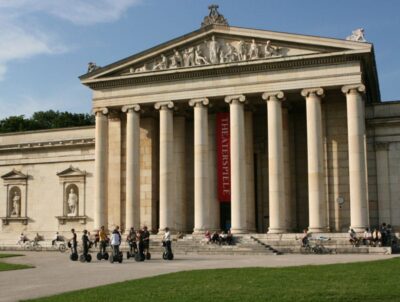
Munich 3-Hour Segway Tour: Nazi Munich & Royal Architecture
Read our review →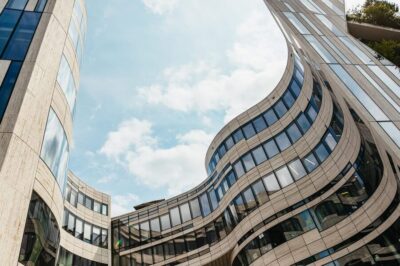
Düsseldorf: Guided City Architecture Walking Tour
Read our review →
Guided Walking Tour of UNESCO Site and Architecture
Read our review →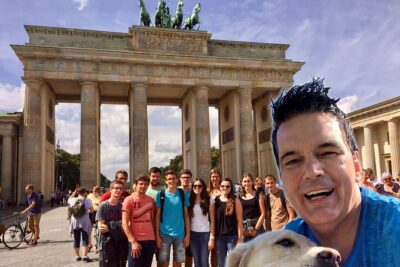
Private Taxi Tour City East & West History and Architecture 3-4h
Read our review →
Karl-Marx-Allee Tour: Life and Architecture in East Berlin
Read our review →
500 Years of Munich Architecture (Max. 16 Guests)
Read our review →Browse the lists this tour appears in