
Review · HISTORICAL TOURS
Private Munich Tour for History Buffs with Architectural Gems and WWII sites
Munich’s past is unusually easy to read in its streets and buildings. This private tour links Nazi-era sites with royal palaces, churches, and grand squares, giving you a useful shortcut through a complicated city. You begin at the New Town Hall and may finish at St. Peter’s Church, with several major stops between them.
I like the private format, since you can change the sights and slow down when a story catches your interest. I also like the practical feel: your guide meets you in your hotel lobby, offers photo tips, and can help you get your bearings in central Munich.
The main drawback is time. Two hours is short for five stops, and Nymphenburg Palace is not in the old-town core. The tour works best as a brisk introduction, not as a full visit inside every building.
Key points to know before booking

- WWII history with wider context: Odeonsplatz, the Residenz, and Munich’s old center connect Nazi history to the city’s royal and religious past.
- A genuinely private route: Only your group takes part, and the sights can be adjusted to suit your interests.
- Hotel-lobby pickup: The guide meets you at a centrally located hotel, hostel, or vacation rental.
- Five major sights in about two hours: Expect an efficient overview rather than long interior visits.
- Tanja has earned special praise: Her patience, cheerful explanations, and willingness to adjust the pace were especially valued.
- Good for photos and orientation: You receive tips on photo locations and practical advice for getting around Munich.
A fast way to read Munich’s complicated past
This is not simply a parade of pretty buildings. Munich was a center of royal power, a major setting for the early Nazi movement, and a city heavily damaged during World War II. The tour places those layers side by side.
You might be looking at the ornate New Town Hall one moment and hearing about city government, then standing at Odeonsplatz where Hitler’s failed 1923 Beer Hall Putsch came to a violent end. That contrast is the point. Munich’s attractive streets do not tell the full story on their own.
The tour costs $217 per person, which is a serious price for roughly two hours. You are paying for a private guide, a flexible route, hotel pickup, and the chance to ask as many questions as your group likes. For two people, the total cost can feel high. For a family or small group, the value improves because the guide’s attention is not shared with strangers, and group discounts may be available.
The tour is offered in English, with multiple start times. You need to provide the exact name and address of your lodging when booking. Airport pickup is not available.
More History Walks in the world:
- Chicago in a Day: Food, History & Architecture Walking Tour
★ 5.0 · 1,153 reviews - Charleston’s Best Highlights: History, Culture & Architecture
★ 5.0 · 422 reviews - Palm Springs Modernism Architecture & History Bike Tour
★ 5.0 · 359 reviews
Starting at the New Town Hall
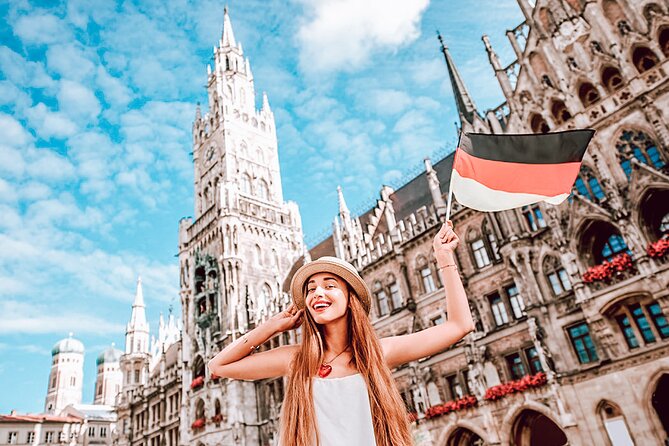
The New Town Hall, or Neues Rathaus, is a fine opening scene. Its neo-Gothic façade was built between 1867 and 1874 from brick and shell limestone. Even before the history begins, the building gives you a sense of Munich’s taste for grand public architecture.
Your guide points out the building’s delicate details and explains how it still serves as a working center of city government. The mayor’s office, city council, and city administration remain here, so this is not just a preserved monument. It is part of daily civic life.
You may hear stories about events that began inside the building. The tour also notes the possibility of climbing the tower for views across Munich’s rooftops, though you should confirm with your guide how that fits the short schedule and whether an entrance fee applies.
A traditional restaurant in the building’s vault dates to 1867. That detail helps make the New Town Hall feel less like a façade and more like a place with a long public life.
The stop is listed as about 20 minutes. That is enough for an exterior explanation and orientation around Marienplatz, but not enough for a relaxed tower visit, a meal, and a full interior look. If the tower matters to you, ask to make it a priority when you meet your guide.
Nymphenburg Palace and the Wittelsbach rulers
Nymphenburg Palace changes the mood. The Baroque complex was built as a summer residence for the Bavarian monarchs, beginning in 1664. Its construction was tied to a prince’s devotion to his wife, a personal detail that gives the huge royal project a human starting point.
The palace tells the story of the Wittelsbach family and five generations of rulers. You can expect an explanation of how the complex grew from a royal retreat into one of Europe’s largest palaces, with elaborate rooms and extensive grounds.
Here, the 20-minute stop is best understood as a look at the building and its setting rather than a full palace visit. The tour information does not include admission fees, and no interior entry is promised. If you want to tour the rooms or spend time in the grounds, you will need to ask about changing the schedule and paying the entrance cost yourself.
There is also a practical issue: Nymphenburg is not beside the other old-town stops. The experience includes a private walking tour, but transportation costs are not included. Ask your guide how the palace fits into your route, particularly if your booking is close to the advertised two-hour duration.
I would choose Nymphenburg if royal architecture is a main reason for visiting Munich. If WWII history is your first concern, you may prefer to replace it with another central stop. The private format makes that choice possible.
The Residenz, from ducal castle to royal palace
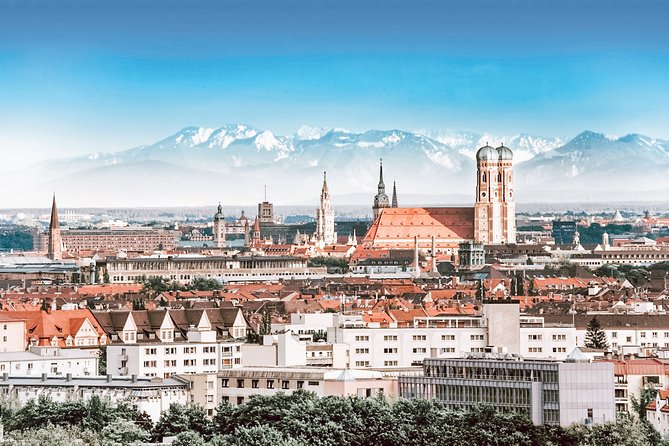
The Munich Residenz gives you one of the clearest views of Bavaria’s ruling families. Its story begins in 1385, when Bavarian dukes began changing and enlarging the original castle. Over time, it became a major palace for dukes and kings.
The building also carries a darker twentieth-century history. It housed former Gestapo headquarters, and Hitler joined the Nazi Party in Munich. Much of the Residenz was destroyed during World War II and rebuilt gradually from 1945 onward.
That combination is worth your attention. You are not seeing an untouched palace. You are seeing a place rebuilt after severe damage, where centuries of political power sit alongside the history of dictatorship and war.
The Residenz is now the largest museum in Bavaria. Admission is not included, and the scheduled stop is about 20 minutes. That makes a full museum visit impossible during the tour. Instead, you can expect a concise explanation of the complex, its history, and its role in Munich.
If you want to tour the museum, treat this walking experience as a preview and return later. If you prefer a focused city introduction, the guide can explain what you are seeing without requiring you to spend several hours inside.
More Private Tours in the world:
- Best of Chicago: Architecture & Highlights City Private Tour
★ 5.0 · 94 reviews - Private Harajuku Omotesando Architecture Walking Tour
★ 5.0 · 67 reviews - Private Santa Barbara History and Architecture Walking Tour
★ 5.0 · 56 reviews - Private Barcelona Modernism and Gaudí Walking Tour
★ 4.7 · 54 reviews
Odeonsplatz and the failed Beer Hall Putsch
Odeonsplatz is one of the most important stops for anyone interested in Hitler’s rise. The Italian-style square is near the Residenz and became the place where the 1923 Beer Hall Putsch ended. Bavarian police blocked the march, stopping the attempted power grab.
Your guide can explain why this square mattered. Odeonsplatz had long been used for public gatherings, demonstrations, funerals, and ceremonies. Its size and position made it suitable for major political displays, which helps explain why the Nazis marched here.
The square is surrounded by the Feldherrnhalle, the Baroque Theatine Church of St. Kajetan, and Munich’s oldest café. That setting can make the stop visually appealing, but the political history deserves more than a quick photograph. Look closely at how a grand civic space can be used for both ordinary public life and political theater.
Today, Odeonsplatz is also used for open-air classical concerts. That modern use adds another layer to the site. You are seeing a public square that has held royal ceremonies, political conflict, mourning, music, and everyday meetings.
For me, this is likely the strongest WWII-related stop on the route because it connects a precise place to a major event. A good guide can help you understand not only what happened, but why the location was chosen.
St. Peter’s Church and Munich’s oldest parish
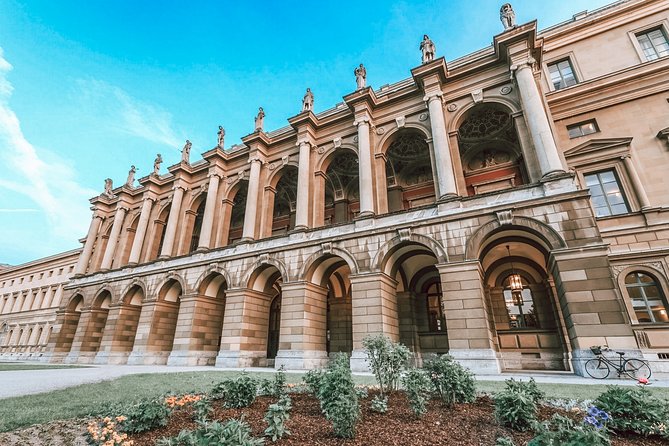
St. Peter’s Church, known locally as Alter Peter, brings you back to Munich’s religious beginnings. The church was first built in the eleventh century and is regarded as the city’s oldest parish church. Its tower rises 91 meters above the center, close to Marienplatz.
The church has been rebuilt more than once. A major reconstruction followed a fire in 1327, and the building witnessed many dramatic chapters in Munich’s development. Your guide can explain the early architecture and how the church changed over time.
This stop is a useful counterpoint to the political sites. Munich’s story is not only about kings, Nazis, and wartime destruction. It also includes parish life, worship, rebuilding, and the everyday connection people have with an old city church.
Again, allow for the limits of a 20-minute visit. You may get an exterior explanation and a short look inside, but you should not assume there will be time to climb the tower or explore every detail. If the views from Old Peter matter to you, ask about them before the tour begins.
The church sits in a very convenient part of the center, making it a sensible finish for a walking route. From here, you can continue exploring Munich on your own.
What a private guide changes

A private tour gives you control that a fixed group walk cannot. You can ask for more WWII history, spend extra time on architecture, or replace a listed sight with something else you want to see. The supplier specifically allows changes to the sights, so use that option rather than treating the route as fixed.
The most useful approach is to decide your priority before meeting the guide:
- Choose Odeonsplatz and the Residenz for Nazi-era history.
- Choose Nymphenburg and the Residenz for royal architecture.
- Choose the New Town Hall and St. Peter’s Church for old-town orientation.
- Keep all five stops if you want a broad first look at Munich.
The guide can also point out good places for photographs. That matters in a city where the most attractive view may not be the most obvious one. You can ask for help with rooflines, façades, square compositions, and places that show several buildings together.
Tanja is specifically praised for patient explanations, a cheerful manner, and adjusting the pace when a group began to tire after several days of walking and standing. That is a useful detail for anyone planning this early in a longer European trip. The tour still requires moderate physical fitness, and it runs in rain or shine, so wear practical shoes and dress for the forecast.
Who will get the most from this tour
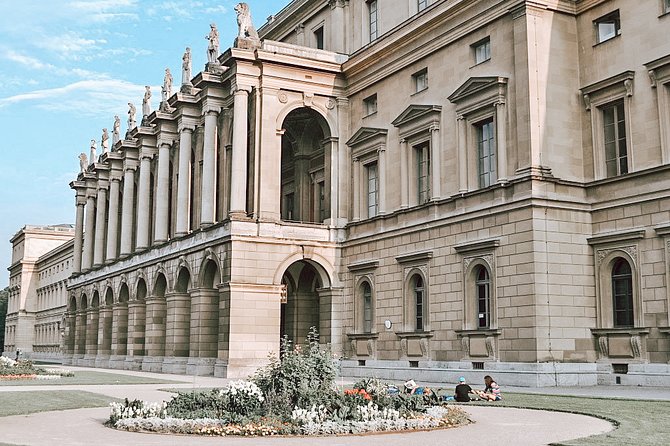
I would recommend this experience to a first-time Munich visitor who wants historical orientation without joining a large group. It also suits couples, families, and friends who have different interests but want one guide for the day.
History fans will appreciate the direct links to the Beer Hall Putsch, former Gestapo offices, Hitler’s early political activity, and wartime destruction. Architecture lovers get neo-Gothic, Baroque, Italian-style, royal, and church buildings in one compact outing.
It is less suitable if you want long museum visits or a slow palace tour. The short duration means you are collecting context and deciding where to return, not completing each attraction. It may also be a poor fit if your hotel is outside the central area, since pickup is offered only at a centrally located hotel, hostel, or vacation rental.
Service animals are allowed, and the tour is near public transportation. The supplier will contact you by email, and you do not need to call to confirm. Free cancellation is available if you cancel at least 24 hours before the local start time. Changes or cancellations inside that window are not accepted for a refund.
Is the $217 price justified?
The answer depends on how you use the private format. If you simply follow the standard route and spend 20 minutes at each sight, the price may seem steep for two hours. You are not getting entrance fees, food, drinks, or transportation costs, and those extra expenses can add up.
The value improves when you customize the experience. Ask the guide to focus on the subjects you care about, use the time for questions, and get practical advice for the rest of your stay. A private guide can also save you time by explaining where to return and which interiors deserve a separate visit.
For a larger group, the per-person cost may be easier to justify, especially if a group discount applies. For a solo visitor or couple on a tight budget, a shared walking tour or self-guided visit may offer better value.
Should you book this Munich history tour?
Book it if you want a private historical overview with a flexible route, a local English-speaking guide, and a clear connection between Munich’s architecture and its WWII past. The strongest reasons are the private attention, the chance to adjust the sights, and the guide’s patient, human approach, especially if Tanja is available.
Before paying, ask how Nymphenburg will be handled within two hours and whether you want to prioritize interiors or exterior explanations. If you accept the fast pace and use the tour to plan the rest of your Munich sightseeing, it can be a useful first step. If you want detailed palace visits, tower climbs, or museum time, choose a longer or more specialized experience instead.
FAQ
How long is the private Munich tour?
The tour lasts approximately two hours.
Where does the tour begin?
Your guide meets you in the lobby of your centrally located hotel, hostel, or vacation rental. You must provide the exact name and address of your lodging.
Is airport pickup available?
No. Airport pickup is not available.
Is the tour private?
Yes. Only your group participates in the activity.
Can the itinerary be changed?
Yes. The route is customizable, and you can change the listed sights to focus on what you most want to experience.
Are entrance fees included?
No. Entrance fees are not included. The listed stops are presented as part of the walking tour, but you should expect to pay separately if you choose paid entry.
Is transportation included?
Transportation costs are not included. The experience is described as a private walking tour, so ask how any transfer to Nymphenburg Palace will be handled.
What happens if it rains?
The tour runs rain or shine. Dress appropriately for the weather and wear comfortable shoes for walking.
Can I cancel for a full refund?
Yes, if you cancel at least 24 hours before the experience’s local start time. Cancellations or changes made less than 24 hours in advance are not eligible for a refund.
Newly added in the world
- Venice Art and Architecture Private Walking Tour★ 4.5 · 11 reviews
- Basilica San Marco and the Pala d’Oro with Architect Guide★ 4.5 · 19 reviews
- Walking tour in Venice with an architect★ 5.0 · 16 reviews
- Sopot Private City Walking or Bike Tour with a local architect★ 5.0 · 19 reviews
- Lesser Poland Wooden Architecture Trail UNESCO Private Tour from Krakow★ 5.0 · 15 reviews
- Lisbon Contemporary Architecture★ 5.0 · 3 reviews
- Neoclassical Paris Architecture 2-Hour Private Walking Tour★ 5.0 · 7 reviews
- Street Art and Architecture:Porto Speaks Through Its Streets★ 3.0 · 2 reviews
Historical Tours, compared.
Chicago in a Day: Food, History & Architecture Walking Tour
Read our review →
Charleston’s Best Highlights: History, Culture & Architecture
Read our review →
Palm Springs Modernism Architecture & History Bike Tour
Read our review →
Historic Georgetown: History, Gossip, & Architecture Walking Tour
Read our review →
Charleston History, Homes, and Architecture Guided Walking Tour
Read our review →

Historical and Architectural Chicago Fireboat River & Lake Cruise
Read our review →Browse the lists this tour appears in