
Review · HISTORICAL TOURS
Private Taxi Tour of City East History and Architecture 2-3h
Berlin’s City East is too spread out for a quick stroll, and too full of layers for a shallow bus tour. This private ride with Gunter Bauer, a Berlin resident of more than 20 years, gives you a comfortable way to connect the Brandenburg Gate, Museum Island, Alexanderplatz, the Wall, and the grand avenues in one outing. His approach mixes dates and buildings with rumors, odd details, and funny stories.
I especially like the personal pickup and the freedom to shape the route. You can ask for a short walk at the Brandenburg Gate, spend more time around the rebuilt City Palace, or skip a sight that does not interest you. The trade-off is simple: most of the 25 stops are drive-bys, and the price of $119.18 per person makes the most sense for a small group that values privacy and flexibility.
Key points to know before you book
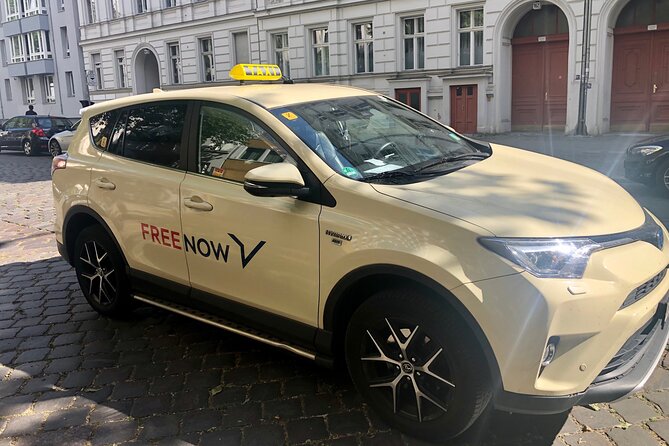
- Private SUV sightseeing: Your party rides alone in an air-conditioned Berlin luxury taxi SUV, with WiFi and parking costs included.
- A local guide with personality: Gunter Bauer has lived in Berlin for more than 20 years and adds anecdotes, rumors, and humor to the historical facts.
- A broad City East route: In about two and a half hours, you cover far more ground than a short central walking tour.
- Flexible stops: You can decide what deserves a pause, including the Brandenburg Gate, Berlin Palace, Nikolaiviertel, Alexanderplatz, and the Berlin Story Bunker site.
- Pickup within the S-Bahn ring: Gunter collects you from a hotel or apartment in central Berlin. BER Airport and locations outside the ring cost extra.
- Best for small groups: The experience is private, and group discounts may improve the value for families or friends traveling together.
Why a private SUV works well in Berlin
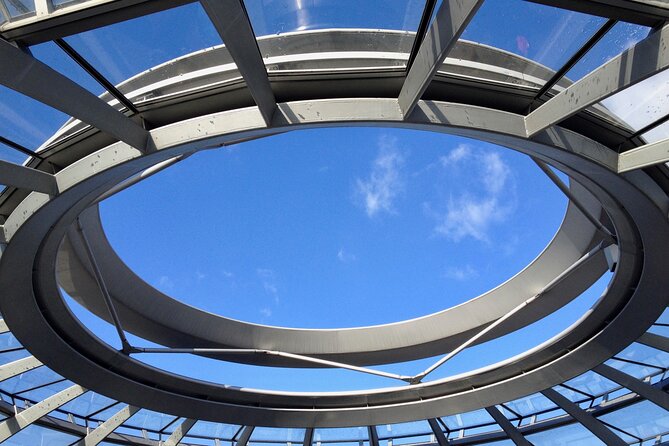
Berlin does not present its history in one neat old town. The grand Prussian center, the Cold War border, the postwar wastelands, and the new government quarter are spread across a large area. A private vehicle lets you connect these places without spending your limited sightseeing time changing trains or walking long stretches between unrelated sights.
I like the way this tour uses the car as a practical tool rather than treating it as the main attraction. You get an overview first, then choose where a short walk makes sense. That is especially useful early in a Berlin visit, when you are still learning how the city’s districts fit together.
The private format also helps with questions. Gunter can adjust the explanation to your interests, spend more time on architecture, or focus on the political history of divided Berlin. The direct communication matters here. The route includes monuments that can feel similar when presented as a list, but a good story can explain why each one matters.
The limitation is pace. Two and a half hours sounds generous, but the route contains about 25 locations. You will see many from the vehicle, not explore every one. Think of this as a guided orientation with selected stops, not a full museum-and-monument tour.
More History Walks in Germany:
- Private Taxi Tour City East & West History and Architecture 3-4h
★ 5.0 · 42 reviews - Lübeck: Private Historical and Architectural Walking Tour
★ 4.5 · 6 reviews - Private Munich Tour for History Buffs with Architectural Gems and WWII sites
★ 5.0 · 3 reviews
Brandenburg Gate and the government quarter
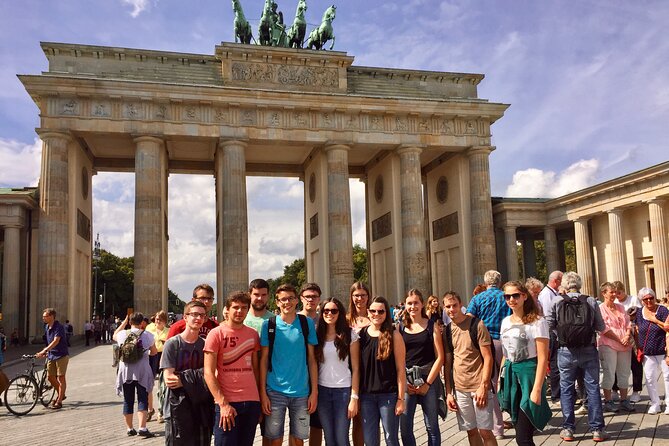
The tour begins with one of Berlin’s essential symbols, the Brandenburg Gate. Today it is linked with reunification and major public events, but its original purpose was more ordinary. It was a city gate on the route from the royal center toward the hunting grounds that became the Tiergarten.
You get about five minutes here, enough for an explanation and a quick look. If you want photographs or a short walk beneath the columns, tell Gunter in advance or use this as one of your chosen pauses. The gate sits at the meeting point of several stories, from Prussian royal power to Napoleon and the Cold War border.
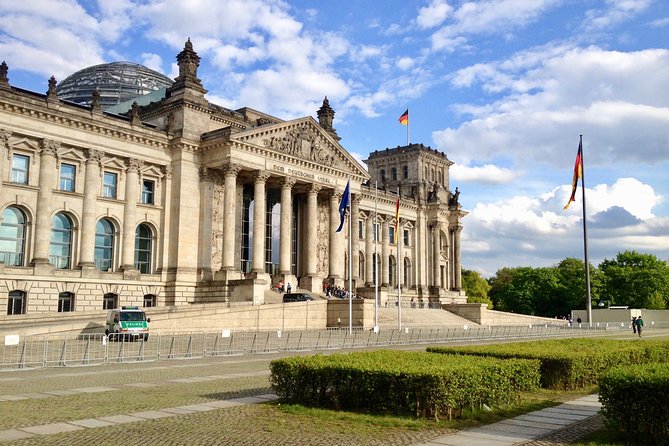
The Reichstag comes next as a drive-by. Its grand 19th-century design was criticized when built, yet it later became one of the most important political buildings in Germany. The Red Army flag placed on the building in 1945 gave it a lasting place in the story of the war’s end.
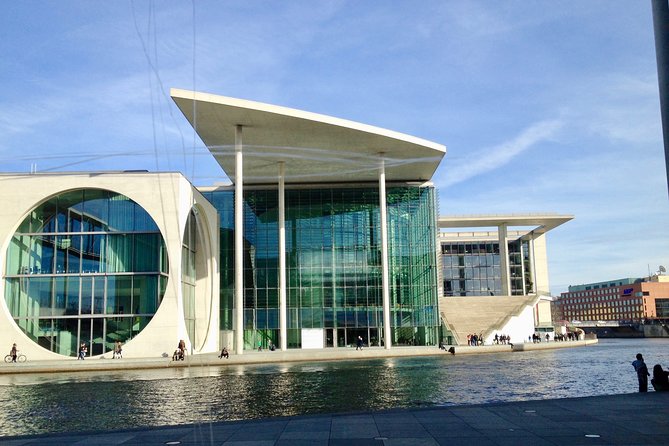
You also pass the Bundeskanzleramt, the federal chancellery, and the Paul-Löbe-Haus. These modern government buildings are large, spare, and highly functional. Gunter’s explanation helps you see how the working parts of parliament differ from the ceremonial Reichstag itself.
This section is useful for architecture fans, but do not expect interior visits. The buildings are viewed from the vehicle unless the route is adjusted.
Unter den Linden and Berlin’s royal center
Unter den Linden is Berlin’s grand ceremonial boulevard, but it began as a quiet riding path from the palace toward the western hunting grounds. That change from private royal route to public avenue tells you a lot about Berlin’s growth.
You pass the Russian Embassy, one of the most imposing diplomatic buildings in central Berlin. Its size was meant to signal Soviet power after the war, when Berlin had become the front line of the Cold War. The building makes more sense when you view it as political architecture, not just an oversized office.
At Bebelplatz, several major buildings form the old Forum Fridericianum. The State Opera, St. Hedwig’s Cathedral, the former royal library, and Humboldt University gather around the square. This is one of the places where a short pause can add real value, since the surrounding buildings are close enough to read as one planned royal ensemble.
The nearby Neue Wache once held guards and later became a memorial. Its role has changed with Germany’s political eras, which makes it a useful stop for understanding how public memory shifts. The Kronprinzenpalais and Kronprinzessinnenpalais are easier to miss, but they belonged to the royal world along Unter den Linden and help fill in the quieter corners of the avenue.
Gendarmenmarkt, Pariser Platz, and the city’s formal rooms
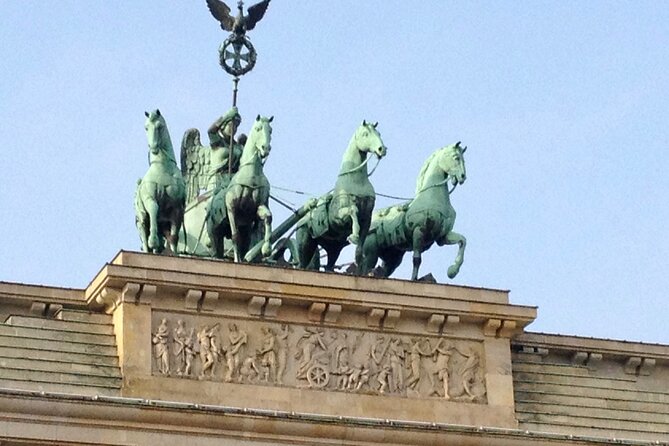
Pariser Platz is Berlin’s polished front room. The Brandenburg Gate closes one end, while embassies, the Academy of Arts, and carefully restored buildings frame the square. The tour allows about five minutes here, which gives you time to look around, take photographs, and compare the open public space with the guarded world of diplomacy nearby.
Gendarmenmarkt is another architectural highlight, framed by the German Cathedral, French Cathedral, and concert hall. From the vehicle, you get the composition. If this square is high on your list, ask whether the timing allows a brief walk, since the details are easier to appreciate on foot.
This part of the route can feel grand and formal. That is its strength, but also its weakness. You are seeing Berlin at its most carefully staged, not its most everyday. The later stops provide a useful contrast.
More Three-Hour Tours in Germany:
- Munich 3-Hour Segway Tour: Nazi Munich & Royal Architecture
★ 4.9 · 194 reviews - Barcelona: 3-Hour Discover Gaudí GoCar Tour
★ 4.5 · 123 reviews - 3 Hour Midtown Manhattan Architectural Tour
★ 5.0 · 81 reviews - Barcelona 3-hour Bike or E-Bike Tour: Gaudí By Bike
★ 5.0 · 24 reviews
The Humboldt Forum and Museum Island
The Berlin Palace site tells one of the city’s most complicated architectural stories. A royal palace once occupied the location, then the East German Palace of the Republic, then a large open space, and now the rebuilt exterior houses the Humboldt Forum.
The planned stop here is listed at about 30 minutes, making it the main opportunity for a longer pause. The general tour details say entrance fees are not included, while this stop is separately described with admission included, so confirm exactly what access is covered when booking. That small clarification matters if you plan to go inside rather than simply view the building.
Berlin Cathedral and Museum Island follow. The cathedral is connected with the Hohenzollern burial crypt and offers a dome ascent, though a full church visit is optional and would require more time. Museum Island contains five major museums on a peninsula in the Spree and has UNESCO status. You will not tour all five museums during this experience, but Gunter can explain how this concentrated museum district developed.
I like this section because it links royal power, socialist planning, reunified Berlin, and modern cultural institutions in a short stretch. You see how the city keeps rebuilding its center, sometimes by restoring the past and sometimes by arguing with it.
Hackescher Markt, the Jewish quarter, and Alexanderplatz
The route can extend toward the former Spandau suburb and the area around the New Synagogue. Depending on your interests, Gunter may include Hamburger Straße, Sophienkirche, a Jewish cemetery, or the former Catholic hospital. This is a more residential and religious side of central Berlin, away from the official buildings.
Hackescher Markt gives you another change of mood. The historic S-Bahn station and Hackesche Höfe represent a less ceremonial Berlin, with courtyards and urban details that reward a short walk. If you have spent the morning seeing domes, embassies, and government buildings, this area can help balance the picture.
Alexanderplatz is viewed as a broad collection of East Berlin landmarks. The television tower, World Clock, House of the Teacher, House of Statistics, and House of Electrical Engineering reflect the planning ideals of the former German Democratic Republic. You can drive past or stop, depending on your priorities.
The nearby Red City Hall is the seat of Berlin’s governing mayor. Its red brick exterior can look more traditional than the surrounding buildings, but its political role places it firmly in the modern capital. Nikolaiviertel, with the Nikolai Church and recreated old-town buildings, is worth requesting if you want to see a deliberately reconstructed version of historic Berlin.
The Wall, Potsdamer Platz, and the Holocaust Memorial
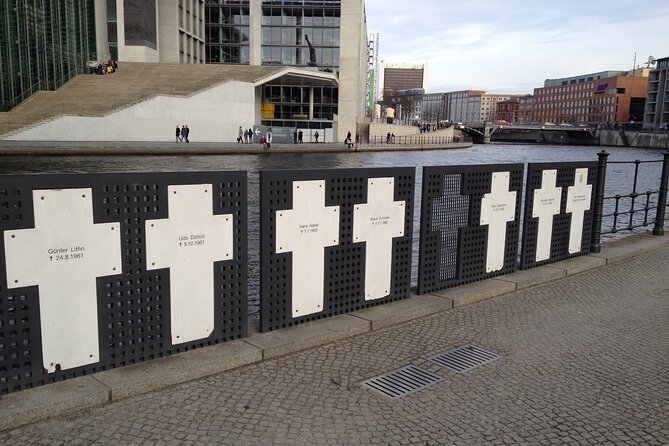
The section around Niederkirchnerstraße includes one of the few original pieces of the Berlin Wall remaining in the city center. The area also makes clear how the Wall worked as a border system, rather than just a single concrete barrier. A fence now limits access because pieces were chipped away over time.
Potsdamer Platz once carried enormous traffic and became one of Europe’s busiest urban intersections. Much of it was destroyed in the war, and the remaining structures were later removed. The modern square is therefore a lesson in postwar absence and redevelopment, not simply a preserved historic district.
The Holocaust Memorial occupies the central route between the Brandenburg Gate and Potsdamer Platz. Its 2,711 concrete steles are designed for walking, and I recommend allowing time to enter the field rather than only viewing it from the car. The tour can point you to the site, but the experience of moving through the uneven rows is yours to make separately.
The nearby Berlin Story Bunker stop concerns the former site of Hitler’s bunker. There is no original bunker interior to visit there. A real bunker near the Landwehr Canal has an exhibition about Berlin’s bunkers, but it is not included in this tour. That distinction saves you from arriving with the wrong expectation.
How the timing and price affect the value
At $119.18 per person, this is not the cheapest way to see Berlin. The price includes private transportation, air conditioning, WiFi, parking fees, pickup within the S-Bahn ring, and both the taxi ride and guiding service. It also removes the need to organize a route through a city where major sights are widely separated.
The value improves when two or more people share the vehicle. A couple pays for privacy and direct attention, while a family or group of friends may find the cost easier to justify, especially if a group discount applies. You are also paying for flexibility, not just mileage. A standard bus follows its schedule; here, you can request a stop, shorten one, or skip something that does not suit you.
The price is harder to justify if you are happy using public transport and prefer long visits inside museums. Entrance fees are generally not included, snacks are not included, and most sights are viewed from outside. Plan separate museum visits if you want a fuller look at the Cathedral, Humboldt Forum, Museum Island, or the Holocaust Memorial.
Pickup begins at 12:30 pm and is offered from your hotel or apartment within the S-Bahn ring. Pickup from BER Airport or outside the ring costs extra according to the Berlin taxi tariff. Child seating is available for toddlers from six months to three years, with booster seats for older children. A Maxi-Cosi baby seat can be brought along on request.
Who will get the most from this tour?
I would choose this experience for a first or second day in Berlin, especially if you want to understand the city before deciding where to return. It also suits anyone who finds long walks difficult, families with young children, and people who want a private setting for questions.
It is a strong fit for architecture fans because the route moves from Prussian buildings to socialist modernism and post-reunification construction. It also works for history-focused visitors who want the Wall, the war’s aftermath, royal Berlin, and the current capital explained in one connected ride.
I would not book it as your only cultural experience in Berlin. You will get a broad and useful view, but the tour cannot replace time inside the museums or a quiet walk through the Holocaust Memorial. Treat it as a framework for the rest of your visit.
The strongest part of Gunter’s guiding style is its human scale. He combines historical details with rumors, humor, and quick answers, so the tour does not feel like a dry recital of dates. That matters on a route with many drive-bys and helps each district feel distinct.
Should you book the City East taxi tour?
Book it if you want one private ride that connects Berlin’s far-flung central sights, with a local guide who can adjust the route to your interests. It is particularly good for small groups, families, and first-time visitors who want pickup at their accommodation and a clear sense of how City East fits together.
Skip it if you want a slow walking tour, extensive museum time, or the lowest possible sightseeing cost. For everyone else, the combination of personal transport, flexible stops, and Gunter Bauer’s conversational storytelling makes the price reasonable, provided you plan to choose only a few places for a proper walk.
FAQ
How long does the private taxi tour last?
The tour lasts approximately 2 hours and 30 minutes.
What time does the tour begin?
The stated start time is 12:30 pm.
Where can pickup take place?
Pickup is offered from your desired hotel, apartment, or other accommodation within Berlin’s S-Bahn ring.
Is pickup from BER Airport included?
No. Pickup from BER Airport or from a location outside the S-Bahn ring requires an additional charge based on the Berlin taxi tariff.
Is this a private tour?
Yes. Only your group participates in the activity.
Are entrance fees included?
The general tour information says entrance fees are not included. The Berlin Palace, or Humboldt Forum, stop is separately described as having admission included, so confirm the exact access provided before booking.
Are child seats available?
Yes. A toddler seat is available for children from six months to three years, and a booster seat is available for older children. A Maxi-Cosi baby seat can be brought along on request.
Can I cancel for a full refund?
Yes. You can cancel at least 24 hours before the local start time for a full refund. Changes or cancellations made less than 24 hours before the start time are not accepted for a refund.
Newly added in Germany
- Hidden Architectural Gems of Munich (Max. 16 guests)★ 5.0 · 2 reviews
- Munich Your Way: Private Tour with Architect & Guide★ 5.0 · 2 reviews
- Architectural Frankfurt: Private Tour with a Local Expert★ 5.0 · 2 reviews
- Berlin Architecture/River Spree Full Day Photography Tour★ 5.0 · 2 reviews
- Architectural Berlin: Private Tour with a Local Expert★ 4.0 · 3 reviews
- Lübeck: Architecture and Local Craft Private Guided Tour★ 4.0 · 6 reviews
- Lübeck: Private Historical and Architectural Walking Tour★ 4.5 · 6 reviews
- Dessau: Radtour Bauhaus – Junkers – Gartenreich★ 5.0 · 2 reviews
Historical Tours, compared.
Chicago in a Day: Food, History & Architecture Walking Tour
Read our review →
Charleston’s Best Highlights: History, Culture & Architecture
Read our review →
Palm Springs Modernism Architecture & History Bike Tour
Read our review →
Historic Georgetown: History, Gossip, & Architecture Walking Tour
Read our review →
Charleston History, Homes, and Architecture Guided Walking Tour
Read our review →

Historical and Architectural Chicago Fireboat River & Lake Cruise
Read our review →Browse the lists this tour appears in