
Review · BAUHAUS AND BRUTALIST ARCHITECTURE TOURS
Dessau: Radtour Bauhaus – Junkers – Gartenreich
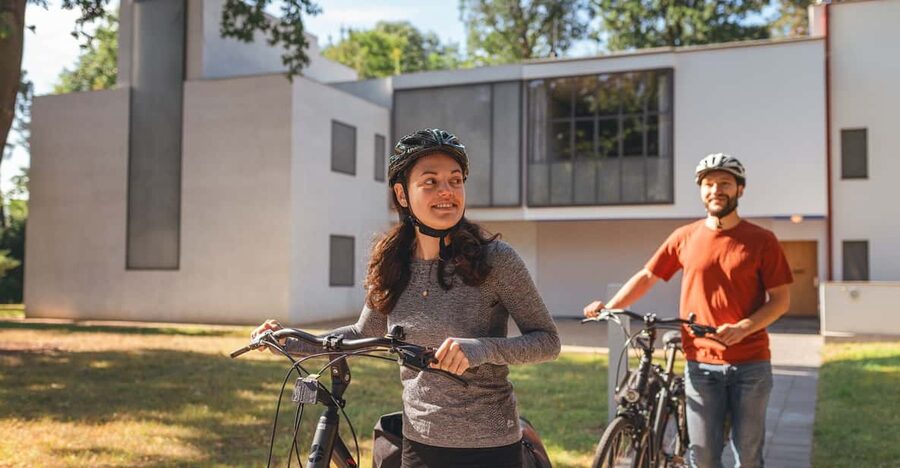
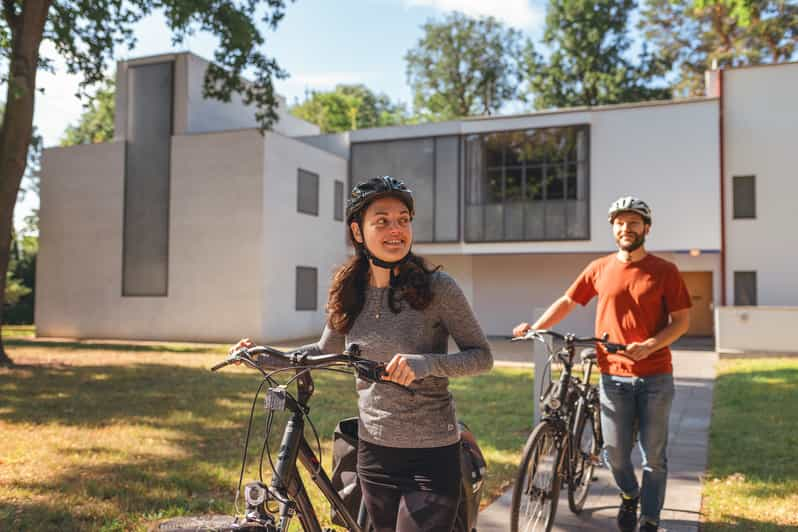
Dessau’s story makes far more sense from a bicycle seat. This 2.5-hour ride connects Prince Franz’s Garden Kingdom with the industrial work of Hugo Junkers and the modern design ideas of Walter Gropius, showing how nature, technology, and art shaped one city.
I like the wide reach of the route and the guide’s use of anecdotes rather than a dry list of dates. I also like that the ride links three very different parts of Dessau’s identity. The main drawback is that the tour is offered in German, and you must pay an extra €10 per day if you need to rent a bicycle.
Key points at a glance
- Three forces shaped one city: See how the Garden Kingdom, Junkers industry, and Bauhaus belong to the same story.
- A bicycle expands the route: You can cover more ground than on a walking tour and reach corners of Dessau that sit farther apart.
- Personal stories add texture: The guide brings the route to life with anecdotes and local history.
- A clear start and finish: Meet at the Tourist Information and finish at the Historic Employment Office.
- German-language guiding: The live tour is conducted in German.
- Good value for active sightseers: The tour costs $23 per person, with bicycle hire available for €10 per bike per day.
How Dessau’s gardens led toward industry
At first glance, a garden tour, an aircraft-engine pioneer, and a modernist design school may seem like separate subjects. In Dessau, they are closely connected.
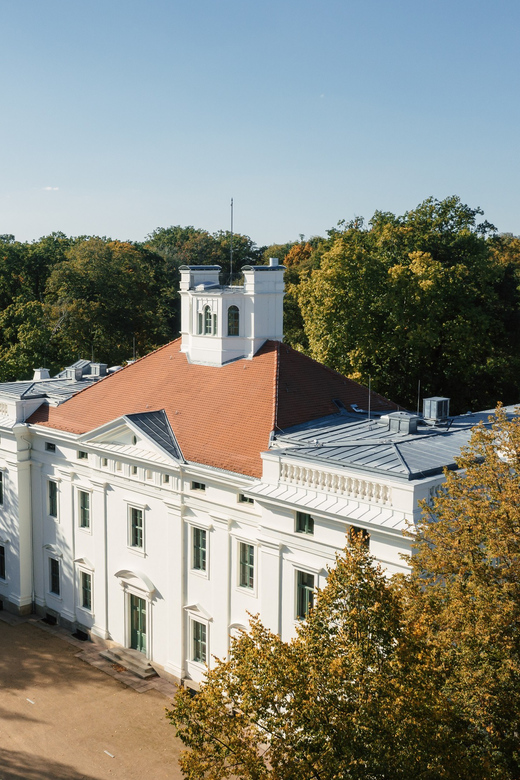
Prince Franz of Anhalt-Dessau used the plants and parks of the Dessau-Wörlitz Garden Kingdom as part of a broad reform program. The idea was not simply to create pretty grounds for court life. The program encouraged new ways of thinking about society, education, agriculture, and economic development.
That reform spirit helped prepare Dessau for industrial growth. As the city changed, it attracted Hugo Junkers, an engineer and industrialist, and Walter Gropius, the founder of the Bauhaus. Both worked in a period when people were asking how technology could improve daily life.
The bicycle route gives you a useful way to follow that shift. You move from the cultivated world of the Garden Kingdom to the industrial age and then toward Bauhaus modernism. The connecting theme is progress, not a collection of unrelated sights.
I find that context especially helpful in Dessau. Bauhaus buildings can look stark if you see them as isolated white boxes. Junkers history can feel technical if you only hear about machines and factories. This tour places both within a larger local story, making the city easier to understand.
More Bauhaus and Brutalist Tours in Germany:
- Brutalist Tbilisi: Urban exploration and untold stories
★ 5.0 · 82 reviews - London: Brutalist Architecture & History Walking Tour
★ 4.8 · 42 reviews - Le Corbusier’s Chandigarh : A Complete Architecture Tour
★ 4.7 · 25 reviews
Starting at the Tourist Information
Your guide meets you in front of the Tourist Information. This gives you a simple starting point, especially if you are new to Dessau and want to get your bearings before setting off.
If you have your own bicycle, you can begin directly with the group. If not, bicycle rental is available for €10 per bike per day. That extra cost is worth including in your budget when comparing the tour with a walking excursion.
The activity price is $23 per person. For a guided experience lasting two and a half hours, that is a fair price, particularly because the route covers more ground than you could comfortably manage on foot. The bike is not included, so check the rental arrangement before you arrive rather than assuming it forms part of the booking.
The tour description does not give a fixed list of every stop or a precise group size. That matters because the exact rhythm may depend on the guide, the group, and local conditions. One useful feature is the reported flexibility of the route. The guide can shape the ride around the people present instead of forcing every group through an identical script.
Riding through the Garden Kingdom
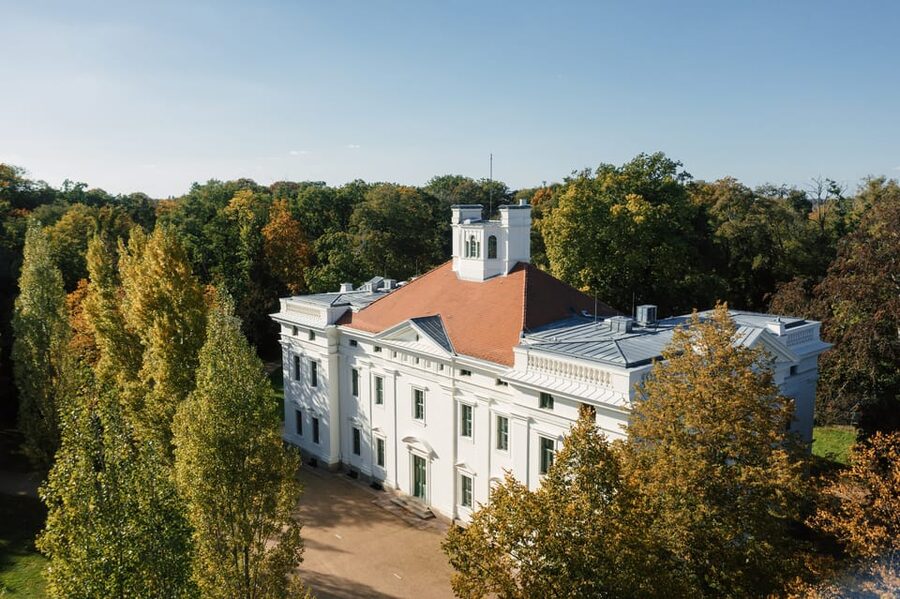
The first major idea you encounter is the Garden Kingdom created under Prince Franz of Anhalt-Dessau. This part of the tour offers a change of pace from the city’s industrial and modernist subjects.
You will see how nature became part of a social and political reform program. The garden setting is not treated as decoration alone. It helps explain the values that later supported Dessau’s economic development: planning, experimentation, access to new ideas, and a belief that improvement could be designed.
The bicycle is particularly useful here. You can move through open areas at a steady pace, stopping when the guide has a story to tell. A walking group would cover less ground in the same time, while a bus would lose the close connection to the surroundings.
One recent participant described the route as reaching from the appealing natural areas of the Garden Kingdom to the plain architecture of the Bauhaus. That range is one of the tour’s strengths. You are not asked to choose between gardens and modern design. You see both as chapters in Dessau’s development.
Do not expect a full garden-history tour or a long visit inside every site. The ride is built around connections, stories, and movement. If your main goal is detailed botanical information, you may want to allow separate time for that. If you want to understand how the garden setting fits into the city’s wider story, this portion should be rewarding.
Following Hugo Junkers into the industrial age
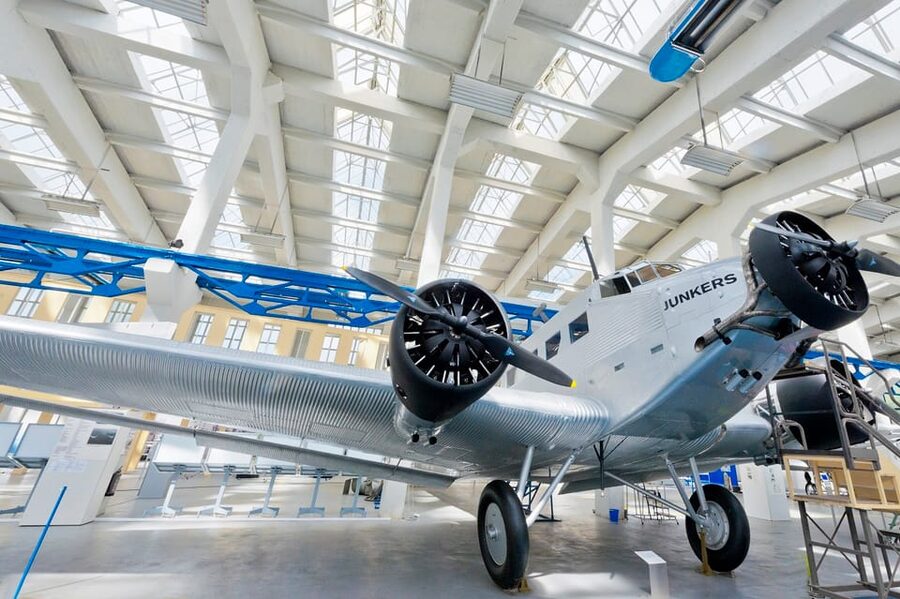
The route then turns toward the industrial side of Dessau. Hugo Junkers is central to this part of the story.
Junkers is presented not only as an inventor or businessman, but as one of the people drawn to Dessau by its culture of progress. His work represents the city’s move into advanced industry and technology. The point is not simply to admire old machinery. It is to see how new technical ideas changed Dessau’s place in Germany.
This section gives the tour a practical edge. You are looking at the places connected with people who believed that engineering could improve everyday life. The guide’s anecdotes are important here because industrial history can become a string of names and dates without human detail.
The route does not promise entry to every building or a museum visit. Instead, the guide shows you the locations tied to Dessau’s changing identity. That makes the experience best for people who enjoy seeing history in its setting, even when the visit is brief.
I would pay close attention to the links between Junkers and the Bauhaus. The tour’s central argument is that art and technology were not enemies. In Dessau, they developed side by side, with each shaping the way people thought about modern life.
Same city, a different facade:
- Munich 3-Hour Segway Tour: Nazi Munich & Royal Architecture
★ 4.9 · 194 reviews - Düsseldorf: Guided City Architecture Walking Tour
★ 4.6 · 61 reviews - Hidden Architectural Gems of Munich (Max. 16 guests)
★ 4.9 · 52 reviews - Potsdam: Guided Walking Tour of UNESCO Site and Architecture
★ 4.7 · 49 reviews
Seeing Bauhaus through the idea of progress
Walter Gropius brings the route to its Bauhaus chapter. Dessau is one of the key places for understanding the school, but this ride approaches it from a broader angle than a standard architecture outing.
You will learn how Gropius and the Bauhaus fit into the same local culture of experimentation represented by Prince Franz and Junkers. Their methods differed, but all three were connected by a belief in progress. The Bauhaus aim of bringing art and technology together becomes easier to grasp when you have already seen the garden and industrial sides of the city.
The attraction here is the contrast. Bauhaus architecture is often associated with clean lines and plain surfaces. Set beside the Garden Kingdom’s designed nature and Junkers’s industrial work, that simplicity begins to look like part of a larger effort to create a better modern environment.
The route highlights the architecture rather than promising an extensive indoor tour. That is worth knowing before you book. If you want a long guided visit inside Bauhaus buildings, this is not the right format. If you want to see how Bauhaus fits into Dessau’s full civic story, the cycling route provides a stronger frame.
A bicycle also lets you experience the city between the major themes. Those connecting stretches are not wasted time. They give you a sense of how the historic areas relate to one another and why Dessau works well as a city for exploring by bike.
Stories, route flexibility, and the human touch
The strongest feature of the experience is the guide’s storytelling. The tour includes numerous anecdotes, and the route can be shaped to suit the group. That means you get more than a prepared lecture delivered at fixed points.
One participant specifically praised the explanations, the personal route design, and the friendly, capable guest service. Those details suggest a tour that responds to its group rather than treating visitors as passengers on a conveyor belt.
That flexibility has a practical benefit. Some groups may want more time with architecture, while others may respond better to the Garden Kingdom or industrial history. The guide can adjust the emphasis, although the exact degree of flexibility will depend on the person leading your ride and the day’s conditions.
The tradeoff is less predictability. Since a fixed stop-by-stop schedule is not provided, you should not book this expecting a tightly timed checklist. You are choosing a guided overview with local interpretation, not a transport service between attractions.
The live guide speaks German. If you do not understand German, the tour may be difficult to follow because the main value lies in the spoken explanations and anecdotes. The listing does not identify the guide by name or provide additional language options, so German ability is an important booking point.
Why two and a half hours is the right length
Two and a half hours gives the ride enough time to connect the three themes without turning into a full-day commitment.
A shorter tour might mention the Garden Kingdom, Junkers, and Bauhaus but leave the links feeling thin. A much longer ride could become tiring, especially if you are also spending time visiting museums and historic buildings elsewhere in Dessau.
The pace should suit you if you enjoy active sightseeing and can cycle comfortably for several hours. The tour is not described as a sports ride, but the distance is greater than a short city-center loop because the purpose is to connect different parts of Dessau.
Wear practical clothing and plan for a normal bicycle outing. The provided information does not specify the bicycle type, terrain, rest stops, or weather policy, so you should confirm those details if they affect your comfort.
The finish at the Historic Employment Office is useful. You are not returned to the starting point, so think about where you want to go afterward. The end point can work well if you plan to continue exploring that part of Dessau, but it may require a little extra planning if you need to return to the Tourist Information or collect belongings there.
The value at $23, plus the bicycle rental
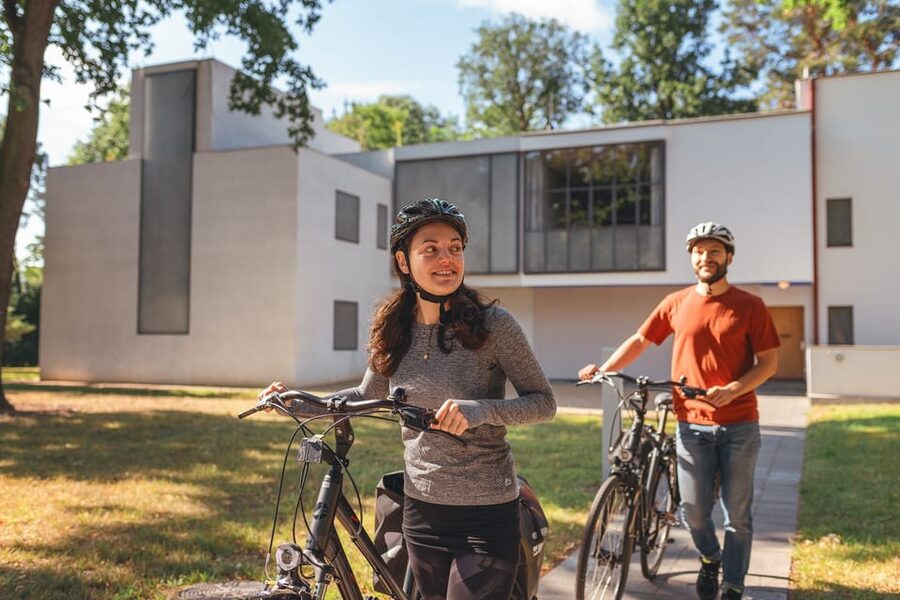
At $23 per person, this is a reasonably priced guided introduction to Dessau. You are paying for a trained guide, a themed route, local stories, and the ability to cover more ground than you could on foot.
The strongest value comes from the connections. A standard sightseeing ride might show you buildings. This one explains why gardens, industry, and Bauhaus design belong together. That added interpretation is what makes the price worthwhile.
The separate bicycle rental fee is €10 per bike per day. If you already have access to a bicycle, the tour becomes especially good value. If you are traveling without one, add that cost before comparing the total with other guided activities.
The flexible booking terms also reduce the risk of committing too early. You can reserve now and pay later, and cancellation is free up to 24 hours before the activity for a full refund. Those terms are useful when your German itinerary still depends on weather or changing train plans.
Who should book this Dessau ride
I would recommend this tour to you if you want a broad introduction to Dessau rather than a single-subject visit. It suits people who enjoy history, design, engineering, and outdoor sightseeing in equal measure.
It is also a good choice if you have limited time in the city. In one outing, you can learn about the Garden Kingdom, the industrial work associated with Junkers, and the Bauhaus world connected with Gropius.
You will probably enjoy it most if you are comfortable listening in German and cycling at a relaxed sightseeing pace. The tour’s value depends heavily on the guide’s explanations, so language ability matters more here than it would on a self-guided ride.
You may want a different activity if you need an English-language guide, a fully fixed itinerary, a long indoor architecture visit, or detailed specialist coverage of just one subject. This ride gives you range rather than exhaustive treatment.
Should you book it?
Book this tour if you want to understand how Dessau’s gardens, industry, and Bauhaus belong to one story. The bike expands your reach, the anecdotes make the history human, and the route gives you a practical introduction to the city’s most important themes.
Skip it if you do not speak German, dislike cycling, or want a tightly scheduled list of named monuments. For German-speaking visitors with a bicycle, the $23 price offers a sensible and active way to see Dessau beyond its most famous Bauhaus label.
FAQ
Where does the bicycle tour begin?
The tour begins in front of the Tourist Information in Dessau.
Where does the tour end?
The guided ride ends at the Historic Employment Office.
How long does the tour last?
The tour lasts 2.5 hours.
Is bicycle rental included?
No. Bicycle rental is available for €10 per bike per day.
What language is the tour conducted in?
The live tour guide speaks German.
Can I cancel the booking?
Yes. You can cancel up to 24 hours in advance for a full refund.
Newly added in Germany
- Hidden Architectural Gems of Munich (Max. 16 guests)★ 5.0 · 2 reviews
- Munich Your Way: Private Tour with Architect & Guide★ 5.0 · 2 reviews
- Architectural Frankfurt: Private Tour with a Local Expert★ 5.0 · 2 reviews
- Berlin Architecture/River Spree Full Day Photography Tour★ 5.0 · 2 reviews
- Private Taxi Tour of City East History and Architecture 2-3h★ 5.0 · 2 reviews
- Architectural Berlin: Private Tour with a Local Expert★ 4.0 · 3 reviews
- Lübeck: Architecture and Local Craft Private Guided Tour★ 4.0 · 6 reviews
- Lübeck: Private Historical and Architectural Walking Tour★ 4.5 · 6 reviews
Bauhaus and Brutalist Architecture Tours, compared.
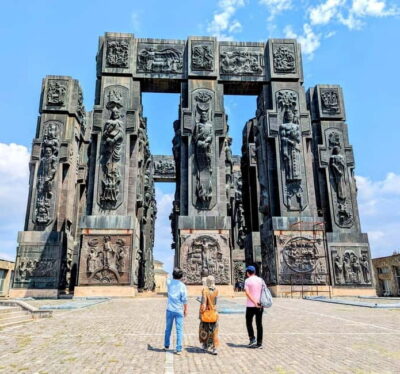
Brutalist Tbilisi: Urban exploration and untold stories
Read our review →
Le Corbusier’s Chandigarh : A Complete Architecture Tour
Read our review →
Architecture of New Belgrade – Brutalism Decoded
Read our review →
Secret Split: Socialist Architecture & brutalism – Urban Utopia
Read our review →
Tashkent Soviet Architecture (Modernism) and Subway station tour.
Read our review →
Space architecture tour – brutalist architecture
Read our review →
USSR History, Soviet Architects ,Statues & Mosaics
Read our review →Browse the lists this tour appears in