
Review · GERMANY ARCHITECTURE TOURS
Berlin: Hansaviertel Modernist Architecture Tour
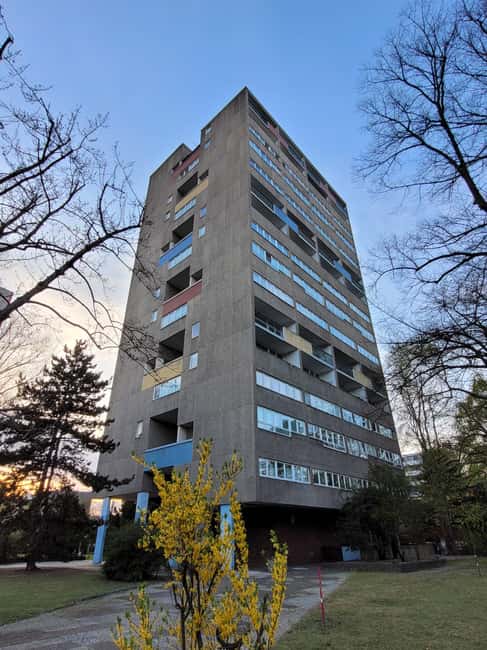
Berlin’s Hansaviertel is a neighborhood built from a political argument. After wartime destruction, West Berlin used it to show what modern city life could look like, hiring major architects such as Walter Gropius, Oscar Niemeyer, and Alvar Aalto to create a new residential district.
I like two things right away: the walk connects architecture to the people and politics behind it, and it takes you beyond Berlin’s usual sights into a quiet area between the Spree and Tiergarten. The main consideration is that this is a content-heavy two-hour walk, best suited to visitors aged 14 and up who enjoy history, buildings, and plenty of standing.
- A Cold War showcase: See how Interbau 1957 turned a damaged part of West Berlin into an international display of modern housing.
- Big names, real buildings: Walk past designs by Gropius, Niemeyer, Aalto, and other leading architects.
- A vanished Jewish community: Pause at a memorial marking a major Jewish center destroyed by Nazi persecution and wartime bombing.
- More than architecture: Learn about residents, political ideals, resistance, and the changing meaning of home.
- Easy city access: Meet beside the Berlin-Tiergarten S-Bahn station and finish at Hansaplatz.
- A good-value specialist walk: At $29, the tour costs less than many major Berlin attractions while giving you two hours of guided context.
Why Hansaviertel Tells Berlin’s Story So Well
Hansaviertel may not be the first neighborhood you think of for Berlin sightseeing. That is part of its appeal. It sits close to the center, between the Spree and the Tiergarten, but the streets feel removed from the crowds around the Brandenburg Gate, Reichstag, and Museum Island.
The district gives you several Berlins in one walk. First comes the late 19th-century city, when Berlin was expanding fast and Hansaviertel attracted middle- and upper-class residents. Then comes the memory of Jewish life, persecution, and wartime destruction. Finally, you reach the postwar buildings that helped West Berlin present itself as open, modern, and forward-looking.
I find this sequence useful because it prevents the architecture from becoming a parade of famous names. You are not simply asked to admire a concrete tower or a sweeping balcony. You are shown what came before, what was lost, and why the new buildings mattered in 1957.
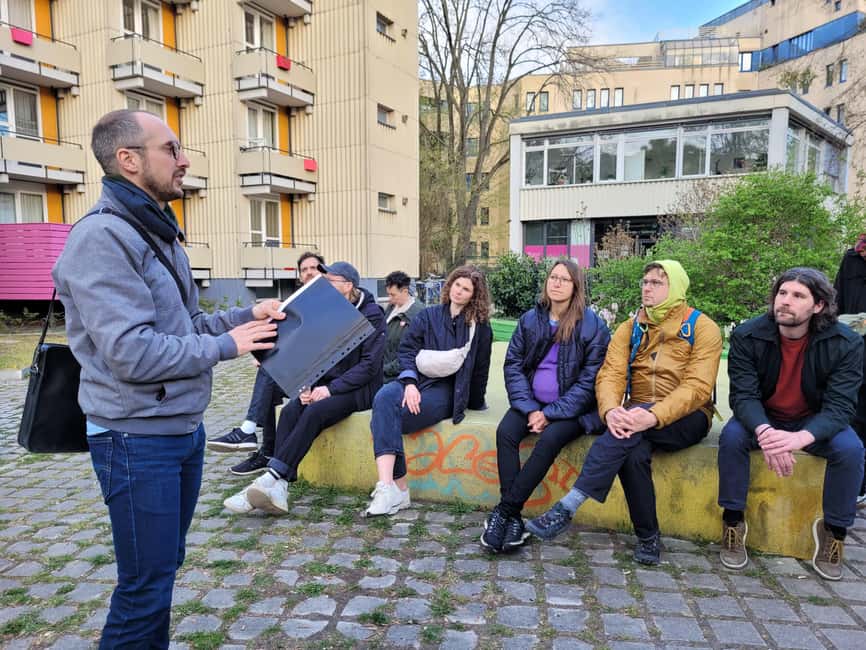
The tour lasts two hours, with about 1.5 hours of guided walking in Hansaviertel. That leaves enough time for explanation without turning the afternoon into a marathon. Still, you should expect to walk and stand for most of the experience.
Starting Beside the Tiergarten S-Bahn Station
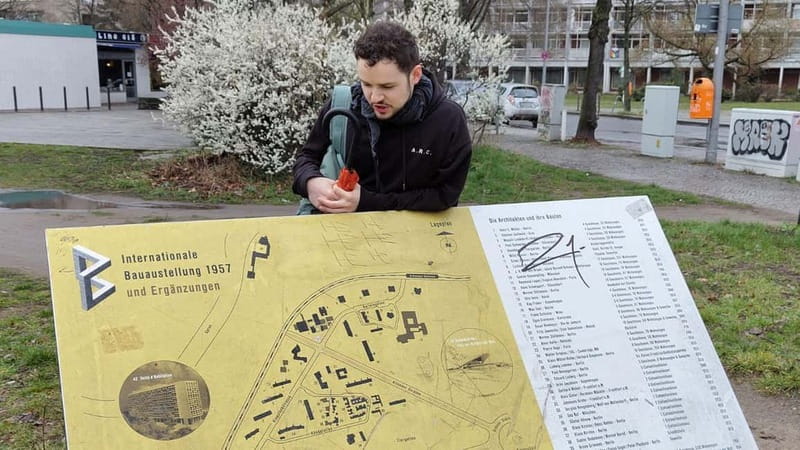
The meeting point is in front of the Berlin-Tiergarten S-Bahn station, at the Siegmunds Hof and Bachstraße exit. Look for the guide with the orange umbrella beside the Biergarten der Tiergartenquelle.
This is a practical meeting point. You do not need to hunt through a residential street or find an obscure monument. The S-Bahn connection makes the tour easy to add to a day in central Berlin, though you should allow enough time to locate the correct station exit.
The beer garden offers a recognizable reference point, but food and drinks are not included. You can bring water, and you should. Comfortable shoes matter more than smart clothing here. The route is accessible to wheelchair users, although the activity still involves about two hours of walking and standing.
The guide leads the walk in English or German. The group may include Berlin residents as well as visitors, which can make the conversation more varied. One guide praised in the feedback was from Texas and spoke excellent German. The guide was also willing to stay afterward for extra questions, a useful touch if the architecture raises more questions than the scheduled time allows.
A few more architecture walks in the world worth a look
- Chicago Architecture River Cruise
★ 5.0 · 15,756 reviews - Chicago River 90-Minute Architecture Tour
★ 4.5 · 9,629 reviews - Chicago River: 1.5-Hour Guided Architecture Cruise
★ 4.8 · 8,046 reviews
The Elegant Hansaviertel Before the War
The first part of the tour looks at Hansaviertel before the destruction of World War II. In the late 19th century, Berlin’s population was growing at a remarkable rate, and the district developed as a fashionable residential enclave.
You learn to picture villas, gardens, and elegant façades rather than the postwar apartment blocks that define the area today. That earlier setting matters because it shows that Hansaviertel was not an empty plot waiting for modern architecture. It had a social identity and a built character before war and ideology reshaped it.
The guide also introduces notable residents connected with the district, including Rosa Luxemburg, Nelly Sachs, and Käthe Kollwitz. Their presence gives the neighborhood a human scale. Hansaviertel was not only a collection of private homes and polished streets. It was connected to Berlin’s political, literary, and artistic life.
I especially like this opening because it gives you something to compare. Once you reach the Interbau buildings, you can ask what the new district kept, what it rejected, and what kind of resident the postwar planners imagined.
Do not expect every prewar building to survive or every former resident’s home to be identified in dramatic fashion. The value is in the broad story and the contrast between old Hansaviertel and the rebuilt district.
Remembering Jewish Life That Was Destroyed
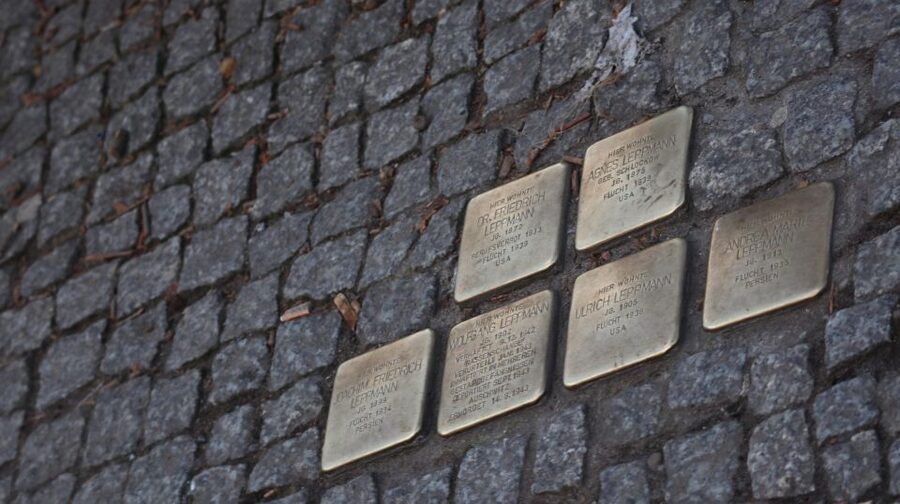
The walk then moves to a quiet memorial at the site of one of Berlin’s significant Jewish communities. This is an important pause because the tour does not treat the area’s wartime damage as a simple architectural reset.
The Jewish community was destroyed socially and physically under the Nazi regime, while Allied bombing raids added further destruction to the neighborhood. The memorial brings attention to people and institutions that disappeared, not only to buildings that were later replaced.
This section changes the mood of the walk. The Interbau buildings are visually striking, but the memorial asks you to consider what a rebuilt city cannot restore. Streets can be replanned, apartment blocks can rise, and a district can receive a new public identity. The lives removed from that place do not return with the new construction.
The guide’s role is especially important here. The supplied details describe a tour that gives historical context without overwhelming you with information. One German-language account praised the clear structure, saying the introduction helped participants take in the later stops without receiving too much at once. That balance matters at a memorial site, where a rushed explanation would feel thin and an overloaded lecture would be hard to absorb during a walking tour.
Interbau 1957 and the Cold War City
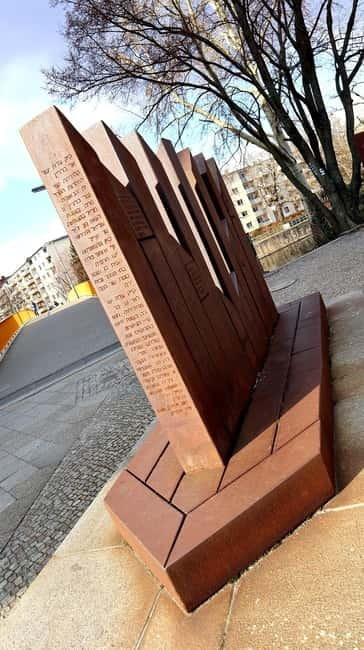
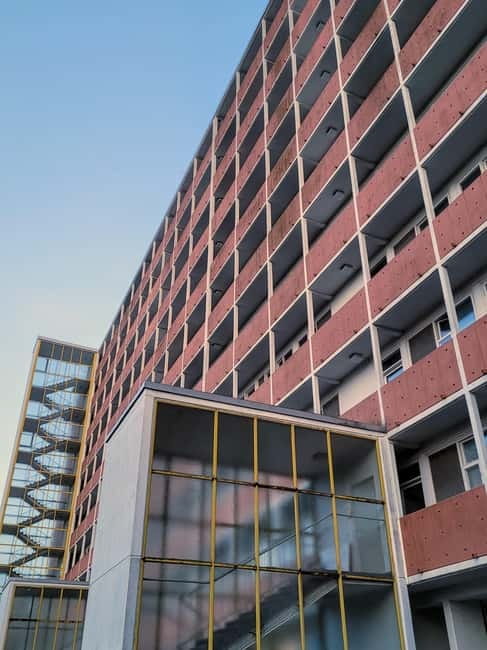
The central chapter begins in 1957, when West Berlin hosted Interbau, an international architecture exhibition. Hansaviertel became a living display of postwar planning, built on land heavily affected by war.
The project had an architectural purpose, but it also had a political one. West Berlin was an isolated frontline city during the Cold War. Interbau presented a confident alternative to older forms of dense urban housing and to the vision being promoted in East Berlin.
You see how architecture became public messaging. The new buildings promised light, air, open space, and a modern way of living. Instead of treating the neighborhood as a static museum, the guide asks what these designs hoped to change in everyday life.
That question makes the walk more useful. A building can look bold in a photograph, but the real issue is how it works for people. How are apartments arranged? What does the surrounding space encourage? Does the design feel welcoming, practical, or remote? Does it still seem modern decades later?
The tour does not ask you to accept the 1957 vision without question. Some buildings feel elegant and carefully placed. Others can seem stark or experimental. That mix is part of the interest. You get to judge the promises for yourself while learning why the architects made such choices.
Same city, a different facade:
- Chicago Architecture Center River Cruise aboard First Lady
★ 5.0 · 5,536 reviews - Chicago: Architecture River Cruise Skip-the-Ticket Line
★ 4.8 · 4,325 reviews - Chicago River 45-Minute Architecture Tour from Magnificent Mile
★ 4.5 · 2,924 reviews - Barcelona: Sant Pau Recinte Modernista Entry Ticket
★ 4.6 · 2,567 reviews
Meeting Gropius, Niemeyer, Aalto, and Other Modernists
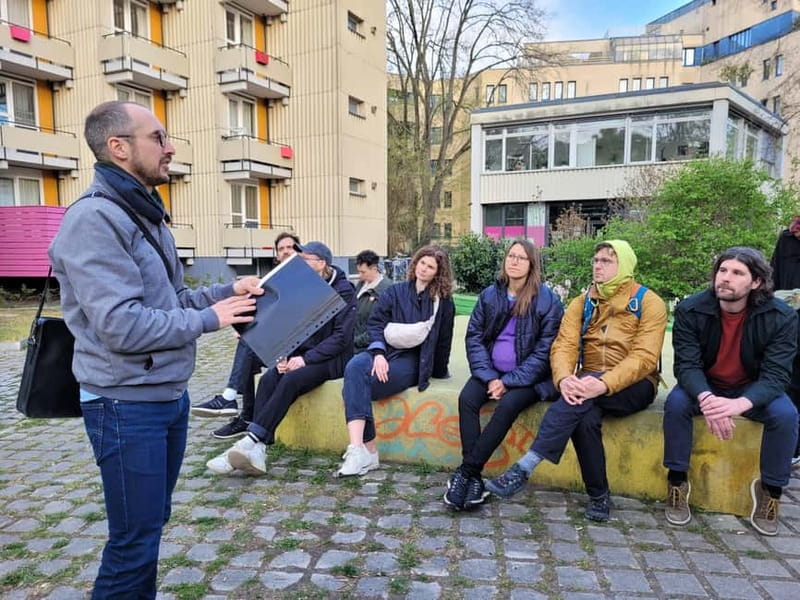
The most visually rewarding section brings you among buildings associated with some of the leading architects of the 20th century. Walter Gropius, Oscar Niemeyer, and Alvar Aalto are the best-known names, but the district includes work by other modernist designers as well.
You are not visiting a single monument with a grand interior. The architecture is spread through the neighborhood, so the walk helps you see relationships between buildings, roads, trees, open areas, and shared spaces.
Gropius brings the authority of the Bauhaus tradition. Niemeyer’s work is linked with the expressive curves and sculptural quality that made his buildings recognizable around the world. Aalto’s approach often feels more attentive to human use and materials than a simple glass-and-steel machine image. The tour uses these differences to show that modernism was not one fixed style.
I like that the focus is not only on famous architects. You also consider what their designs meant for residents. A building designed by a celebrated name still has to provide a home, a view, a route to the street, and a workable setting for daily life.
One practical limitation is that the tour does not include entry to museums or monuments unless specifically stated, and none are specified here. You should think of this as an outdoor architecture and history walk, not an interiors tour. If you want to see apartments from inside, you may need a separate arrangement. One participant specifically wished the group could enter one of the homes, which tells you where the experience’s natural limit lies.
What the Walk Feels Like in Practice
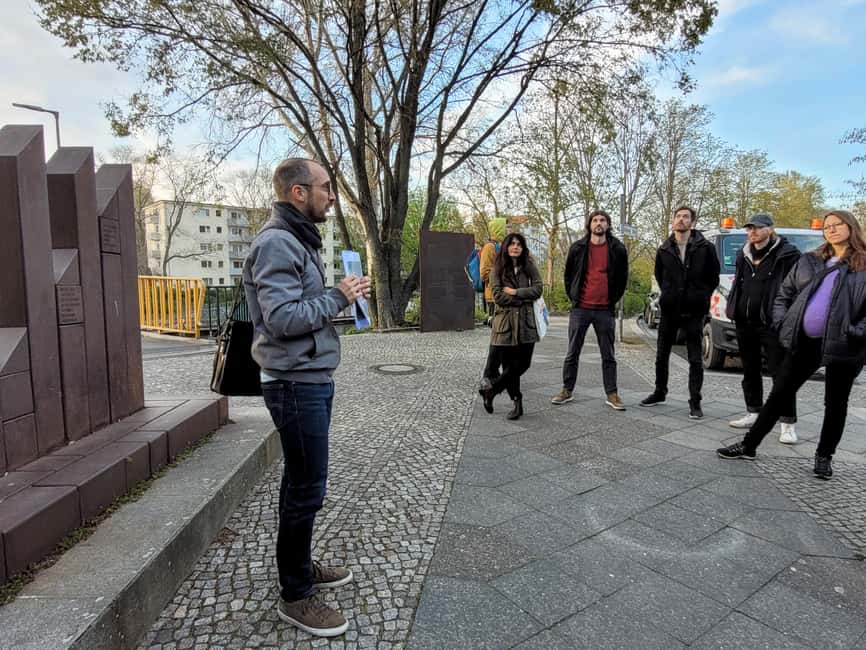
The route covers a compact but meaningful part of Berlin. You start near the Tiergarten S-Bahn station, move through Hansaviertel, and finish at Hansaplatz.
The changing scenery helps the two hours pass. You begin with the district’s older identity, pause for difficult history, and then spend the second half with the Interbau buildings. The latter part receives particular attention, so anyone booking mainly for modern architecture should find the timing useful.
The tone appears structured rather than improvised. The guide gives an overview near the beginning, then builds the subject stop by stop. That approach helps because Hansaviertel includes several layers of information: dates, architects, residents, political motives, and the social effects of war.
You should be ready to listen outdoors. Traffic, weather, and the simple need to keep moving can affect how much detail you catch. Wear shoes you can walk in comfortably and bring water. Children under 14 are not considered a good fit, and all minors must be accompanied by an adult.
The tour is offered in English and German. If you speak German, you may appreciate being able to follow the architectural vocabulary in its local setting. If you book in English, the guide’s ability to explain both design and historical context will matter more than technical jargon.
Is $29 a Fair Price?
At $29 per person, this is a reasonable price for a two-hour specialist tour in central Berlin. You are paying for a live guide, a focused route, and the interpretation that links buildings to Berlin’s political and social past.
The value is strongest if you would otherwise walk through Hansaviertel without understanding what you are seeing. From the street, a modernist apartment block can look like simply another postwar building. With context, you can recognize the district as a deliberate public statement shaped by the Cold War.
It is less useful if you want a long interior visit, a broad survey of all Berlin architecture, or a food stop. Food and drinks are not included, and the tour does not promise museum admission.
The 4.9 rating from 16 reviews suggests a strong response, but the number of ratings is still modest. I would treat that score as encouraging rather than absolute proof. The most consistent strengths are clear preparation, a well-ordered presentation, strong historical content, and a guide willing to answer questions beyond the formal end.
Who Should Book This Hansaviertel Walk?
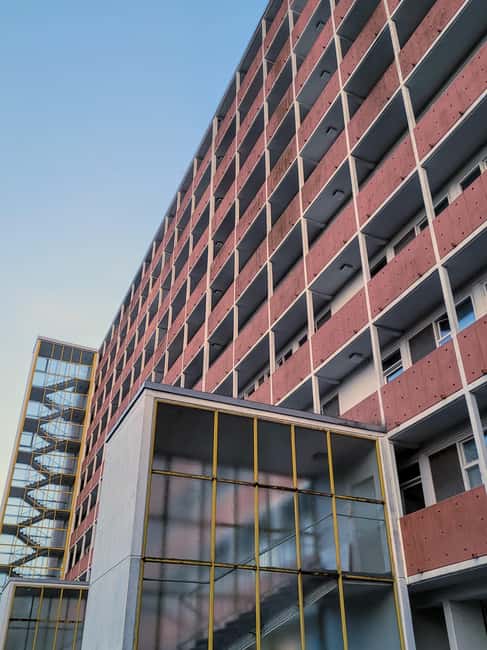
I would choose this tour if you have already seen Berlin’s major sights and want a neighborhood that explains the city through architecture. It also works well early in a Berlin visit if you enjoy using a guided walk to get your bearings, though the subject is more specialized than a general city tour.
You are likely to enjoy it if you:
- Like modern architecture and urban planning.
- Want Cold War history tied to real places.
- Prefer a small district studied carefully over a long list of attractions.
- Are comfortable walking and standing outdoors for two hours.
- Appreciate a serious discussion of Jewish life, Nazi persecution, and wartime destruction.
- Are at least 14 and willing to concentrate.
You may want something else if your main goal is shopping, food, nightlife, or famous monuments. The tour is thoughtful rather than flashy. It rewards attention, especially when the guide explains how an apartment block reflects the ideals of its era.
Should You Book It?

Book this Hansaviertel tour if you want to understand why Berlin looks the way it does, not just photograph its best-known buildings. For $29, you get a focused walk through a district that connects 19th-century wealth, Jewish loss, wartime ruin, Cold War rivalry, and modern housing.
The best reason to go is the structure. The tour shows you what Hansaviertel was, what happened to it, and what West Berlin wanted it to become. The main caution is simple: this is an architecture and history walk, not a relaxed stroll with frequent café stops.
If that sounds like your kind of afternoon, meet by the orange umbrella near the Tiergarten S-Bahn station, bring water, and give the buildings time to speak.
FAQ
How long is the Hansaviertel architecture tour?
The activity lasts two hours. The guided portion through Hansaviertel is listed as approximately 1.5 hours, with the full experience including the meeting and finishing arrangements.
Where does the tour meet?
Meet in front of the Berlin-Tiergarten S-Bahn station at the Siegmunds Hof and Bachstraße exit. The meeting point is beside the Biergarten der Tiergartenquelle. Look for the guide with the orange umbrella.
Where does the tour finish?
The walk finishes at Hansaplatz.
Which languages are available?
The tour is available in English and German.
Is the tour wheelchair accessible?
Yes, the activity is listed as wheelchair accessible.
What should I bring?
Bring comfortable shoes and water. You should be prepared to walk and stand for about two hours.
Is the tour suitable for children?
The tour is recommended for ages 14 and up because of its historical content. Children under 14 are not considered suitable, and all minors must be accompanied by an adult.
Are food, drinks, or museum admissions included?
No. Food and drinks are not included, and entry to museums or monuments is not included unless specifically stated in the itinerary.
Can I cancel the booking?
Yes. You can cancel up to 24 hours in advance for a full refund. You can also reserve now and pay later.
Newly added in the world
- Venice Art and Architecture Private Walking Tour★ 4.5 · 11 reviews
- Basilica San Marco and the Pala d’Oro with Architect Guide★ 4.5 · 19 reviews
- Walking tour in Venice with an architect★ 5.0 · 16 reviews
- Paris: Discover the hidden architecture gems of Le Marais★ 3.8 · 4 reviews
- Porto Tour: Street Art & Architecture Experience 3h★ 5.0 · 4 reviews
- Faro Private Walking Tour: Uncovering its Architectural Legacy★ 5.0 · 8 reviews
- Private Walking Tour of Old Gdańsk with an architect-guide★ 5.0 · 7 reviews
- Sopot Private City Walking or Bike Tour with a local architect★ 5.0 · 19 reviews
Germany Architecture Tours, compared.
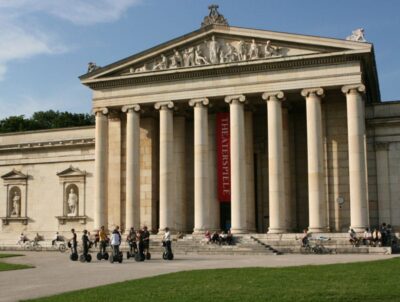
Munich 3-Hour Segway Tour: Nazi Munich & Royal Architecture
Read our review →
Düsseldorf: Guided City Architecture Walking Tour
Read our review →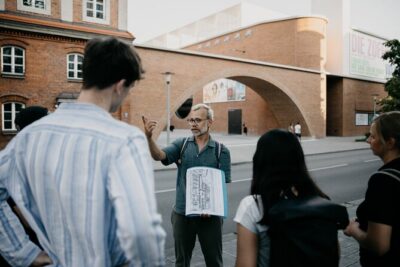
Hidden Architectural Gems of Munich (Max. 16 guests)
Read our review →
Guided Walking Tour of UNESCO Site and Architecture
Read our review →
Private Taxi Tour City East & West History and Architecture 3-4h
Read our review →
Karl-Marx-Allee Tour: Life and Architecture in East Berlin
Read our review →
500 Years of Munich Architecture (Max. 16 Guests)
Read our review →Browse the lists this tour appears in