
Review · NEW YORK CITY ARCHITECTURE TOURS
New York Upper West Side Art and Architecture Tour
New York’s Upper West Side and Lincoln Square are packed with buildings that reward a second look. This two-hour walk connects Columbus Circle, Lincoln Center, and Hearst Tower, showing how grand civic spaces, cultural institutions, and modern skyscrapers fit together. Guide Ivan brings both architectural detail and city-planning context, so the route works for newcomers and longtime New Yorkers alike.
I like the small maximum of 15 people, which makes it easier to ask questions, and the individual headsets, a smart touch on noisy Manhattan streets. I also like the short format and the route’s range, from a historic monument and Central Park to major concert halls and Norman Foster’s glass-and-steel Hearst Tower.
The main consideration is that this is an exterior walking tour, not an inside visit to every building. Travel time is included in the two-hour length, and the itinerary moves through several stops quickly. If you want long museum visits or detailed interior access, this may feel brisk.
Key points at a glance
- A focused Midtown route: Start at Columbus Circle and finish at Hearst Tower, close to public transportation.
- Architecture for all levels: Ivan explains design, history, and urban planning in a way that suits both specialists and curious newcomers.
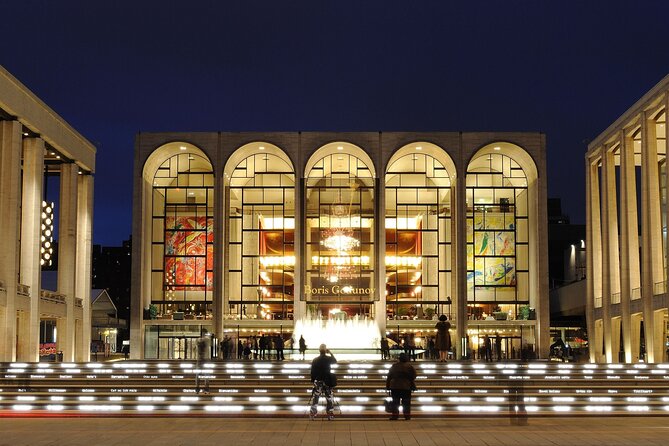
- Lincoln Center gets proper attention: The route covers David Geffen Hall, the Metropolitan Opera, the New York City Ballet, Juilliard, Alice Tully Hall, and the Vivian Beaumont Theater.
- Personal headsets included: You can follow the guide without crowding around him or losing the thread to traffic noise.
- Small-group format: The tour accepts no more than 15 people, allowing more room for questions.
- Good use of two hours: At $49, the tour offers a compact introduction to several major buildings without taking over your entire day.
Why this walk is more than a stroll past famous buildings
The useful idea behind this tour is connection. New York architecture makes more sense when you see buildings beside one another, rather than studying each one as an isolated object.
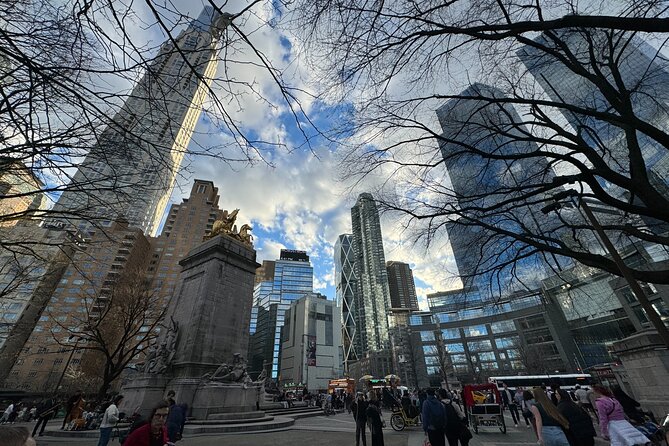
At Columbus Circle, the route begins with the statue of Christopher Columbus and the large buildings around the traffic circle. From there, you move toward the Time Warner Center, Central Park, and the cultural complex at Lincoln Center before ending at Hearst Tower.
That sequence lets you compare different ideas about public space and city building. You see a formal monument, a major park edge, a planned performing-arts center, and a modern office tower. Ivan also brings in urban planning, which is useful because the tour is not limited to dates, architects, and decorative details.
The individual headsets matter here. Midtown traffic can make a normal walking talk hard to follow, especially when the group is spread along a pavement. You can keep looking at the buildings instead of pressing close to the guide.
A few more architecture walks in New York City worth a look
- Manhattan Architecture Yacht Cruise
★ 5.0 · 1,395 reviews - NYC: Around Manhattan Official NYC Architecture Cruise
★ 4.8 · 402 reviews - Art Deco and Architecture Midtown Landmarks Tour
★ 5.0 · 142 reviews
Columbus Circle and the Time Warner Center
Columbus Circle is a practical starting point. It is easy to reach by public transportation, and the roundabout gives the group an immediate lesson in how Manhattan organizes movement, monuments, parks, and large buildings in one tight space.
The statue of Christopher Columbus provides the first reference point. The surrounding architecture then broadens the discussion, including the Times Warner building and Central Park Tower. The listed time here is about 15 minutes, enough for an introduction rather than a long architectural lecture.
The next stop is the Time Warner Center, with about 10 minutes devoted to looking at and discussing the complex. This is a useful early stop because it shows the scale of modern commercial development at the park’s edge.
Do not expect a shopping visit or indoor tour. The value is in hearing how the building relates to Columbus Circle and the nearby park. The route keeps moving, so wear comfortable shoes and be ready to listen while standing.
The Museum of Arts and Design is also passed and discussed. It adds an arts and materials angle to the route, though the supplied schedule does not give it a separate time block. Think of it as part of the street-level sequence rather than a museum admission stop.
Central Park as an architectural boundary
Central Park receives roughly 10 minutes on the route. That may sound brief, but the point is not to explore the park itself. Instead, you look at how the park shapes the buildings around it and how open space changes the experience of dense Manhattan.
I like this part because architecture is easier to understand when you include what surrounds a building. A tower beside a broad park feels different from the same tower in a tight canyon of offices. The park also gives the group a short visual break before the more concentrated run of Lincoln Center buildings.
This is not a Central Park walking tour. You will walk by and discuss it, with travel time included in the overall two-hour duration. If your main goal is gardens, paths, or park landmarks, you will need separate time before or after the tour.
Lincoln Center, building by building
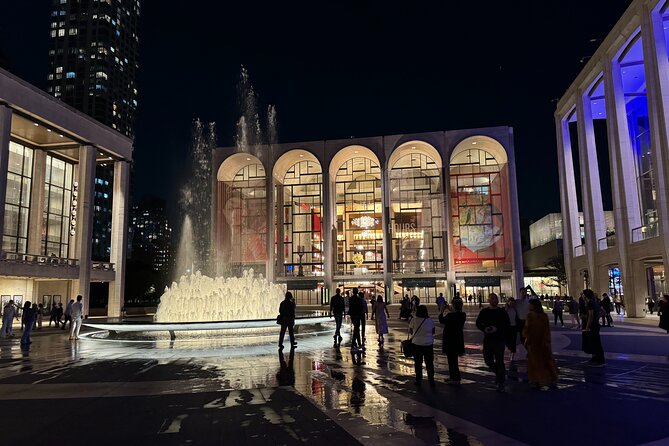
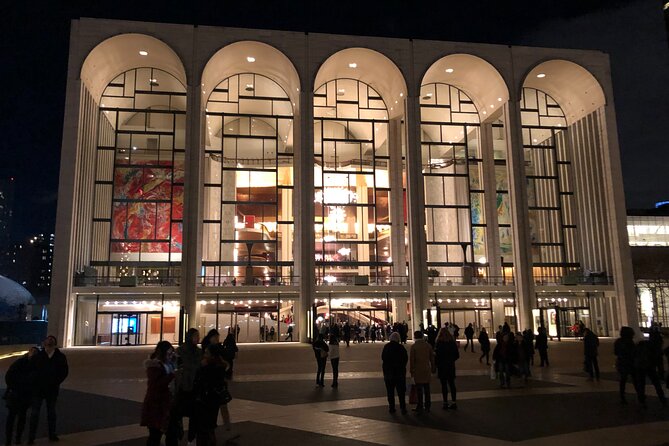
Lincoln Center is the core of the experience. Rather than treating it as one large complex, the route identifies several of its major institutions and buildings.
You pass David Geffen Hall, home to a major concert venue, with about five minutes for discussion. The New York City Ballet receives a similar short stop, followed by the Metropolitan Opera House.
The Metropolitan Opera is one of the route’s most recognizable buildings. Even with only five minutes, a guide can help you notice the building as part of a larger performing-arts plan instead of simply labeling it as an opera house and moving on.
The schedule also includes the Vivian Beaumont Theater, another five-minute stop. This matters because the route covers more than the most famous facade. You get a sense of how different types of performance spaces occupy the same cultural center.
Do keep your expectations in check. These are exterior visits and discussions, not performances or backstage access. The short timing means you will gather a working understanding of each building, then continue. That pace suits someone who wants an architectural overview, but it may frustrate you if you prefer to sit and sketch or examine one facade at length.
Same city, a different facade:
- Tribeca Architecture And History Walking Tour
★ 5.0 · 141 reviews - New York City The Official Rockefeller Center Tour
★ 4.5 · 119 reviews - 3 Hour Midtown Manhattan Architectural Tour
★ 5.0 · 81 reviews - New York City: Art Deco and Architecture Landmarks Tour
★ 5.0 · 76 reviews
Juilliard and Alice Tully Hall
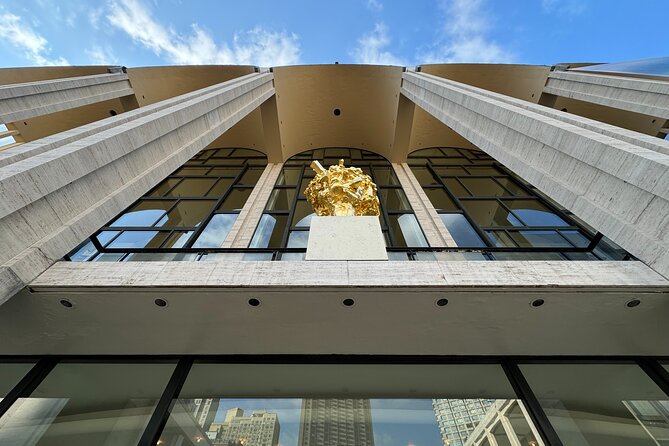
The Juilliard School receives about 15 minutes, making it one of the longer stops. The discussion includes the original building by Pietro Belluschi and the later extension by Diller Scofidio + Renfro.
That pairing gives the tour a useful contrast between different periods of design. You can look at how an institution changes as its needs change, and how a later addition responds to an established building and public complex.
Alice Tully Hall follows with about five minutes. Together, Juilliard and Alice Tully Hall show the range of Lincoln Center, from music and dance education to performance and public presentation.
Fordham University is passed along the route. It is not listed as a full stop, so expect a brief look rather than a detailed visit. The route’s emphasis remains the architecture and planning of the Lincoln Center area.
The advertised highlights also mention Columbia University. The detailed stop-by-stop schedule does not assign Columbia a separate stop, so I would confirm the exact day’s route if seeing its campus is a deciding factor. The named itinerary concentrates on Columbus Circle, Central Park, Lincoln Center, and Midtown.
Hearst Tower and the final comparison
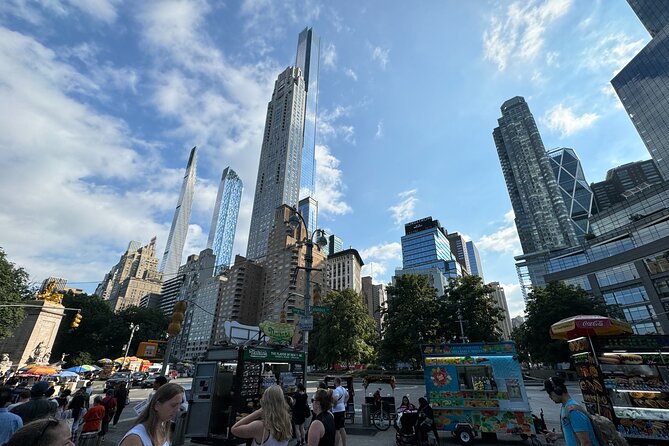
The walk ends at Hearst Tower, at 300 West 57th Street. You spend about 10 minutes discussing the building by Norman Foster, which provides a strong modern finish to the route.
Hearst Tower is especially useful as a final stop because it lets you compare a contemporary office tower with the older and mid-century buildings seen earlier. Its design makes a clear statement about adding new structure to an existing historic base, and the guide can place it within the broader story of Midtown architecture.
The ending is practical. The tower is close to subway and other transportation, so you can continue to another neighborhood, return to your hotel, or make a separate plan without crossing the city again.
Because the tour ends here, you should not expect a return to Columbus Circle. Plan your afternoon from Hearst Tower rather than from the starting point.
What Ivan adds to the experience
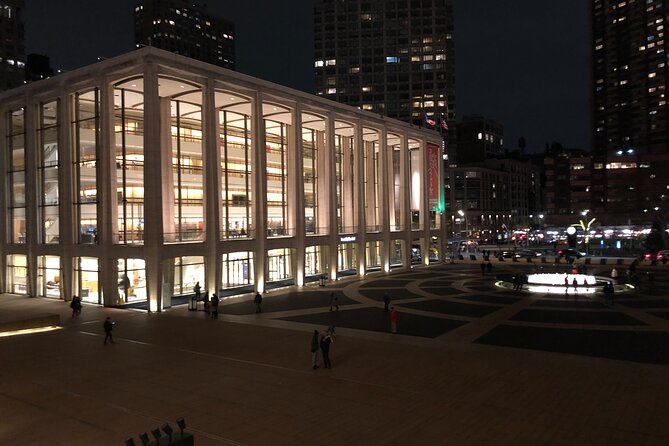
The guide is Ivan, and his strongest role is connecting architecture with the way New York developed. He can discuss the buildings themselves, but also how they fit into the city and how the surrounding spaces work.
That wider approach helps if you are not trained in architecture. You do not need to know the difference between architectural movements or arrive with a list of famous designers. You can simply look, ask questions, and follow the explanation.
It also suits specialists. An architect on the tour had many questions answered, while the same route remained accessible to people without professional experience. That is a good sign for mixed groups, especially when the group limit is 15 people.
Ivan’s tone also appears to favor interaction. Your questions can shape the conversation, though the amount of personal attention will depend on the size of the group and how much time each stop allows. The individual headsets make it easier to hear, but they do not turn this into a private tour.
English, Spanish, French, and Italian guiding is available. Check the selected option at booking so you know which language is scheduled for your departure.
Is $49 a fair price?
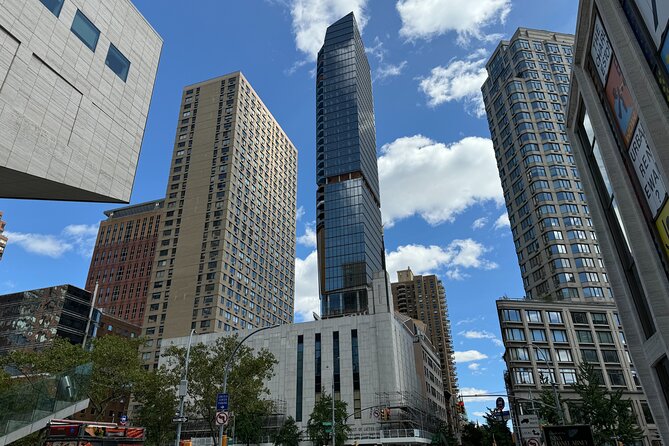
At $49 per person, this is not the cheapest way to see Columbus Circle or Lincoln Center. You can walk past these buildings for free, and plenty of basic information is available on your phone.
The fee pays for interpretation, route planning, a small group, and the headsets. That has real value in Midtown, where traffic, crowds, and distance can make self-guided listening awkward. You are also covering a focused two-hour block that links locations you might otherwise visit without understanding how they relate.
I think the price is fair if architecture, design, or city planning is a main interest. It is less compelling if you only want photographs of famous buildings or plan to spend most of your day inside museums and attractions.
The tour includes all fees and taxes. Tips are not included, so plan for that extra cost if you feel the guide has given you a worthwhile experience.
Timing, group size, and practical planning
The tour begins at noon at Columbus Circle and lasts about two hours. Since travel time is part of that period, the actual discussion at each building is sometimes only five or 10 minutes.
That makes the tour easy to fit before an afternoon museum visit, an evening performance, or another Midtown plan. It also means you should arrive ready to walk rather than expecting long seated explanations.
The maximum group size is 15. That is small enough for a more personal feel, though not the same as a private tour. The headsets help keep the group moving without forcing everyone into a tight circle.
The experience requires good weather. If poor weather cancels the tour, you are offered another date or a full refund. For comfort, check the forecast and dress for an outdoor walk. Service animals are allowed, and most people can participate. The tour is near public transportation at both the start and finish.
Free cancellation is available up to 24 hours before the start time. Cancellations or changes made less than 24 hours before departure are not refunded or accepted.
Who should book this architecture walk?
I would choose this tour if you want a clear introduction to New York architecture without giving up half a day. It is especially suited to:
- People curious about design but not trained in architecture
- Architects, students, and design professionals who want to ask detailed questions
- Longtime New Yorkers who want a fresh reading of familiar buildings
- Visitors staying near Midtown who prefer a compact afternoon activity
- Anyone interested in how cultural institutions shape a city district
I would skip it if you need indoor admissions, a museum guide, a Central Park exploration, or a slow photographic walk. The route is explanatory and fairly brisk.
You should also check the exact route if Columbia University is essential to your plans, since it appears in the tour highlights but not as a named stop in the detailed schedule.
Should you book it?
Book this tour if you want the city to explain itself a little better. The route brings together Columbus Circle, Central Park, Lincoln Center, Juilliard, and Hearst Tower in a short span, while Ivan adds the urban-planning context that a casual walk often misses.
The strongest reasons to go are the small group, clear audio through personal headsets, and the range of architecture covered. The main limitation is the quick exterior format. At $49, it is good value for an informed overview, not for building interiors or lengthy stops.
If you have two free hours at noon and an interest in how New York’s public spaces and cultural buildings fit together, I would book it.
FAQ
How long does the New York Upper West Side Art and Architecture Tour last?
The tour lasts approximately two hours, including travel time between stops.
Where does the tour start?
It starts at Columbus Circle in New York City.
Where does the tour end?
It ends at Hearst Tower, 300 West 57th Street, close to subway and other transportation.
What time does the tour begin?
The scheduled start time is 12:00 pm.
How many people can join the tour?
The tour has a maximum of 15 participants.
Which languages are available?
The in-person guide is available in English, Spanish, French, and Italian.
Are headsets provided?
Yes. Each participant receives a professional individual headset.
Is admission to the buildings included?
The tour lists all fees and taxes as included, but the route is described as an exterior walking tour with discussions of the buildings. It does not list interior admission to the cultural institutions.
Can I cancel for a refund?
Yes. You can cancel at least 24 hours before the start time for a full refund. If poor weather cancels the experience, you can choose another date or receive a full refund.
Newly added in New York City
- Race to the Sky: NYC Architecture Tour With SUMMIT One Ticket★ 5.0 · 3 reviews
- New York Upper East Side Art and Architecture Tour★ 5.0 · 3 reviews
- Private Flatiron Food, History and Architecture Tour★ 5.0 · 8 reviews
- Chelsea and the High Line NYC Architecture Walking Tour★ 5.0 · 6 reviews
- New York Soho and the Village Art and Architecture Tour★ 5.0 · 4 reviews
- New York Midtown South Art and Architecture Tour★ 5.0 · 2 reviews
- Custom Private New York Architecture, Art and City Tour★ 5.0 · 3 reviews
- Chelsea Galleries and High Line; Art, Architecture and History★ 5.0 · 14 reviews
New York City Architecture Tours, compared.

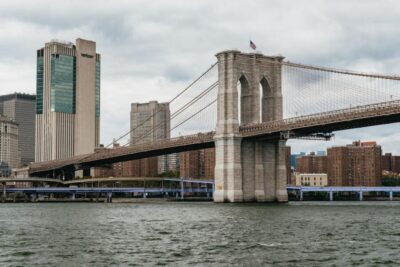
Around Manhattan Official NYC Architecture Cruise
Read our review →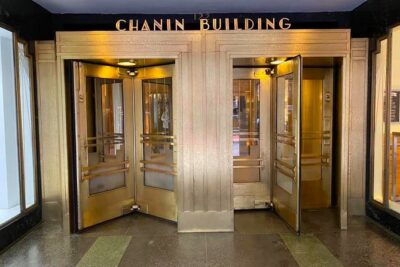
Art Deco and Architecture Midtown Landmarks Tour
Read our review →

New York City The Official Rockefeller Center Tour
Read our review →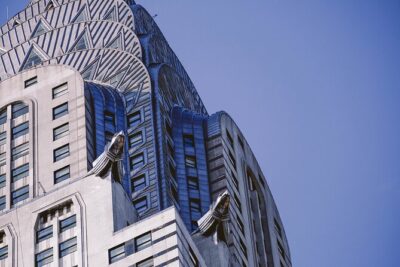

Browse the lists this tour appears in