
Review · WALKING TOURS
Neoclassical Paris Architecture 2-Hour Private Walking Tour
Paris’s Neoclassical style is easiest to understand when you stop treating the city as a postcard and start reading its buildings as political ideas in stone. This private walk links the former stock exchange, a royal square, an early shopping arcade, the Tuileries, and the Palais-Royal, giving you a clear look at how classical design shaped public life.
I like the private format, since your guide can adjust the pace and answer the questions that interest you. I also like the art historian guide, with guides such as Boris, Mila, Melissa, Milica, and Dunya praised for making architecture understandable rather than turning the walk into a stream of dates. The main drawback is simple: two hours is tight, so you get a focused introduction rather than a full survey of Parisian architecture.
Key points to know
- Start at Palais Brongniart: The former stock exchange gives the tour a strong opening, with architecture tied directly to commerce and public values.
- Five central Paris stops: You visit Place des Victoires, Galerie Vivienne, the Tuileries, and the Palais-Royal before finishing at the Arc de Triomphe du Carrousel.
- A private group of up to six: The $360.48 price covers your whole group, not each person individually.
- History, art, and architecture together: The guide explains style in its political and cultural setting, not as a list of façades.
- Mostly an outdoor walk: Admission is free at the listed stops, but you should expect walking between them and changing weather.
- Best for curious visitors: This suits you if you want to understand why Paris looks the way it does, not simply collect landmark photographs.
Why this two-hour walk is different
Many Paris tours rush toward the biggest sights. This one takes a more specialized route through central Paris and asks you to pay attention to the ideas behind the buildings.
Neoclassicism can sound like a narrow subject, especially if your Paris wish list already includes the Louvre, the Eiffel Tower, and Notre-Dame. Yet this route gives those familiar areas a useful frame. It connects royal display, commerce, urban planning, and public taste through buildings you might otherwise pass without much thought.
The tour is private, so you are not trying to hear a guide over a large crowd. With a maximum of six people, you can ask why a square was designed in a particular way, how an arcade relates to modern shopping centers, or how a former royal garden fits the classical ideal.
The guide’s role matters here. Past guides have included Boris, Mila, Melissa, Milica, and Dunya. The strongest praise centers on their ability to explain architecture in plain language and bring in art, history, and culture at the same time. Boris, in particular, is noted for asking questions that get you thinking instead of simply delivering a lecture.
That approach is valuable because architecture tours can become a parade of technical terms. Here, you should expect the guide to connect form with context. You are not only looking at columns, symmetry, or grand spaces. You are considering what those choices said about power, order, taste, and modern city life.
More Walking Tours in the world:
- Lecce: Baroque Architecture and Underground Walking Tour
★ 4.6 · 1,248 reviews - Chicago in a Day: Food, History & Architecture Walking Tour
★ 5.0 · 1,153 reviews - Ramblas, Old Town, Gothic and Gaudi Architecture Walking Tour
★ 5.0 · 723 reviews
Palais Brongniart gives the tour a practical beginning
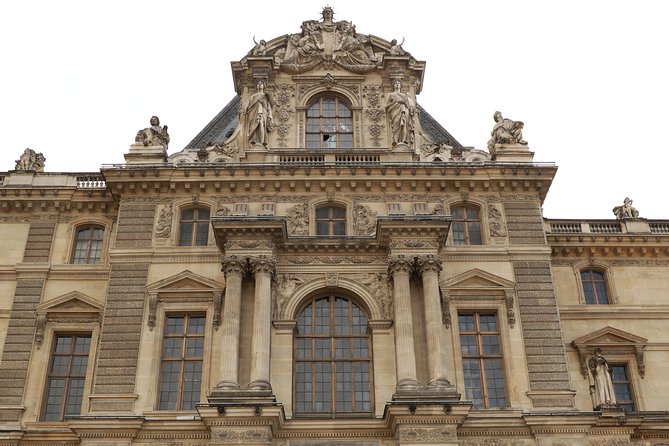
The walk begins at Bourse, outside Palais Brongniart. This former stock exchange is a fitting first stop because it links Neoclassical design with finance, civic ambition, and the values of its period.
You get about 30 minutes here, the longest stop on the route. That extra time gives the guide room to establish the main ideas that will return throughout the walk. Instead of beginning with a garden or palace, you start with a building connected to business and public institutions.
The building is also useful as a teaching tool. The guide can show how an architectural style moves beyond private homes and royal residences into places that organize public and commercial life. If you are new to architectural terms, this is where the tour’s method should become clear.
I would use the first few minutes to tell the guide what you already know. If you have studied European architecture, you may want more detail about design and historical context. If the subject is new to you, ask for the basic visual clues that help you identify Neoclassical ideas elsewhere in Paris.
There is no admission ticket included because the listed stop is treated as an exterior visit. That keeps the route efficient, but you should not expect an interior tour of Palais Brongniart.
Place des Victoires and the language of royal squares
From Bourse, the tour moves to Place des Victoires, one of Paris’s four royal squares. The planned square helps explain the classical predecessor to Neoclassical thought and style.
This is a short stop of about 15 minutes. That may sound brief, but a square is best read as a complete composition. You can take in the arrangement of the surrounding buildings and listen as the guide explains how public space, royal image, and architectural order worked together.
The value here is the comparison. Palais Brongniart shows classical ideas applied to a major public institution. Place des Victoires shows how related ideas shaped an urban square. The guide can help you see the difference between a single building and an entire setting designed to make a statement.
If you enjoy city planning, this may be one of the most useful stops. You are not looking only at decorative details. You are looking at how people were directed through space and how a square could express authority.
The stop is also a reminder that Parisian architecture is not just about isolated monuments. The relationship between a building, a street, and an open space often tells you as much as the façade itself.
Galerie Vivienne shows an early form of modern shopping
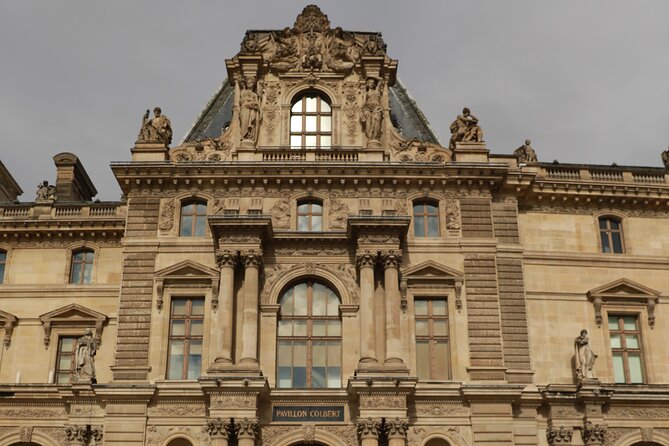
Galerie Vivienne receives about 20 minutes and shifts the subject from royal planning to commercial life. The arcade was part of a 19th-century phenomenon and is presented as an ancestor of the modern shopping mall.
That comparison gives the tour a welcome change of scale. After considering a stock exchange and a royal square, you enter a setting built around movement, retail, and sheltered public passage.
The guide can use Galerie Vivienne to show how architecture responds to changing habits. An arcade is not simply a decorated walkway. It creates a controlled commercial environment, bringing shops and pedestrians together under one roof.
For you, this is likely one of the easiest ideas to grasp because the connection to modern life is so direct. The shopping mall may feel familiar, but the Parisian arcade provides an earlier model with a different sense of scale and atmosphere.
The stop also adds variety to the walk. You are not spending two hours looking at monumental buildings from the outside. You are moving through a commercial space with its own design logic.
Galerie Vivienne is allotted 20 minutes, so the guide can explain its place in the story without allowing it to take over the tour. If shopping interests you, ask how the arcade differs from the royal squares you have just seen. If you care more about political architecture, use this stop to consider how classical ideas entered everyday urban life.
More Two-Hour Tours in the world:
- 2 Hours Savannah Architectural Tour
★ 5.0 · 53 reviews - Life of Gaudi and Architectural | Walking Tour | 2h
★ 5.0 · 35 reviews - Guided Gaudí Trencadís Mosaic Workshop in Barcelona 2 Hours
★ 5.0 · 176 reviews - Miami: 2-Hour Art Deco Bike Tour
★ 4.6 · 155 reviews
The Tuileries through a Neoclassical lens
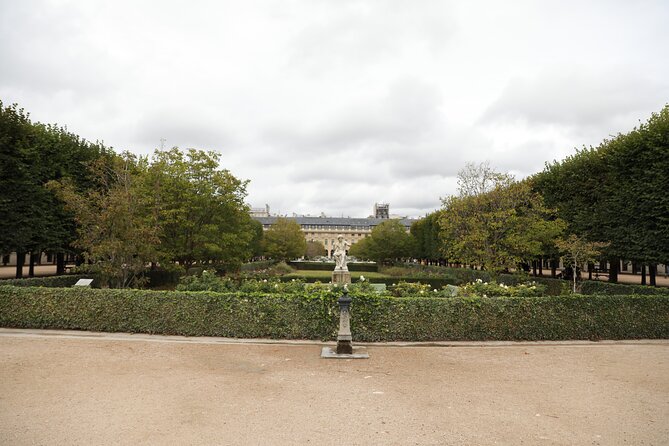
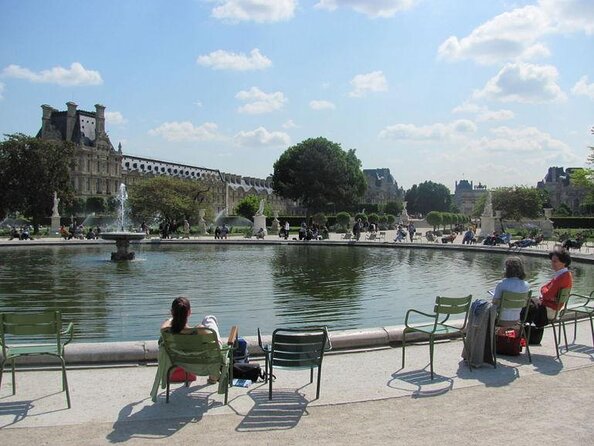
The walk then reaches the Jardin des Tuileries, the former royal garden. This stop lasts about 20 minutes and shifts attention from buildings to a planned landscape.
The Tuileries is important here because the tour treats the garden through the perspective of Neoclassical style and thought. You are encouraged to look at the garden as an organized composition rather than simply a pleasant place to sit.
That distinction matters. A garden can express order just as clearly as a palace or square. Paths, open areas, views, and the relationship between garden and architecture all help shape how you experience the city.
The guide’s historical and artistic background is especially useful in this setting. A good explanation can connect the garden to the larger route without burying you in terminology. You can ask how the Tuileries relates to the royal spaces already discussed and how it prepares you for the Palais-Royal and the Louvre area.
The Tuileries stop also offers a natural pause in a walking tour. You are still outdoors, but the setting gives you a change from streets and arcades. Keep in mind that the tour remains a walking lesson, not a garden break with refreshments. Food and drinks are not included.
Because the tour ends near the Arc de Triomphe du Carrousel, the Tuileries also helps you understand the final portion of the route. You are moving toward a district where royal, civic, and artistic ideas meet.
Palais-Royal connects palace, commerce, and public life
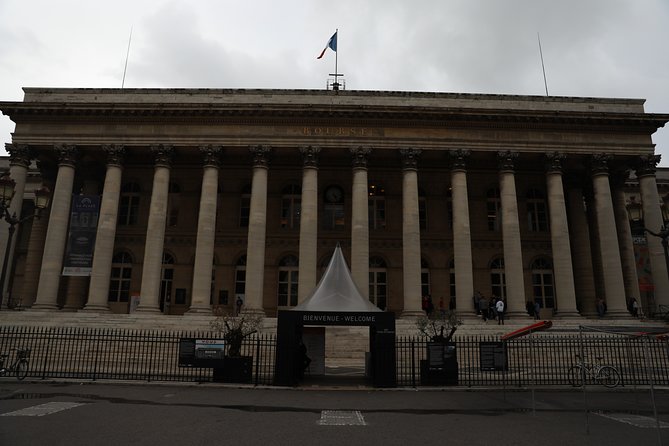
The final listed stop is the Domaine National du Palais-Royal, with about 20 minutes devoted to the complex. This is one of the most revealing places on the route because the Palais-Royal was converted into a commercial center.
That change lets the guide show how a palace setting could take on a new public and commercial role. The tour does not treat the Palais-Royal as a frozen royal relic. Instead, it looks at the building and its use through a particular architectural and social lens.
I like this stop because it brings several threads together. You have already considered finance at Palais Brongniart, royal planning at Place des Victoires, shopping at Galerie Vivienne, and formal garden design at the Tuileries. The Palais-Royal lets you consider how those forces can exist in one complex.
This is also a good place to ask direct questions. You might ask how commercial use changes the way a palace is experienced, or how the guide separates the building’s appearance from its changing purpose. The private format gives you room to follow that line of thought.
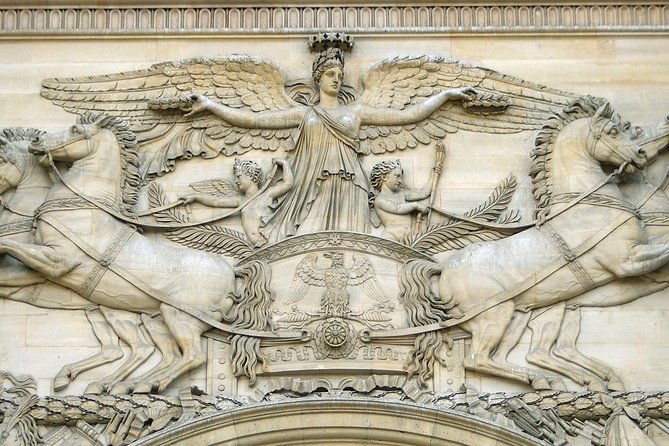
The route finishes at the Arc de Triomphe du Carrousel on Place du Carrousel. The end point is practical if you plan to continue sightseeing in the central Paris museum and palace district, though the tour itself does not include admission to any museum or monument.
What the private format is worth
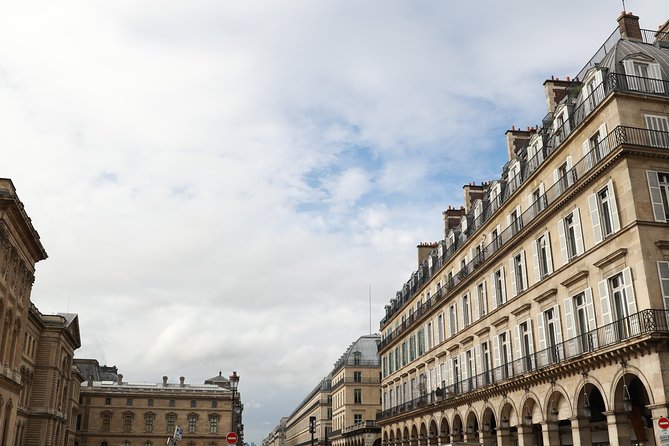
The listed price is $360.48 per group of up to six people. That works out to about $60 per person if you fill all six places. For two people, the effective cost is about $180 each, so the value depends heavily on your group size and your interest in the subject.
For a group of six, this is a fairly efficient way to hire a specialist guide. You get two hours of personal attention without sharing the tour with strangers. A family or group of friends can also set the level of discussion to suit everyone.
For one or two people, the cost is harder to justify unless architecture is a real priority. You are paying for a private art historian guide and a customized experience, not for admissions, food, or a long list of included extras.
The strongest value comes from the quality of the explanation. If you want a general introduction to Paris, a free walk or a broader city tour may cover more ground. If you want to understand one important style and its relationship to urban life, this focused route gives you more room to ask questions.
The two-hour length keeps the commitment manageable. You can fit it into a sightseeing day without sacrificing an entire morning or afternoon. At the same time, the route covers five stops, so you should expect a steady pace and limited time at each place.
Pace, meeting point, and practical planning
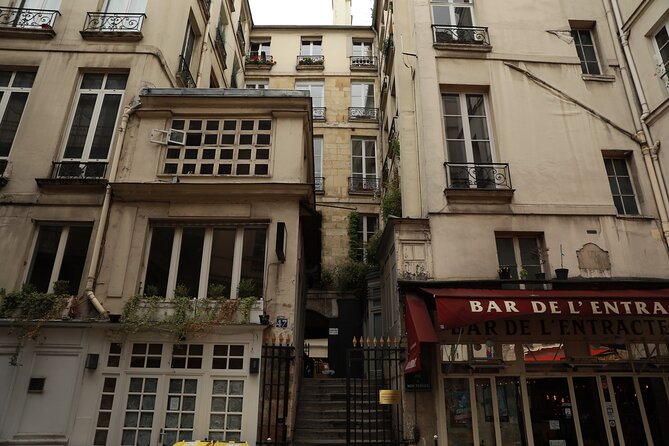
The meeting point is listed as Bourse, 75002 Paris, and the tour ends at the Arc de Triomphe du Carrousel on Place du Carrousel, 75001 Paris. Since the route crosses central Paris, wear comfortable shoes and plan for ordinary city walking.
The listed stop times add up to about 105 minutes. The remaining time allows for walking between places, orientation, and transitions. That means you should not expect 30 uninterrupted minutes at every stop. The guide has to keep the route moving.
The experience is offered in English, though it may be operated by a multilingual guide. A mobile ticket is provided, and confirmation normally arrives at booking. If you book within seven days of the tour, confirmation may arrive within 48 hours and remains subject to availability.
The activity requires a moderate level of physical fitness. Service animals are allowed, and the route is near public transportation. The supplied details do not specify step-free access, seating, or restroom arrangements, so ask the operator before booking if those points matter to you.
Free cancellation is available if you cancel at least 24 hours before the start time. Changes or cancellations inside that window are not accepted for a refund.
The tour is booked, on average, 41 days ahead. That does not mean you must book that early, but it is a useful warning if your Paris dates are fixed. Private tours with a specialist guide have fewer available spaces than large group walks.
Who should choose this Paris architecture tour?
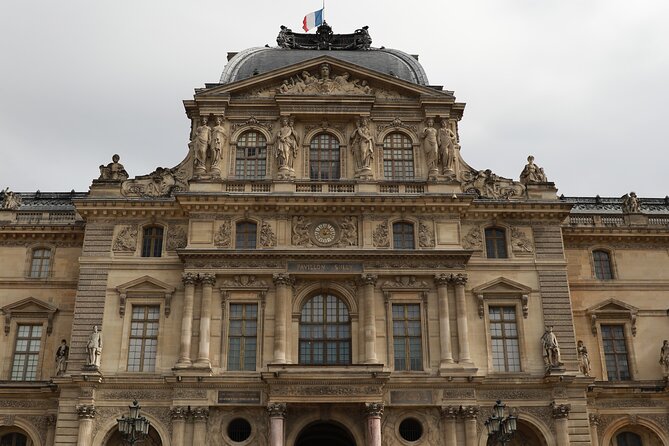
I would recommend it to you if you enjoy asking why a city looks the way it does. It is especially suitable if you like art, architecture, urban planning, or the political meaning of public spaces.
It also works well for families with older children or teenagers who learn better through questions than through a formal museum visit. One guide described using questions to get a mother and daughter thinking, and that style can make a difficult subject easier to follow.
The tour is a good match for repeat visitors to Paris. If you have already seen the major monuments, this route gives you a new way to read familiar central neighborhoods.
It is less suitable if you want to enter major monuments, see a wide range of Paris attractions, or spend a long time at each site. You will not get food, drinks, museum admission, or a broad overview of every architectural period in the city.
Guide quality is central to the experience. The available comments praise Mila for being clear, friendly, and able to connect art, architecture, history, and culture. Melissa is praised for making the educational side memorable, while Dunya is noted for her wide grasp of history, architecture, and art. Boris is praised for making the subject easy to understand and fun.
Those details suggest that the tour works best when you take part. Bring questions, speak up if a term is unclear, and tell the guide what part of Parisian architecture interests you most. The private setting is most valuable when you use it.
Should you book it?
Book this tour if you want a focused lesson on Parisian Neoclassicism and prefer a private conversation to a large group presentation. The route is compact, the subject is unusual, and the guide’s art history background gives the walk more substance than a simple landmark checklist.
I would be more cautious if you are mainly looking for famous interiors or the lowest possible sightseeing cost. At $360.48 for the group, it offers the best value when shared by several people and when architecture is high on your Paris list.
For a full group of six, the price is easier to defend. For two people, book only if you are genuinely curious about how royal spaces, commerce, gardens, and public buildings express the changing ideas of Paris. In that case, this short walk can sharpen your eye for the rest of your visit.
FAQ
How long is the Neoclassical Paris architecture tour?
The tour lasts approximately two hours.
Where does the tour begin?
It begins at Bourse, 75002 Paris, France.
Where does the tour end?
It ends at the Arc de Triomphe du Carrousel on Place du Carrousel, 75001 Paris, France.
How many people can join the private tour?
The price covers one private group of up to six people.
Is food or drink included?
No. Food and drinks are not included.
Can I cancel for a full refund?
Yes. You can cancel at least 24 hours before the experience start time for a full refund. Cancellations or changes made less than 24 hours in advance are not accepted for a refund.
Newly added in the world
- Venice Art and Architecture Private Walking Tour★ 4.5 · 11 reviews
- Basilica San Marco and the Pala d’Oro with Architect Guide★ 4.5 · 19 reviews
- Walking tour in Venice with an architect★ 5.0 · 16 reviews
- Paris: Discover the hidden architecture gems of Le Marais★ 3.8 · 4 reviews
- Porto Tour: Street Art & Architecture Experience 3h★ 5.0 · 4 reviews
- Faro Private Walking Tour: Uncovering its Architectural Legacy★ 5.0 · 8 reviews
- Private Walking Tour of Old Gdańsk with an architect-guide★ 5.0 · 7 reviews
- Sopot Private City Walking or Bike Tour with a local architect★ 5.0 · 19 reviews
Walking Tours, compared.
The Official Art Deco Walking Tour by The Miami Design Preservation League
Read our review →
Baroque Architecture and Underground Walking Tour
Read our review →
Chicago in a Day: Food, History & Architecture Walking Tour
Read our review →

Ramblas, Old Town, Gothic and Gaudi Architecture Walking Tour
Read our review →
Chicago’s Secret Interiors Architectural Walking Tour
Read our review →
Browse the lists this tour appears in