
Review · TOKYO ARCHITECTURE TOURS
Japanese Garden & Western Architecture: Akasaka exploration tour
A 400-year-old garden, a palace built to receive kings and presidents, and a grand avenue of ginkgo trees make Akasaka feel far removed from Tokyo’s towers. This private tour gives you a clear route through that contrast, with a local guide explaining how the Edo shogunate and later Meiji Japan shaped the area.
I like the quiet garden setting at Hotel New Otani and the chance to see the lavish Akasaka Palace without planning the route yourself. I also like the private format, since you can ask questions and adjust the pace for your group.
The main consideration is cost. The tour price is $82.42 per person, and Akasaka Palace adds ¥2,000 per person. You will also walk a lot, and the tour ends at a different station from where it begins.
Key points to know before you book
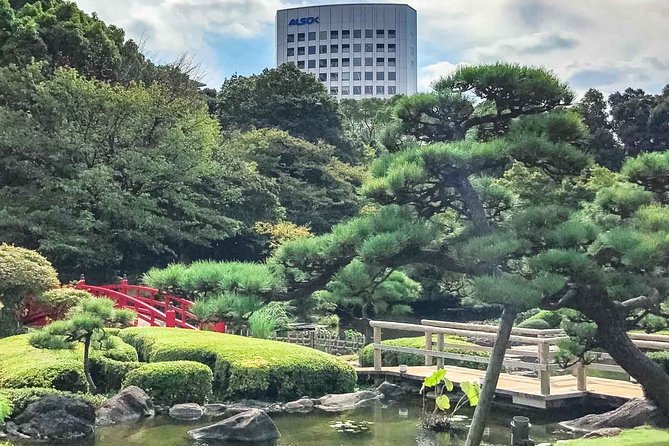
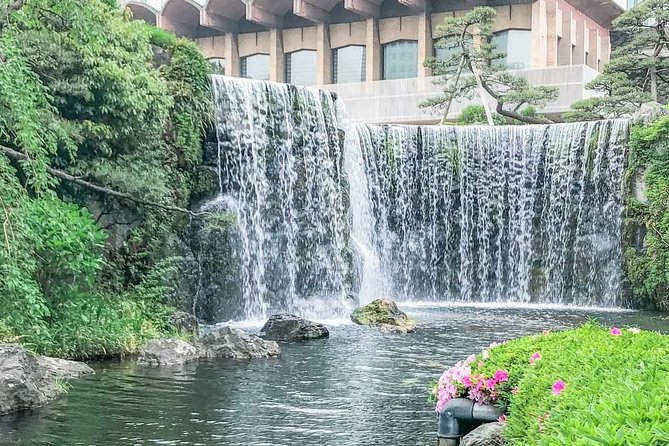
- A 400-year-old Japanese garden: Waterfalls, seasonal plants, ponds, and changing scenery begin the tour on a calm note.
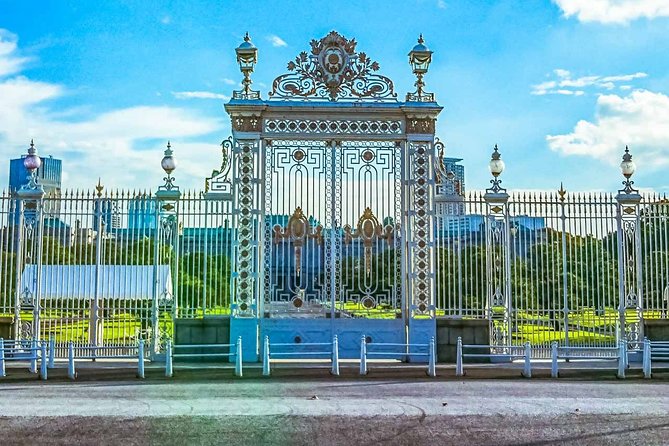
- Akasaka Palace is the main visual prize: The former palace now receives foreign dignitaries and feels more like a European castle than a typical Tokyo government building.
- The Meiji Memorial Picture Gallery adds historical context: Murals and paintings introduce the era that followed the shogunate.
- This is a private tour: Only your group takes part, making it easier to ask questions or discuss Japanese culture in detail.
- The route runs from Akasaka-Mitsuke to Gaiemmae: Transportation is not charged for the planned route, but admission and personal expenses are extra.
- Cash is useful: Some places on the route may not accept credit cards.
Why Akasaka makes a good half-day escape
Tokyo can feel like a wall of concrete, glass, and traffic. Akasaka offers a different look at the city, with old gardens, formal public buildings, shrines, parks, and broad avenues connected by a manageable walking route.
The tour is especially useful if you want history explained as you go. Instead of seeing a garden as simply a pretty place or a palace as simply a grand facade, you get a guide to connect each stop with Japan’s political and cultural past.
The experience lasts about three to four hours. That gives you enough time to see four major stops without turning the outing into an all-day commitment. You begin near Akasaka-Mitsuke Station and finish near Gaiemmae Station, so the tour also works well as a bridge between two parts of central Tokyo.
The format is private, not a large group walk. That matters here because the best parts of the outing involve questions: What did the Edo shogunate control? Why does a Japanese palace look European? What do the paintings in the Meiji gallery show? A private guide can spend more time on the subjects that interest you.
A few more architecture walks in the world worth a look
- Chicago Architecture River Cruise
★ 5.0 · 15,756 reviews - Chicago River 90-Minute Architecture Tour
★ 4.5 · 9,629 reviews - Chicago River: 1.5-Hour Guided Architecture Cruise
★ 4.8 · 8,046 reviews
Hotel New Otani Japanese Garden: a gentle start
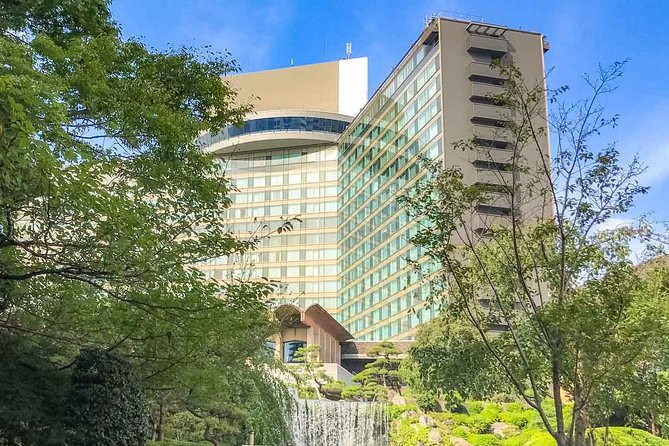
The first stop is the Japanese garden at Hotel New Otani. Its history reaches back about 400 years, giving you an early link to the older world of Japanese aristocratic and political life.
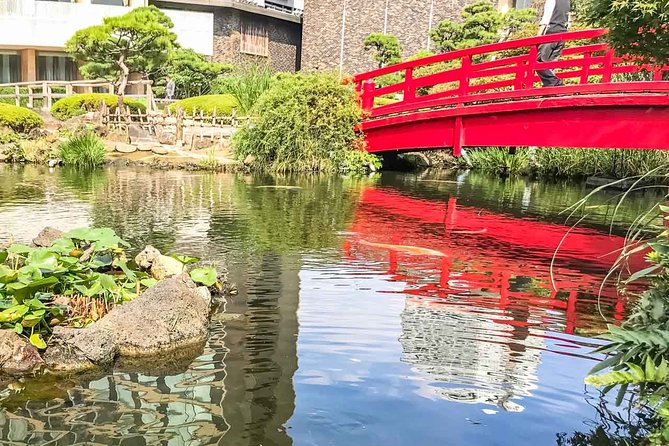
Allow about 40 minutes here. The garden includes waterfalls, a pond, and seasonal plants. Spring may bring cherry blossoms, summer offers dense green growth, and autumn brings changing color and seasonal illumination. The exact display depends on the date of your visit, but the garden gives the tour a peaceful beginning in an otherwise central part of Tokyo.
This is also a good setting for learning how Japanese gardens guide your attention. A view may open gradually around a pond, while water and carefully placed plants create different scenes as you walk. The guide can help you notice details you might otherwise pass without a second look.
A cup of tea may be possible during or around the garden visit, but you should not treat that as a guaranteed part of the booking. One guide helped arrange a reservation at an authentic tea shop, which shows the value of asking if you want that kind of addition. The tour itself does not include a meal or a set dining stop.
The garden is free to enter, but do not confuse free admission with a short visit. This is one of the more relaxing sections of the route, and it gives you time to settle into the pace before the palace and museums.
Akasaka Palace: the tour’s grand centerpiece
Akasaka Palace, also called the State Guesthouse, receives kings, presidents, and other official visitors from around the world. Its exterior has the formal scale of a European castle, which makes it one of the most surprising sights on a tour focused on Japanese history.
The planned visit lasts about 50 minutes. Admission is not included in the tour price and costs ¥2,000 per person. That extra charge is the main expense to plan for, and you should carry cash because some places along the route may not accept cards.
The palace offers a useful lesson in Japan’s changing identity. After the long Tokugawa period, Japan entered a new political era and adopted selected Western forms of government, architecture, military organization, and diplomacy. Akasaka Palace reflects that outward-looking period in a very visible way.
You can expect formal rooms, grand design, and a strong sense of ceremony, although the precise areas open to the public can vary. Temporary closures may also lead to a substitute stop. Your guide can explain what you are seeing and why the building matters, rather than leaving you to admire the facade without context.
This is likely the strongest stop for visitors who enjoy architecture, government, and modern Japanese history. It is less useful for anyone seeking a traditional wooden temple or a purely Japanese building style. The appeal comes from the contrast: Japan’s own political history presented through a palace with a distinctly Western appearance.
Meiji Memorial Picture Gallery: art as historical evidence
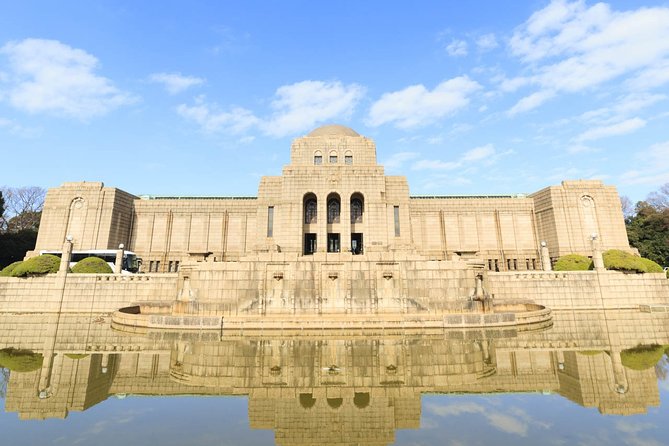
The Meiji Memorial Picture Gallery brings the tour into the period that followed the Tokugawa shogunate. The dome-shaped building contains paintings and murals connected to the Meiji era, when Japan underwent major political and social change.
The visit lasts about 40 minutes. Even if you are not an art specialist, the gallery helps put Akasaka Palace into context. The paintings give you a visual way to understand the people, events, and ideals that shaped Japan during this period.
One useful feature is the view from the entrance toward the outer garden and Aoyama Street. The building is not only about what hangs inside. Its dome, formal approach, and surrounding open space create another example of how public architecture can express national purpose.
This stop will appeal most to you if you like museums, painting, or historical interpretation. If you prefer gardens and outdoor sights, 40 minutes inside a gallery may feel slower. Tell your guide what interests you, since the private format makes it easier to spend your attention where it matters most.
Guides on this route have included Sayaka, Mutsuko Takano, Ume, and Ayako. Their reported strengths have varied, but the useful pattern is clear: the experience depends heavily on the individual guide’s English, preparation, and ability to match your interests. Mutsuko Takano was specifically noted for speaking very good English, while Sayaka was described as enthusiastic and happy to answer questions. Ayako was new to guiding at the time of one visit but was calm and flexible.
That mix is worth keeping in mind. This is not a recorded audio route with a fixed script. Your experience will be shaped by the guide assigned to your date.
Same city, a different facade:
- Chicago Architecture Center River Cruise aboard First Lady
★ 5.0 · 5,536 reviews - Chicago: Architecture River Cruise Skip-the-Ticket Line
★ 4.8 · 4,325 reviews - Chicago River 45-Minute Architecture Tour from Magnificent Mile
★ 4.5 · 2,924 reviews - Barcelona: Sant Pau Recinte Modernista Entry Ticket
★ 4.6 · 2,567 reviews
Jingu Gaien’s ginkgo avenue: a memorable finish
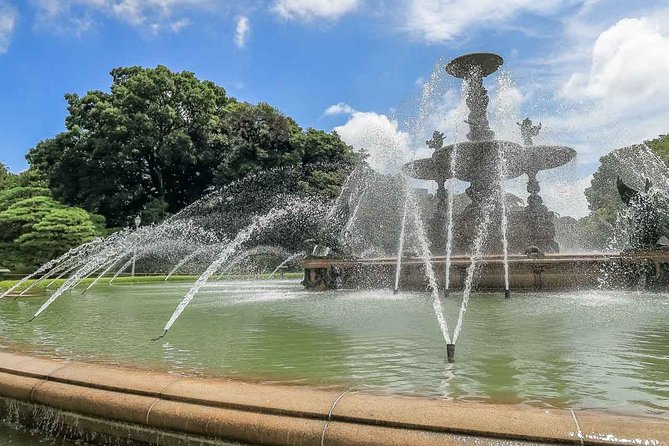
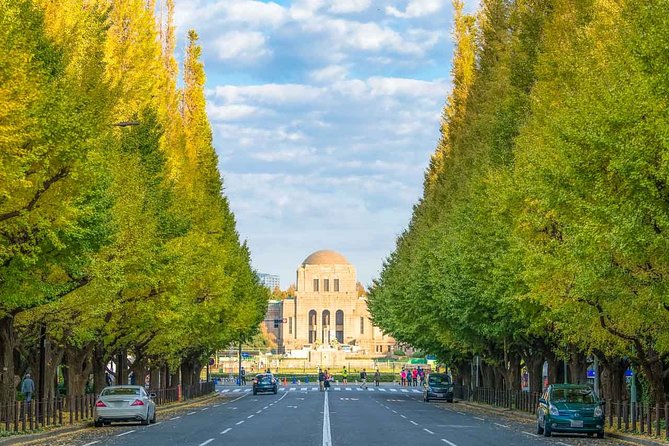
The final scheduled stop is the Jingu Gaien Ginkgo Tree-lined Street. The visit lasts about 20 minutes, making it a brief but photogenic end to the route.
The avenue is one of Tokyo’s recognizable seasonal scenes. Ginkgo trees form long arches over the road, with the appearance changing through the year. Spring and summer bring one kind of view, while autumn is known for the trees’ golden color. The route description also presents the area as a place to enjoy the seasons rather than as a single fixed attraction.
This stop is outdoors, so weather matters. On a clear day, the broad avenue gives you room to finish the tour at an easy pace. In bad weather, the route, transportation, or destinations may change. Comfortable shoes and clothing are sensible from the start because the tour involves substantial walking.
The ending near Gaiemmae Station is practical if you want to continue around Aoyama afterward. It is also important to remember that you do not return to the starting point. If you need to finish somewhere else, tell the guide in advance or at the beginning of the outing.
What the private format adds
A private tour changes the feel of a city walk. You are not trying to keep up with a large group or waiting while strangers pose for photos. You can ask about the Edo period, Japanese gardens, religion, architecture, or daily life as questions come to mind.
The guide can also adjust the conversation. A history enthusiast may want more detail at the Meiji gallery. Someone interested in gardens may prefer more time discussing the New Otani grounds. Families or older visitors may need a slower pace, although the route still involves a lot of walking.
The tour description highlights Inari Shrine and Shimizudani Park as part of the wider Akasaka experience. The scheduled route provided for this version lists the New Otani garden, Akasaka Palace, the Meiji Memorial Picture Gallery, and the ginkgo avenue. Since sites can change because of closures or weather, confirm the exact stops with your guide if a shrine or park is especially important to you.
The private format is also useful for visitors who want local help beyond the basic route. A guide arranged a tea-shop reservation for one participant, and the guides have been described as helpful with questions about Japanese culture. Do not assume extra meals, reservations, or optional visits are included, but do ask if you have a particular interest.
Price, extra costs, and overall value
The listed price is $82.42 per person. You then need to budget an estimated ¥2,000 per person for admission, with Akasaka Palace identified as the specific ¥2,000 charge. The tour includes the guide and the guide’s necessary expenses. It does not include food, drinks, or other personal costs.
Transportation on the planned route is listed at ¥0, which suggests the main movement is on foot. That keeps the outing simple, but it also means the walking requirement is real. Wear shoes you can use comfortably for several hours.
The price makes the most sense for couples, families, or small groups who value a private guide. Group discounts may improve the per-person cost when several people book together. For a solo visitor, the price is harder to justify unless you place a high value on personal questions and a private pace.
A self-guided visit would cost less, especially if you only wanted to see the garden and ginkgo street. The paid value here comes from the connected story, the planned route, and the guide’s explanations. Akasaka Palace admission is still extra, so compare the total with your budget before booking.
The activity is booked well in advance on average, about 164 days. That does not guarantee every date sells out, but it is a useful sign to plan ahead if your Tokyo schedule is fixed.
Who will enjoy this Akasaka walk
I would recommend this outing to you if you want to see a quieter side of Tokyo without spending a full day away from the center. It suits people who enjoy history, public architecture, gardens, photography, and local explanation more than fast sightseeing.
It is also a good choice for first-time visitors who want a guide to make sense of the transition from the Tokugawa shogunate to modern Japan. The four stops do not all look alike, and that variety is the point.
You may want another type of activity if you dislike walking, need a meal included, or want a tightly fixed schedule with no chance of route changes. The palace can also close temporarily, and poor weather may alter the route.
Bring comfortable shoes, some cash, and a phone with your mobile ticket ready. Ask about the day’s exact stops, the pace, and any tea-shop possibility at the start. Those small questions can make a private tour feel much more personal.
Cancellation and practical details
You receive confirmation when you book, and the tour is near public transportation. Most people can participate, but the amount of walking should be taken seriously.
Free cancellation is available up to 24 hours before the start time for a full refund. Changes or cancellations made less than 24 hours before the local start time are not accepted for a refund.
The tour is private, and only your group participates. The ending is at Gaiemmae Station, while the meeting point is Akasaka-Mitsuke Station, so plan your onward route accordingly.
Should you book this Akasaka tour?
Book it if you want a small-scale cultural walk that combines gardens, diplomatic architecture, Meiji-era art, and seasonal Tokyo scenery. The private guide is the main reason to choose it, especially if you enjoy asking questions or want help connecting the sights to Japan’s political past.
Skip it if you mainly want a food tour, a temple circuit, or a no-cost stroll. The extra palace admission and steady walking raise the total, but the route offers a thoughtful look at a part of Tokyo that many visitors pass without understanding. For a first visit to Akasaka, that added context is the real value.
FAQ
How long does the Akasaka exploration tour last?
The tour lasts approximately three to four hours.
Where does the tour start?
The meeting point is Akasaka-Mitsuke Station at 3-chōme-1-6 Akasaka, Minato City, Tokyo.
Where does the tour finish?
The scheduled ending point is Gaiemmae Station at 2-chōme-7-16 Kitaaoyama, Minato City, Tokyo.
Is Akasaka Palace admission included?
No. Akasaka Palace admission costs ¥2,000 per person and is paid separately.
Is transportation included?
The estimated transportation cost for the planned tour is ¥0 per person. Other transportation costs caused by route changes or personal choices are paid by the customer.
Is this a private tour?
Yes. Only your group participates in the private activity.
What happens if the weather is bad?
The transportation, destinations, or route may change because of bad weather. Temporary closures can also lead to alternative stops.
Newly added in the world
- Washington, DC: Georgetown Architecture Walking Tour★ 5.0 · 8 reviews
- Washington DC: Dupont Circle & Embassy Row Architecture Tour★ 5.0 · 6 reviews
- New Orleans : Garden District Architecture Walking tour★ 4.8 · 5 reviews
- Wilmington History and Architecture Tour★ 4.8 · 18 reviews
- Unveiling Brno: History, Culture & Architectural Delights★ 5.0 · 2 reviews
- Vicenza: Palladian Architecture Private Walking Tour★ 3.3 · 3 reviews
- Walk & Discover KL’s Architectural and Heritage Gems★ 5.0 · 7 reviews
- Private Colonial Williamsburg Architectural Tour★ 5.0 · 5 reviews
Tokyo Architecture Tours, compared.
Private Harajuku Omotesando Architecture Walking Tour
Read our review →
Private Edo-Tokyo Open Air Architectural Museum Tour
Read our review →
Tokyo Architecture and Contemporary Art Walking Tour with a local guide
Read our review →
Browse the lists this tour appears in