
Review · WALKING TOURS
Private Ginza Architecture Walking Tour
Ginza is much more than luxury shops and bright signs. It is a compact lesson in Tokyo’s changing style, where a Buddhist temple, a tiny shrine, a Kabuki theater, and daring brand buildings all fit into one walk. The private format lets your guide adjust the talk to your interests, from urban planning to Japanese culture and design.
I like the chance to step inside several buildings rather than simply photograph them from the street. I also like the easy pace, the drink break, and the choice of morning or afternoon departure. The main consideration is that the walk covers a lot of ground, and some stops receive only five or ten minutes.
Key points at a glance
- A private group of up to five: You get a personal guide and can ask questions without competing with a large crowd.
- Old and new Tokyo in one route: The walk links Tsukiji Hongwanji Temple, Kabukiza Theater, small shrines, luxury boutiques, and modern commercial buildings.
- Architecture made accessible: You do not need a design background. Guides adjust explanations for beginners, while urban planner Taka Yamamura can offer a more technical view.
- Several interiors included: The route goes inside the temple, Kabukiza, the Nicolas G. Hayek Center, Maison Hermes, and Okuno Building when conditions allow.
- A useful Ginza finish: The tour ends at the Ginza 4-chome intersection, in front of Mitsukoshi department store.
- Plan for a real walk: The experience lasts about three to three and a half hours and requires moderate physical fitness.
Why Ginza works so well for an architecture walk
Ginza gives you a rare mix of buildings from different eras within a small area. One moment you are looking at a major department store or a polished luxury facade. Soon after, you are facing a Buddhist temple or a tiny Inari shrine tucked into the commercial district.
That contrast is the point. You are not walking through an open-air museum with neat labels. Ginza is a working shopping and business area, and its architecture is tied to commerce, branding, worship, entertainment, and daily life.
A guide helps you look up. One memorable theme from the experience is learning to notice what sits above street level, not only what is directly in front of you. A facade that first looks like a shop may reveal unusual materials, patterns, or a design idea linked to the brand inside.
The route is also a good match for people who have already visited Tokyo’s major temples and observation decks. It gives you another way to understand the city. Instead of focusing only on famous sights, you examine entrances, proportions, signs, corners, and the relationship between old buildings and new towers.
More Walking Tours in the world:
- Lecce: Baroque Architecture and Underground Walking Tour
★ 4.6 · 1,248 reviews - Chicago in a Day: Food, History & Architecture Walking Tour
★ 5.0 · 1,153 reviews - Ramblas, Old Town, Gothic and Gaudi Architecture Walking Tour
★ 5.0 · 723 reviews
Starting in Tsukiji and walking toward Ginza
The meeting point is near Tsukiji Station Exit 1, in the Tsukiji 3-chome area. You do not receive hotel pickup, so you need to make your own way there using Tokyo’s public transportation.
The opening Ginza section includes about 40 minutes of walking between sites. That sounds simple, but it shapes the whole experience. You are moving through the district rather than sitting in front of a long series of buildings. Wear comfortable shoes, keep your hands free for photos, and expect regular stops for explanation.
The guide can use this first stretch to learn what interests you. If you are curious about modern design, the focus can lean toward commercial architecture. If you want cultural context, the route can give more attention to temples, shrines, Kabuki, and local customs.
The private setup matters here. In a big group, the guide has to follow one fixed script. With only your party, you can stop to ask why a building looks the way it does, how a site is used, or what a Japanese sign means. Several guides, including Yoko, Yoshi, Mari, Makoto, Eriko, Haruka, and Taka Yamamura, have been praised for adapting their explanations and answering questions clearly.
Tsukiji Hongwanji Temple, an unexpected first stop
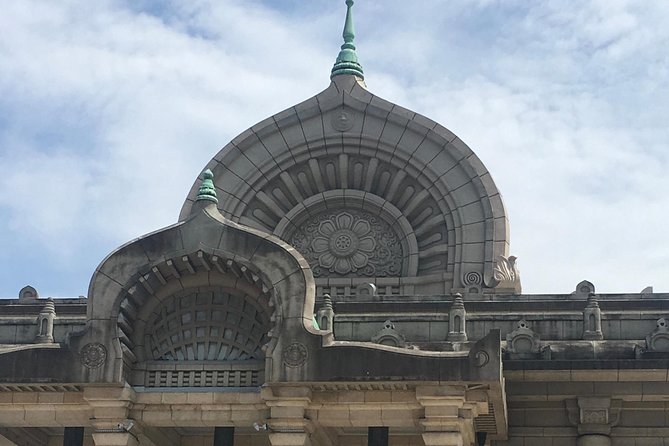
Tsukiji Hongwanji Temple gives the tour an early change of mood. You go inside to see the temple and hear about its role, rather than treating it as a quick photo stop.
This is one of the route’s useful choices. A tour focused only on Ginza’s luxury buildings could become a parade of storefronts. The temple adds religious and cultural context before the walk turns toward commercial design.
You may want to give this stop your full attention because the listed time is about ten minutes. That is enough for an introduction and a look around, but not enough for a long visit. The guide’s explanation is therefore important, especially if you know little about Japanese Buddhist temples.
Kabukiza Theater and the architecture of performance
Kabukiza Theater receives about 20 minutes, with time to go inside and examine its features. This is one of the more substantial stops on the route.
Kabuki is not simply another form of theater. The building connects performance, tradition, costume, stagecraft, and Japanese popular culture. Even if you are not attending a show, a guide can help you understand why the theater matters to Ginza and why its design deserves attention.
I would pay close attention here to how the building presents tradition in a major modern shopping district. It is a good example of the tour’s larger idea: Tokyo does not always preserve the past in a separate historic quarter. Older cultural forms can remain part of a busy commercial street.
More Private Tours in the world:
- Best of Chicago: Architecture & Highlights City Private Tour
★ 5.0 · 94 reviews - Private Harajuku Omotesando Architecture Walking Tour
★ 5.0 · 67 reviews - Private Santa Barbara History and Architecture Walking Tour
★ 5.0 · 56 reviews - Private Barcelona Modernism and Gaudí Walking Tour
★ 4.7 · 54 reviews
Brand buildings as design statements
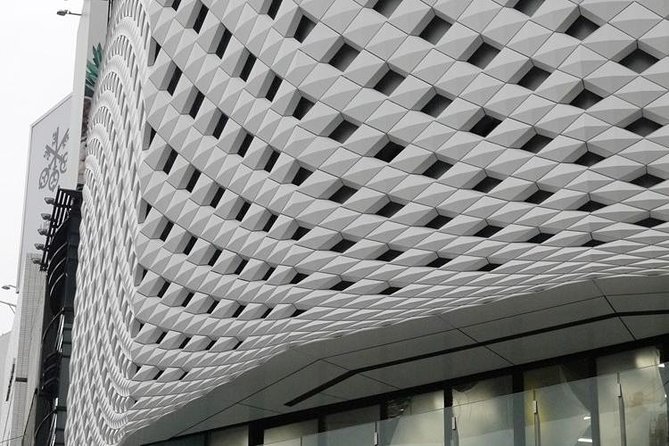
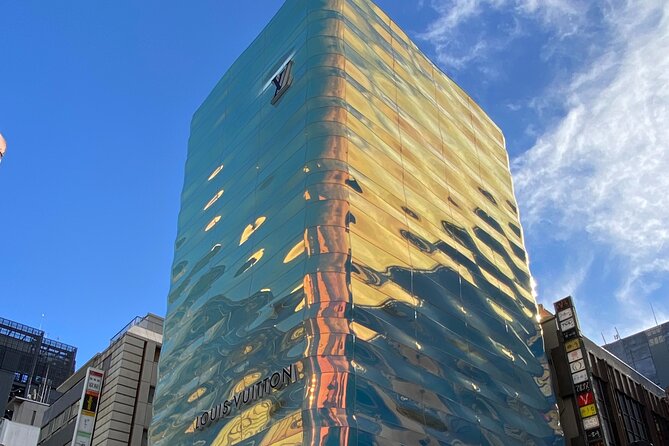
Several stops show how major companies use architecture to express their identity. You go inside the Nicolas G. Hayek Center for about 15 minutes, then visit Ginza Maison Hermes Le Forum for another 15 minutes.
These are not just places to shop. They give you a chance to examine how international brands commission distinctive buildings and interiors. The guide can explain why a company might choose a bold facade, a carefully controlled entrance, or a particular arrangement of windows and materials.
The Hermes stop is especially useful for readers who like the meeting point between art, retail, and architecture. The experience does not treat Ginza’s luxury brands as background decoration. It asks you to consider how the buildings themselves communicate quality, exclusivity, and corporate identity.
The Nicolas G. Hayek Center adds another example. Since the time is limited, do not expect a full architectural lecture at every building. Instead, think of these stops as focused introductions that teach you what to notice.
Toyoiwa Inari Shrine and Ginza’s smaller surprises
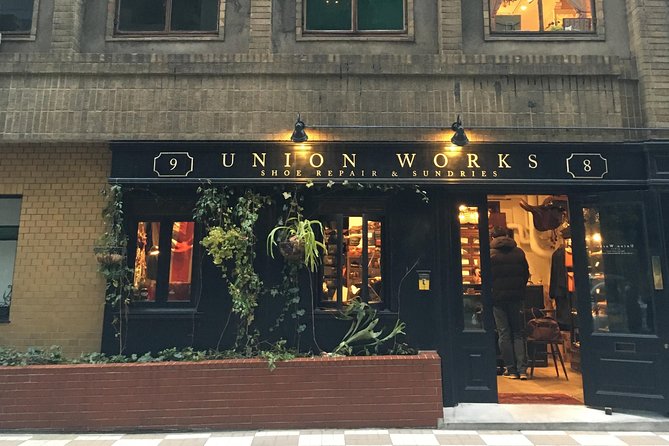
Toyoiwa Inari Shrine receives only about five minutes, but its small scale is precisely what makes it valuable. It gives you a glimpse of a religious site within a district better known for department stores and designer shops.
A short stop like this also shows why a private guide can improve the walk. Without local direction, you could easily pass by. The shrine may not command the same attention as Kabukiza or Wako, but it adds a layer of everyday tradition to the route.
The tour also includes a second shrine among the wider set of stops, according to the experience details and guide descriptions. The timing can vary, especially since one stop is listed as optional if time permits. If small cultural sites matter most to you, tell the guide at the beginning so the route can reflect that interest.
Mikimoto, Uniqlo, and the polished Ginza facade
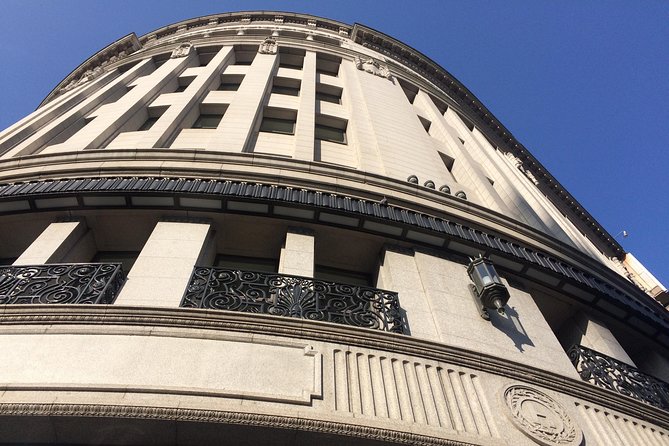
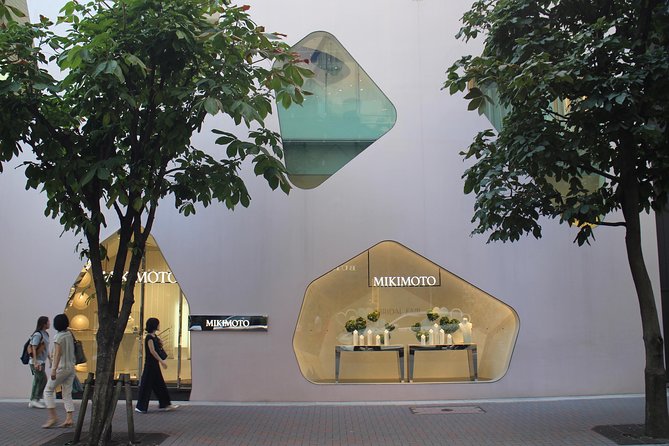
The route includes Mikimoto Boutique Ginza 2chome, where you may go inside if time allows. The planned visit is about five minutes, so this is more of a quick architectural look than an extended stop.
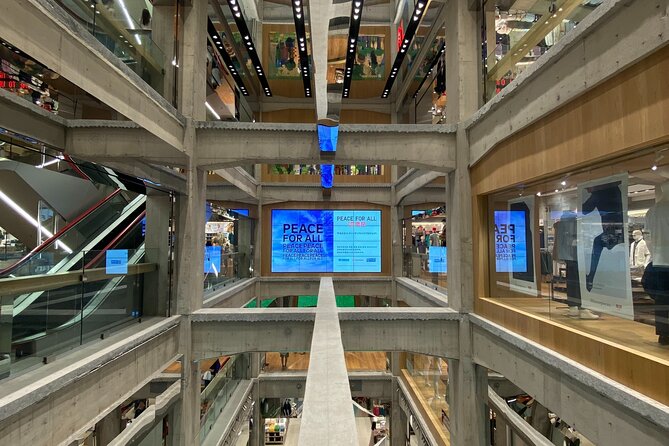
You then view Uniqlo Tokyo from the outside for around ten minutes. The building is useful for discussing how a familiar Japanese retail name presents itself in Ginza. The tour does not promise an extended indoor visit here, so you should treat it as a facade and street-level design stop.
Mikimoto Ginza 4chome Honten receives about five minutes from outside. These stops are short, but together they show how different brands compete for attention through building design. Your guide can help you compare them instead of seeing each storefront as an isolated photo opportunity.
This part of the walk may appeal most to people interested in retail architecture, graphic design, and city streets. If you prefer long visits inside historic sites, the pace may feel quick.
Wako Ginza and the district’s best-known image
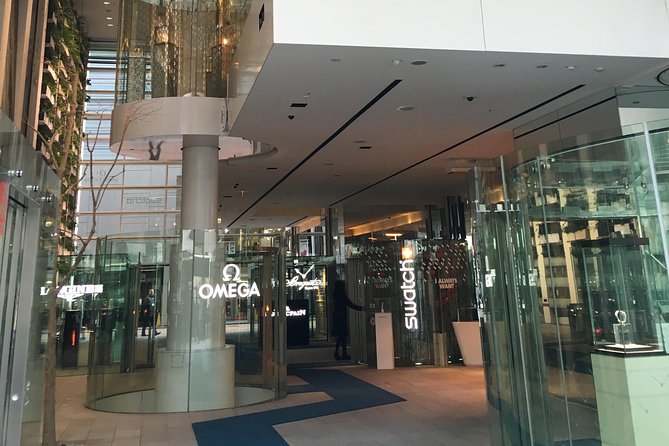
Wako Ginza is viewed from outside for about ten minutes. Its recognizable clock-tower presence makes it an important reference point for understanding Ginza.
The guide can place the building within the wider story of the district’s commercial identity. You get time to photograph it and to examine the way the structure works as a landmark, not simply as a shop.
Because this stop is on the exterior, weather can affect your enjoyment. The tour has no stated indoor substitute for every outdoor viewing point, so a light rain layer and comfortable shoes are sensible choices.
Okuno Building, a different kind of Ginza experience
The final architectural stop is Okuno Building, where you go inside for about ten minutes. This provides a useful contrast with the large, polished brand buildings seen earlier.
The building gives the route another scale and another mood. Rather than focusing only on new commercial statements, the tour includes a place where you can consider Ginza’s older building stock and smaller interior spaces.
The exact amount of time at each stop can change because this is a private walk. That is a benefit if your group asks many questions, but it also means you should not expect every listed stop to receive the same treatment. The Mikimoto Boutique visit, in particular, depends on available time.
What the private guide changes
At $132.10 per person, this is not a budget sightseeing walk. The value depends heavily on your group size. For one or two people, the cost is a premium for personal attention. For a group of five, the price buys a private guide for a half-day-style outing and becomes easier to justify.
The maximum booking size is five people. This is small enough for a conversation, and it avoids the stop-and-start feel of a large group. You can ask about architecture, Japanese history, shopping, translation, or local customs as the route develops.
The guides have different strengths. Yoko has been praised for clear explanations, a friendly manner, and adapting the walk to both modern architecture and cultural sites. Yoshi has helped first-time architecture students understand the subject without assuming prior knowledge. Taka Yamamura is an urban planner, which may appeal to you if you want more context about how Ginza works as a city district.
Mari has been noted for strong English and for preparing the route around the group’s interests. Makoto has helped with translation questions and introduced a small local tea and seaweed stop during one customized walk. Eriko has also been praised for local shopping suggestions and for spending extra time with her group.
These details are not a guarantee of which guide you will receive. They do show the kind of personal service the tour is built around. If you have a clear interest, tell the company before the walk so the guide can prepare.
Timing, pace, and the drink break
The experience is described as about three hours and 30 minutes, with the walking portion between sites listed at around 40 minutes. The individual stops add up to a little under three hours, so the exact pace and time at each place can vary.
You can choose between two departure times. That makes it easier to fit the walk around a morning visit, lunch, or an evening plan. Since the route ends in central Ginza, you can continue shopping or sightseeing after the guide leaves you.
A cozy pause with drinks is included. This is a small but useful feature during a walking tour. It gives you a chance to rest, ask follow-up questions, and compare the buildings you have seen so far.
You need moderate physical fitness. The tour is not described as strenuous, but you will walk between stops for several hours. Anyone who prefers a slow pace should say so at the start. The private format makes that request more realistic than it would be in a fixed group.
Who should book this walk
I would recommend this experience to you if you like cities through their buildings, enjoy asking questions, or have already seen Tokyo’s main sights and want a fresh angle. It also suits families and small groups who want a guide to adjust the level of explanation.
You do not need an architecture degree. Several guide experiences show that beginners can enjoy the route, and the explanations can be shaped around your knowledge. At the same time, an urban planner guide or a discussion of commercial design can give the walk enough substance for architecture fans.
This is less suitable if you want long, unhurried visits at every stop. Several buildings receive only five or ten minutes, and one interior visit depends on available time. It is also not ideal for anyone who dislikes walking or wants hotel pickup.
The tour is open to people aged 10 and older, and adult pricing applies to all participants. A family with older children could find the mix of temple, theater, shopping district, and unusual buildings more varied than a standard architecture lecture.
Practical details before you reserve
Your meeting point is near Tsukiji Station Exit 1, at 3-chome 15-1 Tsukiji, Chuo City. The finish is at the Ginza 4-chome intersection, in front of Mitsukoshi department store.
The end point is convenient. You are near major shopping, food, and public transportation, and you can continue exploring Ginza without retracing your steps. Hotel drop-off and pickup are not included.
Confirmation arrives when you book. Free cancellation is available up to 24 hours before the start time for a full refund. Changes or cancellations made inside that 24-hour window are not accepted for a refund, with the cut-off based on Tokyo local time.
The tour is often reserved well ahead of time, with average bookings made about 44 days in advance. That is useful planning information if your dates are fixed, especially because the private format limits each booking to five people.
Should you book the Ginza Architecture Walking Tour?
Book it if you want Ginza explained rather than merely photographed. The combination of Tsukiji Hongwanji Temple, Kabukiza, Toyoiwa Inari Shrine, luxury brand buildings, Wako, and Okuno Building gives you a more layered view of the district.
The strongest reason to choose it is the guide. A good match can turn a three-hour walk into a flexible conversation about architecture, culture, shopping, and urban life. Yoko, Yoshi, Taka Yamamura, Mari, Makoto, Eriko, and Haruka are among the guides associated with especially strong experiences, though your assigned guide may differ.
Skip it if your main goal is shopping time or if you want to linger inside each building. At $132.10 per person, the price makes the most sense for a small group that values personal attention and wants to understand why Ginza looks the way it does.
FAQ
How long does the Ginza architecture tour last?
The experience lasts approximately three hours and 30 minutes. The route includes about 40 minutes of walking between sites, though the exact pace and stop length can vary.
Where does the tour begin?
It begins near Tsukiji Station Exit 1, at 3-chome 15-1 Tsukiji in Chuo City, Tokyo.
Where does the tour finish?
The walk ends at the Ginza 4-chome intersection, in front of Mitsukoshi department store.
Is the tour private?
Yes. Only your group participates, and each booking can include a maximum of five people.
Is the tour conducted in English?
Yes. The tour includes an English-speaking guide who provides architectural, cultural, and historical information.
What ages can join?
The minimum age is 10. Adult pricing applies to all participants.
Is hotel pickup included?
No. You must make your own way to the Tsukiji meeting point, and hotel pickup and drop-off are not included.
Newly added in the world
- Barcelona: Guided tour e-bike Barcelona historical and modernist Barcelona★ 4.5 · 5 reviews
- Barcelona Architecture Walking Tour With Casa Batlló Upgrade★ 4.8 · 11 reviews
- Astana: Old City Tour, Imperialistic and Soviet Architecture★ 5.0 · 4 reviews
- Barcelona Beyond Gaudí: Modernism, Rooftops, and Hidden Gems★ 5.0 · 2 reviews
- Architecture Tour: Old Historic Madrid with an architect★ 4.3 · 3 reviews
- An Architect’s Tour of Downtown Santiago★ 5.0 · 7 reviews
- London: Architecture Tour of Benjamin Franklin House★ 5.0 · 5 reviews
- Architectural Wonders of KAFD, An Iconic Destination★ 5.0 · 3 reviews
Walking Tours, compared.
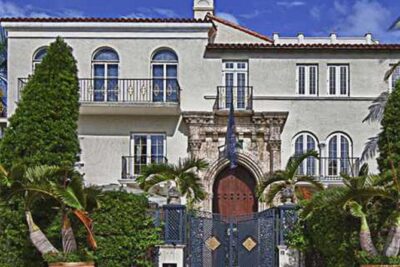
The Official Art Deco Walking Tour by The Miami Design Preservation League
Read our review →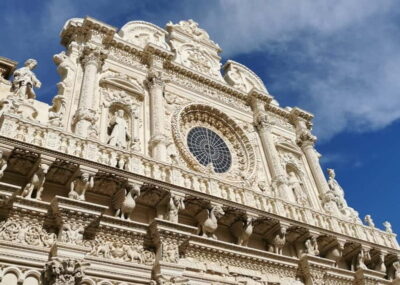
Baroque Architecture and Underground Walking Tour
Read our review →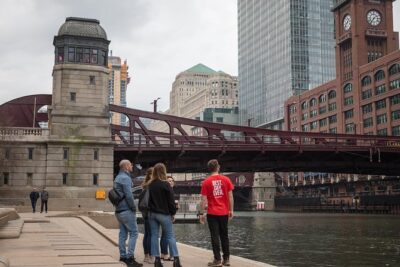
Chicago in a Day: Food, History & Architecture Walking Tour
Read our review →

Ramblas, Old Town, Gothic and Gaudi Architecture Walking Tour
Read our review →
Chicago’s Secret Interiors Architectural Walking Tour
Read our review →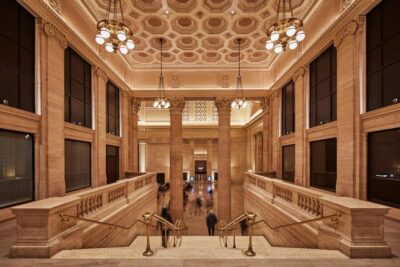
Browse the lists this tour appears in