
Review · HISTORICAL TOURS
Chicago: History and Architecture Guided Kayak Tour
Chicago’s most surprising engineering story is right beneath its skyscrapers: the river flows backward. On this two-hour kayak tour, you get close enough to see how that feat shaped the city while paddling through its downtown core.
I like the small six-person group, which should make it easier to hear the guide and ask questions. I also like the mix of architecture, city history, working bridges, and wildlife instead of a tour focused only on buildings. The main consideration is practical: you need to swim, and the single and double kayaks have weight limits.
Key points
- See Chicago from river level: Paddle through the urban canyon of downtown rather than viewing the buildings only from the street.
- Learn why the river runs backward: The guide explains the engineering work that changed the river’s direction and helped shape Chicago’s growth.
- Pass under historic ironwork bridges: The route includes articulated bridges within the world’s second-largest operational drawbridge system.
- Stay with a very small group: Six participants is the maximum, a useful size for listening and asking questions.
- Finish in central Chicago: The tour ends in a convenient downtown location for more sightseeing afterward.
- Check the physical requirements first: The activity is not suitable for non-swimmers or people with mobility impairments.
Chicago from the water, not the sidewalk
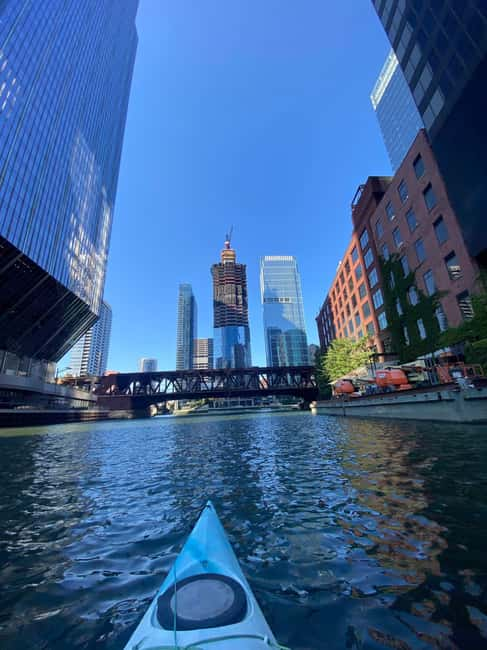
Downtown Chicago can feel like a canyon of steel and stone. From a kayak, you see the same towers from a lower, slower angle, with the river forming a moving line through the middle of the city.
That change in viewpoint is the main reason to book. You are not simply looking at architecture from a boat. You are moving beneath it, passing bridge machinery overhead, and watching the Riverwalk promenade operate along the banks.
The route follows a central section of the Chicago River. As you paddle, your guide connects the waterway to the city’s development, explaining how the river helped Chicago grow and why engineers later had to make such major changes to it.
This setting gives the tour a useful balance. You get an outdoor activity, a close look at downtown structures, and a guided explanation of the city’s past. If you prefer tours that explain why a place looks and works the way it does, this is more rewarding than a simple sightseeing paddle.
Other buildings people go and look at in Chicago:
- Chicago Architecture River Cruise
★ 5.0 · 15,756 reviews - Chicago River 90-Minute Architecture Tour
★ 4.5 · 9,629 reviews - Chicago River: 1.5-Hour Guided Architecture Cruise
★ 4.8 · 8,046 reviews
Getting on the river with a small group
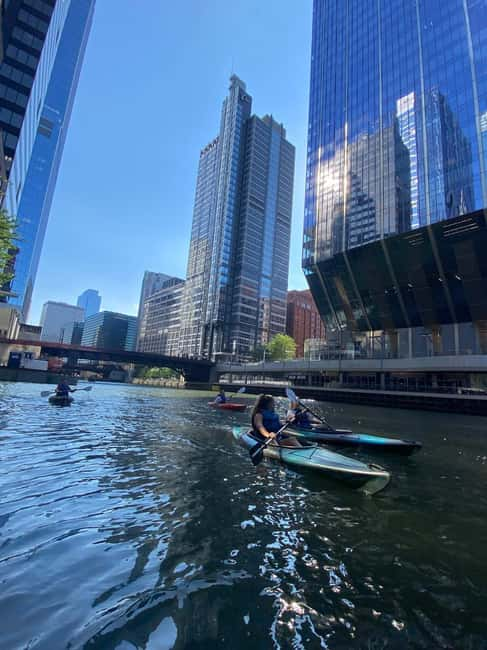
The tour is limited to six participants. That matters on a kayak outing because instructions and commentary can easily get lost in a large group. With fewer people, you should have a better chance of hearing the English-speaking guide and getting help if you need to adjust your paddling.
The tour provider is Wateriders Kayak Tours & Rentals. A live guide leads the entire experience, and kayaks plus the required equipment are included in the $64 price.
You should arrive at the starting point on your own. Transportation to the launch area is not included, and the exact start time depends on availability when you book. Since the finish is in a central location, you can plan to continue exploring downtown afterward rather than returning to a distant meeting point.
The tour lasts two hours. That is long enough to cover the river’s major stories without turning the outing into a full-day commitment. It also leaves room in your schedule for the Riverwalk, nearby architecture, museums, or a meal after paddling.
Why the backward-flowing river matters
The river’s reverse flow is not a minor curiosity. It is one of the clearest examples of Chicago using engineering to solve a serious urban problem.
Your guide explains how the river played a role in Chicago’s growth and why its direction became so important. The tour information does not promise a detailed technical lecture, but the subject gives the outing a strong central story: the waterway you are paddling is also evidence of the city’s effort to reshape its environment.
This is where the tour moves beyond a standard skyline outing. You are not just counting tall buildings. You are learning how water, trade, urban expansion, and engineering affected one another.
I especially like that this topic is easier to understand from the river itself. The setting gives the explanation a physical reference point. As you move along the water, the city’s relationship with the river is right in front of you.
Passing beneath Chicago’s iron bridges
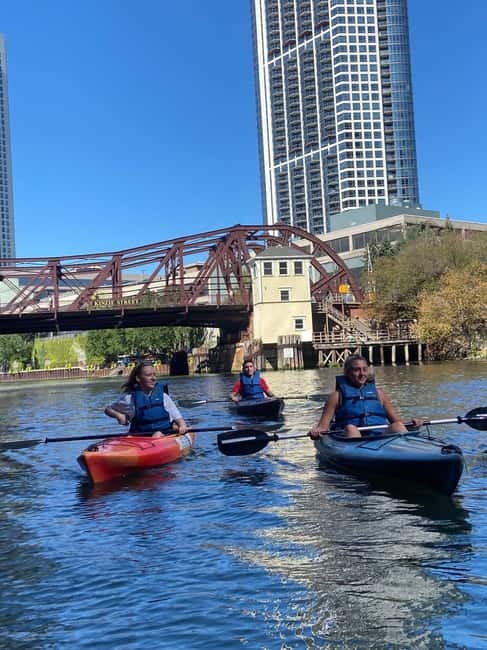
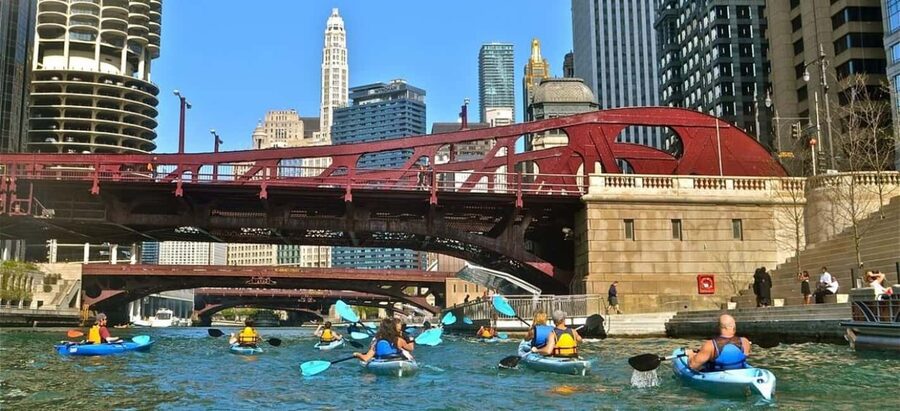
The bridges are another highlight. The route passes under distinctive articulated ironwork bridges that form part of the world’s second-largest operational drawbridge system.
From street level, bridge machinery can blend into the background. From a kayak, you get a much closer look at the structure and its purpose. The underside, moving parts, and narrow passage create a different impression than a normal crossing by car or on foot.
This section should appeal to anyone who likes working infrastructure. The bridges are not simply decorative backdrops. They are functioning pieces of the city, built to accommodate river traffic while connecting downtown streets.
Your guide puts these structures into context as you pass beneath them. That live explanation adds value because it helps you notice details you might otherwise miss. You may leave with a better sense of how Chicago’s downtown operates as a working center, not just as a collection of famous buildings.
Kayaking beneath bridges also gives the route a natural rhythm. You paddle in open sections, then move through more enclosed spaces before returning to wider views of the river and skyline.
More History Walks in Chicago:
- Chicago in a Day: Food, History & Architecture Walking Tour
★ 5.0 · 1,153 reviews - Historical and Architectural Chicago Fireboat River & Lake Cruise
★ 5.0 · 246 reviews - Chicago: Food, History and Architecture Tour
★ 4.8 · 104 reviews - Chicago River Architecture Tour Aboard a Historic Yacht
★ 5.0 · 45 reviews
The skyline at water level
Chicago’s skyline is famous, but your experience of it changes when you are seated in a kayak. Looking up from the river makes the buildings feel taller and closer, while the water creates a clear line through the dense downtown setting.
The tour takes place along the recently renovated Riverwalk promenade. From the river, you can see the shoreline activity from a separate angle. People use the promenade, buildings rise directly behind it, and the water ties the whole scene together.
The skyline is not the only point of interest. The guide also discusses major figures in Chicago’s development and the changes that made the central river corridor what it is today. That broader context keeps the tour from becoming a quick photo stop on the water.
Bring your attention to the spaces between the major buildings. Chicago’s character is often clearest in its bridges, river walls, walkways, and engineering details. A kayak gives you time to notice those pieces without rushing from one street corner to the next.
Wildlife and activity along the river
The river is not only a hard-edged corridor of concrete and steel. The tour gives you a chance to spot wildlife that has returned to this downtown section of the waterway.
Specific species are not listed, so you should not book this as a guaranteed wildlife sighting. Still, the possibility adds a welcome natural element to an outing focused on buildings and engineering.
The shoreline also provides plenty to watch. The Riverwalk has become an active public space, and you will see its use from the water while continuing through the downtown corridor. The contrast is part of the appeal: city activity on the banks, working bridges overhead, skyscrapers behind them, and wildlife on the river.
I like this mix because it keeps the trip from feeling too narrow. You get architecture, urban design, local history, public life, and a little nature in one compact experience.
What the two-hour route feels like
The opening part of the tour is devoted to getting onto the river and settling into the kayak. Your guide then leads the group through the downtown waterway, explaining the city’s development and the river’s role along the way.
As the route continues, the focus shifts between the skyline, bridges, engineering, and shoreline. The tour is not presented as a list of fixed stops, so you should think of it as a moving lesson with changing views rather than a series of places where you get out and walk around.
The central stretch includes the ironwork bridges and the main explanations about the river’s reverse flow. These are likely to be the most distinctive parts of the experience because they combine a close physical view with the city’s larger story.
Later, you continue along the river while looking for wildlife and observing the Riverwalk. The route finishes at a central location, which is useful if you want to carry on with downtown plans.
At two hours, the pace should feel focused. You will not cover every part of the Chicago River, but you will have enough time to understand this central section and see downtown from a fresh angle.
Is $64 a fair price?
At $64 per person, the tour sits in a reasonable range for a guided two-hour city activity. The price includes the kayak, equipment, and live English-speaking guide, so you are paying for both the outing and the interpretation.
The strongest value comes from the combination of access and context. You could walk beside the river for free, but you would not get the same view beneath the bridges or the same connection between the water and the city’s engineering story.
The small group also matters. A maximum of six participants is more personal than a large sightseeing group and should make the guide’s explanations easier to follow. That is a useful feature for anyone who wants to ask questions rather than simply paddle behind a leader.
Food and transportation to the starting point are not included. You should budget for those separately and allow enough time to reach the launch area. The tour ends centrally, which can reduce the need for extra transportation afterward.
For a visitor who wants one active downtown experience, $64 offers solid value. It is less compelling if you only want a quick skyline photograph or if you are uncomfortable with paddling and water-based activities.
Who should book this kayak tour?
This outing suits you best if you want to combine sightseeing with light outdoor activity. It works especially well for first-time visitors who want a short introduction to Chicago’s river, bridges, downtown buildings, and engineering history.
It is also a good choice for people who have already seen the city from street level. The river offers a different angle on familiar sights, and the guide adds details that are easy to miss while walking.
Architecture fans should enjoy the bridge and skyline views. History-minded visitors will appreciate the explanation of the river’s role in Chicago’s growth. Families and friends may like the small-group setting, provided everyone meets the swimming and mobility requirements.
This is not the right pick if you cannot swim or have a mobility impairment. Kayaking also requires active participation, so you should be comfortable handling a paddle for two hours. The available information does not describe the water conditions, paddling difficulty, or weather policy, so ask the provider if those details affect your decision.
Single kayaks hold about 275 pounds, while double kayaks hold about 500 pounds. Check those limits before booking and choose the option that fits your group.
Planning around the tour
The tour is offered in English, and you should check availability for the exact starting times. Since transportation to the meeting point is not included, plan that part of the day before you arrive.
The finish is central, making it easy to connect the outing with other downtown plans. You could use the rest of the day for more Riverwalk time, nearby attractions, or a meal, though food itself is not part of the tour.
The booking terms are flexible. You can cancel up to 24 hours before the activity for a full refund, and you can reserve now while paying later. Those options are useful when your Chicago schedule is still changing.
The tour has received a perfect 5 rating from three submitted reviews, including an excellent assessment from a verified United States booking dated July 28, 2025. That small sample cannot predict every person’s experience, but it supports the idea that the basic format is working well for people seeking a guided downtown paddle.
Should you book the Chicago River kayak tour?
Book it if you want Chicago’s buildings explained from the water, not just photographed from the street. The reverse-flow story, working iron bridges, small group, central finish, and chance to spot wildlife give the two-hour route more substance than a simple paddle.
Skip it if you cannot swim, have a mobility impairment, or want a fully passive sightseeing ride. For everyone else, the $64 cost is fair for a guided outing that combines city history, engineering, skyline views, and a little nature in one compact downtown experience.
FAQ
How long is the Chicago history and architecture kayak tour?
The tour lasts two hours.
How much does the kayak tour cost?
The price is $64 per person.
What is included in the price?
The tour includes a live English-speaking guide, a kayak, and equipment.
Is transportation to the starting point included?
No. You are responsible for getting to the starting point.
How many people can join the tour?
The group is limited to six participants.
What language is the tour offered in?
The live tour guide conducts the experience in English.
Can I cancel for a full refund?
Yes. You can cancel up to 24 hours in advance for a full refund.
Can I reserve now and pay later?
Yes. The activity allows you to reserve your place and pay later.
Is the tour suitable for non-swimmers or people with mobility impairments?
No. The tour is not suitable for non-swimmers or people with mobility impairments. A single kayak has a weight limit of about 275 pounds, and a double kayak has a limit of about 500 pounds.
Newly added in Chicago
- Private Frank Lloyd Wright Architectural Tour by Luxury Vehicle★ 3.5 · 7 reviews
- Private Chicago Architecture Tour★ 5.0 · 5 reviews
- Private Chicago Architecture Walking Tour★ 5.0 · 6 reviews
- Chicago Luxury Minibus City Tour and Architecture River Cruise★ 4.5 · 8 reviews
- Chicago History and Architecture Walking Tour with Boat Cruise★ 4.5 · 10 reviews
- Small Group History And Architecture Walking Tour of Chicago★ 4.5 · 8 reviews
- Chicago Walking Tour: See Inside Art Deco Masterpieces★ 4.9 · 8 reviews
- Chicago: Icons Guided Architecture Walking Tour★ 4.4 · 4 reviews
Historical Tours, compared.
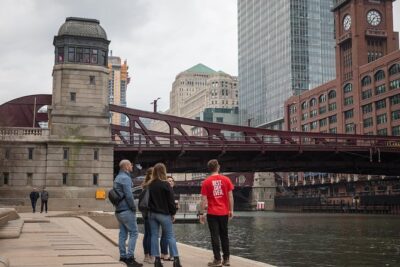
Chicago in a Day: Food, History & Architecture Walking Tour
Read our review →
Charleston’s Best Highlights: History, Culture & Architecture
Read our review →
Palm Springs Modernism Architecture & History Bike Tour
Read our review →
Historic Georgetown: History, Gossip, & Architecture Walking Tour
Read our review →
Charleston History, Homes, and Architecture Guided Walking Tour
Read our review →
Historical and Architectural Chicago Fireboat River & Lake Cruise
Read our review →Browse the lists this tour appears in