
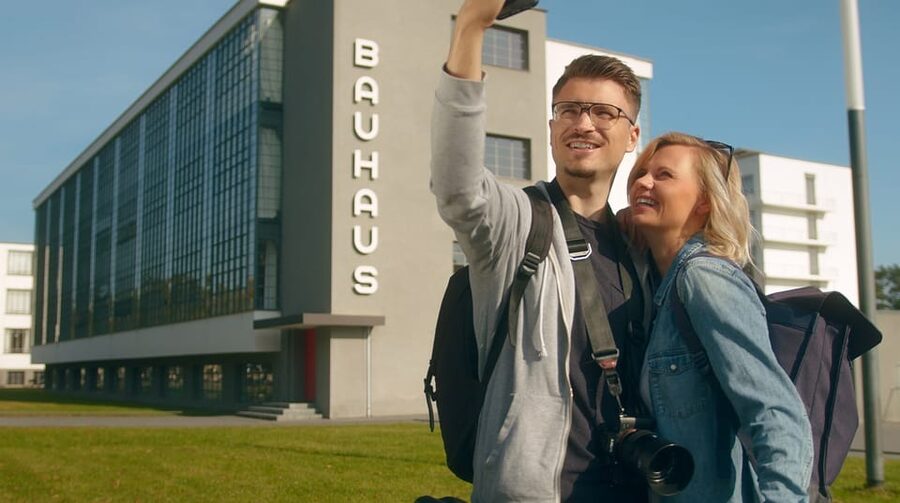
Review · GERMANY ARCHITECTURE TOURS
Dessau: Bauhausbauten Radtour
Dessau’s Bauhaus story makes far more sense from a bicycle seat. In three hours, you can connect the Kornhaus on the Elbe, the Masters’ Houses, the famous Bauhaus building, the Historic Employment Office, and the Törten Housing Estate without piecing the city together on your own.
I like the broad route and the human stories. You get both the major buildings and anecdotes about the Bauhäusler, the people who lived and worked around the school. I also like the simple value: the guided tour costs about $23, and a rental bike is available for an additional €10 per bike per day.
The main consideration is language. The tour is conducted in German, and it runs rain or shine. If wet weather would spoil your day on a bicycle, check the forecast before booking.
Key points to know before you ride
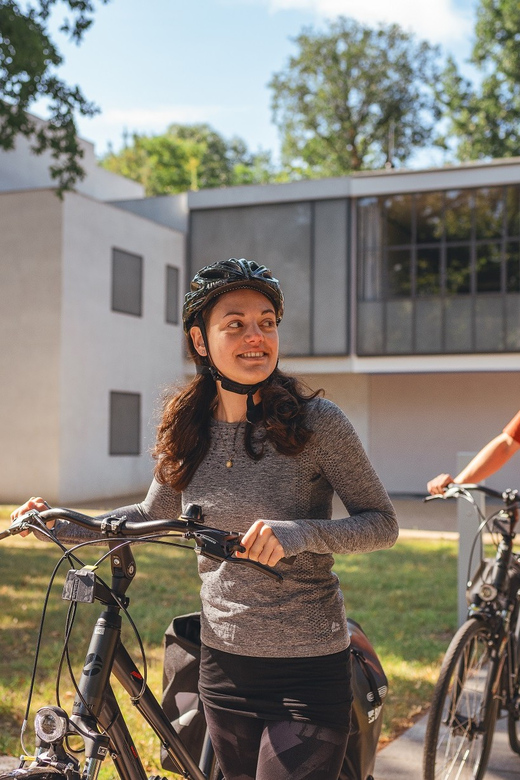
- The route links Dessau’s main Bauhaus sites: You see the Kornhaus, Masters’ Houses, Bauhaus building, Historic Employment Office, and Törten Housing Estate.
- The tour takes three hours: That gives you a useful city overview without turning the outing into a full-day commitment.
- A trained guide leads the ride: Expect architectural background, Bauhaus history, and personal anecdotes about the Bauhäusler.
- You begin at the Tourist Information: This is also where you can pick up a rental bicycle.
- The ride ends at the Kornhaus: The restaurant sits beside the Elbe, giving the route a natural finish.
- Bike rental is extra: The tour price does not include a bicycle. Rental costs €10 per bike per day.
Why a bicycle is the right way to see Dessau’s Bauhaus
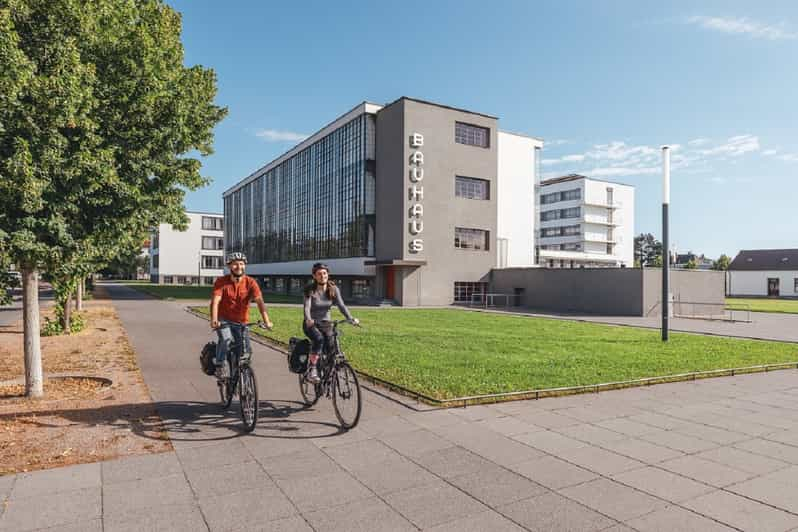
Dessau’s Bauhaus sites are spread across the city rather than gathered in one compact museum complex. A bicycle helps you understand the relationship between them. You are not simply checking off isolated buildings. You are moving through the city that made the Bauhaus practical, visible, and part of daily life.
The route covers the city area from the Elbe in the north to Törten in the south. That range matters. The Kornhaus gives you a river setting, while Törten shows how Bauhaus ideas reached beyond school buildings and into housing. Between those points, you see the central institutions and homes connected with the movement.
I like this format for a first visit because it gives you orientation fast. After three hours, you should know where the main sites are and which ones deserve a second look. The guide also adds the details that a sign or exterior view cannot provide, especially stories about the people behind the buildings.
The cycling itself is part of the lesson. Bauhaus is often presented through clean lines, furniture, and modern design. In Dessau, you see how those ideas worked at the scale of schools, offices, houses, and public buildings. The changing route gives the architecture a setting instead of treating each building like a separate display.
Other buildings people go and look at in Germany:
- Munich 3-Hour Segway Tour: Nazi Munich & Royal Architecture
★ 4.9 · 194 reviews - Düsseldorf: Guided City Architecture Walking Tour
★ 4.6 · 61 reviews - Hidden Architectural Gems of Munich (Max. 16 guests)
★ 4.9 · 52 reviews
Starting at the Tourist Information
Your guide meets you in front of the Tourist Information. This is the practical starting point, especially if you need to arrange a bicycle. Rental is possible for €10 per bike per day, but it is not included in the tour price.
The meeting point also keeps the first few minutes straightforward. You do not need to find a distant site or make your own way to the first building. After introductions, the group sets out with a trained guide who explains the route and the Bauhaus sites along the way.
No guide name is provided for this experience, so you should not expect to request a particular person. The tour language is German. That is an important booking detail, since the stories and architectural explanations are a central part of the outing.
The three-hour length is well judged for a city ride. It is long enough to cover the major sites, yet short enough to fit around other time in Dessau. You should plan to remain with the group for the full route, since the value comes from the sequence of stops and the guide’s commentary.
The Masters’ Houses and the people behind the movement
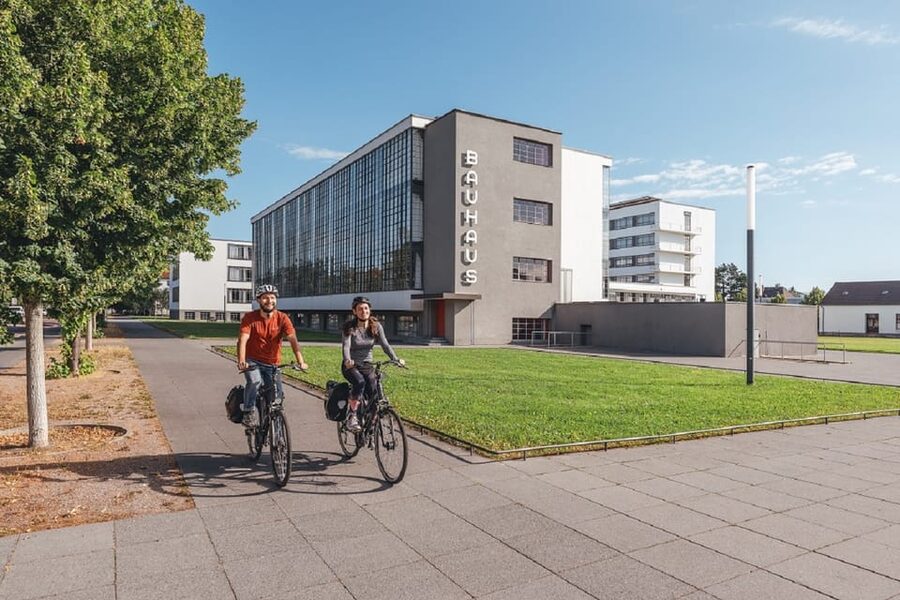
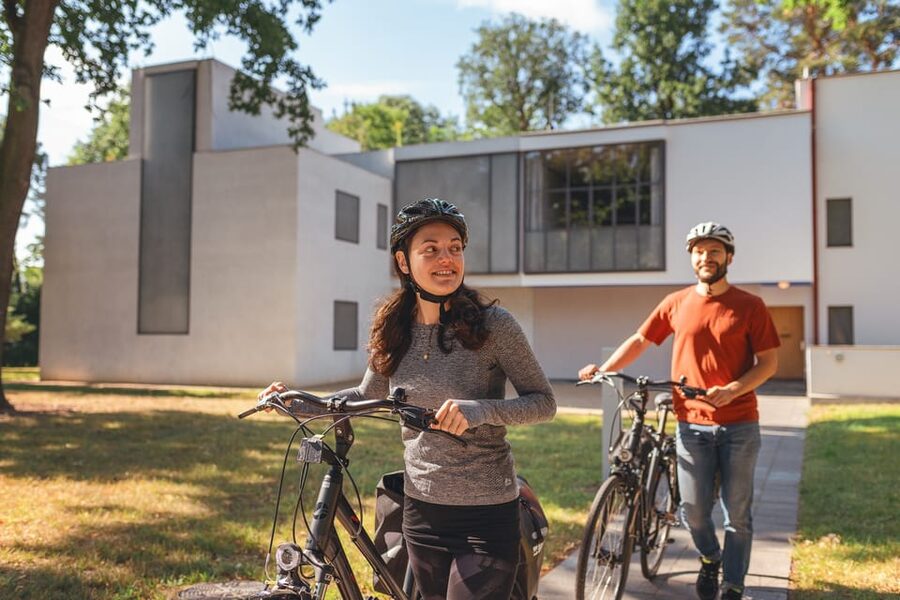
The Masters’ Houses are one of the most personal parts of the route. They connect Bauhaus design with the people who taught and worked at the school. Here, the movement feels less like a design label and more like a community of artists, teachers, and residents.
The guide’s anecdotes matter at this stop. You learn about the Bauhäusler as people, not only as names attached to buildings. Those stories can make the architecture easier to read because you begin to see why these houses mattered within the school’s daily life.
The exact amount of time at each building is not specified, so you should not expect a long interior visit at every stop. This is a guided overview by bicycle, not a building-by-building museum tour. If you want extended time inside a particular site, leave room in your schedule to return independently.
Still, the stop earns its place on the route. It gives you a link between the Bauhaus building as an institution and the lives connected with it. That human scale is one of the tour’s strongest features.
The Bauhaus building and the school’s wider story
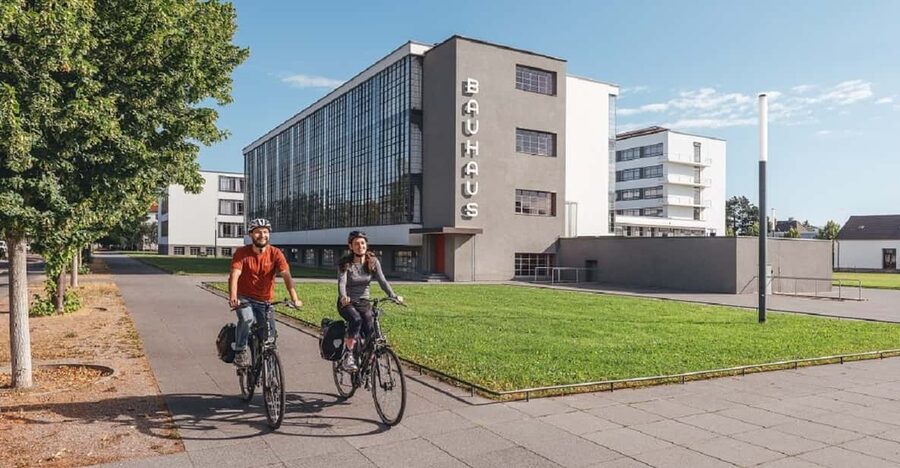
The Bauhaus building is the obvious centerpiece, but the tour does not treat it as the whole story. Your guide places it within the history of the art academy and explains the architectural ideas visible in the buildings.
This is where the tour can help you most if modern architecture is not your usual subject. A quick look at a famous facade may leave you with little more than an impression of glass, geometry, and functional design. A guide can point out why the building matters and how it relates to the school’s work.
You will also hear anecdotes about the Bauhäusler, which keeps the stop from becoming a dry architecture lecture. The supplied information does not give a detailed list of topics or individual stories, so the exact emphasis may vary by guide. You can expect the discussion to cover the school’s history, the architecture, and the people associated with it.
The advantage of seeing this building as part of a longer ride is contrast. After visiting homes and later seeing housing built for ordinary residents, you can better judge the difference between Bauhaus as an educational center and Bauhaus as a social idea.
Same city, a different facade:
- Potsdam: Guided Walking Tour of UNESCO Site and Architecture
★ 4.7 · 49 reviews - Private Taxi Tour City East & West History and Architecture 3-4h
★ 5.0 · 42 reviews - Stuttgart city library – an architectural tour
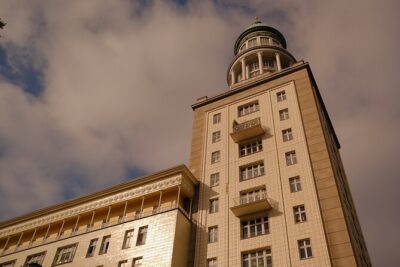
★ 4.4 · 27 reviews - Karl-Marx-Allee Tour: Life and Architecture in East Berlin
★ 5.0 · 19 reviews
The Historic Employment Office and practical modern design
The Historic Employment Office adds another useful layer to the route. It shows that Bauhaus-related architecture was not limited to artist housing or an art school. The movement also shaped civic and working spaces.
This stop helps explain why the tour includes more than the best-known landmarks. You get a wider picture of Dessau’s built environment and see how modern design entered public life. The guide’s explanation of the architecture should help you notice the function of the building as well as its appearance.
For me, this is the kind of stop that makes a guided tour worthwhile. You might pass a civic building on your own and admire its form without knowing why it belongs in a Bauhaus itinerary. The guide supplies that connection.
The route is still an overview, so do not expect a lengthy architectural survey at each building. The benefit is breadth. In one outing, you see different types of Bauhaus-related places and learn how they fit into the city.
Riding south to the Törten Housing Estate
The Dessau-Törten Housing Estate gives the tour its strongest everyday focus. Here, Bauhaus ideas move from institutions and designers into planned housing. That makes the stop valuable even if you are more interested in urban life than in art-school history.
The estate is in the south of the city, while the Kornhaus is on the Elbe in the north. Covering that distance by bike is what makes the itinerary possible within three hours. You see how widely the sites are spread and how the Bauhaus story is tied to Dessau itself.
The information provided does not specify whether the tour enters individual homes or only views the estate from outside. You should treat this as a guided visit to the housing area rather than assume an interior tour. Ask the provider if interior access matters to your plans.
The Törten stop also gives you a useful point of comparison. The Masters’ Houses were connected with Bauhaus teachers and artists. Törten was planned as housing. Seeing both helps you consider how modern design served different social purposes.
Finishing beside the Elbe at the Kornhaus
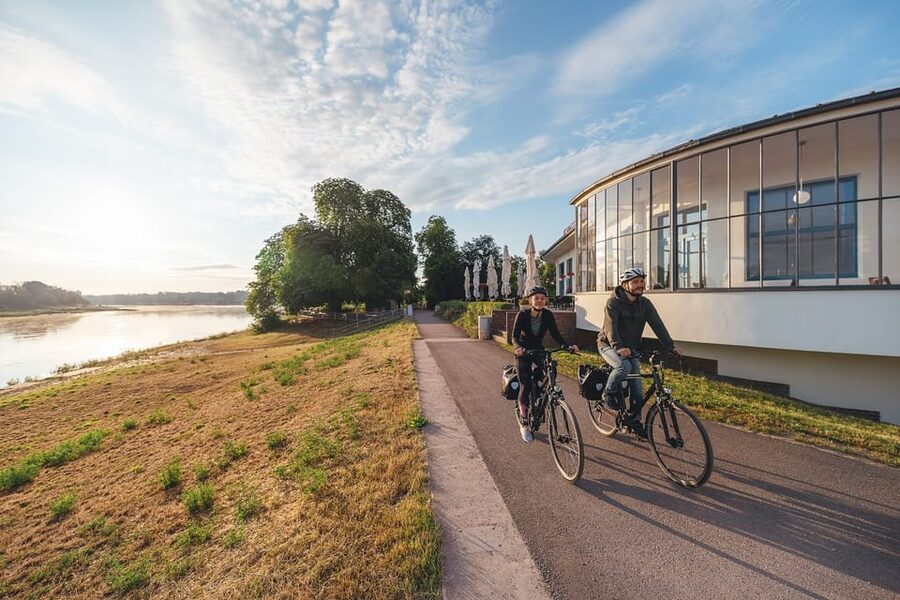
The tour ends at the restaurant Kornhaus on the banks of the Elbe. This is a pleasant finish because the ride closes with one of Dessau’s most scenic settings rather than dropping you back at the starting point.
The ending is worth planning around. You may want to eat there after the tour, though the meal is not included. The experience information only confirms the restaurant and river location, so check opening hours separately if you are counting on lunch or dinner.
Ending at the Kornhaus also gives the route a clear shape. You begin at the Tourist Information, ride south to Törten and through the central Bauhaus sites, then finish by the river. Since the tour does not return to the starting point, think about where you need to go afterward.
I like non-return routes when they make geographic sense, but you should note the practical tradeoff. If you have left luggage or another appointment near the Tourist Information, allow time to make your own way back.
Price, bicycle rental, and what you receive
At about $23 per person, the tour is fairly priced for a three-hour guided city route. You are paying for a trained guide, a planned itinerary, and explanations that connect several sites. The guide fee is the main value, since most of the buildings can be seen only by organizing your own route across Dessau.
The bicycle costs extra, at €10 per bike per day. That is a separate charge, so include it when comparing the total cost. If you already have a bicycle, the tour price becomes especially simple. If you need to rent one, you still get a full day of use rather than only a few hours, according to the provided rental terms.
The tour includes the guided bicycle ride. It does not include food, drinks, or any other listed extras. You should also allow for your own transport before and after the route, since the start and finish are different locations.
Free cancellation is available up to 24 hours before the tour for a full refund. You can also reserve now and pay later, which helps if your Dessau schedule is still shifting. The tour operates in rain or shine, so flexible booking is useful, but weather protection remains your responsibility.
Who should book this Dessau bike tour?
I would choose this tour if you want a first, organized look at Dessau’s Bauhaus sites and are comfortable following a German-speaking guide. It suits visitors who prefer seeing a city through its streets and buildings rather than spending three hours in one museum.
It is also a good match for anyone curious about how Bauhaus ideas reached beyond the famous school. The combination of the Masters’ Houses, Historic Employment Office, and Törten Housing Estate gives you more range than a single landmark visit.
You may want a different plan if you need English commentary, indoor access at every stop, or a slow visit focused on detailed photography. Those features are not provided here. The tour is built around movement, overview, architecture, and anecdotes.
Pack for changing weather and be ready to ride in it. If conditions are poor, the rain-or-shine policy may make the experience less comfortable. On a dry day, however, the bicycle route is an efficient way to see the city’s major Bauhaus locations.
Should you book it?
Book the Dessau Bauhausbauten Radtour if you want the citywide picture, a trained German-speaking guide, and stories that connect buildings with the Bauhäusler. The route covers the key sites in three hours and ends at the Elbe, which makes it a strong introduction to Dessau’s architecture.
Skip it if you need English, guaranteed interiors, or a weather-proof activity. For everyone else, the modest price and broad route make this one of the more practical ways to understand why Dessau matters to Bauhaus.
FAQ
How long does the bicycle tour last?
The tour lasts three hours.
Where does the tour begin?
The guide meets you in front of the Tourist Information in Dessau.
Where does the tour end?
The tour ends at the restaurant Kornhaus on the banks of the Elbe.
Which Bauhaus sites does the route visit?
The route includes the Kornhaus, Masters’ Houses, Bauhaus building, Historic Employment Office, and Dessau-Törten Housing Estate.
Is a bicycle included in the tour price?
No. Bicycle rental is possible for €10 per bike per day.
What language is the tour conducted in?
The tour is conducted in German with a live guide.
Does the tour operate in bad weather?
Yes. The tour takes place rain or shine.
Can I cancel for a full refund?
Yes. You can cancel up to 24 hours in advance for a full refund.
Newly added in Germany
- Hidden Architectural Gems of Munich (Max. 16 guests)★ 5.0 · 2 reviews
- Munich Your Way: Private Tour with Architect & Guide★ 5.0 · 2 reviews
- Architectural Frankfurt: Private Tour with a Local Expert★ 5.0 · 2 reviews
- Private Taxi Tour of City East History and Architecture 2-3h★ 5.0 · 2 reviews
- Berlin Architecture/River Spree Full Day Photography Tour★ 5.0 · 2 reviews
- Architectural Berlin: Private Tour with a Local Expert★ 4.0 · 3 reviews
- Lübeck: Architecture and Local Craft Private Guided Tour★ 4.0 · 6 reviews
- Lübeck: Private Historical and Architectural Walking Tour★ 4.5 · 6 reviews
Germany Architecture Tours, compared.
Munich 3-Hour Segway Tour: Nazi Munich & Royal Architecture
Read our review →
Düsseldorf: Guided City Architecture Walking Tour
Read our review →
Hidden Architectural Gems of Munich (Max. 16 guests)
Read our review →
Guided Walking Tour of UNESCO Site and Architecture
Read our review →
Private Taxi Tour City East & West History and Architecture 3-4h
Read our review →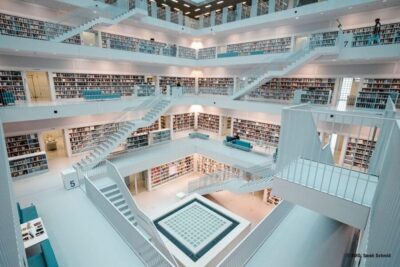
Karl-Marx-Allee Tour: Life and Architecture in East Berlin
Read our review →
Browse the lists this tour appears in