
Review · HISTORICAL TOURS
Architecture Tour: Old Historic Madrid with an architect
Madrid’s story begins with an Arab fortress, not a grand Bourbon boulevard. This private walking tour follows that change step by step, from the old Alcazar and medieval walls to the Habsburg squares and the Royal Palace you see today. You get history, politics, city planning, and architecture in one walk.
I like the architect-led viewpoint, which helps you notice why Madrid’s streets, churches, walls, and public squares sit where they do. I also like the route’s old-city texture: taverns along Cava Baja, the remains of the Arab Wall, and Plaza de la Villa before the tour ends at Plaza Mayor. The main consideration is focus. This is a detailed architecture and history walk, not a light sightseeing stroll, and you do not enter the Royal Palace.
- Follow Madrid from its ninth-century Arab origins to the Bourbon era.
- See the Royal Theater, Royal Palace exterior, Almudena Cathedral, and Royal Collections Museum area.
- Study surviving Arab and 12th-century Christian walls.
- Walk through Cava Baja, Plaza de la Villa, San Miguel Market, and Plaza Mayor.
- Ask questions in a private group with an English- or Spanish-speaking guide.
- Plan for 3.5 hours on foot, with no wheelchair access and weather-sensitive conditions.
A city history told through buildings
I find this tour most useful if you want to understand Madrid as a built city rather than simply check off famous sights. The guide connects changes in power with changes in stone, street plans, squares, churches, and royal buildings.
You begin with the foundations of Madrid under Muslim rule. The Arabs built the Alcazar at the end of the ninth century, creating the first major stronghold around which the city developed. Later, Alfonso VI of Castile conquered Madrid in the 11th century. Those two moments give the walk its basic shape: a frontier settlement becomes a Christian city, then a royal capital.
The story moves on to Felipe II, who fixed the capital in Madrid. That decision changed the city’s future. Madrid needed streets, public buildings, royal residences, churches, and spaces suitable for court life. The Habsburg, or Austrias, period forms the center of the tour, while Bourbon changes from the 18th century onward explain why the old city looks like a mix of eras.
This approach is especially useful for architecture students, architects, and anyone who likes history with a practical edge. You are not only told what a building is called. You learn how politics and royal decisions shaped the city around it.
Starting at the Royal Theater
The meeting point is outside the Starbucks at one corner of the Royal Theater, at Plaza de Isabel II. This is a simple place to find, though the square can have several entrances and moving pedestrians, so I would arrive a little early.
The Royal Theater is the first formal stop. You spend about 15 minutes here on a guided visit and photo stop. The building introduces Madrid’s performance, court, and public-life traditions, and it gives your guide a useful place to explain how later royal projects changed the area.
From here, the walk moves into Plaza de Oriente. You spend another 15 minutes with the guide, looking at the relationship between the theater, royal buildings, open space, and the city’s ceremonial center. The square is not just a place to cross on the way to the palace. It helps you see how a royal capital creates room for display and movement.
I like this opening because you get context before the route reaches the most famous buildings. If you prefer to rush straight inside a major monument, the pace may feel slow. If you want the city’s parts to make sense together, these first stops set up the rest of the walk well.
More History Walks in Spain:
- Historical and Modernist Bike Tour Barcelona
★ 5.0 · 262 reviews - Bike Tour in Barcelona: History, Architecture and Culture
★ 3.5 · 29 reviews - Madrid Historic with an architect : Arabs, Austrias and Bourbons
★ 5.0 · 21 reviews
Reading the Royal Palace from the outside
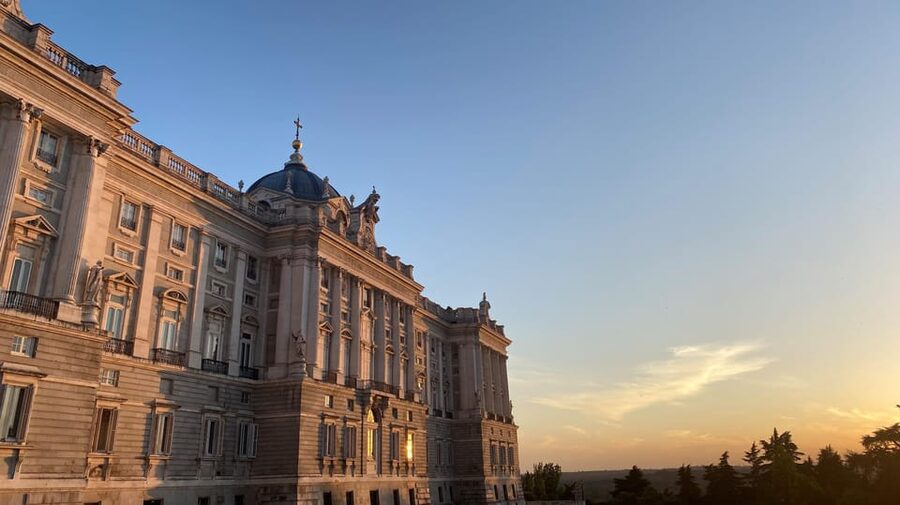
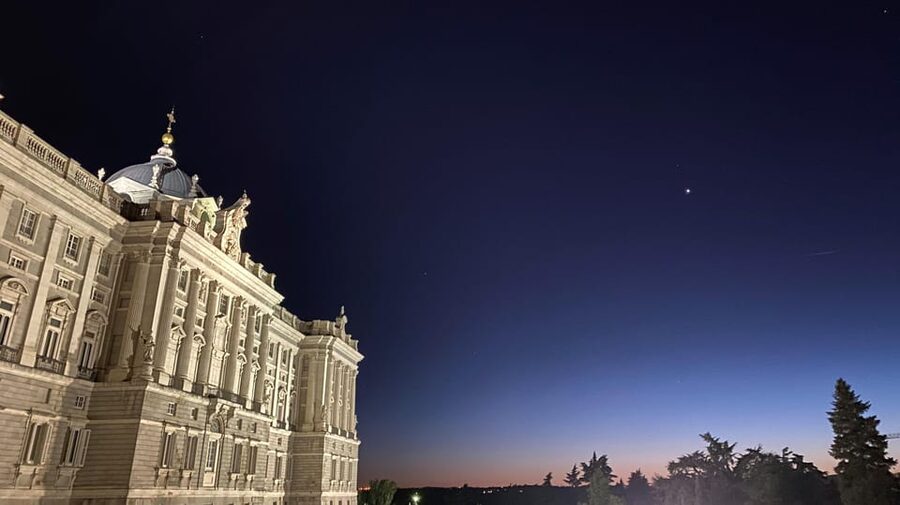
The Royal Palace receives about 20 minutes of guided attention. You do not visit the interior, so you should book this tour for its exterior setting and historical explanation, not for palace rooms, furnishings, or royal collections.
The present palace is tied to Felipe V, who ordered its construction after the earlier Alcazar was lost. That gives the building a useful place in the story. The tour begins with the Arab fortress and finishes this part of the royal sequence with the Bourbon palace you see today.
I find that connection more valuable than a stand-alone palace photo stop. You can trace a change in ruling families and building style without losing sight of the older city below. The Habsburg legacy remains close by, but the Bourbon period leaves a strong mark on the royal center.
The tour then passes San Nicolás Church, with about 10 minutes spent walking by. It is not listed as a full interior visit, so treat this as a brief architectural and historical encounter rather than a long church stop.
From cathedral to Arab Wall
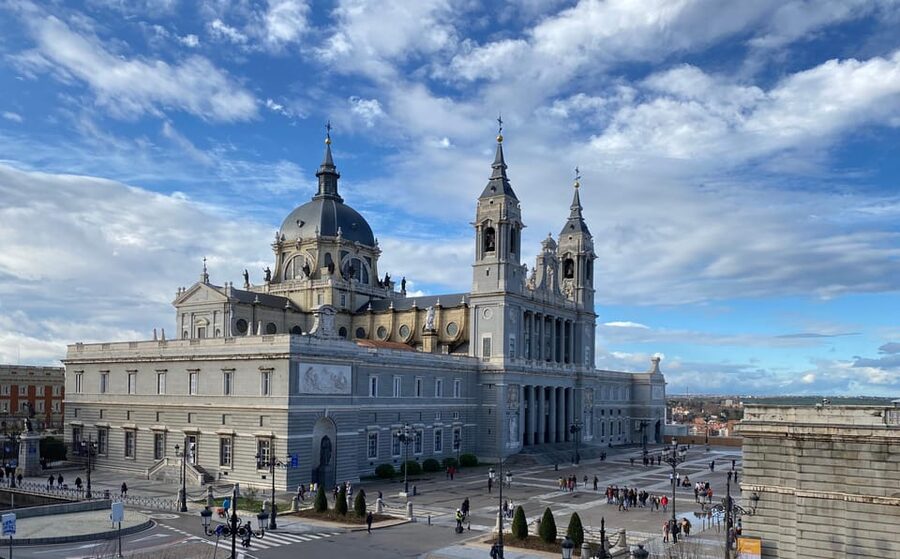
At Almudena Cathedral, the guide gives you around 15 minutes. This is another point where several layers of Madrid meet. The cathedral belongs to the city’s Christian identity, while its position near the old fortress area keeps the earlier Muslim foundation in view.
The route does not treat the cathedral as an isolated monument. Instead, it places it beside the Royal Palace and the remains of Madrid’s earliest defenses. That setting helps you understand how royal, religious, and military power gathered in the same part of town.
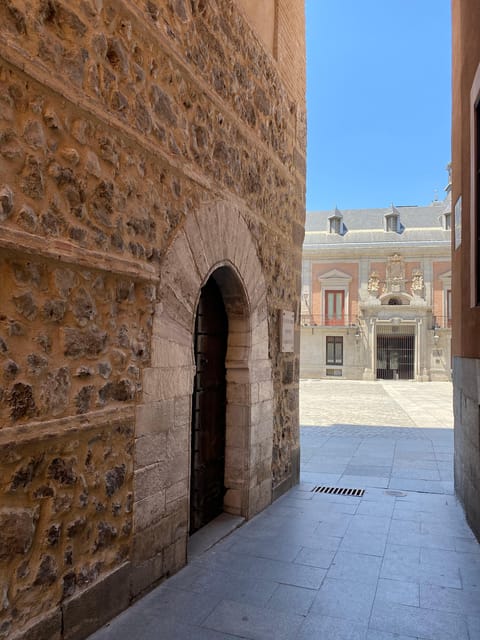
The Arab Wall receives another 15 minutes of sightseeing. For me, this is one of the most important stops on the route because the surviving stone makes the city’s origin visible. Grand palaces can make Madrid’s past feel polished and distant. A wall fragment gives you a harder, more direct link to the settlement that came first.
The guide’s architectural training should be helpful here. You can ask how the wall shaped later streets and how much of the original defensive system remains. The supplied information does not promise an interior archaeological visit, so expect to see and discuss the remains from the route rather than enter a large museum site.
Plaza de la Villa and the medieval street plan
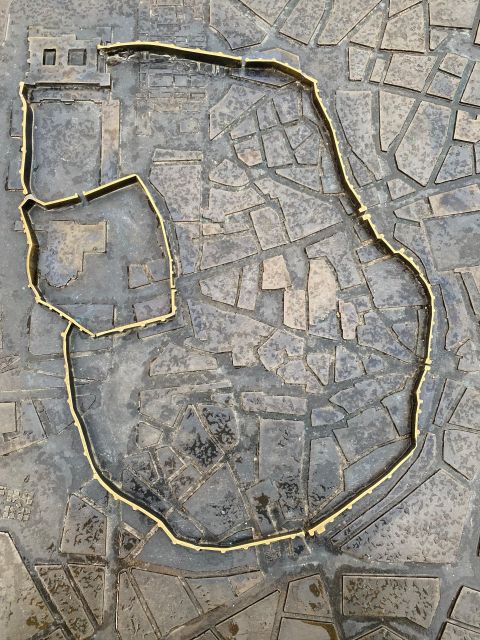
The walk continues to Plaza de la Villa, where the old Town Hall is located. You spend about 15 minutes walking through the square. This is a quieter and more intimate stop than Plaza Mayor, and that contrast matters.
Plaza de la Villa reflects the older city before Madrid grew into a grand capital. Its position helps show how medieval Madrid worked as a compact urban center. The guide can connect the square to the Christian Wall from the 12th century and to the layers of building that followed.
I would pay close attention to the street pattern here. The value of an architect’s tour is often in the spaces between monuments. Narrow routes, changing alignments, and small squares can reveal more about a city’s growth than a single famous facade.
The tour also takes you across Cava Baja, known for its old taverns. This is one of the route’s most appealing everyday moments. After royal buildings and church architecture, you get a street associated with food, drink, and local urban life.
The walk is not designed as a food tour. Drinks and snacks are not included, and personal food or drink costs are yours. Still, the taverns give Cava Baja a strong sense of place, and you can note it for a later meal if you want to return after the tour.
A few more architecture walks in Spain worth a look
- Barcelona: Sant Pau Recinte Modernista Entry Ticket
★ 4.6 · 2,567 reviews - Barcelona: Sagrada Familia, Modernism, and Old Town Tour
★ 4.7 · 1,621 reviews - Ramblas, Old Town, Gothic and Gaudi Architecture Walking Tour
★ 5.0 · 723 reviews - Valencia: Art & Architecture Guided Tour with Monuments Tickets
★ 5.0 · 255 reviews
San Miguel Market and the social city
San Miguel Market is another short stop, with about 10 minutes of guided attention. The market offers a more recent and social counterpoint to the medieval walls and royal spaces.
You can expect the guide to explain the market as part of Madrid’s public and commercial life, while the route keeps moving toward the city’s main historic square. The tour does not include food or a drink, so bring that expectation with you. You may choose to buy something, but it is not part of the price.
This stop works best as a change of pace. The earlier sections focus on rulers, defenses, churches, and urban form. San Miguel brings the discussion back to how people gather, eat, shop, and use central Madrid today.
If you want a long break, this is not the place to count on one. Ten minutes is enough for an introduction and a quick look, but not a full market meal. I would save your appetite and decide later if you want to return.
Plaza Mayor, the grand finish
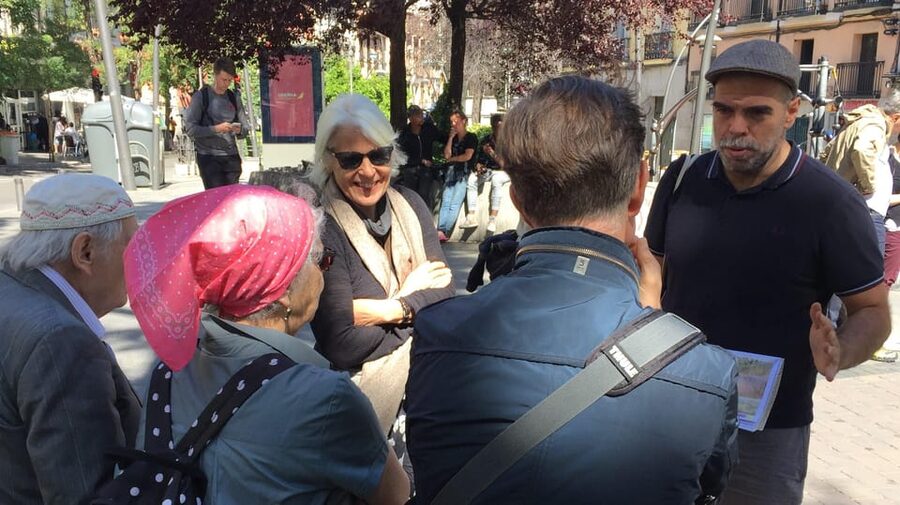
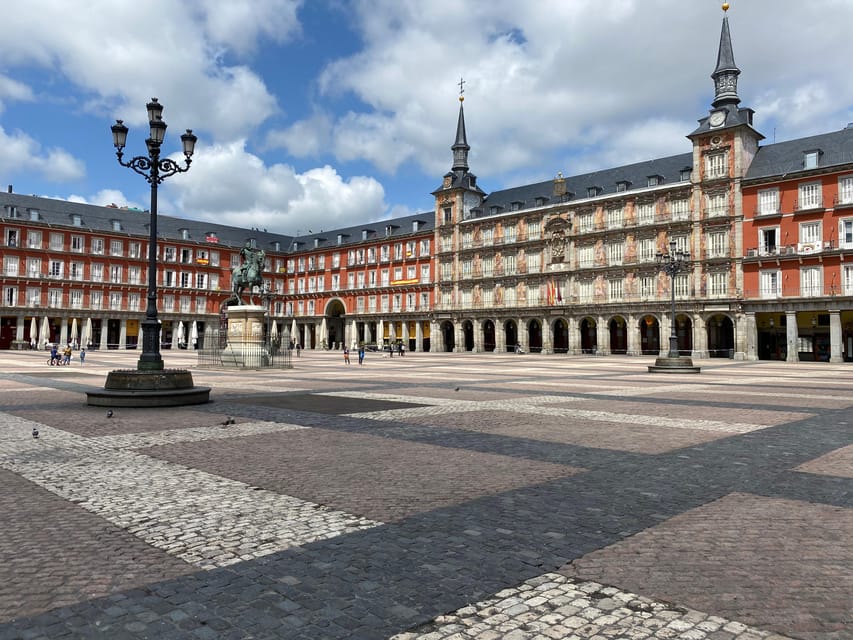
The tour ends at Plaza Mayor after about 15 minutes of guided touring. This square was the center of Madrid’s social and commercial life in the past, and it makes a fitting final stop.
Plaza Mayor brings together the themes you have followed all morning: royal power, public ceremony, trade, urban design, and the way a capital organizes daily life. After seeing the smaller Plaza de la Villa and the old streets around Cava Baja, you can better appreciate the scale and purpose of this larger space.
Ending here also gives you freedom. You are not returned to the starting point, but Plaza Mayor is one of the city’s best-known central locations. You can continue walking, find a place to eat, or use the square as a base for your next plan.
The stop is relatively short. If you want a long lecture on every facade, you may need to ask questions as you go. The route covers many places in 3.5 hours, so the guide must keep the group moving.
What the architect’s approach adds
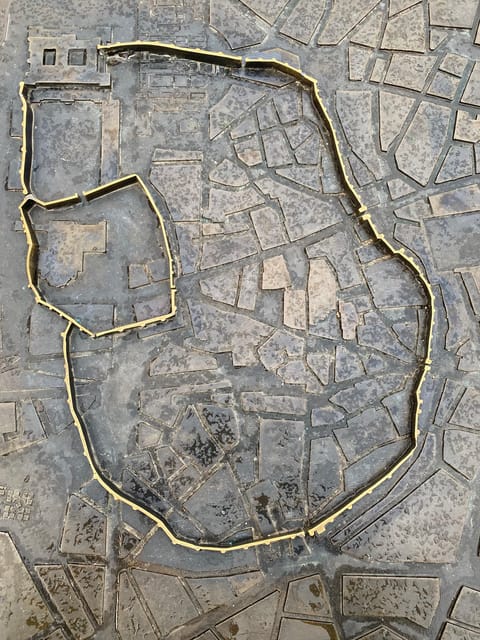
The biggest difference here is the way the tour joins architecture to history and politics. Madrid’s buildings are not presented as decoration. They are evidence of decisions made by rulers, churches, city officials, and changing governments.
A local architect can also help you read scale and sequence. The location of the Royal Palace beside the cathedral, the old walls near later buildings, and the route from Plaza de la Villa to Plaza Mayor all become part of one urban story.
The walk is detailed. One posted rating specifically praised the guide’s historical insight, and another praised the amount of detail while warning that you should choose it only if architecture is what you want. That is sound advice. I would not book this as a casual introduction if you prefer short facts and lots of free time.
Emilio is named as a particularly strong host in the available booking feedback, with praise for his historical understanding and the way he shared it. If Emilio is leading your group, you can expect the historical side of the tour to receive serious attention. Guide assignment should still be confirmed when you book.
Price, group size, and practical value
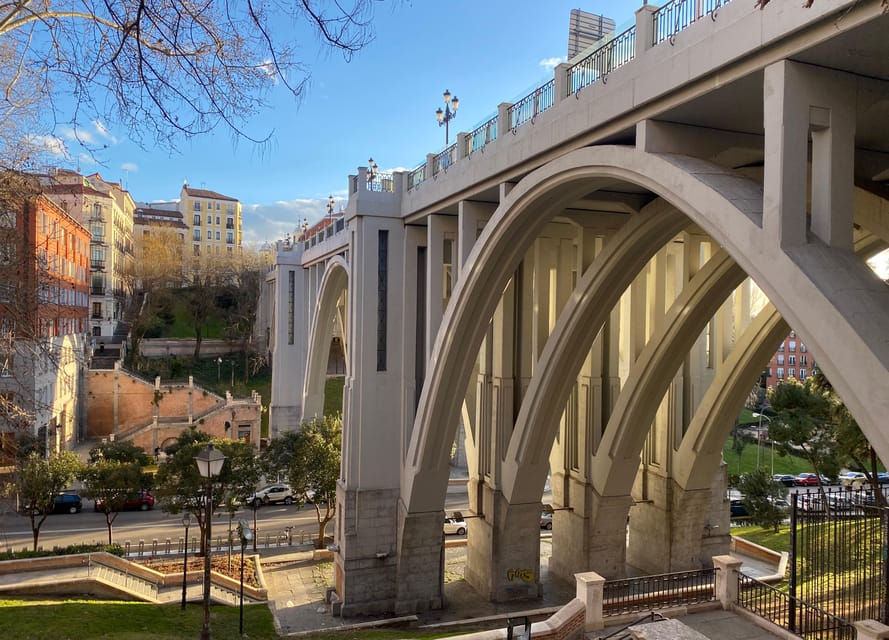
The price is $387 for a private group of up to one person as stated in the supplied details. Because the pricing line lists a group up to one, check the booking page carefully if you are booking for more than one person. The private format can make sense for someone who wants to ask detailed questions or shape the conversation around architecture.
For a solo visitor, that price is a serious commitment. You are paying for 3.5 hours with a private guide, not for a package of palace admission, food, or transportation. The guide fee and entrance to churches are included, but Royal Palace admission, drinks, snacks, and personal purchases are not.
I see the best value for an architect, architecture student, historian, or serious city enthusiast. If you are traveling with a companion who shares those interests, the private structure may feel worthwhile because the discussion can stay focused.
The tour received an overall rating of 4.3 from three posted ratings. The clearest strengths are the guide’s historical insight and the detailed approach. The clearest limitation is also clear: this is not a broad, breezy overview. It asks you to listen, look closely, and stay engaged.
Timing, weather, and walking comfort
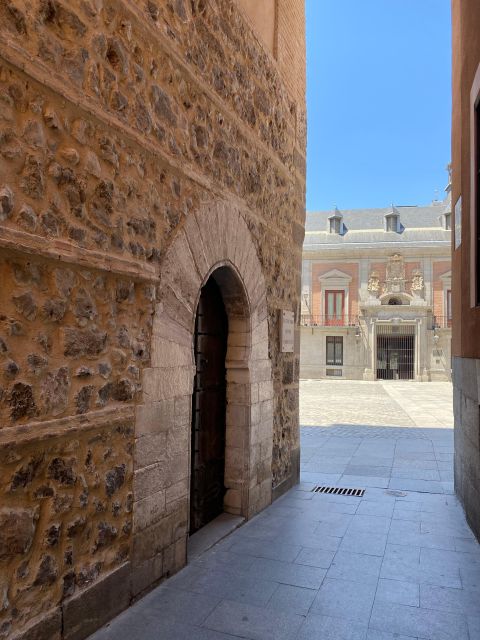
The route lasts 3.5 hours and is conducted on foot. The information provided does not give a precise distance or a scheduled meal break, so wear shoes you can use comfortably for a long city walk.
Winter calls for warm clothing. Madrid can feel cold while you are outside for several hours, especially when the walk pauses at open squares and wall remains. In summer, bring sun protection, sunglasses, a cap or hat, and cold water.
The tour is not suitable for wheelchair users. The route includes historic streets, walls, old squares, and urban sections where access can be difficult, so you should not assume that the full experience can be adapted.
English and Spanish are available. The group is private, which makes it easier to ask for clarification or request more attention at a particular building, though the route and timing still include many planned stops.
Free cancellation is available up to 24 hours before the activity for a full refund, and you can reserve now and pay later. Those terms help if your Madrid schedule is still changing, but I would still check the exact starting time before committing to other plans.
Who should book this Madrid walk?
I would choose this tour if you want to understand why old Madrid looks the way it does. It suits you especially well if you enjoy building styles, city planning, royal power, medieval defenses, and the link between history and public space.
It also works for a first visit if you prefer a strong historical frame. You will see several major sights without spending the day inside museums, and you will finish in a central square where you can continue exploring.
I would skip it if you mainly want to enter the Royal Palace, stop for food, or move quickly from one photo point to the next. Since the palace interior is not included and the guide goes into detail, another sightseeing option may suit you better.
Should you book the Old Historic Madrid Architecture Tour?
Book it if architecture and history are the reason you came to Madrid. The route gives you a clear story, from the Arab Alcazar and old walls to the Habsburg city and Bourbon palace, while the architect’s perspective helps tie the buildings together.
Think twice if the $387 private price feels high for an exterior-focused walk. You pay for the guide’s time and specialist focus, while palace entry, food, and drinks remain separate.
For the right person, this is a thoughtful way to read Madrid rather than simply look at it. Arrive ready for a detailed conversation, dress for the season, bring water, and keep your afternoon free after Plaza Mayor.
FAQ
Where does the tour start?
It starts at the entrance of the Starbucks located at one corner of the Royal Theater, at Plaza de Isabel II, 4.
Where does the tour finish?
The tour finishes at Plaza Mayor in Madrid.
How long does the tour last?
The tour lasts 3.5 hours.
Is the Royal Palace interior included?
No. The tour discusses and visits the Royal Palace area, but it does not include an interior visit to the Royal Palace.
What languages are available?
The tour is available in English and Spanish.
Is this a private tour?
Yes. It is offered as a private group experience.
What is included in the price?
The guide fee and entrance to churches are included.
Are food and drinks included?
No. Drinks, snacks, and personal food or drink expenses are not included.
Is the tour suitable for wheelchair users?
No. The activity is not suitable for wheelchair users.
Newly added in Spain
- Barcelona: Private Gaudi Guided Segway Tour★ 5.0 · 6 reviews
- Barcelona: Wonders of Gaudi Bike Tour★ 4.3 · 6 reviews
- Barcelona: Exclusive Exploration of Gaudi’s Masterpieces★ 5.0 · 2 reviews
- Barcelona: Guided tour e-bike Barcelona historical and modernist Barcelona★ 4.5 · 5 reviews
- Barcelona: Gaudi Tapas & Wine Tasting Small Group Tour★ 5.0 · 3 reviews
- Barcelona: E-Scooter Gaudí & the Sea Tour★ 4.3 · 10 reviews
- Barcelona Architecture Walking Tour With Casa Batlló Upgrade★ 4.8 · 11 reviews
- Barcelona Beyond Gaudí: Modernism, Rooftops, and Hidden Gems★ 5.0 · 2 reviews
Historical Tours, compared.
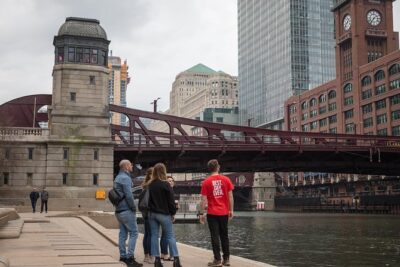
Chicago in a Day: Food, History & Architecture Walking Tour
Read our review →
Charleston’s Best Highlights: History, Culture & Architecture
Read our review →
Palm Springs Modernism Architecture & History Bike Tour
Read our review →
Historic Georgetown: History, Gossip, & Architecture Walking Tour
Read our review →
Charleston History, Homes, and Architecture Guided Walking Tour
Read our review →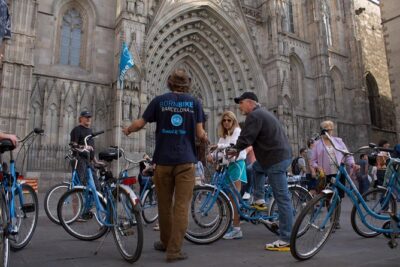

Historical and Architectural Chicago Fireboat River & Lake Cruise
Read our review →Browse the lists this tour appears in