
Review · INDIA ARCHITECTURE TOURS
Mumbai: Story of Mumbai through its architecture
Mumbai’s architectural story unfolds on foot, from the soaring Gothic roofline of Chhatrapati Shivaji Maharaj Terminus to the Indo-Saracenic arch at the Gateway of India. Along the way, you see how British design, Indian motifs, Jewish philanthropy, Indian business wealth, and the end of colonial rule shaped one compact part of the city.
I like the way this tour connects buildings to people: a mother’s love behind Rajabai Tower, David Sassoon’s library, and Indian merchants’ embrace of Art Deco. I also like the contrast around Oval Maidan, where Gothic buildings face a row of Art Deco facades. The main limitation is that nearly every site is viewed from the street, with only CST and the Gateway of India included for entry.
Key things to know before you go

- CST is the architectural opening act: See one of India’s finest Victorian Gothic buildings, still serving millions of daily commuters.
- Rajabai Tower has a personal story: Its clock tower was funded by banker Premchand Roychand for his mother, who wanted him home before sunset.
- Oval Maidan makes the styles easy to compare: Gothic buildings line one side, while Art Deco buildings face them across the open ground.
- Most interiors are off limits: You will see the High Court, cinemas, Empress Court, and colleges from outside.
- Pankaj has received especially strong praise: He is noted for bringing the buildings and Mumbai’s last two centuries to life through stories.
- The walk finishes at a major historical symbol: The Gateway of India marks both a royal arrival and the departure of the last British troops.
Why Mumbai’s architecture makes a good walking tour
Mumbai can look like a jumble of traffic, towers, colonial offices, cinemas, and apartment blocks. This walk gives that jumble an order. You move through several architectural styles while learning why each one appeared and who paid for it.
The central story is not simply British architecture in India. Mumbai’s Gothic buildings were designed in a European language, but many include Indian details, materials, and decorative ideas. Later, Art Deco became popular with Indian merchants and wealthy residents. It offered a modern look that was not tied as closely to British official power.
The tour costs $32 per person and lasts about 2.5 to 3 hours. That is a fair price if you want a guide to explain what your eyes are seeing, rather than simply walk past impressive facades with a few photographs. The value comes from the connections between the stops, especially the stories behind Rajabai Tower, David Sassoon Library, and the growth of Art Deco.
This is a walking experience, not a vehicle tour. You should be comfortable spending several hours on foot in central Mumbai, with the city unfolding around you. The exact starting point depends on the option you select, and the meeting instructions say to wait at the entrance of McDonald’s for your guide.
A few more architecture walks in the world worth a look
- Chicago Architecture River Cruise
★ 5.0 · 15,756 reviews - Chicago River 90-Minute Architecture Tour
★ 4.5 · 9,629 reviews - Chicago River: 1.5-Hour Guided Architecture Cruise
★ 4.8 · 8,046 reviews
CST: beginning beneath Mumbai’s greatest Gothic roof
The walk begins at Chhatrapati Shivaji Maharaj Terminus, formerly Victoria Terminus. This UNESCO heritage building is often called India’s greatest example of Victorian Gothic Revival architecture, and it earns that attention before your guide says a word.
Look for the pointed arches, turrets, domes, carved stonework, and dramatic central roofline. Then look again at the details. The building is not a simple copy of a London railway station. Gothic forms are combined with Indian architectural themes, giving CST a distinctly Mumbai character.
The station is also a working transport center, not a quiet monument. More than six million commuters use it each day, so you see the building in its original role as part of the city’s daily life. That adds weight to the stop. You are not looking at a frozen relic, but at a grand civic building that still handles the movement of modern Mumbai.
CST is one of the two places where entry is included. Allow your guide time to point out details rather than rushing straight to photographs. If you have a camera, this is one of the strongest places on the route for wide architectural views and close shots of ornament.
From Sterling Cinema and Azad Maidan to Flora Fountain
The route continues on foot past Sterling Cinema and Azad Maidan. Sterling is part of Mumbai’s cinema culture, while Azad Maidan is known as the setting for memorable interschool cricket matches.
That cricket connection gives the walk a useful local note. Mumbai’s grand civic buildings are not isolated from ordinary city life. A formal Gothic station, an old cinema, and a public playing field all sit within the same urban story.
Flora Fountain is one of Mumbai’s best-known fountains. It was carved from Portland stone and features a statue of Flora, the Roman goddess of flowers. The monument also carries a political meaning: it is dedicated to people who died fighting for an independent state of Maharashtra.
This is a good example of why a guided walk helps. A photograph may capture the statue and stonework, but the name, dedication, and local political setting add another layer. You can pause here to take in the surrounding buildings and traffic, though this is a city-center route, so do not expect the quiet of a garden.
Eros Cinema and the rise of Mumbai Art Deco
Eros Cinema gives you a clear Art Deco counterpoint to the Gothic buildings. Built in 1938, it was designed by architect Sorabji Keikhushru Bhedwar, with interiors by Fritz von Dreiberg.
The building has a distinctive tiered shape that resembles a wedding cake, topped by a semicircular tower. This playful form is typical of the style’s appeal. Art Deco favored strong geometry, clean lines, symmetry, and modern materials, yet Mumbai’s examples developed their own visual character.
You see Eros from outside, so the value here is in the facade and the explanation. The cinema was not just a place to watch films. Its design signaled modern city life and a new taste among Mumbai’s residents.
The walk also introduces an important social point: Art Deco was embraced by Indian merchants and property owners. In that sense, it could serve as a way to express a modern Indian identity and, as the guide explains, even mock the formal British establishment. That makes Art Deco more than a decorative style. It becomes part of the city’s changing balance of power.
Same city, a different facade:
- Chicago Architecture Center River Cruise aboard First Lady
★ 5.0 · 5,536 reviews - Chicago: Architecture River Cruise Skip-the-Ticket Line
★ 4.8 · 4,325 reviews - Chicago River 45-Minute Architecture Tour from Magnificent Mile
★ 4.5 · 2,924 reviews - Barcelona: Sant Pau Recinte Modernista Entry Ticket
★ 4.6 · 2,567 reviews
Empress Court and the address of Art Deco ambition
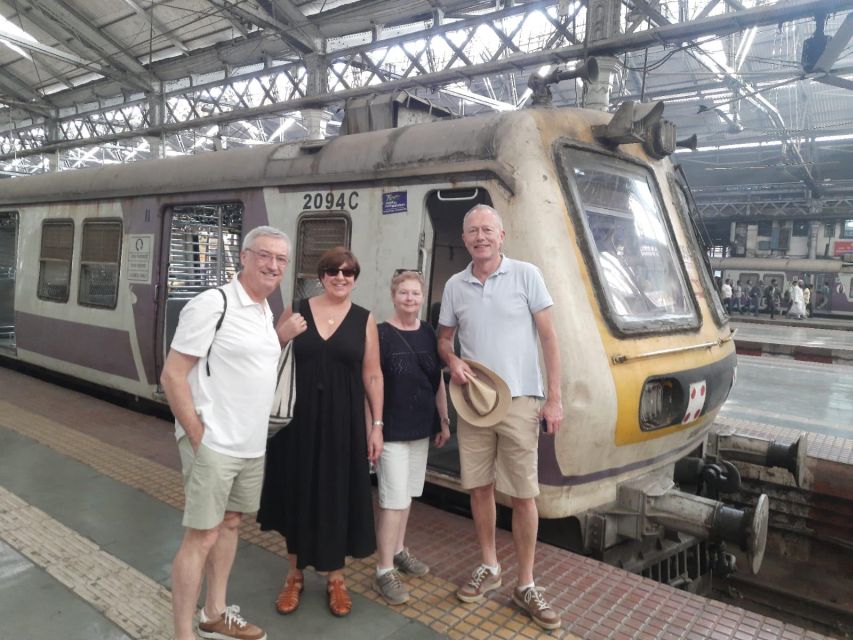
Empress Court is an impressive residential Art Deco building and one of Mumbai’s best-preserved examples. In the period when these apartments were built, living in such a residence signaled status and wealth.
You see the building from the outside, so do not expect an apartment interior or a chance to enter private areas. Still, the stop helps you understand that Art Deco was not limited to cinemas and public buildings. It shaped domestic life too.
I find this useful because residential architecture often explains a city better than grand government buildings. A home tells you what a growing class of residents wanted to display: modernity, comfort, clean design, and a place within Mumbai’s new urban culture.
Your guide can point out the geometry and proportion that make the building recognizable. Since the experience is private or offered in small groups, you have a better chance to ask about details than you would on a large group walk. The supplied information does not guarantee a private group for every booking, so check the option you select.
Oval Maidan: the clearest style comparison
Oval Maidan is one of the most useful stops on the route because it lets you compare two architectural eras from one open space. On one side, Gothic buildings form a grand civic edge. On the other, Art Deco buildings present a more streamlined and modern face.
The contrast is easy to grasp even if you are new to architecture. Gothic design reaches upward with towers, pointed forms, and heavy ornament. Art Deco favors clean horizontal lines, repeated shapes, and a smoother appearance.
This is also a good place to slow down. Dense city streets can make it hard to see a full facade. The open maidan gives you room to look across the buildings and understand how the styles relate to one another.
The tour itinerary includes Regal Cinema, Oval Maidan, David Sassoon Library, the High Court, and Rajabai Clock Tower. The precise walking sequence can vary with the selected starting option, so use the listed meeting details rather than assuming every group follows the same order.
High Court and the visual language of justice
The Bombay High Court is a grand Gothic building designed by Colonel J. A. Fuller. Its large towers and broad staircases give it the formal weight expected of a major court.
Look for the statues of Justice and Mercy at the top. They are not random decoration. They reflect the values the building was meant to represent, reminding people that law should be guided by both authority and compassion.
The High Court is viewed from outside. That is worth knowing before you book, especially if you hope to see courtrooms or interior details. For this experience, the building works as a public facade and a lesson in how architecture can express institutional power.
Rajabai Tower and a mother’s evening deadline

Rajabai Clock Tower is often called Mumbai’s Big Ben. Located within the University of Mumbai complex, it is a UNESCO heritage site and one of the city’s most recognizable Gothic landmarks.
The personal story makes the tower memorable. Jewish banker David Sassoon is associated with several important buildings in Mumbai, but Rajabai Tower’s story centers on banker Premchand Roychand, who funded it for his mother. She wanted him home before sunset, and the clock helped him keep that promise.
That small detail changes the way you see the tower. Instead of treating it as another tall colonial monument, you connect it to family life, wealth, and the social world of nineteenth-century Mumbai.
The tower is more than 125 years old and blends Revival-Gothic elements with Art Deco touches. You will see it from outside, but the guide can help you notice its vertical form, clock faces, and decorative design. This is one of the places where Pankaj’s storytelling has received particularly strong praise. He is the named guide associated with the strongest feedback for this experience, and his explanations focus on making each building feel connected to real people.
David Sassoon Library and the city’s reading culture
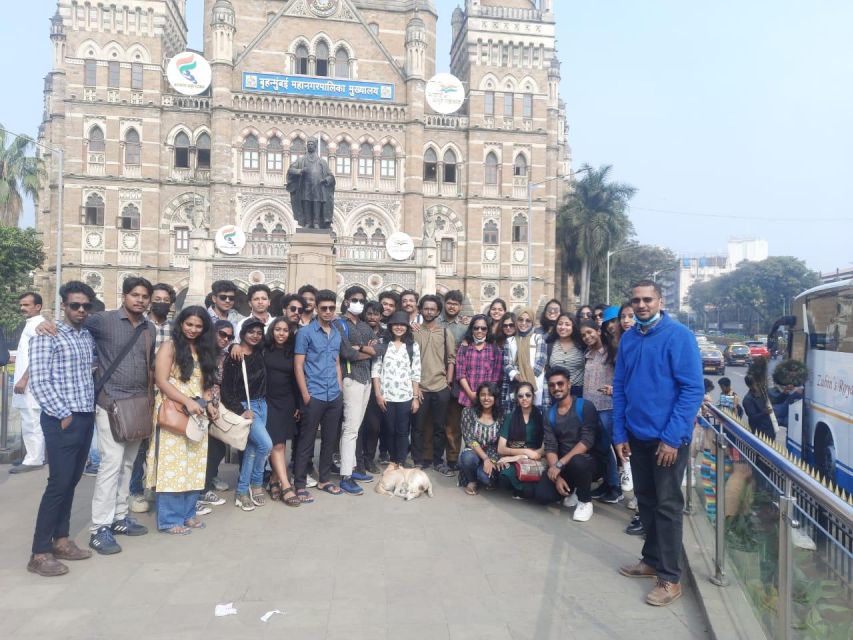
In 1862, Jewish banker David Sassoon funded a Gothic building to serve as a reading room and library. The David Sassoon Library still has a collection of about 70,000 rare books.
The building offers a different side of Mumbai’s colonial-era development. Stations, courts, and government structures show administration and commerce. A library shows the growth of education, reading, and public intellectual life.
An afternoon visit can be pleasant, but on this walk you should expect the building to be seen from outside unless your guide confirms entry. The experience includes entrance charges, but the information specifically says that only CST and the Gateway of India are entered, so do not assume you will browse the library collection during this tour.
Even from the street, the library adds an important human scale to the route. It was made for readers, not crowds, and its Gothic design gives learning the same architectural dignity given to courts and civic institutions.
Elphinstone College and Mumbai’s educational legacy
Elphinstone College is another prominent Gothic structure. Established in 1856, it educated figures such as Bal Gangadhar Tilak, Dr. B. R. Ambedkar, and Jamshedji Tata.
That list gives the building real weight. You are not merely looking at an old college facade. You are seeing part of the setting in which major political, social, and industrial figures studied.
Again, this stop is viewed from outside. The guide’s role is to connect the architecture with the institution’s place in Mumbai’s public life. If you like learning how buildings shaped a city’s people, this section of the walk will be more rewarding than a simple photo stop.
Regal Cinema and the route toward the harbor
Regal Cinema was Mumbai’s first Art Deco cinema hall, built in 1933. Charles Stevens designed it. His father, Frederick William Stevens, designed Victoria Terminus, where the tour begins.
That family connection neatly links the Gothic opening with the Art Deco finish of the central route. It also shows how architectural styles changed over one generation. The father created one of Mumbai’s grand Gothic landmarks, while the son designed an entertainment building in a newer, more streamlined style.
Regal is viewed from outside. The building’s importance comes from its early place in Mumbai’s cinema architecture and from the contrast with the older monuments nearby.
Gateway of India: ending where empire began to leave
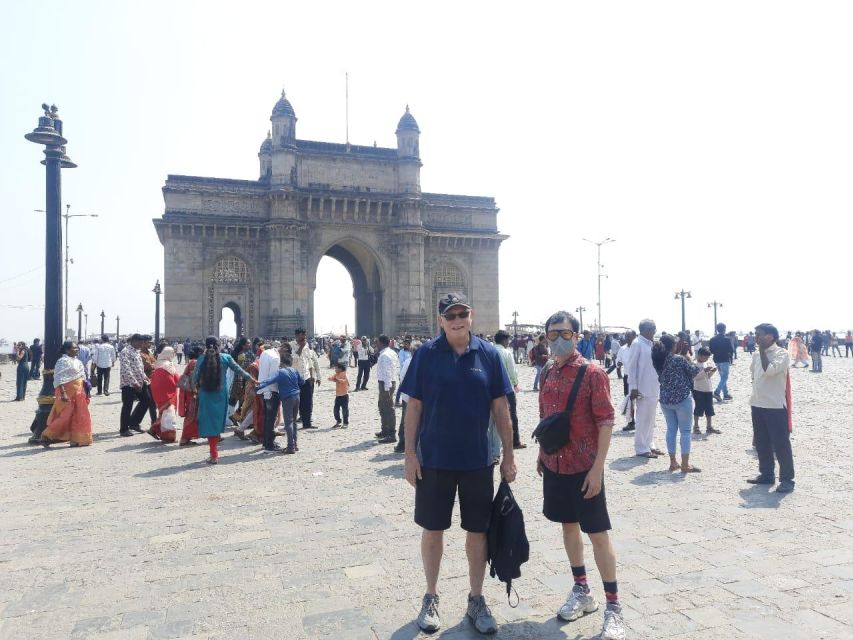
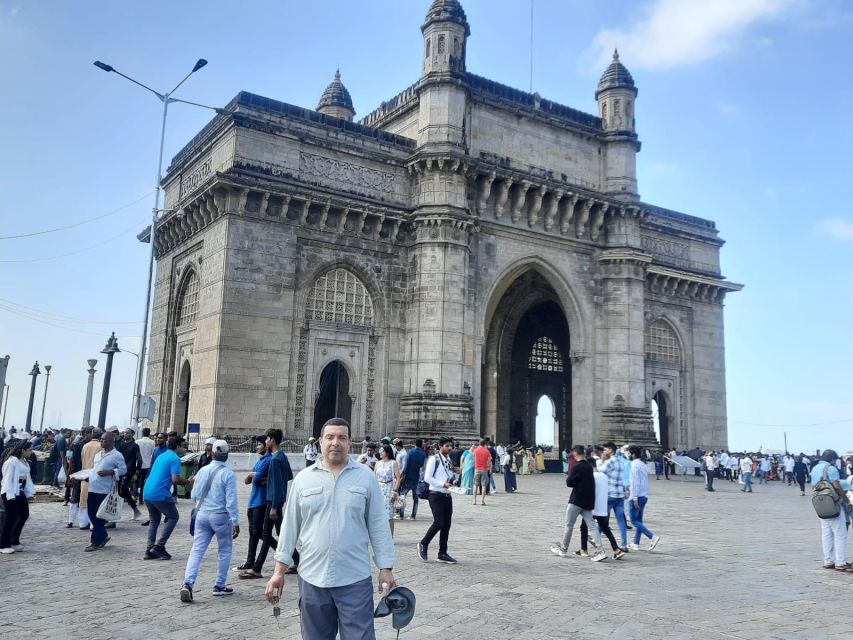
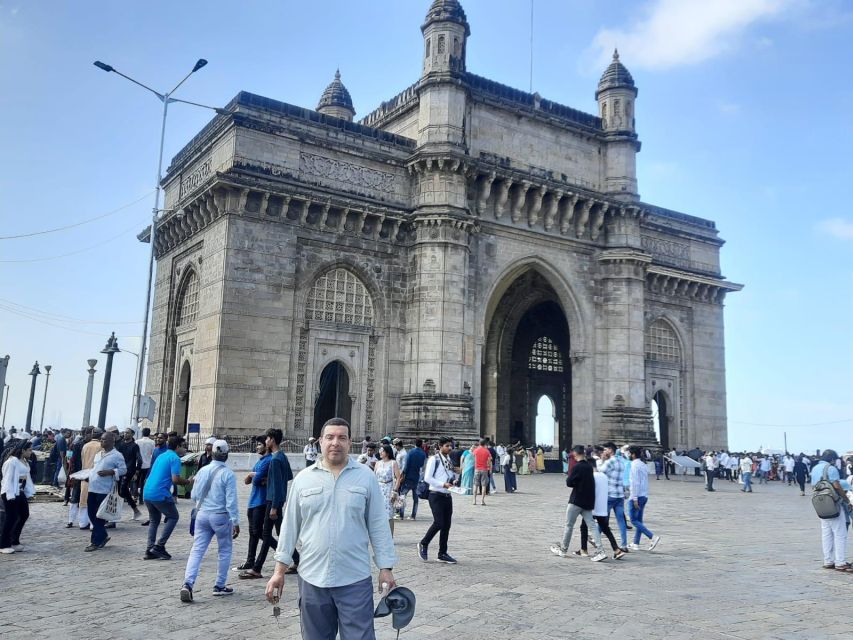
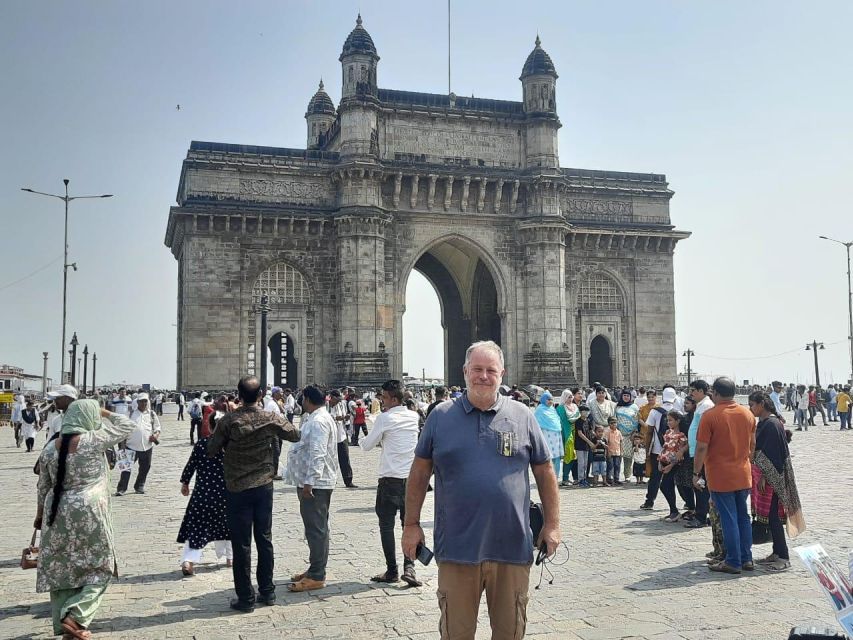
The tour finishes at the Gateway of India, one of Mumbai’s most recognizable landmarks. The arch was built to welcome King George V and Queen Mary in 1911.
Its design is mainly Indo-Saracenic, with Muslim architectural elements worked into the triumphal arch. That style reflects the way British imperial architecture borrowed and reshaped Indian forms for official purposes.
The Gateway’s later history gives the stop a sharp change in meaning. On February 28, 1948, the last British troops passed through it in a ceremony marking the end of British rule in India.
You can enter the Gateway area as part of the experience. It is a fitting place to finish because the building carries both the spectacle of imperial arrival and the symbolism of departure. The route begins with a railway station still full of daily movement and ends at a waterfront monument tied to the end of colonial rule.
Timing, group size, and value at $32
At 2.5 to 3 hours, this is long enough to build a story without taking up an entire day. You get a focused walk through Gothic, Art Deco, and Indo-Saracenic architecture, rather than a broad city tour that gives every subject only a few minutes.
The $32 price is easiest to justify if you care about context. If you only want exterior photographs, you can see many of these buildings independently. If you want to understand why they look different, who funded them, and how Mumbai’s identity changed, the guide adds real value.
English is the stated tour language. Private and small-group options are available, which matters here because architecture questions often come up at each stop. Pick-up and drop-off are not included, so you need to reach the meeting point yourself and arrange your own onward transport.
Cancellation is free up to 24 hours before the start, and you can reserve now and pay later. Those terms help if your Mumbai schedule is still shifting, but the main practical point remains simple: wear comfortable walking shoes and plan for a city route rather than a museum visit.
Who should book this architecture walk?
I would choose this tour if you want Mumbai’s buildings explained through stories, people, and politics. It suits first-time visitors who want a strong introduction to the Fort area, architecture fans who enjoy comparing styles, and anyone interested in the city’s colonial and postcolonial transition.
It is also a good fit if you appreciate a guide who can point out details that are easy to miss. Pankaj has been singled out for making the buildings feel alive and for explaining the last 200 years of Mumbai’s history in a clear way.
I would hesitate if you need extensive interior access. Most stops are exterior views, and the route is not designed as a series of museum visits. I would also avoid booking it if you do not enjoy walking for several hours.
Should you book it?
Book it if you want a compact, guided explanation of Mumbai’s best-known Gothic and Art Deco buildings, with CST, Rajabai Tower, Oval Maidan, and the Gateway of India as the main rewards. The contrast between Gothic facades and Art Deco residences is especially strong, and the stories behind Rajabai Tower and David Sassoon Library give the walk a human edge.
Skip it if your priority is private interiors, extensive time inside the library, or a vehicle-based city tour. For $32, the experience offers good value for a focused architecture walk, particularly in a small group with a guide such as Pankaj who can turn a line of impressive buildings into a connected story.
FAQ
How long does the Mumbai architecture tour last?
The tour lasts about 2.5 to 3 hours. Starting times depend on availability and the option selected.
What language is the tour offered in?
The live tour guide speaks English.
Where does the tour meet?
Meeting instructions say to wait at the entrance of McDonald’s. The exact starting or pick-up location depends on the selected option.
Are the buildings visited from inside?
Only Chhatrapati Shivaji Maharaj Terminus and the Gateway of India are stated as interior visits. The other sites are viewed from outside.
Is transport included?
No. Pick-up and drop-off are not included. The experience is a walking tour between the listed landmarks.
Can I cancel the booking?
Yes. You can cancel up to 24 hours in advance for a full refund. A reserve-now, pay-later option is also available.
Newly added in the world
- Venice Art and Architecture Private Walking Tour★ 4.5 · 11 reviews
- Basilica San Marco and the Pala d’Oro with Architect Guide★ 4.5 · 19 reviews
- Walking tour in Venice with an architect★ 5.0 · 16 reviews
- Porto Tour: Street Art & Architecture Experience 3h★ 5.0 · 4 reviews
- Faro Private Walking Tour: Uncovering its Architectural Legacy★ 5.0 · 8 reviews
- Private Walking Tour of Old Gdańsk with an architect-guide★ 5.0 · 7 reviews
- Sopot Private City Walking or Bike Tour with a local architect★ 5.0 · 19 reviews
- Lesser Poland Wooden Architecture Trail UNESCO Private Tour from Krakow★ 5.0 · 15 reviews
India Architecture Tours, compared.

Delhi Hidden Gems: Mehrauli, Lodhi Art & Sunder Nursery
Read our review →
British Architecture Walk, an immersive walking tour in Chennai
Read our review →
The Hipster Chandigarh Architecture History Tour
Read our review →
Mumbai heritage walk- Story of Gothic and Art Deco buildings
Read our review →
Le Corbusier’s Chandigarh : A Complete Architecture Tour
Read our review →
Victorian Gothic Heritage Quarter and Art Deco Walking Tour
Read our review →Victorian Gothic Heritage Quarter and Art Deco Walking Tour
Read our review →Browse the lists this tour appears in