
Review · WALKING TOURS
Beijing Hutong Walking Tour History, Architecture and Local Life
Beijing’s old lanes reveal the city in a way grand monuments cannot. This walk links a Chinese-style church, Buddhist temple, imperial memorial site, courtyard homes, a Yuan Dynasty pagoda, and one of the city’s oldest hutongs. I like the sharp mix of faiths and architecture, and I like that the guide explains practical things such as door designs, local food, and getting around Beijing. Guides Lori and Dee bring a personal touch, answering questions and offering lunch suggestions.
The main tradeoff is pace. Three hours covers a lot, and some stops are brief. The Temple of Previous Dynasties may also be closed when you visit, while the White Stupa is viewed from a nearby café balcony rather than entered. For $49, this is a useful orientation walk, but it suits you best if you want context and local advice more than long visits inside every site.
Key points at a glance
- A compact old-Beijing route: Walk from Xisi to Fuchengmen, passing hutongs, temples, a church, a stupa, and imperial buildings.
- Architecture with a purpose: Learn how siheyuan courtyards, temple forms, pagodas, and decorated doors reflect Chinese culture.
- A small group of up to 10: The size leaves room for questions and makes narrow-lane walking easier.
- Useful city advice: Guides Lori and Dee provide restaurant recommendations, travel tips, water, and a traditional Beijing drink.
- A strong first-day choice: The route helps you understand Beijing’s historic center before exploring on your own.
- Public transport friendly: The walk starts near Xisi Subway Station and finishes at Exit C of Fuchengmen Station on Line 2.
Why this hutong walk is useful in Beijing
Beijing can feel enormous at first. The main sights are spread across a large city, and the old neighborhoods can look confusing if you do not know what you are seeing. This tour gives you a three-hour introduction to the western part of central Beijing, using buildings and lanes as the lesson.
I like the route because it does not treat the hutongs as a single photo stop. You see several layers of the city. There is Christian history at Xishiku Church, Buddhist architecture at Guangji Temple, imperial memory at the Temple of Previous Dynasties, and ordinary neighborhood life in Zhuanta Lane.
The walk also explains the built details that are easy to miss. A guide can point out the layout of a siheyuan, the meaning suggested by an entrance door, and the contrast between an old lane and the nearby Financial Street district. Those details turn a stroll into a way of reading Beijing.
The group is limited to 10 people. That matters in narrow lanes, where a large group can clog the path and make conversation difficult. It also gives you a better chance to ask about food, transport, local customs, or the places you pass.
More Walking Tours in the world:
- Lecce: Baroque Architecture and Underground Walking Tour
★ 4.6 · 1,248 reviews - Chicago in a Day: Food, History & Architecture Walking Tour
★ 5.0 · 1,153 reviews - Ramblas, Old Town, Gothic and Gaudi Architecture Walking Tour
★ 5.0 · 723 reviews
Starting at Xisi and entering old Beijing
The meeting point is in Xisi, in Beijing’s Xicheng District, near Xisi Subway Station. The tour ends at Exit C of Fuchengmen Station on Line 2, so you begin and finish near public transportation rather than needing a private vehicle.
That arrangement is practical. Private transportation is not included, and it is not needed for this route. The experience is built around walking, with travel time between locations included in the roughly three-hour duration.
From the start, you get a sense of Beijing’s contrasts. Historic streets and low courtyard buildings sit near newer commercial and financial areas. That change is part of the story. Beijing is not an open-air museum, and the old lanes remain part of a modern city.
Wear comfortable shoes and expect an urban walk with several stops. The supplied information does not give a precise walking distance, so you should think of this as a continuous neighborhood tour rather than a series of vehicle transfers.
Xishiku Church and Beijing’s Chinese Christian story
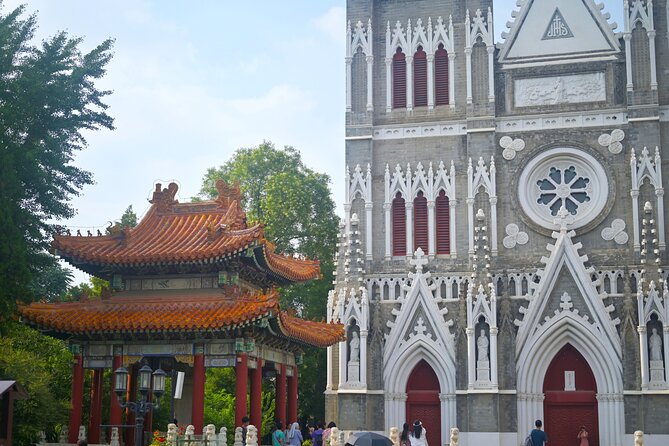
The first stop is Xishiku Church, described as Beijing’s earliest church. You spend about 10 minutes here, with admission listed as free.
The appeal is not only the church’s religious history. The building is presented as having a distinct Chinese touch, making it a good introduction to the way foreign religious traditions were adapted within Beijing. Your guide explains the story behind the church rather than simply giving you time to look at the exterior.
Ten minutes is enough for an introduction, not a full architectural study. If you are especially interested in church interiors or missionary history, you may want to treat this as a starting point and ask Lori or Dee questions while you walk.
This stop also prepares you for the rest of the route. Beijing’s old center includes more than imperial and Buddhist sites. Its streets hold evidence of different communities and beliefs, often within a short walk of one another.
Guangji Temple and traditional temple design
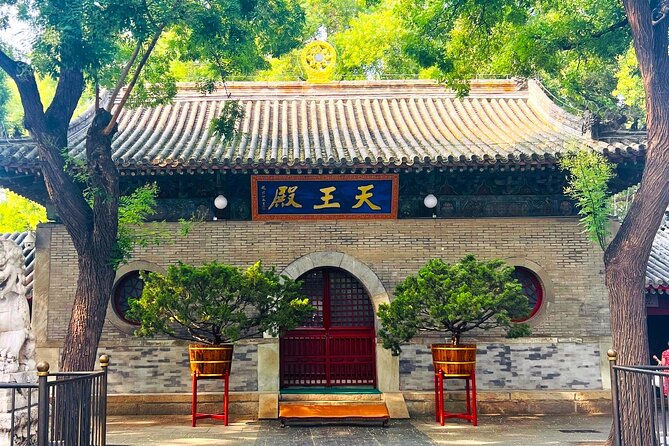
Next comes Beijing Guangji Temple, with about 20 minutes set aside for the visit. Admission is free. Here you see traditional Chinese temple architecture and ancient finger paintings.
The stop is valuable because the guide can explain how to look at a Chinese temple. Rooflines, gates, courtyards, decorative details, and the arrangement of buildings all carry meaning, but they can blend together if you visit without context.
The ancient finger paintings add another layer. The information provided does not specify their exact location or condition, so you should see them as a feature the guide will introduce rather than a guaranteed long viewing session.
Twenty minutes is a sensible amount of time for a first visit. It gives you a chance to see the main architectural character without allowing one temple to take over the walk. If you want extended quiet time for photography or personal reflection, the schedule may feel brisk.
More History Walks in the world:
- Charleston’s Best Highlights: History, Culture & Architecture
★ 5.0 · 422 reviews - Palm Springs Modernism Architecture & History Bike Tour
★ 5.0 · 359 reviews - Charleston: History and Architecture Guided Walking Tour
★ 4.8 · 349 reviews - Historic Georgetown: History, Gossip, & Architecture Walking Tour
★ 5.0 · 321 reviews
Wansong Brick Pagoda and a siheyuan courtyard
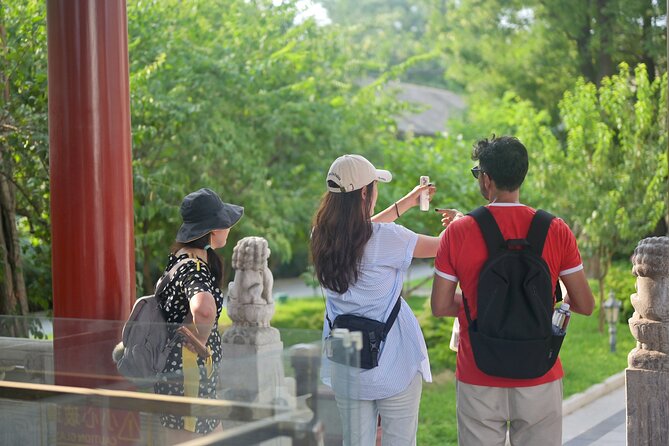
At Zhengyang Shuju, the route turns to the Wansong Brick Pagoda, a Yuan Dynasty structure. You also explore a siheyuan containing a collection of old Beijing images. The planned stop lasts about 20 minutes.
This is one of the most distinctive parts of the tour. A pagoda made of brick offers a different look from the painted timber buildings many people expect in Chinese temple compounds. Its Yuan Dynasty date also gives you a physical link to an earlier period of Beijing’s development.
The siheyuan matters just as much. A traditional siheyuan is arranged around a courtyard, with rooms placed around an open central space. The layout helps explain how family life, privacy, status, and movement worked in old Beijing homes.
The old Beijing images make the courtyard more than an architectural shell. They connect the building to streets, people, and neighborhoods that have changed over time. You may find this stop especially useful if you want to understand how hutongs functioned beyond their appearance in photographs.
Zhuanta Lane and the everyday hutong
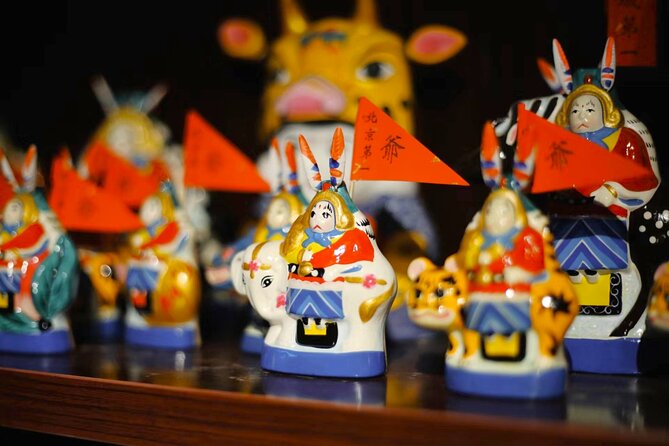
The walk through Beijing Zhuanta Lane lasts about 15 minutes. It is described as one of Beijing’s oldest hutongs, and this is where the tour most clearly shifts from formal monuments to daily neighborhood life.
A hutong is not just a narrow alley for sightseeing. It is a network of lanes, courtyards, entrances, and shared spaces. As you walk, your guide helps you notice how people use the area and how the old city’s layout shaped ordinary routines.
This is also the stop where the door details become especially useful. One of the strongest points from the guide experience is the explanation of how doors were laid out and what they could suggest about a home. You do not need to memorize every design feature. The point is to learn how to look.
Fifteen minutes is short, but that may be appropriate. You get a taste of the lane without turning local homes into a display. Be respectful with photography and avoid treating residents as part of the attraction. The value here comes from seeing a living district while keeping a light footprint.
The Temple of Previous Dynasties
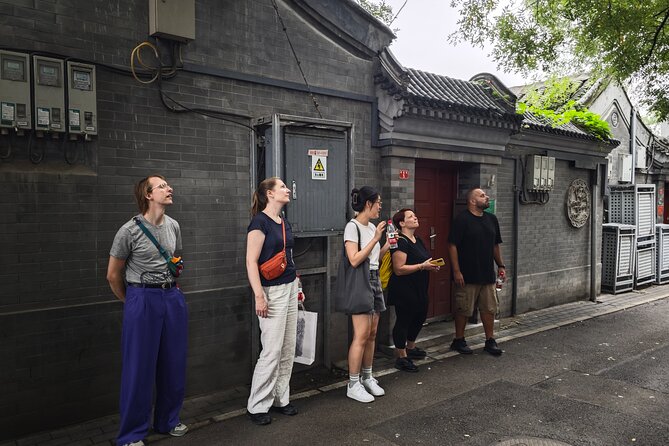
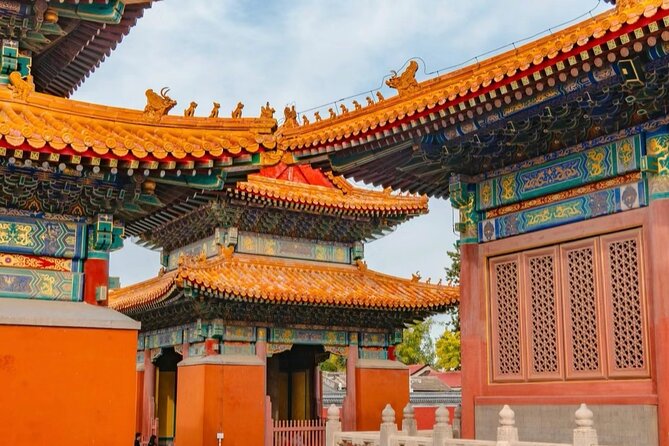
The Temple of Previous Dynasties, also called Lidai Diwang Miao, is scheduled for about 20 minutes, with admission included. The site presents grand palatial structures and offers a lesson in how Chinese culture honors earlier rulers and ancestors.
This stop adds political and ceremonial meaning to the route. After seeing homes and religious buildings, you encounter a place tied to memory, authority, and imperial tradition. The scale and form of the architecture help show how official buildings differ from private courtyard residences.
There is an important qualification: the temple is visited if it is open. If it is closed, you should not assume you will receive the full interior experience. The guide can still place the site in context, but the actual stop may change.
That uncertainty is worth accepting if you value a route that responds to local conditions. It is less suitable if you need every advertised interior visit to be guaranteed.
Seeing the White Stupa from a café balcony
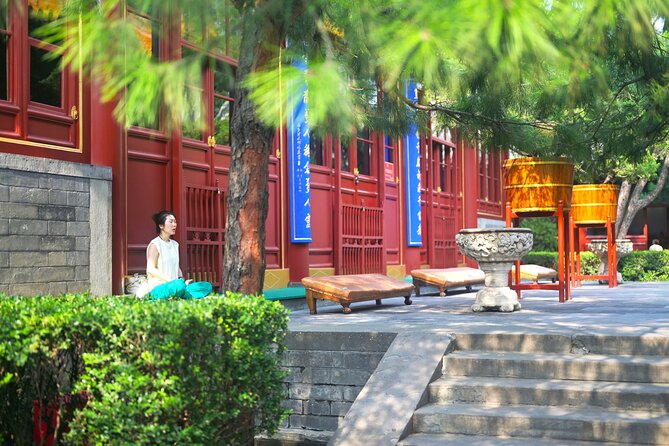
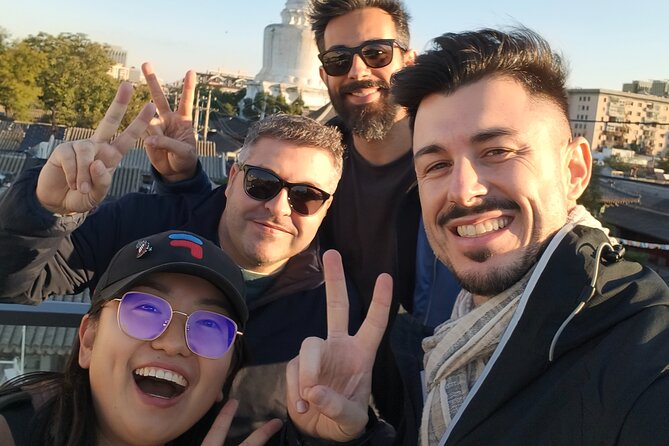
The final major sight is the White Stupa Temple, also known as Miaoying or Baita Si. The guide shows you the exterior design of the White Stupa from a nearby café balcony and explains different types of Chinese pagodas. This portion lasts about 15 minutes.
The balcony viewpoint is an unusual choice. You do not enter the temple as part of the stated visit, but you gain a broader view of the stupa’s shape and setting. A raised viewpoint can help you understand the structure better than standing directly beside it.
The guide’s explanation of pagoda types gives this stop a clear purpose. Rather than simply taking a picture of a famous white structure, you learn that Chinese pagodas come in different forms and traditions.
Still, keep your expectations precise. This is an exterior viewing stop from a café balcony, not a full temple tour. If the White Stupa is your main reason for booking, check that this format suits you.
What the guides add to the walk
The human side of this experience is important. Lori is especially good at explaining hutong layouts and the significance of doors. That kind of detail is hard to get from a guidebook while walking, because you need someone to connect a feature in front of you with the city’s social structure.
Dee brings a friendly, helpful approach and is willing to answer many questions. The tour also includes recommendations for lunch and restaurants, which can be useful after the walk, when you are ready to turn neighborhood observations into a meal.
Guides also offer general travel tips. The supplied details do not list specific restaurants or a set of named recommendations, so you should ask for current advice during the tour. Food and business hours can change, and local guidance is most useful when you tell the guide what you like and how much you want to spend.
A small group makes these conversations more realistic. With no more than 10 people, you are less likely to lose the guide’s explanation in a crowd and more likely to get a direct answer.
Price, timing, and what you receive
The price is $49 per person for about three hours. That is not the cheapest way to walk through a hutong, since you could explore public lanes independently. The question is what you gain by paying.
You are paying for structure, interpretation, and local advice. The route connects six distinct stops, and the guide explains why they matter. Admission fees and taxes are included, as are bottled water and a complimentary traditional Beijing drink.
The drink is a small benefit, but it fits the tone of the experience. It gives you a taste of local custom without adding another formal food stop to an already full schedule.
The price makes the most sense for a first visit, especially if you want to get your bearings quickly. It is also fair for solo visitors who would otherwise have to research the route, identify the architecture, and work out how the stops fit together.
If you already know Beijing well and prefer wandering alone, the cost may feel high for a three-hour walk. The tour’s value depends on how much you want explanation and practical help.
Who should book this walk
I would choose this experience early in a Beijing visit. It introduces several parts of Chinese culture without asking you to spend a full day at one major attraction. Afterward, you will have a better frame for understanding other temples, courtyard homes, and historic lanes.
It suits:
- First-time visitors who want an easy cultural orientation
- People interested in architecture and neighborhood history
- Solo visitors who want a guided walk without a large group
- Anyone looking for restaurant and transport advice
- Families or mixed-interest groups who want several kinds of sights in one outing
- Visitors who enjoy local streets more than polished tourist attractions
It may not suit you if you dislike walking, want a slow photography tour, or need guaranteed access to every site. The schedule is active, some stops are brief, and the Temple of Previous Dynasties depends on opening conditions.
Confirmation is provided at booking. Service animals are allowed, most people can participate, and the tour runs near public transportation. It requires good weather and a minimum number of participants. Cancellation is free up to 24 hours before the start time, but changes or cancellations inside that window are not refunded.
Should you book the Beijing hutong walk?
Book it if you want a well-planned introduction to old Beijing with architecture, religion, local streets, and practical advice in one compact route. The mix of Xishiku Church, Guangji Temple, Wansong Brick Pagoda, Zhuanta Lane, the imperial temple, and the White Stupa gives you more variety than a simple hutong stroll.
I would be comfortable recommending it for a first or second day in the city. Lori and Dee add the kind of local explanation that helps you notice doors, courtyards, and neighborhood patterns instead of simply passing them by.
Skip it if you want long visits inside every building or a completely private experience. For everyone else, $49 buys a useful three-hour introduction, a small group, a traditional drink, and advice you can use for the rest of your Beijing stay.
FAQ
How long does the Beijing hutong walking tour last?
The tour lasts approximately three hours, including travel time between the different locations.
Where does the tour start?
The tour starts in the Xisi area of Beijing, near Xisi Subway Station, in Xicheng District.
Where does the tour end?
The walk ends at Exit C of Fuchengmen Station on Line 2, in the Financial Street area of Xicheng District.
What sights are included?
The route includes Xishiku Church, Beijing Guangji Temple, Zhengyang Shuju and the Wansong Brick Pagoda, Beijing Zhuanta Lane, the Temple of Previous Dynasties if it is open, and an exterior view of the White Stupa from a nearby café balcony.
Is transportation included?
Private transportation is not included. The tour is a walking experience near public transportation, and travel time between stops is included in the total duration.
What is included in the price?
The $49 price includes all fees and taxes, bottled water, and a complimentary traditional Beijing drink.
Can I cancel for a full refund?
Yes. You can cancel at least 24 hours before the experience starts for a full refund. Poor weather or failure to reach the minimum number of participants may also result in a different date or a full refund.
Newly added in the world
- Venice Art and Architecture Private Walking Tour★ 4.5 · 11 reviews
- Basilica San Marco and the Pala d’Oro with Architect Guide★ 4.5 · 19 reviews
- Walking tour in Venice with an architect★ 5.0 · 16 reviews
- Neoclassical Paris Architecture 2-Hour Private Walking Tour★ 5.0 · 7 reviews
- Street Art and Architecture:Porto Speaks Through Its Streets★ 3.0 · 2 reviews
- Wrocław Architecture Cruise by Catamaran★ 4.7 · 25 reviews
- Paris: Discover the hidden architecture gems of Le Marais★ 3.8 · 4 reviews
- Porto Tour: Street Art & Architecture Experience 3h★ 5.0 · 4 reviews
Walking Tours, compared.
The Official Art Deco Walking Tour by The Miami Design Preservation League
Read our review →
Baroque Architecture and Underground Walking Tour
Read our review →
Chicago in a Day: Food, History & Architecture Walking Tour
Read our review →

Ramblas, Old Town, Gothic and Gaudi Architecture Walking Tour
Read our review →
Chicago’s Secret Interiors Architectural Walking Tour
Read our review →
Browse the lists this tour appears in