
Review · WALKING TOURS
Private Walking Tour of Old Gdańsk with an architect-guide
Gdańsk rewards anyone who looks beyond its handsome façades. This private walk with architect-guide Agnieszka connects canals, churches, defensive towers, merchant houses, and the waterfront, using old photographs to show how the city changed before and after the Second World War. It is not just a procession of pretty streets.
I like the private format, since you can ask questions and adjust the pace. I also like the architectural angle. Agnieszka explains why buildings look the way they do, not only when they were built. The main consideration is time: the advertised route can last from 90 minutes to four hours, and several museums and towers are optional rather than included.
Key points
- Architect-led context: Agnieszka links Gdańsk’s buildings with trade, war, religion, and urban design.
- Old photographs: Visual material helps you understand what was lost or changed after the Second World War.
- Two historic areas: The walk begins in Old Town and moves into the larger Main Town.
- Important interiors are optional: The Amber Museum, Uphagen’s House, Artus Court, and the Main Town Hall require separate decisions and, in some cases, admission.
- A flexible private route: The experience can take roughly 1.5 to 4 hours, depending on discussion and optional stops.
- Strong language skills: The tour is offered in English, and Agnieszka is also described as speaking French fluently.
Why an architect makes Gdańsk easier to read
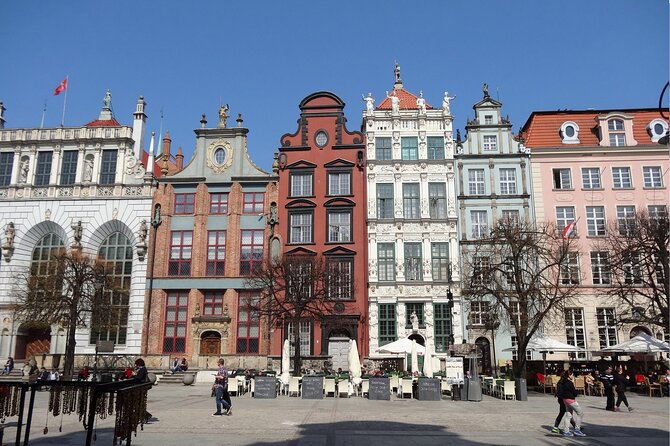
Gdańsk can feel confusing at first because its historic center is not one single district. This walk starts beside the Radunia Canal in the Old Town, then crosses toward Main Town, the area most people picture when they think of Gdańsk’s grand waterfront and merchant streets.
That distinction matters. You are not simply walking through one old quarter. You are seeing how separate parts of the city developed, how trade shaped the streets, and how defensive walls controlled movement. An architect-guide can point out those relationships in a way a standard date-and-name tour may not.
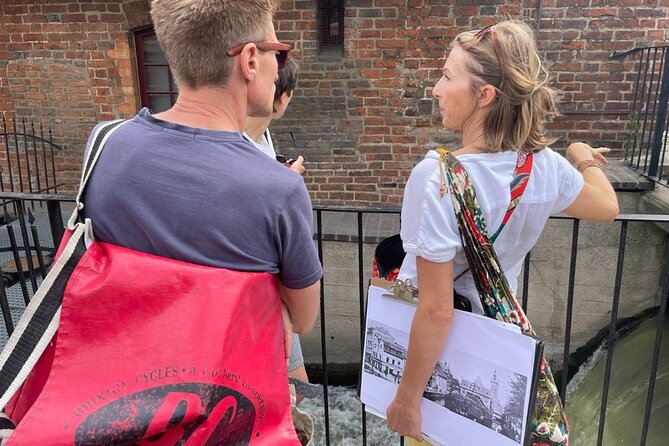
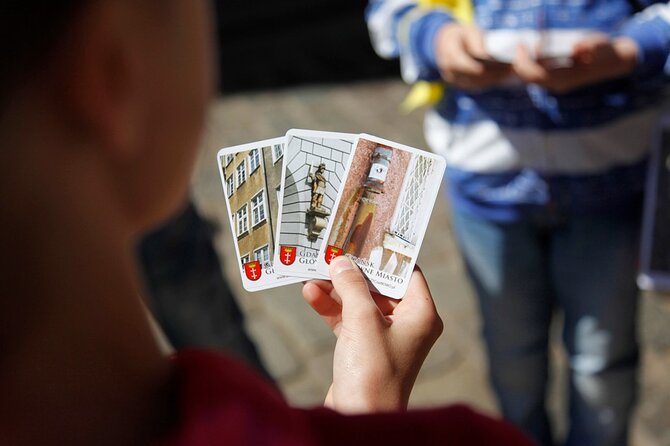
Agnieszka’s style, based on the information provided, combines architecture with anecdotes, humor, historic photographs, and personal enthusiasm for Gdańsk. The photographs are especially useful. Present-day Gdańsk is beautiful, but it is easy to forget how much of the city was damaged and reconstructed. Seeing earlier views gives the buildings more meaning.
The walk is private for your group of up to seven people. That makes the $264.35 group price easier to judge. For one or two people, it is a substantial outlay. For a larger group, the per-person cost becomes more reasonable, particularly if you want a guide who can answer individual questions instead of delivering a fixed speech.
More Walking Tours in the world:
- Lecce: Baroque Architecture and Underground Walking Tour
★ 4.6 · 1,248 reviews - Chicago in a Day: Food, History & Architecture Walking Tour
★ 5.0 · 1,153 reviews - Ramblas, Old Town, Gothic and Gaudi Architecture Walking Tour
★ 5.0 · 723 reviews
Starting beside the Radunia Canal and Old Town City Hall
The meeting point is the Old Town City Hall, at Korzenna 33/35. The building sits beside the Radunia Canal, giving the tour an immediate sense of Gdańsk as a working city shaped by water, mills, and commerce.
Here, Agnieszka introduces the Teutonic Order and the early story of the city. This is a useful opening because the order is central to the wider history of northern Poland, and its presence helps explain why Gdańsk developed as an important fortified and commercial center.
You spend about 12 minutes at the city hall. That is enough for an introduction rather than a full interior visit. If you want a long look inside, you should ask Agnieszka how it fits with the rest of your route.
The Great Mill and the value of old photographs
The next stop is the Great Mill, where the focus shifts to industry and the practical business of feeding a growing city. The building also gives Agnieszka a chance to show photographs of the area before the Second World War.
This is one of the most useful parts of the walk. Ruins and rebuilt façades can be hard to interpret when you are seeing them without context. Old images make the changes visible, helping you understand which parts reflect earlier city fabric and which parts belong to later reconstruction.
The stop lasts about 10 minutes. The Amber Museum is housed in this building, but museum admission is not part of the walk. You are strongly advised to consider visiting it, either before the tour or as a separate plan. That suggestion makes practical sense: the museum gives you another way to understand Gdańsk’s long connection with amber, while the walking tour concentrates on the city itself.
Optional clocks, towers, and a serious climb
Several attractions near the route are discussed rather than formally included. One is a church that still functions as a place of worship and also houses the Museum of Turrets Clocks.
The tower contains centuries-old timekeeping devices, Poland’s largest concert carillon, and the world’s first pulsar clock. The description also makes clear that reaching the museum requires strong legs. You should treat this as a separate choice, not a casual add-on for anyone who dislikes stairs or has limited energy.
Another tower marks the highest point of the medieval fortifications of Main Town. Reaching it signals the transition from Gdańsk’s Old Town into Main Town, the larger and grander historic district. Even without climbing every tower, this change in scale helps explain the city’s historic importance.
More Private Tours in the world:
- Best of Chicago: Architecture & Highlights City Private Tour
★ 5.0 · 94 reviews - Private Harajuku Omotesando Architecture Walking Tour
★ 5.0 · 67 reviews - Private Santa Barbara History and Architecture Walking Tour
★ 5.0 · 56 reviews - Private Barcelona Modernism and Gaudí Walking Tour
★ 4.7 · 54 reviews
The Great Armoury and Gdańsk’s merchant wealth
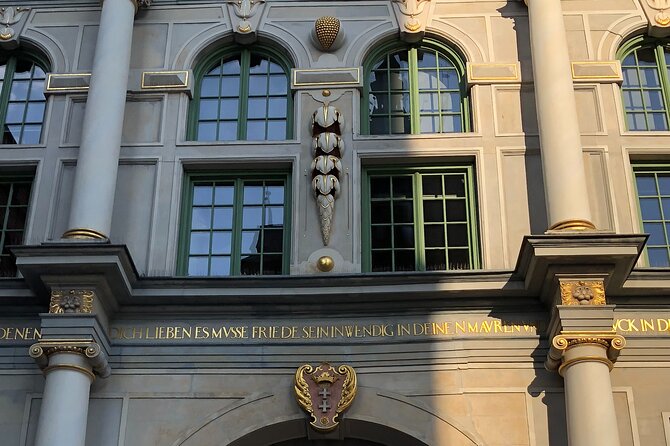
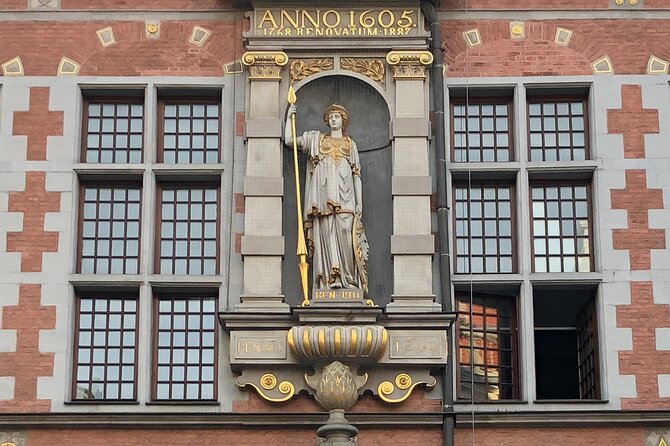
The Great Armoury takes only about five minutes on the route, but its appearance makes a strong point. The building looks unusually ornate for a place designed to store weapons and military equipment. That contrast reflects the wealth of Renaissance Gdańsk, when trade brought money and influence to the city.
The building now houses the Academy of Fine Art. It is sometimes open to the public during student exhibitions, but you cannot count on an interior visit as part of the walk. Ask about current access if this interests you.
I appreciate stops like this because they connect function and appearance. Instead of seeing another decorated façade, you learn why a practical civic building could also serve as a public display of power.
St. Mary’s Church and its astronomical clock
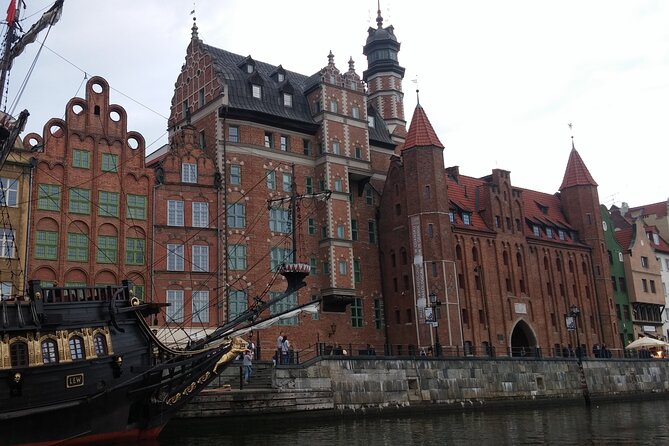
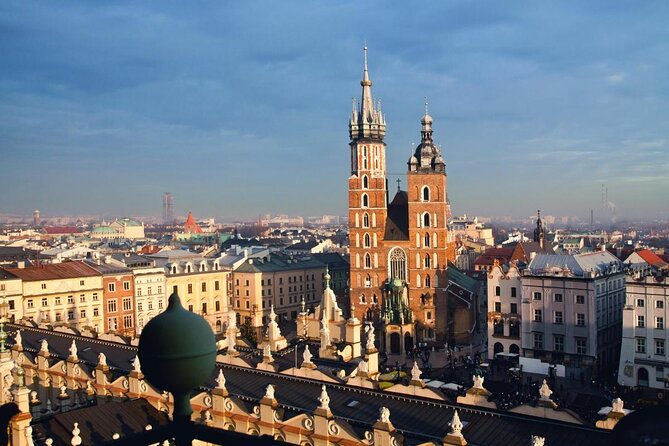
St. Mary’s Church is one of the major landmarks on the route. It is described as the largest brick church in the world, a claim that gives the building real scale before you even step inside.
The church also contains a huge astronomical clock from the 15th century. It chimes every day at noon, so the timing of your walk could matter if hearing it is important to you. The listed stop lasts about 15 minutes, which allows for a look and an explanation but not an extended study of every interior detail.
The church is still active, as are almost all the churches mentioned in the tour material. You should treat it as a functioning religious space, not only as a sightseeing object. That means keeping your voice low and following any local restrictions during services.
Mariacka Street, amber, and the old city atmosphere
Mariacka Street is scheduled for about 20 minutes, making it one of the longer stops. This is where the tour shifts from grand institutions to a more intimate street setting.
The lane is known for its old-world character and its connection with amber shops. You get a better feel for the historic city here than by rushing from one major monument to the next. Look at the street details, entrances, decorative elements, and the way the buildings frame the route toward the water.
The appeal is atmospheric, but the guide adds value by explaining how the street fits into the city’s past. Since Gdańsk’s center was heavily affected by war and reconstruction, an architect’s comments can help you distinguish surviving elements from restored ones without reducing the street to a simple photo stop.
Through St. Mary’s Gate to the maritime waterfront
Passing through St. Mary’s Gate brings you toward the Long Seashore, where the subject becomes maritime trade. This is a natural change of focus. Earlier stops explain civic power, defense, religion, and private wealth; here, you consider the trade that supported much of that prosperity.
The stop at the gate is listed at about five minutes, but its importance is larger than the time suggests. Gates controlled access between the city and the riverfront. They also make the connection between architecture and commerce clear: the grand streets inland were tied to goods moving through the port.
The route ends near the gates that once led into one of the wealthiest cities on the Baltic coast. That closing image gives the walk a useful arc, from canal-side origins to the trading city at the water.
Green Gate and the Great Market
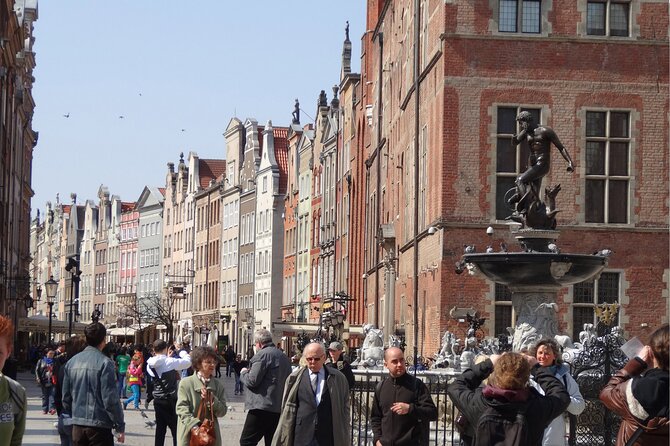
Green Gate marks the entrance to the Great Market, once the place to be in Gdańsk. The stop lasts roughly 10 minutes and provides a chance to discuss the public center of city life.
This is an ideal point to ask questions about how merchants, officials, and residents used the area. The tour is not only about isolated monuments. It shows how streets, gates, squares, and waterfront routes worked together.
Nearby, you can consider two major interiors: Artus Court and the Main Town Hall. Artus Court served as a meeting place for merchants and is now a museum of history and art. The Main Town Hall also has interesting interiors. Neither is included as a guaranteed interior visit, so you should decide whether to return later or extend the walking time if your group wants a closer look.
Uphagen’s House and a glimpse of domestic life
Uphagen’s House offers a different view of the city. Grand churches and public halls show civic ambition, but this house lets you picture how an affluent household lived.
The tour allows only a brief peek, about five minutes, and admission is not included. You should think of this as an introduction rather than a full museum visit. If historic interiors are a priority, set aside time to visit properly.
That flexibility is one of the better features of a private walk. You can use the guide to decide which places deserve a longer return visit instead of trying to force every museum into one route.
Ending at the Prison Tower and Katownia
The walk finishes at the Prison Tower, at Katownia, Targ Węglowy 26. The ending is deliberately darker. This was part of the city’s system of punishment and imprisonment, and the final stop lasts about 10 minutes.
It is a fitting counterweight to the wealthy merchants, elegant streets, and grand churches earlier in the route. Gdańsk’s past was not only trade and beauty. Its civic life also included law, confinement, and executions.
The official ending is at the series of gates leading into Main Town. From here, you are well placed to continue exploring on your own, visit a museum, or return to one of the interiors that caught your attention.
What the $264.35 group price really buys
The price is $264.35 for a private group of up to seven people. You are paying for a dedicated guide, not admission to every building. The Amber Museum, Uphagen’s House, the Prison Tower, Artus Court, and other optional interiors may require separate tickets.
For a group of six or seven, the price works out far better per person than it does for a couple. It is also easier to justify if you want a tailored conversation about architecture, reconstruction, and city history. For a solo visitor or pair watching every expense, a shared group tour may offer better value, though this private option gives you more control.
The route is advertised at about 90 minutes to four hours. That wide range suggests a flexible experience rather than a fixed timetable. Confirm your preferred length when arranging the tour, especially if you have a train, dinner booking, or museum reservation afterward.
Pickup is offered, and the meeting point is near public transportation. Confirmation is normally provided within 48 hours, subject to availability. The tour is offered in English, while Agnieszka is also described as speaking French perfectly, having spent part of her childhood in France.
Who should book this Gdańsk walk
I would choose this tour if you want to understand how Gdańsk was built, damaged, restored, and used. It suits first-time visitors who want a clear orientation, architecture fans, and anyone who prefers a conversation with a local guide over a large group presentation.
It also suits people who enjoy history with a human touch. Agnieszka’s approach includes humor, anecdotes, photographs, and enthusiasm. Her experience guiding walks in nearby Sopot also suggests that she can handle less familiar local stories, although this particular experience focuses on Gdańsk.
You should think twice if you want included museum entry, a fixed short route, or a tour focused only on famous postcard views. Several of the most interesting interiors are optional, and the tower attractions may demand more energy than you expect.
Should you book it?
Book this private Gdańsk walking tour if you value architectural explanation, old photographs, and flexible pacing. It is especially good for a small group that can share the cost and wants to decide together whether to spend extra time at museums or churches.
Skip it if your budget is tight or if you prefer to explore independently with a guidebook. The price does not cover the optional admissions, and the route can expand well beyond 90 minutes.
For most visitors who want a meaningful first look at Gdańsk, the strongest reason to book is Agnieszka’s combination of architecture, history, humor, and visual material. You will leave with more than a list of monuments. You will have a clearer idea of how the city’s canal, gates, churches, markets, and waterfront fit together.
FAQ
How long does the private Gdańsk walking tour last?
The experience lasts approximately 1 hour 30 minutes to 4 hours. The final length depends on your group’s interests and how much time you spend discussing optional museums and interiors.
What is the maximum group size?
The private tour is for groups of up to seven people. Only your group participates.
Is the tour offered in English?
Yes. The tour is offered in English. Agnieszka is also described as speaking French fluently.
Are museum admissions included?
No. Admission is not included for places such as the Amber Museum, Uphagen’s House, and the Prison Tower. Artus Court and the Main Town Hall are also discussed as possible interior visits.
Where does the tour start and finish?
The walk starts at Ratusz Staromiejski, Korzenna 33/35, Gdańsk. It ends at Katownia, Targ Węglowy 26, near the historic gates leading into Main Town.
Can I cancel the booking?
You can cancel up to 24 hours before the experience start time for a full refund. Cancellations or changes made less than 24 hours in advance are not accepted for a refund.
Newly added in the world
- Venice Art and Architecture Private Walking Tour★ 4.5 · 11 reviews
- Basilica San Marco and the Pala d’Oro with Architect Guide★ 4.5 · 19 reviews
- Walking tour in Venice with an architect★ 5.0 · 16 reviews
- Neoclassical Paris Architecture 2-Hour Private Walking Tour★ 5.0 · 7 reviews
- Street Art and Architecture:Porto Speaks Through Its Streets★ 3.0 · 2 reviews
- Wrocław Architecture Cruise by Catamaran★ 4.7 · 25 reviews
- Paris: Discover the hidden architecture gems of Le Marais★ 3.8 · 4 reviews
- Porto Tour: Street Art & Architecture Experience 3h★ 5.0 · 4 reviews
Walking Tours, compared.

The Official Art Deco Walking Tour by The Miami Design Preservation League
Read our review →
Baroque Architecture and Underground Walking Tour
Read our review →
Chicago in a Day: Food, History & Architecture Walking Tour
Read our review →

Ramblas, Old Town, Gothic and Gaudi Architecture Walking Tour
Read our review →
Chicago’s Secret Interiors Architectural Walking Tour
Read our review →

Browse the lists this tour appears in