
Review · WALKING TOURS
Walking Tour of Houston: History, Architecture, Street Art
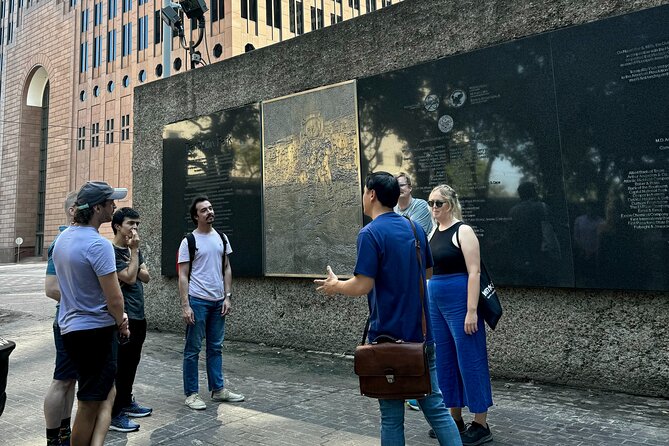
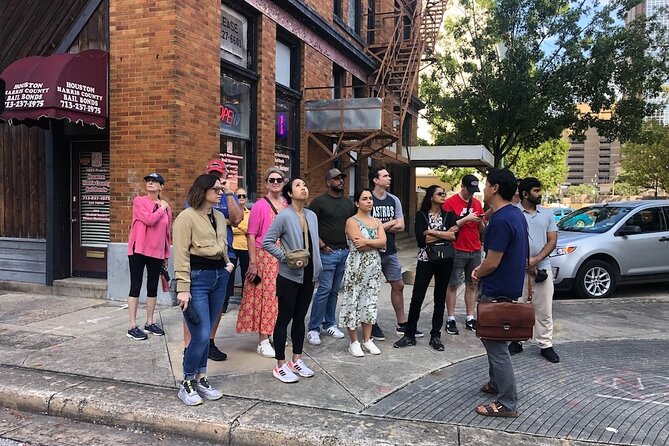
Houston’s downtown story comes into focus on foot. In about two hours, you move from the city’s birthplace at Market Square to Art Deco towers, a NASA-linked park, civic buildings, and colorful public art. John Gu leads the walk, explaining the city through its architecture, important people, and mural artists rather than giving you a quick list of addresses.
I like the mix of big civic landmarks and small visual details, especially the glowing crown of the Gulf Building and the terracotta decoration on the Niels Esperson Building. I also like that the tour ends at Lynn Wyatt Square in the Theater District, where you can eat, continue sightseeing, or walk back toward the start.
The main consideration is that this is an outdoor walking tour, so Houston’s weather matters. One published account describes a 2.5-hour outing in rain, even though the advertised duration is about two hours. Plan for more time than the bare schedule, and bring water since drinks and snacks are not included.
Key Points
- Houston in one compact walk: Cover Market Square, City Hall, Tranquility Park, the courthouse, major skyscrapers, and the Theater District.
- A local guide’s view: John Gu explains Houston’s people, buildings, space-program connections, and mural artists.
- Strong architecture focus: See Art Deco, Italian Renaissance, Brutalist, and civic styles within a short downtown route.
- Useful first-day orientation: Finish with a better sense of downtown and ideas for exploring beyond the tour.
- Easy logistics: Meet at Lyric Market, finish at Lynn Wyatt Square, and use nearby public transportation.
- Small enough to ask questions: The group can reach 25 people, with a recent account describing a group of about 20.
Why This Walk Works for a First Look at Houston

Houston can feel spread out, and its downtown blocks do not always announce their importance. This walk gives you a clear starting point. You are not simply looking at buildings from the sidewalk. You are learning why certain corners matter and how Houston grew from a small commercial settlement into a major American city.
The route is especially useful if you have limited time in town. It connects several key sights without asking you to commit a full day to a museum or a formal bus excursion. You will see the old center of Houston, early skyscrapers, government buildings, the Theater District, and a public space tied to NASA.
I would choose this tour early in a Houston visit. The guide’s suggestions can help you decide what deserves a second look later, and the walk gives you a mental map of downtown. It is also a good option if someone in your group has a meeting or an appointment nearby. One person used it as a way to fill time while her husband attended a meeting, and the start and finish were close enough to make that practical.
The format is friendly to many people. Service animals are welcome, strollers can be used, and most people can take part. Still, you should expect a couple of hours on city sidewalks, with stops outside rather than lengthy indoor visits. The listed maximum is 25 people, so this is not a private walk, but it is smaller than a large coach group.
More Walking Tours in the USA
- The Official Art Deco Walking Tour by The Miami Design Preservation League
★ 5.0 · 1,580 reviews - Chicago in a Day: Food, History & Architecture Walking Tour
★ 5.0 · 1,153 reviews - Miami South Beach Art Deco Walking Tour
★ 5.0 · 1,039 reviews
Starting at Market Square, Houston’s Birthplace
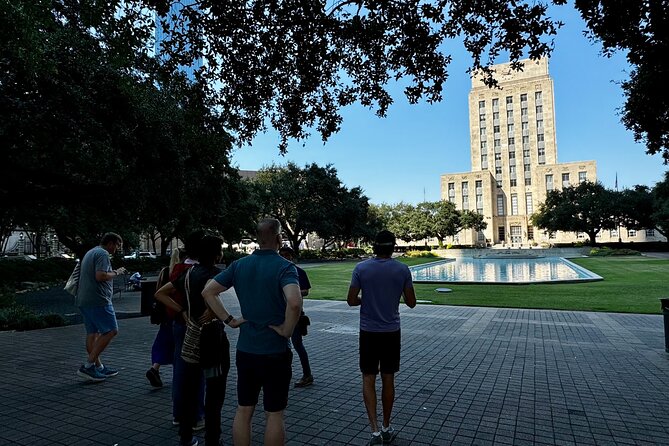
The walk begins at Lyric Market, at 411 Smith Street, then heads into the Downtown Historic District and Market Square. This is the right place to begin because the square is tied to Houston’s origins and sits among some of the city’s oldest buildings.
John Gu uses the first stop to explain how Houston began and how the historic district developed. You get context before the architecture becomes the main subject. That order helps: once you know you are near the city’s earliest center, older façades and later towers become easier to place.
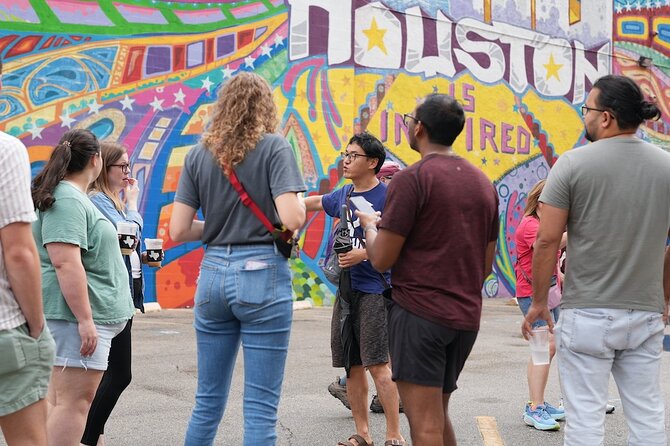
There is also time for photographs at the Houston is inspired mural, described as Houston’s most popular Instagram photo spot. It gives the opening section a lighter touch. You get a recognizable image for your camera, but the mural also introduces the public-art side of the tour.
The stop is scheduled for about five minutes, so expect a quick introduction rather than a long historical lecture. The value comes from the guide’s explanation and from seeing the district as part of Houston’s beginning, not from entering a major attraction.
The Gulf Building and Houston’s Art Deco Years
The Gulf Building is one of the walk’s strongest architecture stops. Completed in 1929, it rises 37 stories and reflects the confidence of Houston’s early skyscraper era. Its setbacks, marble details, and illuminated crown make it easy to understand why it once held the title of Houston’s tallest building.
Look up as you approach it. The building’s shape changes as it rises, a common Art Deco feature that gives the tower a sense of movement. The glowing, stepped crown is especially noticeable after dark, though the tour’s timing is not specified, so you should not assume you will see the nighttime lighting.
The lobby is covered with murals and includes gleaming marble, but the stop is listed as an exterior visit with free admission. The tour does not promise an extended indoor visit, so treat the lobby as a possible visual detail rather than the main event.
I like this stop because it gives you a quick lesson in how architecture can signal ambition. Houston was not content to remain a small regional center. A tower of this scale, built in 1929, tells that story without needing a long explanation.
The Theater District’s Bold Mix of Styles
The route continues to Houston’s Theater District, home to major venues including the Alley Theatre and Jones Hall. This is where the tour shifts from early commercial Houston to the city’s cultural life.
The Alley Theatre is noted for its Brutalist design and its role in producing major theater. Its heavy, geometric form looks very different from the decorative Gulf Building. That contrast is useful. You can compare two periods of architecture within the same downtown outing instead of studying each style in isolation.
Jones Hall offers another change. Its marble interior and concert-hall acoustics are part of its identity, although the tour does not include a performance or promise entry. You will learn what makes the venue important, while the short stop keeps the walk moving.
The Theater District also helps explain why the tour ends nearby. Lynn Wyatt Square provides a natural place to pause after the formal route. From there, you can find a nearby café, walk back to Lyric Market, or continue exploring downtown.
Keep your expectations realistic here. The tour gives you orientation and architectural context, not a backstage tour or a ticketed performance. If you want to see the interiors at length, you would need to plan a separate visit.
Same city, a different facade:
- Chicago Architecture River Cruise
★ 5.0 · 15,756 reviews - Chicago River 90-Minute Architecture Tour
★ 4.5 · 9,629 reviews - Chicago River: 1.5-Hour Guided Architecture Cruise
★ 4.8 · 8,046 reviews - Chicago Architecture Center River Cruise aboard First Lady
★ 5.0 · 5,536 reviews
City Hall and the Civic Core
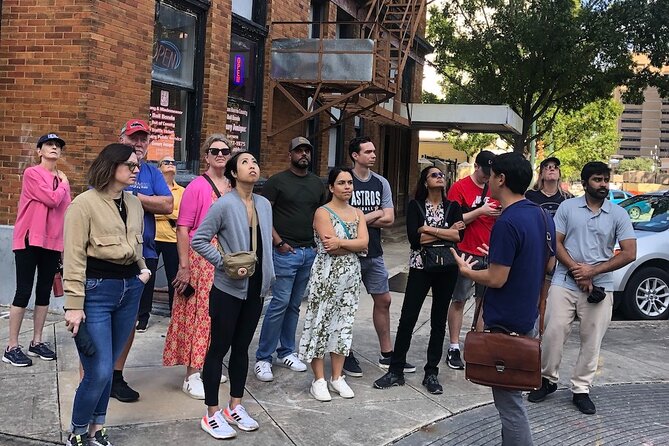
Houston City Hall, completed in 1939, brings the walk into the city’s civic center. The limestone-clad building uses Art Deco forms, geometric decoration, and detailed friezes. It sits beside Hermann Square, giving you room to take in the façade rather than viewing it from a cramped sidewalk.
This stop is valuable because government buildings often reveal how a city wanted to present itself. City Hall’s formal design projects authority and permanence. John Gu connects the building to the stories behind Houston’s government, adding human context to what could otherwise be just another impressive façade.
The stop is scheduled for about five minutes. That is enough for an introduction, a few photographs, and a look at the details, but not enough for a full civic-history lesson. If City Hall interests you, make a note to return with more time.
The route’s building-by-building rhythm works well here. Market Square gives you Houston’s early roots, the Gulf Building shows commercial ambition, and City Hall shifts attention to public power. Each stop adds a different piece to the city’s story.
Tranquility Park and Houston’s NASA Connection
Tranquility Park offers a change from towers and façades. Here, John explains Houston’s relationship with NASA and the park’s connection to the space program.
This stop matters because Houston’s identity reaches far beyond downtown real estate and government. The city is closely tied to American space exploration, and Tranquility Park gives that part of the story a physical place in the center of town.
Do not expect a full visit to a space museum. The purpose here is to connect the park to Houston’s role in the space program and to give your walk a break from dense architecture. The stop is short, about five minutes, but it broadens the tour’s subject.
I appreciate that the route includes this pause. A good city walk should not force every stop into the same mold. After several historic buildings, an open park and a NASA link help you see Houston as a city with several overlapping identities.
The Niels Esperson Building’s Decorative Crown
The Niels Esperson Building is another architectural high point. Completed in 1927, it was built by Mellie Esperson as a tribute to her husband, real estate magnate Niels Esperson. Its Italian Renaissance style, terracotta details, large columns, and temple-like crown give it a very different personality from the Gulf Building.
This is a building worth viewing from more than one angle. Notice the decorative treatment near the top and the contrast between its classical details and the simpler geometry of later towers. The story behind the building also adds a personal note to Houston’s early development. It was not only a business project. It was a tribute shaped by one person’s vision.
The stop lasts about five minutes and is free. As with the other architecture stops, the guide supplies the meaning while you take in the exterior. If you like old skyscrapers, this is a good place to slow down for photographs.
The route is strongest when it lets you compare buildings. The Gulf Building represents Art Deco confidence. The Niels Esperson Building uses historical references and ornament. Seeing both in one walk makes Houston’s architectural changes easier to understand.
The 1910 Harris County Courthouse

The final listed landmark is the 1910 Harris County Courthouse, a major civic building from Houston’s early twentieth-century growth. It is presented as a city landmark and an example of the period’s formal public architecture.
This stop rounds out the civic story. You have already seen the later City Hall, and now you get an earlier courthouse for comparison. The building helps show how Houston’s public architecture changed over time while retaining a sense of ceremony.
The description of the courthouse is brief, so you should expect the guide to highlight its importance rather than spend a long period inside. The tour is about seeing the structure in its downtown setting and understanding its place in Houston’s development.
Depending on the exact flow of the outing, the walk then continues toward Lynn Wyatt Square in the heart of the Theater District. The published end point is 601 Capitol Street, and the square is close to the district’s cultural venues and places to eat.
Street Art, People, and the Guide’s Role
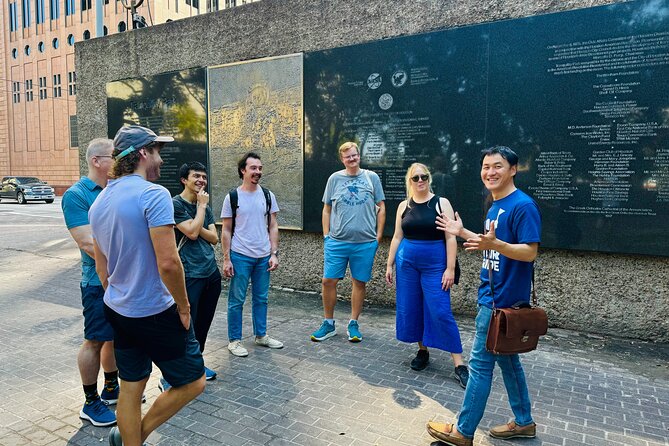
Architecture is the backbone of this walk, but street art keeps it from feeling like a procession of old buildings. The Market Square mural provides the clearest photo stop, while John also discusses mural artists and the people connected to Houston’s history.
That combination is one of the tour’s best features. You get the polished story of skyscrapers and courthouses, but you also see how public art gives downtown a current voice. The experience is not limited to famous architects and government officials.
John Gu’s role matters because the route depends on explanation. One published account describes him as clear, funny, and easy to hear with a group of about 20. Another notes that he made a point of including a solo participant during the break. Those details suggest an attentive guide who tries to keep the walk personal even when the group is not tiny.
The tour is offered in English. A Spanish-language account also praises John’s patience and clear answers, but you should book this experience expecting English instruction unless the provider confirms another arrangement.
Timing, Group Size, and What to Bring
The advertised duration is about two hours, with each main stop listed at roughly five minutes. Walking between the stops, photographs, questions, and a break account for the rest of the time. One account describes spending 2.5 hours on the outing, so I would avoid scheduling a tight connection immediately afterward.
The tour has a maximum of 25 people. That gives you a reasonable chance to hear the guide and ask questions, though a group of this size may feel less intimate than a private walk. John has been described as speaking loudly enough for a group of about 20, which is useful on an urban route.
Bring water. Bottled water and snacks are not included, and food or drinks bought along the way are your responsibility. A short break is part of the practical rhythm, so you can use it for a restroom stop, snack, or beverage.
Houston weather deserves attention. One outing continued in rain and still lasted about 2.5 hours. Check the forecast, wear shoes suited to city sidewalks, and carry rain protection when needed. The tour is stroller accessible, and service animals are allowed.
The start at Lyric Market is convenient for food before or after the walk. The end near Lynn Wyatt Square gives you another chance to eat or continue sightseeing. Public transportation is nearby, and one account places both ends about a block from a tram line.
Is $25 a Fair Price?
At $25 per person, this is a reasonable price for a local-led downtown orientation. You are paying for about two hours of guiding, interpretation at seven major stops, and a route that joins history, architecture, NASA connections, and public art.
The value is highest if Houston is new to you or if you want context before exploring alone. The tour does not include admissions, food, drinks, performances, or extended indoor access. That keeps the price low, but it also means the experience is about the city streets rather than ticketed attractions.
I would compare the cost with the time it saves. Without a guide, you could walk past the Gulf Building, City Hall, or Niels Esperson Building without knowing their dates or design importance. John turns those buildings into a connected story, then leaves you near the Theater District with ideas for what to see next.
The free cancellation policy adds flexibility. You can cancel for a full refund at least 24 hours before the start time. Changes or cancellations inside that window are not accepted for a refund, so keep the local cut-off time in mind.
Who Should Book This Houston Walk?
I would recommend it to first-time visitors, architecture fans, people with a short downtown window, and anyone who prefers learning a city through its streets. It also suits solo participants, since the guide has shown care toward individuals within a group.
Families may appreciate the stroller access and short stops, though young children still need to manage a couple of hours outdoors. The route is also useful for anyone staying near central Houston or using public transportation.
You may want a different experience if your priority is entering museums, attending a performance, or spending a long time inside historic buildings. This is an orientation walk, not a series of interior tours. It gives you the framework, then leaves you to choose which places deserve a closer visit.
Should You Book It?
Book this walk if you want Houston explained through its streets, buildings, and public art rather than reduced to a list of attractions. John Gu’s clear delivery, humor, and attention to questions add value, and the route covers a lot without requiring a full day.
I would especially choose it near the start of a Houston visit. You will leave with a better sense of Market Square, the Theater District, early skyscrapers, City Hall, the courthouse, and the city’s NASA connection. Just allow extra time, bring water, and prepare for the weather.
FAQ
How long is the Walking Tour of Houston?
The advertised duration is approximately two hours. Because walking, questions, photographs, and a short break add time, you should allow extra room in your schedule.
Where does the tour begin?
The tour begins at Lyric Market, 411 Smith Street, Houston, Texas 77002.
Where does the tour end?
The listed end point is 601 Capitol Street, with the walk concluding at Lynn Wyatt Square in the Theater District.
What language is the tour offered in?
The tour is offered in English.
How much does the tour cost?
The price is $25 per person.
What landmarks are included?
The route includes Market Square, the Gulf Building, the Theater District, City Hall, Tranquility Park, the Niels Esperson Building, and the 1910 Harris County Courthouse.
Is the tour accessible with a stroller or service animal?
Yes. The tour is stroller accessible, and service animals are welcome.
What happens if I need to cancel?
You can cancel at least 24 hours before the start time for a full refund. Cancellations or changes made less than 24 hours before the start time are not accepted for a refund.
More History Walks in the USA
- Charleston’s Best Highlights: History, Culture & Architecture
★ 5.0 · 422 reviews - Palm Springs Modernism Architecture & History Bike Tour
★ 5.0 · 359 reviews - Charleston: History and Architecture Guided Walking Tour
★ 4.8 · 349 reviews - Historic Georgetown: History, Gossip, & Architecture Walking Tour
★ 5.0 · 321 reviews
More Street Art Walks in the USA
- Tirana: Street Art & Modern Architecture Walking Tour
★ 4.9 · 31 reviews - Tirana: Street Art & Modern Architecture Tour
★ 5.0 · 18 reviews - Porto Tour: Street Art & Architecture Experience 3h
★ 5.0 · 4 reviews - Street Art and Architecture:Porto Speaks Through Its Streets
★ 3.0 · 2 reviews
Newly added in the USA
- Art Deco Tour of South Beach in French★ 4.5 · 8 reviews
- Award-winning Art Deco & Neon Lights Walking Tour★ 5.0 · 5 reviews
- Miami Beach Art Deco Segway Tour★ 4.5 · 17 reviews
- Boston: Freedom Trail History and Architecture Walking Tour★ 4.8 · 18 reviews
- Boston: Harbor and Charles River Architecture Boat Tour★ 4.6 · 9 reviews
- Chicago: Guided Tour with Architecture River Cruise★ 4.5 · 20 reviews
- Iconic Capitol Hill Architectural Walking Tour★ 5.0 · 21 reviews
- South Beach Food Tour- Culinary & Art Deco & History★ 5.0 · 22 reviews
Walking Tours, compared.
The Official Art Deco Walking Tour by The Miami Design Preservation League
Read our review →
Baroque Architecture and Underground Walking Tour
Read our review →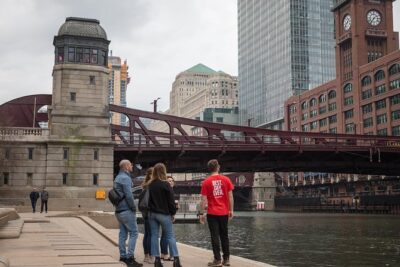
Chicago in a Day: Food, History & Architecture Walking Tour
Read our review →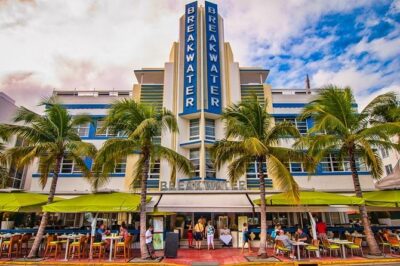

Ramblas, Old Town, Gothic and Gaudi Architecture Walking Tour
Read our review →
Chicago’s Secret Interiors Architectural Walking Tour
Read our review →
Browse the lists this tour appears in