
Review · WALKING TOURS
Plečnik’s Ljubljana -UNESCO heritage- A walk among architect Plecnik’s creations
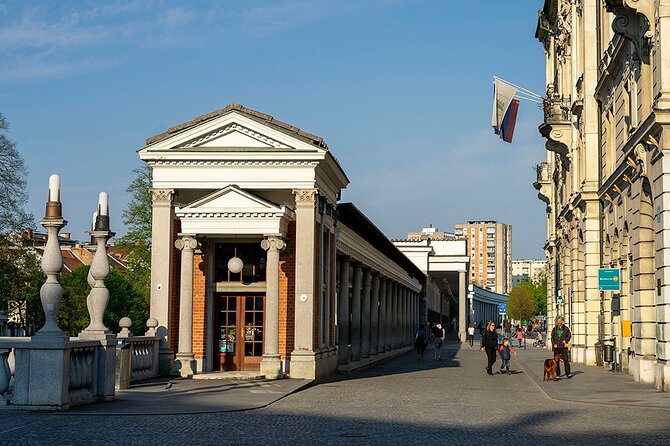
Ljubljana makes the most sense when you see it as Jože Plečnik’s carefully shaped city. This private walk links his bridges, market spaces, river crossings, squares, theater, and library into one clear story, rather than treating each building as an isolated stop.
I like the private format for up to six people, and I like the small tastings that give the walk a local touch. The main consideration is pace: two hours covers six stops, so you should expect a focused introduction rather than a slow architectural study at every site.
- Triple Bridge begins the story of how Plečnik changed Ljubljana’s central river crossing.
- Central Market reveals two levels of design, stretching toward Dragon Bridge.
- Shoemaker’s Bridge pairs river views with Plečnik’s distinctive columns and lights.
- Križanke and the National Library show his grander, more detailed work.
- Private guiding keeps the walk personal, with room for questions and advice about the rest of Slovenia.
- The group price works best for four to six people, especially if you value a dedicated guide.
Why Plečnik is the right key to Ljubljana
Ljubljana is compact, and that makes an architecture walk especially useful. You can move from bridge to market, square, theater, and library without needing transport between the main sights. Instead of only checking off attractions, you see how one architect helped give the city its visual character.
Jože Plečnik’s work here is not limited to one famous building. His mark appears in the way public spaces meet the river, how bridges frame the city, and how practical places such as the market became part of the city’s design. This tour uses those connections well.
You begin at Krekov trg, a central meeting point, and finish at Križanke on Trg francoske revolucije. Pickup is offered, and the meeting area is near public transportation. Since the walk ends somewhere different from where it begins, you can continue exploring from Križanke instead of retracing your steps.
The English-speaking guide is local and explains Plečnik’s work and life as you go. Tjasa has led this experience and is described as going well beyond the basic route, making the walk memorable for people with very different levels of interest in architecture. That matters here. You do not need an architecture degree to follow the tour, but you will have room to ask more detailed questions if that is your interest.
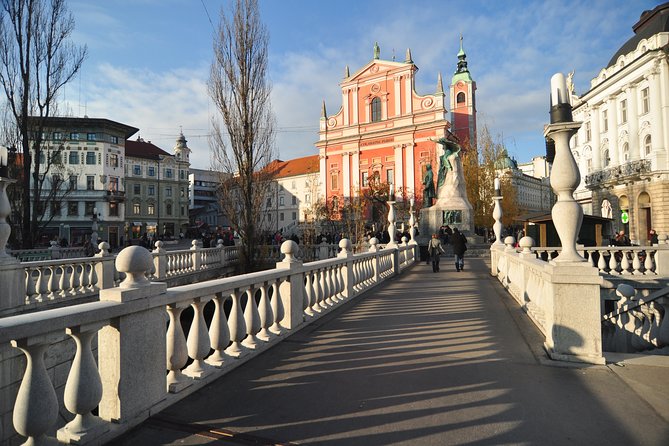
Triple Bridge: Ljubljana’s best opening scene
The first stop is the Triple Bridge, or Tromostovje. It gives you an immediate example of how Plečnik worked with an existing city rather than treating every project as a blank canvas.
Only two of the three bridges were made by Plečnik. That small detail is worth hearing at the site, where the unusual arrangement becomes easy to understand. The bridge is also a good place to see how a crossing can become a public space, not just a route from one bank to the other.
The stop is scheduled for about five minutes. That is enough for a quick explanation and orientation, but not much time for lingering. If you want detailed photographs or a quiet look at the bridge from different angles, you may need to do that after the walk.
Starting here is smart because it gives you a simple question to carry through the rest of the tour: how did Plečnik turn ordinary city functions into memorable public places?
More Walking Tours in the world:
- Lecce: Baroque Architecture and Underground Walking Tour
★ 4.6 · 1,248 reviews - Chicago in a Day: Food, History & Architecture Walking Tour
★ 5.0 · 1,153 reviews - Ramblas, Old Town, Gothic and Gaudi Architecture Walking Tour
★ 5.0 · 723 reviews
Central Market and the route toward Dragon Bridge
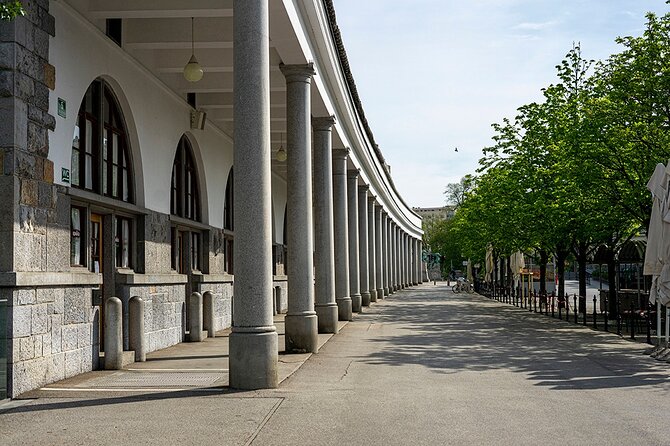
From the Triple Bridge, the walk continues along the Central Market toward Dragon Bridge. The route highlights Plečnik’s work in two levels, giving you more than a single building to look at. The market is a working part of Ljubljana, so this stop connects design with daily city life.
You can expect about ten minutes here. The guide’s job is not simply to point at architectural details, but to explain how the market fits into Plečnik’s larger plan for the center. That makes this one of the most useful stops for readers who want to understand how his ideas affected the way people move and gather.
The short duration means you should not expect a full market tour or a long food stop. The included snacks are described as little tastings along the way, and they add a pleasant local note without turning the experience into a dedicated food tour.
I like this balance. You get a taste of the city while keeping the focus on architecture and urban design. If your main goal is shopping at the market, plan separate time before or after the walk.
Shoemaker’s Bridge and Plečnik’s river details
Shoemaker’s Bridge, or Cevljarski Most, is a smaller stop with a strong visual identity. The bridge creates a square over the river, and Plečnik’s lights and special columns give it a formal look.
The scheduled time is about five minutes, so listen closely when the guide explains what you are seeing. This is the kind of place that can be easy to cross without noticing, especially when you are focused on reaching the next sight. With context, the columns, lighting, and open space become part of a larger design idea.
This stop also helps show the range of Plečnik’s work. The Triple Bridge is the headline attraction, while Shoemaker’s Bridge is about the details and proportions of a smaller public space. You will not spend long here, but the stop helps prevent the tour from becoming a list of only major landmarks.
Congress Square and Ljubljana’s public life
Congress Square, or Kongresni trg, is given about ten minutes. The square was changed by Plečnik and hosted one of the biggest events ever held in Ljubljana, giving the place both architectural and civic importance.
A square like this is best understood as a stage for public life. The guide can connect the space to the events that took place here while explaining Plečnik’s changes. That makes the stop useful even if you are more interested in the city than in design details.
This is another point where the private format helps. In a group of up to six, you can ask how the square fits with the bridges and market you have already seen. The walk becomes a conversation about Ljubljana’s center rather than a string of fixed speeches.
The ten-minute schedule is still brief. You may leave wanting more time to sit, photograph the space, or study its layout. That is not a serious flaw, but it is worth knowing if you prefer unhurried sightseeing.
More History Walks in the world:
- Charleston’s Best Highlights: History, Culture & Architecture
★ 5.0 · 422 reviews - Palm Springs Modernism Architecture & History Bike Tour
★ 5.0 · 359 reviews - Charleston: History and Architecture Guided Walking Tour
★ 4.8 · 349 reviews - Historic Georgetown: History, Gossip, & Architecture Walking Tour
★ 5.0 · 321 reviews
Križanke: the final major work on the route
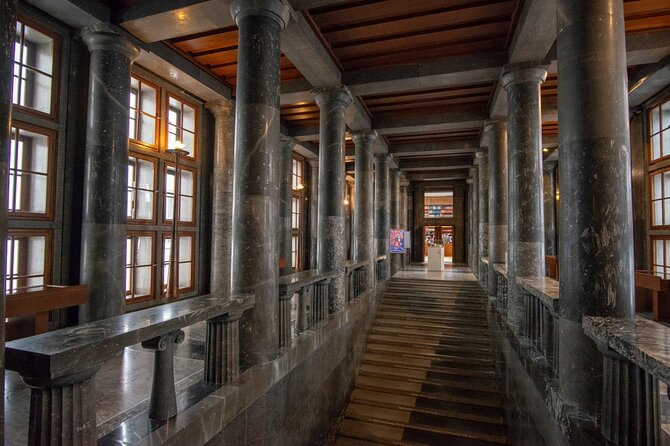
The Monastery of the Holy Cross Summer Theater, known as Križanke, is described as Plečnik’s last major work in Ljubljana. It is also presented as the city’s best outdoor theater, with striking details to examine.
The tour allows about ten minutes here, making it one of the longer stops. That extra time is welcome because Križanke is not only about the overall design. The appeal lies in the details, and the guide can direct your attention to features you might otherwise pass without noticing.
Križanke is also where the walking route ends. The address is Trg francoske revolucije 1, so you finish near another useful part of central Ljubljana. You can ask the guide for suggestions about what to do next, a service included with the tour and particularly helpful if this is your first visit.
Because Križanke is an outdoor theater, weather matters. The experience requires good weather, and poor conditions can lead to a new date or a full refund. Bring that possibility into your plans if your Ljubljana schedule is tight.
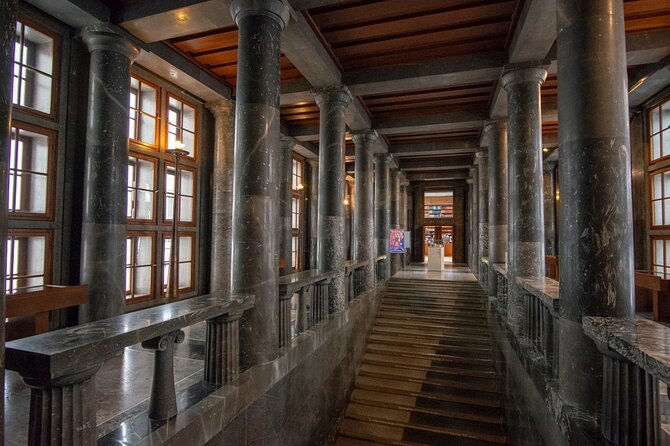
The National and University Library
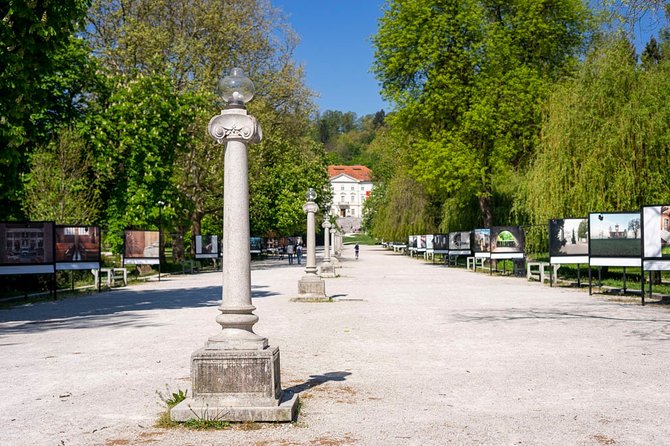
The National and University Library is the final architectural highlight named on the route. It is described as one of Plečnik’s masterpieces, and the short five-minute stop gives you a final example of his work at a larger institutional scale.
After bridges, market spaces, a river square, and a public square, the library changes the tone. Here, Plečnik’s design is tied to learning and civic purpose. Even with limited time, the stop rounds out the tour by showing that his contribution to Ljubljana reached beyond streets and outdoor spaces.
The listed route places Križanke as the end point, while the National and University Library appears immediately before it in the sequence. The walk therefore closes with two strong architectural destinations close together. Your guide can help you understand how these final stops fit with the wider story of the city.
What the private format changes
This is a private activity, and only your group takes part. The maximum is six people, which is a useful size for a walking tour. You can hear the guide more easily, ask questions without holding up a large crowd, and adjust the conversation to your group’s interests.
The format is especially good for mixed groups. One person may care about architecture, another about city history, and another may simply want a pleasant way to get oriented. Tjasa’s ability to engage a family member with an architecture degree while also sparking interest in someone considering a different field shows the kind of broad appeal this tour can have.
The private setup comes with a price of $220.41 per group. For six people, that works out to about $36.74 each. For two people, it is about $110.21 per person, so the value changes sharply with group size.
I would recommend the price most readily to a family or group of friends sharing the cost. For a couple on a tight budget, a public walking tour may cost less. Here, you are paying for a dedicated guide, a short route focused on one architect, small tastings, and personal advice for the rest of your stay.
Snacks, local advice, and the human side of the walk
The included tastings are small, but they serve a useful purpose. Food gives the guide a chance to talk about Ljubljana and its residents in a way that a purely visual architecture tour cannot. Do not book this expecting a full meal or a food crawl. Think of the snacks as brief local pauses during the walk.
The advice at the end can be just as valuable. Since the guide is local, you can ask what else to do in Ljubljana or where to continue in Slovenia. That is particularly helpful after a concentrated two-hour introduction, when you may have a clearer sense of which parts of the city you want to explore next.
All fees and taxes are included, so the price is straightforward. You should still allow time for your own meals and for additional visits after the tour.
Timing, walking effort, and useful planning notes
The experience lasts about two hours and includes six stops. The listed stop times add up to roughly 45 minutes, leaving the rest for walking between locations, explanations, questions, and tastings. That makes it a focused city walk rather than a long, slow day out.
Most travelers can participate, and service animals are allowed. The route is near public transportation, and pickup is offered. Since the activity takes place outdoors and requires good weather, wear comfortable shoes and check the forecast before setting out.
The start point is Krekov trg. The end point is Križanke, so make a note of both locations. Confirmation is sent within 48 hours of booking, subject to availability. Free cancellation is available if you cancel at least 24 hours before the start time. Changes or cancellations inside that window are not refunded, except when poor weather causes the provider to cancel.
Who will get the most from this Ljubljana walk
I would choose this tour if you want a clear introduction to Plečnik without committing to a full architecture lecture. It also suits anyone who likes to understand why a city looks the way it does, rather than simply photographing its best-known sights.
Families can benefit from the private format, especially when members have different interests. Couples and small groups should compare the cost carefully, since the fixed group price offers its best value when several people share it.
You should be comfortable with a short walking route and outdoor stops. If you want extensive time inside buildings, a full market visit, or long breaks for photography, this may feel too quick. The tour is strongest as a structured overview that helps you return to favorite places later.
Should you book Plečnik’s Ljubljana?
Book it if you want to see Ljubljana through one architect’s eyes, prefer a private guide, and have at least four people to share the group price. The route covers a strong set of central sights, and the mix of bridges, market design, public squares, theater, and library gives you a well-shaped introduction.
I would skip it if your budget is tight for a two-person booking or if you want a relaxed half-day with long stops. For everyone else, this is a practical way to get oriented, enjoy a few local tastings, and learn why Plečnik’s work is so closely tied to Ljubljana’s identity.
FAQ
How long does Plečnik’s Ljubljana last?
The walk lasts approximately two hours.
How many people can join the private tour?
The private group can include up to six people. Only your group participates.
Where does the tour start and end?
It starts at Krekov trg in Ljubljana and ends at Križanke, Trg francoske revolucije 1.
Is the tour offered in English?
Yes. The experience is offered in English with a professional local guide.
What is included in the price?
The price includes the guide, small tastings along the way, advice about other things to do in Ljubljana or Slovenia, and all fees and taxes.
Can I cancel for a full refund?
Yes, if you cancel at least 24 hours before the experience starts. Cancellations or changes made less than 24 hours before the start time are not refunded. If poor weather causes the tour to be canceled, you will be offered another date or a full refund.
Newly added in the world
- Washington, DC: Georgetown Architecture Walking Tour★ 5.0 · 8 reviews
- Washington DC: Dupont Circle & Embassy Row Architecture Tour★ 5.0 · 6 reviews
- New Orleans : Garden District Architecture Walking tour★ 4.8 · 5 reviews
- Wilmington History and Architecture Tour★ 4.8 · 18 reviews
- Unveiling Brno: History, Culture & Architectural Delights★ 5.0 · 2 reviews
- Vicenza: Palladian Architecture Private Walking Tour★ 3.3 · 3 reviews
- Walk & Discover KL’s Architectural and Heritage Gems★ 5.0 · 7 reviews
- Private Colonial Williamsburg Architectural Tour★ 5.0 · 5 reviews
Walking Tours, compared.
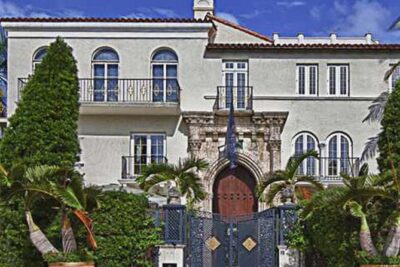
The Official Art Deco Walking Tour by The Miami Design Preservation League
Read our review →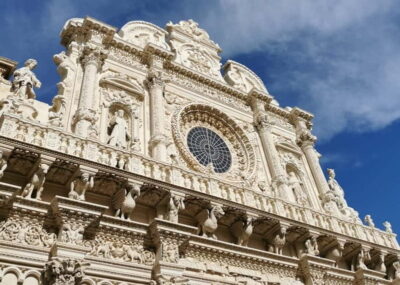
Baroque Architecture and Underground Walking Tour
Read our review →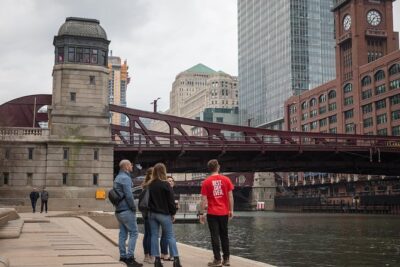
Chicago in a Day: Food, History & Architecture Walking Tour
Read our review →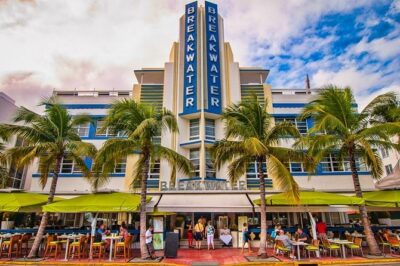
Ramblas, Old Town, Gothic and Gaudi Architecture Walking Tour
Read our review →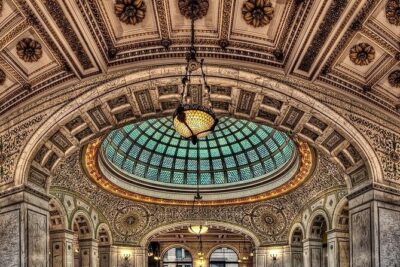
Chicago’s Secret Interiors Architectural Walking Tour
Read our review →
Browse the lists this tour appears in