
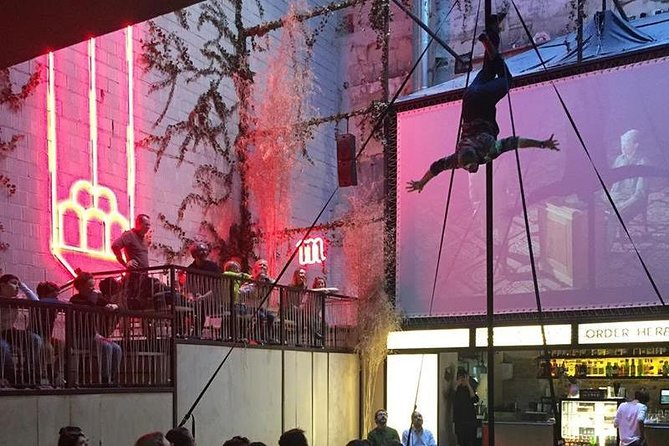
Review · MADRID ARCHITECTURE TOURS
Architour through Lavapiés and Rastro with an architect
Lavapiés is one of Madrid’s best neighborhoods for seeing how the city actually works. On this private walking tour with architect Emilio, you move from old corrala housing and an Inquisition jail to Art Deco theaters, rationalist buildings, street art, and a neighborhood market. It is not a greatest-hits tour of Madrid. It is a close look at how one central district has changed.
I like two things right away: the route gives architecture a human setting, and Emilio connects buildings with politics, migration, urban planning, and daily life. I also like the finish at Mercado de San Fernando, where you can have tapas and ask for practical Madrid advice. The main drawback is simple: three hours on foot requires good shoes, and the $210.12 per-person price is high unless you value a private guide and a specialized subject.
What makes this walk worth considering
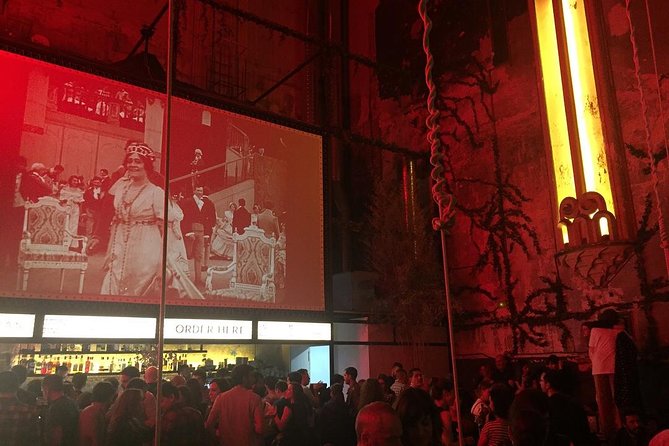
- A private tour led by architect Emilio, who lives in Lavapiés and brings professional insight to buildings most visitors pass without a second glance.
- A broad architectural range, from medieval and Baroque influences to Neoclassical, Art Deco, rationalist, and modern work.
- El Rastro on Sundays, with vintage furniture shops taking its place on other days.
- Access to buildings included, including the Municipal Printing Press, while drinks and food remain your responsibility.
- A social view of Lavapiés, where long-time residents and newer communities share the same streets and public spaces.
- A market finish at San Fernando, with tapas, a drink, and time to discuss what you have seen.
Starting at Tirso de Molina: a quick lesson in Madrid
The tour begins at Plaza de Tirso de Molina, a useful place to get your bearings before entering Lavapiés. Emilio starts with the story of Madrid and the neighborhood, giving you a frame for everything that follows.
This opening matters because Lavapiés can look like a maze of steep streets, small plazas, old facades, and improvised storefronts. Without context, you may notice only the surface. With an architect explaining the changes, you begin to see how old housing, public spaces, theaters, markets, and new cultural uses fit together.
The first stop lasts about 15 minutes and is free. Since this is a private activity, your group can ask questions without competing with a large crowd or following a rigid lecture.
A few more architecture walks in Spain worth a look
- Barcelona: Sant Pau Recinte Modernista Entry Ticket
★ 4.6 · 2,567 reviews - Barcelona: Sagrada Familia, Modernism, and Old Town Tour
★ 4.7 · 1,621 reviews - Ramblas, Old Town, Gothic and Gaudi Architecture Walking Tour
★ 5.0 · 723 reviews
Under the corrala at the old Inquisition jail
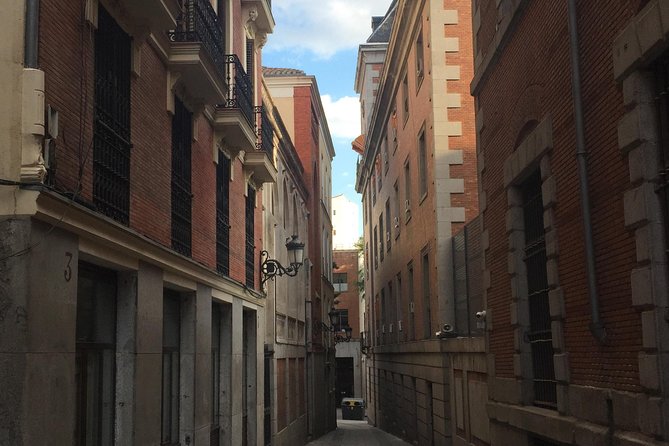
A short stop at the former Inquisition jail offers one of the tour’s more unusual details. The prison was located under a corrala, the traditional Madrid apartment form built around a shared interior courtyard.
Corrala housing tells you plenty about city life. It placed many households close together, with balconies and walkways looking into a common space. Here, that familiar residential form is tied to a darker chapter of Madrid’s past.
You spend only about 10 minutes at this stop, so do not expect a full museum visit. Its value is in the connection between an ordinary-looking housing structure and the political and religious institutions that once operated beneath it.
El Rastro and the pleasure of seeing the neighborhood at work
The route includes El Rastro, Madrid’s famous street market, when the tour takes place on Sunday. Sunday is therefore the best day if the market itself is a priority.
On other days, the route shifts attention to vintage furniture shops. That is a useful adjustment, since it keeps the architectural and design focus alive even when the market stalls are absent. You should confirm the exact operating pattern when booking if El Rastro is central to your plans.
The stop is listed at about 15 minutes. That is enough for an introduction and a quick look, not enough for a long shopping session. If you want to browse seriously, plan to return on your own. The tour’s purpose is to explain the neighborhood, not to give you a full morning at the market.
El Pavón and Madrid’s Art Deco details
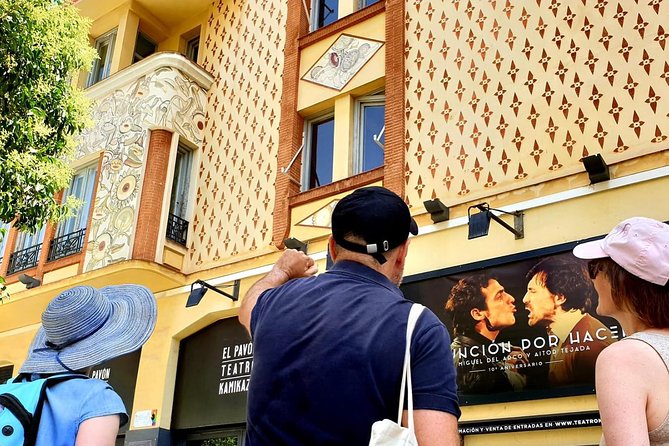
At El Pavón Teatro Kamikaze, Emilio points out the facade and its Art Deco clock. This is a good example of the tour’s method: instead of stopping only at famous monuments, it draws your attention to design details built into ordinary city streets.
The planned stop lasts about five minutes. You may have the option of taking a coffee in the theater café, making this a natural pause in the walk. Coffee is not listed as included, so budget for it separately.
The theater is also a reminder that Lavapiés has long been more than a residential district. Performance spaces, markets, workshops, and cultural projects all form part of its identity.
Same city, a different facade:
- Barcelona: Park Güell and Gaudí House Museum Entry Ticket
★ 4.5 · 6,326 reviews - Barcelona: Gaudi’s Casa Vicens Skip-the-Line Entrance Ticket
★ 4.7 · 4,541 reviews - Barcelona: Gaudí’s Park Güell Tour with Fast-Track Ticket
★ 4.8 · 4,512 reviews - Sagrada Familia & Gaudi Tour Private or Small Group with Tickets
★ 4.5 · 1,188 reviews
The Municipal Printing Press, a 1930s surprise
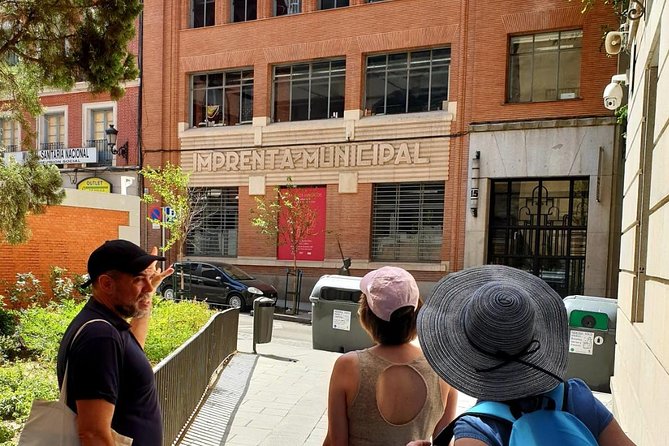
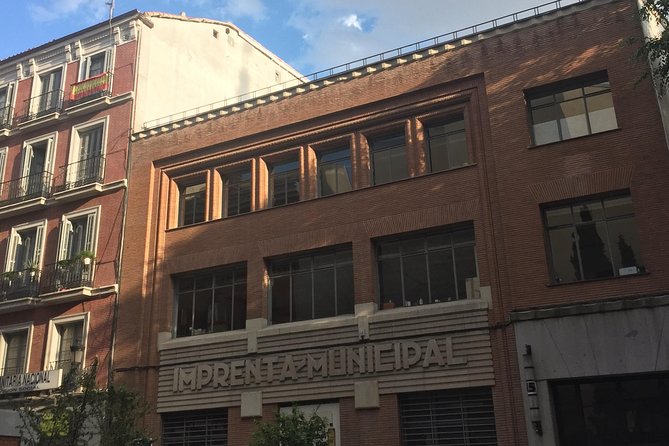
The Municipal Printing Press is one of the strongest architecture stops on the route. This rationalist building from the 1930s is easy to miss if you are walking without a guide, yet it gives you a clear look at Madrid’s modern architectural ambitions.
Rationalist design often values clean lines, practical planning, and a restrained approach to ornament. Emilio can help you read those choices rather than simply look at a facade and move on.
The visit lasts about 15 minutes, and access to the buildings is included in the tour price. That inclusion matters here because the stop is not just an exterior photo opportunity. It adds substance to a route that could otherwise become a street walk with commentary.
Plaza de Lavapiés: the neighborhood in one square
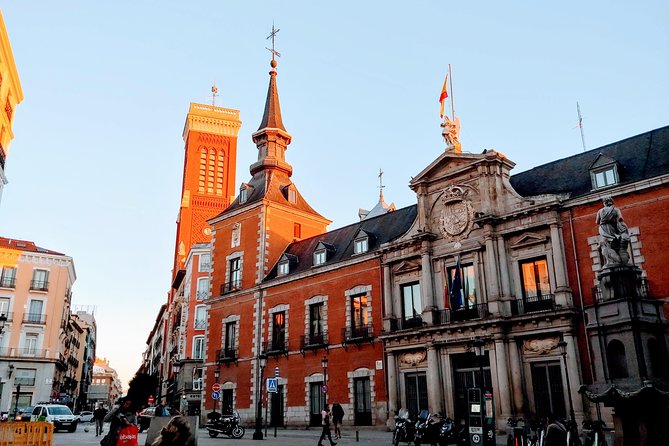
Plaza de Lavapiés gives the district its name and acts as one of its key meeting points. The square is used to explain the mix of long-time residents and newer communities from different cultural backgrounds.
This is where the tour moves beyond architectural styles. A building is never just a building in a neighborhood like Lavapiés. Housing costs, migration, local commerce, public space, and changing tastes all affect how the district looks and feels.
The stop is brief, about five minutes, but the subject is larger than the time suggests. If you want a detailed discussion of current urban change, use the private format to ask questions. Emilio’s focus includes politics and urban planning as well as architecture.
Reina Sofía’s Jean Nouvel extension
The route continues to the extension of the Museo Nacional Centro de Arte Reina Sofía, designed by Jean Nouvel. The visit concentrates on the building’s restaurant, library, and covered patio, along with the different proposals considered in the 1999 design competition.
This is a useful contrast with the older streets of Lavapiés. You move from traditional housing and historic theaters to a major modern addition beside one of Madrid’s best-known art museums.
The stop lasts about 10 minutes. It is not a general visit to the Reina Sofía collection, and museum admission to the main art collection is not presented as part of this experience. The focus is the extension and the architectural ideas behind it.
If you are an architecture student or simply enjoy understanding why a building looks the way it does, this may be one of the most valuable stops. You get both the finished structure and the story of the competition that led to it.
Mercado de San Fernando: tapas and practical Madrid advice
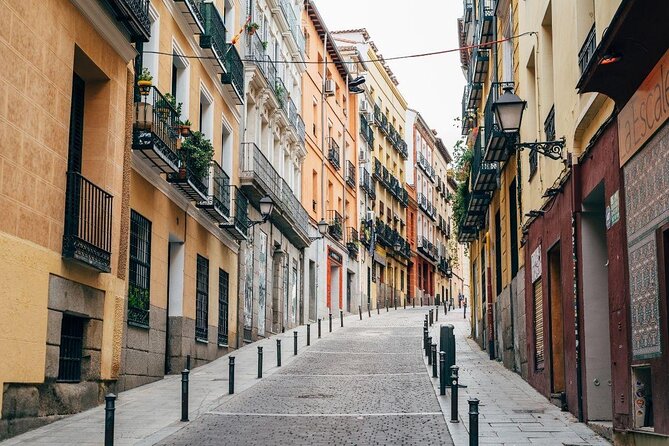
The tour ends at Mercado de San Fernando on Calle de Embajadores. This is more than a final landmark. It is the point where the walking tour turns into a relaxed conversation over food and a drink.
You can take tapas and something to drink while discussing the route and asking Emilio for suggestions for the rest of your time in Madrid. Drinks are not included, and the cost of food and beverages is yours to pay.
I like this ending because it gives the experience a local, useful finish. You can clarify what you saw, ask about other neighborhoods, and get recommendations while the streets are still fresh in your mind. The market also gives you a chance to continue on your own after the formal tour ends.
The tour’s advertised end point is Mercado de San Fernando, even though the full route also includes later cultural and theater stops in the supplied schedule. Confirm the day’s exact order and timing with the provider, especially if you have a tight afternoon plan.
La Tabacalera and the changing cultural district
La Tabacalera de Lavapiés is a former industrial building now used for exhibitions and neighborhood-managed activities. Its walls feature work by urban artists, making it a strong stop for seeing how old structures can gain a new public purpose.
The scheduled visit lasts about 15 minutes. There is one important condition: the building is listed as closed for works from July 25. If your date falls after that point, ask whether the stop has reopened or been replaced.
This is one of the clearest examples of the tour’s interest in change. You are not only looking at polished monuments. You are also seeing how residents and cultural groups use older buildings in new ways.
Teatro Fígaro and the modern movement
The final theater stop is Teatro Fígaro, described as the first theater built in Spain using modern movement principles. The visit lasts about five minutes and focuses on the building rather than a performance.
Taken together, El Pavón and Teatro Fígaro show two different approaches to theater design. One gives you Art Deco detail and a clock on the facade. The other points toward modern architecture and a new view of how a theater could function.
These short stops work best if you enjoy looking at doors, windows, signs, clocks, proportions, and materials. If you want long interior visits or performances, this is not that kind of tour.
How much value do you get for $210.12?
At $210.12 per person, this is an expensive walking tour. The price makes more sense for a private group that wants a specialist guide, access to buildings, and a customized conversation rather than a standard city walk.
You are paying for Emilio’s architectural training, his connection to Lavapiés, and the ability to ask questions throughout the route. The tour also includes building access, which adds value at places such as the Municipal Printing Press.
The price is harder to justify if you mainly want a quick orientation to Lavapiés or a shopping visit at El Rastro. You could explore the streets and market independently for much less. The difference is the interpretation: Emilio explains how architecture, politics, history, and neighborhood life connect.
Group discounts are available, so the per-person cost may work better when shared among several people. The private format also means you are not placed with strangers, which suits families, couples, friends, or architecture students with a specific interest.
Who should book this experience?
I would choose this tour if you want to understand Madrid beyond its major plazas and museums. It suits you especially well if you enjoy architecture, urban planning, local politics, neighborhood change, or design details.
It also works for repeat visitors. Several people who already live in Madrid used the route to see familiar streets differently, and Emilio’s local connection gives the walk a personal angle.
Architecture students may get the most from it, but you do not need technical training. Emilio’s approach is described as clear, pleasant, and easy to follow. The subject matter is serious, yet the route includes coffee, market food, and conversation rather than a nonstop classroom lecture.
You should think twice if you dislike walking, want a fast list of famous sights, or have no interest in buildings. The tour includes many short stops, but the overall experience depends on moving through the district on foot. Wear your most comfortable walking shoes.
Timing, weather, and practical details
The experience lasts about three hours, though one published description of the route places it closer to three and a half hours. Allow some extra time, particularly if you stop for coffee or linger at the market.
The tour is offered in English and is confirmed at booking when possible. It is near public transportation, service animals are allowed, and most people can participate. Since it is a private activity, only your group joins the guide.
Food and drinks are not included. Bring a payment method for the coffee, tapas, or market drink. If you want El Rastro itself, choose Sunday. If your date falls after July 25, check the status of La Tabacalera before you go.
Free cancellation is available up to 24 hours before the start time. Poor weather or failure to meet the minimum number of participants can lead to a new date, another experience, or a full refund.
Should you book the Lavapiés architecture walk?
Book it if you want a focused, personal look at Madrid’s buildings and neighborhood life, especially with a private English-speaking architect. The strongest parts are the variety of stops, the discussion of urban change, the access to selected buildings, and the relaxed finish at Mercado de San Fernando.
The price is high, and the route is not designed for people seeking only major attractions or a leisurely shopping morning. But if you like asking why a district looks the way it does, Emilio’s tour gives you a useful set of answers. Reserve it early if your dates are fixed, since it is booked well in advance on average.
FAQ
Where does the tour begin?
The tour begins at Plaza de Tirso de Molina in central Madrid.
Where does the tour end?
The advertised end point is Mercado de San Fernando at Calle de Embajadores, 41.
How long does the tour last?
The tour lasts approximately three hours. One description places the full experience at about three and a half hours, so allow some flexibility.
Is the tour offered in English?
Yes. The experience is offered in English.
Is this a private tour?
Yes. Only your group participates in the activity.
Who leads the tour?
The tour is led by Emilio, an architect who lives in Lavapiés.
Is El Rastro included every day?
El Rastro is visited when the tour takes place on Sunday. On other days, the route includes vintage furniture shops instead.
Are food and drinks included?
No. Drinks at markets, bars, and restaurants are not included. The tour ends at Mercado de San Fernando, where you can buy tapas and a drink.
Is admission to the buildings included?
Yes. Access to all buildings included in the experience is covered by the tour price.
What is the cancellation policy?
You can cancel up to 24 hours before the start time for a full refund. Cancellations or changes made less than 24 hours before the start time are not accepted for a refund.
Newly added in Spain
- Barcelona: Private Gaudi Guided Segway Tour★ 5.0 · 6 reviews
- Barcelona: Exclusive Exploration of Gaudi’s Masterpieces★ 5.0 · 2 reviews
- Barcelona: Guided tour e-bike Barcelona historical and modernist Barcelona★ 4.5 · 5 reviews
- Barcelona: Wonders of Gaudi Bike Tour★ 4.3 · 6 reviews
- Barcelona Architecture Walking Tour With Casa Batlló Upgrade★ 4.8 · 11 reviews
- Barcelona: Gaudi Tapas & Wine Tasting Small Group Tour★ 5.0 · 3 reviews
- Barcelona: E-Scooter Gaudí & the Sea Tour★ 4.3 · 10 reviews
- Barcelona Beyond Gaudí: Modernism, Rooftops, and Hidden Gems★ 5.0 · 2 reviews
Madrid Architecture Tours, compared.
Architecture tour Gran Vía from its best rooftops 20thC
Read our review →
Madrid Historic with an architect : Arabs, Austrias and Bourbons
Read our review →

Browse the lists this tour appears in