
Review · ART DECO TOURS
Victorian Gothic Heritage Quarter and Art Deco Walking Tour
Mumbai’s grandest architectural story unfolds on foot, from the domed General Post Office to the Gothic High Court, the Rajabai Clock Tower, and the Art Deco edge of Oval Maidan. The route ends near the Gateway of India and the Taj Mahal Palace, giving you a sharp first look at the city’s old colonial center and its public life.
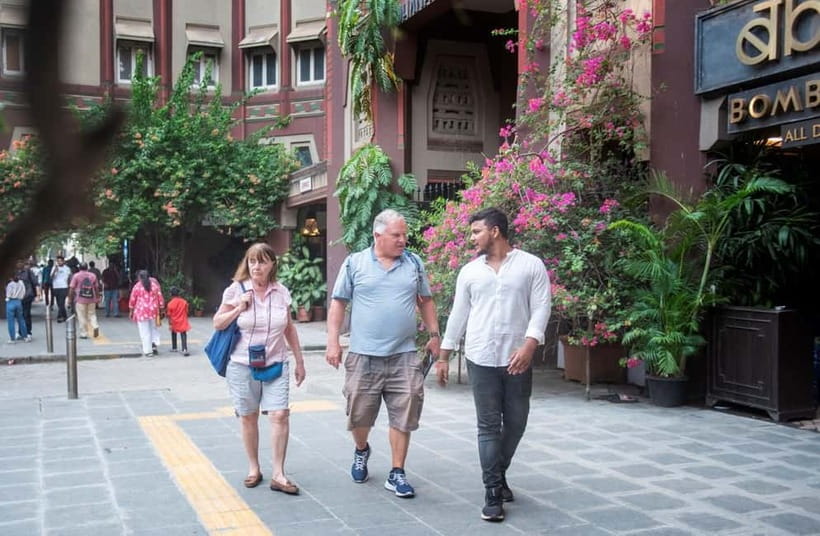
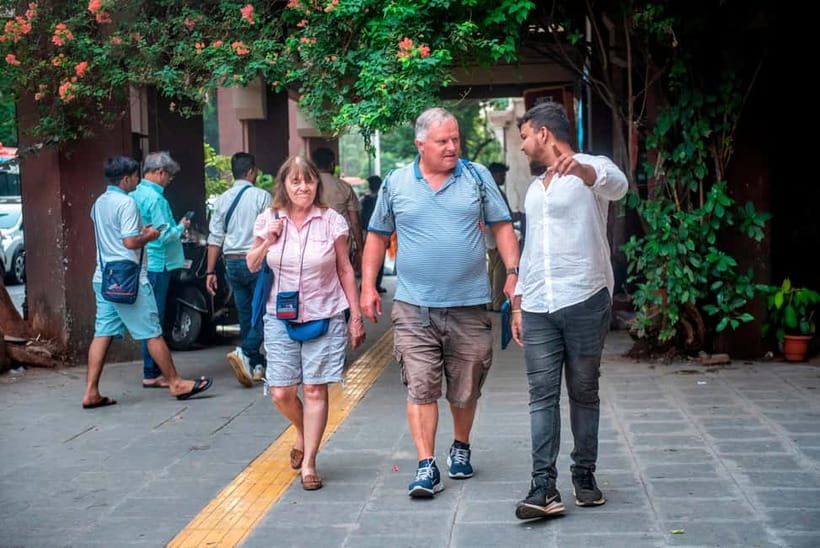
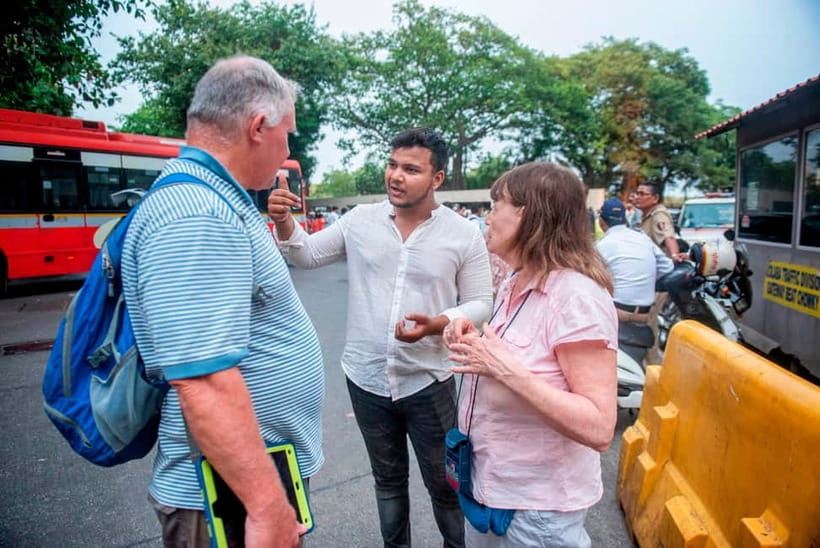
I like the small maximum group of 15, which makes it easier to hear the guide and ask questions. I also like the range of guides, including Abhi, Abhishek, Ravi, and Yash, who bring in local details, photographs, cricket, and lesser-known stories rather than simply pointing at façades.
The main consideration is pace. Ten stops in about two hours means some places receive only five to 15 minutes, and the tour is primarily an outdoor architectural walk. If you want long interior visits or a slow museum tour, this will feel brisk.
Key points to know before you book

- A compact architectural route: You’ll cover Indo-Saracenic, neoclassical, Gothic Revival, Victorian Gothic, and Art Deco styles in one walk.
- Starts at Regal Cinema: The meeting point in Apollo Bandar puts you in Colaba, close to major sights and public transport.
- Finishes at Churchgate Station: The end point is useful for continuing your day in South Mumbai or catching a train.
- Guides add the human details: Abhi, Abhishek, Ravi, and Yash have each been praised for clear explanations, local facts, and friendly service.
- Good value at $18.88: The price includes the guided walk and bottled water, with no admission fees listed for the stops.
- Allow some flexibility: The planned walk lasts about two hours, but one reported outing ran closer to three hours with extra stops.
Why this Mumbai walk works as a first introduction
This tour gives you a useful map of South Mumbai without asking you to commit to a full-day excursion. You move from the old business and civic center toward the university district, Oval Maidan, Kala Ghoda, and Colaba’s waterfront.
That sequence matters. Mumbai’s architecture is not one single style. The route shows how the city changed under British rule, how civic buildings borrowed from European Gothic design, how Indian motifs entered public architecture, and how the newer Art Deco quarter took shape beside the older Victorian buildings.
You also get a look at the city as a working place, not just a collection of monuments. The General Post Office remains tied to communication and public service. The High Court continues its legal role. Oval Maidan is a public recreation ground, and cricket may be part of the scene, especially on a Sunday.
I would use this walk early in a Mumbai visit. It gives you names, landmarks, and a sense of direction that can make later exploring easier. It is also a good choice if you have only a morning or afternoon free.
More Gothic Quarter Walks in the world:
- Ramblas, Old Town, Gothic and Gaudi Architecture Walking Tour
★ 5.0 · 723 reviews - Barcelona: Sagrada Familia, Modernism and Gothic Quarter
★ 4.5 · 48 reviews - Mumbai heritage walk- Story of Gothic and Art Deco buildings
★ 5.0 · 33 reviews
From Regal Cinema to Mumbai’s grand post office
The walk begins at Regal Cinema in Apollo Bandar. This is a practical starting point because it puts you close to Colaba, the Gateway of India, and the southern end of the route.
The first scheduled stop is the General Post Office, built in 1913 and designed by John Begg. Its Indo-Saracenic design blends grand domes and arches with Indian architectural influence, making it an easy early lesson in how Mumbai’s public buildings were designed to project importance.
You have about 15 minutes here. That is enough for an exterior explanation, photographs, and a quick look at the building’s role in the city’s communication network. It is not enough for a lengthy architectural study, so listen for the guide’s main points and take your photos promptly.
This first stop also sets the tone for the tour. You are not just looking at an attractive façade. You are seeing the kind of public institution that helped Mumbai grow into a major commercial city.
Town Hall and the neoclassical side of Mumbai
The next stop is Town Hall, home to the Asiatic Society Library. Founded in 1804, the institution holds rare manuscripts, old texts, and valuable objects. Its neoclassical design creates a clear contrast with the more ornate forms you see elsewhere on the walk.
The building is especially useful for understanding Mumbai’s civic and intellectual past. The city’s story is not only about ports, trade, courts, and government. Libraries and learned societies also shaped the way information was collected, preserved, and shared.
You receive another 15 minutes here. That short time is best used to study the symmetry of the building and ask the guide about the institution’s purpose. The tour information does not promise an interior visit or access to the library’s collections, so you should treat this as a guided heritage stop rather than a museum admission.
Horniman Circle, a green pause among old offices
Horniman Circle Garden gives the walk a welcome change of pace. Created in 1860, the garden is surrounded by grand colonial buildings and named after Benjamin Horniman, a British newspaper editor.
After the stone façades and formal civic buildings, this small open space helps you understand the original planning of the district. The garden was designed as part of an urban center, not as an isolated park. Its position among old commercial buildings shows how public space and business districts were meant to work together.
The stop lasts around 15 minutes. I like this pause because it gives you room to step back and see the buildings as a group. You may also find it easier to take people-watching photographs here than directly beside a busy landmark.
The guide can also help connect the buildings around the circle to Mumbai’s public life. This is one of those places where the setting matters as much as any single façade.
More Art Deco Tours in the world:
- Art Deco and Architecture Midtown Landmarks Tour
★ 5.0 · 142 reviews - Chicago Architecture Walking Tour: Incredible Art Deco Interiors
★ 5.0 · 85 reviews - Tulsa Art Deco and Architecture with Expert Guide Walking Tour
★ 5.0 · 77 reviews - New York City: Art Deco and Architecture Landmarks Tour
★ 5.0 · 76 reviews
St. Thomas Cathedral and the city’s early British chapter
St. Thomas Cathedral is described as Mumbai’s oldest Anglican church, consecrated in 1718. It offers a quieter, more restrained contrast to the large Gothic buildings later in the route.
The cathedral’s importance is both architectural and historical. It reflects the early British presence in Mumbai and the religious institutions that grew alongside the expanding colonial settlement. Its age also gives you a useful timeline. Much of the grand Victorian architecture ahead came well after the cathedral was established.
The planned visit is 15 minutes. That should give you a chance to appreciate the building’s exterior and hear about its place in the city’s religious story. As with the other stops, no separate admission charge is listed, but the itinerary does not promise a long interior viewing.
If you enjoy old churches, ask the guide to point out details that are easy to miss from the street. A short stop can still be worthwhile when you know what to look for.
The Bombay High Court and the Gothic Revival mood
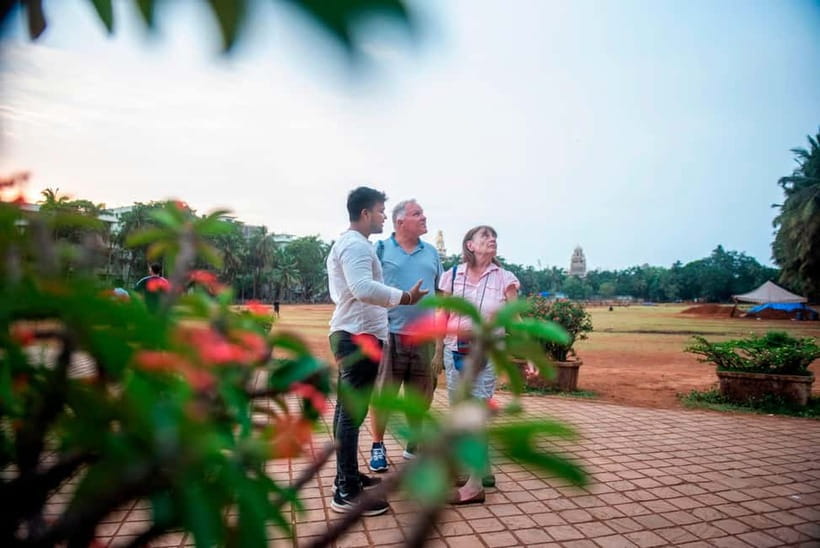
The Bombay High Court is one of the route’s strongest architectural moments. Inaugurated in 1879, this Gothic Revival building was designed to look serious, imposing, and permanent.
You have roughly 15 minutes here. That is enough to take in the pointed arches, vertical lines, and elaborate exterior details, but the area can feel more formal and controlled than a public square. The guide’s explanation is important because the building’s visual drama can otherwise overshadow its practical role in Mumbai’s legal system.
This stop helps explain why Gothic Revival became such a strong part of Mumbai’s public architecture. The style was used for institutions that wanted to project order and authority. It is not just decorative. The design was part of the message.
The High Court also makes a useful comparison with the Asiatic Society Library. Town Hall uses classical balance and restraint. The High Court uses height, detail, and Gothic drama. Seeing both on the same walk makes the differences much easier to understand.
Rajabai Clock Tower and the University of Mumbai

The Rajabai Clock Tower is another major highlight. Completed in 1878, it was designed by Sir George Gilbert Scott and funded by Premchand Roychand. The tower rises from the University of Mumbai and adds a more vertical, almost European Gothic note to the route.
You receive about 15 minutes here. The tower is best appreciated from a little distance, where its height and decorative details are easier to read. Your guide can also explain how the university setting fits into the larger civic district.
This is one of the places where the walk’s short format works well. You get the essential story, see the structure from the street, and keep moving before the route becomes repetitive.
The tower is also a good reminder that these buildings were not built as isolated showpieces. They belonged to a network of courts, schools, libraries, churches, offices, and public grounds that gave the district its identity.
Oval Maidan and Mumbai’s public cricket culture

Oval Maidan is the route’s best place to see architecture and daily life together. Established in the 19th century, the recreational ground is bordered by Victorian Gothic buildings on one side and Art Deco architecture on the other.
That pairing gives the tour its clearest visual lesson. You can look across an open field and see two different periods of Mumbai’s development facing each other. The Gothic side reaches upward with ornate stonework. The Art Deco side is cleaner and more geometric.
The scheduled time is about 10 minutes, but this may become one of the most memorable stops because the setting is active. One Sunday outing included many cricket matches in the park. If your walk falls on a Sunday, you may get a lively view of a local favorite rather than an empty lawn.
The stop also helps keep the tour from becoming a march between monuments. You see how residents use the city’s historic spaces today. That balance between formal architecture and ordinary public life is one of the walk’s real strengths.
Kala Ghoda, art, street life, and local side stories
Kala Ghoda receives only about five minutes on the planned route, so do not expect a full tour of its galleries or museums. You will get a quick introduction to the cultural precinct, known for art spaces, public creativity, and the statue that gave the area its name.
The name Kala Ghoda means Black Horse and refers to a statue of King Edward VII. The area is also linked with the Kala Ghoda Arts Festival, making it one of South Mumbai’s best-known cultural districts.
This is where the guide’s personality can make a large difference. Abhi’s tours have included stories about vintage Bollywood record stalls, Cat Chowk, and an unusual black magic house. These are not guaranteed scheduled stops, but they show the kind of local detail that can turn a standard architecture walk into a more personal introduction to the city.
Yash has also been praised for sharing lesser-known facts and taking good photographs. If you want pictures of yourself during the walk, it is worth asking your guide politely. It is a small service, but useful when you are exploring alone or with a small group.
Gateway of India and the final Colaba landmarks
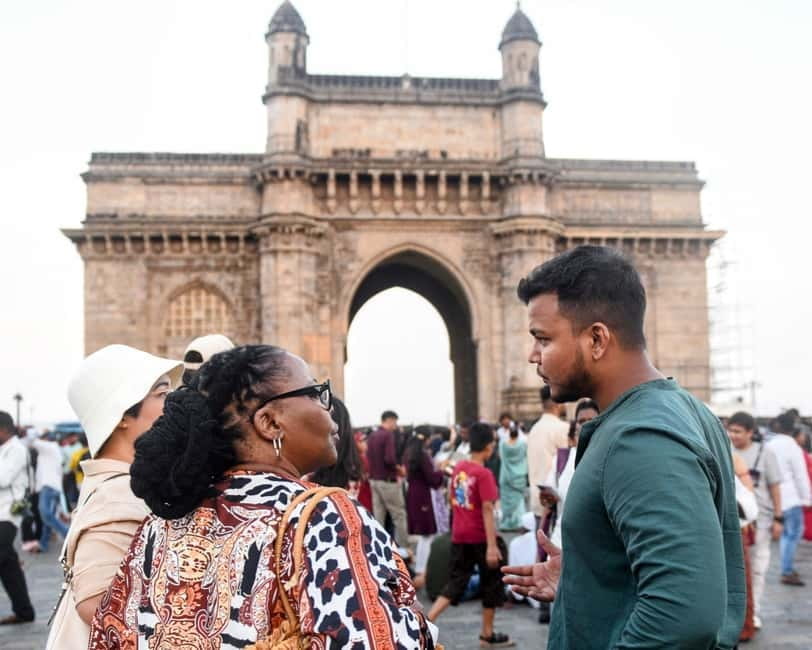
The Gateway of India is one of Mumbai’s essential sights. Built in 1924, the arch commemorated the visit of King George V and Queen Mary to India.
The planned stop lasts around 10 minutes. That gives you enough time for photographs and the basic story, though the waterfront can be busy. The monument is visually impressive, but its meaning has changed over time, and a good guide should help place it in the broader story of colonial rule and independence.
The Gateway is also a practical orientation point. By this stage, you have connected the city’s civic center with Colaba and the waterfront. You can better understand why this part of Mumbai has such a strong mix of trade, government, tourism, and public gathering spaces.
The final stop is the Taj Mahal Palace, built in 1903. The luxury hotel is famous for its architecture and its position overlooking the Arabian Sea. You receive only about five minutes here, so expect an exterior introduction rather than a hotel tour.
The Taj adds a different note to the route. Earlier stops focus on government, law, education, religion, and public services. Here, the subject is hospitality and private enterprise. Together, the buildings show how many parts of city life were represented in South Mumbai’s architecture.
What the two-hour timing really means
The official duration is about two hours, with short stops ranging from five to 15 minutes. The route includes ten locations, so you should expect a steady walk and brief explanations rather than long visits.
One outing lasted about three hours because the guide added unscheduled stops and finished at Mumbai Railway Terminus instead of the usual Churchgate endpoint. That flexibility can be a bonus, but it also means timing may vary. If you have a train, meal reservation, or other fixed appointment, tell the guide at the start and keep some room in your schedule.
The walk begins at Regal Cinema and ends at Churchgate Station. No private transport is included, which is not a serious drawback for this route. The whole point is to connect the sights at street level, and the start and finish are near public transportation.
A bottled water is included. Wear comfortable shoes, bring sun protection, and keep your phone ready for photographs. Those are simple precautions, but they matter more on a continuous city walk than they do on a vehicle tour.
How much value do you get for $18.88?
At $18.88 per person, this is a fair-priced introduction to South Mumbai’s major architecture. You are paying for a local guide, route planning, explanations, and a small group capped at 15 people. The listed stops have no admission ticket cost, so the main value is the interpretation rather than entry to paid attractions.
I consider the price strongest if you are new to Mumbai, short on time, or interested in architecture but unsure how to connect the sights yourself. The route covers enough ground to give you a clear framework for later exploring.
It is less compelling if you already know the district well and mainly want to enter museums or historic interiors. The walk spends limited time at each stop, and private transport is not included.
The current rating is 4.7 from 13 ratings, with 92 percent recommending the experience. The praise centers on friendly guides, clear explanations, flexible pacing, local facts, and good value. There is also one clear warning: guide quality can vary, and one participant found the presentation weak and the architectural information lacking.
That criticism is worth taking seriously. The company uses several guides, so the personality and depth of your experience may depend on who leads the walk. Abhi, Abhishek, Ravi, and Yash are names associated with especially positive experiences, but a specific guide is not promised in the supplied details.
Who should book this walking tour?
I would choose this for a first morning in Mumbai, especially if you want a practical introduction before exploring on your own. It suits couples, solo visitors, small families, and anyone who prefers local explanation to a sightseeing bus.
It is also a good fit for repeat visitors. One local who had grown up in Mumbai used the walk to explain the city to a manager from outside India. That says something useful about the route: even residents can gain fresh context when the buildings are connected into one story.
The walk is a weaker match for anyone who dislikes city walking, needs long rests, or wants extensive interior access. The route is short but busy, and several stops receive only a few minutes.
Most people can participate, and the group size is limited to 15. You receive booking confirmation at the time of purchase. Free cancellation is available if you cancel at least 24 hours before the local start time. Cancellations or changes inside that window are not refunded or accepted.
Should you book it?
Book this tour if you want to see the main architectural spine of South Mumbai in a manageable two-hour walk. The mix of the GPO, Town Hall, St. Thomas Cathedral, High Court, Rajabai Clock Tower, Oval Maidan, Kala Ghoda, Gateway of India, and Taj Mahal Palace gives you far more range than the title alone suggests.
I especially like it for first-time visitors who want local context, Sunday cricket scenes, and the chance to ask questions along the way. The $18.88 price is reasonable, the group is kept small, and the Churchgate finish helps you continue sightseeing.
Go in with realistic expectations. This is a brisk outdoor overview, not a series of long building tours. If you can accept that format, and your guide is one of the stronger storytellers such as Abhi, Abhishek, Ravi, or Yash, it can be a very useful and enjoyable start to Mumbai.
FAQ
How long does the Victorian Gothic Heritage Quarter and Art Deco Walking Tour last?
The planned duration is approximately two hours. One outing lasted about three hours because it included extra stops, so you should allow some flexibility.
Where does the walking tour begin?
The tour starts at Regal Cinema in Apollo Bandar, Colaba, Mumbai, Maharashtra 400001.
Where does the tour end?
The scheduled endpoint is Churchgate Station on Maharshi Karve Road, Churchgate, Mumbai.
What is included in the tour price?
A bottled water is included. Private transportation is not included.
How many people can join the group?
The tour has a maximum of 15 participants.
Can I cancel the tour for a full refund?
Yes. You can cancel at least 24 hours before the experience start time for a full refund. Cancellations or changes made less than 24 hours before the start time are not accepted or refunded.
More History Walks in the world
- Charleston’s Best Highlights: History, Culture & Architecture
★ 5.0 · 422 reviews - Palm Springs Modernism Architecture & History Bike Tour
★ 5.0 · 359 reviews - Charleston: History and Architecture Guided Walking Tour
★ 4.8 · 349 reviews - Historic Georgetown: History, Gossip, & Architecture Walking Tour
★ 5.0 · 321 reviews
More Walking Tours in the world
- Lecce: Baroque Architecture and Underground Walking Tour
★ 4.6 · 1,248 reviews - Chicago in a Day: Food, History & Architecture Walking Tour
★ 5.0 · 1,153 reviews - Chicago’s Secret Interiors Architectural Walking Tour
★ 5.0 · 635 reviews - Chicago: Secret Interiors Architecture Walking Tour
★ 4.9 · 498 reviews
Newly added in the world
- Barcelona: Guided tour e-bike Barcelona historical and modernist Barcelona★ 4.5 · 5 reviews
- Barcelona Architecture Walking Tour With Casa Batlló Upgrade★ 4.8 · 11 reviews
- Astana: Old City Tour, Imperialistic and Soviet Architecture★ 5.0 · 4 reviews
- Barcelona Beyond Gaudí: Modernism, Rooftops, and Hidden Gems★ 5.0 · 2 reviews
- An Architect’s Tour of Downtown Santiago★ 5.0 · 7 reviews
- Architecture Tour: Old Historic Madrid with an architect★ 4.3 · 3 reviews
- London: Architecture Tour of Benjamin Franklin House★ 5.0 · 5 reviews
- Architectural Wonders of KAFD, An Iconic Destination★ 5.0 · 3 reviews
Art Deco Tours, compared.
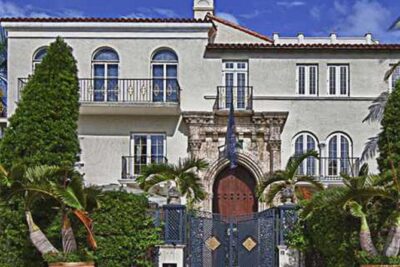
The Official Art Deco Walking Tour by The Miami Design Preservation League
Read our review →

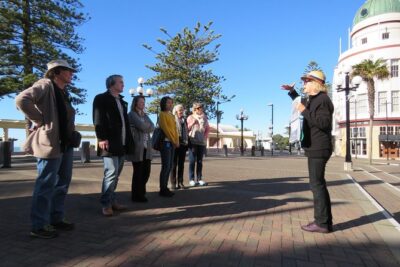
Guided 10am Morning Art Deco Walk From Napier Art Deco Trust
Read our review →

Award-winning Art Deco & Neon Lights Walking Tour in Miami Beach
Read our review →
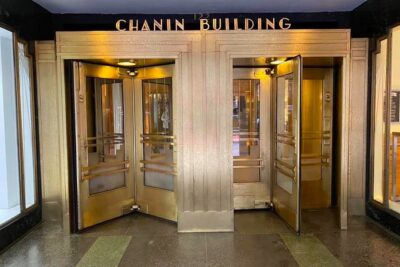
Art Deco and Architecture Midtown Landmarks Tour
Read our review →Browse the lists this tour appears in