
Review · ART DECO TOURS
Mumbai heritage walk- Story of Gothic and Art Deco buildings
Mumbai tells its story in stone, plaster, towers, and curved Art Deco balconies. On this three-hour walk, you follow that story from the Victorian Gothic grandeur of Chhatrapati Shivaji Terminus to the sleek 1930s lines of Eros Cinema and Empress Court. Guide Pankaj adds the human details, including the story behind Rajabai Clock Tower and its connection to a patron’s visually challenged mother.
I like the way this tour links buildings to Mumbai’s growth as a major trading center, rather than treating each landmark as a separate photo stop. I also like the small group limit of 15 people, plus the included snacks, which make the walk feel more personal and less rushed. The main thing to consider is that most buildings are seen from outside, with only limited interior access.
Key points to know before you book
- CST gives the walk a powerful start: Spend about 30 minutes with one of India’s finest Victorian Gothic buildings, where European forms meet Indian design details.
- The tour compares two very different styles: Gothic towers, pointed arches, and carved decoration give way to Art Deco curves, tiers, and clean geometric lines.
- Pankaj is the guide to look for: He is praised for clear explanations, lively stories, helpful answers, and a warm manner.
- Most stops are exterior visits: You see the Bombay High Court, Eros Cinema, Empress Court, Rajabai Clock Tower, Elphinstone College, and the museum building from outside.
- The route covers a lot in three hours: It starts at CST and ends at the Chhatrapati Shivaji Maharaj Vastu Sangrahalaya in Fort.
- The $35 price buys context, not entry tickets: CST admission is included, snacks are provided, but other admission tickets are not included.
Mumbai’s architecture becomes a timeline
This walk works because the buildings are not presented as isolated monuments. They form a timeline. Mumbai first grew as a port and trading center, then gained grand public institutions under British rule, and later embraced Art Deco as a modern style for cinemas and private homes.
You begin at Chhatrapati Shivaji Terminus, once known as Victoria Terminus. From there, the route moves toward the Fort area, where courts, colleges, libraries, clock towers, cinemas, and museums reveal different chapters of the city’s development.
I find that approach more useful than a simple architecture tour. You are not just learning to identify a pointed arch or a rounded balcony. You are seeing how money, education, trade, public life, and changing ideas of status shaped Mumbai’s streets.
The experience lasts about three hours. That gives you enough time for stories and close looks, but you should expect a steady walking pace and several outdoor stops. Mumbai’s weather matters, too. The tour requires good weather and may be moved or refunded if poor conditions cancel it.
More Gothic Quarter Walks in the world:
- Ramblas, Old Town, Gothic and Gaudi Architecture Walking Tour
★ 5.0 · 723 reviews - Barcelona: Sagrada Familia, Modernism and Gothic Quarter
★ 4.5 · 48 reviews - Barcelona 1.5h Private Old Town, Gothic & Ramblas Walking Tour
★ 5.0 · 318 reviews
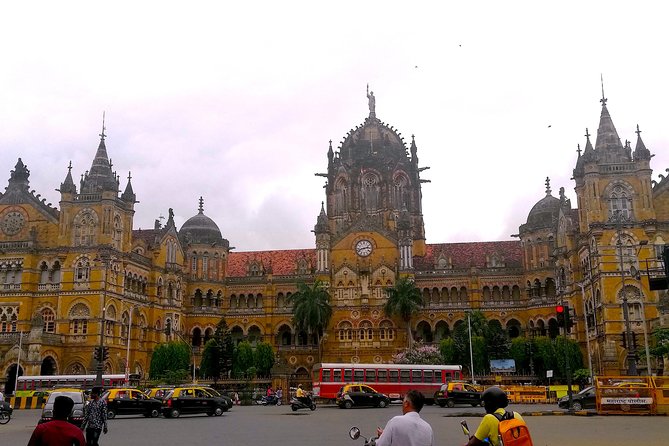
Chhatrapati Shivaji Terminus: Gothic design with Indian touches
The first stop is Chhatrapati Shivaji Terminus, a UNESCO heritage building and one of the most memorable railway stations anywhere in India. Plan on about 30 minutes here, with admission included.
The building is a major example of Victorian Gothic Revival architecture, but it is not simply a European design copied onto an Indian street. Its Gothic features are blended with themes drawn from Indian traditions. That mixture is one of the key ideas of the whole walk.
Look up at the towers, arches, stone decoration, and layered façade. The station was built to project power and progress, but its design also reflects the local setting and artistic traditions. Pankaj uses the building to explain how Mumbai’s architecture developed instead of treating Gothic style as a foreign import with no local character.
This is a strong first stop because it gives you visual clues that will return throughout the morning. You begin to recognize the love of vertical lines, elaborate stonework, and grand civic buildings that shaped the Victorian parts of South Mumbai.
Eros Cinema and the Art Deco turn

The route then shifts from Gothic to Art Deco at Eros Cinema. You see the cinema from the outside, and the stop lasts about 30 minutes.
Eros is especially useful for understanding how Mumbai changed in the 20th century. Its design is lighter and more streamlined than CST. The building rises in tiers and ends in a semi-circular tower, giving it the look of a wedding cake.
That comparison makes the tour’s central contrast easy to grasp. Gothic buildings often reach upward with pointed forms and heavy ornament. Art Deco favors symmetry, smooth curves, strong bands of color, and a modern sense of speed. A cinema was an ideal building type for this new style, since movies themselves represented modern entertainment and urban life.
You will not go inside Eros Cinema on this experience, so the value comes from the exterior explanation and the chance to compare its form with the Gothic buildings already seen. If you enjoy architectural photography, this is a good place to notice the building’s stepped shape and rounded crown.
Empress Court and the social meaning of Art Deco
Empress Court is a residential Art Deco building, viewed from outside during a 15-minute stop. It may be less famous than Eros Cinema, but it adds something important: a look at how Art Deco entered private life.
The discussion focuses on the building as a symbol of status and wealth. Living in an Art Deco apartment once signaled that you belonged to a modern, prosperous part of Mumbai society. That point helps you see the style as more than decoration. It was also connected to ambition, comfort, and a new urban identity.
A short stop is enough to introduce the idea, though you should not expect a detailed interior tour. The building’s exterior is the main subject, and Pankaj explains how its appearance communicated social position.
For me, this is one of the more useful stops for understanding why architectural history matters. Public monuments tell you what a city wanted to project. Apartment buildings show how those ideas reached daily life.
More Art Deco Tours in the world:
- Art Deco and Architecture Midtown Landmarks Tour
★ 5.0 · 142 reviews - Chicago Architecture Walking Tour: Incredible Art Deco Interiors
★ 5.0 · 85 reviews - Tulsa Art Deco and Architecture with Expert Guide Walking Tour
★ 5.0 · 77 reviews - New York City: Art Deco and Architecture Landmarks Tour
★ 5.0 · 76 reviews
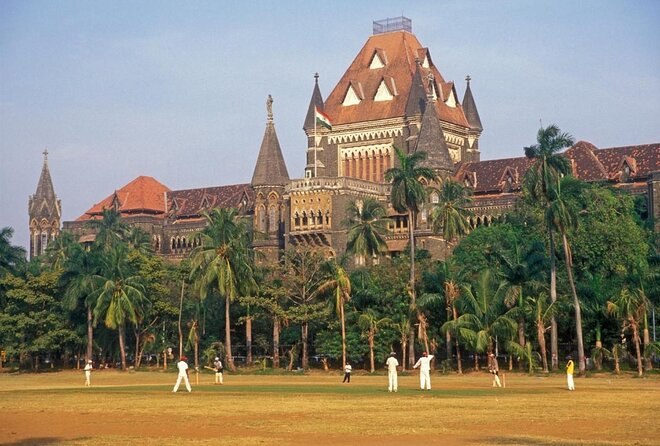
Bombay High Court and the symbols of justice
The Bombay High Court is another exterior stop, with roughly 30 minutes devoted to its Gothic architecture. Its pointed forms and imposing scale fit the grand civic style of the Fort district.
The detail to watch for is the pair of statues on top of the building, representing Justice and Mercy. They offer a simple visual lesson in how architecture can carry ideas. The court is not only a large stone structure. Its decorations express the principles associated with the institution inside.
You will need to view the building from outside, so the guide’s explanation is central to the stop. Pankaj’s strength is connecting architectural details with the wider story of Mumbai, and this building gives him a natural way to discuss law, public authority, and the city’s institutions.
The stop also shows how close together many of Mumbai’s major historic buildings are. You are not spending the morning riding between distant attractions. The route builds one district into a connected open-air lesson.
Rajabai Clock Tower and a personal story in stone
Rajabai Clock Tower receives about 30 minutes. It is often called the Big Ben of Mumbai, but its story is more personal than that nickname suggests.
The tower was financed to help the visually challenged mother of its patron hear the chimes and keep her fasts punctually. That detail turns a tall landmark into a story about family, faith, money, and public architecture.
This is exactly the kind of detail that can be lost if you explore the Fort district without a guide. You can photograph a clock tower on your own, but you may not learn why it was built or what purpose its sounds served.
The tower is viewed from outside. Use the time to study its vertical form and listen closely as Pankaj explains the connection between its design, financing, and daily use. It is one of the tour’s most memorable stories because it gives a human reason behind a building that might otherwise seem purely decorative.
David Sassoon Library and a glimpse through the lobby
The David Sassoon Library and Reading Room is connected to David Sassoon, a Jewish banker who funded the Gothic structure as a library and reading room. The stop lasts about 20 minutes.
Only members are allowed inside, so you see the building from the lobby rather than taking a full interior tour. That limitation is worth knowing before you book. The stop still gives you a look at a notable Gothic institution, but it is not an extended visit to the reading room.
The library adds another layer to the story of Mumbai. The city’s growth depended not only on commerce and government, but also on education, reading, and institutions supported by wealthy residents. Its Gothic appearance fits the district, while its purpose points to an educated urban public.
If you enjoy libraries and old civic buildings, you will likely appreciate this stop. If your main goal is to see grand interiors, keep your expectations modest.
Elphinstone College and Mumbai’s educational legacy

Elphinstone College is a 15-minute exterior stop. It is another strong example of Gothic architecture, but the building’s importance also comes from its former students.
Its alumni include Bal Gangadhar Tilak, Dr. B. R. Ambedkar, and Jamshedji Tata. Those names connect the college to politics, social reform, education, and industry. The building therefore represents more than a handsome façade. It points to the people and ideas that helped shape modern India.
This is a good place to ask questions if you want to connect architecture with Mumbai’s intellectual life. The stop is brief, so the focus is on appreciating the building and hearing its place in the city’s story rather than exploring the college in detail.
The museum building and the route’s final view
The walk ends at the Chhatrapati Shivaji Maharaj Vastu Sangrahalaya, formerly known as the Prince of Wales Museum. The stop lasts about 10 minutes, and the building is viewed from outside.
The museum occupies a magnificent heritage building that was once used as a military hospital for the Children’s Welfare Exhibition. Its history gives the final stop a different angle from the Gothic and Art Deco buildings earlier in the walk.
You finish on Mahatma Gandhi Road in the Fort area, at 159 to 161 near Lion Gate. Ending here is practical if you plan to continue sightseeing in South Mumbai, though no further activity is included in the walk itself.
The final stop is short, but it rounds out the architectural sequence. You have seen a railway station, cinema, apartment building, court, clock tower, library, college, and museum. Together, these buildings show how many parts of city life were shaped through architecture.
What Pankaj adds to the experience
Pankaj is repeatedly praised for his clear explanations, strong command of Mumbai’s history and architecture, enthusiasm, and willingness to answer questions. That matters here because the buildings are large and visually busy. Without context, you may notice only the most obvious details.
His role is not simply to identify styles. He explains why the structures were built, who supported them, how they related to Mumbai’s growth, and what their details meant. His stories about Rajabai Clock Tower and the city’s development are particularly useful for turning visual information into something you can remember.
The walk is limited to 15 people. That is small enough to make questions practical and to keep the guide’s explanations from becoming a distant speech. It also gives the experience a more personal feel than a large group moving through busy streets.
Snacks are provided during the walk. They are a small addition, but useful during a three-hour outing, especially since the route is built around walking and outdoor viewing rather than restaurant stops.
Is $35 a fair price?
At $35 per person, this is not the cheapest way to look at buildings in Mumbai. You can walk through the Fort area independently and see many of the same façades for nothing.
The price makes more sense if you value explanation. You are paying for about three hours with a guide, a planned route, stories about the buildings, a maximum group size of 15, snacks, and admission to CST. Most other admission tickets are not included because the buildings are viewed from outside.
I would consider the tour good value for a first visit to Mumbai, especially if you want a clear introduction to the city’s architecture without spending time researching each building yourself. It is less compelling if you already know the Fort district well or prefer to explore entirely at your own pace.
Group discounts may be available, and mobile tickets make the booking side simple. The tour is near public transportation, with the start at CST and the finish at the museum in Fort.
Who should book this walk?
This experience suits you best if you enjoy architecture, urban history, public buildings, and stories about the people behind landmarks. It is also a good choice if you want to understand Mumbai through more than food, markets, and famous views.
History buffs will have plenty to discuss, but you do not need technical knowledge of architecture. Pankaj explains the Gothic and Art Deco styles through visible features and local stories.
You should be comfortable walking for about three hours and spending much of the time outdoors. Most people can participate, but the tour is not designed as a relaxed indoor museum visit. If your priority is entering every building, this is not the right format.
The experience also works well early in a Mumbai stay. It gives you a framework for later sightseeing, helping you recognize the difference between Victorian Gothic and Art Deco as you explore more of the city.
Should you book the Mumbai Gothic and Art Deco walk?
Book it if you want the Fort district to make sense, not just look impressive. The strongest parts are the contrast between CST and Eros Cinema, the personal story behind Rajabai Clock Tower, and Pankaj’s ability to connect architecture with Mumbai’s social and economic development.
Skip it if you want extensive interior access, a short outing, or a self-guided route with no fixed pace. Most stops are exterior views, and three hours is a serious commitment for a walking tour.
For $35, the main value is the guide’s interpretation. If that is what you are after, this small-group walk offers a smart and focused introduction to Mumbai’s Gothic and Art Deco buildings.
FAQ
How long does the Mumbai heritage walk last?
The walk lasts approximately three hours.
Where does the tour begin?
It begins at Chhatrapati Shivaji Maharaj Terminus in the CST Area, Fort, Mumbai.
Where does the tour finish?
The walk ends at the Chhatrapati Shivaji Maharaj Vastu Sangrahalaya, at 159 to 161 Mahatma Gandhi Road, Lion Gate, Fort, Mumbai.
What architectural styles does the walk cover?
The tour focuses on Victorian Gothic and Art Deco architecture.
Is admission to the buildings included?
Admission to Chhatrapati Shivaji Terminus is included. The other listed stops are viewed from outside, and their admission tickets are not included.
How large is the group?
The tour accepts a maximum of 15 people.
Is food included?
Snacks are provided during the walk.
Can I cancel for a full refund?
Yes. You can cancel at least 24 hours before the experience start time for a full refund. Changes or cancellations made less than 24 hours before the start are not accepted for a refund. The experience requires good weather, and a weather cancellation offers a different date or a full refund.
More History Walks in the world
- Charleston’s Best Highlights: History, Culture & Architecture
★ 5.0 · 422 reviews - Palm Springs Modernism Architecture & History Bike Tour
★ 5.0 · 359 reviews - Charleston: History and Architecture Guided Walking Tour
★ 4.8 · 349 reviews - Historic Georgetown: History, Gossip, & Architecture Walking Tour
★ 5.0 · 321 reviews
More Walking Tours in the world
- Lecce: Baroque Architecture and Underground Walking Tour
★ 4.6 · 1,248 reviews - Chicago in a Day: Food, History & Architecture Walking Tour
★ 5.0 · 1,153 reviews - Chicago’s Secret Interiors Architectural Walking Tour
★ 5.0 · 635 reviews - Chicago: Secret Interiors Architecture Walking Tour
★ 4.9 · 498 reviews
Newly added in the world
- Barcelona: Guided tour e-bike Barcelona historical and modernist Barcelona★ 4.5 · 5 reviews
- Barcelona Architecture Walking Tour With Casa Batlló Upgrade★ 4.8 · 11 reviews
- Astana: Old City Tour, Imperialistic and Soviet Architecture★ 5.0 · 4 reviews
- Barcelona Beyond Gaudí: Modernism, Rooftops, and Hidden Gems★ 5.0 · 2 reviews
- An Architect’s Tour of Downtown Santiago★ 5.0 · 7 reviews
- Architecture Tour: Old Historic Madrid with an architect★ 4.3 · 3 reviews
- London: Architecture Tour of Benjamin Franklin House★ 5.0 · 5 reviews
- Architectural Wonders of KAFD, An Iconic Destination★ 5.0 · 3 reviews
Art Deco Tours, compared.

The Official Art Deco Walking Tour by The Miami Design Preservation League
Read our review →

Guided 10am Morning Art Deco Walk From Napier Art Deco Trust
Read our review →

Award-winning Art Deco & Neon Lights Walking Tour in Miami Beach
Read our review →
Art Deco and Architecture Midtown Landmarks Tour
Read our review →Browse the lists this tour appears in