
Review · HISTORICAL TOURS
Alhambra Surroundings: History, Architecture and Legends
The best part of this tour is that it shows you how the Alhambra works before you ever enter its famous palaces. You’ll follow its gates, walls, gardens, churches, and courtyards while learning how a Muslim fortress became a Christian royal complex. The Justice Gate and the walk beside the Alhambra walls give you a strong sense of the site’s defensive design.
I like two things here. First, you can see several important buildings for $26 without buying an Alhambra ticket. Second, the tour gives gardens and water a proper place in the story, rather than treating them as decoration. The views from the Plaza de los Aljibes are another real reward.
The main caution is timing. The experience is advertised as two hours, but the listed stop times add up to about three hours. Also, bilingual guiding can mean a long stretch of repeated explanation, so ask about the language setup when you check in.
Key points to know before you book

- The tour stays outside the ticketed Alhambra areas: You see major exterior landmarks without an admission ticket to the Nasrid Palaces or other ticketed interiors.
- The Justice Gate sets the historical tone: This grand entrance reveals how ceremony and defense worked together.
- Charles V Palace brings a sharp change in style: Its Renaissance design looks very different from the surrounding Nasrid buildings.
- The Alhambra Forest adds shade and context: The walk through the trees helps explain how gardens shaped Hispano-Arabic architecture.
- Granada views come at the Plaza de los Aljibes: This is one of the tour’s best stops for understanding the Alhambra’s position above the city.
- Language and timing need attention: Spanish and English are offered, but bilingual delivery may feel tiring, and the stated schedule needs clarification.
Why this outdoor Alhambra tour is worth considering
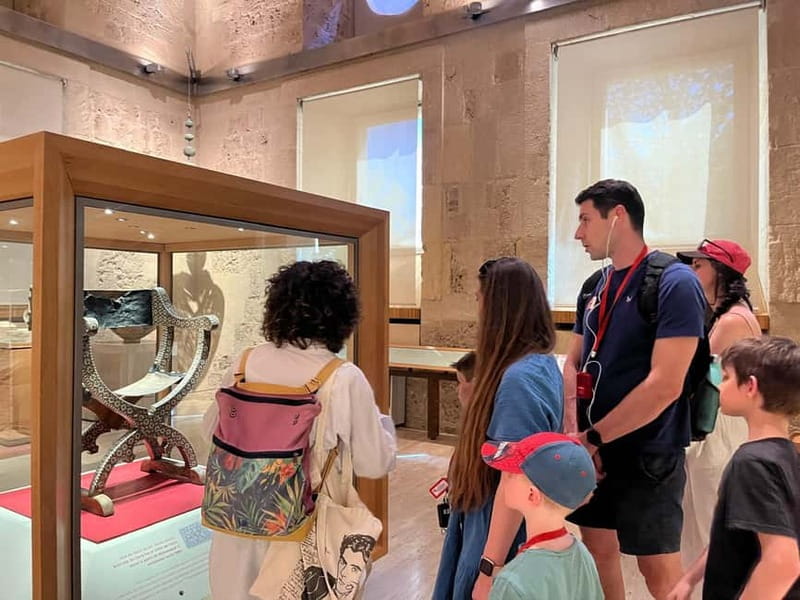
Many people picture the Alhambra as a series of ornate rooms. That is only part of the story. The complex also depends on gates, walls, towers, forest paths, gardens, religious buildings, and open spaces. This walk focuses on those pieces.
I see it as a useful choice for three kinds of visitors. You may already have an Alhambra ticket and want help making sense of the outside. You may be unable to find a ticket for the main complex. Or you may prefer a shorter historical walk rather than a full palace visit.
The price is modest compared with a full guided Alhambra visit. You get an official guide, a route through several major landmarks, and broad views over Granada. But you need to be clear about what you are buying: this does not include entry to the Alhambra’s ticketed monuments. You will not be taking a standard interior tour of the Nasrid Palaces.
That limitation is also part of the value. If your main goal is to see the famous carved rooms and courtyards, this will not replace an admission ticket. If your goal is to understand the setting, approach, and outer defenses, it gives you a lot for the money.
More History Walks in Spain:
- Historical and Modernist Bike Tour Barcelona
★ 5.0 · 262 reviews - Bike Tour in Barcelona: History, Architecture and Culture
★ 3.5 · 29 reviews - Madrid Historic with an architect : Arabs, Austrias and Bourbons
★ 5.0 · 21 reviews
Meeting at the Granavision Welcome Visitor Centre
The meeting point is the Alhambra Online, Granavision Welcome Visitor Centre at Paseo de la Sabika 28, next to the Guadalupe Hotel. You need to go inside and check in at the front desk.
This matters because the staff confirm your reservation, assign you to a group, and introduce you to the guide. Do not simply wait outside. The tour starts at 10:30 am, so allow enough time to find the centre and complete check-in.
The route begins on foot. Wear comfortable shoes. You will be walking through outdoor areas, along the forest, and near the old walls, so this is not a polished indoor museum visit. The Alhambra sits on a hill, and even a gentle sightseeing walk can feel tiring if you arrive in stiff shoes or expect a flat pavement route.
The tour is offered in Spanish and English. Guides named Hector and Robert have led departures. Hector received especially strong praise for his clear historical teaching. Robert’s delivery was described as too fast by one participant, with the bilingual format making the walk harder to follow. This is useful practical information: if you need one language only, confirm how your departure will be handled at check-in.
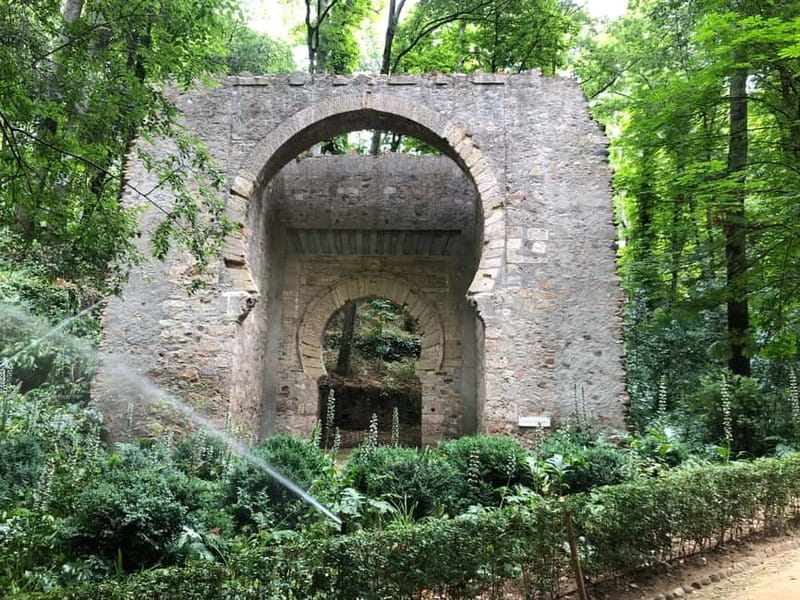
Justice Gate: the Alhambra’s grand front door
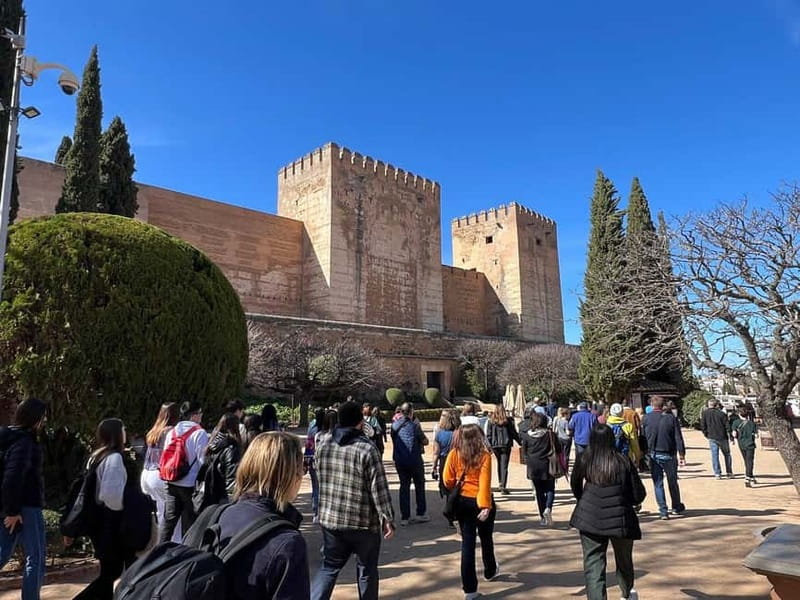
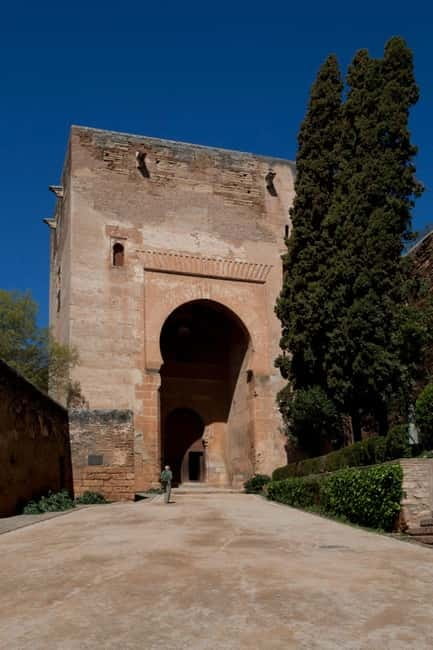
The first major stop is the Puerta de la Justicia, or Justice Gate. This is one of the Alhambra’s most important entrances and a good place to begin because it joins practical defense with royal ceremony.
Your guide explains the history of the monuments outside the main Alhambra area here. Look closely at the scale and arrangement of the entrance. A gate like this had to control movement, protect the hilltop complex, and make an impression on anyone arriving.
I like this stop because it corrects a common misunderstanding. The Alhambra was not simply a palace planted on a hill. It was a fortified city and royal seat, and the entrance makes that clear. The story begins with walls, controlled access, and military planning before it moves toward gardens and refined court life.
The advertised timing gives about 30 minutes to the Justice Gate. That should allow a proper explanation and a look at the structure, though the actual pace depends on group size and how much time the guide spends answering questions.
The Alhambra Forest and the role of gardens

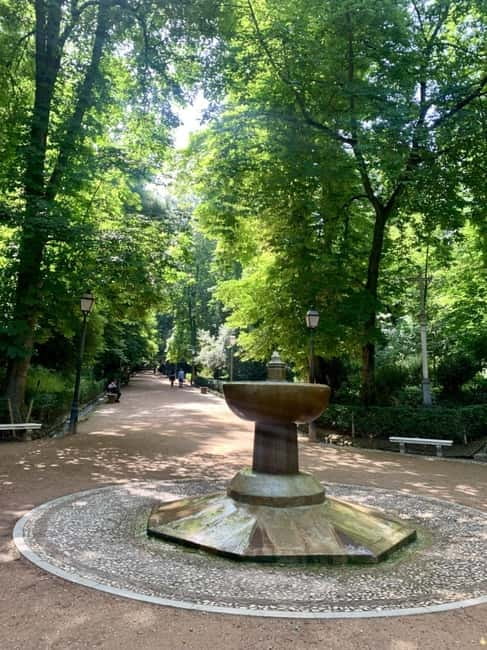
From the gate, the walk continues around the outside of the Alhambra gardens and through the Alhambra Forest. This is one of the more pleasant parts of the route, especially if you want a break from stone walls and busy sightseeing paths.
The guide explains why gardens mattered in Hispano-Arabic architecture. They were not just pretty planting areas. Water, shade, trees, and ordered space helped create a cooler and more private setting. They also expressed ideas about control, pleasure, and paradise.
That context makes the later views more meaningful. Instead of seeing greenery as a backdrop, you begin to understand how the natural setting supported life at the Alhambra. The forest also gives you a sense of the complex as a place with layers: military walls on one side, cultivated gardens and royal spaces on the other.
The route description assigns 45 minutes to this section, which is longer than many people may expect from a simple forest walk. That suggests the guide may use the area for substantial explanation of the gardens, the monuments, and the Alhambra’s setting. If you prefer a fast checklist of sights, this may feel slow. I think it works better for visitors who want the ideas behind the architecture.
A few more architecture walks in Spain worth a look
- Barcelona: Sant Pau Recinte Modernista Entry Ticket
★ 4.6 · 2,567 reviews - Barcelona: Sagrada Familia, Modernism, and Old Town Tour
★ 4.7 · 1,621 reviews - Ramblas, Old Town, Gothic and Gaudi Architecture Walking Tour
★ 5.0 · 723 reviews - Valencia: Art & Architecture Guided Tour with Monuments Tickets
★ 5.0 · 255 reviews
Santa Maria Church and the Christian chapter
The church of Santa Maria occupies an important place in the Alhambra’s later story. Its presence shows how the complex changed after the Christian conquest of Granada.
The visit is listed as a guided stop of about 15 minutes. You also visit the convent of San Francisco as part of the experience. These sites help you follow the Alhambra from its Muslim era into its Christian period and then toward its modern identity as one of Spain’s best-known monuments.
That change is worth paying attention to. The Alhambra was not frozen in the Nasrid period. It was adapted, reused, and given new religious and political meaning. The church and convent make that history visible in a direct way.
Because the stop is short, you should not expect a detailed art-history lesson on every feature. The value lies in the connection between the buildings and the larger story. Your guide helps you see that the complex is a collection of historical layers, not one single moment preserved untouched.
Charles V Palace and the shock of Renaissance design
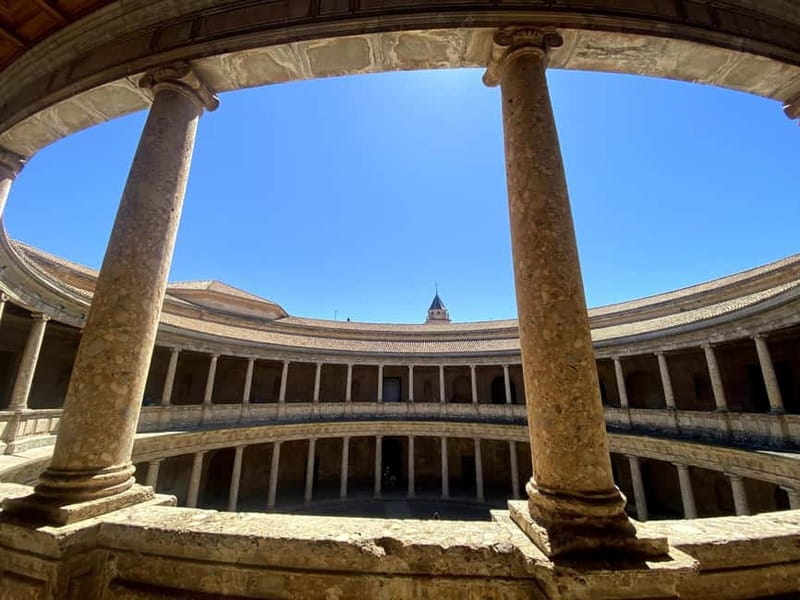
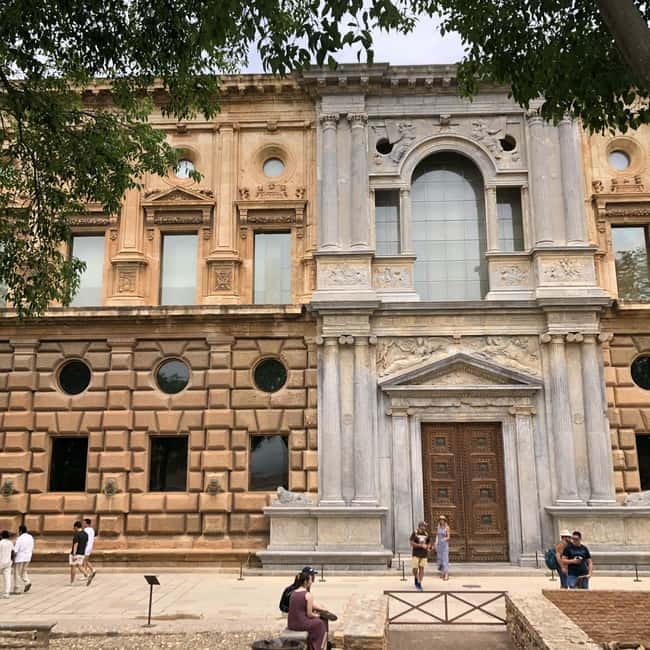
The Palace of Charles V is probably the most striking architectural contrast on the route. Its heavy Renaissance style differs sharply from the Nasrid character usually associated with the Alhambra.
The palace was built for the Christian emperor Charles V, and its form reflects a different idea of royal power. You see a strong geometric design, large scale, and a formal approach that does not try to copy the earlier Islamic architecture around it.
The stop is listed as a 75-minute guided visit, although the overall tour is advertised as two hours. That mismatch is worth clarifying before you book. The palace is described as a stop rather than a full ticketed interior tour, so ask the welcome-centre staff exactly how much time your group will spend there and which areas are included.
Even a shorter stop can be worthwhile. The palace lets you compare two architectural languages in one place. The contrast is not a flaw. It is one of the clearest ways to understand how Granada’s rulers used the Alhambra to express changing power.
Walls, the Tower of the Seven Floors, and old legends
The walk continues along the Alhambra wall and past the Tower of the Seven Floors. This section brings you back to the fortress side of the complex.
The Tower of the Seven Floors is linked with legends and mystery, which gives the guide room to move beyond dates and construction details. Stories connected with the Alhambra have helped keep its outer walls alive in the public imagination. The important thing is to enjoy the legend while keeping it separate from documented history.
I find this part useful because walls can seem dull when viewed without context. Once you hear how the defensive system worked, towers and gates become easier to read. You begin to notice the practical relationship between the hill, the entrances, and the city below.
The tour also includes a stop at the old Taberna del Polinario. The supplied details do not specify how long you stay there or the exact format of the visit, so think of it as an added historical stop rather than a meal or tasting. The name connects the route with Granada’s older cultural life.
Plaza de los Aljibes and the view over Granada
The tour ends its main sightseeing route at the Plaza de los Aljibes. This open space offers spectacular views of Granada and the exterior of the Alcazaba.
The word aljibes refers to cisterns, and the plaza helps remind you that water management was essential to life on the hill. The Alhambra needed more than walls and palaces. It needed systems for storing and moving water, gardens that used it carefully, and spaces designed around shade and refreshment.
This is also the place to pause and take in the city. From here, the Alhambra’s position becomes easy to understand. You can connect the fortified hilltop with Granada below, rather than seeing the complex as an isolated monument.
The view is one of the strongest reasons to choose this walk if you do not have a main Alhambra ticket. You get a broad visual sense of the setting, something a room-by-room palace tour cannot provide on its own.
Inlay work and the final Nasrid note
The experience includes a look at Granada’s inlay work in an artisan workshop within the grounds. Inlay is a traditional decorative craft in which small pieces of material are fitted together to create patterns.
This stop adds a hands-on cultural note to a tour otherwise focused on walls and architecture. It gives you a chance to connect Granada’s historical decoration with a living craft tradition. The details do not say whether a purchase is required, so you should treat it as a demonstration or learning stop rather than assume you must buy something.
The route concludes at the Alberca Nazarí, described as a place that reflects Nasrid refinement. The name points to the importance of the pool and water garden in the Alhambra’s design. After the defensive gates, forest, church, palace, and wall, this final setting returns you to the elegance most people associate with the Nasrid court.
You then return to the Granavision Welcome Visitor Centre. The exact walking order may vary slightly, but the planned route keeps the focus on the exterior and ends where it began.
Language, pace, and the real two-hour question
The experience has a listed duration of two hours, but its stop schedule adds up to roughly three hours: 75 minutes at Charles V Palace, 15 at Santa Maria Church, 30 at the Justice Gate, 45 in the forest, and 15 at the Plaza de los Aljibes.
That is not a small difference. It may mean the listed stop times are approximate, shared across a longer version, or not meant to be added literally. I would ask at check-in how long your departure is expected to last, especially if you have a timed meal, transport, or Alhambra entry afterward.
The bilingual format also deserves a practical note. A guide speaking Spanish and English may repeat each explanation, which can make the tour feel longer and harder to follow. One participant found the constant switching tiring. If you are sensitive to fast speech or need a single-language explanation, ask whether separate language groups are available.
The strongest guide feedback names Hector as an excellent history teacher. That suggests the quality can depend on the individual guide and the day’s group. The official-guide format gives the tour structure, but it cannot remove all differences in delivery.
Who should book this walk?
I would recommend it to first-time visitors who want an introduction to the Alhambra’s setting before seeking a full interior visit. It also suits people who missed a main ticket and still want a guided look at the walls, gardens, outer buildings, legends, and views.
It is a good fit for history-minded visitors, architecture fans, and anyone who enjoys seeing how different eras overlap. The contrast between the Puerta de la Justicia, Santa Maria Church, and Palace of Charles V gives you more than one version of Granada.
I would be more cautious if your only goal is the Nasrid Palaces. This tour does not include Alhambra admission, and no exterior walk can replace the carved interiors and famous courtyards. I would also hesitate if you need a tightly timed two-hour activity unless the provider confirms the actual schedule.
At $26 per person, the value is solid for a guided outdoor history walk with Granada views and several important stops. The price works best when you see it as an orientation and context tour, not as a substitute for the main Alhambra ticket.
FAQ
Does the tour include entry to the Alhambra?
No. An entrance ticket to the Alhambra is not included. The tour focuses on exterior areas and landmarks.
How much does the experience cost?
The listed price is $26 per person.
How long does the tour last?
The advertised duration is two hours. The listed stop times add up to about three hours, so ask for clarification at check-in.
What time does the tour start?
The tour starts at 10:30 am.
Where is the meeting point?
Meet at the Granavision Welcome Visitor Centre at Paseo de la Sabika 28, next to the Guadalupe Hotel.
What should I do when I arrive?
Check in at the front desk inside the Welcome Visitor Centre. Staff will confirm your reservation, assign you to a group, and introduce you to the guide.
What languages are offered?
The live tour guide service is offered in Spanish and English.
Is the Palace of Charles V included?
Yes. The route includes a stop and guided visit at the Palace of Charles V. The tour does not include a general Alhambra admission ticket.
What other buildings and sites are visited?
The route includes Santa Maria Church, the convent of San Francisco, the Justice Gate, the Alhambra Forest, the walls and Tower of the Seven Floors, the old Taberna del Polinario, the Plaza de los Aljibes, an artisan inlay workshop, and the Alberca Nazarí.
What should I wear?
Wear comfortable shoes for walking.
Can I cancel the booking?
You can cancel up to 24 hours in advance for a full refund.
Do I have to pay immediately?
The reserve-now, pay-later option allows you to book without paying at the time of reservation.
Newly added in Spain
- Barcelona: Private Gaudi Guided Segway Tour★ 5.0 · 6 reviews
- Barcelona: Guided tour e-bike Barcelona historical and modernist Barcelona★ 4.5 · 5 reviews
- Barcelona: Wonders of Gaudi Bike Tour★ 4.3 · 6 reviews
- Barcelona: Exclusive Exploration of Gaudi’s Masterpieces★ 5.0 · 2 reviews
- Barcelona: Gaudi Tapas & Wine Tasting Small Group Tour★ 5.0 · 3 reviews
- Barcelona: E-Scooter Gaudí & the Sea Tour★ 4.3 · 10 reviews
- Barcelona Architecture Walking Tour With Casa Batlló Upgrade★ 4.8 · 11 reviews
- Barcelona Beyond Gaudí: Modernism, Rooftops, and Hidden Gems★ 5.0 · 2 reviews
Historical Tours, compared.

Chicago in a Day: Food, History & Architecture Walking Tour
Read our review →
Charleston’s Best Highlights: History, Culture & Architecture
Read our review →
Palm Springs Modernism Architecture & History Bike Tour
Read our review →

Historic Georgetown: History, Gossip, & Architecture Walking Tour
Read our review →
Charleston History, Homes, and Architecture Guided Walking Tour
Read our review →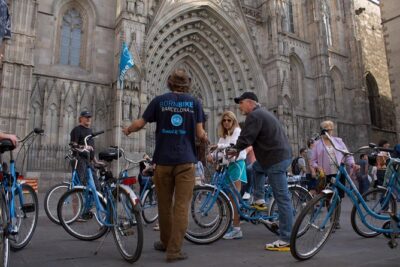

Historical and Architectural Chicago Fireboat River & Lake Cruise
Read our review →Browse the lists this tour appears in