
Review · HISTORICAL TOURS
[Aomori Prefecture] Tour the history and architecture in Towada City, the art city
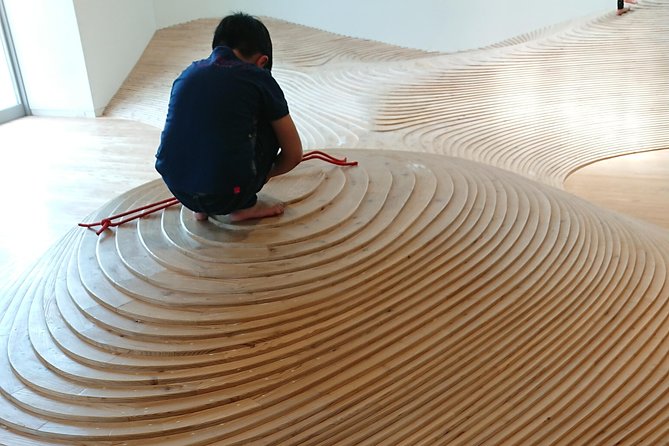
Towada’s appeal is not limited to its art museum. This small city of about 60,000 people has turned its streets, public buildings, manholes, and civic spaces into part of an ongoing art and architecture project. This walking tour helps you read that city as you go, from Sou Fujimoto’s Towafuru to the concrete forms of a library designed by Tadao Ando.
I like the relaxed 3-kilometer route and the guide’s attention to small details, including street art and manholes that are easy to miss. I also like that the tour connects modern buildings with Towada’s past, so you learn why the city looks as it does today rather than simply ticking off famous architects.
The main consideration is that the tour is conducted outdoors and requires good weather. The Towada Art Center admission fee is not included, and the schedule includes several exterior explanations, so you should not book this expecting a full guided museum visit.
Key Points
- Public art beyond the museum: Find artwork in streets, civic spaces, manholes, and everyday parts of Towada.
- Two major architectural names: See buildings connected with Sou Fujimoto and Tadao Ando.
- A calm 3-kilometer walk: The pace is designed for a leisurely city walk rather than a strenuous hike.
- Useful local context: Learn how Towada developed from its earlier form into the art-focused city you see today.
- Private experience: Only your group participates, making it easier to ask questions and set a comfortable pace.
- Good value for architecture fans: At $33.88 per person, the fee covers the guide and tax, while museum entry costs extra.
Why Towada Makes a Good Architecture Walk
Towada is an unusual place for an art tour because the city itself is part of the subject. You are not simply walking between one museum and another. Public buildings, plazas, planted streets, civic design, and small pieces of street art all contribute to the experience.
That matters in a city of this size. In a major capital, you can see famous architecture almost by accident. In Towada, the buildings are spaced through an ordinary working city, so the guide’s explanation gives you a way to notice what would otherwise look like a regular street corner.
The tour also puts modern design beside older city features. Along Government Office Street, you see cherry trees and pine trees that point toward Towada’s earlier identity. At the same time, art appears in places you may not expect, including manholes and small details along the road.
I would choose this walk if you want more than a quick photograph at the Towada Art Center. It is especially useful if you have little background in architecture. The explanations are built around clear points rather than technical jargon, and the route gives you time to look carefully.
More History Walks in the world:
- Chicago in a Day: Food, History & Architecture Walking Tour
★ 5.0 · 1,153 reviews - Charleston’s Best Highlights: History, Culture & Architecture
★ 5.0 · 422 reviews - Palm Springs Modernism Architecture & History Bike Tour
★ 5.0 · 359 reviews
Starting at Towada Art Station Assembly
The meeting point is at 15-3 Inaoichō. The first stop is Towada Art Station Assembly, where the guide begins setting out the city’s connection with art and civic design.
This opening stop is short, listed at about five minutes, but it gives the walk a useful starting point. Rather than launching straight into a long lecture about architects, the guide begins with the area around you and shows how art has been placed into the daily life of Towada.
That approach is one of the tour’s strengths. You do not need to arrive with a vocabulary of architectural terms. The guide can point out what to notice, then build the story as you move through the city.
The stop is free, and you should expect to remain on foot. Wear shoes you can use comfortably for several hours, even though the overall distance is modest.
Sou Fujimoto’s Towafuru
The next stop is Towada Community Exchange Center, known as Towafuru. It was designed by Sou Fujimoto, an architect recognized here for a building that plays with openness, light, and the way people move through shared space.
The visit is listed at about 10 minutes and does not require an admission ticket. The guide explains the building and its role in the city, giving you a chance to consider how a community center can be more than a practical box.
You will get more from this stop if you look at how the building meets the surrounding area. Notice the relationship between its exterior shape, the public space around it, and the people using the building. The point is not only to identify the architect. It is to see how design can affect the mood and use of a public place.
If your interest is architecture, this is one of the tour’s clearest highlights. If you prefer long museum visits, the short stop may feel brief. The value comes from the explanation and the connection to the wider route, not from spending a long time inside one building.
A Pause at Shimin Koryu Plaza Tower
At Shimin Koryu Plaza Tower, the guide explains the exterior before taking you inside to experience the space. The stop lasts about 10 minutes and includes a restroom break.
That practical pause is useful. Three hours on foot can feel different from three hours spent in a museum, and having a planned restroom stop keeps the route comfortable. It also lets you experience the building rather than only looking at its facade.
The guide’s comments help you think about the tower as a public building with an interior atmosphere, not just an object to photograph. This is a good example of the tour’s broader method: look at the outside, then consider how the design feels when you enter.
There is no admission charge listed for this stop. Still, the exact amount of time spent inside can depend on the day’s conditions and the guide’s presentation.
A few more architecture walks in the world worth a look
- Chicago Architecture River Cruise
★ 5.0 · 15,756 reviews - Chicago River 90-Minute Architecture Tour
★ 4.5 · 9,629 reviews - Chicago River: 1.5-Hour Guided Architecture Cruise
★ 4.8 · 8,046 reviews - Chicago Architecture Center River Cruise aboard First Lady
★ 5.0 · 5,536 reviews
The Towada Art Center and Art Square
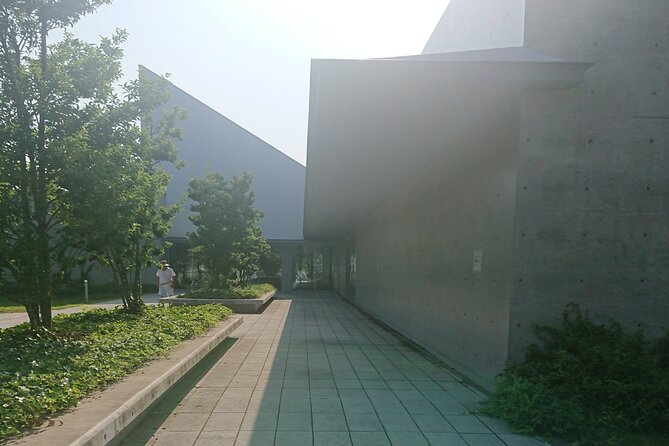
The Towada Art Center is the best-known art stop on the route. Here, the guide explains the architect and the concept behind the building, then gives you an exterior tour around the art square.
The listed time is about 20 minutes. Museum admission is not included in the tour price, so you should treat the guided stop as an introduction to the building and its setting rather than a replacement for an indoor museum visit.
This distinction is important when you compare the tour with buying an admission ticket and exploring alone. If you want to see the museum’s indoor works, plan for that separately and confirm the opening arrangements for your visit. The walking tour helps you understand the building and the public art setting, but the supplied details do not promise a guided interior museum tour.
I like the art square as part of the route because it shows how Towada’s art project reaches beyond gallery walls. The public setting gives the museum a connection with the surrounding city. You can look at the architecture, the placement of art, and the way the square creates a meeting point.
For someone short on time, this stop gives you a solid first look. For someone making a special trip to Towada for contemporary art, I would allow additional time beyond the three-hour walk.
Government Office Street and Towada’s Older Layers
The route continues along Towada City Government Office Street, where the focus shifts from individual buildings to the city as a whole. The listed walking time is about 15 minutes.
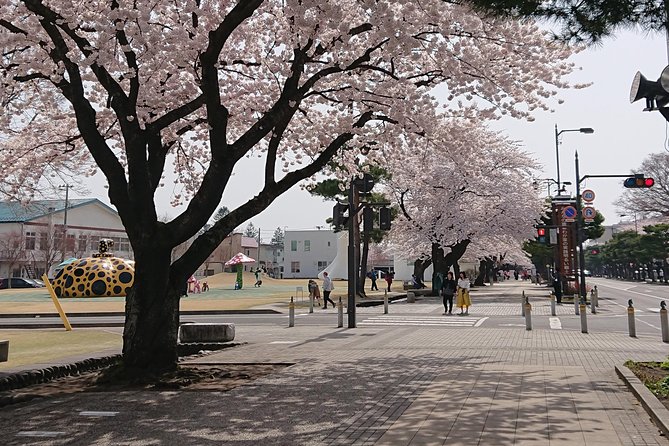
This is where the tour’s historical side becomes most useful. Cherry blossoms and pine trees line the area, offering reminders of the city’s past while modern art appears in the public realm. The guide explains how the older town connects with the present city, using the streets themselves as part of the story.
Look down as you walk. Art can appear in small, easy-to-miss places, including manholes and details along the pavement. A person walking alone might pass these without a second glance. With a guide pointing them out, the route becomes a kind of open-air gallery.
The walk also gives you a sense of ordinary Towada life. This is not a staged historic district or a single-purpose art complex. It is a functioning city, and that makes the art placement more interesting. You see how culture can sit beside offices, public services, trees, and daily routines.
One particularly useful part of the guide’s approach is the explanation of how Towada changed from its earlier form into the city presented today. Photographs are used to help make that change easier to understand. If you are curious about urban planning or local history, this may be as valuable as the architecture itself.
Inside Towada City Library
The final major stop is Towada City Library, located at the end point of the tour at 2-18 Nishi13banchō. The building is associated with Tadao Ando, and the guide explains its exterior before taking you inside to look at the interior space and key features.
The stop is listed at about 15 minutes and is free. You will have a chance to see how the building works as a library, not only as a piece of architecture.
This is likely to be a favorite stop for anyone who enjoys concrete construction and clean, strong forms. The design may seem simple at first, but the guide helps explain why the space produces a particular feeling. The discussion links the building’s materials and form with the way people experience it.
I would pay close attention here to the shift from the street into the library. Notice how the entrance, walls, open areas, and light guide your movement. You do not need a background in architecture to understand the basic effect. The guide’s job is to show you why the building catches your attention and how its design serves a public purpose.
The library also gives the tour a fitting finish. You have moved from outdoor art and civic buildings to a place where local people read, study, and use a shared public resource. Architecture is not presented as something separate from life in Towada.
What the Guide Adds

The guide is nationally certified, and the experience is run by aomori walkingtour by Az&n. No individual guide name is provided, so you should not expect to select a particular person when booking.
The strongest feature is the way the explanations connect details. The guide does not only identify a building or tell you which architect designed it. You also hear about Towada’s history, the city’s transformation, the relationship between different public spaces, and the art tucked into the streets.
That makes the tour suitable for beginners. Clear explanations are especially helpful if you have never taken an architecture walk before. You can ask questions as you go, and because the tour is private, your group does not have to follow the interests or pace of strangers.
The route is also designed to be easygoing. The walking pace is described as comfortable, and the distance is about 3 km. You still need to be prepared for an outdoor walk, but this is not presented as a demanding physical activity.
Price, Group Size, and Overall Value
The price is $33.88 per person. It includes the guide fee and consumption tax, but not private transportation or museum admission.
For one person, the cost is reasonable if you care about architecture, local history, or public art and would otherwise miss the meaning behind the buildings. You are paying for interpretation and access to a carefully connected route, not for transportation or a large attraction ticket.
The value improves for a private group because only your party participates. Group discounts are available, though the supplied details do not specify the discount amount. A family or group of friends can split the experience around its own questions and interests.
The price is less attractive if you only want to photograph the Towada Art Center and leave. Much of the route can be walked independently, and the tour does not include museum admission. Its real worth is in the explanations, the historical connections, and the small public artworks you might miss alone.
The total duration is about three hours. The named stops add up to roughly 75 minutes, with the remaining time used for walking, transitions, questions, and broader explanation. That balance is sensible for a city walk. You get enough time to pause without spending the whole morning standing in front of one building.
Who Should Book This Walk
I would recommend this tour to anyone with an interest in modern architecture, contemporary art, Japanese civic design, or smaller cities that are trying something different. It is also a good choice if you want a local introduction before exploring Towada independently.
Beginners should feel comfortable. The explanations are meant to be understandable even if you arrive with no prior knowledge. The walk can also suit people who think they are not architecture fans, since the guide connects design with everyday use and local history.
Families and private groups may appreciate the flexible feel of a small-group experience. The route is not described as difficult, but you should still consider the 3-kilometer distance and the weather.
I would be more cautious if your main goal is a long indoor art visit. The Towada Art Center stop focuses on the architect, concept, exterior, and art square, while admission is extra. Add separate museum time if the collection is your priority.
Free cancellation is available if you cancel at least 24 hours before the start time. Changes or cancellations inside that window are not accepted for a refund. Since the tour requires good weather, poor conditions may lead to a different date or a full refund.
My Take: A Smart Way to Read Towada
This is a focused walking tour rather than a grand sightseeing package. You will not be driven between attractions, and the route does not promise a full museum visit. What you get is more personal: a guide who shows you how art, architecture, history, and ordinary city life fit together.
I especially like the attention to overlooked details. The manholes, street art, trees, and public spaces give the walk texture, while the Sou Fujimoto and Tadao Ando buildings provide strong architectural anchors.
Book it if you want to understand why Towada is known as an art city, not simply to see one famous building. Skip it if you dislike walking, need indoor activities in uncertain weather, or want museum admission bundled into the price.
FAQ
How long does the Towada walking tour last?
The tour lasts approximately three hours.
How far will I walk?
The total walking distance is about 3 km.
Where does the tour begin?
The tour begins at 15-3 Inaoichō, Towada, Aomori 034-0011, Japan.
Where does the tour end?
The tour ends at 2-18 Nishi13banchō, Towada, Aomori 034-0081, Japan, at Towada City Education Plaza, the library.
Is the tour private?
Yes. Only your group participates in the activity.
What is included in the price?
The price includes the guide fee and consumption tax.
Is admission to the Towada Art Center included?
No. Museum admission is not included in the tour price.
Is transportation provided?
No. Private transportation is not included.
Can I cancel for a full refund?
Yes, if you cancel at least 24 hours before the experience start time. If poor weather causes the tour to be canceled, you will be offered another date or a full refund.
Newly added in the world
- Washington, DC: Georgetown Architecture Walking Tour★ 5.0 · 8 reviews
- Washington DC: Dupont Circle & Embassy Row Architecture Tour★ 5.0 · 6 reviews
- New Orleans : Garden District Architecture Walking tour★ 4.8 · 5 reviews
- Wilmington History and Architecture Tour★ 4.8 · 18 reviews
- Unveiling Brno: History, Culture & Architectural Delights★ 5.0 · 2 reviews
- Vicenza: Palladian Architecture Private Walking Tour★ 3.3 · 3 reviews
- Walk & Discover KL’s Architectural and Heritage Gems★ 5.0 · 7 reviews
- Private Colonial Williamsburg Architectural Tour★ 5.0 · 5 reviews
Historical Tours, compared.
Chicago in a Day: Food, History & Architecture Walking Tour
Read our review →
Charleston’s Best Highlights: History, Culture & Architecture
Read our review →
Palm Springs Modernism Architecture & History Bike Tour
Read our review →
Historic Georgetown: History, Gossip, & Architecture Walking Tour
Read our review →
Charleston History, Homes, and Architecture Guided Walking Tour
Read our review →

Historical and Architectural Chicago Fireboat River & Lake Cruise
Read our review →Browse the lists this tour appears in