
Review · HISTORICAL TOURS
Architecture and History of Mexico City – Small Groups
Mexico City’s Historic Center is a stack of different cities in one place: Mexica ruins beneath Spanish churches, grand republican buildings beside modern towers, and richly decorated interiors tucked behind busy streets. This small-group walk helps you read those layers instead of simply passing them by. Guide Raul brings together architecture, politics, art, and social history in a way that gives the center a clear shape.
I like the maximum group of six, which makes it easier to ask questions and hear the guide in crowded streets. I also like the route’s variety, from the view near Torre Latinoamericana and the House of Tiles to the Templo Mayor archaeological site. The main consideration is that this is a brisk urban walk of about three to three and a half hours, so good walking fitness and sensible shoes matter.
Key points at a glance
- Raul’s story-led approach: Expect architecture to be linked with political change, art, construction materials, and everyday city life.
- A compact group of six: The small size gives you a better chance to ask questions and receive personal recommendations.
- Eight central stops: The route moves from Torre Latinoamericana to the Zócalo, with no private transport between sights.
- A useful first-day orientation: The walk connects pre-Hispanic, colonial, and modern Mexico City before you visit museums on your own.
- Rare balcony views: At the House of Tiles, you use the building’s balconies to look toward nearby architecture.
- One cost to check: Entry to Palacio de Bellas Artes is not included, while other listed stops are free or included as noted.
Why this walk makes sense early in your Mexico City visit
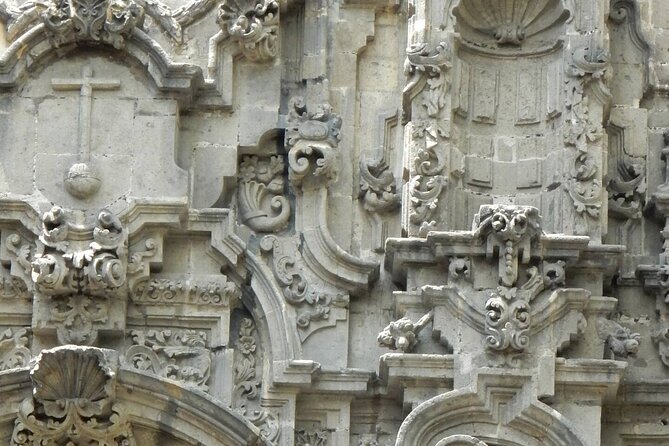
I like this experience best as a first-day activity in the capital. The Historic Center can feel confusing at first because its buildings do not belong to one neat period. A single block may contain colonial stonework, nineteenth-century civic design, early twentieth-century ornament, and modern concrete and glass.
Raul’s method, as reflected in the tour experience, is to connect those periods rather than treat each building as an isolated photo stop. You hear how architecture reflects conquest, religion, politics, artistic movements, and changing ideas about the city. That context can help you get more from later visits to museums, including the National Museum of Anthropology.
This is not simply a walk for people who collect building façades. The tour also discusses construction materials, muralism, symbols such as griffins and mermaids, and the way Mexico City developed around older foundations. If you like asking why a building looks the way it does, you should find plenty to discuss.
More History Walks in the world:
- Chicago in a Day: Food, History & Architecture Walking Tour
★ 5.0 · 1,153 reviews - Charleston’s Best Highlights: History, Culture & Architecture
★ 5.0 · 422 reviews - Palm Springs Modernism Architecture & History Bike Tour
★ 5.0 · 359 reviews
Starting beneath Torre Latinoamericana
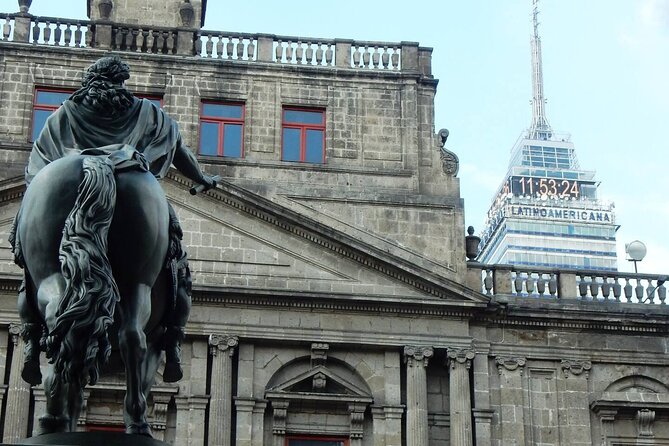
The meeting point is Torre Latinoamericana, at Eje Central Lázaro Cárdenas 2 in the Historic Center. The first stop is a viewpoint near the tower, where you spend about 30 minutes getting an overview of Mexico City’s growth.
The value here is orientation. Torre Latinoamericana gives you a way to think about the center as a city built in layers. The guide uses the setting to frame the rest of the walk, so later churches, palaces, and archaeological remains fit into a wider story.
This opening does not require a separate admission ticket. It is also a practical place to begin because the area is close to public transportation. Still, expect the normal noise and movement of central Mexico City rather than a quiet lookout.
San Francisco Temple and the materials of the city
Next comes the atrium of the Temple of San Francisco, with about 25 minutes devoted to the building and its role in Mexico’s past. The focus is not only religious architecture. You also learn about the materials used to construct Mexico City and the historical processes that shaped the country.
An atrium can be easy to rush through if you are walking alone. With a guide, its walls and proportions become clues to the city’s colonial development. This stop gives the route a grounded, physical quality: you are not just hearing dates and names, you are looking at the substances and building methods that made the city possible.
The stop is free, but the route remains an outdoor urban experience. Crowds, street noise, and changing access can affect how long you spend in any one space.
The House of Tiles from inside and above
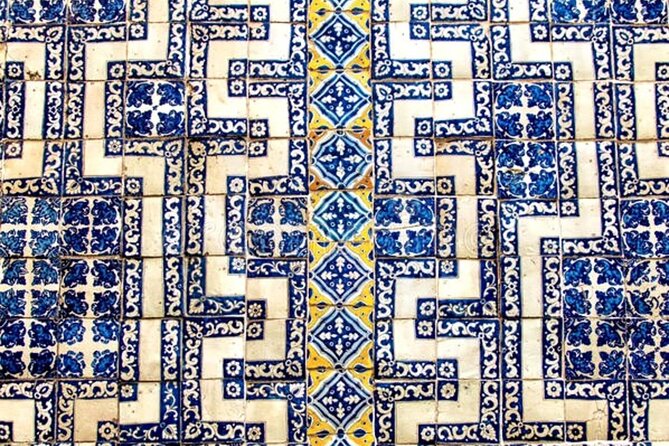
The House of Tiles is one of the more distinctive stops. You spend about 25 minutes exploring its development over nearly 300 years, seeing an artwork inside, and using the balconies to view other buildings.
That balcony angle matters. From street level, Mexico City’s architecture can look like a collection of unrelated façades. Looking outward from a historic building lets you compare styles and see how the surrounding center changed over time.
The stop also shows why architecture is more than exterior decoration. The building’s long evolution gives Raul a chance to explain how older structures were adapted and reinterpreted. This is one of the route’s strongest moments for anyone who likes visual details, because you are asked to look closely rather than simply take a picture and move on.
A few more architecture walks in the world worth a look
- Chicago Architecture River Cruise
★ 5.0 · 15,756 reviews - Chicago River 90-Minute Architecture Tour
★ 4.5 · 9,629 reviews - Chicago River: 1.5-Hour Guided Architecture Cruise
★ 4.8 · 8,046 reviews - Chicago Architecture Center River Cruise aboard First Lady
★ 5.0 · 5,536 reviews
Palacio de Bellas Artes and the politics of grand design
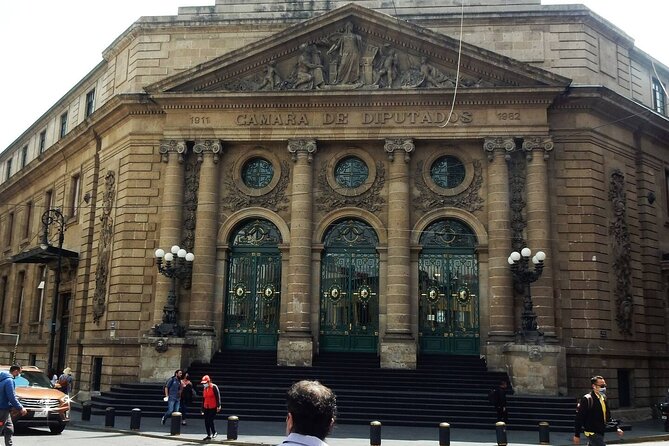
At Palacio de Bellas Artes, the discussion turns to the historical, political, and artistic setting in which the palace and nearby buildings were created. You spend about 20 minutes here.
Bellas Artes is a useful point for discussing how a city presents itself. Its scale and ornament invite questions about national identity, public culture, and the political climate behind major building projects. Raul also connects the building with its neighbors, which keeps the stop from becoming a single-monument lecture.
The important practical note is that admission is not included at this stop. The route may discuss the building from outside rather than provide a full interior visit, so you should not assume this tour replaces a separate museum visit. If you want to explore inside, allow additional time and budget beyond the tour price.
Palacio Postal and early twentieth-century decoration
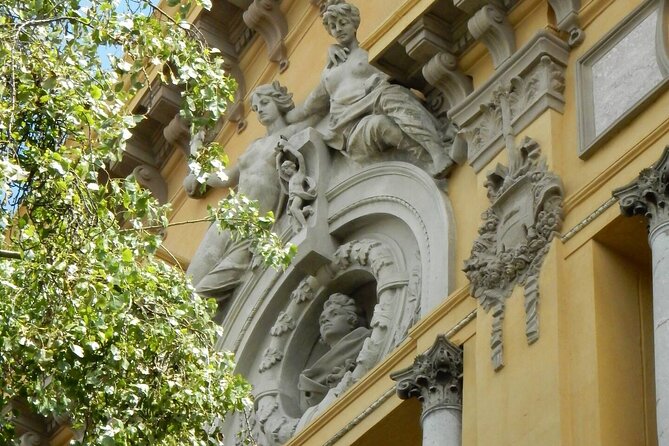
The Palacio Postal is another short stop, usually around 20 minutes. This early twentieth-century post office gives you a look at the decorative ambitions of the period, and the group may visit the interior depending on the time of day.
That qualification is worth noting. The building is included in the route, but interior access is not guaranteed at every hour. Even so, the stop adds a different architectural note after the religious and monumental buildings earlier in the walk.
I find this kind of comparison useful. The route is not asking you to decide which building is prettiest. It is showing how Mexico City adopted and reshaped outside styles while creating a public identity of its own.
Plaza Tolsá and an eclectic city center
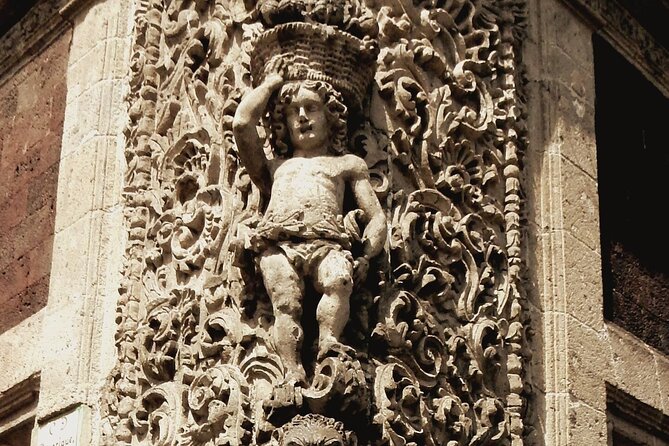
At Plaza Tolsá, you spend about 20 minutes looking at the varied architecture around the statue of Charles IV of Spain. The square works as an open-air lesson in eclectic design, with several buildings competing for attention.
This is where a guide’s commentary can make a real difference. Without context, the square may seem like a pleasant pause between larger sights. With Raul, the surrounding buildings become evidence of different periods and tastes sharing the same urban space.
The stop also keeps the tour from focusing only on famous landmarks. You are encouraged to read the relationship between a monument, its plaza, and the buildings around it. That is a useful habit for the rest of your time in Mexico City.
Templo Mayor and the city beneath the city
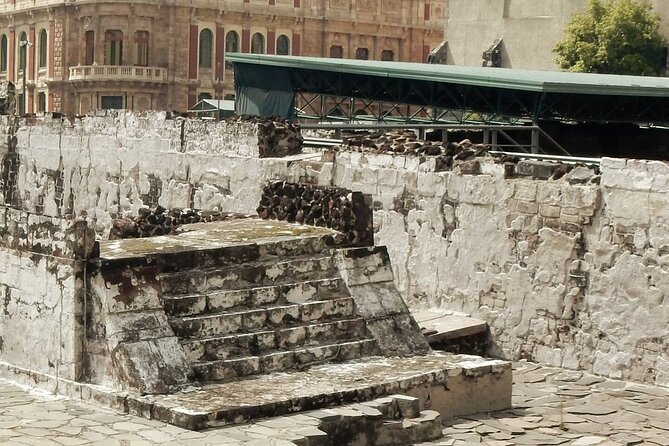
Before the walk ends, the group visits the archaeological site of Templo Mayor for about 20 minutes. This is the clearest point on the route for understanding that the modern Historic Center was built over an older Mexica city.
The stop helps connect the opening view at Torre Latinoamericana with the rest of the route. Mexico City is not only a colonial center with modern additions. It also carries the remains of an earlier capital beneath and around its present streets.
Twenty minutes is enough for an introduction, not a full archaeological visit. If Templo Mayor interests you, plan a separate, longer visit another time. The walk gives you the basic frame, then leaves you with a better sense of why the site matters.
Ending at the Zócalo
The walk finishes at the Zócalo, Mexico City’s main square, after roughly 20 minutes devoted to pulling the stories together. This is a sensible ending because the square brings many of the tour’s themes into one place: political power, religion, public ceremony, archaeology, and changing architectural styles.
Raul can answer questions at the end and offer recommendations for the rest of your visit or a future return to the city. That makes the final stop more useful than a simple goodbye. You can clarify something you missed, ask how to arrange the rest of your sightseeing, or connect the walk with places you plan to visit next.
The official endpoint is Constitution Plaza, Plaza de la Constitución, in the Historic Center. You should arrange your own way back afterward, since private transportation is not included.
What the $83.59 price gives you
At $83.59 per person, this is not the cheapest way to see central Mexico City. The route uses public streets and includes several free stops, so you are paying mainly for the guide’s time, the structure of the walk, the small group, and the interpretation.
That can be good value if you want more than a list of addresses. The tour runs for about three to three and a half hours and covers eight connected locations. A private guide would usually cost more, while a large group would give you less room to ask questions.
The value is strongest for people who want an intellectual map of the city. If you only want quick photographs of famous buildings, the price may feel high. If you want to understand how Mexica, Spanish, colonial, republican, and modern influences meet in the center, the cost is easier to justify.
Bottled water is included. Transportation between stops is not separate because this is fundamentally a walking tour, and the allotted movement time is already part of the total duration.
How demanding is the walk?
The tour requires a moderate level of physical fitness. You should expect several hours on your feet, walking between central sights and pausing in public spaces. The supplied information does not give a total distance, so I would not plan it around a precise mileage estimate.
Wear comfortable shoes and bring whatever sun or rain protection you normally need for an outdoor city walk. The experience requires good weather. If poor weather causes cancellation, you are offered another date or a full refund.
The small group helps with communication, but it does not change the physical nature of the activity. This is best for people who can manage a steady urban walk without private transport.
Who will get the most from Raul’s approach?
I would choose this tour for:
- First-time visitors who want a strong base before exploring the city alone.
- People interested in architecture, art, politics, and social change.
- Visitors who prefer questions and conversation to a scripted large-group tour.
- Museum-goers who want background before visiting the Anthropology Museum or other cultural sites.
- Repeat visitors who have seen the main buildings but never understood their connections.
Raul’s strongest quality is the way he links subjects. He does not stop at architecture as decoration. His explanations connect buildings with sociology, art, political events, construction, and cultural change. That is why the walk can make familiar places feel newly readable.
The tour may be less suitable if you want long interior visits, a relaxed pace, or a focus on food and markets. Most stops are short, and the route is built around explanation and comparison rather than extended time inside each attraction.
Booking details worth knowing
Confirmation is provided at booking, and the experience is offered in English. It is listed as a small-group activity with a maximum of six people, which is a major part of its appeal.
The meeting point is Torre Latinoamericana, not the Zócalo. Check the location carefully before setting out, especially because the endpoint is several central blocks away. The tour ends at the Zócalo, where Raul can answer final questions and suggest next steps for your visit.
The experience is non-refundable and cannot be changed for personal reasons. Since weather can affect the walk, consider your schedule before booking. A poor-weather cancellation is handled differently, with a new date or full refund offered.
Should you book Architecture and History of Mexico City?
Book it if you want the Historic Center to make sense, not just look impressive. The small group, Raul’s personal guidance, and the mix of archaeological, colonial, artistic, and modern sights give you a useful introduction in one morning or afternoon.
I would especially choose it early in a Mexico City stay. You will finish at the Zócalo with a better sense of what you are looking at, plus the chance to ask for advice before continuing on your own.
Skip it if you prefer to spend several hours inside museums or move at your own slow pace. But if you value strong storytelling, close attention to architecture, and a guide who can connect centuries of change, the $83.59 fee is reasonable for the amount of context packed into three hours.
FAQ
How long does the architecture and history tour last?
The experience lasts approximately three to three and a half hours, including the time needed to move between stops.
Where does the tour begin?
It begins at Torre Latinoamericana, Eje Central Lázaro Cárdenas 2, in Mexico City’s Historic Center.
Where does the tour finish?
The walk ends at Constitution Plaza, also called the Zócalo, the main square of Mexico City.
How many people can join the group?
The maximum group size is six people.
Is the tour offered in English?
Yes. The experience is offered in English.
Is transportation included?
Private transportation is not included. This is a walking experience, and travel time between stops is already included in the total duration.
Is admission to Palacio de Bellas Artes included?
No. Admission to Palacio de Bellas Artes is not included. The other listed stops are free or included as specified, and access inside Palacio Postal depends on the time of day.
What happens if bad weather cancels the tour?
The experience requires good weather. If it is canceled because of poor weather, you are offered a different date or a full refund.
Newly added in the world
- Venice Art and Architecture Private Walking Tour★ 4.5 · 11 reviews
- Basilica San Marco and the Pala d’Oro with Architect Guide★ 4.5 · 19 reviews
- Walking tour in Venice with an architect★ 5.0 · 16 reviews
- Paris: Discover the hidden architecture gems of Le Marais★ 3.8 · 4 reviews
- Porto Tour: Street Art & Architecture Experience 3h★ 5.0 · 4 reviews
- Faro Private Walking Tour: Uncovering its Architectural Legacy★ 5.0 · 8 reviews
- Private Walking Tour of Old Gdańsk with an architect-guide★ 5.0 · 7 reviews
- Sopot Private City Walking or Bike Tour with a local architect★ 5.0 · 19 reviews
Historical Tours, compared.
Chicago in a Day: Food, History & Architecture Walking Tour
Read our review →
Charleston’s Best Highlights: History, Culture & Architecture
Read our review →
Palm Springs Modernism Architecture & History Bike Tour
Read our review →
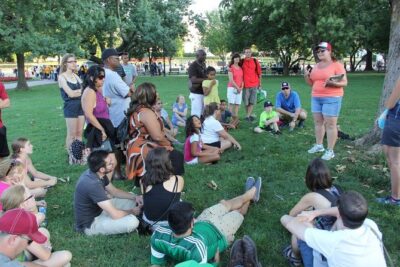
Historic Georgetown: History, Gossip, & Architecture Walking Tour
Read our review →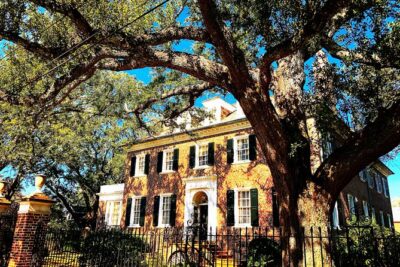
Charleston History, Homes, and Architecture Guided Walking Tour
Read our review →

Historical and Architectural Chicago Fireboat River & Lake Cruise
Read our review →Browse the lists this tour appears in