
Review · WALKING TOURS
Bilbao: Historical and Architectural Walking Tour
Bilbao’s grandest story unfolds across its streets, not inside a single museum. This two-hour walk traces the city’s first Ensanche, the planned expansion built when industrial wealth pushed Bilbao across the river and toward the broad boulevards, palaces, banks, and gardens of the modern city. I like that Javier, often called Javi, brings the buildings to life through the families who lived and worked in them, rather than treating the facades as pretty scenery.
I also like the access to Chavarri Palace, the train station, Old Alhóndiga, and part of the Bilbao metro. Those interiors give the walk more substance than a simple street tour. The main caution is reliability: the experience has a 3.6 rating from 17 ratings, including two serious cases in which the guide did not appear or the tour was canceled poorly. Confirm the appointment details before you set out.
Key points to know
- Bilbao’s first Ensanche: Follow the city’s move across the river during late 19th-century industrial growth.
- Javier or Javi as a guide: He leads in English, Spanish, or French and has received especially strong praise for his explanations and local suggestions.
- Access beyond the sidewalk: The tour includes entry to Chavarri Palace, the train station, and Old Alhóndiga.
- Small-group format: A compact group makes it easier to hear the guide and ask about Bilbao’s architecture.
- Pintxo-pote at the finish: The walk ends with a local snack and drink stop, included in the $94 price.
- Central meeting point: Meet by the fountain in Plaza Moyúa, with the tour ending at either Calle Esperanza 22A or back at Plaza Moyúa.
Bilbao’s planned city beyond the old quarter
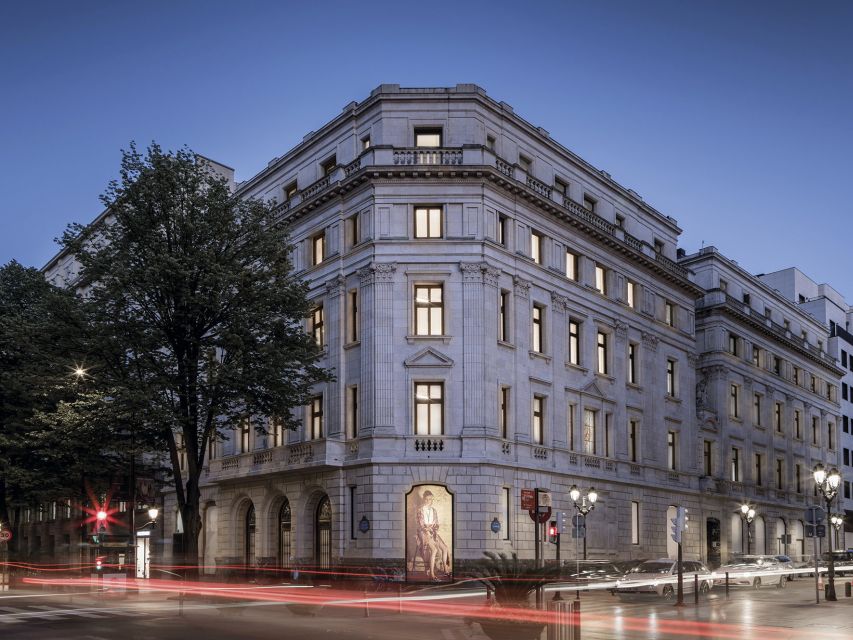
Many first-time visitors think of Bilbao through its medieval Casco Viejo or its famous modern art museum. This walk focuses on a different Bilbao: the broad, ordered city created when industry and commerce changed the town in the 19th century.
At the start of the 19th century, Bilbao’s growing bourgeois class wanted a cleaner, brighter city modeled in part on Paris and London. The answer was the Ensanche, a planned expansion across the river. By the end of the century, industrialization had brought money, new institutions, and a demand for grand homes and offices.
You begin at Federico Moyúa Plaza, also called Plaza Moyúa, beside the fountain. This is a practical starting point because it places you near the commercial center and the Gran Vía. The square also gives you a quick sense of the contrast between Bilbao’s older core and its later expansion.
I find this context useful before looking at the buildings. Without it, a palace is simply a palace. With it, you can read the city as a record of industrial fortunes, political power, banking, and changing ideas about urban life.
More Walking Tours in Spain
- Ramblas, Old Town, Gothic and Gaudi Architecture Walking Tour
★ 5.0 · 723 reviews - Barcelona 1.5h Private Old Town, Gothic & Ramblas Walking Tour
★ 5.0 · 318 reviews - Barcelona: Ramblas, Old Town & Gaudí Houses Walking Tour
★ 4.9 · 239 reviews
Gran Vía and the families behind the facades
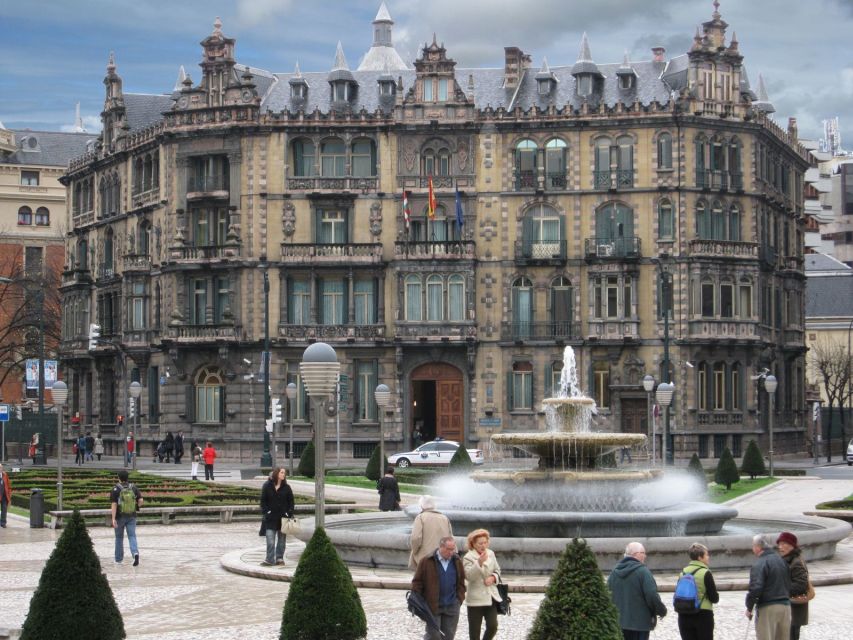
The Gran Vía is the main stage for the tour. Lime trees shade the avenue, and the broad sidewalks invite you to stroll, shop, and look upward at the facades. The guide’s task here is not just to point out decorative details, but to explain the people who commissioned these buildings and the social ambitions behind them.
The tour centers on the families who lived in the great palaces around the avenue. Their homes reflected wealth gained from Bilbao’s industrial and commercial growth. You’ll hear how the city’s leading families helped shape the new district and how their residences fit into the larger plan for a modern Bilbao.
This is one of the strongest reasons to choose the walk. Architecture becomes easier to understand when you know who paid for it and why. The palaces, banks, gardens, and civic buildings were not random additions. They were part of a deliberate effort to make Bilbao look and function like a major European business city.
The information available does not promise a particular interior at every stop, so you should expect a guided look at several important buildings rather than a museum-style tour with long indoor visits. Still, entry to selected emblematic buildings gives you more than a pavement-level view.
Circular Square, the founder, and Bilbao’s older roots
The route also connects the new city with its medieval foundation. Don Diego López de Haro, Lord of Bizkaia, founded Bilbao in 1300. A statue of the founder is included along the way, providing a simple link between the medieval town and the industrial city that came much later.
Circular Square marks the business center of modern Bilbao. The name fits the tour’s wider theme: this is where the city’s commercial energy gathers, while the surrounding streets show how that energy was expressed in stone, iron, glass, and public planning.
The walk includes what is described as Bilbao’s inner beach. That phrase may surprise you, since this is an urban river setting rather than a seaside resort. It is best understood as part of the city’s relationship with its waterway and public spaces. Ask the guide to explain the location in the wider story of Bilbao, especially if you want to understand how the river shaped trade, industry, and urban growth.
The train station’s visual history of Bilbao
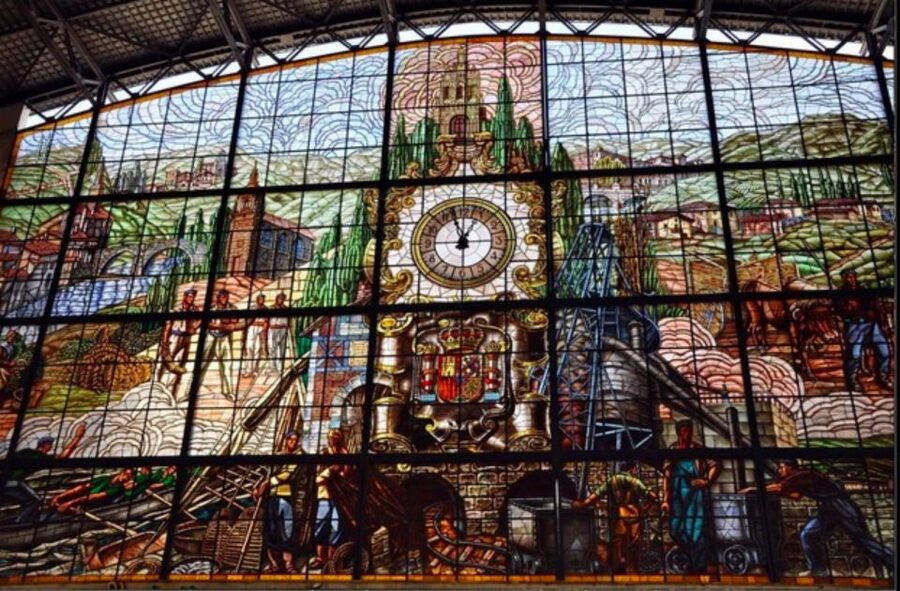
The train station is one of the more useful stops for putting Bilbao’s development into sequence. The station includes a representation of the city’s history, so the visit is not only about transport or architecture. It gives the guide a place to connect Bilbao’s foundation, expansion, industrial period, and modern commercial identity.
Stations often make good teaching spaces because they show how a city opened itself to people, goods, and ideas. Here, the station helps explain why Bilbao could grow beyond its older center. The tour includes entry, although the exact amount of time inside depends on the guide and the day’s conditions.
I would pay attention to the relationship between the station and the rest of the route. The grand boulevards and palaces make more sense when you see them as part of a city connected to wider markets. That is a more useful lesson than simply memorizing dates or architectural labels.
Same city, a different facade:
- Barcelona: Park Güell and Gaudí House Museum Entry Ticket
★ 4.5 · 6,326 reviews - Barcelona: Gaudi’s Casa Vicens Skip-the-Line Entrance Ticket
★ 4.7 · 4,541 reviews - Barcelona: Gaudí’s Park Güell Tour with Fast-Track Ticket
★ 4.8 · 4,512 reviews - Barcelona: Sant Pau Recinte Modernista Entry Ticket
★ 4.6 · 2,567 reviews
Chavarri Palace and Bilbao’s grand domestic style
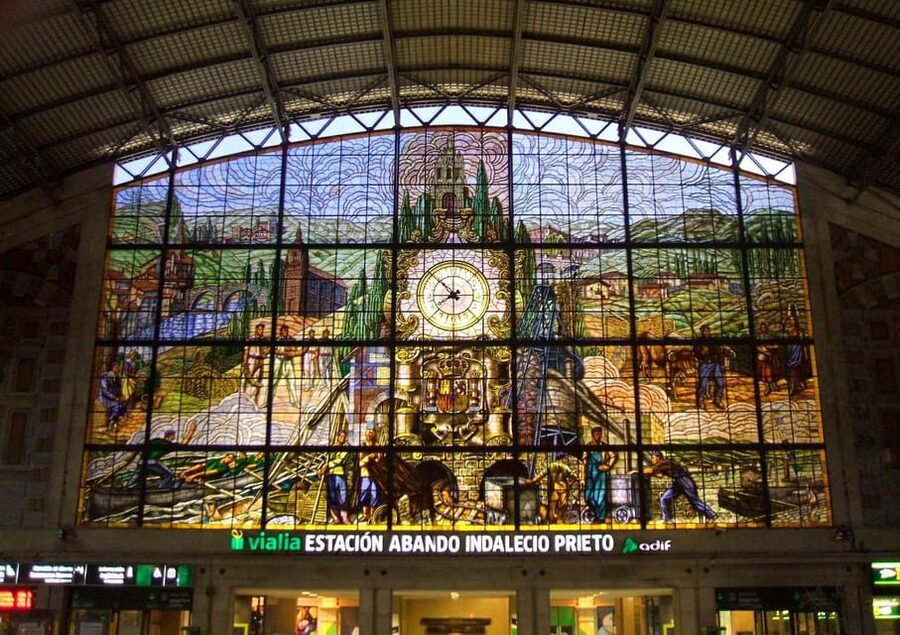
Chavarri Palace is one of the headline stops. Its inclusion gives you a close look at the kind of residence associated with Bilbao’s wealthy industrial families. The palace represents the private side of the Ensanche: homes designed to signal status, taste, and financial power.
The tour includes entry to the palace, making this more than a photo stop from the street. You can expect the guide to explain the building’s architectural details and its place in Bilbao’s social history. The precise rooms or areas open during your visit are not specified, so keep your expectations flexible.
This stop is especially valuable if you enjoy architecture but do not want a technical lecture. The best part of a small group is the chance to ask a direct question: Who lived here? What did the building say about its owner? How did these families relate to the banks and civic bodies nearby?
Banks, gardens, and the business center
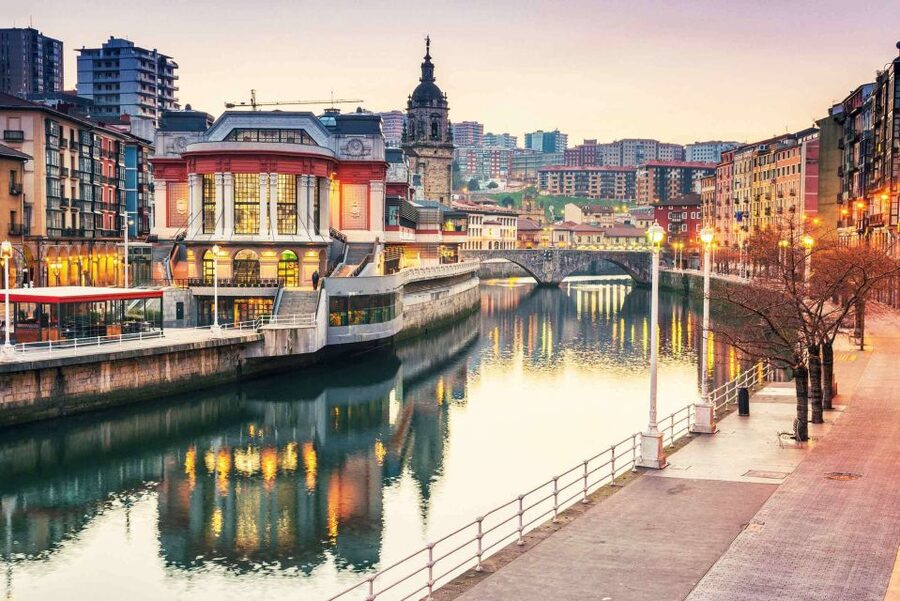
Bilbao’s most important banks are included in the route. Their presence tells you how closely the city’s architecture was tied to finance. The palaces were not isolated displays of wealth. Banks, government buildings, transport links, and commercial streets formed one working district.
The gardens offer a change of pace from facades and offices. They also show how the planners of the new city tried to make the expansion more pleasant and livable. The shade from the lime trees along the Gran Vía adds to that experience, especially during a warm afternoon.
You should wear comfortable shoes, even though the tour lasts only two hours. The route includes several outdoor stops, city streets, building entrances, and likely pauses for explanations. There is no transportation between attractions, so you move on foot from Plaza Moyúa through central Bilbao.
Provincial Council of Bizkaia and public power
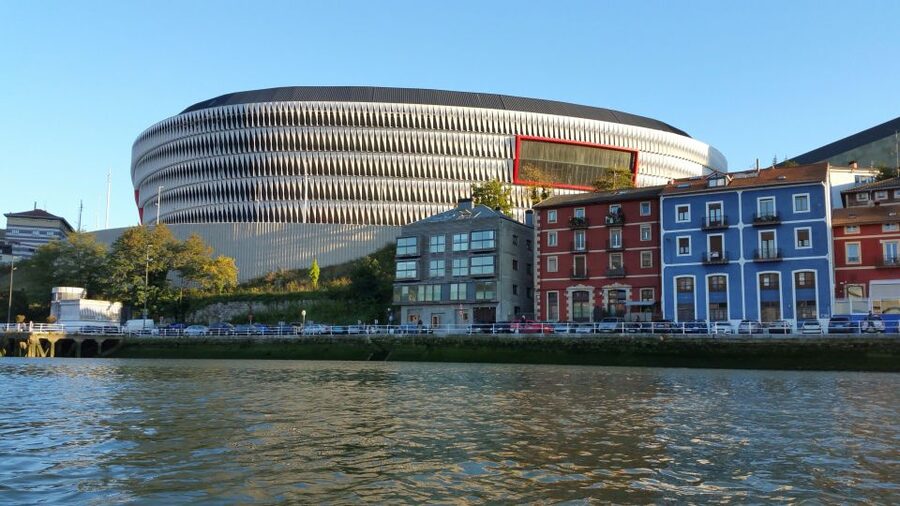
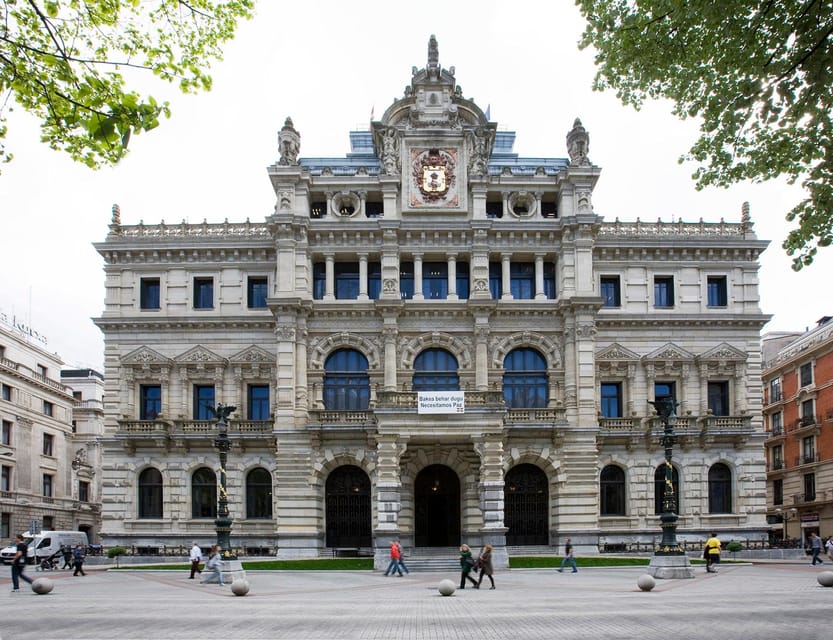
The Provincial Council of Bizkaia adds the civic side of the story. After seeing private palaces and financial institutions, you get a look at the public authority that helped define the region.
This part of the tour is useful because it keeps the walk from becoming a parade of wealthy homes. Bilbao’s growth involved government as well as business. The guide can place the council within the wider history of Bizkaia and the Basque Country, including the different periods that shape the region’s identity.
The route is not presented as a specialist political tour, so you should expect a clear overview rather than an exhaustive discussion. That balance works well for a first visit, especially if you want enough historical background to understand later sightseeing.
Inside the Bilbao metro
The Bilbao metro is an unexpected inclusion. The tour does not simply stay with 19th-century architecture. You also enter the metro, connecting the city’s earlier expansion with its modern public transport system.
The details provided do not specify which station or how long you remain inside. The value is in seeing how the metro fits into daily city life and how modern Bilbao continues to adapt its public spaces. It also breaks up the route with something different from palaces and government buildings.
Because the tour includes no transport between stops, entering the metro should not be mistaken for a ride across the city. It is an architectural and urban stop within a walking route.
Old Alhóndiga and the city’s changing purpose
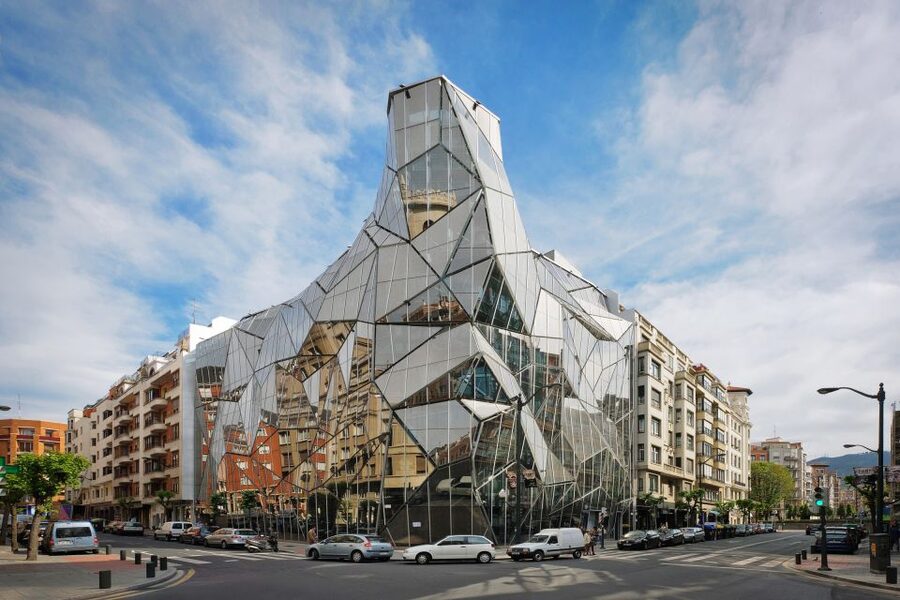
Old Alhóndiga is another major inclusion. The building is known by that name and is presented as one of Bilbao’s emblematic structures. Its presence helps show how city buildings can change meaning as Bilbao changes.
The tour includes entry, but the supplied details do not specify which sections you visit or how much time you spend inside. Ask the guide to explain the building’s former role and its place in the modern city. That question should help you connect the old commercial Bilbao with the city you see today.
For me, this stop adds needed variety. A route built only around palaces can feel narrow. Old Alhóndiga widens the picture and helps you see that Bilbao’s architectural story includes work, storage, commerce, public use, and later adaptation, not just elite residences.
Pintxo-pote gives the walk a local finish
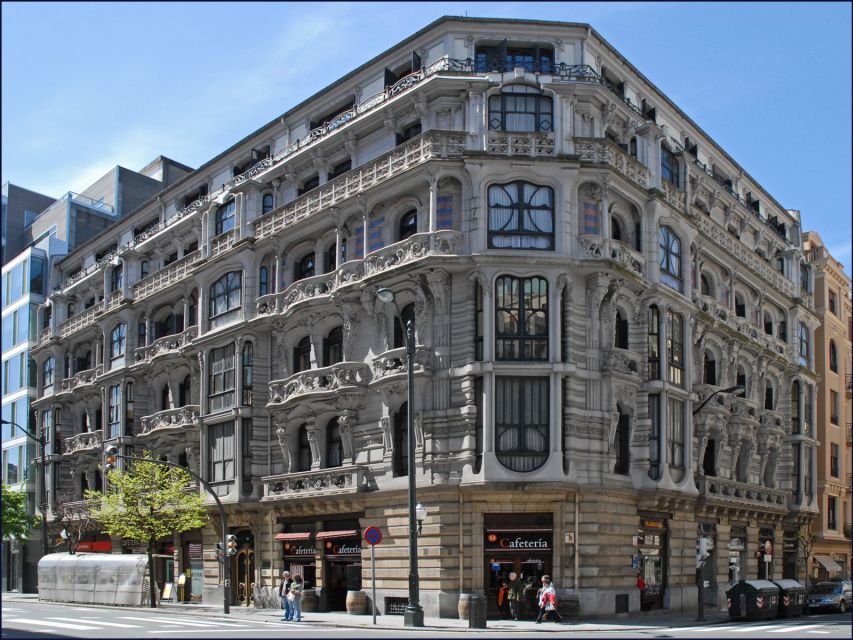
The tour ends with pintxo-pote, included in the price. Pintxos are small portions of local food, and pintxo-pote pairs them with a drink. The experience listing includes beer, coffee, tea, regional food, tapas, and local snacks, so the exact beverage may depend on the arrangement at the end.
This is a smart finish to a short city walk. You get a chance to discuss what you have seen instead of ending abruptly at the last building. It also introduces one of the social food customs associated with the Basque Country.
Do not book this as a full food tour. The meal component is a pintxo-pote, not a long series of restaurant visits. If you are hungry after a morning of sightseeing, treat it as a well-timed local snack and plan another meal later.
What the $94 price really covers
At $94 per person, this is not a bargain-priced orientation walk. The value depends on how much you care about guided access and historical explanation.
You are paying for a professional guide, a two-hour small-group experience, entry to Chavarri Palace, the train station, and Old Alhóndiga, plus pintxo-pote. You are not paying for transportation to or from attractions, and the route itself is on foot.
I would choose it if you want a focused introduction to Bilbao’s Ensanche and prefer buildings explained in context. The price is harder to justify if you only want a general stroll through central Bilbao, since you can walk many of these streets independently.
The guide makes the difference. Javier, or Javi, has received repeated praise for explaining architecture, Bilbao’s three main historical periods, and the wider history of the Basque Country. He has also been singled out for offering advice about other things to do in and around Bilbao. That extra local guidance can be valuable early in your stay.
Guides, languages, and group size
The tour is offered in English, Spanish, and French. You should select the language that lets you ask questions comfortably, since the tour’s value rests on spoken explanation rather than audio equipment or a printed guide.
The small-group format is a plus. A compact group usually makes it easier to hear on city streets and gives you a better chance to ask about a family, facade, or building that catches your eye. The exact maximum group size is not stated, so do not assume it is private.
The experience is wheelchair accessible, according to the supplied information. Since the route includes streets and building entrances, it is still sensible to confirm current access details when booking if you have specific mobility needs.
Reliability matters more than the polished itinerary
The experience has clear strengths, but I would not ignore its uneven operating record. The overall rating is 3.6 from 17 ratings, with several strong scores praising Javi’s explanations and the educational quality of the walk.
There are also two major problems in the record. In one case, the guide did not arrive and the person spent the morning trying to resolve the issue. In another, the provider contacted the customer about a special event that made the original date impossible, then failed to complete the cancellation or respond properly.
That does not prove every departure will have a problem, but it is enough to justify a practical check. Confirm the meeting time, the Plaza Moyúa fountain location, and the guide’s contact details shortly before the tour. If a city event, parade, or road closure is scheduled, ask directly if the route is still operating.
The booking information is also inconsistent: it says you can cancel up to 24 hours in advance for a full refund, while another note says the tour is nonrefundable. Check the exact terms shown at checkout before paying, especially because the price is relatively high.
Who should book this Bilbao walk?
I would recommend it to you if you like architecture, city planning, social history, and short guided walks. It is particularly useful on your first day in Bilbao because Plaza Moyúa, Gran Vía, Circular Square, and the main business district can help you get your bearings.
It also suits anyone who wants more than the old quarter but does not want to spend half a day in museums. The combination of palaces, banks, civic buildings, gardens, the metro, and Old Alhóndiga gives you a broad look at the modern city.
You may want to skip it if you prefer to explore at your own pace, dislike scheduled group activities, or mainly want food. The route is also not a substitute for a full tour of Casco Viejo, the Guggenheim Museum, or the wider Basque Country.
Should you book the Historical and Architectural Walking Tour?
Book it if the story of Bilbao’s industrial-era expansion interests you and you value access to buildings that are easy to miss from the street. Javi’s strong record for clear explanations adds real value, and pintxo-pote makes the finish pleasant.
I would book with one condition: verify the departure shortly before you go. The architectural content looks worthwhile, but the cancellation and no-show problems deserve attention. If the operator confirms the appointment and you want a compact, historically grounded introduction to central Bilbao, this can be a rewarding two-hour use of your time.
FAQ
Where does the tour begin?
The meeting point is Plaza Moyúa, beside the fountain in central Bilbao. The listed starting address is Federico Moyúa Plaza, 1.
How long does the tour last?
The walking tour lasts two hours.
What languages are available?
The tour is offered in English, Spanish, and French.
What buildings can I enter?
Entry is included for Chavarri Palace, the train station, and Old Alhóndiga. The route also includes the interior of the Bilbao metro.
Is food included?
Yes. Pintxo-pote is included, with local snacks and a drink. The listed options include beer, coffee, and tea.
Is transportation included?
No. You travel between the attractions on foot, and transportation to or from attractions is not included.
Is the tour wheelchair accessible?
Yes, the activity is listed as wheelchair accessible.
What should I bring?
Bring comfortable shoes because this is a walking tour through central Bilbao.
More History Walks in Spain
- Historical and Modernist Bike Tour Barcelona
★ 5.0 · 262 reviews - Bike Tour in Barcelona: History, Architecture and Culture
★ 3.5 · 29 reviews - Madrid Historic with an architect : Arabs, Austrias and Bourbons
★ 5.0 · 21 reviews - Chicago in a Day: Food, History & Architecture Walking Tour
★ 5.0 · 1,153 reviews
Newly added in Spain
- Santander: The Caprice of Gaudí, Santillana and Redwood Forest★ 4.0 · 11 reviews
- Madrid: Gran Vía Rooftops and Architecture Tour★ 5.0 · 4 reviews
- Architour through Lavapiés and Rastro with an architect★ 5.0 · 10 reviews
- Barcelona Private Walking Tour through the City of Gaudi★ 4.5 · 20 reviews
- Offer: Be Gaudí mosaic class Barcelona for families (max 4 pax)★ 5.0 · 20 reviews
- Madrid Historic with an architect : Arabs, Austrias and Bourbons★ 5.0 · 21 reviews
- Private Montserrat, Gaudi and Modernism Day Trip from Barcelona★ 4.5 · 20 reviews
- Barcelona: The Genuis of Gaudi & Modernist Architects Tour★ 5.0 · 20 reviews
Walking Tours, compared.
The Official Art Deco Walking Tour by The Miami Design Preservation League
Read our review →
Baroque Architecture and Underground Walking Tour
Read our review →
Chicago in a Day: Food, History & Architecture Walking Tour
Read our review →

Ramblas, Old Town, Gothic and Gaudi Architecture Walking Tour
Read our review →
Chicago’s Secret Interiors Architectural Walking Tour
Read our review →
Browse the lists this tour appears in