Review · GUIDED
Castries: Guided City Architecture and Castries Market Tour
Castries comes into focus through its market stalls, old buildings, harbor views, and everyday street life. This three-hour tour links the city’s main sights with time to shop for spices, sauces, crafts, T-shirts, and local trinkets.
I like the mix of Castries Central Market and the city’s 19th-century architecture. I also like the included pickup, air-conditioned vehicle, and soft drinks, especially if you are staying outside the city or want a simple introduction without arranging transport yourself.
The main caution is that the quality depends heavily on your guide. Some guides, including Albert, Kendel, Peter, and Lisa, have earned warm praise for their personality and local knowledge. One account describes a much thinner explanation, heavy traffic, loud music, and only a basic look at the buildings.
Key points to know before booking

- Castries Market is the heart of the tour: Shop for local sauces, spices, crafts, snacks, and souvenirs in an open-air setting.
- Pointe Seraphine adds harbor views: The stop gives you a different angle on the city and port area.
- The city sights are spread across a short drive: La Place Carnage, Serenity Park, the Vendors Arcade, and other Castries landmarks are easier to connect by vehicle.
- Food is not included: You can choose a Creole snack or lunch from 16 or more food courts, but you pay directly.
- Guide quality matters: Albert, Kendel, Peter, and Lisa received specific praise, while one experience felt too brief and basic.
- Allow for walking and uneven access: The tour is not suitable for wheelchair users, people with mobility impairments, or pregnant women.
Starting with Castries and its old buildings
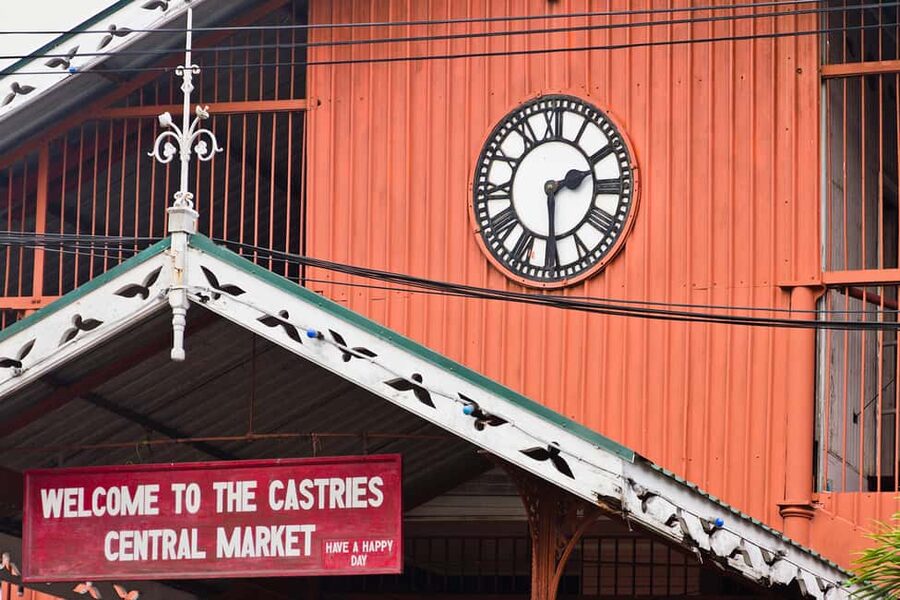
Castries is not a city where every historic building comes with a grand, polished explanation. Its appeal is more practical and human. You see government buildings, shops, market stalls, harbor facilities, and older structures woven into the working center of Saint Lucia.
Your guide should help you connect those pieces. The tour is designed to explain the city’s history and 19th-century architecture while showing you the main points around Castries. That context matters because the buildings can otherwise pass by as simple city scenery.
The transport portion takes you through several areas rather than keeping you in one square. You may stop at viewpoints and landmarks before reaching the market. One account describes a stop where the port, post office, and a cannon could be seen. That kind of short orientation is useful at the start of a visit, especially if you are arriving by cruise ship and want to understand how the waterfront fits together.
You should keep your expectations realistic. This is a city orientation, not a formal architecture lecture. If you want detailed information about dates, building styles, restoration work, or colonial administration, ask direct questions. A strong guide can add much more when you show interest.
The best experiences appear to come from guides who treat the drive as part of the tour rather than simply a transfer. Kendel was praised for knowing Castries and pointing out lesser-known landmarks and important buildings. Peter added personal details and took his group to places not specifically expected. Albert was described as friendly, well informed, and good company.
More Market Visits in the world:
- Guadalajara: Culture, Architecture, and Market Walking Tour
★ 5.0 · 81 reviews
Shopping through Castries Central Market
Castries Central Market is the most distinctive part of the experience. This is where the tour moves from sightseeing to daily life. You can browse goods that are useful, edible, decorative, or simply fun to carry home.
Look for local sauces, spices, craft items, T-shirts, small trinkets, and other products sold by local vendors. The market gives you a chance to ask what a seasoning is used for, compare prices, and choose a souvenir with some connection to Saint Lucia rather than grabbing the first generic item near the port.
I would bring cash. It is specifically recommended, and market shopping is easier when you are ready to pay directly at the stalls. A small camera is also worth carrying, though always ask before photographing vendors or their products.
The market can feel crowded and active, especially when several groups are shopping at once. That is part of its character, but it also means you should stay aware of your belongings and keep track of your meeting point. Your guide should tell you where to regroup and how much free time you have.
The tour also includes the Vendors Arcade, where you can continue looking through arts, crafts, clothing, and small souvenirs. This gives you a second shopping setting after the open-air market. If you dislike browsing, you may find this portion long. If you enjoy comparing handmade goods and local food products, it may be the most rewarding part of the morning.
Choosing a Creole snack or lunch

Food is available during the market visit, but it is not part of the $50 price. You can choose a Creole snack or lunch from 16 or more food courts and pay your own bill.
That arrangement gives you control. You can keep the meal light, try something unfamiliar, or choose a more filling lunch. You are not locked into a group menu, and you can decide how much to spend.
The tradeoff is that the final cost is not limited to the tour fee. If you plan to eat, shop, and buy gifts, bring extra cash. The supplied soft drinks are included, but the food itself is not.
I would use this stop as a chance to ask your guide what is local and what suits your appetite. The description does not name specific dishes, so it would be wrong to promise a particular meal. Your guide can help you choose from what is available that day.
One guide, Albert, reportedly found a good place for a drink while a sudden rain shower passed. That detail gives you a useful picture of the island climate: a short shower can arrive quickly, and a flexible guide can turn an interruption into a comfortable break. Do not plan your schedule so tightly that a few minutes of rain ruin the experience.
Pointe Seraphine and the harbor view

Pointe Seraphine gives the tour a change of pace. After the close quarters of the market and the city streets, you get room to look across the port area and take photographs.
The views are a repeated strength of the experience. Several accounts singled out the viewpoints as excellent, and one group was taken to a particularly good place to enjoy a drink. Another guide showed the port and less familiar city landmarks from useful angles.
This stop is valuable if you are visiting Saint Lucia for a short time. A market walk shows you street-level Castries, while Pointe Seraphine helps you understand the city’s position beside the water. You get both the practical center and the broader view.
There is no promise of a long photo stop, so keep your camera ready and listen for instructions about where to stand. The tour uses a vehicle between areas, and the exact balance between driving, stopping, and walking may vary with traffic and the guide’s approach.
Traffic is worth considering. One account described heavy traffic through the city, which reduced the time available for sightseeing. A comfortable air-conditioned vehicle helps, but it cannot make a slow road move faster. If you are booking around a ship departure, flight, or another fixed appointment, leave a generous buffer.
More Shopping Trips in the world:
- Castle to Capitol: Museums of the National Mall Architecture Tour
★ 4.5 · 9 reviews
La Place Carnage, Serenity Park, and the Vendors Arcade

The final group of sights brings together several Castries landmarks. La Place Carnage, Serenity Park, and the Vendors Arcade are not presented as long, separate museum visits. They work better as short stops that help you get a feel for the city.
La Place Carnage is part of the waterfront side of Castries and fits naturally with the port views. Serenity Park offers a quieter public space within the city. The Vendors Arcade returns you to shopping and local crafts, giving the tour a practical ending.
You should expect an overview rather than extended time at every landmark. The tour lasts three hours, and that time includes transportation, market browsing, stops, and the food break. If you want to study one building or park at length, you may need to return independently.
This is also where the guide’s personal style makes a big difference. A good host can explain why a place matters, point out a detail you might miss, and connect one stop to the next. A less engaged guide may simply identify a building and move on. Ask questions about the city’s past, architecture, local customs, and the purpose of each place. That gives the tour more depth and helps you judge how much detail your guide can provide.
What the transport and pickup add
Pickup and drop-off are included, along with an air-conditioned vehicle, driver, guide, and soft drinks. That is useful if you are staying at a hotel outside central Castries or do not want to negotiate a taxi for each part of the visit.
The vehicle also reduces the effort of linking Pointe Seraphine, the waterfront sights, the market, and other city areas. You are not expected to plan every turn. For a first look at Castries, that convenience has real value.
Pickup at the port needs special care. One person had trouble finding the meeting point because the duty-free area was large and several tour companies were nearby. No sign with the tour company name was visible, and help from other providers led the group to a pink building near the exit gates associated with Kendell’s taxis and Caribbean tours.
Confirm the exact meeting point before the day of the tour. Do not assume that standing in the general duty-free area will be enough. If you are unsure, ask for the precise building, exit, and contact instructions. This is the most practical warning I would take seriously.
The vehicle may be a luxury taxi when the group is small. That can be comfortable, but the available space and presentation may vary depending on the number of bookings. One private outing had only two people, which allowed for a more personal ride.
Keep the guide’s voice in mind. One account says the music had to be turned down because it was difficult to hear the commentary. A quiet cabin makes a major difference on a tour that depends on explanation. If music is playing too loudly, ask politely for it to be lowered at once.
Is $50 a fair price for three hours?
At $50 per person, this is not the cheapest way to reach Castries Market. You can walk to the market from some port areas, depending on your exact starting point, and shop without paying for a guide.
The price begins to make more sense if you need pickup and drop-off, want air-conditioned transport, and prefer to combine several city sights in one outing. You are paying for the driver, guide, vehicle, soft drinks, and the convenience of moving between market, waterfront, viewpoints, and neighborhood stops.
The value also depends on how much explanation you receive. A warm and engaged guide can turn a short city tour into a useful introduction to Saint Lucia. A basic drive with limited commentary is harder to justify, particularly if you could reach the market on foot.
Food and shopping are extra. Add money for a Creole lunch, snacks, spices, crafts, and souvenirs. I would think of the $50 as the transport and guiding cost, not as a complete spending budget for the day.
The overall rating is 4.5 from 16 reviews, with especially strong praise for the views, personal service, pickup, and guides such as Albert, Kendel, Peter, and Lisa. The uneven comments make one point clear: this is a good product when the human side works well, but you should not book it expecting a formal, highly scripted history tour.
Who will enjoy this Castries tour?
I would recommend it to you if you have only a few hours, want a broad introduction to Castries, and prefer not to arrange transport. It suits people who enjoy markets, local products, short scenic stops, and conversation with a local guide.
It is also a sensible choice if you are staying outside the city. Pickup and drop-off remove one of the main hassles of a short visit, and the air-conditioned vehicle gives you a break from heat and sudden rain.
You may prefer another plan if you mainly want to shop at the market. The market can be reached on foot from some port locations, and one account felt the tour added little beyond what could be done independently. You may also be disappointed if you want a detailed architectural study or a long, slow visit at each landmark.
The experience is not suitable for pregnant women, people with mobility impairments, or wheelchair users. The combination of walking, market areas, vehicle transfers, and city stops may be uncomfortable or difficult for anyone who needs fully accessible facilities.
How to get the best experience
Ask your guide questions early. Try questions about the age of a building, the role of the market, the meaning of a landmark, or how locals use a public space. This can turn a simple sightseeing loop into a more informative visit.
Carry cash, a camera, and comfortable clothing for warm outdoor conditions. Keep enough money aside for food and shopping, since both are optional extras.
Confirm pickup details in writing, especially at the port. Arrive early at the stated meeting point, and look for the exact vehicle or company name rather than waiting in a large general area.
Finally, keep some flexibility. The tour can be affected by traffic, market conditions, and sudden rain. The strongest guides appear willing to adjust, add a worthwhile stop, or find shelter when weather changes.
Should you book this Castries experience?
Book it if you want convenience, market time, harbor views, and a guided first look at Castries in three hours. The best version includes a personable guide who explains the city, adds local details, and makes the drive between stops worthwhile.
Skip it if you are comfortable walking to the market and do not need transport. Also think twice if detailed architecture is your main goal, since the amount of historical explanation can vary.
For most short-stay visitors, I would call this a useful orientation rather than a must-do cultural tour. Confirm the port meeting point, bring cash, ask questions, and judge the $50 price by the value of transport and personal guiding, not just by the market visit.
FAQ
How long does the Castries city and market tour last?
The tour lasts three hours.
How much does the tour cost?
The price is $50 per person.
What language is the tour conducted in?
The live tour guide speaks English.
Is pickup and drop-off included?
Yes. Pickup and drop-off are included.
Is transportation included?
Yes. Transportation is provided in an air-conditioned vehicle.
Is lunch included in the price?
No. You can buy a Creole snack or lunch at Castries Market, but you pay for it yourself.
What can I buy at Castries Market?
You can look for local sauces, spices, crafts, T-shirts, trinkets, and other arts and crafts.
Which Castries sights are included?
The tour includes Castries Market, the Vendors Arcade, Pointe Seraphine, La Place Carnage, and Serenity Park. It also includes views of other city landmarks and the port area.
What should I bring?
Bring a camera and cash.
Is the tour suitable for wheelchair users?
No. The activity is not suitable for wheelchair users, people with mobility impairments, or pregnant women.
Newly added in the world
- Washington, DC: Georgetown Architecture Walking Tour★ 5.0 · 8 reviews
- New Orleans : Garden District Architecture Walking tour★ 4.8 · 5 reviews
- Wilmington History and Architecture Tour★ 4.8 · 18 reviews
- Washington DC: Dupont Circle & Embassy Row Architecture Tour★ 5.0 · 6 reviews
- Unveiling Brno: History, Culture & Architectural Delights★ 5.0 · 2 reviews
- Vicenza: Palladian Architecture Private Walking Tour★ 3.3 · 3 reviews
- Walk & Discover KL’s Architectural and Heritage Gems★ 5.0 · 7 reviews
- Private Colonial Williamsburg Architectural Tour★ 5.0 · 5 reviews
Guided, compared.

Chicago River: 1.5-Hour Guided Architecture Cruise
Read our review →
Park Güell: Guided Tour with Optional Gaudí Experience Entry
Read our review →
Vienna: Spanish Riding School Guided Architectural Tour
Read our review →
Charleston History, Homes, and Architecture Guided Walking Tour
Read our review →