
Review · WALKING TOURS
Copenhagen: Harbor Architecture Private Walking Tour
Copenhagen’s harbor is a lesson in how an old port can become a modern city center. On this private two-hour walk, you move from the colorful 17th-century buildings of Nyhavn to striking bridges, cultural buildings, and new waterfront districts. Guide Dalit has been praised for making the city shine, and the route gives you a clear look at why Copenhagen was named World Capital of Architecture in 2023.
I like the mix of old harbor stories and modern design, and I like that a private guide can adjust the conversation to your interest in buildings, history, photography, or city planning. The main drawback is the pace: two hours is enough for a strong introduction, but not enough for long visits inside every building. The route also is not suitable for wheelchair users or people with mobility impairments.
Key points at a glance
- Nyhavn sets the historical scene: Begin among colorful waterfront houses, canal views, restaurants, and stories linked to famous Danish writers and artists.
- The route follows Copenhagen’s design story: See how former industrial waterfront spaces now support culture, public life, and modern urban development.
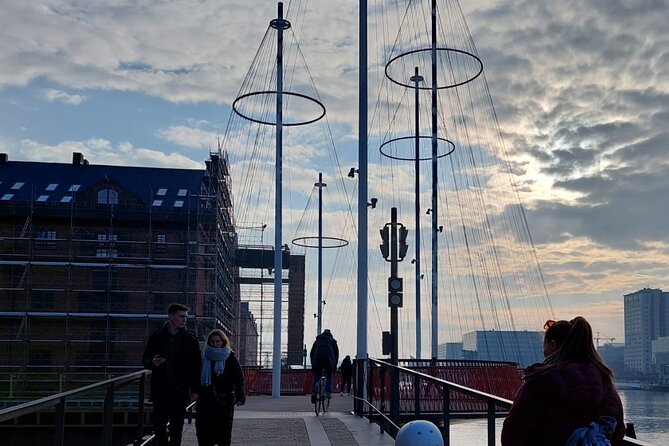
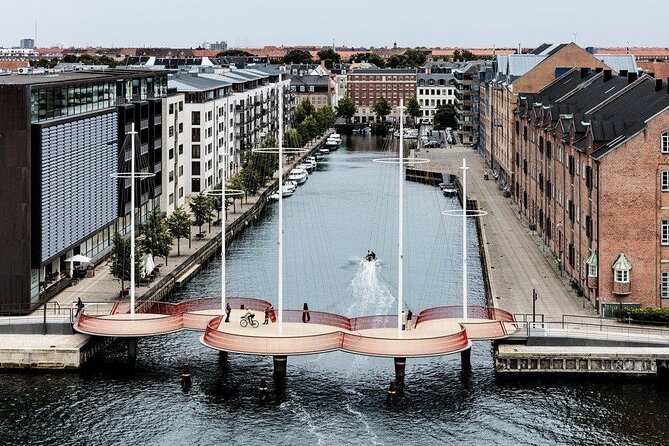
- Cirkelbroen makes a memorable stop: This pedestrian bridge uses circular platforms and a playful design inspired by the circles of life.
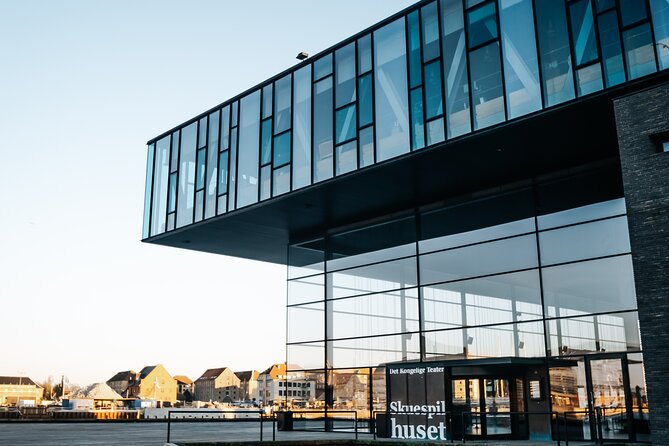
- Several major buildings appear along the walk: The Opera House, Royal Library, and Danish Architecture Centre add cultural weight to the harbor route.
- Private means personal attention: The tour is for your group, up to two people, with guiding in English or Spanish.
- Plan for outdoor conditions: The walk runs rain or shine, so bring water and wear comfortable clothing.
Why this harbor walk is worth your time
Copenhagen’s waterfront is not just a pretty place for photographs. It shows how the city has changed. Older harbor districts once served trade, shipping, and industry. Today, the same waterline links museums, performance spaces, public squares, bridges, restaurants, and new neighborhoods.
That makes this tour useful for more than architecture fans. You get a quick introduction to Copenhagen’s past and present while walking through some of its most recognizable settings. The guide explains what you are looking at, which helps you notice details you could easily miss on your own.
The private format matters here. A large group can make a walking tour feel like a moving queue, especially near Nyhavn, where the waterfront can be crowded. With a private group of up to two people, you can ask questions as they arise and spend more time on the buildings or urban details that catch your eye.
The price is $394 per group of up to two. That is a serious cost for a two-hour walk, so this makes the most sense if you value one-on-one guiding and want an efficient introduction to Copenhagen’s harbor design. Split between two people, it becomes easier to justify, especially for visitors who would rather have a focused private tour than join a larger group.
More Walking Tours in the world:
- Lecce: Baroque Architecture and Underground Walking Tour
★ 4.6 · 1,248 reviews - Chicago in a Day: Food, History & Architecture Walking Tour
★ 5.0 · 1,153 reviews - Ramblas, Old Town, Gothic and Gaudi Architecture Walking Tour
★ 5.0 · 723 reviews
Starting beside Ofelia Plads and Nyhavn
The meeting point is in front of the Scandic Hotel at Sankt Annæ Plads, right beside Ofelia Plads. This is a practical starting point because it puts you close to Nyhavn without beginning inside the busiest part of the canal district.
Ofelia Plads gives the tour an immediate connection to Copenhagen’s newer public waterfront spaces. From here, your guide introduces the harbor as both a working port and a stage for modern city life. The area is especially useful for setting up the main theme of the walk: Copenhagen has not erased its past, but it has placed new cultural and public buildings beside it.
You spend about 15 minutes at Ofelia Plads. That is enough for an overview, though not a long architectural study. If you want technical details about materials, architects, or building dates, ask early. A private tour gives you a good chance to steer the conversation toward those subjects.
The tour takes place outdoors and runs rain or shine. Check the forecast, but do not rely on perfect weather. Comfortable shoes matter more than stylish ones, since the experience is built around walking between several waterfront stops.
Nyhavn, where colorful facades meet port history

Nyhavn is the most instantly familiar part of the route. Its colorful houses, canal, boats, and outdoor restaurants make it one of Copenhagen’s classic views. It can also feel touristy, which is why the guide’s historical explanation adds value.
You learn how Nyhavn began as a working port and how it later became linked with famous Danish artists and writers. The 17th-century setting gives you a useful contrast with the newer buildings later in the walk.
The tour allows about 15 minutes here. That is enough to hear the main stories and take photographs, but it is not a long stop for browsing restaurants or exploring side streets. If Nyhavn is high on your personal list, you may want to return later for more time, especially if you hope to eat beside the canal.
I like this opening because it gives the rest of the route a clear point of comparison. After seeing the old waterfront, you can better appreciate how dramatically Copenhagen’s building styles and public spaces change as the walk continues.
Krøyers Plads and the changing harbor edge
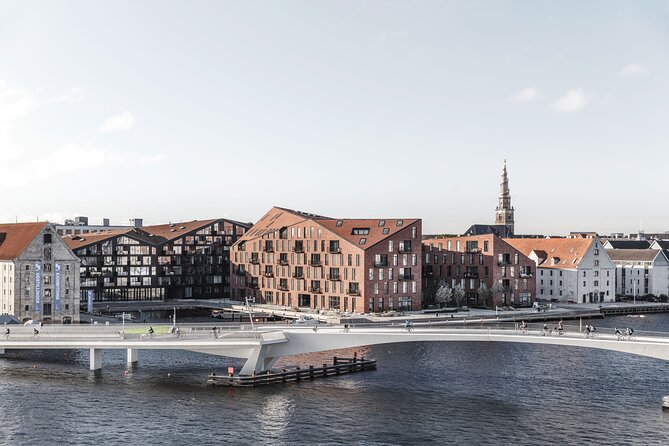
The next stop is Krøyers Plads, another useful place to consider how Copenhagen has reused its waterfront. The tour spends about 15 minutes here, giving you time to look at the relationship between public space, water, and surrounding buildings.
The supplied route describes the harbor as a place where older industrial functions have given way to cultural, residential, and public uses. Krøyers Plads fits that larger story. Rather than treating architecture as a collection of isolated objects, the guide connects buildings to the way people use the water’s edge.
This is one of the places where a private guide can help you read the city. You can ask why a building faces the harbor in a certain way, how public areas connect, or how newer projects fit around older structures. The value is not only in seeing a particular facade. It is in understanding the decisions behind the waterfront’s design.
More Private Tours in the world:
- Best of Chicago: Architecture & Highlights City Private Tour
★ 5.0 · 94 reviews - Private Harajuku Omotesando Architecture Walking Tour
★ 5.0 · 67 reviews - Private Santa Barbara History and Architecture Walking Tour
★ 5.0 · 56 reviews - Private Barcelona Modernism and Gaudí Walking Tour
★ 4.7 · 54 reviews
Cirkelbroen, a bridge built for people
Cirkelbroen is one of the most distinctive stops. This pedestrian bridge uses a series of circular elements and takes inspiration from the circles of life. It connects the two sides of the harbor while giving pedestrians an unusual architectural experience.
The tour allows about 15 minutes here. That is a good amount of time for photographs and a short explanation of how the bridge combines a practical job with a strong visual idea. Bridges are often treated as simple links between two points. Cirkelbroen makes the crossing itself part of the experience.
You should expect a walking tour rather than an engineering lecture. The guide shares the story and design concept, then gives you a chance to see how the bridge works at human scale. This stop should appeal to you if you enjoy public design, not just grand cultural buildings.
It is also a reminder that Copenhagen’s architecture is often most interesting where it meets daily life. You are not only looking at a structure from a distance. You are walking through it.
The Royal Library and the harbor’s darker modern form
The Royal Library of Denmark is listed as a photo stop for about 15 minutes. It provides a different visual note from Nyhavn’s painted facades and Cirkelbroen’s playful circles.
The library is an important cultural building on the harbor, and the stop gives you time to photograph its exterior and hear how it fits into Copenhagen’s waterfront. Since this is a photo stop rather than a full guided visit, do not expect to go inside or spend a long time examining the interior.
That distinction is worth noting. The tour is best for seeing a series of important places and understanding their role in the city. It is not an admission-based architecture tour with extended indoor visits. If you want to study the Royal Library in detail, plan separate time for it.
The stop also breaks up the route nicely. After the lively canal setting and pedestrian bridge, you get a more formal cultural landmark before moving on to the Danish Architecture Centre.
The Danish Architecture Centre and the tour’s natural finale
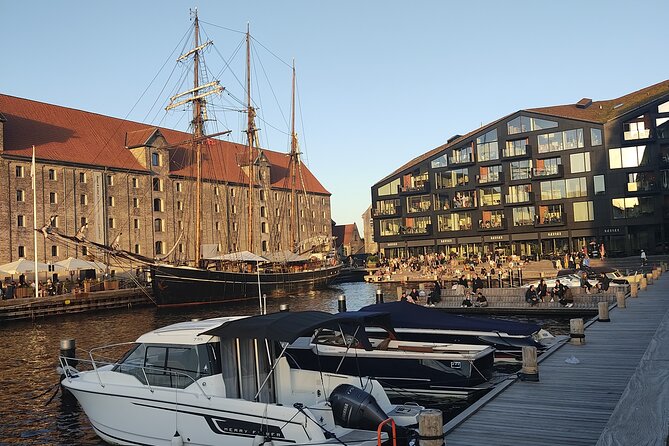
The Danish Architecture Centre, known as DAC, is the final guided stop on the listed route. You spend about 15 minutes here before the walk continues to its endpoint at Islands Brygge 4.
DAC is a fitting place to close a tour about Copenhagen’s built environment. The center focuses on architecture and city development, so it reinforces the themes you have been following since Ofelia Plads: older harbor uses, new public spaces, cultural buildings, and the way design shapes city life.
Because the tour is only two hours, the time at DAC is brief. The route does not include a full visit to exhibitions or a long indoor session. Think of it as a guided introduction and a useful pointer for anyone who wants to return later.
The walk finishes at Islands Brygge. That is important for planning the rest of your day. You do not return to the meeting point, so you should be ready to continue from the southern harbor area once the tour ends.
Operaen and Papiroen: important views along the route
The experience description also highlights views of Operaen and Papiroen. These places help explain the wider architectural story of Copenhagen’s harbor, even though the detailed stop-by-stop route names Ofelia Plads, Nyhavn, Krøyers Plads, Cirkelbroen, the Royal Library, and DAC.
Operaen, completed in 2005, is a major waterfront cultural building with a distinctive design. Your guide discusses its connection to the harbor and Danish cultural identity. From a visitor’s point of view, the Opera House is valuable because it shows how a large modern building can become part of the city’s public image.
Papiroen was once a paper mill and has since been turned into a new waterfront area. Its appeal lies in the contrast between industrial beginnings and modern public use. The tour explains the effort to retain links to the site’s working past while creating a place for contemporary city life.
Since the precise viewing point and timing for these locations are not separately specified, treat them as part of the harbor architecture story rather than guaranteed extended stops. If Operaen or Papiroen is especially important to you, mention it when you meet your guide and ask how the route will cover it that day.
What the private format changes
A private tour is not automatically better for everyone. It is better for a certain kind of visitor: someone who likes asking questions, wants a flexible conversation, or has a specific interest in architecture and city planning.
You receive the guide’s attention rather than sharing it with a large group. That can make a difference at stops where the details are easy to miss. You can ask about why a bridge is shaped a certain way, how industrial land was reused, or which buildings are old and which are recent.
The available languages are English and Spanish. Guide Dalit is named in the booking information, and a previous tour with Dalit was praised for enthusiasm and for bringing Copenhagen’s attractions to life. Another verified review praised the guide’s strong understanding of the harbor and called the route a good way to learn about the city.
The tour is designed for a private group, but the price covers up to two people, not a larger party at the same rate. If you are traveling alone, the cost is harder to defend. For two people who care about architecture, the per-person price is more reasonable, but still higher than a standard group walk.
Practical details before you book
The meeting point is at the Scandic Hotel in front of Ofelia Plads. The endpoint is at Islands Brygge 4, so plan your day around a one-way route.
Bring water and wear comfortable clothes. There is no hotel pickup or drop-off, and food and drinks are not included. You are paying for the guide and walking experience, not meals, transport, or entry tickets.
The tour lasts two hours, with roughly 15 minutes assigned to each listed stop. That schedule keeps the walk moving. You will see several areas, but you will not have time for long visits, shopping, or leisurely meals along the way.
Mobility is the main concern. The experience is not suitable for wheelchair users or people with mobility impairments. Since the tour runs in all weather, rain gear may be sensible even though only water and comfortable clothing are specifically requested.
Free cancellation is available up to 24 hours before the tour for a full refund, and you can reserve now and pay later. Those terms are helpful if your Copenhagen schedule is still changing.
Who should book this Copenhagen harbor tour?
I would choose this walk if you have limited time and want one organized route through several important harbor districts. It works particularly well early in a Copenhagen stay because it gives you context for places you may revisit on your own.
Architecture fans will get the most from it, but you do not need a design background. The guide connects buildings to port history, public space, culture, and city growth, so the subject stays grounded in real places.
It is also a good fit for couples or two friends who want a private conversation instead of a standard group tour. The strongest praised qualities are the guide’s enthusiasm and command of the subject, especially in the experience led by Dalit.
I would skip it if you want long indoor visits, a relaxed café break, or a tour focused only on old Copenhagen. It also is not the right choice if walking in uncertain weather or along a one-way route will be difficult.
Should you book it?
Book this tour if Copenhagen’s harbor transformation interests you and you value a private guide who can explain why the city looks the way it does. The route gives you a strong two-hour introduction to Nyhavn, Cirkelbroen, the Royal Library, DAC, and the newer waterfront areas associated with Operaen and Papiroen.
At $394 for up to two people, it is a premium walk. You are paying for personal attention, not a long list of inclusions. If that format fits your budget, the combination of old port stories, modern architecture, and guide-led discussion makes it a useful way to get your bearings along Copenhagen’s water.
FAQ
Where does the Copenhagen Harbor Architecture Tour begin?
The tour begins in front of the Scandic Hotel at Ofelia Plads, near Sankt Annæ Plads and Nyhavn.
Where does the tour finish?
The walk finishes at Islands Brygge 4, 2300 København, Denmark.
How long does the tour last?
The tour lasts two hours.
What languages are available?
The live guide is available in English or Spanish.
Is this a private tour?
Yes. It is offered as a private group experience for up to two people.
What is included in the price?
The price includes the guide and the walking tour. Hotel pickup, hotel drop-off, food, and drinks are not included.
Is the tour suitable for wheelchair users?
No. The experience is not suitable for wheelchair users or people with mobility impairments.
Newly added in the world
- Venice Art and Architecture Private Walking Tour★ 4.5 · 11 reviews
- Basilica San Marco and the Pala d’Oro with Architect Guide★ 4.5 · 19 reviews
- Walking tour in Venice with an architect★ 5.0 · 16 reviews
- Street Art and Architecture:Porto Speaks Through Its Streets★ 3.0 · 2 reviews
- Wrocław Architecture Cruise by Catamaran★ 4.7 · 25 reviews
- Paris: Discover the hidden architecture gems of Le Marais★ 3.8 · 4 reviews
- Porto Tour: Street Art & Architecture Experience 3h★ 5.0 · 4 reviews
- Faro Private Walking Tour: Uncovering its Architectural Legacy★ 5.0 · 8 reviews
Walking Tours, compared.

The Official Art Deco Walking Tour by The Miami Design Preservation League
Read our review →
Baroque Architecture and Underground Walking Tour
Read our review →
Chicago in a Day: Food, History & Architecture Walking Tour
Read our review →

Ramblas, Old Town, Gothic and Gaudi Architecture Walking Tour
Read our review →
Chicago’s Secret Interiors Architectural Walking Tour
Read our review →

Browse the lists this tour appears in