

Review · WALKING TOURS
Helsinki: Architectural Highlights Guided Walking Tour
Helsinki’s architecture tells the story of the city better than any single museum. In three hours, this small-group walk links grand neoclassical squares, Art Nouveau details, modernist offices, a wave-shaped library, and bold contemporary spaces. I like the route’s wide architectural range and the chance to enter buildings you could easily pass without noticing.
I also like the human scale. With no more than six participants, guide Zana can answer questions and adjust the emphasis, whether you want Finnish history, architecture, culture, or city life. The main tradeoff is simple: you’ll walk 5 to 6 kilometers in all weather, and a weekend visit may mean some office interiors are closed.
Key points at a glance
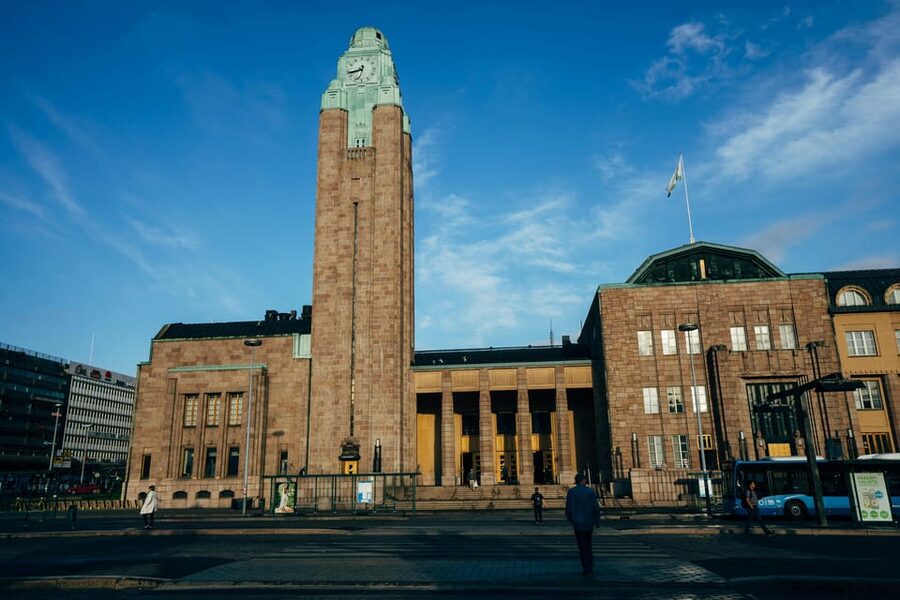
- A city told through its buildings: See neoclassical, Art Nouveau, Nordic Classicism, functionalism, modernism, and contemporary design in one compact center.
- A small group of up to six: The format leaves room for questions and makes it easier to request a particular period or architectural style.
- Several interiors included: The route goes inside places such as the National Library, Academic Bookstore, Central Library Oodi, and selected cafés and public buildings.
- A guide with a broader lens: Zana connects design with Finnish politics, culture, language, food, and everyday life.
- A strong introduction to Helsinki: The walk works especially well near the start of your stay, when you want to understand the center before exploring on your own.
- Plan for the weather: This is a rain-or-shine walking tour, not a quick stroll between nearby sights.
Why Helsinki works so well as an architecture tour
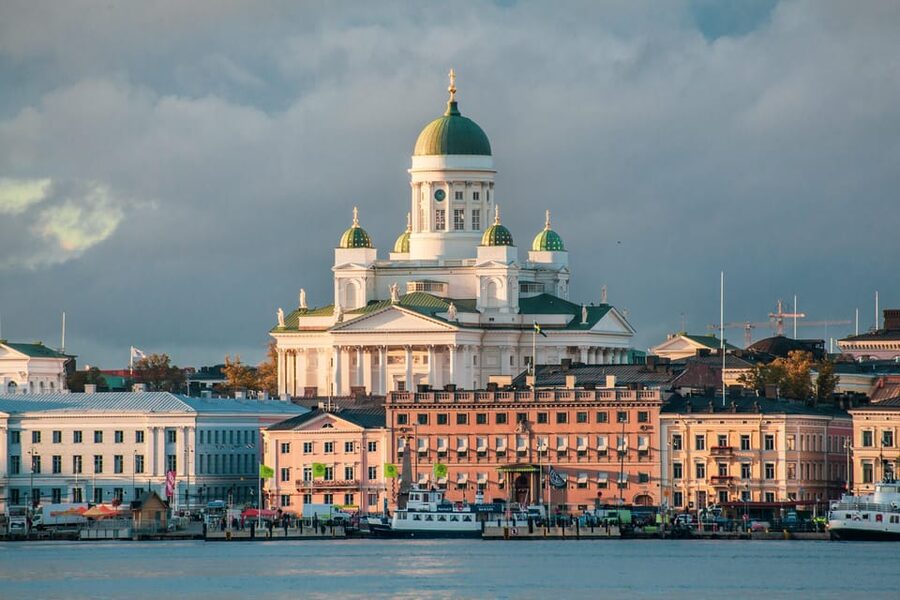
Helsinki gives you an unusual amount of architectural variety within a walkable center. The route moves from the formal 19th-century heart of the city to practical modernism and expressive public buildings. You are not simply ticking off façades. You are watching Finland change through its buildings.
The city’s story includes neoclassical design, Gothic Revival touches, Renaissance Revival work, Art Nouveau, Nordic Classicism, functionalism, modernism, and contemporary architecture. The walk also introduces major Finnish and Helsinki-based architects, including Carl Ludvig Engel, Eliel Saarinen, Lars Sonck, J. S. Sirén, and Alvar Aalto.
I find this more useful than a tour that treats architecture as a parade of famous names. Here, the buildings give you clues about civic ambition, national identity, education, commerce, and the Finnish taste for practical public spaces. Helsinki was named World Design Capital in 2012 and is a UNESCO City of Design, but the important thing for you is how that design shows up in ordinary places: a bookstore, a café, a railway station, or a library.
The walk is conducted in English by a live guide. Zana is identified as a sociology PhD student, and the strongest part of his approach is the link between buildings and society. You can ask about architecture, but you can also ask why Helsinki feels the way it does, how Finns use public spaces, or what a particular building says about the country.
More Walking Tours in the world:
- Lecce: Baroque Architecture and Underground Walking Tour
★ 4.6 · 1,248 reviews - Chicago in a Day: Food, History & Architecture Walking Tour
★ 5.0 · 1,153 reviews - Ramblas, Old Town, Gothic and Gaudi Architecture Walking Tour
★ 5.0 · 723 reviews
Starting at Fazer Café and Senate Square
Meet in front of Fazer Café on Kluuvikatu. This is a practical starting point in central Helsinki, and the café gives you an easy landmark. The route then heads toward Senate Square, the grand neoclassical center shaped by Engel.
Allow about 15 minutes here for the main explanation. Senate Square is the place to understand Helsinki’s formal civic face: orderly proportions, pale façades, and an imposing sense of space. The square helps set up the rest of the walk because later stops will show you how dramatically Helsinki moved beyond this early 19th-century ideal.
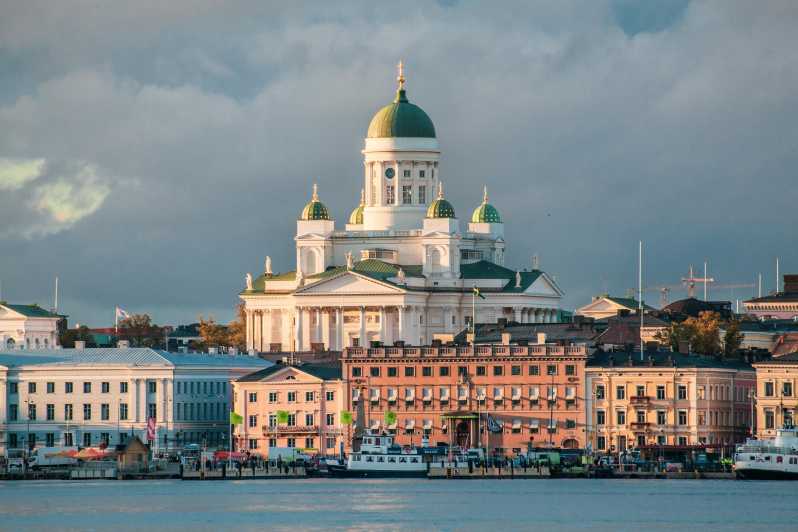
Helsinki Cathedral is next, seen on the route with a short guided explanation and a pass by. The bright exterior and elevated position make it one of the city’s clearest visual markers. The stop is brief, so think of it as architectural context rather than a full church visit.
The National Library of Finland receives more time, about 15 minutes. This is one of the route’s most valuable interiors. You can look beyond the obvious exterior and see how a public institution expresses the country’s respect for learning, books, and civic access.
The library also helps balance the grand scale of Senate Square. The earlier buildings project state power. The library shifts your attention toward education and public knowledge. That change in purpose is exactly the sort of detail a guide can make clear.
Cafés, parks, and the city’s social spaces
Robert’s Coffee Jugend is one of the shorter interior visits. Its name points to Helsinki’s Jugend, or Art Nouveau, tradition, and the stop gives you a chance to look closely at design in a commercial setting rather than only in official buildings.
Kappeli follows with another brief visit. This historic café and restaurant sits by Esplanadi, the central park-like boulevard. The point is not just to admire a pretty place. Cafés and public gathering areas show how Helsinki’s architecture is used in daily life.
Esplanadi provides a change of pace after the interiors and formal squares. You’ll have about 10 minutes here, enough to understand the role of the central green corridor and to connect Helsinki’s buildings with its public spaces. The route is not locked inside museums or monuments. It keeps returning to streets where local life continues around you.
A short stop at the Johan Ludvig Runeberg monument adds a cultural layer. Runeberg is an important Finnish literary figure, and the monument helps connect architecture and public art with national identity. The explanation is only about five minutes, so expect a concise introduction rather than a long biography.
This part of the walk is especially useful if you want more than architectural labels. Several people who took the tour found that the guide also covered Finnish customs, culture, language, and food. Those subjects are not separate from the buildings. They help explain why public interiors and shared spaces matter so much in Helsinki.
Aalto, commerce, and the Central Station

The Academic Bookstore is one of the major architectural stops. Designed by Alvar Aalto, it gives you a clear look at Finnish modernism in a working commercial building. The interior visit lasts about 10 minutes, and it is a good place to see how light, structure, and everyday use can work together.
Rautatalo follows with a shorter stop. This building adds another modernist note to the route and shows how Helsinki’s commercial center developed beyond its older neoclassical core. The visit is brief, but the sequence matters: you begin to see that Helsinki’s modern architecture is not concentrated in one isolated district.
Helsinki Central Station receives about 10 minutes. It is one of the city’s most recognizable buildings, and its scale makes it an important link between architecture and movement. A railway station must handle crowds, schedules, entrances, and exits, yet it can still have a strong civic character.
The Central Station stop also gives you a chance to think about how the city functions. Helsinki is compact, but it is not frozen in a historic picture. People are commuting, shopping, meeting friends, and crossing the center while you study the buildings.
Next comes Fazer Café in Sanomatalo. This stop brings the tour into a newer office and media setting. The contrast with Senate Square should be clear by now: the route is moving from ceremonial architecture to buildings shaped by business, communication, and contemporary urban life.
The café stops are practical as well as architectural. They break up a long walk, although food and drinks are not included, so budget separately if you want to buy something. You are free to enjoy the locations as part of the route, but the tour price covers the guide and walking experience, not refreshments.
More Guided Tours in the world:
- Chicago River: 1.5-Hour Guided Architecture Cruise
★ 4.8 · 8,046 reviews - Charleston: History and Architecture Guided Walking Tour
★ 4.8 · 349 reviews - Vienna: Spanish Riding School Guided Architectural Tour
★ 4.8 · 333 reviews - Charleston History, Homes, and Architecture Guided Walking Tour
★ 5.0 · 267 reviews
Kansalaistori and the wave-shaped Oodi library

Kansalaistori, or Citizens’ Square, is one of the major highlights. The open public area forms a bridge between several important contemporary buildings and gives you room to appreciate the scale of the modern civic center.
Central Library Oodi is the longest stop, at about 20 minutes. This is the building many people are most excited to see, and for good reason. Its sweeping, wave-like form is immediately memorable, but the important point is how the building serves the public.
Oodi is presented as a community center and library, not merely a place to borrow books. The visit lets you see how contemporary Finnish design can support study, meeting, reading, and shared civic life. If you have only a short time in Helsinki, this is the stop I would protect on the schedule.
The building also gives the guide a chance to explain modern Finnish values through a real place. You can compare it with the National Library earlier in the route. Both relate to knowledge, but they belong to different periods and serve different ideas about access and community.
The route’s newer buildings are not included simply because they photograph well. They show how Helsinki continues to spend care on public architecture. That makes the walk useful for anyone interested in current design, not only older styles.
Amos Rex, Kamppi Chapel, and Pohjola Insurance Building

Amos Rex comes next, with a short guided stop. The museum is known for its contemporary architectural setting, and this brief visit helps you see how Helsinki uses art spaces to reshape the city around them. Since the stop is only about five minutes, do not expect a full museum visit or exhibition tour.
Kamppi Chapel is another short guided stop and pass by. Its quiet, rounded form provides a sharp contrast with the larger civic buildings earlier in the day. The chapel shows how a small structure can create a calm public refuge in the middle of a busy central area.
The final architectural stop is the Pohjola Insurance Building. This is a particularly useful place to slow down and look at detail. The building is noted for carvings and decorative features, and a guide can point out elements that would be easy to miss if you were hurrying between major sights.
One participant singled out the former bank building carvings as a favorite part of the route. That makes sense. Smaller visual details often stay with you longer than the famous façade, especially when you understand what you are looking at and why it was made that way.
The tour then returns to Fazer Café on Kluuvikatu. The full route takes three hours and covers about 5 to 6 kilometers, so it is a serious city walk rather than a short orientation stroll. The pace has been described as relaxed, with stops for questions and photographs, but your comfort will depend on weather and footwear.
What the $56 price buys you
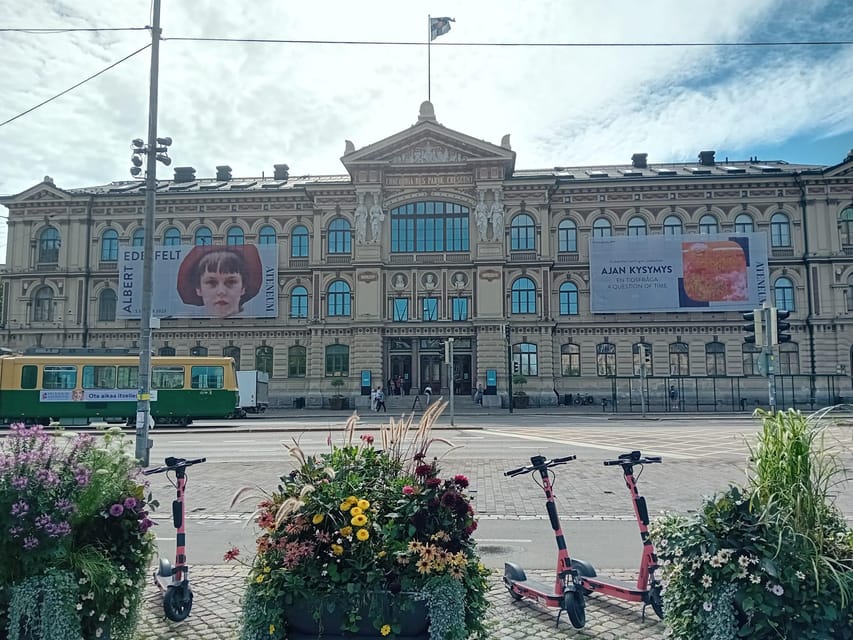
At $56 per person, this is not the cheapest way to look around Helsinki. It is also not just a walk past buildings. The price includes three hours with a live guide, a small group limited to six, and several interior visits that would be difficult to organize with the same context on your own.
I see the best value in the guide’s interpretation. A map can show you Senate Square, Oodi, Central Station, and the Academic Bookstore. It cannot easily explain how those places fit into Finnish civic life, or point out the carvings, room details, and design choices that make a building worth entering.
The small group matters. With six or fewer people, you can ask about a specific architect or request more attention to a certain period. You can also tell the provider in advance if you want to focus on a style, such as Art Nouveau, functionalism, or contemporary architecture.
The price does not include food, drinks, or transportation. That is not much of a problem because the route is built around central Helsinki and is walked from start to finish. You should, however, allow for your own café purchases and wear shoes suited to several hours on city streets.
When to go and how to prepare
Try to choose a weekday if entering office buildings is important to you. Some interiors may not be open on weekends, which can change what you see inside. The public buildings and outdoor sites still make the walk worthwhile, but weekday timing gives you the best chance of seeing the route at its fullest.
Dress for the forecast, not for the season printed on your itinerary. The tour runs rain or shine, and Helsinki’s wind, rain, snow, or cold can make 5 to 6 kilometers feel much longer. Bring weather-appropriate clothing and shoes with a good grip.
This tour is not suitable for wheelchair users. The supplied information does not promise a step-free route, so you should contact the provider before booking if mobility access is important to you.
I would take this tour early in a Helsinki visit. It gives you a working map of the center and helps you decide which buildings deserve a later, longer visit. It also suits cruise passengers or anyone with only an afternoon, since the route covers a great deal without using public transport.
Who will enjoy this walk most

You should book it if you like cities understood through design, public buildings, and everyday spaces. It is a strong fit for architecture students, design fans, first-time visitors, and curious walkers who want Finnish history explained without sitting in a classroom.
It is also good for people who do not consider themselves architecture experts. The guide’s broader approach brings in culture, politics, language, and daily life, so you do not need to know Aalto from Engel before you arrive.
You may want something else if you dislike long walks, need guaranteed interior access, or want a slow museum visit. The route covers many sites, and some stops last only five minutes. Its strength is range and connection, not extended time inside one building.
Should you book the Helsinki architecture walk?
I would book this tour if you want Helsinki to make sense quickly. The combination of Senate Square, the National Library, Aalto’s Academic Bookstore, Central Station, Oodi, Amos Rex, Kamppi Chapel, and the Pohjola Insurance Building gives you a strong cross-section of the city.
Book on a weekday when possible, tell the provider which styles interest you, and come ready to walk in changing weather. At $56, the tour earns its price through the small group, interior access, and the guide’s ability to connect buildings with Finnish culture.
Skip it only if you want a very short orientation or prefer exploring without a set route. For everyone else, this is a thoughtful way to see Helsinki through the places its residents use, not just the monuments that appear on postcards.
FAQ
How long is the Helsinki architecture walking tour?
The tour lasts three hours. It includes about 5 to 6 kilometers of walking through central Helsinki.
How many people are in the group?
The group is limited to six participants, allowing time for questions and requests about particular architectural styles or periods.
What language is the tour conducted in?
The live tour is conducted in English.
Who guides the tour?
The guide is a sociology PhD student. Guides identified in the supplied information include Zana, with one entry also spelling the name as Zane.
Does the tour go inside buildings?
Yes. The route includes interior visits or guided stops at places such as the National Library of Finland, Robert’s Coffee Jugend, Kappeli, the Academic Bookstore, Sanomatalo, Central Library Oodi, and the Pohjola Insurance Building. Access to some office interiors may vary, especially on weekends.
Is the tour suitable for wheelchair users?
No. The activity is listed as not suitable for wheelchair users. It also takes place rain or shine, so you should bring weather-appropriate clothing.
Newly added in the world
- Venice Art and Architecture Private Walking Tour★ 4.5 · 11 reviews
- Basilica San Marco and the Pala d’Oro with Architect Guide★ 4.5 · 19 reviews
- Walking tour in Venice with an architect★ 5.0 · 16 reviews
- Porto Tour: Street Art & Architecture Experience 3h★ 5.0 · 4 reviews
- Faro Private Walking Tour: Uncovering its Architectural Legacy★ 5.0 · 8 reviews
- Private Walking Tour of Old Gdańsk with an architect-guide★ 5.0 · 7 reviews
- Sopot Private City Walking or Bike Tour with a local architect★ 5.0 · 19 reviews
- Lesser Poland Wooden Architecture Trail UNESCO Private Tour from Krakow★ 5.0 · 15 reviews
Walking Tours, compared.

The Official Art Deco Walking Tour by The Miami Design Preservation League
Read our review →
Baroque Architecture and Underground Walking Tour
Read our review →
Chicago in a Day: Food, History & Architecture Walking Tour
Read our review →

Ramblas, Old Town, Gothic and Gaudi Architecture Walking Tour
Read our review →
Chicago’s Secret Interiors Architectural Walking Tour
Read our review →
Browse the lists this tour appears in