
Review · LONDON ARCHITECTURE TOURS
London: Architecture Tour of Benjamin Franklin House
Benjamin Franklin’s only surviving home is not a grand palace. It is a narrow, five-storey townhouse on Craven Street, where Franklin lived for 16 years before returning to America in 1776. That modest setting makes the tour especially appealing: you are tracing the daily life of a thinker, inventor, printer, and political operator in the actual rooms he rented.
I like the way the tour connects Georgian domestic life with Franklin’s work, from the kitchen and its discussion of London food to the parlour where he pursued experiments and political debates. I also like the final stop, where you can try to play Franklin’s glass armonica. The main drawback is practical: the house has uneven, sloping floors and stairs between all five levels, with no wheelchair access.
Key points to know before you go
- Franklin’s London home: See the only remaining house in which Benjamin Franklin lived, including the floor he rented for 16 years.
- A house with a darker story: Learn about the Craven Street Bones and surgeon Hewson’s anatomy school.
- A room-by-room tour: The route links the kitchen, Margaret Stevenson’s parlour, Franklin’s parlour, and the Glass Armonica Room.
- A hands-on finale: You are invited to try playing Franklin’s unusual glass armonica.
- Short but focused: The live English tour lasts about one hour, with time for questions and photographs.
- Plan for stairs: This Grade I listed townhouse has five storeys, uneven floors, and no wheelchair access.
Why Benjamin Franklin’s London years matter
Many visitors know Franklin as an American founding father, but his London years are less familiar. He lived at 36 Craven Street for 16 years, a remarkably long stay that covered a major part of his adult life. He left London in 1776 to return to America and sign the Declaration of Independence, never coming back to the city.
That fact gives the tour a useful angle. You are not simply looking at a famous person’s birthplace or a polished memorial room. You are entering the house where Franklin worked, entertained, tested ideas, and dealt with the political tensions between Britain and the American colonies.
I find this setting more revealing than a large museum display can be. The building helps you think about Franklin as a person with landlords, family connections, meals, visitors, experiments, and strong opinions about public affairs. The tour also explains why he came to London and how his life there connected to the events that eventually drew him back to America.
The experience is led in English by a live guide. Ron has been praised for his enthusiasm and detailed knowledge of the house and Franklin’s life, while Brian has been noted for adding many extra details. Guide quality matters in a small historic house, and this is a tour where storytelling does much of the work.
A few more architecture walks in the world worth a look
- Chicago Architecture River Cruise
★ 5.0 · 15,756 reviews - Chicago River 90-Minute Architecture Tour
★ 4.5 · 9,629 reviews - Chicago River: 1.5-Hour Guided Architecture Cruise
★ 4.8 · 8,046 reviews
Entering 36 Craven Street
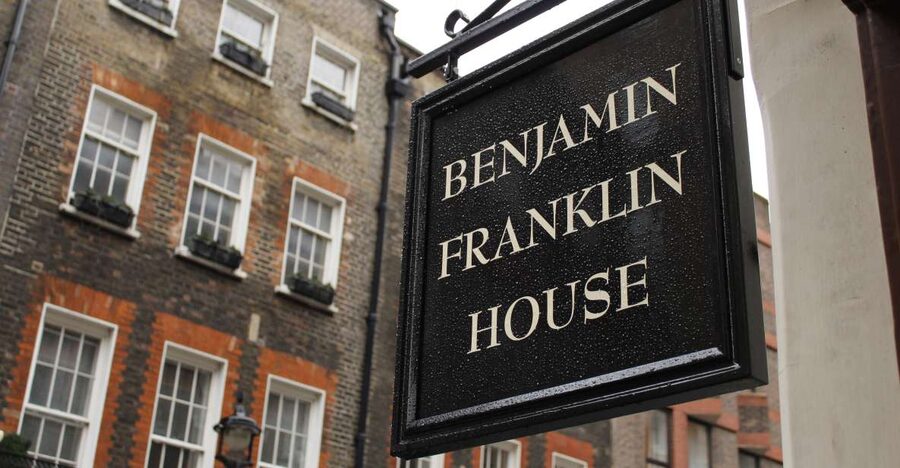
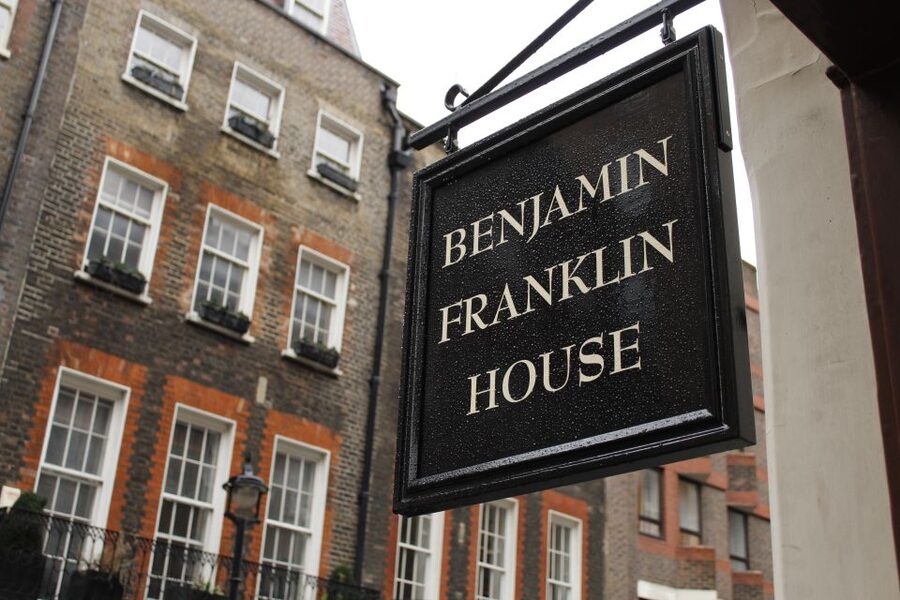
Your meeting point is the door at 36 Craven Street, below the Benjamin Franklin House sign. You knock to enter, so do not simply pass by looking for a large museum entrance. One useful practical point is that the entry process can briefly interrupt the start of the tour, so arriving ready and paying attention at the door will help you settle in quickly.
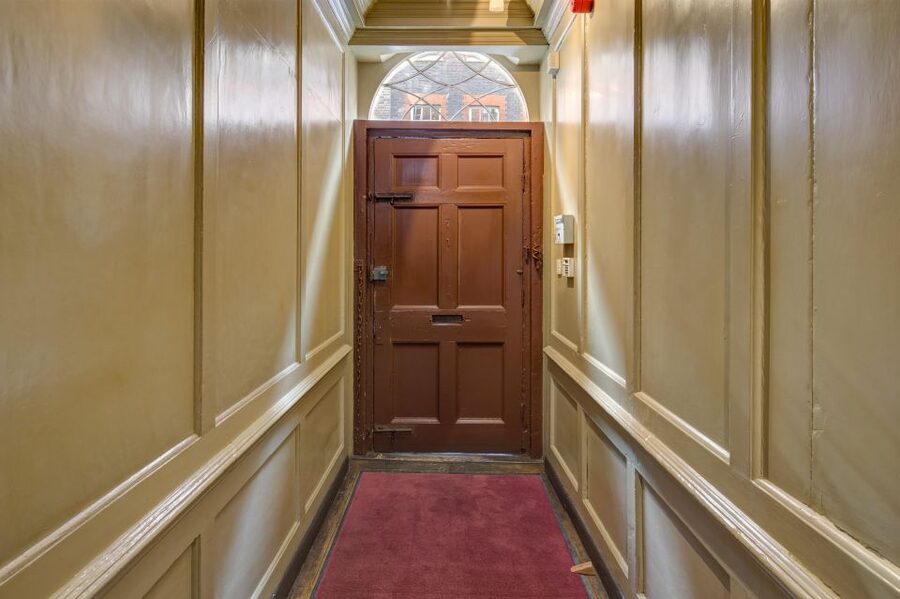
The building itself is the first exhibit. It is a Grade I listed townhouse with original Georgian and Victorian features. Instead of wide galleries and large modern rooms, you get a vertical house with a staircase linking one floor to the next.
That layout affects the pace. You move from room to room and floor to floor, with handrails available on the staircases and seating in each historic room. The floors and stairs are uneven and sloping, so comfortable, secure footwear is sensible. Bare feet are not allowed, and drinks, smoking, vaping, flash photography, audio recording, alcohol, and drugs are prohibited.
You can take photographs without flash and ask questions during the visit. The tour lasts about an hour, which makes it easy to fit into a day of sightseeing, but the stairs mean you should not treat the short duration as a sign that the house is effortless to navigate.
The kitchen and Franklin’s London diet
The tour begins by connecting the building’s domestic spaces with Franklin’s life. In the kitchen, you learn about Georgian food and Franklin’s thoughts on the London diet. This is a small detail with real value because it shifts the story away from famous documents and inventions.
Food tells you how Franklin experienced London day by day. The kitchen also helps you picture the house as a working home rather than a static monument. You are considering what was prepared, how a household functioned, and what Franklin thought about the food around him.
I like this stop because it gives the tour an ordinary starting point. Franklin’s political ideas are easier to understand when you first place him in a real house, eating meals and dealing with the practical routines of life. The information is also useful for families and younger visitors, who may connect more quickly with food than with eighteenth-century political arguments.
The building’s original features add to the effect. You are not viewing a recreated kitchen in a modern exhibition hall. The house itself is the setting, with its old structure and changing levels reminding you that this was a lived-in townhouse.
Margaret Stevenson’s parlour and Franklin’s circle
As you go upstairs, the guide introduces Margaret Stevenson, the wealthy widow from whom Franklin rented. Her parlour gives the tour a social focus. You hear about the influential people Franklin met there, the current affairs they discussed, and his relationship with the Stevenson family.
This part is important because Franklin did not live in London as an isolated scholar. The Stevenson household formed part of his life for 16 years, and the tour examines both that connection and Franklin’s relationship with his own family.
The parlour also helps explain how ideas moved through eighteenth-century London. Discussion, correspondence, political opinion, and personal networks all mattered. Franklin’s London life involved more than his own experiments. It placed him in a setting where public questions could be discussed in private rooms.
For me, this is one of the strongest parts of the route because it gives the house an emotional dimension. You are not only following Franklin’s career. You are also hearing about the people who provided his London home and the family ties that shaped his time there.
The room’s smaller scale may be a consideration for anyone expecting a large museum. Historic townhouse rooms can feel tight, particularly when a group is gathered inside. The trade-off is that the setting feels personal and close to the life being discussed.
Same city, a different facade:
- Chicago Architecture Center River Cruise aboard First Lady
★ 5.0 · 5,536 reviews - Chicago: Architecture River Cruise Skip-the-Ticket Line
★ 4.8 · 4,325 reviews - Chicago River 45-Minute Architecture Tour from Magnificent Mile
★ 4.5 · 2,924 reviews - Barcelona: Sant Pau Recinte Modernista Entry Ticket
★ 4.6 · 2,567 reviews
Franklin’s parlour, experiments, and politics
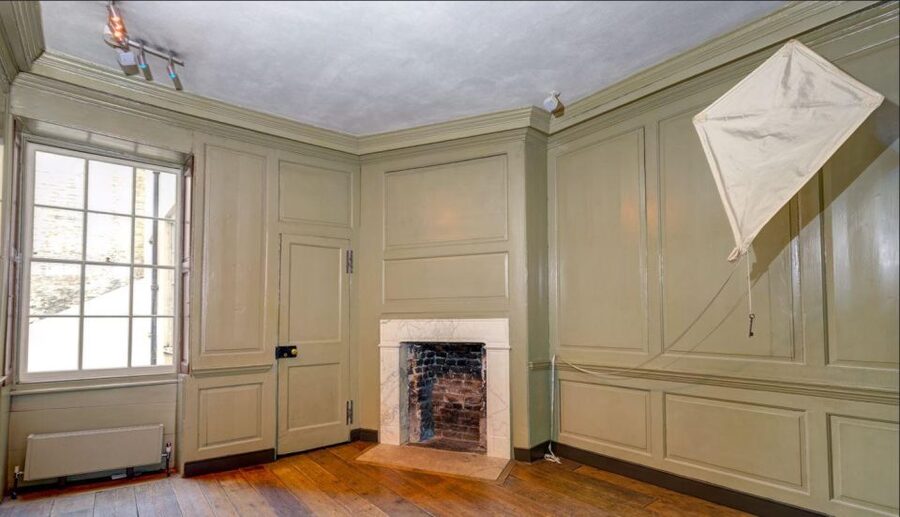
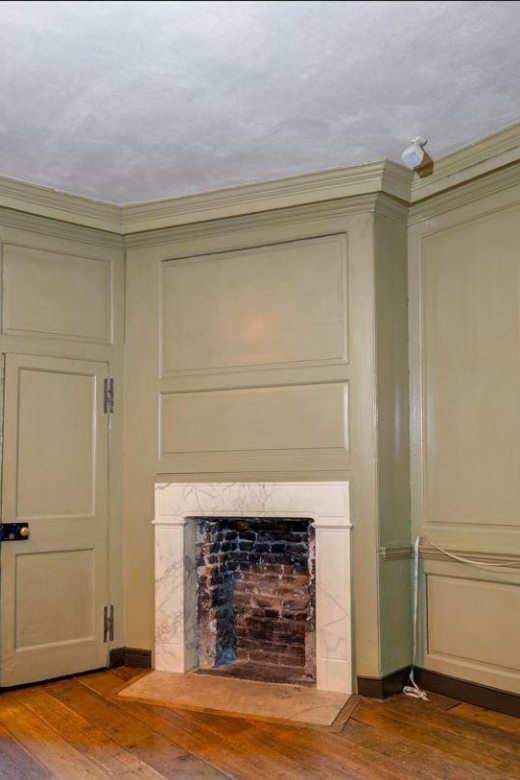
Franklin’s parlour is the central stop. This was the floor he rented for 16 years, and the guide uses it to discuss his experiments, political beliefs, political actions, and eccentric personality.
The room gives you a chance to hold several sides of Franklin together. He was involved in practical science, but he was also a political figure with strong views and public responsibilities. He could be methodical in one area and unconventional in another. The tour does not reduce him to a single role.
I would pay close attention here if you already know something about Franklin. The guide can connect familiar facts about the Declaration of Independence with the less familiar London period that came before it. If you know little about Franklin, this room provides the central explanation of why his London years were so important.
The timing of his departure adds weight to the story. Franklin left the house and the Stevenson family in 1776, returned to America, and signed the Declaration of Independence. He never returned to London. That final break helps you see the house as more than a former address. It was the setting of a long chapter that ended as the political relationship between Britain and America reached a crisis.
The best way to approach this stop is to ask questions. The tour includes an opportunity for questions at the end, and a live guide can explain details that a label cannot. Ron and Brian have both been specifically praised for adding useful information, so this is a good place to speak up if you want more context.
The Craven Street Bones and Hewson’s anatomy school
The house also has an unsettling story. You learn about the Craven Street Bones and surgeon Hewson’s anatomy school.
This section broadens the experience beyond Franklin. It shows how the building and its occupants connected to medical study and eighteenth-century science. The subject may be surprising, particularly if you arrive expecting only a conventional biography of Franklin.
The bones add a darker layer to the house’s past. They also make the building feel like a place with several chapters, not a site preserved for one famous resident alone. The tour explains the connection with Hewson’s anatomy school, giving you a better sense of the work and scientific activity associated with the address.
I appreciate this kind of historical contrast. A visit focused only on Franklin’s public achievements could become predictable. The Craven Street Bones introduce a more complex story and may interest you if you enjoy medical history, forensic stories, or the less polished side of old buildings.
This is also a reason to choose a guided visit rather than simply looking around on your own. The subject needs explanation and context. The guide connects the bones, Hewson’s work, the house, and the later conservation project that allowed the building to open to the public in 2006.
Playing the glass armonica
The final stop is the Glass Armonica Room. Franklin was associated with the instrument, and you are invited to try playing a tune.
This hands-on ending gives the tour a welcome change of pace. Much of the visit involves listening, looking closely at rooms, and moving through the building. Here, you get to test an object linked to Franklin’s inventive side.
Do not expect a full concert or a long music lesson. The appeal is the chance to make a sound on an unusual instrument connected with Franklin. It is a memorable finish for adults, and it gives children something active to anticipate during the earlier historical sections.
I also like the order of the tour. You first learn about the house, Franklin’s household, his social world, and his work. Then you finish with an object that reflects his curiosity and willingness to experiment. The instrument becomes more meaningful because you have already heard about the person behind it.
Is the $16 price good value?
At $16 per person, the tour offers solid value for anyone interested in Franklin, architecture, or small historic houses. The ticket includes entry to the house and a one-hour guided tour, rather than just access to an empty building.
The price makes particular sense if you value interpretation. The townhouse is compact, and much of its importance comes from understanding who lived there, how the rooms were used, and why the Craven Street Bones matter. A guide turns those rooms into a connected story.
Children under 12 enter free, which improves the value for families. You should still consider the building’s stairs before bringing younger children, especially if they tire easily or need step-free access.
The tour may be less useful for you if you want a long, self-paced museum visit with many displays. The experience is short and guide-led. Its strength is the focused route and the chance to ask questions, not a large collection of objects.
Who should book this experience?
I would recommend it most strongly to:
- People curious about Benjamin Franklin’s life outside the United States
- Visitors interested in Georgian and Victorian architecture
- Families who want a short historical activity with an interactive finish
- Anyone drawn to medical history and the Craven Street Bones
- Repeat London visitors looking for a smaller historic site
- Adults who prefer a guided story to a large, crowded museum
You do not need specialist knowledge of Franklin. The tour explains why he came to London, who he lived with, what he did there, and why he left. If you already know his political story, you may value the domestic and personal details even more.
The visit is less suitable if you use a wheelchair, need an accessible restroom, or prefer to avoid stairs. There is no wheelchair access, the restrooms are downstairs in the basement, and there is no accessible restroom. Carers enter free, visitors with disabilities qualify for concessionary tickets, and guide and hearing dogs are allowed in all areas. Pets are not allowed, apart from assistance dogs.
Timing, rules, and useful planning tips
The experience is listed with a one-day validity, with starting times available according to the chosen date. The actual guided visit lasts about one hour. Free cancellation is available up to 24 hours in advance, and you can reserve now and pay later.
The tour is in English. If you want photographs, bring a camera or phone, but use no flash. Audio recording is not allowed, and you cannot bring drinks into the house.
I would arrive with enough time to find 36 Craven Street and locate the door below the Benjamin Franklin House sign. Since entry begins with a knock, do not assume the building will look like a large public museum. Wear shoes that feel secure on sloping floors and stairs, and keep your hands free enough to use the handrails.
Should you book the Benjamin Franklin House architecture tour?
Book it if you want a compact, well-explained visit that combines Franklin’s personal life, political work, and inventive side in the actual house where he lived. The kitchen, Stevenson parlour, Franklin’s parlour, Craven Street Bones, and glass armonica give the hour plenty of variety.
Skip it if stairs are a serious problem or if you expect a big museum with a long independent visit. For most other visitors, the $16 cost is reasonable, especially with free admission for children under 12. Guides such as Ron and Brian add the detail that makes a small townhouse worth your time, and the chance to play the glass armonica gives the visit a fittingly curious finish.
FAQ
Where does the Benjamin Franklin House tour begin?
Meet at the door of 36 Craven Street, below the Benjamin Franklin House sign. You knock on the door to enter.
How long does the tour last?
The guided tour lasts about one hour. The ticket is valid for one day according to the selected date and availability.
What language is the tour in?
The live guided tour is in English.
What is included in the ticket?
The price includes entry to the house and the one-hour guided tour. There is also an opportunity to ask questions at the end.
Are children admitted free?
Children under the age of 12 enter for free.
Can I take photographs inside?
Photography is allowed, but flash photography is not permitted. Audio recording is also not allowed.
Is the house wheelchair accessible?
No. The five-storey townhouse has stairs between each floor, uneven and sloping floors, and no wheelchair access. Restrooms are downstairs in the basement, and there is no accessible restroom.
Are assistance dogs allowed?
Guide and hearing dogs are permitted in all areas of the house. Other pets are not allowed.
Newly added in the world
- Barcelona: Guided tour e-bike Barcelona historical and modernist Barcelona★ 4.5 · 5 reviews
- Barcelona Architecture Walking Tour With Casa Batlló Upgrade★ 4.8 · 11 reviews
- Astana: Old City Tour, Imperialistic and Soviet Architecture★ 5.0 · 4 reviews
- Barcelona Beyond Gaudí: Modernism, Rooftops, and Hidden Gems★ 5.0 · 2 reviews
- An Architect’s Tour of Downtown Santiago★ 5.0 · 7 reviews
- Architecture Tour: Old Historic Madrid with an architect★ 4.3 · 3 reviews
- Architectural Wonders of KAFD, An Iconic Destination★ 5.0 · 3 reviews
- Alhambra Surroundings: History, Architecture and Legends★ 4.5 · 10 reviews
London Architecture Tours, compared.
Private Tour of Hampton Court Palace with Award-Winning Architectural Historian
Read our review →
Modern Architecture & Building Guided Walking Tour
Read our review →Browse the lists this tour appears in