
Review · BAUHAUS AND BRUTALIST ARCHITECTURE TOURS
London: Brutalist & High-tech Architecture Walking Tour
London’s modern center makes more sense when you read its buildings as political documents. This three-hour walk moves from the Barbican Estate and the post-war Welfare State to Lloyd’s, the Gherkin, and other towers shaped by finance, digital design, and new engineering.
I like the way architect Poi explains both the visible details and the forces behind them. I also like the route’s clear timeline, from the Great Fire’s planning legacy to London’s rise as a global financial center. The drawback is practical: you walk a lot, and the tour is not suitable for wheelchair users, people with mobility impairments, people over 80, or people with hearing impairments.
Key points
- Barbican sets the social story: See Brutalist concrete as part of post-war housing policy and the Welfare State, not simply as a style.
- Architect Poi leads the walk: Expect clear, detailed explanations from a practicing architect who connects structure, politics, and city planning.
- Lloyd’s turns machinery into architecture: Pipes, lifts, stairs, and services are placed on the outside and made part of the building’s visual identity.
- The City’s towers tell an economic story: 22 Bishopsgate, the Gherkin, and the Walkie Talkie reflect London’s financial expansion and changing technology.
- You finish at the Great Fire Monument: The final stop connects today’s skyline with the disaster that shaped the City’s long-term planning.
- The route is strictly exterior: You visit and view the buildings from outside, with no entry into the buildings included.
From post-war concrete to financial towers
I find this tour valuable because it does not treat modern architecture as a parade of unusual shapes. It asks why London needed these buildings, who paid for them, what social goals they served, and how engineering changed what architects could design.
The route begins outside St Giles Cripplegate church, beside the Barbican Estate. From there, you walk through a concentrated lesson in post-war rebuilding. Later, the mood changes as you reach the City of London, where office towers express private finance, international business, and technical ambition.
That contrast gives the walk its shape. Brutalism here is tied to public housing and collective life, while High-tech architecture is tied to flexible offices, visible machinery, and corporate growth. The later towers add another chapter, showing how environmental engineering and digital design tools now affect London’s outline.
You spend about three hours on foot. That is enough time for real explanation, but not enough to enter buildings or linger at every stop. I would treat this as a focused architecture seminar with a city walk attached, rather than a general sightseeing tour.
More Bauhaus and Brutalist Tours in the world:
- London: Brutalist Architecture & History Walking Tour
★ 4.8 · 42 reviews - Le Corbusier’s Chandigarh : A Complete Architecture Tour
★ 4.7 · 25 reviews - Architecture of New Belgrade – Brutalism Decoded
★ 4.5 · 24 reviews
Starting at St Giles Cripplegate and the Barbican
Meet outside St Giles Cripplegate church. The opening section at the Barbican lasts about 50 minutes, making it the longest single stop and the intellectual base for everything that follows.
The Barbican Estate grew from the post-war reconstruction of a bomb-damaged part of London. The tour places it within the rise of the Welfare State, when public authorities pursued large-scale housing and civic planning as part of a broader social mission.
That context matters. Without it, the Barbican can look like a fortress of concrete, elevated walkways, and massive blocks. With it, you can read the project as an attempt to build a complete urban environment, with housing and public functions planned together.
I like that the route gives Brutalism more than a surface-level treatment. You are not simply told to admire or dislike the concrete. You consider the ambitions built into the planning, including the belief that architecture could improve daily life and create a stronger sense of community.
The Barbican also gives Poi room to explain architectural details clearly. Specific features that might pass unnoticed on your own become part of the story. One useful strength of the tour is its ability to connect what you see at eye level with much larger questions about government, housing, and rebuilding.
The estate can be visually demanding. Its scale and layered walkways may be tiring to follow, especially if you have difficulty walking. Comfortable shoes are essential, and you should expect a substantial amount of walking rather than a series of short curbside stops.
The walk into the City of London
After the Barbican, the group walks for about 15 minutes toward the City of London. This transition is important because the subject changes from public reconstruction to private economic power.
The walk lets you watch London’s building types shift around you. The route is not only about isolated landmarks. It links different periods of construction and shows how the City became a place where historic streets sit beside large, technically advanced offices.
I appreciate this movement between districts. It prevents the tour from becoming a collection of unrelated building facts. The walk gives you a basic timeline: fire and rebuilding, wartime damage and public housing, deregulation and financial expansion, then the use of digital tools and environmental engineering in newer towers.
22 Bishopsgate and the scale of the modern office
The stop at 22 Bishopsgate lasts about 10 minutes. It is a short explanation, but the building helps show the scale and priorities of the contemporary City.
Here, the story is less about post-war social planning and more about the growth of London as an international financial center. The tower belongs to an era in which large office buildings needed to support changing corporate demands and a vast concentration of workers and services.
The short stop means you should not expect a full technical lecture on every system inside the tower. Instead, you get a place in the wider sequence. The building helps mark the move from the exposed mechanical language of High-tech architecture toward later towers shaped by digital planning and environmental concerns.
For me, this is one of the stops where the guide’s ability to connect buildings matters most. A very tall office can seem anonymous without context. With a clear explanation, you can ask what its size says about land values, finance, and the changing role of the City.
More Walking Tours in the world:
- Lecce: Baroque Architecture and Underground Walking Tour
★ 4.6 · 1,248 reviews - Chicago in a Day: Food, History & Architecture Walking Tour
★ 5.0 · 1,153 reviews - Ramblas, Old Town, Gothic and Gaudi Architecture Walking Tour
★ 5.0 · 723 reviews - Chicago’s Secret Interiors Architectural Walking Tour
★ 5.0 · 635 reviews
Lloyd’s Building and architecture turned inside out
The Lloyd’s Building receives about 25 minutes, one of the more generous stops on the route. It is a central example of High-tech architecture, and the longer viewing time suits it.
Lloyd’s made a strong break from the idea that a building’s technical systems should be hidden. Stairs, lifts, pipes, and other services are placed outside the main interior volume and become part of the building’s visual language.
That approach makes the structure look almost industrial. It also gives the guide a chance to explain how engineering can shape the appearance of a building, rather than merely support it behind the scenes.
This stop is especially useful if you have seen Lloyd’s many times but never understood its purpose. Poi can show you how its exposed systems relate to the High-tech movement and to the City’s changing economic identity.
The building also fits the tour’s political story. High-tech architecture emerged in a period of economic deregulation and financial expansion. Its machinery, flexibility, and visible structure suggest a different set of values from the Barbican’s public housing ambitions.
I would give this stop your full attention. It is one of the clearest places to see the tour’s main idea: architecture reflects how a society organizes work, money, technology, and public life.
The Leadenhall Building and a more open structure
The Leadenhall Building gets about 10 minutes. Its angled profile is immediately recognizable, but the useful part of the stop is understanding how the building’s structure and services affect its form.
The tour treats the building as another stage in High-tech design. Rather than presenting a sealed box, it expresses elements of construction and gives the building a strong relationship with the space around it.
The short time here keeps the route moving. You will hear the main architectural story, but you should not expect to inspect every detail. That balance works because the building serves as part of a larger comparison with Lloyd’s, not as a stand-alone museum visit.
I like the way this stop helps you compare two buildings rather than memorize two names. Lloyd’s is famous for placing its services outside. The Leadenhall Building shows how structure, profile, and public space can also become part of an office tower’s identity.
The Gherkin and the role of environmental design
The stop at 30 St Mary Axe, better known as the Gherkin, lasts about 15 minutes. Its curved shape makes it one of the easiest buildings to recognize, but its value on this walk comes from the engineering behind that shape.
Here, the discussion moves toward environmental engineering and digital design tools. The Gherkin represents a point when a tower’s form could be shaped by more than visual novelty or available materials. Design decisions could also respond to energy, airflow, and the performance of the building.
I would not come expecting to enter the Gherkin. The tour includes an exterior visit and explanation only. Still, the outside view is enough to support the main lesson, especially when Poi links the building’s form to later ways of designing the City.
This is also a good place to consider how London’s skyline changed after the High-tech period. The Gherkin is not simply a tall office with a memorable nickname. It shows how technology and environmental goals became part of the public image of corporate architecture.
Leadenhall Market and the Walkie Talkie
Leadenhall Market receives about 10 minutes for a visit and walk. This gives the route a welcome change of scale and texture after several large office towers.
The market helps you see the City as a place of overlapping layers. The route does not present modern towers as if they replaced everything before them. Instead, you encounter a historic market near some of London’s most recent office buildings.
That contrast is useful. The City’s identity comes from its old streets and institutions as well as its new financial towers. You can look from a traditional market setting toward buildings shaped by modern finance and engineering, then consider how these different pieces share a small area.
The route then passes the Fenchurch Building, widely known as the Walkie Talkie. This is a brief five-minute pass-by with scenic views on the way, not a long guided stop.
The Walkie Talkie adds another example of how digital design and structural planning can produce an unusual outline. Because the stop is short, I would see it as a visual punctuation mark rather than one of the tour’s main teaching sessions.
The Monument and London’s long planning memory
The final guided stop is the Monument to the Great Fire of London, with about 15 minutes of explanation. Finishing here gives the tour a much longer time frame than modern architecture alone might provide.
The Great Fire’s planning legacy helps explain why the City cannot be understood only through its newest towers. The disaster influenced how London thought about rebuilding, streets, construction, and urban order over the long term.
This ending also brings the route back to a central question: how does London respond when its built environment must change? The Barbican represents one answer after wartime destruction. The City’s towers represent later responses to finance, technology, and limited central space. The Monument points to an earlier moment when fire forced the city to reconsider itself.
I like this final connection because it stops the tour from becoming a celebration of tall buildings. You finish with planning, risk, memory, and public decisions in view.
The walk ends at the Monument. It is a practical finishing point for continuing around the City, but the tour itself does not include food, drinks, or building entry. Plan those separately.
What the guide adds to the experience
The strongest feature is the guide’s architectural training. Poi explains buildings in a way that connects technical details with political and social context. That is different from a guide who simply lists dates, architects, and construction facts.
I would expect the English or Chinese tour to be shaped around questions and discussion, although the supplied information does not promise a particular group size. Small groups are described as offering closer explanations and clearer stories, so you should have a better chance of following the details than on a large general walking tour.
The feedback attached to this experience repeatedly emphasizes three things: clear explanations, unusual detail, and genuine enthusiasm. One especially useful point is that the walk can change how you look at familiar streets. Buildings you may have passed without thought become clues about London’s politics, economy, and technical ambitions.
You cannot record video or audio during the tour. Bring your attention instead, and take notes afterward if you want a record of the information.
Is $47 a fair price?
At $47 per person, this is not the cheapest way to walk around the City. You can see the exteriors of these buildings without paying for a guided experience.
The value comes from the interpretation. You are paying for three hours with an architect who organizes a difficult subject into a readable story. If you already have strong training in architecture or have carefully studied the Barbican and City towers, you may find the price harder to justify.
For most visitors interested in design, planning, or London’s development, I think the cost is reasonable. The route covers several major buildings, and the guide explains how they connect rather than treating each one as an isolated photo stop.
The tour also saves you the effort of building your own route. The stops are close enough to link on foot but different enough to show a real change in time and purpose. You are buying structure, context, and access to an expert explanation, not admission tickets.
Who should book this walk?
I would choose this tour if you like cities that reward careful looking. It suits architecture students, design professionals, urban planners, history readers, and anyone who wants to understand why central London looks the way it does.
It also suits repeat visitors. One review described having walked through this part of London many times without knowing the buildings’ purposes or stories. That is exactly the kind of person who can gain the most from the route.
I would be more cautious if you want a relaxed sightseeing stroll, frequent café breaks, or indoor visits. The route covers significant distances, and most of the experience involves listening outdoors while standing or walking.
Wear comfortable shoes. The three-hour schedule includes the 50-minute Barbican section, a 15-minute transfer on foot, and several stops of varying length. People with mobility impairments, wheelchair users, people over 80, and people with hearing impairments should choose another activity.
Should you book the Brutalist and High-tech Architecture Walking Tour?
Book it if you want London explained through buildings rather than simply photographed. The best reasons are the Barbican’s connection to the Welfare State, Lloyd’s clear High-tech lesson, and Poi’s ability to tie architecture to finance, politics, engineering, and the Great Fire.
Skip it if you need step-free access, dislike long walks, or want to go inside the buildings. For the right audience, this is a focused and unusually thoughtful way to spend half a day in the City. You leave with more than a list of landmarks. You understand why these particular buildings appeared, and what they say about London at different moments in its history.
FAQ
How long does the walking tour last?
The tour lasts three hours.
Where does the tour begin?
It begins outside St Giles Cripplegate church.
Where does the tour finish?
The tour finishes at the Monument to the Great Fire of London.
Which languages are available?
The live tour guide is available in English and Chinese.
Does the tour include entry into the buildings?
No. The experience includes exterior visits and guided explanations, but entry into the buildings is not included.
Which buildings are included in the route?
The route includes the Barbican Estate, 22 Bishopsgate, Lloyd’s Building, the Leadenhall Building, 30 St Mary Axe, also known as the Gherkin, and the Fenchurch Building, also known as the Walkie Talkie. It also visits Leadenhall Market and the Monument to the Great Fire of London.
Is food or drink included?
No. Food and beverages are not included.
Is the tour suitable for wheelchair users?
No. The experience is not suitable for wheelchair users or people with mobility impairments.
Can I record the tour?
No. Video and audio recording are not allowed.
Newly added in the world
- Venice Art and Architecture Private Walking Tour★ 4.5 · 11 reviews
- Basilica San Marco and the Pala d’Oro with Architect Guide★ 4.5 · 19 reviews
- Walking tour in Venice with an architect★ 5.0 · 16 reviews
- Sopot Private City Walking or Bike Tour with a local architect★ 5.0 · 19 reviews
- Lesser Poland Wooden Architecture Trail UNESCO Private Tour from Krakow★ 5.0 · 15 reviews
- Lisbon Contemporary Architecture★ 5.0 · 3 reviews
- Private Munich Tour for History Buffs with Architectural Gems and WWII sites★ 5.0 · 3 reviews
- Neoclassical Paris Architecture 2-Hour Private Walking Tour★ 5.0 · 7 reviews
Bauhaus and Brutalist Architecture Tours, compared.
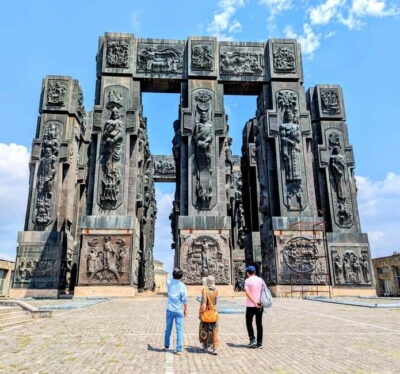
Brutalist Tbilisi: Urban exploration and untold stories
Read our review →
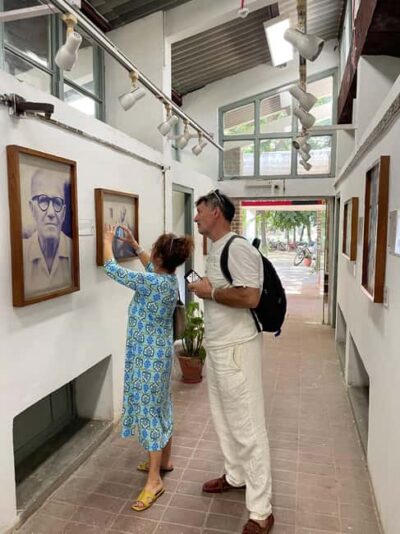
Le Corbusier’s Chandigarh : A Complete Architecture Tour
Read our review →
Architecture of New Belgrade – Brutalism Decoded
Read our review →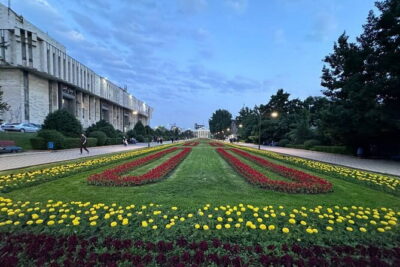
USSR History, Soviet Architects ,Statues & Mosaics
Read our review →
Brutal Tbilisi — Night Edition: Dark Side of Soviet Architecture
Read our review →USSR History , Soviet Architects , Statues & Mosaics
Read our review →
Browse the lists this tour appears in